
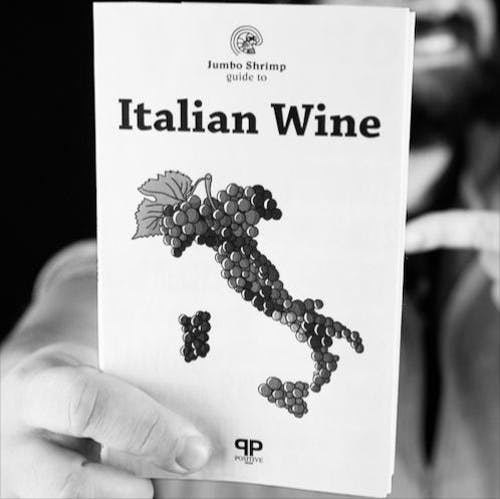
Ep. 307 Jumbo Shrimp Guide | A Brief History of Italian Wine
A Brief History of Italian Wine
Episode Summary
Content Analysis Key Themes and Main Ideas 1. Introduction to ""The Jumbo Shrimp Guide to Italian Wine"" book and podcast series. 2. A comprehensive historical overview of Italian wine, from ancient origins to modern developments. 3. Significant turning points in Italian viticulture, including Roman influence, medieval innovations, and the devastating phylloxera epidemic. 4. The evolution of winemaking practices in Italy, emphasizing the shift towards quality and scientific approaches in the modern era. 5. Detailed profiles, characteristics, and tasting notes of three major Italian grape varieties: Garganega, Frappato, and Sangiovese. Summary This episode of the Italian Wine Podcast introduces ""The Jumbo Shrimp Guide to Italian Wine,"" a new book and podcast series narrated by Joy Livingston. The core of the episode is a historical journey through Italian wine. It begins with the influence of Phoenician and Greek traders around 2000 BC, moving to the Roman era where Italy earned the moniker ""Oenotria"" (the land of wine) due to their advanced viticultural practices. The narrative traces wine's survival through the decline of the Roman Empire, largely due to the Church, and highlights medieval innovations in winemaking. The 19th century brought scientific progress but also the devastating phylloxera aphid, which nearly destroyed Europe's vineyards and necessitated replanting on American rootstocks, leading to a loss of grapevine biodiversity. The podcast emphasizes Italy's ""modern renaissance"" starting in the 1960s, driven by the end of sharecropping and a new focus on quality, scientific methods, and cellar hygiene. The episode concludes by showcasing Italy's position as a major wine exporter and delving into the specifics of three important native grape varieties—Garganega, Frappato, and Sangiovese—providing their historical context, common uses, and distinctive tasting notes. Takeaways - ""The Jumbo Shrimp Guide to Italian Wine"" offers a concise exploration of Italian wine for enthusiasts. - Italian wine history spans millennia, with foundational contributions from ancient civilizations, particularly the Romans who named it ""Oenotria."
About This Episode
The jumbo shrimp guide to Italian wine is a crash course on Italian wine that provides a reference to the history of Italian wine, including changes to regulations to protect prices and the rise of Italian wine in the late BC, along with the introduction of new techniques and regulations to protect prices. The success of Italian wine production is due to the combination of factors, such as the rise of native fruit varieties and international markets for unique wines, as well as the success of winemaking and Vit twork, which has led to a wideening of the scope of wine production. The success of Italian wine is due to the renewed focus on native fruit varieties and the drive in the international market for unique wines.
Transcript
The Italian wine podcast presents the jumbo shrimp guide to Italian wine, a new book for curious wine lovers, narrated in weekly installments. Join us on journey to Italian wine. Hello, and welcome to another installment of the jumbo shrimp guide to Italian wine presented by the Italian wine podcast. My name is Joy Livingston, and I'll be your narrator for this series. The jumbo shrimp guide to Italian wine is a new book from Positive Press. It is intended as a quick lighthearted crash course on Italian wine. The material provides a great opportunity for serious wine scholars to refresh on the basics or to use as a reference. At the same time, we'll bring new fans of Italian wine up to speed. If you're wondering how to get a copy of the book, the kindle version is available on Amazon, and the paperback is available from positive press dot net. We'll also send you a complimentary paperback copy if you donate any amount to the Italian wine podcast. While supplies last. Find details at italian wine podcast dot com or on our social media channels. This week, we cover a brief history of Italian wine. So pour yourself a glass sit back, relax, and join this journey through Italian wine. A brief history of Italian wine. Ancient times to Renaissance. Wine and Italy has a long and distinguished history. It first became important in Southern Italy around two thousand BC, thanks to Finetian traders. And later around one thousand BC, thanks to Greek colonists. These traders and colonists not only imported the vines planted in their own lands, but also new grapevine cultivation and vinification techniques. From Sicily Pulia and Calabria, they gradually spread northward. The etruscans further boosted the spread of Viticulture and winemaking and were known for trellising their vines low and for pruning them regularly. Then, of course, along came the ancient Romans and integrated the existing systems of Viticulture into their own daily activities. They were well known for taking objects and practices from various people they came into contact with, not least because they often married into the families of people they conquered. It was the Romans that first referred to Italy as or the land of wine. The etymology of this name comes from the habit of training vines on poles or posts as is normal today. Instead of relying on trees or other plants. It was apparent to the ancient Romans that vines trained to poles gave better wines, and the importance of making good wine was not lost on the Romans. Ancient documents show that land holdings with vineyards trained to poles were sold for four times more than those in which vines were allowed to run wild. Owing to the many great intellectuals of the Roman era, for example, virgil Horace, Avid Catellis, juveninal, and many others. We have come to know the extent of Roman Viticulture indeed. Before the eighteen fifty five classification in Bordeaux existed, it was plenty the elder who created what is thought to be the first ever wine classifications this system based on quality. With the barbarian invasions and the fall of the Roman empire, Italy's Viticulture went into rapid decline, but grape vines and winemaking survived essentially thanks to the church. Clearly wine was needed for Sunday mass. Viticulture and wine making were to flourish in Italy again only many years later in the feudal age. When the economic wealth that wine production could bring was evident and strict laws were implemented in order to protect fines. It was in the middle ages that many innovations in wine production came into effect, including many that seem so obvious to us now. The separate vinification of white and red grapes rather than just pressing them altogether. Variability in the length of maceration on the skins. The first accurate zonation attempts of vineyards, for example, recognizing that wines made from grapes grown on better exposed sites such as at the top of a hill fetch higher prices. The introduction of legislation designed to define the timing of the harvest and to regulate the production and trade of wine eighteenth and nineteenth centuries. The nineteenth century was decisive for analogy thanks to great scientific progress, leading to a better understanding of grape varieties and winemaking. For example, it was Louis Pasteur's mid nineteenth century discovery of the role played by yeast and alcoholic fermentation that allowed wine making to propel itself into the modern era. It is also in the second half of the nineteenth century that many of Italy's most famous wines became established. Such as Brunoo Dimontalcino and modern day chianti in Tuscany. Filoxera and World Wars. At the end of the nineteenth century and the beginning of the twentieth century, parasites and fungi devastated Europe's vineyards. The first was OIDium or powdery mildew that attacked grapevines in liguria and Piamonte destroying much of the vineyards. Soon followed by PerenOSpara or Downy mildew. In eighteen seventy nine, Filoxera, the worst of all the grapevine pests appeared in Italy, at first mainly in Lombardi and Sicily, but from these two places, it slowly spread throughout the rest of the country. An aphid that feeds on the roots of European vines. Filoxera virtually destroyed all of Europe's vines. With the exception of those growing on very sandy soils or in very cold micro climates in which the aphid cannot survive. Filoxera was slowly dealt with by the replanting of almost all of Italy and Europe's vineyards on American rootstocks. The usage of American rootstocks was due to the fact that they were resistant to the aphid. An important consequence of the phylloxera invasion was that farmers who had to replant their vineyards often chose to do so by replanting not with the same local varieties but with new foreign and more resistant ones. Therefore, Filoxera is one of the major causes of the loss of grapevine biodiversity in Italy. However, Italians have become increasingly aware of how lucky they are to own absolutely unique grapevines not found anywhere else and then allow for the production of unique world class wines. Modern reorganization. The modern renaissance of Italian wine really began in the nineteen sixties. With the end of the misadria or share cropping system that encouraged farmers to produce quantity rather than quality. As the more you produce, the more you could keep. From the nineteen sixties onwards, Italian winemaking and Viticulture have undergone changes more radical than in the previous three centuries combined. Matching grape vines to specific root stocks and more suitable soils and micro climates has become commonplace. The introduction of temperature control during fermentation almost immediately upgraded the quality of Italian white wines. Clearly, the modernization of Viticulture and winemaking led to a huge qualitative improvement in Italy's wines. First in Tuscany, Frigula, and slowly spreading to all regions of the Italian Peninsula. Today, it is common to hear Italian wine producers speak of the importance of carefully kept vineyards of low yields per hectare of the application of scientific criteria in the process of winemaking and of seller hygiene. Italy is one of the world's biggest exporters of wine. And in fact, if the Veneto and Pulia join together to form a new country, they would then automatically become the fourth largest wine producer in the world. This analogy explains just how much wine is made in Italy every year. However, the key thing to remember is just how broad the scope of wine being made in Italy is now. The renewed focus on native grape varieties and the drive in the international market for wines that are unique hold a story and are connected to a sense of place. This has given Italian producers an ideal audience that is growing year on year. It's no wonder that when people ask, what's your favorite Italian wine that you can never choose just one. Wines to try. One of Italy's oldest and most important grapes, is the great responsible for the world famous suave, among the earliest documented wines in Italy. In the suave dock, the wines can be, but are not necessarily made with one hundred percent Garganaga. Ricciotto D'CG, rich, honeyed, and floral, and mineral, and slightly oxidative. Are sweet whites made from air dried grapes, traditionally without buttritus, though this has recently become more common. Called gricanico Dorato in Sicily. It can be found as a dry white mono varietal, but is commonly blended with grapes like insomnia and chardonnay, and can be found in the Alcamo doc, among others. Tasting note. Ripe fruit, hay, and floral notes are typical. A well made, an oak gardenica, is steely, and minerally, with white flowers, apricot, citrus, and yellow apple aromas, and flavors. The finest are complex and age worthy. One of Sicily's oldest grape varieties responsible for some of her most delicious wines, both as a single varietal and as part of a blend. The most famous of the latter, of course, being the Cerasualo de Victoria, d o c g. Fropato is a great well suited to hot and dry conditions, and the red sandy calcareous soil around Victoria is the best for giving refined fragrant wines. Tasting note. Fravato has a light pale red color and has low tannins and moderate alcohol. This results in a fresh and juicy medium bodied wine that is fragrant with notes of strawberries and dried herbs. It is particularly pleasurable when served lightly chilled. The number one most planted grape variety in Italy. Its etymology and its origin are simply not agreed upon by experts. Sandroveza's proliferation has led to numerous names in different zones Muralino in Scansano on the Tuscan coast, Brunoo in Montalcino, Pruniolo gentile in Montepulciano, and San gerveto in parts of Chianti classical. The key San Jose based docs are Kianti, DOCG, Kianti classical DOCG, Rosso di Montalcino doc, Brunoo di Montalcino, DOCG, Rosso de montepulciano doc, Vino novile de montepulciano, DOCG, Muralino, DOCG, and Tuscany, Rosso Picciano dock in Marque and Romania dock in Amelia Romeo. Tasting note, ranging from brilliant Ruby to Garnett. True sangiovese wine should never be jet black in color because of the variety's anthocyanin composition. Overall, sangiovese shows aromas of red and black cherry licorice black tea and nuances of violet. With age, leather, undergrowth, and even tobacco start to emerge. Regardless, San Jose always has high acidity and pronounced chalky tannins. Thank you for listening to this installment of the jumbo shrimp guide to Italian wine on the topic of a brief history of Italian wine. We'll see you again next Thursday. And remember, the kindle version of the book is available on Amazon and the paperback is available from positive press dot net. You can also get a complimentary paperback copy by donating any amount to the Italian wine podcast while supplies last. Find Italian wine podcast on Facebook and Instagram. Our Twitter handle is at Ita wine podcast and check out at mama jumbo shrimp on TikTok. This has been the jumbo shrimp guide to Italian wine presented by the Italian wine podcast and a once listened to the Italian wine story. Join us next week as we continue our narrative journey.
Episode Details
Related Episodes

Ep. 2789 ColleMassari: a long-term vision rooted in Montecucco with Giuseppe Di Gioia | On The Road With Stevie Kim
Episode 2789

Ep. 2788 Ep. 14: Austria and Hungary | Study Smart for your WSET Level 3
Episode 2788

Ep. 2785 From Volunteer to Speaker at TEXSOM with Samantha Cole Johnson | TEXSOM 2026
Episode 2785

Ep. 2766 Inside the U.S. Non-Alcoholic Wine Market: What Wineries Need to Know with Jill Sites | Masterclass US Wine Market
Episode 2766

Ep. 2761 Winemaking and Consulting Across Sicily with Alessandro Serughetti | Wine, Food & Travel with Marc Millon
Episode 2761

Ep. 2759 Part 2 – The VIA Educational Program & Italian Wine | Heart-to-Heart Conversation with Sarah Looper
Episode 2759