
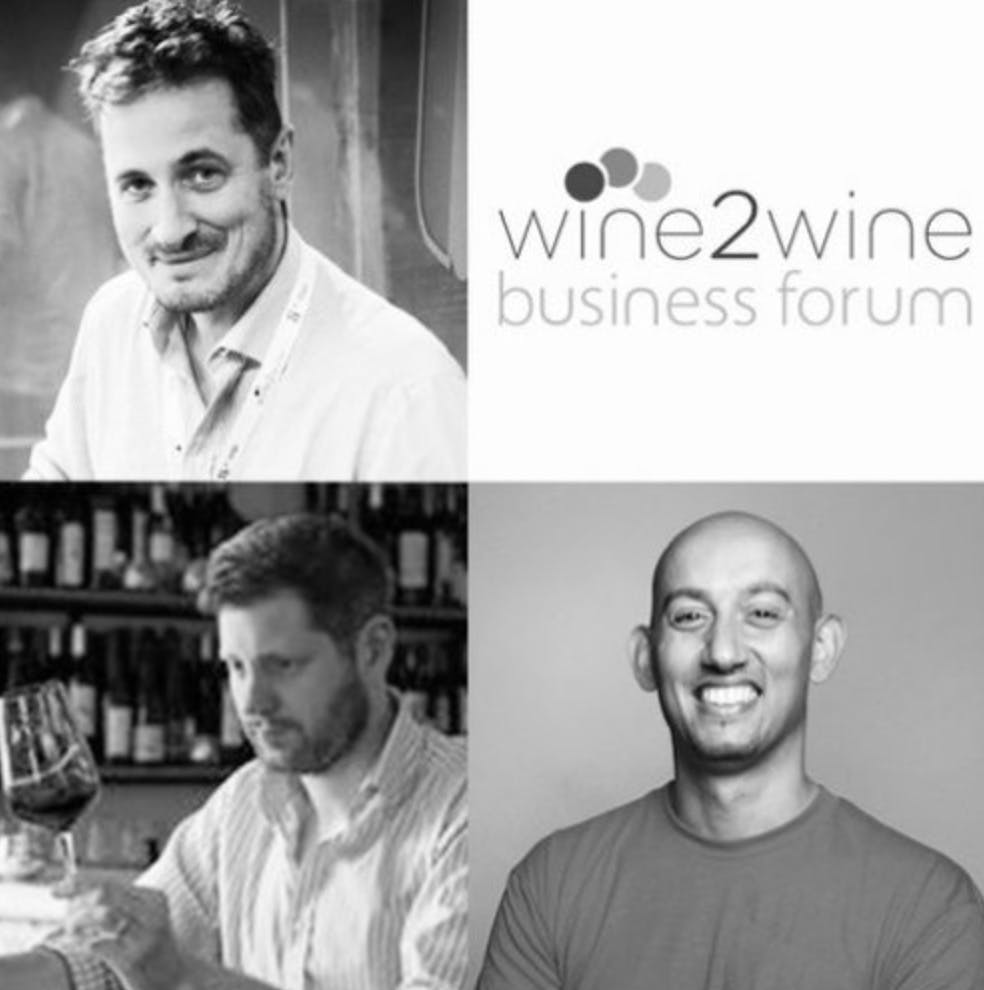
Ep. 451 wine2wine Session Recordings | Beyond Podcasting
Beyond Podcasting
Episode Summary
Content Analysis Key Themes and Main Ideas 1. The efficacy and analytical benefits of podcasting for the wine industry. 2. Podcasting as a versatile marketing, engagement, and networking tool. 3. Innovative applications of audio content, such as audio tasting notes. 4. The inherent advantages of audio content over video, particularly its intimacy and non-intrusive nature. 5. The importance of storytelling and audience engagement in podcast content. 6. Practical considerations and challenges of starting and maintaining a podcast. Summary This Italian Wine Podcast episode, recorded at Wine to Wine 2020, features Monte Warden, Lawrence Francis (Interpreting Wine), and Paul Caputo, discussing how audio content can benefit the wine industry in a digitized, post-COVID world. Lawrence shares data from his podcast, revealing significant listener engagement (51,000 hours consumed) and highlighting that series formats lead to significantly higher listenership (38-48% increase). Paul emphasizes the intimate experience of podcasting, likening it to being in a room with a stranger who becomes familiar, making it a powerful marketing tool. An innovative application discussed is Lawrence's audio tasting notes for Davies Wine Merchants, where QR codes allow customers to hear producers describe wines directly. The speakers agree that audio is less intrusive than video, enabling multitasking and fostering deeper imaginative engagement. They acknowledge the increasing production values in podcasting, necessitating creativity to stand out, and stress the critical role of storytelling. Practical advice includes low startup costs (around £100 for basic equipment and $5-15/month for hosting) but also the significant time and mental energy required to produce engaging content and manage guests. Ultimately, they conclude that podcasting is a tremendously powerful tool for wineries and businesses to engage their audience. Takeaways - Podcasting can generate substantial audience engagement, as evidenced by Lawrence's 51,000 hours of content consumption in 2020. - Podcast series formats enhance listener engagement by 38-48% compared to single episodes. - Podcasts offer a unique, intimate listening experience that builds familiarity and can be a powerful marketing tool. - Innovative uses of audio, such as QR-code linked audio tasting notes, can directly connect producers and consumers. - Audio content is less intrusive than video, allowing for multitasking and fostering deeper imaginative engagement from listeners. - Storytelling is a crucial element for creating compelling and memorable podcast content in the wine industry. - The barrier to entry for starting a podcast is low in terms of equipment and hosting costs (e.g., £100 for a mic, $5-15/month for hosting). - However, sustaining a podcast requires significant time, mental energy, and effort in guest coordination and content creation. - Podcasting is a resilient and effective channel for reaching the wine trade and consumers, especially when traditional channels are challenged. Notable Quotes - ""I really think that podcasting has its place in that, especially when one does that analysis and sees that each episode each producer insight or or or each bit of, educational content that I've produced and have published it in twenty twenty has resulted in sixteen days of listening across the trade in in, in a hundred and eleven countries."" - Lawrence Francis - ""listening to a podcast is a very intimate experience. You can, you can almost feel like you're in a in a room with a stranger... And that, can be an extremely powerful marketing tool."" - Paul Caputo - ""You click play, and you get an authentic audio note direct from the producer."" - Lawrence Francis, describing the audio tasting notes. - ""audio is not as intrusive, really, as as as video. You know, you're you're only asking for one, channel in in in people's attention. You're only asking for their ears. And you're not asking for for their eyes."" - Lawrence Francis - ""The inevitable reality of that is that you know, production values are going up. The amount of, money being spent on marketing is going up... people who are truly committing to the to the medium, are really having to look for creative ways to to stand out and to do something different."" - Paul Caputo - ""But in terms of entertainment, I think, the storytelling element is critical."" - Paul Caputo - ""I feel there's actually a lot more engagement that happens inside the the brains of the listener... your brain, I believe it just can't help itself. It just has to fill in those blanks."" - Lawrence Francis Related Topics or Follow-up Questions 1. How can smaller wineries with limited marketing budgets effectively leverage podcasting to compete with larger brands? 2. What are the key metrics beyond listenership that wine businesses should track to measure the ROI of their podcasting efforts? 3. Could augmented reality (AR) or virtual reality (VR) technologies be integrated with audio content to create even more immersive wine experiences? 4. How might the increasing prevalence of AI-generated content impact the authenticity and appeal of wine podcasts, particularly in storytelling? 5. What strategies can be employed to overcome the challenges of guest coordination and content consistency for wine podcasts?
About This Episode
The podcast industry is becoming more accessible, with the availability of podcasts and the ability to access and read content. The importance of listening to a podcast is discussed, with podcasts being increasingly popular in the wine industry and the need for audio to be present in the background. The importance of storytelling and the use of analytics for analytics and insights is emphasized, and the use of podcasts as a powerful tool for wineries and wineries is discussed. The importance of storytelling for engaging audiences is emphasized, and the use of podcasts as a tool for analytics and insights is suggested.
Transcript
Italian wine podcast. Chinchin with Italian wine people. Italian wine podcast as wine to wine twenty twenty media partner is proud to present a series of sessions chosen to highlight key themes and ideas and recorded during the two day event held on November twenty third and twenty fourth twenty twenty. One to wine twenty twenty represented the first ever fully digital edition of the business to business forum. Visit wine to wine dot net, and make sure to attend future editions of wine to wine business forum. Hello. This is Monte Warden at wine to wine twenty twenty. Subject today is how can audio help the wine industry in a digitized post COVID world. My guests are Lawrence Francis and Paul Caputo, who are based in the UK and have used or are using podcasting as an adjunct to some form of business. Hello? Yeah. Hi, Lawrence. Why bother with the podcast? Why bother with the podcast? I mean, I am the host and founder of interpreting wine, and, I get asked that question all the time, really. And I think twenty twenty being the crazy year that it is, it's really giving me some time to sit down with a an Excel spreadsheet and figure out what exactly is happening when I hit publish on an episode. So I've really, you know, today, really for the first time, I'm gonna be presenting some fresh data around what is actually happening. How is my audience? How is the wine trade engaging with those episodes? So what's typically happened is that people have just shared the number of listens that that that's happened, but I have chosen to to look at something. I think that gets really to the heart of of what happened. So, actually, looking at three factors together, so the percentage of an episode that's played, which I think is is is important. You know, if if somebody is obviously playing a much smaller amount, then then they're gonna get less from that episode and and, it's gonna be less. Can infer it's gonna be less useful for them. Obviously, the episode length itself, so a longer episode, I think gives it gives an opportunity for for my guests, a lot of them who are winemakers, who are producers, who are educators to really get their point across. And then looking at the number of plays, you know, how many times are actually people actually accessing that, to give an an overall engagement time. So, again, those three factors. So the percentage of the episode that's played times the episode length times the number of plays. I think, you know, it gives a it gives a much more meaningful, indicator, and it gives you the, really, the number of hours that people are spending consuming your content. And I've done this for my year to date. And since the start of, twenty twenty since and, obviously, through all of the lockdown, I can see that my audience has has been engaging with my content right away across the channel for a total of fifty one thousand hours, which, if you haven't got a a a calculated to hand, is around two thousand one hundred days or around five years and eleven months. So, basically, you know, the long and the short of it, I, for me, is that something like my podcast, when it when it's being broadcast out there, it's really reaching people, it's really giving people, a a a lot of of content, a lot a lot of engagement. And I I think far and be in in excess of other sort of, you know, snackable content, short videos or, tweets or or or short articles, And breaking that down to an individual episode, the average engagement for each episode published in twenty twenty has been three hundred and eighty hours, which is kind of around sixteen days. So I think, you know, why why would you want a podcast? I think you know, in in the especially in these modern times when we are challenged to gather together when we're when we're challenged to use our traditional channels to reach the wine trade, which is my main audience. We have to find an alternative, and I know that people have looked have looked at Zoom and have looked at Instagram live. I really think that podcasting has its place in that, especially when one does that analysis and sees that each episode each producer insight or or or each bit of, educational content that I've produced and have published it in twenty twenty has resulted in sixteen days of listening across the trade in in, in a hundred and eleven countries. Okay. Paul, any comments on that? I mean, you were an earlier listener to, an early listener to podcasts, before you had your wine business. Why did you add a podcast to, the memorandum your your business? Yeah. Well, I mean, as as you say, I was an early listener. I think I got my my first iPad twenty years ago, and and and podcasts were available on that. And, I used to listen to to all sorts of content And the reason was simple, really. It was the the versatility and where you could listen to them and what you could do at the same time. And that, I think, has taken a very long time to to sync in with people. Maybe the it's the fact that the technology is now, in people's hands far more than it was sort of fifteen, twenty years ago. But I think the reality is now that the the technology has is is facilitating both creators and listeners in a way like never before. And I think people are now rapidly understanding that listening to a podcast is a very intimate experience. You can, you can almost feel like you're in a in a room with a stranger. And, you know, somebody that you maybe know of from from distance But after a few episodes, it's it's like you know that person. And that, can be an extremely powerful marketing tool. You know, you can you can gain a familiarity with people that you you never would otherwise. And I think my my background in the wine trade based in the northwest of England in Chester was one that has always been very isolated from what I thought was where the wine industry was taking place. And I felt like in my early years, I didn't have access to the kind of people, the kind of networking opportunities that maybe I would have wanted, and and podcasting was a was a great way to to learn and watch what people were doing. Lawrence? Hello? In comments? Yeah. I mean, I I think, you know, there's that, what what Paul said there. You know, I think I think wine to wine credit to you guys, you know, I listened back to your two two thousand and eighteen panel discussion on on podcasting the other day. I think, you know, you've been really, yeah, leading the way and you've been you've been telling people all of these things, I think over over many years. I I, I just think it's it's it's really been quite revolutionary for me to actually do that analysis and actually see, you know, this is what happens when you press play because, I mean, as you he was a as a fellow podcaster, it's it's often can just feel like these things kind of go out there into the air. And I think that because of how the audience interact with other content in their everyday lives, you know, let's say Netflix or Hulu or other other, other content channels, there's not always the the direct feedback, you know, when was the last time you sort of left a rating on Netflix or or or gave you the feedback. Yeah. I mean, you have, you have got feedback, from your from your listeners, what were the key points, that you found in terms of, like, yeah, like, you know, you said you you did some various series, a series of podcasts in particular country. Why was why did that help you? Yeah. So, I mean, I think, yeah, lee so lee leading on to that just to to give the the broad context here, as I say, probably too too much time on my hands during lockdown. So I was able to to really sort of dive into the data. And and really went in with an open mind and and and found that, you know, I had put myself out there as the wanting to to be like the Netflix of Wine podcast wanting to put series out there. Did it very intuitively when I really first started doing it two years ago, but it's only this year, something now since I've I've done the analysis that I've got the figures that say two part series have an uptick of thirty eight percent in in engagement, thirty eight percent more listening than the channel average. And when series get to seven episodes or more, the average is is over forty eight percent of an uptick of of listening. So people are engaging a lot more with with a series, it kind of draws them in as I as I thought it might, rather than here's an episode on on Italian wine, here's an episode on Spanish wine. It's like, no. Let's let's actually draw out that engagement possibility, and I call it making the target bigger for people to to land on one of those three, four, five episodes that are part of that series, and then they can kind of, if you like, spread out and look at those other, episodes of that same series, and that's absolutely drawn out by, by that analysis. Okay. Back to Paul. Obviously, Paul, you, your podcast obviously could have been listened to by anybody. It did have a a trade focus. Why did you why was why was that important to you? To to keep the trade focus. I think, like Lawrence, the the origins were in that lockdown period where, you know, who knows, you know, who knew what was gonna happen. But, for me, it was that so much of my wine, career, and journey had been involved, either with a retail customer, up in the northwest or internationally. So in Italy, in different countries where I've been judging and then going on press trips and that kind of thing. And my connection with the UK wine trade was was not really you know, that strong. And so for me, it was a great opportunity to to do that kind of networking and to and to maybe add some value to, the Italian trade. You know, I get a lot of emails, sort of, say, oh, Paul, you're in the UK. Can you put us in touch with with a buyer here or a journalist there? And, and, you know, I I felt like it was time to sort of use the opportunity to, you know, to build more of a connection with the UK because you know, after all, it Italians are very good, I think, of, of asking you where you are rather than what you do. And wherever you say you are, you know, is is what you, therefore, must do. Okay. Quick question for Lawrence. You've been working with a, a Y merchant in London, Davies, and you've come up with a very innovative way of allowing, the public to get a tasting node in a very authentic way. Just explain how that works. Yeah. Sure. Sure. I think, you know, the the the whole title of the session, you know, beyond podcasting. So you know, I I like to think that, you know, can bring something new and and what else, really. And so, yeah, in in really heightened by lockdown and and and really sort of advanced by lockdown, I've been working with Davey's wine merchants on producing a set of producer tasting notes. So so these are audio tasting notes. So in the traditional sense, you can go to the davies website, daviewine dot co dot u k, and you can go and you can you can look by by region, by grape, and and and all the usual stuff. But what they've got, but I don't believe any other retailer in the world has got, if if there is one out there, please let me know. Is you can actually go to the wine page, see the bottle of wine, see the region, see the grapes, see the ABB, all the usual stuff, but then there's actually a little play, a little player there on the on the page itself. You click play, and you get an authentic audio note direct from the producer. So you're hearing about it in the in the voice. So if you're, you know, if you're in Italy and and, you're up in Tuscany, then you're gonna, you're gonna hear that that coming through in the voice of the producer. If you're looking at a a Pino from, Czechano Estate over in in central otago, then you're gonna be hearing direct from the from the Waimekro over there with with his Kiwi accent and and and his sort of yeah, his way of communicating. So that really, again, I think is is the is the way to bring together the producer and the customer. And and in a way, you know, let the merchant just be the one to kind of facilitate that you know, I think in the same way that traditionally Davies have brought their customers and and producers together at organized tastings. Now that that's off the menu, it's like, okay, how can we how can we bring them together? I think what it does really that I think, again, nobody else is is really doing is, a, it's on demand. So it's there and and and kind of ready whenever you want. You don't have to sort of, turn up for a tasting and open all the bottles. You can just sort of, you know, have it at your own time. And also think audio first is really important because audio is not as intrusive, really, as as as video. You know, you're you're only asking for one, channel in in in people's attention. You're only asking for their ears. And you're not asking for for their eyes. So so they can be listening in while they're while they're still with their friends, and and it it's not so intrusive. It's not like, let's all sit around the TV and watch this. It can just be there in the background and and people can can can play it as as they need to. And also what's nice about it, I think, is, it's just audio. So there's no, pictures or anything like that so you can jog and not feel that you're missing something whilst you're jogging and listening to the taking notes. Paul, what do you think about it? Absolutely. Yeah. Paul, what do you think of that as an open? I I think it's a a a great idea, really. And I think that for anybody who is who has been following the the podcast journey, You know, the the the conversation really isn't about, you know, our podcast's good or worth the effort anymore. It's about how do you push on now to the next level? Because, for example, I consider myself to be someone who is a big fan of podcasts and as always, sort of been, you know, following the the story. But, just before we came on, I did a little search for, you know, the the top hundred podcasts to listen to right now. And I knew about two of them, which to me showed me, just how much content is now being made, at such a speed. And the inevitable reality of that is that you know, production values are going up. The amount of, money being spent on marketing is going up. You know, and things are moving really fast. And money's going into the writing of these podcasts as well. And so I think what you're seeing now, are people who are truly committing to the to the medium, are really having to look for creative ways to to stand out and to do something different. Sorry. Go ahead. Sorry. I didn't mean to interrupt you. Yeah. No. I think because, you know, at the end of the day, we've all seen a lot of talking heads, and we're all used to having this kind of intimate access to to people we may be curious about now. And I think that it's the question is what happens next? Yeah. Interesting enough. I got a call yesterday. I kid you not from a well known wine magazine that I write for. And they the question was how do we get a podcast going, you know, what what would we use it for? How could it work, etcetera, etcetera, etcetera. And, you know, they would should never have sent that email, even, I think, two or three years ago. They've got new owners there, obviously, that have picked up on this this idea and, audio, you know, I grew up with radio and Northern TV, as we've all agreed that it's a much more it's an easier medium for for people to consume. I think you're not distracted by anything, and you're not also not hoodwinked by, you know, panoramas, beautiful panoramas of vineyards, all that. It's really about you and and and and somebody else. Anybody got anything else that they haven't said and want to say before we we get turned off? I may I may just add, around the the audio tasting notes. So it is available online sort of before you buy, as I say, on the on the Davies website. And then of course, subsequently after you buy when you're sitting at home with the with the wine. But, yeah, just sort of push things along. It's also available now in the retail shop. So it's it's actually physically available there. And and the and how we've put that in place is to assign a QR code to the audio. And then as you're in the Davey shop walking around, you can just scan that QR code next to the wine. And if you like, all of a sudden, the producer is stood there next to you telling you about the wine in your hand. And and I think that's that's how you sort of break the fourth wall and and make this something that that people can can kind of take with them at home, but then also in a in a retail environment as well. You know, retail's not dead by any means. So that I think, COVID has sort of tested it, but it's it's definitely a resilient channel as well. Are there any preferred platforms that people should be thinking about if they're, doing a podcast in terms of, good listening? I've I've only ever used Libson, l I b s y n. For for my hosting needs. It's one of the one of the top ones out there. There there are loads and loads available. I I've just always found that to be very reliable. I've never had any access problems with, with my podcast. So I I would wholeheartedly recommend them to to anybody that that's keen to give it a go. They have plans from about five dollars a month. So, you know, you do there is a a small cost with podcasts that you you generally can't get around. But, you know, the same five dollars. Okay. Sorry. What yeah. What just go into those costs again. If you obviously, it's not just about the hosting. It's about equipment. What what do you need to do it yourself? Okay. The the the super short version is for the session last year. I actually produced, a summary of kit and hosting and all of, you know, the software and all of that. It's available at interpreting wine dot com slash kit, k I t. And that they all have, like, an NA or so page PDF. But basically, you know, it's, if you're gonna do them in person, the way I started was just a a mic like this, you just need, software to do the editing. You can get free software out there. Yeah. Then you need somewhere to, to put it, basically. You need a, you need a podcast host, these things. The processes have become much, much easier over the years. Years and years ago, it was quite a technical thing. Now the barrier to entry is super, super low. And I think I did do the the costing at the time. It's it's probably around, I mean, this is a a a zoom h one, which is the the mic that I started with. It's about a hundred pounds. And then you're probably looking at, yeah, an ongoing cost of maybe around ten, fifteen dollars or, or euros or pounds around that sort of amount. Okay. Paul, any comments on, the sort of startup cost and the time and the hassle and the aggravation? Yeah. I think the the start up costs as as Lauren says are now pretty minimal, you know, you you probably need a decent microphone and you you need a, a decent internet connection if you're going to talk to guests remotely. But I I so I think anybody can do it if they want to. I think for for me, one of the big challenges and one of the, you you you know, one of the reasons that has shown me just how how impressive it is that Lawrence puts out the the the content, you know, as frequently as he does, is is just how much time and mental energy it takes up to pull guests together to keep the the content interesting to keep, you know, to keep pushing the boundaries and improving the the show, really. I mean, one one example is is you know, it took me weeks to organize a conversation, with a with with a winemaker. And, you know, I was really keen to have this person on. And eventually after numerous cancellations, you know, they they connected on a phone in a church. You couldn't hear a thing. And it was like, you know, it was a I think it was, like, on the top of a mountain as well. It just, you know, you know, it's just it's hard sometimes to despite how much proactive, effort you put into to explaining what what you need to make this work. It's hard for people to understand the challenges as much as much as you do. And so if you're going to do a podcast that relies on, guests to do the heavy lifting, to to do, you know, to provide the interesting content, and you're not gonna just sit there and and talk yourself. You you it's it can be quite an all consuming project. But the the flip side of that is that podcasting is a tremendously powerful tool and a great opportunity, I think, for wineries and anybody with a wine business to engage an audience. What about it, what about using it as a tool for, I mean, analytics, heard one of the comment, a comment about, you know, why certain wines sell and certain wines don't sell? I mean, can it be used as an analytical tool for wine merchants? I I think I think the the there are two ways of maybe looking at the analytics. One is, you know, who's who's listening and where are those people listening. But I think you've got to you you've got to really insert opportunities within the content of the podcast to to really measure. I mean, measure, you know, its effectiveness. And I think that's one of the the other things that can maybe make people who start podcasts sort of drift away because they're not, you know, they can lose sight of why they're doing it. The the the the listens are maybe not quite as they expected. And if there's no if there's no articulated reason for why they're doing it other than it's something they might quite like to do and it's probably useful, then it I think it I I think it can, it can be tricky. I mean, Lawrence, you take great pride in in really putting a huge amount of effort into your podcast. So when I go back to this idea of the series, we often think of a podcast as sort of bite sized chunks, you know, you hear it, you forget about it, and then you move on. And you made life difficult for yourself in New Zealand and, America by doing these thousands of episodes series. But it paid off. Why do you think that is? Why do you think that is? Yeah. I I think the Well, I mean, again, I'll I I'm happy to share practical examples here. So just very briefly, I'll talk about the the series I did it earlier this year, actually, when when we were still able to travel back in January, over over in the Willow Valley. So I went over there interviewed twenty winemakers, in January. The episodes were released in in in February and March. These were long episodes as well. What what I I kind of hadn't really anticipated was was how eloquent and and just how engaging, these conversations were going to be. And and, the the average episode duration was fifty minutes. Right the way across all twenty episodes, the shortest was half an hour, the longest was sixty eight minutes. So really, yeah, quick closely around that sort of fifty, minute mark. And and people, yeah, they they engaged with that series more than any other series that I that I've done, the the average episode listening is is five hundred and nineteen hours, which is like double the the the channel sort of all time average of of two hundred and fifty three. And I just think, yeah, when you again, it's back to that whole thing of, you know, you got the the series as the format, which we've already really spoken about, but I think then it really just comes back to the guests themselves, you know, are are those people engaging? Are they passionate? Do they make good wine, of course? But but, you know, really, you know, in an audio setting, it's not the same as other tasting. So so people are not tasting the wine. People are listening to the stories and engaging with the producers. Yeah. I was just about to talk about the importance of storytelling and also the idea that everybody now has a two second attention span and quite clearly that is not the case, and especially Okay. That's not what we're doing today, but this is different. But this idea of storytelling, and letting winemakers really tell everything that they know and want to share with people without any kind of, barrier between them and the audience, and you're just simply standing there with a microphone, and that's really all you're doing. So do you think we're gonna see more of this? Paul, do you think that this kind of storytelling thing has got legs? Yeah. Absolutely. I think I think that professionals in the media world are now starting to, consider their their careers down this path. You know, I think One of my one of my favorite, football pundits, James Richardson, who works with, with with Italian football a lot. He he has gone his own way to and really invested with a with a little team to to put up a podcast together and the focus is on storytelling, and I think that's what that's what a lot of people want to hear. You know, it's it's great if you're thinking about your your business and your career to hear from different people in the industry and just keep in touch with what's going on. But in terms of entertainment, I think, the storytelling element is critical. Okay. Final question, if we can squeeze one in, what are the main differences between video and audio content? I mean, yeah, I think I think it's it's really just that that, yeah, you don't have the visual. But I think, you know, perhaps more interestingly for me is, it's just that it's just that level of intimacy. I I I relate it to what the difference between podcasting and video is, for me, is is like watching a a a film or reading a book. I feel there's actually a lot more engagement that happens inside the the brains of the listener. Right? It's it's a, yeah, I guess, another another bit of research should be doing as a as a next psychologist. You know, I should I should be looking at what's going on inside the the brains of listeners, but I'm I'm convinced, you know, because you you have to I think as you hear something, you fill it in, you you start to imagine what people look like You start to imagine if they're sitting on that in that church and on the top of that mountain, like Paul was saying earlier, you know, your brain, I believe it just can't help itself. It just has to fill in those blanks. And I think that if you've got that investment in creating that that, virtual world inside your own head, you've got that greater engagement in the content. I think it's gonna keep you tuned in, and I think it's gonna make you remember think it's gonna make you take action afterwards. If it's, if it's something that you, that you like and that you've, you've stuck with over that duration of that episode or that series. Perfect. Well, I hope my sisters have got, a lot out of this podcast in terms of practical advice and sensible suggestions, from our two panelists today. And, hopefully, we'll see, some sort of resurrection for Paul back at back behind the microphone at the same stage. Oh, yeah. Absolutely. Yeah. And Lauren, sir, thanks very much for all your analytics, etcetera, etcetera. Yeah. No problem. Alrighty. Thanks very much for listening everybody, Chom. Chom. Listen to the Italian wine podcast wherever you get your podcasts. We're on SoundCloud, Apple Podcasts, Himalaya FM, and more. Don't forget to subscribe and rate the show. If you enjoy listening, please consider donating through Italian wine podcast dot com. Any amount helps cover equipment, production, and publication costs. Until next time.