

Ep. 527 Russian Tour | Borsa Vini-Vinitaly Russia 4
Borsa Vini-Vinitaly Russia
Episode Summary
Content Analysis Key Themes and Main Ideas 1. Promotion and export of Italian wines through B2B events (Borsa Vini, Vinitaly Russia) in Moscow and Saint Petersburg. 2. Showcasing diverse Italian wine regions: Sicily, Puglia, Campania, and Salento. 3. Highlighting individual wineries and their signature wines, emphasizing their unique characteristics, history, and production philosophies. 4. The importance of indigenous grape varieties as a reflection of regional identity and tradition. 5. The integral role of traditional food pairings in enjoying and understanding Italian wines. 6. The balance between tradition, innovation, and sustainable practices in Italian winemaking. Summary This episode of the ""VINitular Russian tour"" on the Italian Wine Podcast is dedicated to the Borsa Vini and Vinitaly Russia B2B events held in Moscow and Saint Petersburg. Host Rebecca Lawrence introduces participating Italian winemakers, who present a wine that best characterizes their winery, explaining why it's special and what traditional regional dish pairs with it. The episode features four distinct wineries: Azulie from Sicily, highlighting their organic Orlando Nero D'Avola; Vinaioli Puliesi from Puglia, emphasizing their ""wine artisan"" philosophy with Nero D'Troya; Cantina Iorio from Campania, showcasing their Alianico del Taburno and strong family legacy; and LaVigna Dissamarco from Salento, presenting their Zifa Primitivo di Manduria. Each segment delves into the winery's history, terroir, winemaking practices, the specific wine's tasting notes, and its ideal food companion, underscoring the rich diversity and deep-rooted traditions of Italian winemaking across different regions. Takeaways - The ""VINitular Russian tour"" podcast serves to promote Italian wine exports and B2B opportunities in the Russian market. - Participating winemakers are asked to showcase a signature wine, its unique story, and its traditional food pairing. - Azulie winery in Sicily produces organic Nero D'Avola (Orlando), drawing connections to Sicilian art and literature. - Vinaioli Puliesi in Puglia operates with a ""wine artisan"" motto, focusing on quality and tradition with their Nero D'Troya. - Cantina Iorio in Campania specializes in indigenous grapes like Alianico (dubbed ""barolo of the south"") and Falangina, continuing a multi-generational family tradition. - LaVigna Dissamarco in Salento highlights their Zifa Primitivo di Manduria, emphasizing local biodiversity and ancient winemaking heritage. - Italian wine culture is deeply intertwined with regional identity, indigenous grape varieties, and traditional cuisine. - Sustainability, organic practices, and a balance of tradition and innovation are common threads among the featured wineries. Notable Quotes - ""Why is this wine special for you? And which traditional dish of your region pairs well with the wine?"
About This Episode
The Italian wines are being produced by a group of farmers in Tavalieri, and are made from organic and organic wines. The wines are made from vines that are two hundred and fifty to three hundred meters above sea level on limestone and clay soil, and are harvested in the Salento region. The LaVigna brand has a rich and elegant vines, and the Zifa wine is made from a vines that are two hundred and fifty to three hundred meters above sea level on limestone and clay soil, and are harvested in the Salento region. The LaVigna brand has a hundred and eighty reserves of land in the Italian region of San Marco, and the LaVigna brand has a hundred and eighty reserves of wine in the Salento region.
Transcript
Welcome to our VINitular Russian tour, a service that will air each day this week only. Episode is dedicated to the events we held at the end of March this year in Moscow and San Petersburg at Bourseveni and in Italy Russia, organized by the and the Italian trade agency powered by the Ministry of Foreign Affairs and into National Corporation. Grab your favorite Italian wine, and we will see you in Russia. If you enjoy listening, please consider donating through Italian wine podcast dot com. Any amount helps cover equipment production and costs. And remember to subscribe and rate our show wherever you're tuning. Hello. This is the Italian wine podcast Russian Tour. I'm Rebecca Lawrence And as you may know, I've been introducing you to the Italian winemakers who are participating in the Borsa, Vini, and Vin Italy Russia joint events, Verona Fjeda, and the Italian trade agency, I GE, with this port of the Ministry of Foreign Affairs and International Corporation have scheduled for the end of March this year in Moscow and Saint Petersburg. We've been asking wine producers taking part in B2B sessions in Russia to present themselves with one wine that best characterizes the winery and to answer two questions. Why is this wine special for you? And which traditional dish of your region pairs well with the wine? In particular, today and tomorrow, we are going to present to you the Italian wine producers taking part and the Italian trade agency B2B meetings in Russia. This is a program powered by the Ministry of Foreign Affairs and International corporations called pianos. So let's dive in and see what we have today. Asulli winery, Vigna de Sanraco. Let me start with the asulli winery. Asulli vineyards are located in the western part of the heart of Sicily. Twin Matzaro, Delvalho, and trepani, with a mild and breezy climate and altitudes of one hundred to six hundred meters above sea level, soils of middle texture, clay, and shingle. The western side of Sicily called Azuli, in the local dialect means under the sun. In fact, the sun, the light, the high minerality of the soil. The Mediterranean perfume is brought by the wind characterized these wines of great personality. The caruso family that owns the winery combines tradition and innovation in this magical location. The winery is the result of the patient restoration of an old eighteenth century value, and it renews a wine growing family tradition for over three generations. Now, the area of a Sudi winery consists of five plots for a total of a hundred and thirty hectares of vineyards of around six to eighteen years old. A hundred hectares of this land, mainly suited for the great varieties such as Nero Davala, Zibidbo, in solia, Luchiro, Gurelo, Perricone, but also perfect for the well known cera. What else? Well, the winemaker and agronomist of the winery is Doctor Lorenzo Landi. A suli is a modern organic certified winery where the innovative techniques are used and environment and land care policies are followed. The company embodies the principle of identity of the territory of origin by promoting the production of organic Cicilian wine containing aromas that make this island unique. The winery stands in an area renowned for its centenarian wine growing history and composed the DOC Sicilia certification. Asuli's three main pillars are the indigenous grape varieties, the organic growing and Italian culture. So simplicity and respect for the land are the fundamental principles of their daily activities, and the choice of producing only wines and purity. The choice to pursue a model of sustainable development based on the respect for environment and health, and all this enriched by multiple connections to the sicilian art and literature. Let's speak a little more about Orlando. Hi, everybody. I'm Anelia Pramataro, as Europe expert manager for a Zulu winery. And I would like to introduce you, Orlando, a hundred percent, Nero Davola, busting the Cecilia, the It's a very lovely wine. It features an intense ruby red with purple hues. The nose is a dive into the aromas of this island with intense chance of ripe red fruit. It shows a good balance with soft tenants. This wine, especially for me, as its name, evokes the one of the paladin of the poem Orlando furioso, and covers a distinct voyage through Cecillion Art and literature. It pairs excellent with medium aged cheeses and roasted meat with potatoes. See you soon, Kjell, and thank you very much. A red wine of DOC Sisley. Neuro Davala in a hundred percent. The production area is Matzada Dalvalho, on a soil type of medium rich texture stone and pebbles with good mineral endowment. The vine sit at an altitude of a hundred to a hundred and fifty meters above sea level. With an insular Mediterranean climate with mild winters and breezy summers. The harvest is from the end of September into the first week of October, obviously depending on the ripening of the grapes each year. The wines are traditionally fermented with twenty five to thirty days of maceration, very soft extraction through traditional pumpings at a temperature of around twenty six to twenty eight degrees Celsius. After a period of malolactic fermentation, three to four months is kept in stainless steel and then in butter for another three to four months. It is an intense ruby red wine with purple hues, aromas of red ripe fruit, which are well balanced with soft tannins. So, Orlando is excellent with aged cheeses and red meats. This wine has twice been awarded with a tray Bicheri by Vini D'italia and got ninety two points in two thousand and sixteen from James Suckling. We could talk endlessly about wine in Sicily, and we will definitely come back here. But other participants of the project are waiting for us, so we must move to Pulia and Vinayola Pullierze. Calling themselves wine artisans, rather than wine producers, the motto here is the excellence of the territory, a cooperative spirit, and constant attention to the modern cultivation techniques that lead to a production of great quality. Welcome to Pullia. Italian region located in the southern Peninsula of the country Bordering the Adriatic sea to the east, the ionian sea to the southwest, and the Gulf of Toronto to the south. And we are going to present to you a company with strong innovative character, Vinayole Pullierzi. The vineyards stand in the middle of the Tavalieri de Poulier where the quality of land in the ideal climate favor the cultivation of vines, where the tradition and quality of the capitanata grape stand out to create a wine that respects the territory and gives pleasure of taste. In nineteen fifty nine in Orteanova, during the economic boom, a group of farmers decided to found the Cantina Sochale, a cooperative set up among members only to make good local wine by harvesting the grapes from their fields. In two thousand thirteen, the Cantino Sochale was transformed into Vinaioli Puliesi SR. Vinaioli Puliesi SRL. With the modernization of the plants and offices with new partners in the winery, a decision to focus on the growth of the company, but keeping intact the traditional work of growing grapes and improving the interventions to generate the flagship wine of the five royal sites. As for the wine, the wine of Vinayole Pullierze today is Nero D'Troyer, awarded in national and international contests, created to satisfy different markets and different targets. So they have a line dedicated to large scale distribution, the Vignaioli Puleza that bears the name of the company, and four lines dedicated to the Horeca channel, five Riali Citi, Mediuragale, Afidos. As Pulli and winemakers used to say, drinking well, to live well. In Vinay Pullierze, do their best to make this happen. Today, we have the Vinay Pullierze Naldo Ditroyer, one hundred percent. Vines at an altitude of a hundred meters above sea level on fresh deep soils. Canopied in Pögla Pulliese. Harvest by hand in the third week of September. They're destemned, pressed, emasorated, during fermentation, a controlled temperature for six days with pumping over, racking with soft pressing, and after melolactic fermentation is completed, pouring off and filling of barrels, and a period of rest in cement storage tanks before bottling. They are then left to refine in bottle for a further two months. This is a ruby red colored wine with lingering and intense fragrances of floral and underbrush, soft and delicate flavor, ideal for light first courses such as roasted meat, medium season cheeses, and cooked vegetables. Let's hear what the winemakers at Vinayolipulierge have to say. Good morning. I'm joining is a Italy marketing communication manager of Avayolipulierge, and I will talk about an energy to I was asked two questions the first. Why this wine special to me? But these wines is special because it has enhanced city history, which has its load in the territory of the five royal site. A territory that has a a lot to tell where tradition and quality are the binomials that's character is our product. The label is inspired as in the color palette by any intense and delicate, brush stroke like its blend. The second part is the traditional dish of my origin that goes particularly well with this wine. So with Tony Topes. In Italian, the name is But, the secret of this dish lie precisely in the optimal cooking of the vegetable with pasta, experience and the knowledge of raw materials, hello, to obtain a perfect dish. Where the excitation of flower thanks to redouane Marjes. Thank you. Gratia Giovanni. The sunshine, the sea breezes, the local hospitality. It's no secret, and the traditional dishes combined with local wines will win over many wine lovers here. Our exploration of the south of Italy continues today into the Campania region, where we're going to talk about cantina Iorio. Cantina Iorio is located in Torres Guso at the slopes of Mount Tobono. On a calcareous massive known as the sleeper, because observing this group of mountains from a certain distance, it looks like a lying down sleeping woman. Here, long stretches of vineyards create a picturesque natural park that, thanks to its territorial structure and particular weather conditions, allow the production of high quality wines. Sanual Benaventano is an area highly vacated in the cultivation of grape and olive trees. The great part of Autogne's grape varieties diffuse today have been inherited from the Greeks. Already since the Roman period, there was a particular preference for wines from this area, and To underline the fertility and prosperity of this region, pliny the elder defined it as Campania Felix. This territory is also known as the land witches because of an ancient legend. We leave the story to the local people to reveal it once you get the chance to come here. The wines from Sanu are the result of the desire to preserve and valorize or tocterness vines, and this is why the local wine production is characterized by a strong topicity and an easily recognizable sensory profile. In fact, Cantina yorio decided to orient its whole production to Allianicom, Falangina, giving these grapes different interpretations. Allianicom, also known as the barolo of the south, and one of the most important wines in the region, is here Alianico Del Taborno, and this is a full bodied wine characterized by strong tannins and a good predisposition to aging. The Tiborno mountain is also ideal for the cultivation of Falangino. A white grape variety very much appreciated in Campania. Cantina Yorio is a project realized by two brothers with the desire of continuing a family tradition. Their great grandparents cultivated grapes, and stored the wine in large oak vessels and waited for the merchants of the nearby cities to have bought it. In the early nineties, Piet in his twenties decided to start a company devoted to such passion and work. The smallest family seller comes back to life together with the tools his ancestors used to work with. Some years later, Luca, the younger brother, joined the company. In two thousand thirteen, an innovative modern seller was built to provide the opportunity to produce sparkling wines. Now, they use this modern technology to produce wines from more tocter's grape varieties that represent the territory. So Pietro reserves the viticultural techniques and is responsible for the grape harvest and the relationship with vine growers that cultivate the vineyards with care and dedication and also make up part of the Cantina yoyo, and Luca deals with the winemaking techniques in the winery. Together through traditional innovation, they produce high quality wines that convey the authenticity of the territory. One of them, we will focus on today is Sanio Allianico DOC, made from one hundred percent Allianico in the Tuurno DOC Sanio Area in Campania. The vines here are two hundred and fifty to three hundred meters above sea level on limestone and clay soil and a geotraining system, a plant density of around three thousand plants per hectare. They are harvested in the last week of October by hand. And then undergo maceration at control temperatures of twenty four to twenty six degrees and malolactic fermentation. They are aged for eight months. They are then aged for eight months in steel before bottling. They have a deep and bright red color, intense fragrance of red fruits with spicy scents, solid and elegant tannins blended with a balanced acidity and full body. Sanio Allianic or DOC is ideal with grill steaks and red meat. Hello, everyone. I'm Ann, Rossacks for the manager of a container yoyo. Continue yoyo is a one hour located in a software, Italy just to give you an idea. We are around one hundred kilometers from, Naples. For me, it's a very big pleasure to be here, we do, and I would like to introduce you one of how our favorite, Cantina yoyos wind. It's about the sameo Ayani code of. I chose this one, first of all, because it is one hundred percent, Ayani code, and we are in the actual lens of Ayani code. It represents how our soul. We are very hard workers. I hope we will appreciate his, very deep and bright, red color. It's a nice program of red, for it, and, of course, this final sense of spicy. It can be well paired with our traditional dish made of pork, redoxie peppers, and baked potatoes hope you will enjoy. Thanks for your patience and, bye. Thank you, Rosa, export manager of the cantina yorio. What's next? Last for today, Lavinia Disa Marco. Welcome to LaVigna Desamarco. A territory immersed in the heel of Italy. A unique territory of Salento, kissed by the sun and caressed by the sea breezes, which bring the vineyards the sense of the Mediterranean. A cradle of wine in the classic era, this land has jealously preserved the unique imprint of its vines until present day. Lying between the ionian and the Adriatic seas, mostly flat, the salento territory is exposed to the many winds that soothe the heat of summer. The scarcity of rain and the soils of limestone and clay composition give these wines remarkable body and an intense bouquet destined to have the production of high quality dop wines. The heritage of this unique area is constituted by its precious biodiversity and knowledge that passes from generations of wine growers and inologists who resonate with the ancient voice and the offer of modern technology. Decades before the winery was born in nineteen seventy two, the Ritello family grew grapes. It was the grandfather, Marco, who in the seventies of the last century decided to produce wine on his own. Since nineteen ninety, his son Franco, the new generation, focuses on the native grape varieties of Salento and their unique characteristics. From two thousand seven, the Ripsello family has significantly expanded production of high quality wines, thanks to new modern wineries. Thanks to a new modern establishment, which in a few years has allowed LaVigna Dissamarco to spread the wine culture of salento far beyond Italy. Today, the Ritello family owns a hundred and eighty hectares of land in the countryside of cellino San Marco. These vineyards are the guardians of tapicity and tradition. Eighty percent of the land of the Rizzello family is dedicated to the vines of this territory, the reinterpreting wine culture of Salento. Each vine is a nuance of the voice of this land. Persuasive tone of Nagoromaro, decisive rhythm of Primotivo, the ancestral echo of Malvoisier Neda, the lively chatter of Susimanello. But let me tell you a few more words about Zifa, the Primotivo de Mandoria, DOC, Line crew. This is made from a hundred percent primitivo grapes grown in the mandatory production area on alborello vines and manually harvested. The harvest occurs in the first period of September. Carried out during the coolest hours of the day with careful sorting of the grapes. After pressing and de stemming and twelve to fifteen days on the skins, there is racking, then malolactic fermentation and aging in Barriques. This produces a deep intense ruby colored wine with sweet red fruits, blackberries, and blueberry flavored scented with coffee, orange peel and balsamic notes. It has good structure and silky tannins, and alcohol balanced by a good freshness and long finish. Traditionally, food pairings have been diverse from pork shank to sausages, even aged cheeses. Let's get some more information from the representative of Lovino Dissam Marco. Bongiorno. Hello to everyone. My name is Roberta lupi. I'm the expert manager of LaVigna Desa Marco, a family company born in nineteen seventy two, located in the deal of the Italian booth in the Celino San Marco County side. There is a lot of family, farms, one hundred and eighty hectares of vineyards. The eighty percent of this property is dedicated to local vines to produce high quality, DOP certified wines, such as primitive body manduria, Other wines are primitive. The annual production is of one million bottles. The wine I would like to present to you is our Zifa. I was asking why this Zifa wine is special for me because Zifa is a very fine and elegant one hundred percent primitivo de manduria. Zifa means a gust of wind in an ancient language still spoken in some areas of Fulia. The selected bunches are collected in small boxes. The grips are left on skins for twelve, fifteen days, followed by raking malolactic fermentation and aging in French of bars. Four, six months, which are the traditional dishes to enjoy with zip a wine, enjoy it with grilled, or oven roasted meat dishes, and aged cheeses. See you soon. Thank you so much, Roberto. So a quick reminder of the wines to try that we talked about in this episode. Rolando Nero Davala, DOC from Sicily, from Azulie winery. Nero D'Troya, IGT Pulia from Vinaioli Pouliesi, Sanio Alianico, DOC from Cantina, yorio, and Zifa Plimotivo de Mandoria from Lavinia Dissamarco. That's it for today. Thanks for tuning in. And we'll see you again for another edition of the Russian Tour on the Italian wine podcast. Listen to the Italian wine podcast wherever you get your podcasts. We're on SoundCloud, Apple podcasts, Himalaya FM, and more. Don't forget to subscribe and rate the show. If you enjoy listening, please consider donating through Italianline podcast dot com. Any amount helps cover equipment, production, and publication costs. Until next time, Chinching.
Episode Details
Related Episodes

Ep. 2789 ColleMassari: a long-term vision rooted in Montecucco with Giuseppe Di Gioia | On The Road With Stevie Kim
Episode 2789

Ep. 2788 Ep. 14: Austria and Hungary | Study Smart for your WSET Level 3
Episode 2788

Ep. 2785 From Volunteer to Speaker at TEXSOM with Samantha Cole Johnson | TEXSOM 2026
Episode 2785

Ep. 2766 Inside the U.S. Non-Alcoholic Wine Market: What Wineries Need to Know with Jill Sites | Masterclass US Wine Market
Episode 2766
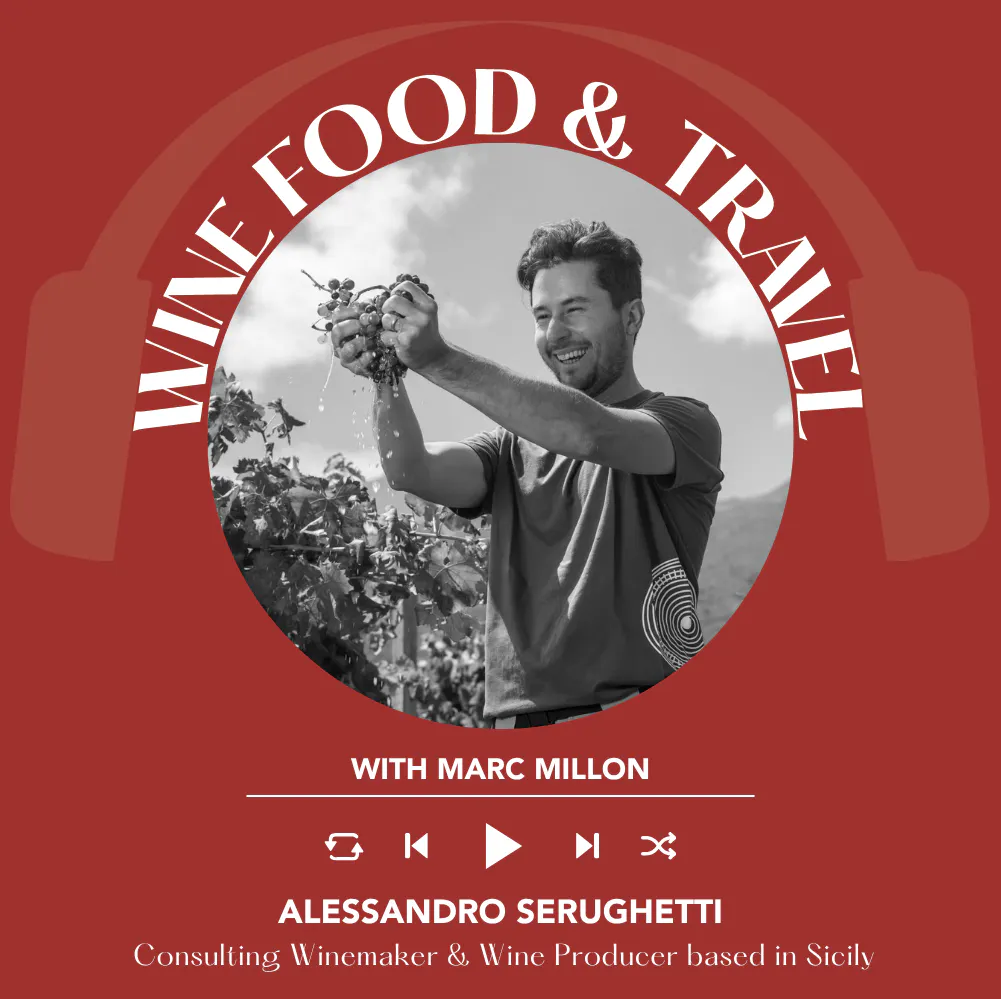
Ep. 2761 Winemaking and Consulting Across Sicily with Alessandro Serughetti | Wine, Food & Travel with Marc Millon
Episode 2761

Ep. 2759 Part 2 – The VIA Educational Program & Italian Wine | Heart-to-Heart Conversation with Sarah Looper
Episode 2759