
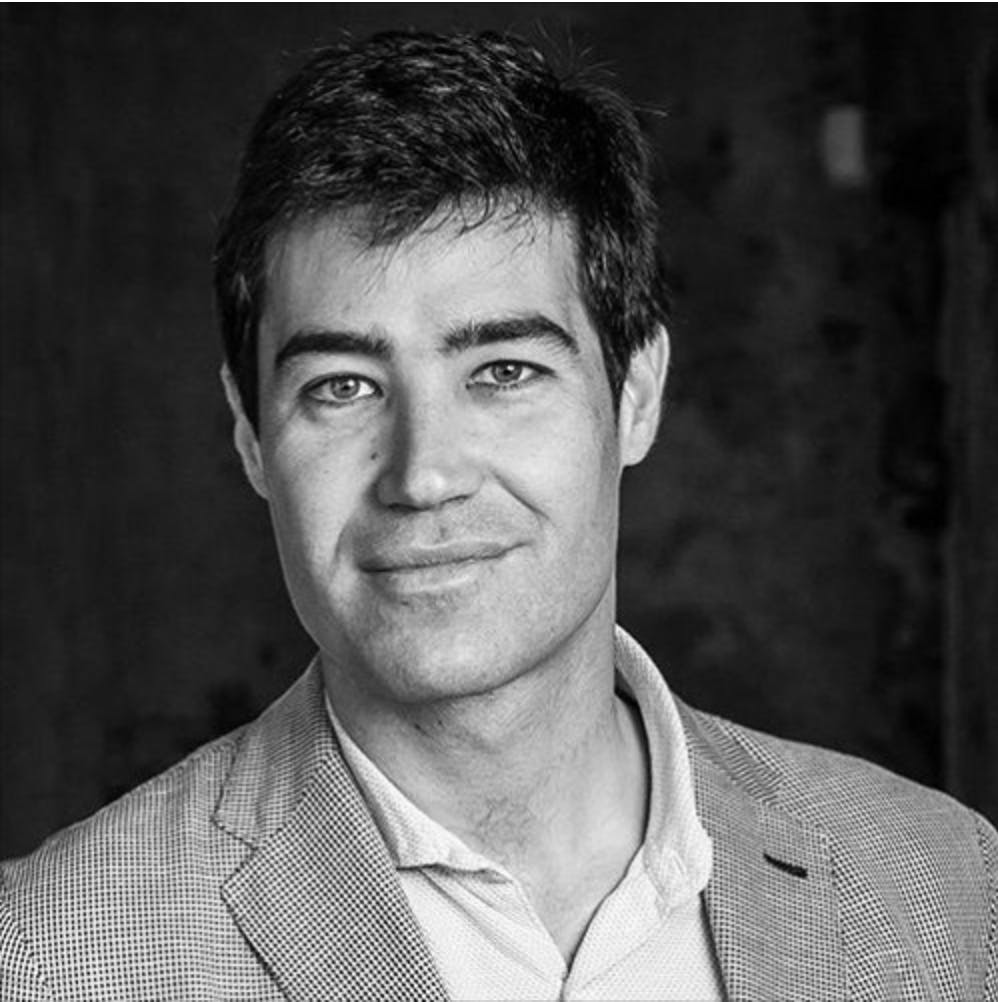
Ep. 289 Gabriele Gorelli (BROOKSHAW&GORELLI)
BROOKSHAW&GORELLI
Episode Summary
Content Analysis Key Themes and Main Ideas 1. The personal and professional journey of Gabriele Gorelli within the Italian wine industry, rooted in Montalcino. 2. The impact and demands of the Master of Wine (MW) program on professional development and critical thinking. 3. The crucial role of authentic storytelling and personality in wine marketing and branding. 4. The emergence and philosophy behind ""natural wines"" and traditional winemaking techniques. 5. The blend of tradition and modern global perspective in the wine business. Summary In this episode of the Italian Wine Podcast, Monte Walden interviews Gabriele Gorelli, a Montalcino native with deep roots in winemaking. Gabriele shares his upbringing with his grandfather, a small Brunello producer, which nurtured his early passion for wine. Despite not pursuing viticulture initially, studying languages and communication led him to a career in design and photography, focusing on the Montalcino wine region. He now serves as CEO of his advertising agency, which specializes in wine. A significant part of the conversation revolves around Gabriele's rigorous journey through the Master of Wine (MW) program, emphasizing how it has profoundly impacted his critical analysis, global perspective, and communication skills. He underscores the importance of authenticity and personal storytelling for wine producers to connect with consumers. Gabriele also discusses his ""Senza Rete"" (Without Nets) project, a co-fermented, no-sulfur, traditional ""Contadino"" style wine he made with renowned consultant Maurizio Castelli, aimed at markets like New York. Takeaways - Gabriele Gorelli's family history in Montalcino, particularly his grandfather's small vineyard, instilled an early passion for wine. - His career path demonstrates how diverse skills (languages, design, communication) can be leveraged within the wine industry. - The Master of Wine program is highly demanding, requiring not only academic rigor but also physical and mental resilience. - The MW qualification significantly broadens one's global perspective and sharpens critical analysis in the wine sector. - Authentic storytelling, rooted in a winery's unique personality and history, is vital for marketing and consumer connection. - ""Senza Rete"" is a natural, traditional-style wine project by Gabriele Gorelli and Maurizio Castelli, reflecting a return to rudimentary winemaking. Notable Quotes - ""The NW really, lets you distill the information, lets you analyze the information, critically analyze the information. And let you convey your messaging in a in a more succinct, in a in a very, effective manner..."
About This Episode
Speaker 1 and Speaker 2 discuss Speaker 2's career in wine and the impact of the pandemic on their work and relationships. They discuss the importance of finding one's own selves in the market and building a storytelling skill. Speaker 2 explains their past experience in communication science and their desire to pursue a master wine program. They also discuss the impact of the pandemic on their work and relationships, including the importance of finding a professional in a critical value chain. They also discuss the potential market for a co-f declared wine and the potential market for government ed wines. Speaker 2 is close to the co-ship and wants to do a co baked wine project. They discuss the potential market for a co-f declared wine and the potential market for government ed wines.
Transcript
Italian wine podcast. Chincin with Italian wine people. Hello. This is the Italian wine podcast. My name is Monte Walden. My guest today is Gabrielli Gorelli. Gabrielle was born in Monteaccino in nineteen eighty four, and his grandfather used to be the smallest Brunello de Montecino producer. Is that correct? Yeah. Correct, Monty. Nice to meet you. Sorry. Yeah. Sorry. So what was it like, when you were very small growing up, with your grandfather in southwestern Montalcino. Is that correct? Yes. The right, out of the walls of Montalcino, and a very, pretty high altitude site. We had this very small vineyard. You could really count defines. Yeah. Less than half a hectare. Wasn't it? Sorry? Less than half a hectare of vines. Less than half a hectare, Bruno, and then a little bit more, but not brunello. For for home consumption, you know. But what was your grandfather called? John Carlo. Mhmm. And so he just had a little bit of vineyard. And did he grow like vegetables and fruit and things like that, as you say, like, so, you know, self sufficient. Exactly. In chickens, and, rabbits, all this kind of stuff. They're they're they're old, but without living in the Fat Korea because he was living within the walls of Montecino, but like I mean, five minutes drive from, the vineyard. So it could go there literally every day to check and to work. And you used to go and help him as well, did you when you were a little boy? Yes. Of course. Of course. I did a lot of damage, while being with a boy there. And, but I really developed a passion for that because, you know, even my father and my uncle were working with with my grandpa. And, I know, you know, I I I was the only kid in the family at that moment. And, I felt like I I was destined to help them. Uh-huh. And then you went, so then you went to, obviously, you went to school. And what did you study when you left school? What was your specialty? Oh, well, I always try to be focused on something that didn't really, put me on on the truck, which I had to keep for a long time. That's why I decided to study languages. And so I studied English and studied French and German. And, I wasn't focused on the, you know, cultivation of Davinia or stuff like that because by the time I started school, at the given hours in my main, my father, a grandfather retired, and my uncle decided to fund another, winery, at the moment. So at that moment, my cousins were already born. So, I felt like, okay, my, my the family wasn't the same as it used to be, and, So I I felt like I was going to to learn how to, live in the world, and then I could think to get back into wine at a certain moment, a certain point. So you you've got quite a nice combat. So as a small kid growing up into an adult, you've got a nice blend of practical knowledge from from your grandfather and sort of academic side to you knowing really what you wanted to do. As a as a possible career. You ruled out growing wine yourself. So then what was your next step? What was your next step? So then I joined the university in Sienna and I did communication science. But, at the same time, actually, the the same the same year, I started working, in design and photography. But everything was focused in Montalcino, so everything was focused to wine. And so, this was a, you know, a side effect of the the power of wine, especially here in the area. So I started, working, as a designer. So I to to do labels and web design and stuff like that. And at the same time, I started specializing myself in the product, which I I needed to to know the most, which was wine itself. Was that, so was that with, did you have a company called Brookshore and Garelli? Exactly. Exactly. We we the the the the advertising agency, which is a worrying focus advertising agency as I was telling you, it was funded in two thousand and four. Twenty years old, but, I I'm still there. I am the CEO now, and I owed, fifty percent of the of the company now. So in terms of day to day, what's a typical day for you? Assuming you're in Italy, I know you travel a lot, but just say a typical day in Italy and a typical day in, I guess you're based in the UK when you're in the UK. You're in London. Right? Yes. Exactly. Yeah. So a typical day typical day here in Montalcino would be, you know, trying to to get a grip on the, the program of things to do, so photos and video to shoot. And, and designing labels, or designing websites. So meeting customers, and trying to find a way to to enhance their storytelling through images or through words and graphics. While I am in, in London, also in the UK, I I go there, especially, under cover of and master wine students. So my day is there. It used to be very tough, tasting, fine tasting, and, and working on the on the theory. At the moment, since I passed the exam last year, I'm focusing on my research paper, which is a very, very lonely task you have to do to get to your title. Alright. So you've passed the tasting in the theory, have you? So I passed in in two years because I the the first year I passed, I passed the tasting, but the four fifth of of the, theory only. So I needed to receipt one, one paper, which was actually literature, which I'm a little bit ashamed of, but wasn't about knowledge, the the thing that didn't let me through. It was more about the fact I was so, into it that I decided to answer the question I I wished I have in my paper, besides answering the actual question, and that's that's what cut me a c. And so that's why I had to restate my my paper the the year after, which was two thousand nineteen. And I passed that year. Okay. So you just gotta do your dissertation? Yes. It's not called dissertation anymore. It's now called search paper. It's slightly different, aim And, but still it's, it's what's in Cambridge or in Oxford. They they called, like, the hundred and fifty hour project. So it's ten thousand words maximum project, which can be, experimental or can can be, survey based or, you know, it's it's a research project more than a dissertation. So it needs to be, to have a lot of hard facts to to work on and to show the analysis. Do they call it an investigation still? An investigation into blah blah blah. Pretty much. Yeah. That's about right. So you I mean, I imagine you're gonna get through that and you will be an MW. I mean, how if if you're assuming you do pass? How and how is that gonna change your life? Does it mean that you put your prices up or you or you're just doing it? Because because you sit it's a personal challenge? I think I think, my life has been changing through the, the years I've been into the, and w program because, you know, by the time you, you make friends, you do networking with the guys that work and study together with you, it's it's already a game changer because you you are part, of a slightly bigger elite than, the actual MWs, one, but it's still an elite because the there are, as much as students, and now that, as much as masters of wine, so, like, three hundred and eighty students to three hundred and eight is master wine at the moment. So it's it's already an elites to be a and and establish students. And I and I joined the incident in two thousand fourteen. So I've been there for a while. And that was really changing the way I approached work, the way I approached even life, I would say, and, and, of course, it's strongly impacting and affecting every every relationship and every task you're you're asked to accomplish. When B and W, I think these will be even more, evident and empower it, but with the same, like, tone. Keeping your feet on the ground, you mean? Mhmm. Of course. So, I mean, in terms of, your work, you know, the designing and consulting, how has the how has your study improved or or change the way that you work or the advice that you give. Okay. So I I have always been very, I wanna say humanistic and Mediterranean in the sense that I've been very flowery on in writing and, and not very strongly based on numbers and figures and artifacts. Despite being, I mean, a good student, even a school. But, you know, the NW really, lets you distill the information, lets you analyze the information, critically analyze the information. And let you convey your messaging in a in a more succinct, in a in a very, effective manner that really, empowers the the way you're working, the way you are relating to to people and, in the way you're tackling your, your everyday tasks. Of course, there is also the, real life thing. So the fact that you, if you wanna pass the exam, you need to be in shape. So this is a side effect of BMW. I mean, you cannot really, sit hunched the over at your desk and, and try to pass. Going through the books. You need to have hands on knowledge, and you need to be in shape, even physically in shape. And, when I started my, my programmer, one year after, I felt like I had to start something that really lets me feel, better. And then I started doing yoga. And these never abandoned me, throughout the program, and and is now part of my life. So it strongly changed the way even I am living by by a side effect, of course, but still has. Has that made you a better professional in terms of the advice that you give and the ideas that you have when you're with a client? You're trying to get out away less from stereotypes, stereotypical marketing, either sound bites or or labels, or, how has it impacted on your work directly? I I would say so because it's it's very it's something that's really enhances your knowledge and, your ability to compare things in a in a critical way. So you have a broader knowledge with a more than decent depth in several, I would say stages of the the value chain that really help you to to know what you're talking about in pretty much every situation. And I would say you know, things from a global perspective because most of the time, we have many experts in Italy, that are so focused in in Italy. That they cannot focus on anything else. And I think what the NW has told me most of the time is to make a step back and to kind of see the bigger picture not to focus too much on something that will let you, you know, blur your vision, on a more global, picture. And that is really enhancing the the the the power you have to for putting together to connect dots. And of course, there is no more stereotypical, you know, way to approach stuff. I mean, it's always something you wanna experiment. There's always something that you wanna try to go, in in that direction, and you always want to, to be critical about what you've done, what the other people have done, And, the the real question is not what. It's why. It's always asking why. Mhmm. Okay. Okay. Is there is there anything we've missed? Why what do you think? Well, it's, also, also, why? What's something I can say, it's that, not only the NW program empowered my, you know, company, which is the advertising agency, I even founded another company, which is called KHWines, in two thousand fifteen, so one year after I, started the the program. Which is, focused on the wine selection. I mean, it's it's provide services for the importers that want to, import some, Italian or European in general wine. Or distributors within Italy, but also offers consultancy to wineries that want to go into international markets. So it is something that really puts into places, things that I've been experiencing and studying while while I was in the NW program. So one of the one of the things that you say, you this idea of storytelling now is becoming very important for brands, particularly, in competitive environments, such as Bruno, and people think that Bruno sells itself. It doesn't necessarily. In some ways it does, but you still need a story. What are the storytelling, tips that you could tell, in general, if I'm a winemaker, and I'm a broo in Bruno, and I, and I come to you, what what would, What kind of thing would you tell me in terms of storytelling? Okay. There are there are several things that's, I think now have a a grip on the market despite only being a producer of Brunelo full stop. You need to you need to find your place in the appalachian. I mean, you need to find your, you know, the, your audience. That's why, I think one of the most important advice is I I could give to people is to be their their own selves because they they cannot afford just to pretend being something they are not, but they need to tell their story, from a very visceral point of view. I mean, they they've been they they they have to be very, honest on what they're doing. And, and to convey their message. I mean, that their personality should shine through their products, but even from their communication. So, it is not, about going through, their assets. It's more about going, through their personalities. So develop what's, it's about for them to produce wine. So what's what's the family story? Was they, they approach I mean, they they do produce house style versus terroir driven, so single beam hairstyle, this kind of stuff. And, of course, if they are under organic or above an economic regime, this should be, one of of the the most priorities able, values to to convey, but always with the infused in their own in their own personality because we we are full of, people that do wine as a me to behavior. Like, which is which is something that, really the consumer, cannot cannot get. And and that's why I always advise people to find go and find a deeper foundation of their their, the wineries within themselves. So that's interesting that you say that. I mean, imagine going back to your grandfather that he, never heard of storytelling or marketing or anything like that, but he would have been a classic case of, he could almost write his own story, you know, full of authentic, you know, anecdotes, man of the soil, that kind of thing. With no no artificial at all, wake up early in the morning, all weathers outside pruning, and plowing, and looking after the vines. He'd have been a great candidate, I think, for your for your company would have been the easiest client you ever had or would have ever had? Absolutely. That that's that's the the authenticity I I I talk about, especially in a very high quality area where there are a lot of producers that own very small pieces bits and land of land, you need to have your own personality to shine through because we are we do not have any classification of the vineyard. So it's more a producer related quality, that you can perceive as a as a consumer. So if you if you stick to the to the producer that really works for your, you know, values, I think it's the best thing you can do because you have a loyal customer. You have a loyal consumer. It's not somebody that will, go for, a better story, but, are not as authentic. This is yours. Okay. Do you think you'll ever make your wine yourself? Well, I like to do blending. I'm I don't think I am ready to to oversee the whole process. But, and, and, of course, I'm I had no time to do that now, and it is something that really needs to to settle in my mind. But, yes, I do like to do branding because I like to to design wines in the sense that I wanna I wanna send specific messages when when producing one wine, but I haven't got in control the the whole value chain. I mean, I'm only having the some, vats to to blend weights. The only, interesting experiment that they did It was last year. So on vintage two thousand nineteen, and together with, Maurizio Castelli, we we sourced, a bit of sangiovese, organic sangiovese and organic treviano grapes. And we did a full, vessel, and with a whole bunch and no no sulfur dioxide, which was, feet stomped. And we we just have only three thousand bottle of it. And it is, a pretty, pretty nice example of, a classic wine, a co fermented, you know, Contadino wine of, of a few decades ago. That was, I I the way making the most, close to what we're making, experience I had this year. Yeah. Contadino means it's sort of like a subsistence farmer. I mean, you In the old days, you would call a a Contadina or a Contadina, a, not a peasant, but a, yeah, subsistence, farmer, and Maurizio Castelli is, one of the, most respected, consultants in in Italy for wine in terms of both in terms of Viticulture and in terms of winemaking, and he lives near near Montalcino. And he's someone I've got huge respect for. So I'm I didn't know you're working with him, as a it seems like a good, combination with your youthful enthusiasm and his, laid back experience, sounds like a pretty interesting project. Well, we we are very close friends. We we like to do things together. And this idea of a co fermented wine, was something that we had since, since one year. And, you know, that this year, the the harvest I mean, in twenty nineteen, the harvest was pretty delayed. And so we had time to source the grapes at the right, at the right moments. And, and we, and we wanted to to do this try. And this product is gonna be called, so without nets. There is no added anything. There is no safe safety net. And, so the sensor rate, which is also without connection. It's, it's something that, would be, I think, a trade blazer for several other varieties, unified, with skins, with a whole bunch, in in the case of reds, and, with no addition whatsoever. Interesting. So what market is that destined for then? Actually, it was, stimulated by a friend of mine, which is also an established student, and you see how networking works in, in the, wine industry. And because she was looking for a, government ed wines, which is pretty rare now, I would say. And, I think New York markets will be the the first the first market to to go to. And also Italy because of, you know, Castelli name, it's it's pretty renowned. And, you know, it's it's renowned for producing wines for, decades for the same customer. For example, it has, badia Cortibano for has been there for forty years consulting. It's it's something it's unique because you have consulted it. Go back and forth from from, states, but forty years consulting for the same. It's, it's pretty interesting. I would say. So I mean, Castel is a name that can can be can be used, to convey the message that this is a is a line of absolute quality, but is made with some very rudimental and it's a very, simple, way in a traditional one. So there is a story beside that. And the sense that it is story, I think it's something that, it's nice to tell because, now we all connected in these days more than, more than always because we need to. But, going sensory, and going without safety net and going without net. Some of them, most of the time, can be very healthy. Yeah. For sure. But as long as you I mean, the thing what you're saying is it's like a natural wine, but with some a little bit of science behind it. And, that's why I think it's a good idea with doing what you're doing with, Marito Casteli. And as you say, only forty years at, Badia called Tibana, as the as the consultant, was one of the largest, organic estates in, in Canti Classic. Exactly. And, so it's quite it's a it's a good it's a good marriage between his, old head and your sort of younger, way of looking at things and, identifying, particularly as you mentioned, the New York, where anything sort of natural is is very hot at the moment, but I think the idea of you coming up with a wine that is, natural, but also, I'm I'm not gonna say drinkable, but, you know what I mean, not funky and not funky and corrupted unnecessarily. I think you could have, a good impact there. You know, your great communicator you're a young lad, and, got a lot of energy about you. And, you got a great future ahead, and I'm sure once you've got your MW, and just to get that out of the way rather than having the magic letters after your name, will allow you to focus even more fully on some of these projects. So I wanna say thanks very much to you Gabrielli. Gorelli, who's, from Montalcino, but he's a man of the world, and he's got many strings to his bow. He's probably gonna be an MW one day. And, next time you're back in Montalcino, be great to go down to, see that vineyard, your family vineyard where where you were a little boy, and we can have a little look around there. Okay? Okay. I will. Thank you very much, Monty. It's been a pleasure. Miss my pleasure hearing listening to you, and we'll share every success with, with your education and with your, with your business. Thanks a lot, Gabrielli. Listen to all of our pods on Sound Cloud iTunes, iTunes, Spotify, human I f m and on Italianline podcast dot com. Don't forget to send your tweets to eta wine podcast.
Episode Details
Related Episodes

Ep. 2789 ColleMassari: a long-term vision rooted in Montecucco with Giuseppe Di Gioia | On The Road With Stevie Kim
Episode 2789

Ep. 2788 Ep. 14: Austria and Hungary | Study Smart for your WSET Level 3
Episode 2788

Ep. 2785 From Volunteer to Speaker at TEXSOM with Samantha Cole Johnson | TEXSOM 2026
Episode 2785
Ep. 2766 Inside the U.S. Non-Alcoholic Wine Market: What Wineries Need to Know with Jill Sites | Masterclass US Wine Market
Episode 2766
Ep. 2761 Winemaking and Consulting Across Sicily with Alessandro Serughetti | Wine, Food & Travel with Marc Millon
Episode 2761

Ep. 2759 Part 2 – The VIA Educational Program & Italian Wine | Heart-to-Heart Conversation with Sarah Looper
Episode 2759