
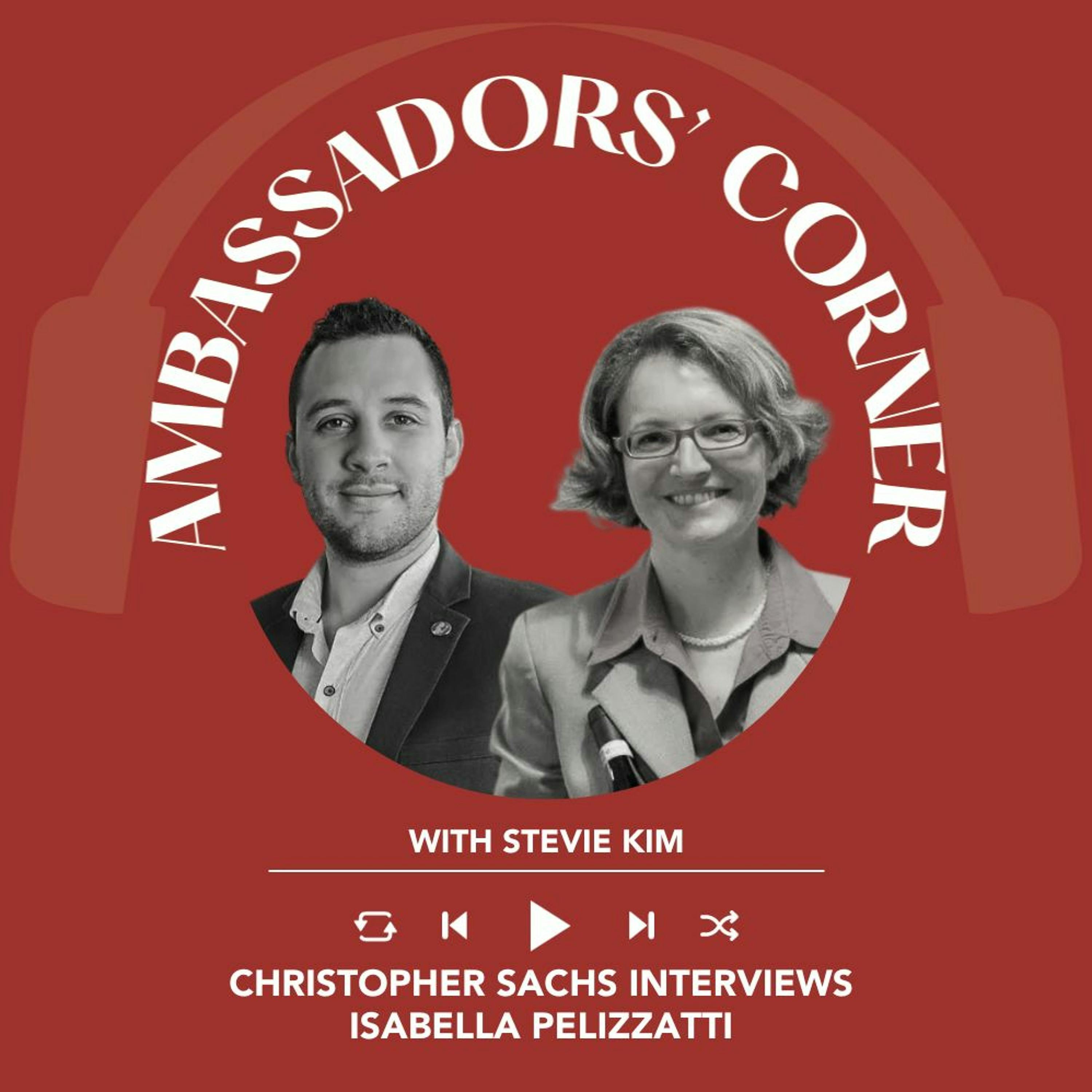
Ep. 1647 Christopher Sachs Interviews Isabella Pelizzatti | Clubhouse Ambassadors’ Corner
Clubhouse Ambassadors’ Corner
Episode Summary
Content Analysis Key Themes and Main Ideas 1. The unique history and generational legacy of Arpepe winery in Valtellina since 1860. 2. The distinct characteristics of the Valtellina wine region, including its geography, climate, and ""heroic viticulture."
About This Episode
During a conversation about the Arpepe winery, the speakers discuss their success in the Italian wine industry, their plans for their upcoming tour, and their approach to preserving their wines and their family. They emphasize the importance of long-characterized grapes and the use of organic and sustainable agriculture, as well as their approach to winemaking and preserving their pictures and wines. They also discuss the challenges of finding the right wines and the need for better weather conditions. They emphasize the importance of preserving their pictures and wines and being mindful of their grapes.
Transcript
Welcome to this special Italian wine podcast broadcast. This episode is a recording off clubhouse, the popular drop in audio chat. This clubhouse session was taken from the wine business club and Italian wine club. Listen in as wine lovers and experts alike engage in some great conversation on a range of topics in wine. If you enjoy listening, please consider donating through Italian podcast dot com. Any amount helps cover equipment, production, and publication costs. And remember to subscribe and rate our show wherever you tune in. Swirl, sniff, sniff, sip, sip, and once again, here we go. Swirl, sniff, sip, sniff while you think, don't forget these testing tips. Swirl. Sniff. Sniff. Sniff. And what's again? Here we go. Swirl, sniff, sip, sniff. Welcome everybody. My name is Stevie Kim, and this is Clubhouse. I know it's kind of old fashioned. I I suppose nobody's on Clubhouse anymore, but we are still recording on Clubhouse. And this is the series we call the Ambassador corner. And we replay this episode on Italian wine podcast. We've been doing this for, I suppose, about a couple of years now since the pandemic. We've been doing it for longer, perhaps. Like, why don't you jump on and tell us how long we've been doing this? Oh, I actually don't recall, but I think it's been like two to three years now. I know crazy. Right? For more than one hundred episodes, I think. So definitely more than two years then. Yes. Yes. Exactly. And thanks to Laika, who is our clubhouse manager. We've been going strong since the very, very beginning. And we continue to do this every single week, except the week of, Vinetley. And I was going to say wine to wine, but actually we double down during wine to wine. We have other interviews. Is that correct? What's the plan for wine to wine like a? Yeah. We're going to have a podcast marathon for wine to wine. So we're we're going to be very busy during wine to wine, but then, so we won't have a lot of clubhouse, but we we have a lot of buffer for club house. But then during wine to wine, we've invited, produce some producers to be part of the podcast marathon, that's going to be during wine to wine, and Cynthia and McKenna will be interviewing them to talk about their wineries and the the wine they want to feature. Okay. Excellent. For the our audience, our listeners out there, this is the way it works. We have one of our Italian wine ambassadors at large. They get to interview one of their favorite producers. From the Mod squad today, we have Christopher Saks. Chow Christopher. Charles, Dini. How are you? Okay. He is our newly anointed Italian wine Ambassador, and he will be running the room today. Christopher tell us a little bit about yourself. Well, I'm a wine distributor with Michael Scernic wines and spirits based in New York and New Jersey where I I sell all of the good wine spirits, sake and cider to anyone who will listen to me speak. And, on the side, I also run a company called Travel By Wine, which is a education and seller development and consulting firm that I I kinda do my myself to have some fun on the side. So, Christopher, why did you choose Arpepe as your favorite producer today. So I I chose Arpepe, because Isabelle and I connected back in person at opera wine twenty twenty two, I think, to Italy, we began importing and working with their wines just before the COVID nineteen pandemic began. And, it was, of course, a difficult stage to really launch a brand, but we, isabella was lucky enough to share Vautelina Roca Rosse, reserve at twenty, two thousand two, and I absolutely fell head over heels for the wine. So, I wanna I've always been infatuated with the family, the history, the region, the drinkability of all of the wines from young to old, and, just fascinated with their process. Yeah. I I hope they'll be making more wines because every time I go to a restaurant and I order their wine, it's always out. It's all always sold out. So it's kinda frustrating, but That's really good for them. Good on them that they're incredibly popular, although it's a very niche pocket, if you will. So what do you think we'll be doing in terms of learning objectives today? As you know, this is kinda we get a little bit geeky, and we expect you to come up with some learning objectives for our listeners for our students at large. Absolutely. And I think that's the benefit to this podcast to the clubhouse is those learning objectives. So first and foremost, wanna understand first, where is the Valhelina? Yeah. Good question. What is the climate like? What are we really? Where are we playing? Next, we're gonna discuss what is the history of the region? And what is the history of our pit pay? Because it is a a winery with so much, distinct history, of the family. Next, we're gonna discuss the grapes, the styles, the different types of wines coming from the area. And then we'll finish up with what sets our pay pay apart as a hero producer from the Valtellino. As an, like, you know, heroic Viticulture. Do you mean? Pretty much. Yeah. Alright. Well, sounds all great. I am going to now put on my mute button and leave it up to you, Christopher Sachs, and we'll come back towards the end of the show to see if there are any questions. Okay? Over to you. Wonderful. Wonderful. Thank you so much, Stevie. I wanna, again, start off by saying apologies for any lapse in connection, but I am traveling a bit right now. But, I'm very excited to introduce, Isabella Pelizati Parego from Art Pepe. Who, together with her two brothers, Gido, and Emmanuel, are the fifth generation of the Art Pepe winery. So Isabella was born February fourth in Sandrio, graduated with a degree in food science, so also a little bit close to myself. I'm a a culinary arts graduate. So definitely have a love of food and wine at the same time. And she also, to part in a a three month project, at the University College in Court, Ireland. From there, she earned her master's degree in Anology, from the university, Catholicism, the Sacrokor at Deep Piacenza. Pardon all of the Italian pronunciations, super, super white American guy here. So have fun with that. Prior to her involvement with Art Petpay, she worked as a new product and packaging development department, with the United distillers and Vintners, also known as Diageo. And then took hold of the estate off in December twenty two thousand one, where until today she's been working with her family, at the ARpepe, a state in Valdilina, of course, following mostly the export and marketing promotion and hospitality departments there. So welcome, Isabelle. Hello, Christopher. Hello, everybody. Welcome to be very nice to be with everyone here. And we are so so happy to have you. Thank you for being here as well. I'm sure it's a pretty busy time out in Buffalo right now. My pleasure. We are in the middle of the harvest, so you can imagine how busy. It's all around, but it's fantastic to be talking to you all. Lovely. Lovely. So thank you so much again for being here. We'll try to keep it nice and sweet while you are in the middle of harvest. So why don't we get started with our first question, Can you share with us the history of the Arpepe winery? Sure. So Arpepepe, together with my brothers, Emmanuel and Guido, as you said, we are the fifth generation of a family producing wine since eighteen sixty. So when our great great grandfather Giovanni did start. And, also, the history of our family is also linked to the history of Valhelina because Valentina has been part of Switzerland for three hundred years from fifteen twelve to Napoleon time. And thanks to the very precise Sweden history, our customer was already, buying from our great, great father in eighteen sixties. So we can really say that probably the beginning of our family was much earlier than eighteen sixties, but we recall to that date when we got a fixed, registration together with with that, company at that time. And we were celebrating the hundredth anniversary in the nineteen sixties together with the the great grandfather and grandfather. At that time, the winery was actually bigger because, during the the Swiss time, the expansion of Viticulture was actually much bigger and bigger than what it is today. Believe it or not up to the beginning of the previous century, we were, I think, still five thousand hectares. And, then due to the worst in Vaultilina, we lost a lot of population, also a lot of people not only passed, but, moved to new countries, not only, new words, like Americas, North, and South, and Australia, but also to the city. So the abandoning of the land has been huge. And, we drop down to the seventies with a three thousand actors in total in Valtilina. And believe it or not nowadays, we have eight hundred and fifty hectares left only. And, up to the seventies, when, father grandfather and our father were working together, we were still having fifty actors. So five zero, so we were one of the two biggest winery in Baltimore together with the Indian navy at that time. And, for a family reason, when our grandfather suddenly got killed in seventy three, they took the decision to divide the winery just to be able to divide the money, let's say. So they sold the the old brand that was Arturo Pelizati founded by the great grandfather that was, so Arturo, like our father, they sold the seller, but they didn't sell the vineyards. Vineyards were just divided like a big cake into the family. And most thanks to this that our father was able to start again a few years later with his own vineyards only. And thankfully, this point, Vineyard's not being sold was the key thing for us, and having sold a brand yet to create a new brand. So that's why Arpepe, Arturo Peritza tiperego in short to keep the initial to keep the name in a different way. So there was a rebirth under our paper in nineteen eighty four. And, and this is the a new beginning, let's say, for for all of us. Absolutely. So essentially the brand was sold, but the vineyards were able to be stitched Exactly. To kind of bring back the the historical region, the historical holdings that you've had together. Combining those different vineyards, combining that different space, can you explain to us the landscape kind of paint a picture for us? What is the landscape of, Valtelina? And where are your vineyard holdings specifically? Alcelina, it's really a very nice long East West valley on on the edge of a lake como. It's a nice valley. So we are very much sheltered into the Alps. Because we have, the north part, the reticulps, where the vineyards are on facing south, while we have the other part of the Alps, the aerobic Alps facing, north in this house that are at no vineyards at all. These are famous for cheese making at the top, but no other cultivation. And, because it's a long corridor, it takes benefit also from the presence of Lake Como which is bringing a lot of beautiful, mitigation, climate into the entire area. And we always have a beautiful, wind that is called BRAva, that is blowing from, west towards East every day, especially in the afternoon. And this special wind is also helping mitigating the area and keeping away the extra humidity that, that we don't need. So, because it's all south exposed, we do have the same hours of light, like, believe it or not, like, the south of Sicily, like Cantelaria, and all the Cecilian islands, And so it's a very, very unique climate, because Nebula has been, growing there since ever. And we can actually connect the origin of Nebula back back probably in a very remote time, probably back to Roban's time. And the major expansion, as we said, was probably in a medieval time when Volterina was part of Switzerland. And, there is also the serious probability that Nebula was born in Baltimore because this is what genetic is telling us according to this, such a big biodiversity that we have there. And, Naviolo that we locally call Kiavanasca from it that were Chovinasca, which means for adapt to be transformed into wine, name that has been given to Nebula since ever. Fantastic. And and How is Valtilina broken up into different subregions and and where are your parcels within those regions? So in Valtilina, we do have, one do you see as Roso to Valtilina, and two DOCG, the Valtelina superiorgio CG, with five historical area. We have the little ones, Marrocha, coming from West towards East, and we found Sacella, Grumello, inferno, and Valle. And as a family winery, we have vineyards only in three areas in Sacella, where we have the majority of our vineyards. We have nine extras and a half in Grumello area. We have four actors and a half, and we have one actor only in the inferno. We are with our winery in Sandrio, and Sandrio is the city in between Sacela and Grumello. Which is just at the base of the big Valenco valley, which is leading up into the Bernina Group, the biggest mountains, four thousand meter, that are always bringing down a lot of nice fresh air from, the north through this extra corridor. And we all know that if there's any region that's broken up into smaller sub parsons, there has to be differences in soil. Right? As Stevie mentioned, we are pretty geeky, in this group. So what are the different soil types that are played with? Yes. You have to think that, the way that the terrace, the vineyards have been made, they are all in terrace, very steep and stony. So they have been digging the rocks on the mountain side, making the dry stone and then they were filled up with a little soiled around. If if the soil was not enough, they were taking the soil back up on their shoulder. It's which is a soil of the river. So it's it is called Franco Sabioso It's a fragmented rocky sandy soil. It's a low pH soil. There's nearly no clay anyway. It's kind of poor and draining a lot, but apparently Nebbiolo has been growing so well in this environment and really has been, getting more and more, let's say, great approach into this, this area. And so Nebula has been grown there beautifully since ever. So so we have a poor rocky soil that is well draining that needs to be sometimes carried back up the hill and replaced after it erodes down. That must mean a lot of of hands on management, in the vineyards. Is there anything additional that is done? How are the vineyards manage themselves? Well, of course, all the vineyards are completely manually. So there's no possibility of mechanization at all. So from when you put a plan after the harvest, everything is manual. And we have roughly one thousand and five hundred hours per hectare per year, which means one person per actor per year to do all the work. And if you consider that, you know, on a hillside, when you are not lucky, it's about five hundred hours per actor. So we are three times more the nail side because, we cannot do anything else. So our machinery, our our legs, and the way we go around, but it's fantastic because we do not also compact the soil too much because we only work walking there, it's very delicate our approach, and also the guard the grass you need to do like a garden with their rotative ones because you cannot enter with any machinery. And this makes us very kind of a soft approach to all our vineyards and, without, at at all any mechanization. And we'll definitely come back to that soft delicate approach when we discuss the wines themselves in a little bit. But, What is the wineries view towards sustainability and organics knowing that everything is done by hand? Everything is sustainable or everything is done very delicately and by hand. What else, goes into the the the sustainability of the winery and the region as a whole? We've been doing a lot of efforts in the past, years in that direction. And even though we cannot be defined organic, but because we are doing the so called integrated agriculture where we try to reduce as much as possible, all the the chemicals every year according to these protocols that are regional, and then we have every single province as a single and different approach, but it's going to be under control, constant, and constant, we've been doing as much as possible to, use the resource that we have. And for example, we've been doing a lot of work with Joe Therme. You have to think that our seller is all digging to the mountain, but it's like a steel house built on a lake because just three meters down, we do have a lot of water which has a constant temperature around twelve thirteen degrees, and we are using this resource, either to cool down and warm up each single tank, either wood steel or concrete, and also the environment in the cellar. This is so important because we have a fixed temperature of sixteen degrees into our cellar, and we try to be as much careful as a physical approach, so to try to maintain our wines during the aging in the perfect situation, and also we are very much careful about, potential, oxidation during the aging. And we've been creating also on-site in, creation of nitrogen directly. And so all our wines are in the right temperature and without potential oxidation either during VINification, but also during the long gaging. So we try to work as much as possible. We in this way. And also, we've take advantage of our beautiful sunshine because, we are producing our own energy through, photovoltaic panel solar panel to try to be independent energetically. And, so this is very important for us to try to, to work in the best way. And I love how you're talking so much about geothermal and elect photovoltaic. So, solar panels as opposed to chemical changes that are happening in the vineyards or not happening in the vineyards, you're using the actual earth itself and then the the essences that we have So the last question about the vineyards, before we get into the actual winemaking, but you had mentioned that these vineyards are terrorists. They're worked by hand. What are we talking about in terms of, of aspect or in terms of, elevation here? We need to. So we are definitely in a cool climate area, and we we go from the bottom of the valley where we are at three hundred meters and our vineyards in the hop upper part are at six hundred meter there are some parts also in Valle, where we go beyond seven hundred meter, but as far as we are involved into Sacella Grumello inferno, the highest in the upper part of Sacella, six hundred meter. And, And of course, inside each single zone, we do have so many, different, aspects because either in terms of elevation and exposure, you also have to think that it's a longest west valley with so many perpendicular valley bringing in and out a lot of fresh or warm hair from north and south. So you really define inside each single area. So many, different and peculiar, single vineyard from which you can get significant different wines. First of all, of course, of grapes. Well, and that brings up a great point. And our, our great pivot for us is you have these great grapes that you've you've labored over by hand. I keep stressing that by hand part because of all the elevation and the the terracing here. But you have these great grapes, and now you bring them to the winery post harvest. What do you do with them? What are your winemaking techniques and your winemaking philosophy? So the big objective for us is to try not to damage the great quality that we do our best to produce in our vineyards by bringing them into the seller. So this is the first key point that our dead and granddad were saying to us. So we do our best in full respect of our raw materials that are on the grapes to try to preserve the quality. So all our grapes are broke off. As we said, by hand, we also pick, through very small basket that you can also see on our website. And, in those basket, we try to let the the grapes traveling without any single transfer. So the the grapes are only transferred into the distem machinery when they enter the cellar, but they have there are never any juries around because they are carefully taken and, positioned into the basket. And, all our grapes are fully disturbed. And, it's also very important that, we are now using a more, clever new machinery that distem our grapes like if you were doing manually. So we like to leave the berries as much intact as possible. We try not to press at all, but only the stem, like, like, pearl out of the the stem. And, we go for fermentation in tonic, teeny, five thousand liter, all bed by steam and not by fire because we never want any toasty notes in our wines. And by doing this, we also cool down, our berries, slightly in order to, avoid a big, let's say, start of the fermentation. We want the fermentation to start as more slowly as possible. By doing this, we also, keep under nitrogen and, CO2 in order to avoid oxidation from the very early stage. And this is very important because we want our fermentation to start spontaneously because we work only with the spontaneous yeast We just use, of course, a little bit sulfur to, naturally select from, the, let's say, the unpleasant yeast, and then we allow the fermentation to start very slowly. And, by doing this, we've been experimenting more and more or so longer and longer maceration. But again, there's no fixed recipe by doing this. We need to be very careful and understanding on each vintage, whether we have, stronger or softer skin. And so everything is done according to the vintage. So this is very, very important. And, everything is done by tasting and tasting and tasting constantly by the time we are doing our pinification. So the same philosophy as out in the vineyard, there's no one single dogmatic approach to the process. It's it's tasted. It's handcrafted. It's it's specifically, manipulated as needed. And I'm actually looking through some of my notes from when you visited the Skurnic offices in New York back in May. Some of your macerations go as long as a hundred is. Hundred and thirty days. We've been, for the longest time, which is, which seems so long. But again, they it's so important for us not to detect too much a strong strength in maceration. So maceration, it's important for us because we believe nebbiolo has a lot of, positive things to release from the skins. It's so complex, but we never want to reach too much. So it's not that we want to make absolutely maceration, long maceration. We need to understand as much as it it is needed on that specific vintage. So if at some point we notice that, we start getting some off notes of extra maceration, that means that we've been going further too much. So it's important not to go beyond that point, but stop before until you see improvement. And if you don't see any more improvement, then it's time to stop. So this is very important for us. And this is also done in terms of long gauging in the barrels. Because, for example, they all spend a full year into our tonic technique that are made, either in Slavonian oak, in French oak, but also the majority of the wood in the cellar. It's the mix of chestnut wood with a touch of oak and a touch of acacia into the same barrel. And this used to be historically and traditionally up to the seventies, and we do like to keep this very special mix of wood as the majority of our powers because, especially if a vintage we decide it's gonna be reserva. So it's gonna be with longer aging. We will then dedicate our eldest barn that are now fifty five years old, and we will put all our, reservous into those elders parallel, and that they are so specific in each single cruise receiver as his own single home. So we try to put always in each single one, to preserve the approach that each single barrel as on our reservice. And, in this place, we might be leaving our reservice additional two, three years or more depending again on each single vintage, but all this processing, it's done as we said under nitrogen. So we like to keep our wines fully covered to avoid any losses of, flavor and, structured by doing our long gaging process. And also, as we said, at the constant temperature that is done through geothermal. So this is very important, for us because, again, there's no recipe also into the long gauging process, one vintage might need a little bit more, one vintage less, but it's important that we try to achieve the best expression out of every single vintage. So it's that delicate balance of, long aging, long mass of traditional oak and a little bit of chestnut, a little bit of acacia, that really brings things into balance and brings a sense of history and style to your winery. We really think that all this care, by preserving the the product that you get in each single vineyard and, we are very proud of also these, very historical, place where we own our vineyards. And so we just try to be as much careful in all the processing to preserve the best character that we get out of every single one. And now if I may ask a a more, divisive question here, what sets Artepe and the Veltelina as a whole apart from its brothers, if you would consider them bravo in Piedmont? Well, what we love is that, in Valhelina, it's a much more cool climate area. It's a mountain Nebula from the Alps as we like to call it. So you can get, and if you close your eyes while you're tasting the wine, you can see the mountain that is behind. And I think this is a plus for our wines because, even though we've been having few warmer vintages, we are still around fourteen degrees alcohol. So we are further cooler than, the language, I think, and these help us getting wines that are much more, easy drinking, balanced with a lot of minerality that I think makes Valtelina, like, in the right place, in the right time today. That's our feelings. Oh, and I I fully agree going back to Stevie's question of why, am I infatuated with your wines is because while they have that elevated alcohol, they are at that that fourteen percent. Their cooler climate, so longer hang time, more ripeness, more drinkability in its youth, as well as, of course, in its in its older age, which I wanna dive into now as well. You have some quite deep sellers at our pay pay. Is there a particular vintage that you're in love with? Well, we, of course, love all our babies because, these are all products out of our family, but, it's it's almost like asking you for your favorite child. But That's the feeling, but, I can't tell because, this is something we cannot repeat anymore, but I was proud enough and lucky to be there. When our father was opening, his last few bottles to celebrate the sixties birthday in two thousand and two. He was opening his last few bottles of nineteen forty two. And even though forty two was not an astonishing vintage, I can tell you that I was so impressed of how much freshness and minerality, some gooseberry knows that I was recalling in this wine, even though they worked coming from the past, and they will probably not be able to be open again because my father decided to drink them all with their friends, in his party, sixties' party. So no complaint, but it was incredibly fresh. And despite the fact that nineteen forty two was not an incredible vintage, it was kind of a normal vintage, and only because it was our father, bird, was kept. And so I think it was an incredible, I taught for all of us because, by tasting this wine, you understood the potential of a valley of a region And, and I I love the way those wines are aging beautifully for serving the mountain character and the the freshness. So they always seems younger in comparison to other regions that's at least as far as my understanding and tasting so far. Oh, absolutely. And, so we we've learned a little bit about the vineyards. We've learned about your process. We've learned a little bit about the winemaking. Let's learn a little bit more about you, if we will. If you had the choice and the chance to make wine, anywhere else in the world. Where would you go? Well, since we love challenges, I think I would go to the mosel for my best, white grape that is riesling. So it could be another challenge for me. And, still keep, my mountain, feeling a little bit more north. So I think, could be my first place to go. Absolutely. Maybe not so much terrorist, but incredibly steep slopes. So you you would feel a little bit at home, I guess, in a similar style. I would definitely think so. And, and so Yes. I think I always like when you get a a mountain feeling into the wines and for sure this is something we we can get in the mosel wines, for sure. And in in the same vein of got not necessarily going to the Mosul, but do you have any inspirations, any winemakers or idols that, inspired you in the wine world? Well, considering people that do so much research, and, they never stop learning and they want precision first. I think Roberto would be our inspiration person. He's a friend also. And, we've been taking a lot of, a lot of thoughts. And, we are always happy to discuss and, get advices and, and understanding because I think, he has been doing something amazing in his life and, and keeps doing and never stop. Wonderful. At the very beginning of our of our discussion, you had mentioned that the region is is known for its cheese. Are there any specific food pairings or regional specialties that, would pair exceptionally well with your wines? Well, for sure, cheeses will be a perfect pairing and in Valhelina. We do have a a DOP cheese that is so fantastic, that is made only during the summertime, that is called bito. Beto cheese that is made on the arabic alps, so on the part where we do not have vineyards, but up in, above one thousand three hundred meters, up to three thousand. We do have pastures. And during the summertime, they bring cows, the, our typical, brunalpina, the the type of, of cows that we do have, in the valley, that we brought up to the the pastors. And these teases made only when the cows are on pastures and they do not have anything to to eat apart from the fresh grass. And so they follow the pasture from the beginning up to the the top of the season when they reach the top elevation and then they come down and they start eating the grass that has been growing in the meantime. So it's a fantastic cheese that can be aged up to ten years, sometimes even more, and can be, matched with our food, of course, exceptionally. But, what I love with our Valentilina wines in general is that they are so flexible. So you can have a fantastic pairing from the fresh trout from the alpine lake, even row, if you want. Up to the game meat on top of the cheese, of course. And of course, we do have a lot of buckwheat in the region. Backwheat is our main ingredients from which we make our famous, pasta called pizzokuri, which is a a Bakuit tagliatelle made with a cup with potatoes and cabbage and then you use the other DOP cheese, which is the Valtilita Casera cheese that we are using in our main preparation And then we also use the fried butter on top with some garlic to melt up and it's so fantastic and it's so wintery, cozy dish. But we also do a lot with the polenta, back with polenta. And, again, with cheese. And, so it's very good also for vegetarian. And, we had, in our cuisine, less meat and more, cheese, for sure. Because it was a much more poor kind of, cuisine up in the old days. And then we were also using a lot, the nuts, so either walnut and, chestnut, of course. And so a lot of alpine preparations using all these ingredients, which makes, the cuisine so interesting, so different, of course, not to forget about the mushrooms, mushrooms from the alps, our beautiful porcini mushrooms, potatoes that are so incredible either with rice, with tagliatelle, and whatever. So we are very much, proud of all the mountain cuisine that we can, share with all the tourist visiting Baltimore. Wonderful. And that brings up two different points that you just said there about the visiting tourists, because I actually wanna turn our attention to the world market as, at large. First and foremost, do you see a lot of tourists that are coming to the area and coming to visit, our Petpay specifically? And, we'll we'll touch on the the rest of the world market in a moment. I have to see that, there is more and more people coming to Valtelina to discover, thanks to all the things that we've been doing in the past few years. Valtelina, I've always been more known for, skiing resorts, so as a sportive, but it's been more and more, discover as a food and wine region. And I think in these directions, still have, a lot of potential growth because, we could certainly work three hundred and sixty five days a year in this direction and bringing more and more people to discover the beauty of the valley, not only, during summertime or wintertime, but also in spring and fall because it's always so beautiful and there are always so much to discover. And, we see the the tourists growing slowly, slowly, but, it is significantly growing. And we see with a lot of people visiting us. We just, have a problem that it's because we are a small family winery. We cannot welcome as many people as they would like to visit us because, we try also to put so much care into the the hospitality and to the welcome, because, we try to do our visit ourselves and not to have, let's say someone else a hostess or anything anyone doing this for us. So because we do ourself, there's always kind of a limited time to dedicate. And, if we are traveling around the world or to wine first, etcetera, it's hard to welcome at the same time. Well, when that goes to Stevie, that that's part of the reason why there's no wine available in some of our restaurants whenever she's going out because, there's so many tourists who are getting turned on to the region and buying it themselves. So we'll have to figure out a balance there. But now isabella, oops, sorry. Go ahead. No. I I just mean, unfortunately, we have only fifteen actors. So even though we would love to produce more, we cannot increase, more. And then, of course, we have to respect that every season is different. So we also face vintages with no bottles, so which has been, struggling us later on in the market, of course, but, this is part of the game, part of the nature. So we can open in a generous vintage, but we also need to accept and understand that they are not all the same. And, and so the idea is to be placing our wines in the best restaurants all over the world. So that's the objective. So we focus on debt, But, of course, to since we have always new market on board that they want to discover, they knock our door, it's really hard to to be able to to give more to everyone. So they the challenge in the future will be to to give the right amount of wine to each single one and not to leave anyone without. Yeah. It's a fun game of being in the right place at the right time to find the wines that you that you so desire. Exactly. We are doing a work best. Absolutely. Absolutely. And it shows. So we're getting towards the end, but I wanna wrap up a little bit here by, talking about, changing consumer tastes and, and, the world market. So specifically in the US, it's very common that everyone loves big, rich, red wines, napa valley, it's structured. Now are you noticing a change in the trends and in the people that are, attracted to the RP Pay wines? Are you noticing a change in the way you're making wines to adapt to that? Well, I have to say that, we do not have to make a change because as we said, we just try to respect our grapes and produce the best out of every single vintage, but what we noticed across my more than twenty years into the winery, how much the market itself has been changing because, when I began, there was so much attention into big international wine, very full of wood, and very full of texture, and very rich, and, sometimes hard to drink. And what I see here is the beauty that the world in a way has been changing the taste towards more terroir wines, more easy to drink wine, more, mineral, really easy to approach and even easy to match with food. So I think that we've always been in that position, but of course when people were seeking for different wines, we were not receiving the same attention We've never been moving that much from that point and believing that a wine is like a food. So it's something that you need to enjoy until the end of the bottle is possible and, really to to be pairing, with whatever food you like. And I really think also in this moment, we are in the right place in the right time because, Valhelina, as this character, And, and I think, we must be all very proud because, it's really a character of our Nebula, our cool climate Nebula as this kind of character. So it's very important for us also to use. So for us, the wood is important for micro oxygenation across the long aging, but we never want the wood to give additional taste to the wine. So the respect for, again, the type of wine, the everything is done in that direction for us. And we just want to achieve a wine that is preserving his life across time And, we are also very happy that now we can work with less and less sulfur, for example, because we are using Nomacork as our closure that has been bringing a lot of, new, attention for us, because it goes in the right direction. Reducing sulfur was always an objective, but without a secure closure, like, like this, we are only working with Nomacore Creserve, which is the top artagering that, made with sugarcane biopolymers. So we know exactly, and it's also recyclable. So we know exactly the way we can deliver the wine to the customer. Without, really deviation that could be coming from a natural cork. And this is for us. It's another very important point because, we want to deliver the wine in the best possible condition until to the consumer. And I mean, using that, the those normal quirks even go and you mentioned they're they're recyclable. It goes further to talk about sustainability as well. But, the the last couple of questions that I have for you here, we had talked at the very beginning of the decreasing amount of vineyard space, the vineyard land holdings that are in Valhelina, to around the five hundred, hectair space now. What can we do or what is being done? Is our our the vineyards being a grown in any way, shape, or form? Are there is there more land being acquired or being changed to to grow the pot the production? So the objective is to try not to lose any more land because the property is still very much fragmented. Nowadays, we have, still two thousand little vine growers out of these eight fifty hectares. So it's very important that exactly what's going on around, yourself in order to preserve any extra boundary because we've been far losing too much. And the forest has been taking the majority. Some part has been transforming to apple tree. The positive thing in this is that now in the past twenty years, we jump from about twenty producer to more than fifty producers. Some are very, very small, but this is so important because every one of them is an actor important to preserve all the land that we have left, and they can, avoid any possible abandoning around and closer to their own vineyards. And also all this small Viticulture can act so well to preserve and to preserve the identity of each single plot. This is so special and also we are very proud to be the first winery entry into Phoebe, the federation of the Italian Independent winery, which is so important to preserve, also our style, our terroir, and my brother Emmanuel, is also the delegate of the the team of the Valtarina, group from Phoebe. So, like, the civilian France. So this is very important to be able to to preserve all our characters and to avoid any extra abandoning. At the same time, we are doing our best to try to reconquer very few pieces around our vineyards that have been only recently abandoned even though it's another challenge because it's not always easy. Whatever has been left and lost can be lost forever unless we try to act probably, and, on this way, we need to work also politically to try to, let's say, resist and to keep the possibility of, planting again those small little parts. So this is very, very important skin is it again. Yeah. As with most most things in our world, global warming, vineyard holdings, we have to be proactive to try to, fix the problems before they become irreversible. But with that, Isabelle, I wanna thank you again. That is, all of the questions that I have for you. I'm gonna, offer you the floor for a moment. If there's anything that we didn't touch on that you want to, speak about and then I'll open the floor, back to Stevie and to any questions if there's any out there. If we have more questions, it will be very welcome, of course. Okay. That's my special effect. Thank you so much, you guys. What are wonderful discussion we've had? We've learned so much. I do have well, I more than a question. There was Andrey Baklin from Malatea. He said, last opera wine, Roca Rosier, in nineteen ninety six, was stunning. So that's from Andrey, much appreciated. I do have a question, isabella. Would you mind just giving us an overview of the number of labels you have and the production, like the volume, the number of bottles you produce? Sure, Stevie. So we when we are lucky, we produce kind of a hundred thousand bottle out of our vineyards in total, right? In total. Which is a lot, but not a lot to cover the entire world for sure. And, we do have eleven labels, but, we are not absolutely making all of them every year. For example, Roso De Baltellina was born in vintage two thousand and three, the hottest vintage ever, where we made only that wine out of all our business. And after that, everyone was expecting that wine to be available every year. So we decided to dedicate a portion of our grapes near every every year, dedicating the grapes that could peak below four hundred meter to the rosso. But then let's say we dedicate the best exposure from four hundred to six hundred meter, either to the Valentina superiority if the vintage is a bit more prompt or to the reserve, if the vintage needs more time. So there is also an interesting chart into our website on the the part where we talk about the wines. And you can see which wines have been produced in each vintage. This is very much giving you an idea of how our production has been divided across the years. For example, in between ten and twenty, we made only three reserve of integers. We made only thirteen, sixteen, and eighteen. That is also why The Receva have been lacking a little bit around in the past, years because sometimes we've been remaining out of stock with one waiting for the next vintage to be released. So we also try to be a bit strict according to the best timing because we do not want just to release if something gets sold out, but we wait until the wine is ready. And this is very important for us. So you're still harvesting, you said, right? When will you be finished with your harvest this year? Well, It's really depends on the weather because, there is, some bad weather that it's arriving. We hope to be finished at the beginning of next week. Okay. So how does it how does it look for you now? You're almost towards the end of the harvest. What is this vintage looking like for you in terms of both in quantity and quality? So it has been a very challenging vintage because also we've been affected by hailstorms, which is, the risk number one every year. What about perrineau Spoda? What about downy mildew? We've actually been having mildew much less. So we were managing to cover that point, but Ailstorm came and did the biggest problems. I have to say that also it would have been absolutely a reserve of vintage without the Ailstorm at the very beginning. So we were very confident, and we were also having quite a bit of quantity together with it quality before a storm. Surprisingly, we are noticing that, some quantity has been saved despite, PA storm. So let's say that every day that we are tasting also the virus that are fermenting, we are getting kind of a better and better result. We are getting beyond the the expectation that they were not very high after the A storm. So we still don't know exactly where we will be, but, for sure, not reserve, that's, that's hundred percent, but, we are getting better and better feeling every day. So we will see. We will do for sure our best. We still pray. Okay. Well, good luck to you, Sabella, to you and your family. And I think we're I'm going to close-up the room. For now, I'm going to bring back Leica. Leica, who has COVID at home. Like, are you okay? How are you feeling today? All good. All good recovering little by little, but thanks a lot for the care and everything. Okay. You're such a good sport. So tell us what's up next? Is it next week or Thursday? Yes. It's next week, October twenty six at five thirty PM. So we've got Anna Obovskaya. She will be interviewing Alezandra Tessani from Cantina de Monte. That's it. Okay. So I should be back. I'm I'm going state sites tomorrow. So anybody who's will be in New York for wine experience, I'll be attending that Thursday, Friday, and Saturday. So ping me if you are in the hood. And that's it for now. I'm going to sign off. My name's Stevie Kim. I'm here with Laika. And our guest ambassador Escona moderated by Christopher Sachs great job. And of course, Isabelle from our that. SIP and square. Once again, here we go. Listen to the Italian wine podcast, wherever you get your podcast. We're on SoundCloud, Apple Podcasts, Spotify, HimalIFM, and more. Don't forget to subscribe and rate the show. If you enjoy listening, please consider donating through Italian wine podcast dot com. Any amount helps cover equipment, product and publication costs. Until next time.
Episode Details
Related Episodes

Ep. 2789 ColleMassari: a long-term vision rooted in Montecucco with Giuseppe Di Gioia | On The Road With Stevie Kim
Episode 2789

Ep. 2788 Ep. 14: Austria and Hungary | Study Smart for your WSET Level 3
Episode 2788

Ep. 2785 From Volunteer to Speaker at TEXSOM with Samantha Cole Johnson | TEXSOM 2026
Episode 2785
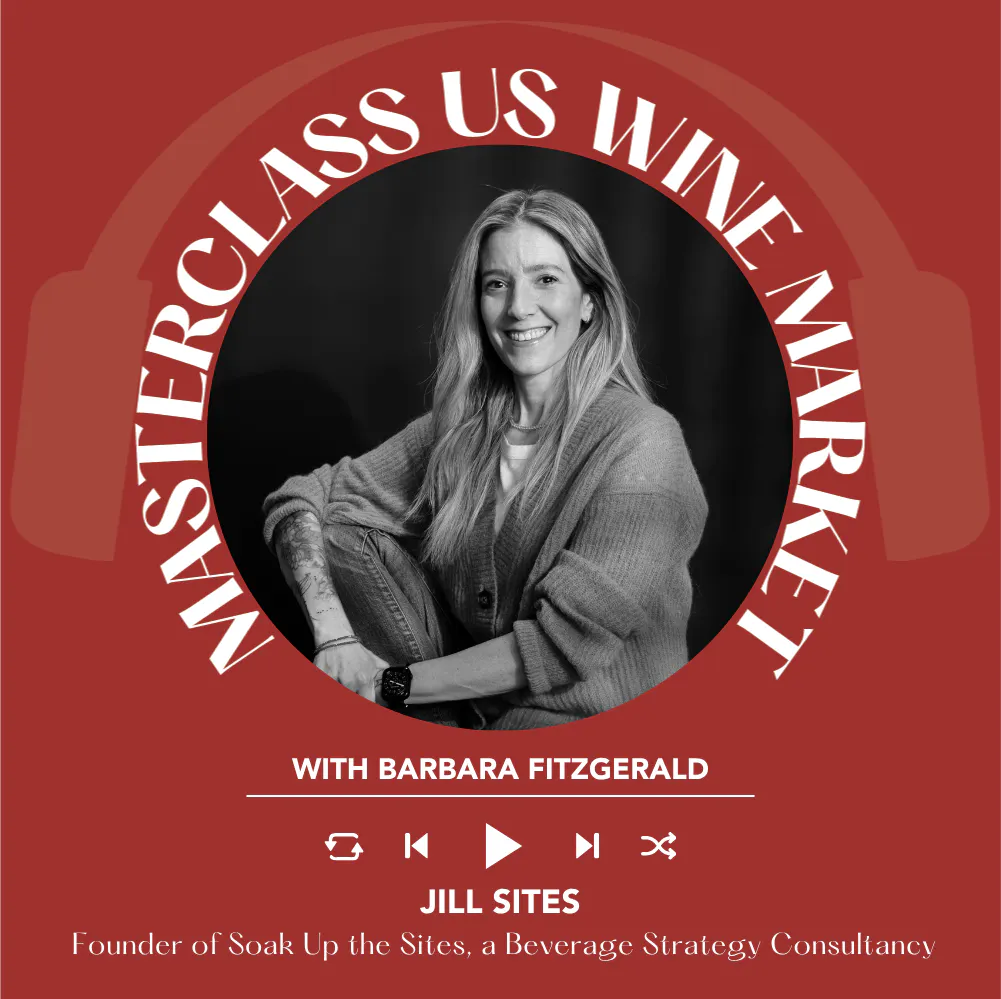
Ep. 2766 Inside the U.S. Non-Alcoholic Wine Market: What Wineries Need to Know with Jill Sites | Masterclass US Wine Market
Episode 2766
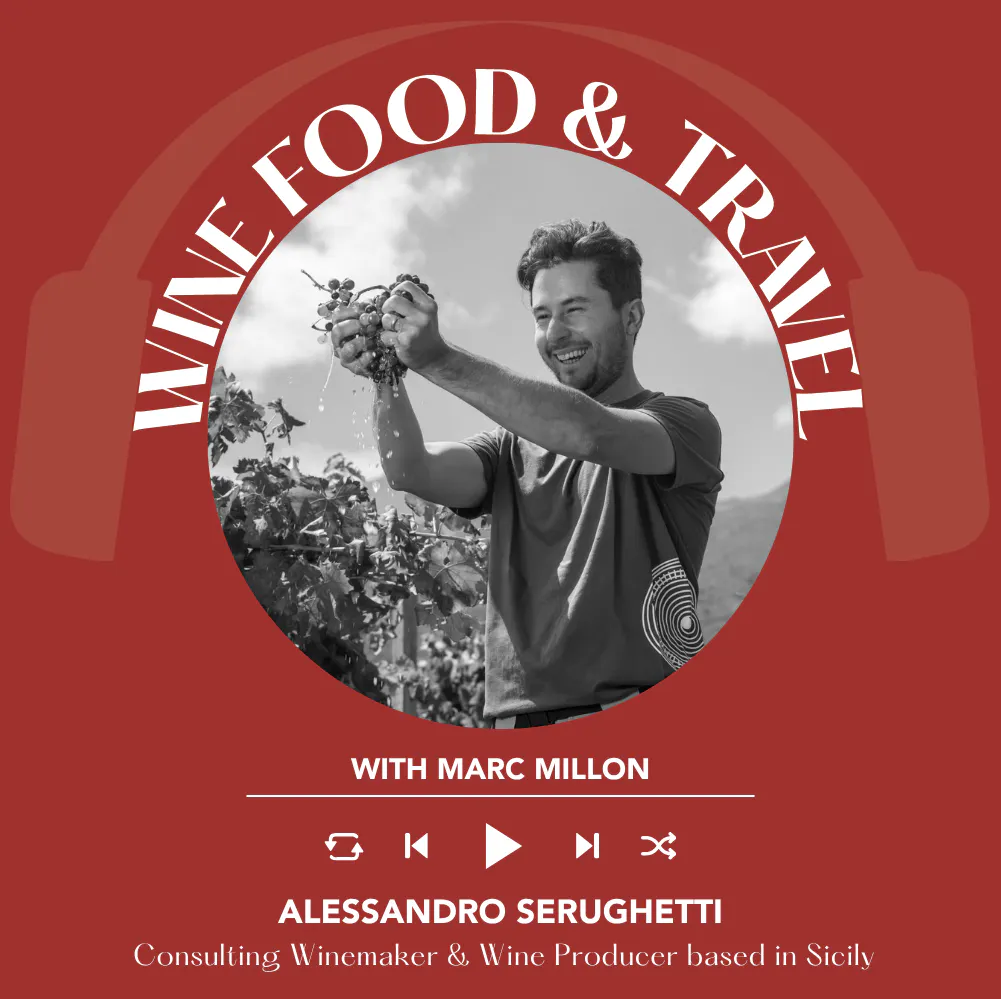
Ep. 2761 Winemaking and Consulting Across Sicily with Alessandro Serughetti | Wine, Food & Travel with Marc Millon
Episode 2761

Ep. 2759 Part 2 – The VIA Educational Program & Italian Wine | Heart-to-Heart Conversation with Sarah Looper
Episode 2759