
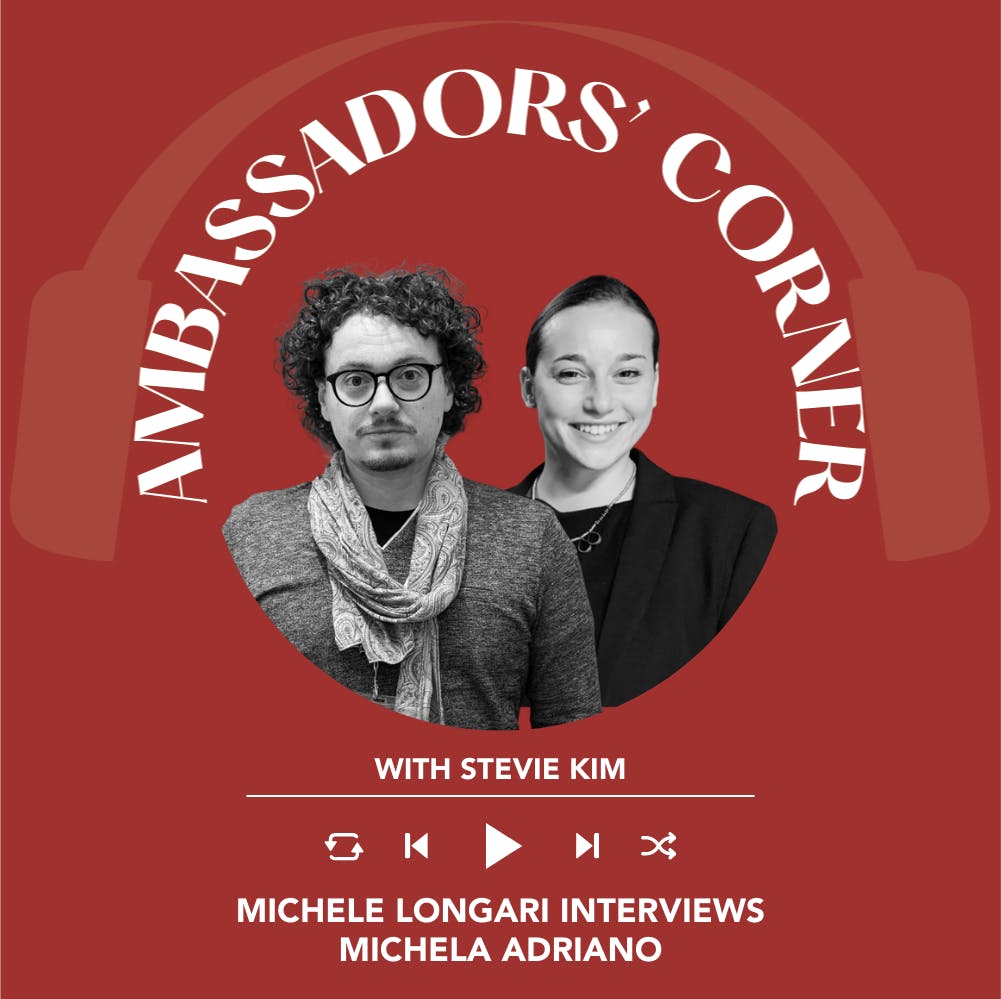
Ep. 1768 Michele Longari Interviews Michela Adriano | Clubhouse Ambassadors’ Corner
Clubhouse Ambassadors’ Corner
Episode Summary
Content Analysis Key Themes and Main Ideas 1. The unique geographical and historical factors contributing to the distinctiveness of the Langa wine region. 2. An in-depth comparison of Barolo and Barbaresco, two prominent Nebbiolo wines, highlighting their differences in aging, microclimate, and style. 3. The evolution and challenges faced by traditional Piedmontese grape varieties such as Barbera, Dolcetto, and Freisa. 4. Adriano Marco & Vittorio winery's commitment to traditional winemaking practices that emphasize terroir expression. 5. Modern innovations and challenges in the wine industry, including the use of alternative closures like screw caps and adapting to climate change. 6. The increasing role of women in the Italian wine industry and the impact of social responsibility projects within the wine community. 7. The strategic importance of wine tourism and direct consumer engagement as a primary marketing and educational tool. Summary In this episode of the Italian Wine Podcast, wine ambassador Mikaela Adriano interviews Mikaela Zangati of Adriano Marco & Vittorio winery, based in Piedmont's Langa region. Zangati details the unique aspects of Langa, from its ancient seabed soils and protective microclimate to the foundational work of past generations. The discussion delves into the characteristics of local grapes, noting the struggles of Barbera and Dolcetto with disease and suggesting Freisa as a promising, resilient alternative. A key segment clarifies the distinctions between Barolo and Barbaresco, explaining how differences in terrain, microclimate, and aging protocols result in distinct expressions of Nebbiolo, with Barbaresco often being an approachable entry point. Zangati shares her winery's traditional approach to winemaking, emphasizing minimal intervention to allow the terroir to shine, particularly across their various Barbaresco crus. The conversation also explores the adoption of screw caps for some wines, acknowledging market perceptions versus quality, and Mikaela's involvement in ""La Sabbatese,"" a women-in-wine initiative, and ""Otopari,"" a social project employing vulnerable individuals. The interview concludes with Zangati advocating for wine tourism as the most impactful way to connect consumers with the wine's story and passion, a sentiment echoed by many interviewed on the podcast. Takeaways - The Langa region's distinct climate (influenced by seaside and mountains) and ancient marine soils are crucial to its wines' character. - Barolo and Barbaresco, both Nebbiolo-based, differ in microclimate and aging requirements, leading to variations in structure and approachability. Barbaresco is often seen as a more accessible entry point to Nebbiolo. - Traditional Piedmontese grapes like Barbera and Dolcetto face challenges (e.g., disease), while Freisa shows promise for future resilience against climate shifts. - Adriano Marco & Vittorio's winemaking philosophy prioritizes allowing the vineyard's characteristics to express themselves, with minimal intervention in the cellar. - The winery actively experiments with screw caps, particularly for white and younger red wines, favoring their consistency over natural cork, despite traditional market resistance. - Mikaela Zangati is involved in initiatives promoting women in wine and social projects that provide employment for vulnerable individuals, showcasing the wine industry's broader community impact. - Wine tourism and direct engagement with consumers at the winery are considered the most effective channels for fostering deep appreciation and understanding of wine. - The current generation of young winemakers in Piedmont demonstrates strong collaboration, sharing knowledge and resources through activities like blind tastings and support groups. Notable Quotes - ""I think language is very lucky because it's even if it doesn't seem, but it's very close to the seaside... and same distance to the mountains."
About This Episode
The Italian wine podcast is a clubhouse show where guests can donate money to cover equipment and publications costs. Speakers discuss their backgrounds and the success of the show, while also discussing the importance of learning objectives for the audience. They talk about the language region in Italy, where wines are popular due to the long distance between the language and seaside, and the challenges faced by wineries and the language region's language and language diversity. They also discuss the importance of selecting the right variety for one's wine and the importance of investing in marketing channels. They mention a social project called Barbattale and the importance of understanding the naturality of wine. They also discuss the importance of investing in marketing channels and the need for winemakers and wine producers to make their products understand and be appealing to people.
Transcript
The Italian wine podcast is the community driven platform for Italian winegeeks around the world. Support the show by donating at italian wine podcast dot com. Donate five or more Euros, and we'll send you a copy of our latest book, my Italian Great Geek journal. Absolutely free. To get your free copy of my Italian GreatGeek journal, click support us at italian wine podcast dot com, or wherever you get your pots. Welcome to this special Italian wine podcast broadcast. This episode is a recording off clubhouse, the popular drop in audio chat. This clubhouse session was taken from the wine business club and Italian wine club. Listen in as wine lovers and experts alike engage in some great conversation on a range of topics in wine. If you enjoy listening, please consider donating through Italian wine podcast dot com. Any amount helps cover equipment, production, and publication costs. And remember to subscribe and rate our show wherever you tune in. This is our very first episode of wine Ambassador Corner. We call it the Ambassador Corner, kind of the fire chat form. And today, we have our special guest, which is Mikaela Adriano, Chaela. Chastibi, it's a pleasure to be here. And the host with the most, This is Steve. How are you? Okay. Where are you now, Mikaela? Exeter, Devon, UK. Oh, yes. The cosmopolitan of the UK with Mark Millen and Mikaela's Zangati. What more do you want out of life? Right? By the way, I've just organized and I'll be all attesting with Mark next, next month. So I'm looking forward to it because, you know, Mark has a salary with a lot of interesting stuff. I've been invited. So, you know, I feel, like, the honor to go there. Yeah. Make sure he opens up all, all of that good stuff, not just, you know, be greedy. Tell me. Yeah. Okay. Yeah. So, this is double Mikaela Mikaela, you know, you're going to get people confused. I'm not even drunk. I've I'm kind of detoxing after three weeks of drinking and eating, but so Mikaela, tell us a little bit about yourself to our audience who may not know you just as of yet. By the way, hello to Jodi. I see Cynthia at home and fermented boss, I think. That is Hugh priest. Of course, Angela Ciculo, Kevin luch Hi, everyone, and happy New Year. So, Mikaela, give us kind of the skinny of what you're up to and what you're doing. Yeah. So originally, I am from, Parma, I'm in La Romania, but, I moved to the UK almost eleven years ago now, to do a master program in, one business management. And then, nine years ago, I started to work for a company called, HeyWise, and, within AWise, I am taking care of all our direct imports from, Spain, France, and, obviously, Italy. In July twenty twenty two, I became an Italian wine ambassador for, Vinital International. Since then, I've been doing, a lot of these, clubhouse, corners because I think they are, an amazing opportunity to have, an informal chat with, winemakers and producers. Very informally to ask, the question that I think probably people would like to ask, during maybe fairs, exhibition or wine tastings, but maybe there is not enough time or, they don't have the courage to ask. So I think this is the perfect, corner, the perfect moment to do that. Yeah. You know, it's crazy. When I first started way back, I was like, who the hell is going to listen to a podcast? Like a geeky podcast for you know, for an hour, sixteen minutes. But believe it or not, this is one of our most popular series. Thanks to, of course, all of our Italian wine ambassadors at large. And I would just like to thank everyone for contributing to the success of this series. I have also, LICA sitting right next to me. Lika, do you wanna say hi? Hi. Hi, everyone. I'm Mikela. I'm Mikela. Hello. Hi, Lika. Tao. Yeah. Of course, Lika is our backstage manager who has become been fully acclimated as the Italian wine podcast producer because Joey quit on May finally took some time, but finally she was like, that said, Stevie. I'm ready to leave. So now Leica is completely in charge. So what are we up to? Like, Okay. Actually, this is the one hundred and twenty episodes so far. So it's been a lot. And so, Mikaela is with Mikaela, and she is from Adriano Marco Evittorio winery. Excellent. Okay. So this is where I get to ask you, Mikaela. Why did you choose, you know, so many producers. Why did you choose Mikaela Adriano as your favorite producer? Well, I think with Mikaela, I follow, the great theory I follow in the previous episodes, and I think they went very well. So I think Mikaela is truly passionate about wine, but most importantly, I think she's a great communicator. So when I met her, recently, I mean, she's very young because she's twenty eight, but she She looks actually like, teenager. Yeah. I was afraid that she was under of age. I'm like, does she drink and she's talk about wine? I just wanted to be sure. Maresco make me young. Yes. Yes. I'll be drinking. I need plenty of Barbara then. Give it to me intravenously. I think the the the way Mikaela looks is, the the the greatest advertisement for Neebiol and barbaresco, actually, because it's like, those standings and polyphenols are, really, you know, making Mikaela micaela looking like ten years younger, probably. So it's, is great. We need to drink more of our barays, I think. Absolutely. I'm looking forward to your conversation. But, why don't you tell us, you know, the good old learning objectives? What we should expect from your call today with Mikaela? Yeah. It's in terms of learning objectives. I think that, in our interview, I want to make sure that we give, a detailed view on, first of all, all the language wise. The local variety is plus, obviously, we will have a a deep focus on, Barbarisco, the history tradition, terroir, and also the differences between Barron and Barbarisco, because I think that, I mean, at least from my direct experience, here in the UK, there is usually a lot of confusion or at least there are not very clear ideas on what are the main differences, and even point in common between, Barbara and Nebula. So I think that you'll be very important if, we have a deep focus on that. Oh, that's fantastic. I think actually that's a very good objective. It's almost like Barolo versus BarBaresco one zero one kind of lesson. I I love it. So I don't know. Like us right here next to me, when does this episode go live? It's gonna be at the end of, February one. Of February one. Yeah. It's kind of late, but I wanted to just make sure everybody understood that the VINital International Hadame is coming to New York very soon. It's the fourth to the sixth of March, but of course you need time to study. So if any of you are interested, please apply now and please help us spread the gospel. We've gone through about thirteen hundred candidates and three hundred and forty six, I believe, have been acclimated as the Italian wine ambassadors So if you would like to join our community, we would love to have you. So and more information is on Vineitley dot com. We are migrating all of our stuff to the main main website, which is Vineitilli dot com. Okay then. So, Mikaela, I'm going to give you the passover the mic over to you and please come back towards the end of the session if there are any additional questions from our audience. Okay. Perfect. I'm ready. Yeah. Ciao. Thank you. Bye bye. Bye bye. Thank you. Tommy Kayla, how are you? Tommy Kayla, I'm good. You? Yeah. I'm very good. And thanks for, accepting our invite today. It's great. To have you here. And I'm sure that, we will be able to have, an interesting conversation about why. So thank you very much. Thank you. I'm very happy, and I will try my best to explain to everyone our region. Okay. Mikaela, it's, let's start obviously with the introduction. So, can you please, introduce to our listeners continue, Adriana Marco Evitorio, where are you? What do you do? So tell us a bit about, everything in your, hemisphere. Okay. So Adriano is our family name. That's why the name of the seller, the winery is Adriano, Marco Victoria. So Marco is my uncle, and Victoria was my father. So that's the name of the family because we are two family working together. And we are based in, in Alba, always very famous as the truffle town. So in the heart of a land area in the south part of Pimonte, and we are in the only fraction of Alba that is, instill in the area production of Barbarresco. So, actually, we are located in the south part of Barresco wine area. My grandparents, they started to make and produce grapes in that area in the sixties. It's actually I'm the third generation of this family business, but only my father and my uncle in nineteen ninety four, they started making wine. So this year, we will celebrate thirty anniversary of our, business. And so I'm the third generation that is trying to give a value of what they did in the past because they think, our family made a little piece of the history. We have in Langa in Langa we have so much history. So I'm very proud of them and very lucky to be part of this family and for this job. So, of course, it's a family business Actually, we everyone does everything, but, I'm more focused on the communication part and commercial part of the of Avoir business. Okay. Thanks, thanks, Michael. And, yeah, I think that, obviously, for the fact that, you are in the third generation. So it's, at the same time as an honor, and also, you know, you have a lot of, responsibility because, the challenges that, all the winemakers and everyone is facing, at the moment. I mean, we could talk about the overall, global economic situation, the climate crisis and everything. So I think that all the young white makers like you, at the moment, are facing, very important challenges. But I think it's, very good that, you know, wineries like, like yours. I've, people like you with a lot of energy and, interested in, making sure that everything works. So as you mentioned, you are obviously in the language from my experience dealing with, the export markets. I think that probably is one of the most famous wine regions of Italy. At least, one of the most popular. Everyone knows Delange and, Nebula. But I think that, probably, it's only partially known by most of when consumer because, There is a huge focus on just maybe one or two grape varieties, and then maybe two or three wise. But, obviously, the language is, much more than that. So before we start to talk about more in details about Nebula can you tell us, in your opinion, what makes the language regions suspension, and, also, what are the most, traditional varieties and, wines in the region? I think we, we have to start to mention the geographical, position of lung because, I think one of the many important part of making wine is also, of course, the climate and the area where we are. And I think language is very lucky because it's e even if it doesn't seem, but it's very close to the seaside and say it's very close, it's because it's only thirty seven, thirty eight kilometers as the crown flies to the seaside to liguria, and same distance to the mountains. So we have some protection from the mountains, but also some influence the same thing from, the seaside. So I think this thing already makes a special microclimate in our region. It is, with with very steep hills. This makes very, very interesting difference. Each small valet we can find. So this is thing, a thing that is very, very important, I think. The other thing is that ten millions years ago there was the sea here. So all the clay, all the soil we have They are all sediments from, a very, very, very long, in time, story that makes a very, very important, size that makes wonderful wines. And then I think the other very, very special reason that makes wonderful wines longer are, of course, the people. Because I'm sure that if it wasn't for generation like my grandparents, we now would not be here with this, talking about this area. We are not now drinking these wines because I think that that generation really believed in our area. And even if they did, because maybe it was the only reason to to survive because they were after the war. It was a very, very poor area here. So it's speaking about the fifties and the sixties. They did for living, but they did it very well. Like, in a very Italian made in Italy way, and they really made something very big that now it's important to keep reserves and make it better, maybe if we can. So I think, the position in the area, the soil, and then the people made the lung very great. And about varieties, of course, now I think Neiolo is the king. It's the one that everybody knows. But what made also the language very great is that there are two indigenous graves that they're they were very famous, especially for the local consumer. Is a dorchetto and barbera. So mostly use also for very fruity, easy drinking daily wines, but also something a little bit not that famous that is like or speaking about whites because the other are all reds. Of course, we have to mention, Muscato, Muscato Bianco. Thank you for this, a great panoramic on, on the land. And, I think that, again, especially when consumers abroad, don't have any idea of, the proximity of the language with the, legality. And, they don't have any idea of the kind of influence that you can get, and importance. Of these. Because I think that, obviously, when we we talk about, in particular, export markets and people living abroad, maybe they have just an idea of the geography of Italy. So Piedmont normally is considered Northern Italy, and that's it. So it's perceived like a very cool, the continental climate, full stop. While actually, I think the the greatest essence of the language, the fact that, You have these mitigating inferences coming from the south, and in particular, obviously, is something that is very important to, obtain the the wise that we know nowadays. And then, thank you also for mentioning people because I think that, is something we see, every time with also other wine regions. I think the importance of, toward regeneration back, and how their ideas and their passion was key in order to make the popularity of wise, the wise we know nowadays. So you actually mentioned, grape varieties that, I think are very interesting, are less famous than Nebula But I think before we move to Napiola, it would be great, to have, a quick, chat about them. So I'm talking about, Barbara Doceto and, Frisia, obviously. So you said that, locally, this tree are very important varieties, and they have been historically very important for the, in particular, economic growth of, of the region. So I don't want you to talk about all of them in detail because unfortunately we didn't have enough time. But, my question is, which one? So between Barbara Docit and Frisia, which one in your opinion is, the variety, making wise, more tailored to the, modern wine market? And, why? Why is that? Okay. So this is not a very easy question. So my opinion is that we, of course, have to consider many different things, like, not only the taste of the people that they are going to buy our wines. If, we only look at the taste of the people, I would always say barbera, because barbera is such a wonderful grape, so fruity with a very nice acidity. It's a never boring wine, but Actually, what is very worrying as a, like, producer is that there is, disease implemented that is killing a lot, a lot of vines of Berbera. So even when we're planting a new vineyard, we have to be very, very careful where we are planting it if this, disease is around because Barabera is really, really, fragile in these terms, even if it makes wonderful wines, and we still want to produce it. Coming back to America, Van Italy International Academy, the ultimate Italian wine qualification will be held in New York City from four to six March twenty twenty four. Have you got what it takes to become the next Italian wine ambassador? Find out at benitely dot com. I think Fraser, even if it's not that famous can be a very interesting wine for the future because it's fruity, a little bit spicy, good part of tannins, The and the interesting thing is that it's very resistant to disease. So maybe in the future that we are always working more to understand how to act in our vineyard that is always more challenging with this, big, changing in the climate. Maybe Pfizer can be a solution for many vineyards around. And I don't know. I'm very worried about Dolcito because Dolcito is really disappearing around even if, I love it. I'm a Dolcito. So people that drink so much Delcito because of our history and because it's a very, very super nice light red wine. But, I think, we will focus more in the future on that varieties that can resist more, to the climates and disease. So maybe Pfizer can be a solution. Even if now is not so famous and not very known. Yeah. Thank you, Mikaela. I I know it wasn't, an easy question, but I think you you gave us a great answer because, yeah, actually, what I was asking is not only, in terms of, the taste of the consumers, because I agree with you, Barbara, is, hands down the you know, a very successful and, great variety for the wine it makes. And, it will never disappoint in terms of, consumer taste. But I was also, my question was also referring to the future of wine, in terms of the different challenges we are facing nowadays. And, it's very sad to hear, when when I hear one maker saying about, you know, how difficult it is to grow the cheeto nowadays because, like you, I really love the cheeto, and I think the cheeto is a fantastic, great variety and wine. And it's, it's something that, is disappeared. So it's very sad. But, I agree with you. I think that, fries are probably, in terms of, at the same time, how strong it is to grow. And, the wine it makes, I think it can be absolutely, a great variety that can give, amazing results in the future. And, Okay. So I think that now we reach the point where we need to talk about Nebula. But before we do that, let me just, I just noticed that there is my archie enemy Pablo connected. I need to say Chao. Otherwise, he's going to send me a message later to complain because I didn't say Chao, Chao Pablo, Chao Pablo. So, Mikaela, Let's talk about Nebula. I don't want to talk specifically about the grape variety and this characteristic because, I think it's by far one of the most famous in the world. And as I mentioned before, I think that is one of the most popular grape variety, Italian grape variety, especially, in the export market. As I was mentioning to Steve before, I think there is often a lot of confusion within, when consumers on, the differences, and, the points in common between, parole and barbaresco. And they think that most of the time, there is a lot of confusion. And most of the time, when people need to buy, let's say, higher end, Nipiolo, most of the time, they go for Barolo, just because, it's a slightly more famous name compared to Barbara. But, also because they don't know the difference between Barolo and barbaresco. So, can you make it clear to our listeners exactly, what makes, Barolo and barbaresco different, although they come from the same region and the same variety. Sure. So, actually, Michael, you know, how much I love maps. Why maps. And so I always use so much them, especially when I have to explain, the differences between Barl and BarBaresco or other things about wine areas. But because now you cannot see me, of course, I'm not using any map, but, I try my best to make it, very easy to understand because in Italy, you know, with wines, we are very big families to make a very difficulties to understand things. So but let's start saying that they are made one hundred percent with grape nebulo. So both of them are made with nebulo grape. There are two different geographic areas both in the lung area. So let's consider longer as a big box. Inside longer, we have two smaller area, BarBaresco and Barolo, both docG wine. So the most important population we have in Italy. Let's say that Barolo is like the double, area of BarBaresco more or less. A little bit more. Barbaresco are only for it's made only with four villages. In Barolo, you can find eleven villages. So let's already keep in mind that Parvaresco is smaller, and Barolo is, bigger. If, of course, if you wanna make Barbaresco Cor Barolo, you have to start from the vineyard that it needs to be in Piolo. Inside the area that is Barolo or Barbaresco It depends which one you wanna make. And then it it cannot only be the vineyard, but then you have to follow specific process in the cellar. We always have minimum months aging in the cellar and minimum months aging in food barrels or Barric. So Barolo is always one year less than Barolo. Barolo is always longer in the aging. So let's make, an example, like, this year. So now January twenty twenty four, you can find the market, the last release of these wines. You can find Barbaresco twenty twenty one, and Barolo twenty twenty. So, Barriquez released after three years, and Barolo after four years. This is the first difference. So Barolo always needs more time. Why it needs more time? This can be the next question. I think it's not mostly about the soil. There is a little bit different in the soil, but actually the soil is mostly the same. The biggest, difference you you can find in the microclimate. BarBaresco compared to a position of Barolo is more on the east a little bit warmer climate. A little bit less rain and precipitation. So this means that the grape, it's ripe a little bit, earlier than the grape in Barolo. In Barolo, we have a little bit cooler climate with a little more rain, and this makes the harvest of the building in Barolo normally now ten days later. In the past, it was also fifteen days or twenty days later. So because of this difference of the period, it can really change a lot of the characteristic in the wine. So, actually, with the cold weather, nebulo graves react having more tannins, more structure. That's why then you need more aging to have a smoother wine. So, but Varespace released before because it's a little bit lighter in the structure. I am not speaking about quality. Quality is always very high. I think, all the producer are very proud of what we are doing altogether about this area of equality you can find is very high. So this is really only differences, speaking about structure, tannins, and how deep these wine are. They are both wines that you can age for a very, very long time, but maybe Babaysco, you can start to drink a little bit before, then Barolo. These are very big differences I'm making. But then, of course, if you go in details in a small vineyard or different style of producer, it can change. I mean, If you now open a bottle of Barolo twenty twenty, you can drink, of course, because twenty twenty was amazing vintage to be drink young. Same thing as Barbara. But as to make you clearly, understand these differences. I would say, Barbara is a bit easier to approach, but although it needs maybe sometimes a bit more time or it's a little bit more but, they are brother of the same family. This is how I feel these two wines. Yeah. Thanks, thanks, Mikaela. I think that you made it very clear what is, obviously, baroque and bar baroque have a lot of points in common, and just a few differences. But I think those differences are, very important to create a very different styles of, of, of wine. And it's, I think this is something very important because, I mean, the main difference as, as you mentioned, and, you explained very clearly is the fact that, obviously, in Barolo, Nebula takes a bit of more time, to get the full ripening. So, obviously, these these ten days, are very important to, you know, get more concentration entirely. So this is the I think the key difference. So, they are both brothers as as as as you said. But then, Barbaresco, as, let's say, a more easy drinking character. And, this is why I wanted you, because I remember When, we last met, I think, was, in Italy twenty twenty three, and I remember you showed me all your maps, and it was great. And I remember we had a conversation about this because, I explained to you that, one of the issue I was facing in terms of, selling Barbaresco here in the UK is the fact that, it is less known compared to Barolo. And, sometimes, when you have people looking for a higher end, Napiola, from, the longer they go for Barolo, and that's it. Many times, maybe they are not, ready yet to enjoy Barolo. This is why I always try to have a conversation with our clients to say have you already tried Barolo, or do you want, and if, is there first time that they try an important, Napiola from from Piedmont, I always always try to convince them to try Barbarisco first because I think that Barbarisco is the perfect, gateway that can bring a lot of consumers into this, into this world. And, otherwise, many times, I had customers going straight for, you know, Barolo. And I mean, Barolo, obviously, he's a fantastic wine. But if, that is, the first, time you try that kind of Nebula made wise, then maybe can be probably too much. So I always try to encourage people to try Barbarisco because I think it's a fantastic wine, for people to start to understand that this, fantastic work. And, so let's continue our chat, Mikaela, talking about, your own, and I'll be all. Because, obviously, Katriano, Marco, Evitorio, as always put a lot of focus. To, Barbara. And, what kind of style and approach are you following? Your wineries following. And, also, since I noticed that in the charter, Pablo. My friend Pablo was mentioning your, crew, Bazarin, which actually is, pretty famous. What makes your Bazarin also so special? Yes. Thanks, Pablo for, saying that you really like it. I'm very happy. So we make four different wines with Nebula grapes, one, long, and three different Barbaresco. We decide to have a very different style of longanepiolo. So our longanepiolo compared to our barbaresco, it's focused on the fruity part of this grape. So we sell it young. Now we're selling we're starting to selling now twenty twenty two. No food aging to really focus on the fruity part. So very, very a, a romantic, bouquet, and taste, and also a crunchy partner from the tannins. But, because, having three different Barbasco, we want to focus on the strong part of Nebula in the barbaresco. But with lung and ipiolo, we want to tell people that you can also make, easy drinking, young fruity red. And so that's the lung and ipiros style. Speaking about barbaresco, we do, so, three different Barbaresco. Two of them are made in, in the crew, Bazarin. That is, our most famous crew. Course. And the other one is a barbaresco that we call Sanada. So barbaresco Sanada. So, actually, the vineyards we have in Barbara area, they are in two different area. One area where we add them, they are just in front of our seller and that they are in the fraction I was mentioned before. It's the only fraction of Alba that can produce Barbisco. So the southeast Valley in Barbaresco area. The name is a little bit long. It's, San Rocko, Sanodelio. That's the name of this tiny part, Valba, here. And so the name of our barbaresco, Barbara, Santa, actually, this word is a translation in our dialect. Our payment is to translate the name of this small area. Because on that, Barbara, we wanna focus on the features of this small valley. Because here, we have, a colder climate with, more sand in the soil that makes a very easy drinking fruity, and mineral, Barbaresco. Very, very easy to approach, even when it's very young. And very different characteristic we find than embersering in the group. This crew, it's a quite a big crew. It's a very steep crew. It's forty percent of slope. So very, very good for Nebula grapes because Nebula grapes, they love to be in the steep hills. And it's in a different area. It's like seven kilometers far away driving, but, of course, not very far if you just flew there. And it is in another village. It is in neither where we only have clay in the soil. It's a warmer area. Here, the barbaresco we got, it's much more deep, more stronger, more complex. So because we have so differences in the soil, in the microclimate, so that our water, it's very, very different. We decide that in the seller, we have no differences. So the winemaking process for both Barbisco, it's always the same because we love, and we are fascinated by the differences of the vineyard and what we can find in the vineyard. And so we want to underline, this, making the same approach in the seller. And in the seller, we want to be very traditional. We don't want to work too much with our grapes, so we want to be very light. So all fermentation, all for six months, they are in the stainless steel tank, all spontaneous, natural fermentation, And then the aging is always in big barrel. So we don't want to leave taste of wood in the wines. So we use the most light way to age the wines. So large cask for twelve months. And then aging for minimum six months in the bottle. So we'd like to be very, very traditional in the cellar, to be very focused on the feature we can find in the vineyard because for us, the eighty percent of the style of our wines is made always in the vineyard. And the tour Babresco was mentioning is always made in Barzarin crew, but is a selection we do in the vineyard of the heart of this vineyard with the best grape. We don't make it every year. Only in the year, in the vintages, we think they are good to age for a very long time. And that is our Barbaresco Vasarina Rizarra. So for us, this survey is not only a matter of longer aging, but really an importance of choosing the best grade that they can have a very long life as a wine. And then, it's a longer fermentation longer processed than in the cellar, and we only release after many years. Like, for example, last July, we bottled our Barbaresco Bazenge Rizarva twenty nineteen vintage, and we are going to release it in July twenty twenty six. Thank you. Thank you, Mikaela. And, I think it's, I mean, what you explain about, the one making of your barbaresco's and the fact that, you follow exactly the same when making process and techniques, and you let, terroir express itself. I I think it's something that is, it's amazing because, obviously, it's the only way where we can let terroir express, itself. And, I think it's something very, very, very important. And, I've got, one last question, Michael about wine. And then, if you are okay with that, I would like to talk with you about a couple of, interesting projects that, you are involved with. First, one last question about wine itself. So last time we met, again, I think it was, Vineetale last year. I noticed that you've got a couple of, white wines, under screwup. What is your view on this, very hot topic? And do you think actually the wine market will have, eventually to completely shift to, valid alternatives to, natural court. Starting from the end, I don't think, the one word will shift one hundred percent to different cork. But I think natural cork would always cover a percentage on the wine closure because they think it's, of course, part of the culture. And for some very important wines, it's always something very unique. To use. But, of course, not all the wines are the most important wines only for occasions. So I think for, easy drinking wine, something you want to open, every day or just with your friends, nothing no big deal. Sometimes we have to think about different closure because it's always so hard to find very, very good quality cork. So, sometimes for us, like producer, it's, irritating that you work so much to make a good wine And then when you open the bottle, it's corked. So, of course, sometimes, we have to change that. I think a wine like Varesco will always have natural cork, but maybe I'm wrong. Maybe in ten years, it would change, and we will have struck up even on that. I don't know. But, by the way, we are doing a small experiment for our, consumption, and we are doing some bottles of Barbaresco with screw cap to see how it change how it evolves. We start made the making experiments with screw caps in twenty twenty, and we started with whites. We did with Muscatodasti. With our dry muscato, with our sovignon blank, with our dulce to the alba and Burbera, alba. Because we loved it so much. Now our muscato dusting dry muscato, they only add two cups. And on the other wines, we cause we sell a lot in Italy. And Italy is not a market. It's very ready to the to this idea. We still have part in cork and part in, screw cap. What I think is that it's a very screw copy. Something very interesting to me because as all the cork you can find in the market, you can have a very high quality screw cap, or you can have, of course, a cheap one that is not giving you what you need. So it's always very important to choose the best one for your wine and for your bottle. It was very impressive with, our wines because like twenty twenty, we decided to try three different quirks on our dry mosquito, and then we tasted same wine, same day of bottling just different cork. One was crew cup and then two different type of cork. In a blind tasting, we all prefer, so one hundred percent, we were ten people, this crew cup. Because with some wines, maybe it can be more interesting. And it was, like, with the with the Moscato. So, like in Italy, the idea that people give to a screw cap is like, find not buying that bottle because screw cap means it is a cheap wine because the history, told them that screw cap was something very cheap. So something very not good quality. But I think we have to change that idea. I think, the young generation really believe more in what they have inside the bottle, respect of what's outside and take, I think this is the important focus. And I think with the screw cap, you can have very big, big surprise. So I think we'd be a closure to cover a big percentage in the wines. Yeah. Yeah. Thank you, Mikaela. And, I think it's great that, you are doing some, you know, experiments, long term experiments also on, on Barbarisco because I think that, although as you mentioned, in some markets, like, you know, the Italian market, screw up is always perceived in the wrong way. But, I think it's important that at least, there is, a work being done in terms of, you know, research. And see how actually this, kind of closure, can work on the long term, in particular on, you know, big wines like, like Barbara. So this is, actually very, very good news. And, yeah, so now, Mikaela, Actually, I would like, I wanted to ask you a couple of questions about, your, some of your side activities and projects, that, you take care of when, let's say you are not around the world selling wine or working in the vineyard in the Sala. So I'm talking about, your involvement in the, Sab Patel association. But also, I'm talking about your recent collaboration with the social enterprise, to pari, eight pari. Can you tell us a bit more about, both of them? So this, and also, your collaboration with, Otopari. What are they? They range, and, what it means for you? This kind of collaboration? Yes. True. So, It's, it was born in twenty seventeen as an event. He was born from the Italian Sommelier Association here in Pimonte. And, me, with other wine makers, always always woman, we were approving that the wine word in Italy is not only a man's word, but also woman's word. So, actually, it was born like a small events, but ear after ear, you know, we become so important that, now, at least, there is a a group of us that's, is working to make an association. So I don't know the times, but assume we will have a association called where we are all women white makers, very young because we are all under forty years old. And this is to send a big message, that, is not only men's, that they can make wine, but also women's are making a lot of good wines. And, of course, we still keep our our event. One event will be in Rome. Very soon. It will be eighteenth of February. And, the big, official event is here in Piedmont in a wonderful location. It is in, Marques Delfieri in a wonderful castle. It would be, in the half part of June. And so I'm very happy to be part of these because, many times, because, I'm a young girl. I had problem proving that I could explain or I could make some wine to people, but finally times are changing. So we now have tools to prove, the opposite. This is one thing. The other thing is, projects that is here in Alba of topari. That's the name. It's something quite new for us. We started with this project in twenty twenty one, so almost three years. So, actually, this is, social project that, I'm very happy to to collaborate with where we can give the opportunity to to people with some problems, fragile people, with some psychological, problems to work. That, they are part of this small cooperative. They cannot be hired from the companies, but they work in, this small team called Octopari. And so every day, they go in a different seller to work, for hours. Or, like, in our seller, they come to work on Friday. So every Friday, they come to work with us. And so the result of this collaboration made to different wine that they sell and they distribute right now only Italy, but maybe in the future also in the export market to to give the opportunity to these people to say, like, I work. And this gives a lot of help in the their emotion and psychological, balance and also give them also a salary because, the cooperative can hire them and can pay them. So it's a very, very small thing that we do in our community, but, I'm very happy to do it because we met wonderful people. Now there are four, guys coming that, they are wonderful, and they are making very, very interesting moments on Fridays and, and it's magic because they can do they do everything. So not only cellular, but also vineyard, and everything. And so it's a very, very nice project that we like to support. Yeah, Mikaela. I wanted to, ask you a question about, both Barbattale and the auto par because, I think it's, it's great when the world of wine. You can also do something, something more. Than just making wine, which obviously is something that is great. But I think that is very important when, you know, winemakers and people like you that already have a lot of work to do and, a lot of challenges. But then, you go above and beyond, and you try also to make a difference, using wine in different ways. So, I wanted to ask you a question because I think it's, great. So, Mikaela, I've got one last question for you because then I would like to leave, at least five minutes, if we have any question or if Stevie herself has a question for you. So my last question to you is, listen very carefully. I'm going to give you three options. Okay? So web and social media, first option. Public relation and press. Second option, or, wine tourism and hospitality third option. So if, you were given, enough resources and I'm talking about, don't worry about time and money. And you wanted to invest you you could only invest on, one of these, marketing channels. What will you do and why? Okay. So not very easy because, you know, a business needs all of them, but you you say that they have to choose one, only one. Okay. I think I would say one three is the hospitality. Because maybe first option was social media, but actually we live in a world. Our work is to make something a product. And this product, it's wonderful when you taste with people and you make people taste. So it's always important to touch people, speak people with really in in your life. It's not something only on social media that you can promote. So I would say one reason and hospitality because, you really want that the people want to understand what's behind the glass, not only drinking the glass and enjoy the wine, But it's very important. I think that they can live, understand three sixty, what you're doing, and, and really try to explain them all your passion, yeah, for that work and everything happened in the history of your family in that area. So even now, we even if we don't have a lot of time, we try to do our best when people come to visit us because for us, it's really an experience that lasts almost two hours because you see I like to speak a lot. But it means very important that when people go away, then you they really feel that they love they live to something. So it's not only a dream, but much much more. So I would do that. So very, very important that people visit you. Yeah, Mikaela. Thank you. And, so I always, like to ask this question at the end of my interviews here in the clubhouse, corner. And, I must say that, for the moment, one hundred percent of the people I interviewed, they all gave me the same answer. So, it looks like everyone would invest on, hospitality. And, personally, I think it will be the right choice. Because, obviously, yes, public relation press web and social media are extremely important. But probably as, winemakers and wine producers, it's much more important. That, you are able to, have people coming over and experience your winery. So I think that, at least this is how I got so passionate in the first place about wine was, not by just browsing, the internet, but was by visiting Venus and dabbing, a proper chat with winemakers and wine producer. This is, I think, the best way to do that. And, okay, Mikaela. Thank you very much. I have, finished my question and think it was, a great conversation. Thank you very much. Now I'm going to leave, leave it to Stevie. If you have any questions, and, I will let you know it from now. First of all, congratulations. What are great questions? We don't have very much time, but Mikkele. First of all, your last question was, yes, very good question, like like I said, but very cheeky, I might add, because it's quite difficult. Yeah. It is very difficult because, I mean, I think those three marketing channels at the moment are, all three of them are extremely from a strategic point of view extremely important. But then I think that, the three different channels are important for different professionals. And, I think that, wine producer, they always go for hospitality because I think they all love having people around to show their wines and, the winery together. So, yeah, I know it's a tricky question, but I think it's, it's an important question to ask when you have an opportunity to have a chat with a producer. Yeah. And and all of your producers that they've opted for hospitality. Yes. So I think this is my fifth or sixth ambassador corner. And at the moment, all of them went for, hospitality. Yes. Wow. That's interesting. That's very good. Mikila, thank you very much. I do have one tiny question before we end. So, Mikila, so you're so young. It's it's impresses me to be quite honest. I can be your mom. But that's that's another story altogether. We don't have time for that today. But you are so young. In within in PMonte, or do you hang around with other young winemakers and young wine producers and wine people. Like, do you gather together? Is there a collectiveness? I don't know, collective creativity or do you have a social gathering I mean, are you folks united or are you pretty much each to his own? No. No. I am very lucky because our generation is really, really good friends. We are always together, and that's amazing because imagine only when we travel for our work, we normally share the car or maybe we are on thin flight that sometimes helps to to spend the time together or we just share the hotel. Sometimes, when you travel a lot, it's very expensive and helps, or what also we do that's that's my favorite part. Or, like, this is how are we spending my Thursday night in two days is that we do a lot of blind tasting together Uh-huh. To learn a lot about wine. Sometimes with a theme, like, once we did, okay, let's study this crew of Barolo and we bought, a bottle of each producer making that crew, and then we shared the bill, and we did all blind tasting of that fifteen wines to really understood the feature of that wine because, you know, in blind tasting, it is always a big discovery of everything, or sometimes we just do for fun to practice more because tasting is always so important. So our generation right now is really connect. We speak a lot about the area and what's important to do. Or, like, even we have a WhatsApp group that we are, like, seventy young producer. Sometimes, even if, you have problem with some, clients or with a supplier, we try to support each other. And I don't think, many area does that. Or in the past, I know that, like, my grandfather, a generation, there were more fights than collaboration. But now it's, a lot about friendship. This is fantastic to end this talk with a very optimistic positive note. Thank you so much, Mikaela, for joining us and Mikaela for having organized this call. Leica, are you on? I'm here. Hi, Steve. Yes. Micah, so what's going on next? The next one is on Thursday at four thirty PM. So we have Valentina here, one of our audience, and she will be interviewing John Marco Viano of Aseanda Agricola Monteo. Okay. Excellent. So see you all Thursday. That's two two. So, of course, we're back and like I will put me to work. Said. Listen to the Italian wine podcast wherever you get your podcasts. We're on SoundCloud, Apple Podcasts, Spotify, EmLIFM, and more. Don't forget to subscribe and break the show. If you enjoy listening, please consider donating through Italian wine podcast dot com. Any amount helps cover equipment, production, and publication costs. Until next time.
Episode Details
Related Episodes

Ep. 2789 ColleMassari: a long-term vision rooted in Montecucco with Giuseppe Di Gioia | On The Road With Stevie Kim
Episode 2789

Ep. 2788 Ep. 14: Austria and Hungary | Study Smart for your WSET Level 3
Episode 2788

Ep. 2785 From Volunteer to Speaker at TEXSOM with Samantha Cole Johnson | TEXSOM 2026
Episode 2785
Ep. 2766 Inside the U.S. Non-Alcoholic Wine Market: What Wineries Need to Know with Jill Sites | Masterclass US Wine Market
Episode 2766
Ep. 2761 Winemaking and Consulting Across Sicily with Alessandro Serughetti | Wine, Food & Travel with Marc Millon
Episode 2761

Ep. 2759 Part 2 – The VIA Educational Program & Italian Wine | Heart-to-Heart Conversation with Sarah Looper
Episode 2759