
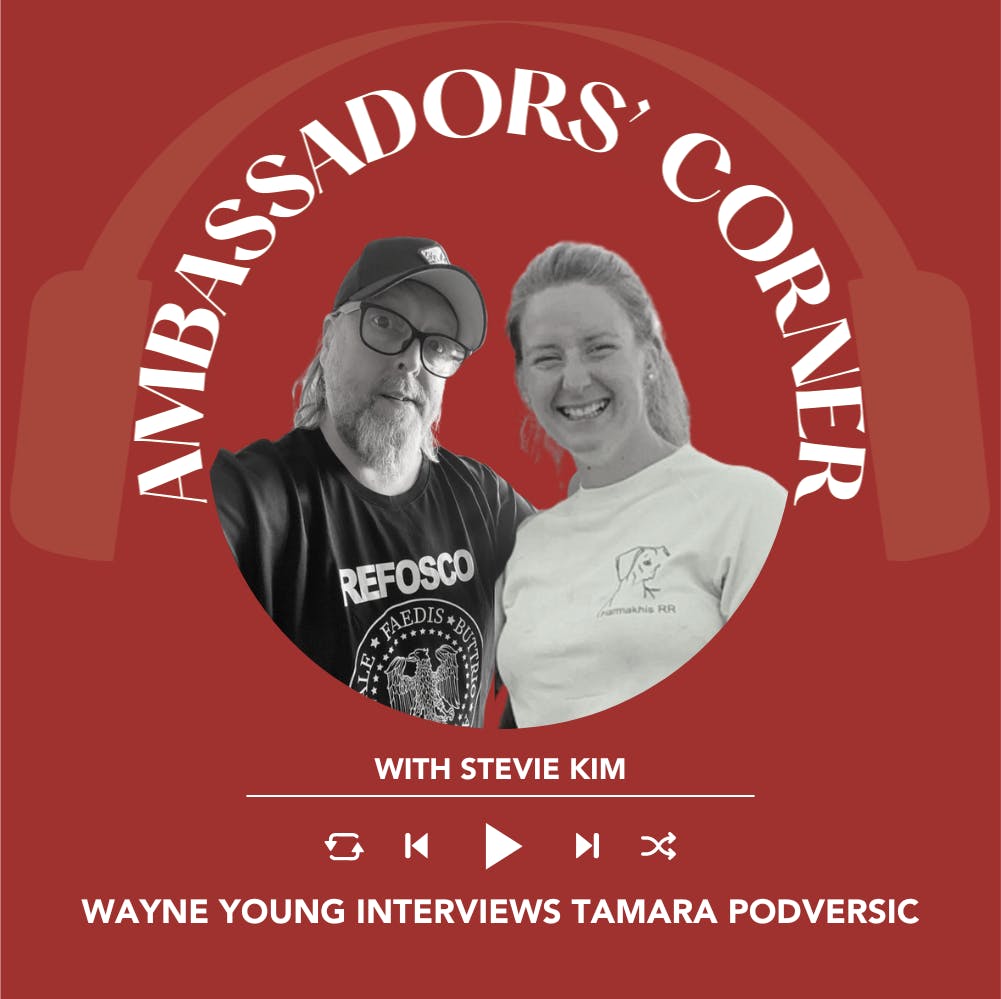
Ep. 1875 Wayne Young interviews Tamara Podversic | Clubhouse Ambassadors’ Corner
Clubhouse Ambassadors’ Corner
Episode Summary
Content Analysis Key Themes and Main Ideas 1. Terroir and its Impact on Winemaking: The profound influence of the unique Monte Calvario terroir in Colio, Friuli Venezia Giulia, including its Marl-sandstone soil (""ponca""), microclimate (sea breezes, Bora wind), and elevation changes, on the characteristics of the wines produced. 2. Podere Verace's Winemaking Philosophy: A deep respect for nature and territory, minimal intervention, the intentional use of maceration for white wines to express grape character rather than to create ""orange wines,"" and embracing vintage variations. 3. The Journey of Tamara Poderasich: Her personal path from studying economics to inheriting and passionately embracing her family's winemaking legacy, highlighting her deep connection to the land and the emotional aspect of her decision. 4. Native Grape Varieties of Friuli: Focus on and valorization of indigenous Friulian grapes like Tokai Friulano, Malvasia Istriana, and Ribolla Gialla, and their specific needs and expressions within the Colio region. 5. The Role of Blends vs. Monovarietal Wines: The winemaker's perspective on how blends can offer a more complete expression of the territory compared to single-varietal wines, reflecting traditional vineyard practices. Summary This episode of Clubhouse Ambassador Corner features Wayne Young interviewing Tamara Poderasich of Podere Verace, a family winery in Colio, Friuli Venezia Giulia. Tamara delves into the unique terroir of Monte Calvario, emphasizing how its Marl-sandstone soil (""ponca""), specific microclimate, and winds dictate their winemaking approach. She explains their philosophy, highlighting that maceration for their white wines is about extracting the true character and ""crunchiness"" of the grape, rather than fitting into the ""orange wine"" trend. Tamara shares her personal journey, revealing her initial detour into economics before returning to the family business, a decision rooted in a deep, almost spiritual connection to the vineyards. The discussion covers their focus on native Friulian varieties like Tokai Friulano, Malvasia Istriana, and Ribolla Gialla, and how they embrace vintage differences, including the influence of Botrytis, as integral to the wine's identity. She also touches on their red blends and the idea that wines should be a ""picture"" of the vintage and territory, not a standardized product, ultimately aiming to bring a piece of their home to tables worldwide. Takeaways * Podere Verace is a family winery in the Monte Calvario area of Colio, Friuli, known for its unique Marl-sandstone soil (""ponca""). * Tamara Poderasich, despite initially studying economics, chose to dedicate herself to the family winery, driven by a deep connection to the land. * Their white wines undergo maceration not to be ""orange wines"" but to extract the full character and ""crunchiness"" (""crocantica"") of the grapes, reflecting the unique terroir. * The winery embraces natural cycles and vintage variations (e.g., presence of Botrytis) as essential expressions of the territory, rather than seeking consistency. * They primarily cultivate native Friulian grape varieties such as Tokai Friulano, Malvasia Istriana, and Ribolla Gialla, believing they best express the region. * Blends are considered the most complete expression of the territory, reflecting traditional vineyard co-plantings. * The winemaking process at Podere Verace is seen as translating the ""language of nature"" into the wine. * The winery emphasizes the historical and cultural significance of wine in their region, stretching back to the Austro-Hungarian Empire. Notable Quotes * ""our soil has this steep city to retain water in summertime."
About This Episode
The speakers discuss their favorite wines and learnings for their podcast, emphasizing the importance of understanding the three factors involved in achieving great wine quality and learning the natural biology of their wines. They thank their audience for their support and encourage them to subscribe to their podcast. They also thank their audience for their help and emphasize the importance of being secure in travels and finding a second home when in love with their growing home.
Transcript
The Italian wine podcast is the community driven platform for Italian winegeeks around the world. Support the show by donating at italian wine podcast dot com. Donate five or more Euros, and we'll send you a copy of our latest book, my Italian Great Geek journal. Absolutely free. To get your free copy of my Italian GreatGeek journal, click support us at italian wine podcast dot com, or wherever you get your pods. This podcast is brought to you in the association with Lata Verna Frioli, the definitive podcast on the wines of Frulio, Lata Verna Frioli is a proud supporter of the Italian wine podcast. I'm host Wayne Young, And if you're a fan of the Italian wine podcast and want to take a deep dive into this fascinating wine region, visit Lativerna for Yuri dot com, or wherever you get your pods. Welcome to another episode of Clubhouse Ambassador Corner. We don't have a lot of people up from the audience, but this episode is going to be recorded, and it will be up on Italian wine podcast. So we have here our supporter of Italian webcast, Lata Verna Furi. So how are you, Wayne? How are you doing? I'm doing just great. How are you, like? All good. Quite very busy for the Bill Italy marathon. It's upcoming. Yeah. Was gonna do a Van Italy marathon too, but I decided against it. So if you guys need help, you can always give me a call. Okay. So It's like, for the opportunity to Of course. To come in here and, and chat with one of my favorite wine people in for you leaving Etsy Julia. Of course, definitely. So before we begin, I would like to introduce to the audience Wayne Young. So Wayne Young is a US expat living in Frioli Vanessa, Julia, since two thousand two. He's self employed, wine marketing, and communications consultant, wine educator, and events coordinator, and the host of Latavanna Fluley podcast. Okay. So before we dive into the discussion, I wanted to ask you these three questions. Why did you select Tamara Poderasich as your favorite producer? Well, I selected tomorrow because when I met Tamara a long time ago at a winery visit at, Port Verasich, I immediately got this really great energy from Tamada, and she spoke great English. So I was like, I have her as a guest on the pot. She's very young. She's very enthusiastic. She's got a lot of really, really good positive energy Yeah. And so I was immediately, sort of, overwhelmed with her with her good vibes. Yeah. And plus, you can't deny that her and her dad's wines are amazing. They're cult wines. They're wines that can be described as cult wines, really. I'm really interested in having a conversation with Tamara, learning a little bit more about why they do what they do. Mhmm. Actually, yes. That's true. Like, communications, and also her charm would actually be very important in terms of how to also reach out to other people to also try the wines. So tell me more about this called wines. When was the first time that you try the wines of Dania with Versace. Wow. Oh, I can't remember. It was a long time ago. I can't remember the first time, but I remember being a little bit hesitant about trying the wines Mhmm. From Potte Verace because I had heard that they were like, heavily macerated orange wines, which isn't normally my thing. Okay. And then I actually tried them, and I was like, these wines are amazing. And they totally subverted and exceeded my expectations. So I've been a big fan since them. There's a reason why I'm a much bigger fan of Ebola Jala now than I was, let's say three or four or five years ago, and then their wines are one of the reasons why. Oh, wow. Wow. That's that's really like an eye opener for you because, like, you you shifted your point of view about Caldwell. So since this podcast will be listened by a lot of Italian wine ambassadors all over the world. So tell us What are the learning objectives that we should be expecting from this interview? Well, I I think one of the things that I really wanna learn a little bit more about pod Verisic is because pod Verisic is quite a name, but I wanna know a little bit more about the place and what's special about the place where they make their wines. And I've been there and I've seen it, but I'm really looking forward to listening to tomorrow, sort of explain the effect of the place on the way they make their wines and how their wines become what they are. Okay. Okay. Alright. So I'm going to meet myself, and I will leave the floor to you and Tamara, but don't sing. You want the last people who are in here to leave. Well, you won't let me sing. No. I will not sing. Okay. Okay. I'm gonna meet myself, guys. Alright. It's like Alright. Thank you so much, Tamara, for being here. Tamara, you say that you were born at the perfect place and time to fulfill your dreams in this family estate of pub Verisage, but that wasn't sort of your original plan. So tell me a little bit about, you know, how you got involved in the winery and all that sort of stuff or maybe we should take a step back and tell me a little bit about where the winery is located and and what's special about this place. Let's start with that. Let's start sort of more with a place than with you. And then we'll get into your family history. Great. Thank you, Wayne. Thank you. Thanks for, for those beautiful words that you said before, about us, about, actually, also our territory. Today, also, we are sitting in this beautiful Wine Academy Yeah. In Gordon Dirozat. So I'm just quite, always charmed about what our territory can give us. So we have such some beautiful purse. And, we have to be aware of what we have and what we can do. So, therefore, my father always taught me thanks also to my mom and, my grandpa, my grandma, because actually, our family was always a wine producing family. Okay. So my father, then it was the first one to start to bottle it. And it's quite a long traumatic story, but with a beautiful never ending end. Okay. So, long story short, actually, we are placed in polio. So just at the limit of Italy on the east side with the Slovenia border. And, we are actually on Montecal value. Okay. Which quite a name Mont Calvary, you know, in a way of, we are also taking our cross on our shoulders. Exactly. But, looking to be redeemed in a way. Yeah. So, we are part of the most south exposed hills from Colio, from the gorizia area. And, we are now a fifteen hectares estate. We're actually started from a really small amount as my father decided to to go on his road, on his on his foot, and, started with a really small part of, six thousand square meters in San Floriano. Where, actually, last year, I just combined it with, my first bought vineyard. It's one hectare of free. Oh, congratulations. It's, like, failed to close a circle of generations as my grandpa then, bought just close to Monte Calvario at the bottom of the hill in the Localita Grady Chukta. He bought two hectares to continue to produce wine in the Austria. It was a family on the Sterea, because you have to know that in the Austrian Guardian Empire, our territory was quite, important for the Fruit point of view, wine. Everything was delivered always to Vienna tables. Okay. So we were, you know, the history with first world war, second world war, cold war even. It was everything, destroyed in a way not only from the, with the logical point of view, but also social. So we were, we were quite destabilized, and, therefore, my grandpa opened on Austria to to carry on the the wine business otherwise, to sell wine. Today, you can be in America. You can be in Japan without any problems, but at the time, to sell in ordinary even, like, few kilometers away, it was quite impossible. So everything from Gaurizia, it was, concentrated there. So my father, yes, actually, he was born in Austria. Literally born in Austria. That's true. That's true. And, he was always, working with, with the vineyards of the family. And then, so now we are working on the on the property of my grand grandpa, the six thousand square meters that I told you before in some Lariano. Okay. Then the two hectares in, gradis Chuta Okay. Parts of the story of my grandpa. And then it's my father that just fell in love with Montecalvario. So where we have today, nine hectares in total, And, we have still a small part in rent in PDi Monte that is just the other side of Montecovatti. Okay. And now finally, the one, Hector free just close to the to the San Floriano part of my generation. Okay. So this is what it is. Our soil is quite charming because, you know, my father to to choose to be our maker, it means to be, as I said before, in the right time, in the right place, it means that you you observe where you are and what you can do. Okay. So our soil has this steep city to retain water in summertime. And it's the first mandatory obligation of our way maker to understand that if you have it, you can do it. Okay. Otherwise, techniques can provide you the possibility to work with the with the nature in order to bring, like, to say irrigation. And therefore, the plant can survive in really hot dry summer times, but our Marlon sandstone's stratification give us the possibility, the lucky parts to be able to produce incredible quality of grape till the end of the season. Okay. So this is the magic trick. The magic trick. So it's it's the soil and And not only because Exactly. The beautiful word terra Right? It's always Everything. Exactly. A combination of things, which, actually, again, strike two. We have it. Okay. So it's a beautiful soil. You always have to look at three things. Okay. I haven't done agronomical studies nor analogical ones, but, my father always taught me, you need those three things. And every university should teach those. And those three things are? Soil. Right? Understands the parallels that dictate the topology of varieties that you can plant. So this means that, you have to understand that, if you are in burgundy, you cannot plant Okay. So where you exist on the globe? Exactly. Okay. And, here we are lucky enough. Also, by the point of view of climate, because if I'm a really rainy region, as food it is, I have to understand that certain varieties, even from the parlour that we are, can work or not. Okay. And, therefore, also to understand the parlours in a way of, of height of the hills. Okay. Because I have to look at the grape at the characteristic of it and understand that, on the top of the hill should be always placed. Okay. Because if I put tokai on the top of the hill, where it's a lot of sun, a lot of wind because we are a region of winds. Especially. Yeah. Not not all terrain. No. So we have also beautiful things like winds. And, we have this microclimate from really close to the seaside, but really close also to mountain. So we have this, yes, rain, but also the possibility to make incredible wines due to the trying part of the winds from the sea or from the east, the the really interesting and strong bora. Okay. Yeah. This hard eastern wind that comes comes down. Yeah. As monte calvary is the last hill from the gorizia area. Oh, okay. We didn't have We have no hues that separate us from the seaside. So we have a constant sea breeze Okay. That, take away all the humidity from, after the rains and so on. So also we can push in maturity, in late harvesties, to go into concentration, to go to search the maturity of the seed, which is the third ingredient. Oh, okay. To make an incredible wine. You have always to understand the language of the nature. You have to understand the cyclic part because, she teaches you that everything has a start and everything has an end. So it's everything always changing. And, therefore, you also have to understand that the plans have no idea that she's producing. Why? She's just producing aside to continue on. Exactly. And that's it. It's reproduction. Yeah. And she talks to you with flavors. She talks with your colors. All those are languages of nature. So therefore, into understanding what is the the top quality for the nature. You have to understand those free languages. And when you get all those free points in the line, then you cannot permit yourself to to make mistakes in the seller. Okay. So then is the part of the human to interact with the wine to understand its path, how to take care Mhmm. From what he was working so hard all all the year because you have only one chance and you cannot miss it. Of course. And also in that point of view, our main goal is to talk about territory because it's the only thing that was before us and that we remain after us. Okay. So each winemaker have always, the obligation to talk about, the top quality to leave an important message of, to never see, like to say, our territory were already abandinated after the first world war because the economy was totally stagnated. Okay. So, therefore, give the opportunity to valorize our heels, our territory in order to not see them again abandoned. Because those are the places where you can do incredible wise. Okay. So, we always have to ask ourselves where we are, what we can do. And, from where we are, we can do incredible fruit. Okay. This is it. So we we talked about these these elements, and we talked a little bit about where we find your winery. So what is sort of special about this particular place and what is the thing about this place that leads you to make the types of wines that you do, or is the style of wines that you make based solely upon choice? It's always a choice Okay. When we get to the to the seller because actually the first three vintages that my father produced were white unification. Okay. It's quite, quite technical, which is great because, he understood what actually he was losing in a way of process. No. When he was tasting the grapes, he was saying, I feel this crunchiness. Like, I feel this stupidity right here. I I feel this, really long, incredible mouth, but at a certain point, he was missing those things in the in the wines. Wines were perfect. Okay. Beautiful wines. When was this exactly? This so the first bottle produced was in, vintage nineteen ninety eight. Oh, okay. Two thousand one, he actually started the first maceration thing. So so to many talks and, share thoughts with other producers of the area at the time. So my father was quite lucky also in that point of view to be, to be able to listen, and also he was smart enough to think with his own head. Mhmm. Not with what the market was saying, because if he would listen to the market, he would still know, we'll do another path. So my father actually chose to master it when, maceration was quite not a trend. Okay. Nothing. So I don't like actually the words really orange. Right. It's a thing now about many producers, or let's say many on the market, we are seen as a orange wine producers. But, actually, we are making a white wine with a technique of, of a red one, but it's always talking about a white wine macerated. Right. Because, again, as I said before, a natural speaks to you with a coder and the coder of orange, a part if you are using pinot grillo from the color of the skin as it's quite more intense in the purple. The color of the of the wine should be always gold with hints of green, yellow, alive. It should be shiny like the bananas. The end the wine is a plant of sun. Okay. If you start to see, like, dark shadows, a little bit cloudy, not really, like, death, that not alive, not bright, no, not not with light, then you understand that there's something bad going on. Oh. But if I return back to your question, sorry. I tend to That's okay. To go left and right. No, but I love the analogy of of the brightness and green and yellow is as opposed to like orange, which is sort of what happens in the fall when the vine starts to, you know, go dormant and go to sleep for the winter. Okay. I never really love that analogy between the colors of the wine and the colors of the of nature. But also, it's, as I said, no natural is cyclic. Mhmm. So also on the grape, when you see on a white variety grape, an orange berry Okay. You can understand. And then when you extract it, you see it, there was a break. Uh-huh. On the skin. So, therefore, with the oxygen, the fermentation can start as, the sugar level inside the berry. All the part of a life on the grape can induce defermentation on the skin, which is a part natural of the grape. But as natural goes on, there is the part of, alcoholic fermentation Right. That gets into that overs, that take over also the bacteria part. So it goes into vinegar. Okay. So the cyclic part is always berry when it gets cracked, the oxygen with sugars induced fermentation. Yeast have done its part. Bacteria takes over, goes into bacteria fermentation there for vinegar. Okay. And there, the color change. Okay. And it begins to be orange. So orange is almost like a warning sign. Yeah. It's already done. It's already. It's already done. No. No. It's already done. Wow. So, and when you taste it, you feel it. Okay. Apart from when you have to try this, when you have to try this, the color of the berry is purple. Ah, okay. Well, because we're gonna talk about Beatritis because there's something very interesting about your wines and Beatritis, and I wanted to get that to that later on. But What I did wanna talk about a little bit and loving the explanations that you're giving for what you do, but I wanna talk a little bit about you first because you did not plan on getting into the wine business at all. You actually studied what economics mean, I think economical engineering. Economics engineering. My father never forced us to go on with the with the wiring. Okay. And also he never wanted us to study agronomy or analogy he didn't wanted us to be in a way afraid. Mhmm. Because he always said that if you are two techniques, you tend to feel like a god. So, therefore, you you feel that you can command nature and decompose it and compose it again. But, to say also knowledge is really important, you you cannot do wine without knowing what you're doing. So I have started in a way on my own. Okay. But he wanted us to choose other schools just to enlarge our reviews to to be more, elastic into the mentality and So you went out and studied something different Exactly. But did you always have this idea that you were gonna stay? I have it in the in the belly. Okay. But, I was doubting that in my head. Okay. I consider myself really rational. Mhmm. Person. So, therefore, my head was really doubting in a way. But at a certain point, I I really remember exactly the moment that I was also working in other different areas and everything because I wanted to experience I was really in love with the automotive industry. I was really into it, but, you know, also probably worse or bad boyfriends decisions and so on. That probably were not really into accepting me in a wine word, but, this is why then I get single. Okay. But I had to choose because I felt that, the party in my value was getting stronger and stronger, you know, that there's something was telling me that I was doing, a mistake of choosing wine. And I I was always involved in the vineyards. I always helped her way because it was a family estate. I always felt, the importance, and I was always charmed. The curiosity was always spreading, you know, many questions and everything. And I saw my father looking at me, but he never actually, like, say, oh, Tamara, but you think that you would love to do it. No. No. He he lets me be. So then I came up in the vineyard. It was, summertime, July two thousand sixteen. And, I said that, you know, what, I have to talk to you. I just look at the vineyards. I I feel it, and, then I have I had just two boots on the some, work into the vineyards for the next day, and I just get back home sit to the table. I said, dad, let's talk. I have something to tell you. Wow. He was a little bit afraid. He have no idea what was coming on. Okay. Yes, that's that's that's something the father never wants to hear dead from their daughter, especially dead. You need to talk. You know what? I want to be a awaremaker. Wow. You said right then. Yeah. I know. So what was it in the vineyard that night that just flipped that switch? Probably it was the scenario to the the count that the the vineyard was giving me It was like looking at the vineyards and saw it, like, how it she was growing. I don't know that the energy that the place was giving me Mhmm. It's true that Calvario is something, you know, energetical points of view incredible. The Okay. The feelings that can give you. But, from how I was growing up, all the things that I saw from the soil, from taking up the vineyards, from the harvest point of view, bottling, and so on. It was for me, charming. Looking at the grapes, looking at the work down, like, how the leaf was turning, the light, how was how was leaving the moment, it just gets to me. I it's difficult to to explain it how the feeling was, but it was just a click. But talking about also, I never really answer you to the question that you you put me before, you know, about the, the term of montecal value about the places that we are. You know, it's something really important as I said that you choose the right soil, you know? And Montecalvario has this incredible stratification of, Marlon sandstone, this fleege that, actually, you can have, like, three different colors. You can have a gray. You can have more, yellowy. You can have more red a ponca depending on the, components that can be more present in it. And we have a more, like, Raiish with, much more present of Marl. Okay. And it's, like, a little bit Sandish. It depends in certain areas. We can have more stones or less. It depends really by the veins that can be, but it's quite beautiful because we have also a change of, elevation from ninety meters above sea level, but we get also to almost two hundred. Oh, wow. Okay. So it's a it's a great, heel to to walk, but you can see so many things changing so few meters. And apart from that, also the, as I said, the winds are really important, And this is why also the choice to work with Malvasia is perfect because she needs always this, seaside wind. Otherwise, you don't get the characteristic of balsamic of, herbal notes and, really characteristic of of her. And then this, help us to get from a mid September harvest of Tokai. So to get, into a amazing ripeness without losing it because she the Tokai is really sub all. The skin is so thin that can, totally from one day to another, you can just lose it. Yeah. So you have to be really, really there on time with the beautiful vineyards that we have with the maniacal precision, Kerurgical that we have also, we can keep it at least from the end of, first week of September until the second week of September. It really depends also by the vintages. But we can go on till mid of October. Wow. So it's quite an extended harvest Okay. Divided between those different varieties. We actually, in today, work mainly with Toca Frulano with, Malvasia, Estriana, and with Rubolajala. Okay. So those are your three whites? Yeah. Which I really want to continue on. We actually have also other varieties because my father, till ninety four, I don't blame himself because he wanted to do the best that he could. And at the time, it was said that if you don't plant international varieties, you can never do a really great wine. Okay. So, actually, he planted those chardonnay. He planted Merloch, Vernessevignon, some pinot gris also. And, we have those varieties. And, also, my grandpa told me always that the vine can, permit you many mistakes. Can let you do many mistakes. She will always forgive you. She's a really forgiving plant. It's true. It's true. You can plant her in many places, but the question that our way maker should always ask himself, am I doing the ninety nine percent of top quality. I'm choosing the right variety that she will be able to reach the ninety nine percent of quality. Okay. In order of when I say quality for me is talking about the possibility that she reaches that she reached the perfect maturity of the seat, but at the same time that she's in the perfect balance also in the sugars with the c d t. Mhmm. Without the technical, maturity part. So this is why I go back to the second point now. So not only soil, but also choosing the right variety. Okay. Okay. Okay. So knowing your territory enough, not just the type of soil, but knowing the very specific places where certain varieties need to be planted. Exactly. Okay. Exactly. So this is probably all those things, all those, thoughts that, I was always listening to at the table because to say, my father asked, he started from nothing. He had to to make a name in a way. So we had always the house full of people. So also the exchanging parts of stories Okay. It was always charming, you know, to to open the bottle, to taste. Also, this make me realize, like, how deep it was rooted the the wine in our culture, like, how charming it was as you could go just two heels left, and wines could totally change. Right. Or even talking about call you on cars or call you in, orientales. Okay. Also, our neighbors, Berta, Veravale. Right. We are so close. We share, apart from cars, so we share we we share the same soil, but how things can change due to the winds Mhmm. The expositions, the temperature, how they change, and therefore can give a change to the wine. So all those things were for me something, something beautiful, and also the part of, learning that wine is not just alcohol. Also the choice to to do maturation, it was, like, the, the search for that crunchy part, you know, like, like, a foot. Yeah. And also, the definition of, foot for sol is for, for us really important because you don't drink it just to drink. You you're drinking because you you share a table. Yeah. You share, also not the table, but a moment with a friend or with a place, you know, way also of just listening to a music or just reading a book. Right. So it's, something to to feel good with ourself, to celebrate ourself, or or a moment, or as I said before a friend. So, all those, everything led to that decision to masurate Okay. My father, to be a white maker for me, are are things so deep rooted in our territory, in ourselves that, I was lucky enough to realize it. Not, not too not too late. I remember when I when I visited the winery with Tommy, this this idea of of crocante crispy. Right? Crunchy sort of came out. So He feels that if you don't have the maceration, if you don't do a little bit of maceration with the with the whites, you you lose this crunchiness, this crokantica, this crispiness. It it described that a little bit more to me. What exactly Does that mean? And how would you define your wines in general? If we don't define them as orange wines, because you said they're not orange, how would you describe the wines you make, especially the whites, the reds we can talk about a little bit later, but the whites, especially. How would you describe them? How would you define them? But, you know, let's start from the point that maturation actually is not making something better. Okay. That's really important to understand. Maceration is just showing you what you have done. So he's just, extracting all the work from, let's say, three hundred sixty four days because the last one is picking. Right. It's for our best time. Fantastic. So it's just showing you all the, the detailed work that you have done. So extracting the, if we have talked to, about the, the type type part of tennis or fibulajala. So the she's not dramatic at all. Right. But when you macerate, you extract her character that is, it's just enwrapped in that, beautiful thick skin. Mhmm. And when you taste it, in the vineyards. And those stannies just gets to you all over your mouth Right. In a velvety way, you you say, well, what am I doing? You know, I'm I then I then I taste the wine and I say, where are those stannies? Okay. Is this Rubolajala? It's a and it's a question of, perception how, also to say, wine is an art. And, the winemaker is the artist. So, therefore, who am I to judge, an art that won't, with a knife, just cut and, and leave, and leave a hole that, every person can, can have an explanation for what they feel when they see that, the tart. My father chose to be, a realist in a way Okay. To, but also, but it's more on choosing to shoot a photo also. And, let all the small details be shown. Okay. Because So making sure everything is in focus. Exactly. Wine is only it's only actually a picture of that exact time of the picking of the harvest. It's just, translating, with the with the collar. For the paint, it's looking at it, for the wine is filling it. Okay. So you feel the rhythm of the vintage. You can feel if the seat was, getting mature really fast with you getting ripe, really fast or really slow, you feel in the perception of the energy in the mouth. Okay. It's like also with the music, and please sing later. Okay. It's same with the music because if we start to now sing, really rock or metal song, it will be for me, like, tasting a really hot vintage because the rhythm is high. Okay. The energy is incredible. Now, so, therefore, also the, also the seed was getting ripe really fast. A lot of sun, a lot of wind. It was like, it goes into raisins. Okay. This is the part of an extreme hot vintage. Okay. If we go there for in the extreme opposite of a cold one, which we can get thanks to our microclimate. Mhmm. We go into botrytis, as I mentioned before. Exactly. So it means that, we have less sun. We have a little bit more of rain, with interruption, with parts of, of sunny days, but, the humidity change. The the wind get to blow out the humidity, but, it gets into this slow ripening cycle that you cannot compare any more. Okay. Irbitoven. Okay. Orbitoven. Okay. The classical, like, when you're seated in a in a sofa, listening to to that beautiful music, it's not anymore like being in a pogo, in the first row, of course. Right. Right. So, those feelings are always connected to the first element knows the the maturity of the seat. Okay. So this is, this is our signature of our territory. Okay. We are just part of, we are just a small drop at the end. So we, you know, fifteen hectares, Colio, counts of thousand five hundred hectares. Okay. It's also a very small small part. One percent. Exactly. It's not that small. ID. So come on. One percent. That's okay. I'm only losing myself probably. I'll I'll bring you back. You're talking about Beatritis. Yep. And one of the things that I noticed is that on your site, I'm pretty sure it's for Malvasia, you have a chart that shows which years you've had betrayed us and which years you didn't have betrayed us. Is that true? That's the Malazilla. Right? Yeah. Yeah. Or is that another wine? No. No. In all the wines, we replace the chart in, in all our wine, in London, when you just click on wine. Exactly. You can find it in, in every wine, the the differences between the vintages. Okay. Which is, for us really important that, the person that choose our wine know that in that vintage was a hot one or a cold one. Or we'll try this one. Exactly. So there are many percentages different. We usually do like an average. Okay. I would love to to get more into the depth of, of communication about the, the Vintages, but it's, the the problem is always that we have twenty four hours. You know, when that that's the problem when you hear You need to sleep for at least four or five of them. Yeah. Because at the end, me and my father, we are always in the in the vineyards if needed in the in the office Right. From the documents part. Because the thing that struck me about the that chart Right? Is when you look at that chart and you see, okay. Buttritus, no, buttritus. Okay. Well, doesn't that make your job more difficult to sort of say, oh, okay. I really love, you know, pad Verisiches Malvasia, and I had the two thousand seventeen, and it was amazing. And then you go back next year and you have the two thousand eighteen. Oh, wait a second. There's no botritus. And the wine is so different. Do do you how do you manage expectations for people who fall in love with one type of your Malvasia, and then the next year they get another. You know, at the end, I believe that the beauty of our world is this, distinctive, parts of the vintages. Okay. Is the is the catchy part because, for me, it's quite the magic of, of never knowing what will, what will come after. Right. And what we are doing, actually, we are just, we're just letting the territory speak for what it is. We we as humans, we are only walking with the vineyards Okay. Making right that the plants, are feeling good. Right. So it's our part to let's speak the nature for what was she doing in that year. It's also true that's, you know, I remember really vividly the, from the first vintage that my father just asked me, okay, Tamara? So now that you have done the first vintage, what you have learned from for the next one. No? And I was so proud of myself that I make a incredible technical analytics about what we have done, what we could improve. No. This is that. So probably we could be better there. No. And then say, okay, Tamara. You have not understand a thing. Wow. Because actually, the beauty of our work is that every time that, harvest is finished. You have to turn the page and it's completely blank. Uh-huh. Every year is a new year. Every year is something changing also because every year, the vineyard is one year older. Right. Oh, okay. And so the plans change. Exactly. Okay. But the beauty is that, we can, we can give in our territory those beautiful differences. And this is the beauty about feeling a hot vintage, a cold vintage, medium with sixty percent of the varieties of vintage. You can have also dad's blues. No. I'm talking about a lot of music. Exactly. And I believe that this is charming. We we don't produce many bottles. Mhmm. And, to do a monochromatic color gray is not part of the nature. Nice. It's really smart about color shades, and this is who we are, and this is what we show. So it's not intervening with our hand that we want to make a product same every year because it's not a product. It's something alive. Okay. And again, it's a it's a picture. Also, we are different in our way. No. Exactly. Metra is never replicating the same thing all alone. Exactly. She is always changing. Therefore, it's important for for us to let her change. Okay. Again, we are not god. Exactly. You have to go with what you what you're you've been given. We've spoken a lot about white wines, but we haven't mentioned the fact that you actually do make some red wines. Tell us a little bit about the red, the reds that you make or the red that you make to make one or two red wines. Two. To. And let me tell you. Okay. Juan is pinot grigio, even if you cannot be really, into saying me that pinot grigio is red, but, her the the skin of pinot grigio is violet. It doesn't have that much color Mhmm. Like, that are the two other varieties that we we use it, we work with it in a blend Okay. That is prelate. And, Pina Grija is, this is why I said that the only time that, wine could have an orange hint if it's pinot grisia macerated is added in the in the blend. This is the only part because it has this, like, a little bit tramato. Okay. But quite more, like, we let, the, like, from thirty days could be also in maceration because we want that the alcoholic fermentation is done, and we let also the head to sink Okay. Nicely a little bit to release much carbon based. So you let the cap sink to the bottom before you. Yeah. So that the carbonic gets released, gets released nicely. I have tried to do malactic also on the skin with pinot grisio, and it's true because we saw, usually, it's not done due to the stability of the color. It can be reduced as the skin gets, it gets it back. Mhmm. So this is nice, not because natural gives you, but also takes, you know? Again, that, what the the beauty part is that, I have those two, trials now in the seller as, from the vineyard that I have bought. Now finally, we have a little bit more of Pinoglegio. So I could do those trials before, which is not not possible. And, you get two wines that are completely different. Okay. You have, in the first one, that was the Malo not down on the skins. It was, the color is more vivid. A little bit more into the violet Right. Purple shades with beautiful nose, like, small fruits, but also flowery. But with, with a mouth more vertical in a way, but the texture, if you feel it, of tennis in the second one, with the malolactic done on the skin, it has like, a trauma, how do you say the trauma of, on the clothes, you know, when you get when you stitch the Oh, it's like, we've weaved together. Yes. Thank you. Okay. Weaved together. I could I could never say that word. You were doing the thing with your hands. Exactly. Thank you. So it's, the the parts of how the tendons are weaved. Altogether is something, charming, amazing. So usually, the Marlanka Vernestebillon, I have done also a trial on Marlotte with, with Malolactic, and it doesn't actually lose that much of color. But it's always charming. But, you know, at the end, for me, talking about the the territory for me, my focus in my thirty vintages possible to as a waymaker, because everyone have to realize the teach way maker, as my father says, you can have thirty vintages. Then you have to accept ten vintages of generational, no Okay. Change, and other ten vintages like before and after, no, for the generational part. If you don't have the possibility to to have, a change after you. No? Okay. You can, like, try to push other thirty vintages, but you have to accept as I'm, like, punching left and right to find my space. I'm lucky enough that my father is, seeing that and he's letting me be even year by year more responsible. Oh, okay. But, to say my this is why I'm saying about the parallel that we are, the climate that we have for me, the focus of identity of our heels will be Takaribola and Malvasiaestriana. That's that's for me important. So and you make two blends. So the prelate is the red blend. Yep. And then the copy is the white blend. Yeah. Where, actually, actually is the blend which Sharpen Nam and Vasieto Kaai. We don't produce pure chardonnay. Okay. It's always used only in the blend. And, actually, Capia, that means drop is lavinia. Okay. As our matter language is lavinia. Right. It's, I would love to to continue it without the chardonnay, but withribolajal. Oh, okay. So ribolaj, ma'am, is it? Okay. Exactly. The classic sort of called Yobianco. Exactly. Mhmm. This is it. Okay. So do you do you prefer making blends, or do you prefer making mono varietal wines? What do what do you what sort of, you know, excites you more as a winemaker? You know, for me, the blend is the most complete wine. That we can have because it, it gets together so many different characters all in one glass that can show you what actually our territory it is. Mhmm. So usually traditionally, the the vineyards also were complaint. Between different varieties. Right. And they were picked. Also, everything at the same time, because Bula Jalla had a little bit more of acidity. As Takai doesn't have it that much, but it was nicely romantic. Malvasia was quite white in the mouth, so it was binding everything together for how we evolve because also tradition doesn't mean copy everything that, in the past was done. Mhmm. It means understanding what was done, what was okay done, and what was a mistake Right. And evolve from that. No. So by looking, as I said, to the maturity of the seat, I don't want to go on as in the past was about picking everything at the same time, but looking at the ripeness of the seat and, putting together the shy Ribula Jolla with, the charming Malvasia, together with the sexy pakai. Oh, that's so sexy. It is. When you did the the podcast with me a couple of years ago, we talked about how would you describe you know, Mavisy as a guy, or how would you describe to a guys again? It was a great great moment there when you talked about, you know, all all those different things. Are there any grape varieties that you don't work with that you would love to work with that you would love to try making wines from a particular type of grape in your area? In our vineyards? No. Okay. Because again, as I explained, for how we learned, to work on our land, those are the varieties that works best. If I will have the possibility to, to do a magnifical work with a friend, and, just to share, like, a piece of Martabella, while I would be probably in my pension. I would love to try with, with Cupertino. Really? But, but looking at the color in Dali. Why is your patino? That's interesting. I I I swore that you were gonna say pinot narrow because you actually did vineyard experience at Burgundy. Yeah. But, you know, I don't want to move from friuli. My my my land is here, you know. That I like. So I love friends for me. It's like a second home. And, I was thinking about it because, you know, when you when you go abroad, when you can't, you can get just in love with the with the place, and your heart can also play an important part. But it never tricked me that much like, our land. Okay. It will be, for me, also, Vipala Valley is something charming with the winds that they have a little bit more cold. It could be also something amazing, but also to push with the with some tokay, they will be really nice. If I will have to choose a totally different place. It will be for me really difficult. A totally different place. Yes. Yeah. Yes. Yes. Yeah. Well, you you it's obvious that you're very, very attached to your home. Yeah. But, you know, it's nice to travel. It's nice to see because then, you realize that, who you actually are, where you actually are growing up and what are your possibilities. Then again, you have to choose. No. Yeah. And your travels, have you found anything, or even in your time in Burgundy or just traveling for your own pleasure or tasting other wines? Have you run across anything that influenced maybe the way you thought about making your wines, like, I need to do a little bit more of that like they do there. Or this wine has this characteristic that I wanna bring out in my wines. Have there anything ever influenced you that way? I believe that my, travels made me day by day, more, more sure about myself. Okay. More secure. Secure. Thank you. In a way of observing things. Mhmm. So I saw so many interesting techniques from the vineyard to the cellar, and the observant parts on being always more sure having doubts because this means also to be sure. So Okay. That you you put in, yourself into doubt. It's, it's also realizing where where I am and what I can do. I was, like, in love with the milk treatment, for the OIDium part in Burgundy. Okay. But then again, I realized that, I'm in a different place that could not work for me. Really? And, also, again, no, I was really intrigued by, and this happened with, with, Paul over the VIVET's wines. I I really respect him a lot for me. He's an incredible white maker. And by, talking with him, tasting his wines, and then also confronting with other white makers from, at the time, from my area, there I get, the the view about trying to do my first, trial on Tokai with, with some, whole bunch fermentation. But it's not really a whole bunch. You know, you're just using the stem because I want to release all choose. So probably this is the only time. And again, I didn't move far away. No. Okay. I mean But, like, traveling that's much abroad, confronting me with other winemakers, make me realize much more about the potential that we have. Into, like, strategic more more talkative way of, welcoming to people about how, territory could work altogether. In that way, it was for me really important to see what it is happening outside. But, in a way of, like, managing the the vineyards, so therefore, it could be interesting, but, not always the right choice for your vineyards. Okay. So, I I heard recently one time, somebody said that people don't buy what you make. They buy why you make it. So why do you make the wine that you make. What is your why? Soul. Soul. Territory. To to keep it alive. To to fill our roots, deep, profound, to put a bottle in, to to sit on a table in, Melbourne, in Tokyo and feel at home. Fantastic. To bring just a drop of, of who we are, of where we are, that that's the most charming and important part of, of our road. That we that we took could be steep. That's really easy. But, this is what's something that, wine gives me, the feeling of a place, the feeling of the people that, that work together. And the feeling of the of the potential. That land and that variety thing can that can give you. So this is why because, you have to you have to show you are obliged to show the the maximum potential. I love that answer. That's a great answer. So how about some of the a wine that you've had maybe that is is super memorable? Obviously, not your own wine, but do you have, like, a wine that you've drunk in your life that has stuck with you that has not necessarily influenced the way that you've made wine. But just when you've had a glass of wine or a bottle of wine, you're like, wow. I I it has to be I gotta remember this wine forever. You take the bottle home and put it on a shelf and say, wow. That was really something. Anything that you've had, they're really very memorable. What? What was it? It happened. I did it. I take the bottle and bring it home because it was something spectacular. And, actually, it was a a beautiful trip to to Burgundy with family friends. I really love them because, together with them, I have the possibility to taste some incredible wines that, that was a ninety four barolo of, fanocchio with something outstanding. Actually, the last the last vintage that he he produced before he died, and it was something so charming, the texture, the fruit, the the feeling of the territory. It was so rich, still alive. You you will never say that it was ninety four. Probably, I was more feeling older than the wine, that's the same vintage. No. So also ninety four was not considered as a great v intentional all over the world. Okay. So but it was something so unbelievable. And by tasting it that, on the table with, Le Chapello Frousseau, like, and it's in another incredible wine. It was two thousand nine. Like, in comparison, Finokia was eating alive. Really? Everything. It was something so vivid, so so so alive, so charming, so intense. Like, the bottle just finished in a sequence. And, no, where's the hole? What's going on? That was something incredible. But also, again, For me, Pemonte is quite charming. Okay. Also, I had a menu of, of Bernate two thousand eleven of Renaldi, charming. Really? Absolutely lovely. Lovely. Lovely. Talking about whites, if I have to say, again, two thousand eleven, the the VIToskalvo, the Puez Okay. Was a beautiful night shared with a friend. Beautiful. Beautiful, the texture. So something, again, crunchy. Crunchy. Yeah. Sap it. And, ninety five, again, for me, strange to say because I have troubles with the whites of burgundy. But, it was, Cortain Sierleman of, option dundee Briei. Ninety five. Absolutely. Love it. Wow. Absolutely. So you were born in nineteen ninety four? Yes. And this is two thousand and twenty four. Exactly. So you're gonna be thirty this year. Oh my goodness. I remember how traumatizing turning twenty nine was for me. That was thirty years ago. But, anyway Really? Yeah. But, you know, even if I return to thirty, actually, they always say to me that, to be thirty, it means to be also twenty five, twenty fifteen, and five. So it's great to be. Okay. Yeah. You can't get to thirty without all those other ones. So Same as the vineyard. That's true. You always see how how it grow where you cast another date. Birthday party for you this year. Exactly. Sounds great. Sounds great. Like, did we have any, any questions from you? Well, there's no questions from the audience. So that's, I think that's a wrap for today. So, yes, thank you so much. It has been a fantastic conversation. Thanks a lot, Tamara. And Wayne, thank you for this conversation, and this podcast is going to be up on Italian wine podcast. Yes. Okay. Thank you, Lega. Thank you, Tom. Of course. Tell everyone. Bye. Listen to the Italian wine podcast wherever you get your podcasts. We're on SoundCloud, Apple Podcasts, Spotify, EmLIFM, and more. Don't forget to subscribe and rate the show. If you enjoy listening, please consider donating through Italian wine podcast dot com. Any amount helps cover equipment, production, and publication costs. Until next time.
Episode Details
Related Episodes

Ep. 2789 ColleMassari: a long-term vision rooted in Montecucco with Giuseppe Di Gioia | On The Road With Stevie Kim
Episode 2789

Ep. 2788 Ep. 14: Austria and Hungary | Study Smart for your WSET Level 3
Episode 2788

Ep. 2785 From Volunteer to Speaker at TEXSOM with Samantha Cole Johnson | TEXSOM 2026
Episode 2785
Ep. 2766 Inside the U.S. Non-Alcoholic Wine Market: What Wineries Need to Know with Jill Sites | Masterclass US Wine Market
Episode 2766
Ep. 2761 Winemaking and Consulting Across Sicily with Alessandro Serughetti | Wine, Food & Travel with Marc Millon
Episode 2761

Ep. 2759 Part 2 – The VIA Educational Program & Italian Wine | Heart-to-Heart Conversation with Sarah Looper
Episode 2759