
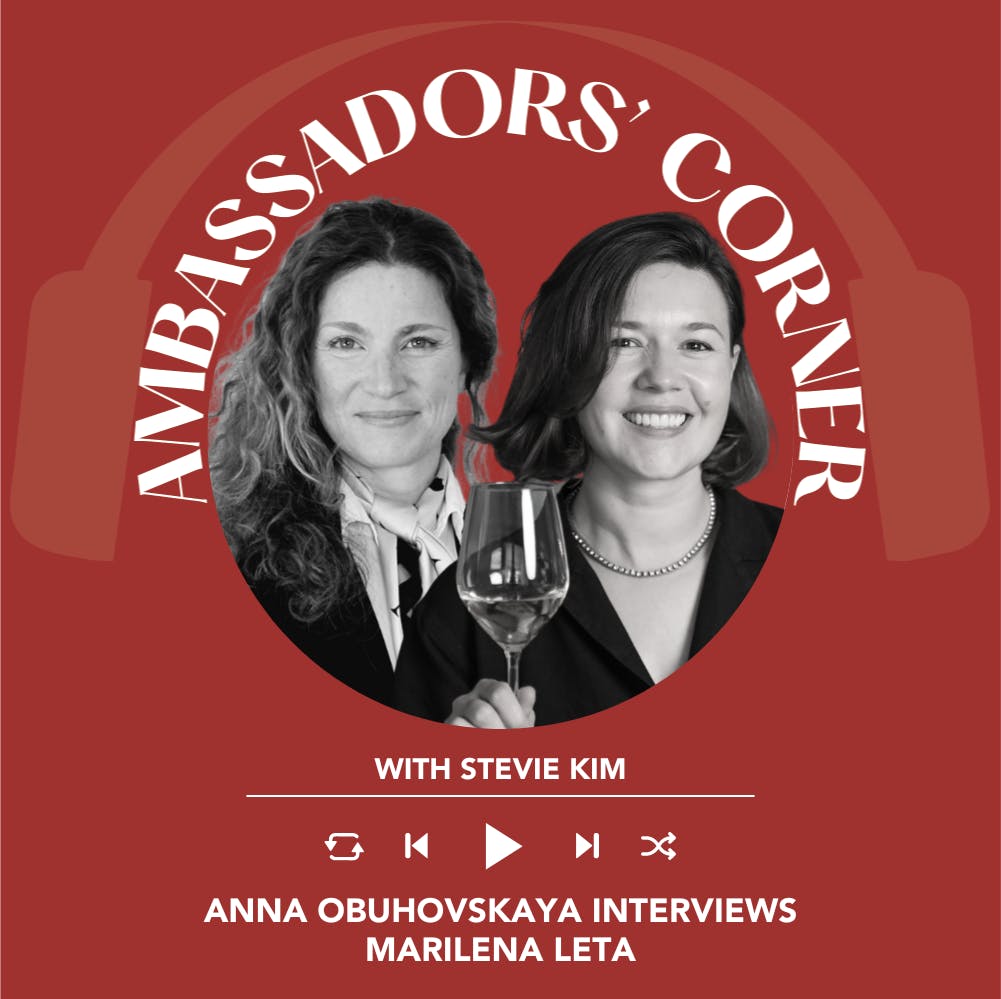
Ep. 2122 Anna Obuhovskaya interviews Marilena Leta | Clubhouse Ambassadors’ Corner
Clubhouse Ambassadors’ Corner
Episode Summary
Content Analysis Key Themes and Main Ideas 1. Exploring the unique terroir and indigenous grape varieties of Western Sicily, specifically the Mazzara del Vallo area. 2. The history, organic practices, and diverse wine portfolio of Tenuta Gorgitaine winery. 3. The impact of climate change on viticulture in Sicily and adaptation strategies. 4. The intersection of Sicilian wine, gastronomy, and cultural tourism. 5. Marketing strategies and consumer engagement, particularly targeting younger generations. Summary In this episode of the Italian Wine Podcast, hosted by Stevie Kim and Anna Obuskaya, the focus is on Western Sicily's wine and food scene through a conversation with Marilena Leta, Brand Ambassador and Communications Manager for Tenuta Gorgitaine. Marilena shares the rich history of the winery, founded in 2000, which stands within a protected nature reserve, influencing its organic certification since 2016. She delves into the unique indigenous white grape varieties like Grillo, Catarratto, and Zibibbo (Muscat of Alexandria), highlighting their diverse expressions, including a rare noble rot Grillo. The discussion also covers their experimentation with red grapes like Frappato and international varieties, and their foray into sparkling wines. Marilena addresses the challenges posed by climate change, such as earlier harvests and water anomalies. She then paints a vivid picture of the local cuisine, emphasizing fresh seafood like Mazzara red prawns and fish couscous, and suggests wine pairings. Finally, Marilena discusses the winery's marketing approach, including their successful semi-sparkling Babio, designed to attract younger consumers with a unique plastic-free bottle, and touches upon a new documentary exploring the human stories behind winemaking in Sicily. Takeaways * Tenuta Gorgitaine is a family-run winery in Mazzara del Vallo, Western Sicily, focusing on organic viticulture. * The winery is located within the Gorgitaine nature reserve, emphasizing biodiversity and natural pest control. * They produce a diverse range of wines from indigenous Sicilian grapes (Grillo, Catarratto, Zibibbo, Frappato) and some international varieties. * Tenuta Gorgitaine notably produces a rare noble rot Grillo (Grillo Doran) in select vintages. * Climate change has led to earlier harvests and water stress, impacting grape production, particularly Grillo. * The semi-sparkling Babio wine is a significant success, targeting younger generations and promoting sustainability through its unique plastic-free, screen-printed bottle. * Western Sicily offers unique culinary experiences, with highlights like Mazzara red prawns and fish couscous, perfectly paired with local wines. * The region offers a blend of archaeological sites, cultural melting pots (like Mazzara del Vallo's Casbah), and natural beauty (coastal areas for water sports). * The winery will be featured in an upcoming documentary series ""Beviamoci su,"" focusing on the personal stories of winemakers. Notable Quotes * ""I would like us to learn more about the area from the first hands. I would like us to hear more in deep stories about about the area of this part of Sicily. And have a better picture of Trapani and Marcella and, wine and food of this, beautiful area."" - Anna Obuskaya (on learning objectives) * ""I'm a translator alone, and, it's eighteen years. I've been working in the wine business now. So I can say I'm more more in wine than in translation."" - Marilena Leta (on her background) * ""The winery was one of the very first in, western Sicily to to focus on dried Zibibbo instead of going on making the dessert version."" - Marilena Leta (on Zibibbo production) * ""It's a completely different perspective compared to other kind of serious... it will be very nice to, to to explore also the more intimate side of wine, not just the one that we all know and we want to, to to to go deeper and deeper."" - Marilena Leta (on the documentary series) * ""We hope that a lot more events will happen in in the future and in, in the next years because we really need, to have a bigger focus on, on Sicilian wines, all of them, not just certain areas."" - Marilena Leta (on promoting Sicilian wine regions) Related Topics or Follow-up Questions 1. How do the specific microclimates within the Gorgitaine nature reserve influence the distinct characteristics of the wines grown there? 2. What are the long-term strategies for Tenuta Gorgitaine to mitigate the effects of climate change beyond adapting harvest times? 3. How does the ""Plastic-Free"" initiative for Babio align with the winery's broader environmental and social responsibility goals? 4. Beyond the upcoming documentary, what other innovative communication strategies is Tenuta Gorgitaine exploring to reach new audiences? 5. What efforts are being made to develop wine tourism infrastructure and experiences specifically in the Mazzara del Vallo area? 6. How do Tenuta Gorgitaine's international grape experiments (e.g., Pinot Noir) interact with or complement their focus on indigenous varieties? 7. What are the specific challenges and opportunities for Western Sicilian wineries to gain the same international recognition as those from the Etna region?
About This Episode
The speakers discuss their interest in the Italian wine industry and their desire to learn more about the area. They talk about their roles in the industry, including their roles as a multi-itasking multitasker person and their interest in the wine industry. They also discuss their success in the wine industry, including their roles as a rhythm wrestler, a wine coach, and a multi-itask person. They also mention their experience with the wine industry and their marketing strategies for their own brands. They also mention their desire to bring more events to bring people to know the area and encourage listeners to donate through Italian wine podcasts.
Transcript
What should we expect from this call in terms of learning objective? Well, I would like us to learn more about the area from the first hands. I would like us to hear more in deep stories about about the area of this part of Sicily. And have a better picture of trapani and Marcella and, wine and food of this, beautiful area. Welcome to the special clubhouse session of the Italian wine podcast. Listen in as members Utah wine community engaging fascinating conversations about contemporary wine topics. If you enjoyed the show, please consider donating through Italian White Podcast dot com, and remember to subscribe and rate the Italian wine podcast wherever you get your pods. Hello, everybody. My name's Stevie Kim, and welcome back to the Ambassador Cornum. Sorry. I haven't been around much on the Ambassador Corner, mostly because I've been very, very, very busy traveling. But welcome. And today, our host is Anna Obus of Skyya. Hello, everyone. My name is Anna Buske, and I'm happy to be with you again. Yeah. I just completely butchered your last name. Thank you for correcting that. And Anna, where are you now? I'm in Dubaiana. I live and work in Slovakia for, two and a half years already. I know. Crazy. It's it's been two and a half years already. Is it what's the weather like that now? Well, since, I am three hours away, from Verona, it's pretty much the same. It's it's rainy today. A bit of everything. And what's going on with the harvest this year? Well, the weather conditions are really tricky. Depends on the on the area. Depends on the region in British Caber, the they already finished the harvest. Are they tips done already? Yeah. Yeah. About a week and a half ago. And, other regions pretty much also. Okay. Yeah. It's been tricky because of the rain. Right? It's like stop and go harvest season. Yeah. Yeah. Yeah. Exactly. It's not a good weather at all. So for those of you who are joining with us for the very very first time, of course, we will be replaying this episode, this call on the Italian wine podcast. I have some competition today because Marco is doing some recording for wine to wine at the same time on main stage. I'm in the booth. I'm keeping the doors open because it's all of sun. It went from like super hot summer to super cool autumn. Right? It's kinda crazy here. Anyway, so the concept behind this series, of course, it's called Ambassador Corner because It is our mostly our Italian wine Ambassador community at Lodge. They get to choose their favorite wine producer or wine personality. And for about an hour, they get to you know, ask them some deep dive questions. And today, our host is Anna Obuskaya. How do you say it? One last time? Skyya. Okay. She's been on it so many times. Hi. This is how many episodes have you done so far with us? I'm pretty sure it's the tenth. Oh my gosh. You're part of the family. I need to give you, like, some kind of, like, metal or a bronze statue or something. Yeah. It's my pleasure, Stevie. Yes. I love being a part of Tell us once again a little bit about yourself to our audience who may not have listened to you in the past. Well, I've been in the wine industry for, a bit more than fifteen years already, having experienced mostly in, wine retail markets in its sales. And I worked in a number of bigger companies, in Saint Petersburg, be be good importing companies, but I also, did some independent projects and found Italian wine tasting club in Saint Petersburg. Two years ago in two thousand and three, I moved while I became an Italian wine ambassador by the Italy international academy. And I was driven by passion for European wine so much. So I moved from Saint Petersburg to Charmin, Slovakia. And currently, I'm holding the position of a Port follow its development manager and also sales in a wine importing company, dobrovino. It's a slovenian company. So I am, bringing we're mostly focusing on import So I'm bringing great international wines to Slovenia. This is my job now. Okay. Great. So, Anna, your guest today is her name is Marilena Leta. And how did you come to choose Marilena for your call today? Well, we met at Vineetri in Verona earlier this year, and I tasted, Gorgatonja wines upon our recommendation from a friend. And in this taste in marathon, which, each, wine expo is, this wine really, this wine's really, stood out and impressed me, especially Zhibbo, the sweet wine made of, beautiful, muscata delis Andrea. And I still remember the taste of this wine and this expressive shiny character. So Excellent. So as you know, we always share, just to make sure we're all on the same page, aligning our expectations from this call. What should we expect from this call in terms of learning objective? Well, I would like us to learn more about the area from the first hands I would like us to hear more in-depth stories about about the area of this part of Sicily and have a better picture of Trapani and Marcella and wine and food of this, beautiful area. Excellent. Okay. So I will give the floor over to you, Anna and your guest, Marilena. I will be muting my mic and then I'll come back towards the end. And let me just give a shout out to Andre. From Latvia. We have Julia, Kevin Matzia, Judith, and Tushar from our community joining us today. So okay. I'll be off, and I'll speak to you soon. Thank you, Stevie. Hello, Marilena. It's great to have you here. Ciao, come and stay. Hello, Anna. Nice to have you again. Here, it's a it's a really a pleasure to to be here. Sorry for my voice, but I have, very bad that flu this day. So is what I get from a few days of bad flu. So sorry for that. So sorry. So sorry. We make you we make you recording this podcast on this on these conditions. I'm really sorry to to ruin your tent's exhibition. Well, thank you. Thank you so much for joining. And, and, let's, let's, let's talk about the beautiful wines and, let me introduce somebody, Dana, to everyone of you. So she is a translator on loan of the world of wine, and, I don't make it, but, I will she loves sharing the story, explaining and, spreading the word, and sometimes drinking it too. So, Marilena is a family, a wine coach, and also a proud member of Italian woman in wine. So she's also brand ambassador Fortinuto Gorgitante. Is that right? Anything to add? That should be good right. Yes. I'm a translator alone, and, it's eighteen years. I've been working in the wine business now. So I can say I'm more more in wine than in translation. Perfect. Great. And which, which language did you translate to? What's your other language in Italian? Normally, English, Spanish and French. I did study Russian also, but I never spoke the language. So basically, I cannot understand something, but nothing more than this. Okay. Okay. I guess with a glass or two or one, you Yeah. You could you could handle that. Absolutely. Okay. Okay. Great. So, I my first question to you is, is actually, could you please, share a brief story of, Gorgi Tonsie winery when it was found and who is in charge of making the wines? Sure. Gautitoni winery is, located in Southwest, Sicily. We are in Mazzara Delvalo, so in the coastal area between, Marcella and Mazzara. And it was founded, in two thousand. The very first harvest was two thousand and five, but the story of the winery is a little bit longer than this because everything started when Dora, the great grandmother of the two owners today, Nomeria and Clana, decided to purchase the area where the vineyard stands. So a hundred and thirty actors purchased by a nobleman of the area, because the area of mozzarella del valo, especially the the vineyard that we're facing the sea, we're considered the best at the beginning of the twentieth century for the growing of, white grapes used for making the most famous wine at that time. It was Marcella wine. So, basically, we are talking about grillo grapes, and cataract grapes growing very close to the sea. So the the story is longer than a century, but actually the the current brand, San Gutierrez, it only started in two thousand. And the very first harvest was two thousand and five. The hectares are still the same. A hundred and thirty. And the winemakers is historical winemaker that make the wines since that moment is Tonino Guzzo, with the help of Mikales Cabona that is our resident winemaker. Well, that's that's that's really interesting. I love the the this part of Sicily so much. It's it's very green. And, yeah, the influence of the city is quite, it's quite big. But, well, you described that you are you're you're a Brent ambassador of Tinouta, Gorchid Toni, but but what are your duties in the winery? I know you're you're way more than that. You're a multitask person. Could you describe a bit more of your role? Yes. Yeah. Normally, I'm a rhythm wrestler, but normally I'm, the person in charge for communication and PR. I deal both with digital and classic communication activities at the winery. So I deal with social media, with the web, with the journalists, with, with the trade, it depends. I can have different activities every day. But in any case, I talk about wine. It's really continuously talking about wine and explaining and storytelling, basically. So I'm a multitasking I'm multitasking person, definitely. I'm also a familiar. As you said before, I'm a wine coach, and it often happens that I help my colleagues in sales to introduce the winery and the wines, to to the to their prospects. And it can happen that I have to organize meetings or master classes on a specific topic directly at the winery or outside of the winery. As for example, admin Italy where we met. Oh, great. That must be a very interesting, job, you know, well, connecting to so many people and, seeing this, great part of of the wine business, introducing the wine to people, seeing sparkling their eyes. It's Yeah. Has been really fascinating. But, my my question would be, next question would be which, varieties you work with? Besides burrito, which you already mentioned. And what is the role of for each of these, grape varieties in the in in your range? Let's say what's more popular, what's least popular, maybe There's some rising star, your perspective, how would you arrange, these wines, you know? Okay. So we are, of course, in, in Western Sicily. So when we talk about Western Sicily, we are talking about whites. Grapes, mostly white grapes. So, Katarato, Zibibo, Drillo that we have already mentioned, some rarities such as the Mosquino, Greccario, and Zolia. These are all the grape varieties you can find in Western Sicily. At the winery, we focus mostly on grillo's, missette, Katarato, Zibibo, a little bit Moschino too. We also have some red grapes, of course, Sira that is, the International Great Verizon historical of that area, probably for some similarities with the climate, with the hot climates of, Valle de Ron. And recently, we have brought, Fracpato in the area. About the the white of ricey, especially Zibibo, that is Muscat of Alexandria, as you said before. We normally use it for making our single vineyard wine that is called Rajra. That comes from a vineyard that is over twenty five year old. It is an aromatic wine, of course. And it is the demonstration that, dried CBbo and not the sweet version that is definitely the traditional one, the one you mentioned before. So when the dried TBbo have structure, elegance, minerality, depth, and the ability to age in the bottle is a completely different thing. It can be really something amazing, especially if you try to taste it after few years in the bottle, it can develop some riesling like aromas such as petroleum, and it it's really, really interesting. The winery was one of the very first in, western Sicily to to focus on dried debo instead of going on making the dessert version. So this is probably one of our most represented, great varieties together with Grillo. The other star would be Katarato. Cartarato is, probably, one of the most traditional historical cecillium variety. It was mistreated, in the last decades. And it was only destined to give alcohol, structure, and body to other regions wines. But thanks to some visionary winemakers in the last years, he's showing off all its character, and he can really, they consider a real gem on its own. Ceterato gave me very versatile, flexible, more resistant than Grilo, in certain occasions. And it is a true sicilian gray grape. That can really express there are like no other. We make a wine, only one wine, with Qatar. That is called Midor, and the name is the union of Mikele and Dorretta that, are the parents of Namara and Clara, the owners of Terolta Gerta only today. So it represents a kind of a family bond because the the the family has been for fourth generation leading, the the winery, a winery carried on mostly by by women since the beginning with the great grandmother daughter. And it is considered, kind of a tribute to the beauty of sicilian art because, on the label you have this, maiolica is a very ancient, design. So It is definitely a sicilian label when you just looked at the bottom. And, among the rarity, I mentioned before Domasquito. Domasquito, is is a white wise, a white grape. Today, there are very few vineyards left in Western Sicily with this variety. This is very delicate and, historically speaking, It was normally, a part of the Marcella wine blend. Today, we are a little bit mo modern than that. We use it, in our semi sparkling wine, Babio, that is probably one of the fizzy wine destined to the younger generations. So we use this wine to, have a kind of an approach with the younger generation to let them discover that wine is not so bad that it are not just beers, but also wine can be a very nice choice when you drink something, something nice. Well, that's that's really interesting. And what about Frapato? Is it is it yeah. And they're popular? Yeah. Fracazo is definitely, the new kids on the block, especially, not only in the area of origin that is Victoria, so Eastern Sicily, but also, in the Japanese area, not many know that the the vineyards grown with Chapato are more in the trapani area than the original area of Victoria and ragusa. So there are more actors here than on the other side of the island. The fraud battle we make is called DuMed, and in Cecilian means my way. Because, of course, this was not a great Verizon, originally from this area. So we we wanted to discover how it could grow close to the sea. And this is why, we we've brought it to to to see the view of the sea because we have vineyards facing the sea. And, it is probably the best representation of what we normally call, thisiculture by the sea, the, the winery, Gordony, started making experimentation, not just with international grapes, but also with local grapes, but originally from other areas of Sicily. Frapata is one example. We tried also with Nera Loma scalessa with which we produce a rosette, for example. So it is a modern wine, a light is it drinking red, but with a lot of character? And, fortunately, the times when only big bold full bodied red could be considered sicilian is likely passed because now the people are asking for more, more lightness for really, light red wines. So, Frapato can be definitely an answer to this, to this question that comes continuously from the different markets? Yes. Absolutely. I was just going to say that, Prappato, when you when you taste it for the first time, it's such a light, beautiful, shiny red wine, and you don't expect this kind of style in the southern region of Sicily. You I mean, I mean, in in in the southern island of Sicily, you you expect this to be an eye to IDG or somewhere in the north of Italy, but not, that way south. So that's exactly, the style of wine that is very hot now. It's very, trendy. The lighter reds, because our food would be becoming less and less heavy And, yeah, more lean, more, like natural, I would say. Let's meet more fish, more vegetables. So this one definitely feeds this, consumer's choice. So Yeah. They are good for for eating with. They are good as bad by the glass. So it is definitely something so versatile that you can you can you want more and more because it's not a glass, not a glass. They are very is it drinking and really nice, but really, really expressive? I know you also have some sparkling wine. What which grape variety is it made of? We have three sparkling wine at the moment, two made with sharmer methods. So with the tank method, one is Grillo. It is a white brute, and the other one is, Nero daula rosette. And this year, at Vine Italy, we launched the very first method of classical, the traditional method that is a pinot noir. Also that one, was a bet, was an experimentation. So, again, what we call the visiculture by the sea. So so to experiment, great verisals that are not normally considered to be grown in a good way in areas that normally consider too hot to close to the sea, but both Frapato and pinot noir, definitely, confirmed that it's possible. It's definitely possible. Oh, great. It's very interesting. I think also, sparkling wine is, I mean, I work in trade. I work in with the import, so I'm always, in the search of, I'm I'm always keeping an eye on trends on what's hot now with consumers want. So, Spartan One is definitely a growing category. So it's very pressing that that you launched, three labels because, this is really what, consumers need now, what wine industry is looking for. My next question would be, about the area of, roughly. But could you you please specify, the, the vineyard is located in Trappany area, but, is it also in Marcella or Treppany, like, what's location and what are the specific traits of this area and the influence, on the style. Okay. The, so the, the area, the province's property, but the winery is located in Mazzara Del Valo. That is probably the southern West some parts. What, you can find specifically in this area, is, the Mediterranean influence. This is what really stands out. So winds, sea breeze, and the kind of soil that you have on the coastal area, that comes from the places in the area. So, you can still find fossils and shells while walking in the in the Sandy vineyards very close to the seaside. Of course, big influence, in terms of, ranges of temperature and mitigation is the big mass of water. Made by Mediterranean Sea. That really mitigates, the rise of temperatures, especially during the hot summers. It can maintain a good balance between the acidity and the ripeness of the grapes, during that development, and, the coastal area, the one ranging from Marzara Delvalo to Marzala, as always a good range in temperatures between day and night, compare, for example, to inland areas, where it could be or super hot in summer or super cold in winter. So we have a very perfect balance especially for the growing of the of the different grape varieties, especially the local one, the indigenous one that are absolutely used to, to to this situation. But there is also, net natural reserve the national park or, specially protected area. Could you speak, say a few words about it, please? Yes. Actually, the the winery, stands in the middle of, a nature and reserve that give the name to the winery. Actually, Gorgitaine, if we have to translate it in English, it would be round weirpals, are three car slakes, inside of this nature reserve, was declared as a protected area in the eighties by the, the civilian government. And in nineteen ninety eight, it was given to the WWF. To to the worldwide foundation. So, they are protecting the area now. And in these, specific nature reserves, we have thirty five actors of vineyards that grow inside the protected area. And of course this is a kind of a gift because you are living inside the nature reserve, and this is the best way to understand nature, through its freedoms, its needs, and most of all, what we can learn, living with nature. So thirty five actors, as I told before, as I said before, all surrounded by, biodiversity because, when you are close to other kind of plants. You are basically in the middle of the wilderness. So you are protected by the plants, by the insects, by the birds, and all of them are basically fighting against vine pests and diseases, helping you in your job in the agricultural activities that you are bringing on in your in your property. So it's probably one of the best examples of cohabitation, men and nature are working together in a, in a in in this situation. And this was probably the very first, turning point to start working organically. So, this is why the the winery since two thousand and sixteen has been, fully certified organic. Yeah. That seems very interesting. I I've never been particularly in in that natural reserve, but from what you explained, It really want it really I really want to call one day and see if it's lakes. When you whenever you want, I know. Okay. Okay. Thank you. But, speaking of this natural reserve, did the climate change, influenced, your area at all. I mean, now it's a very common thing to discuss with one makers because things are really changing. From what it used to be ten or twenty years ago. And, what are the challenges that, Gorgita and Duiner is facing recently? How mother how much the weather conditions, changed in the, in the past years? We have seen changes. Even if we work mostly with local grapes, a little bit more resistant to the, the, the modification of the climate. In the last years, we have seen a lot of changes. These here We witnessed probably the earliest harvest in our history. So it was really a few days because it was so quick. The vines had to cope with the thermal and water anomalies, of the past two years because it was not just this year, the lack of water, but also last year, we lacked the water, but not so much as this year. Some varieties, for example, I've shown a greater ability to adapt but, others experienced a significant drop in production. For example, Grillo. Grillo was, one of the Verizon's that, had the most of the problem this year. We brought home just fifty percent of what we could. So this is definitely a common situation in this part of Sicily this year with the twenty twenty four harvest. But, in any case, and this was how lucky. The clusters arrived at at harvest perfectly healthy. So, the white makers had to just focus on achieving the right level of ripeness. We are we can say overall, satisfied. With the quality of the wines. But, we have not finished yet because we are still waiting to cut the clusters of the grill up affected by the noble rot because we have this wine made only in the best vintage, and we normally wait for the full brightness of this, green La Vigna that is facing the seats, something like ten meters from the seat. And we normally have to wait up to the middle of October to see if the noble rock is spreading and definitely to and finally to pick, the grapes and bring them back to the, to the seller to start the work. That's very interesting. I don't think I heard of any of of any, case like that in Sicily, working with graves, with Noble Road. That's that's something new to me. How how long how long are you making those wines? The first harvest was two thousand and six. It was quite a discovery because, our white maker that, you know, Guzzo recognized the novel rocks while the father of Annamarian Clara saw it was normally erupt. So he was, ready to uproot the vineyards. When Maker say, stop, please. He don't know what what you will you have found in your vineyard. So since that moment, Tonino started to work with, with the noborod grapes and since two thousand and six, not every year because it's difficult to have, the perfect condition, but, some from from time to time, we we who we can achieve that beautiful result that is this little production of botrytis Grillo. It is called Grillo Doran, and, we produce something like three thousand bottles, in the vintage we can. Beautiful. Well, that's a great story. I have to I have to take this one sometime. Now I have even more reasons to come into deal. Yeah. Second reason to come. Yeah. Yeah. Yeah. Definitely. Well, I I when I've been to Japanese, I know, to Japanese area, I noticed how many wineries are in this area, and they are mostly bigger ones. These fields, with, vine, big big squares. I mean, I mean, a lot of, it just a lot of land occupied with, with vine. Let's say, And, you do do you know the exact number? What what, how many wineries are your neighbors? I mean, how how many wineries are in this area nowadays? Well, in Missouri Del Valador, not so many. We can say something like three to four, not so many. As in Marcella, Marcella area is a very big one where you can really find, I think over a hundred wineries. You have the bigger one, of course, but you have also a very small one. But in the Trapani area, you have something like a hundred, a hundred producers, definitely. But in Mar Imazzara, that is something like thirty five forty kilometers south, from Marcella, you have three to four. Because, these has always been one of the biggest province planted with vineyards in Italy. It is still one of the biggest in Europe. After Portugal, I think. So this is why you you remember all these fields of vineyard is definitely the truth. Well, that's that's a really I would say the the busy market. It's a lot of competition on the market. It was all day. It's, with all these wineries. Couldn't speak a bit, about the main trade markets for for Gorgatonsie. Which which are the most important for you or maybe some some most promising, which you are aiming? Well, covered by our export activities. And we are mostly concentrated in Northern Europe. So Belgium, Germany, the Netherlands, Poland, Poland, and in some traditional importing countries in the old and new one word such as United Kingdom, United States, Canada, Japan. We have started exploring, some new markets in Southwest Asia. Thailand, Hong Kong, of course, Australia, New Zealand, and South America, Brazil, for instance. Of course, it's difficult to to to to, to say which one is the most, is the most promising because everyone on them has a very specific idea of Italian and civilian wine. So, we try to, really, understand first and then, have, bring them to understand why we, we make certain things and what can be the best representation of Sicily for them. We are lucky because we have quite a good range of, of wines. They are quite twenty in total. So, it is easy, but there is a lot of curiosity for sicilian wine. And, even the perception compared to, fifteen, twenty years ago, it's definitely different, and we are so happy about that. Well, yeah. What what I can observe, within this fifteen years, while I'm working in the in the wine industry, I I notice how the quality of sicilian wines, grew significantly. And, it when whenever, I look for something with great pricing quality, it's very often, southern, Italy, and, particularly see. So Well, definitely, I have I think these wines have a great perspective, on, on different markets, outside of Italy. Absolutely very approachable, style of wine. Easy to understand, for non experienced drinkers, but also there is something to surprise, connoisseurs, you know, with with dryzy bebo or with, This is this is this is so versatile, you know, the the the range of wine you have. CCD, subsequently, beautiful wine with my favorite reasons, really. Yeah. And, well, when when you speak, or when you think of Sicily, you cannot only talk about wine, but there's also food, great food. Very different breed. A lot of food. Yeah. Yeah. Yeah. Every province every province has, its own specific, dish or products they work with. Could you speak a a little bit about, or not a little as much as much as you wish? Yes. It's interesting to, to know if somebody's, well, could you please describe some of the signature dishes of your area? What do you think, makes the best pair with your wines, especially, but, could you also speak about the signature dishes? Well, in a in a mozzarella area, fish and seafood are, of outstanding quality, because mozzarella del valo is one of the biggest flee fishing fleet, of Italy. And when we talk about, signature dish, we cannot forget the king of the table that is the red prawn of mozzarella. Alongside with fish cuscoos. The, that can be considered the dish of integration and of peaceful coexistence, because Maszara Delvalo, you have these two communities of people, the sicilians, and the Magrabi, that came in the sixties and seventies, to the city, to work as fishermen. So for the red drone, of course, you can you can have it roll if you like the style. But I would go for something, grilled with some extra virgin of olive oil, parsley, a little bit of garlic, and a glass of grill. Because, you know, the grill is round with a nice Cct with that with that minerality that goes very well with the with the with the red throne and, Kara, that is our three headed era would be probably the best match, or even the especially if the bottle is not of the current vintage, but of an older one because Qatar is super, super nice when it stays in the bottle for a few years. And for the fish couscous, I will definitely go for consider that the fish cuscoos is made, of course, with, with the cuscoos and with, with a super fish in where you have something like the ten, fifteen different kind of fishes, you have tomato. And this is why Frapato, that is light, bright, with a nice acidity, with this, spiciness goes very well with, with a fish cusco. So on, when you come here, Fiskos and tripato waiting for you. Well, that that sounds just so great. I hope, you guys are not really hungry. When you listen to this podcast, otherwise, Yeah. It's it's it would be very difficult. Well, yeah. Food in Sicily is something is something really to remember, definitely. But, if somebody is visiting your area for the first time, what would you recommend as a must see? What what are your personal, top things to see? Your your, your recommendations? Well, to visit the area, if you if you come with the spirit of the ground tour, you know, you would go definitely for the for the archeology areas, for the archeology sites such as that is very close to Mazado. We're talking about twenty kilometers. No. No more than this. And Cabadikusa, it is a a a ecological area where actually the the big columns that you can see on the Salimuta Temple were carved So, these are very close, and it is, an archaeological discovery. Mazadeval itself is a very beautiful city. It's probably the best representation of what melting pot means, essentially. Because you have really a lot of our, architectural style in the city. You have the the Arab of the Norman, the baroque, yep, really a lot of things. And in the in the core of the city, you have a Casba because the the narrow streets of the of the city center have been decorated during these decades by the Magrabee community living in there. So, basically, you you can be found lost in the middle of the city center and you you are lost in the Mazzara del Balo Casa with all the the ceramics, all those colors. It's really, really beautiful. So this would be, definitely the two Moscow places and if you like nature, except the the nature reserve that, of course, is very close to us. And you love the the seaside, or most of all you you love water sports. Well, the the spots that you have on the coastal area are amazing, especially for windsurfing and kite surfing. So you have really a lot of choices if you come to visit the Southwest part of Sicily, Missouri in Vanau area. That that sounds really great. Such a nice such a nice destination, some some some interesting things to do and also eat and drink well for sure. Yeah. What else? Yeah. What else? What else? Exactly. All all of everything together. I would I would like to ask you, as a big, cinema lover. I know that that, Gorgatonsie participated this special series of, of documentary. And, one, one, episode is devoted to Gorgatonji winery. Could you speak a little bit about that? Could you tell, what's it about? Who filmed it and where it's possible to to to see? Yes. It will be exactly, next Tuesday, at twenty forty, at night. It will be, on And the the name of the, of the show is Bevy. That is in Italian. It's a it's an acronym, meaning drink, but basically it's, the art of verification. And we were invited to to film one of the episodes. It was really an honor for us because it will be a very long episode talking about most of the thing we have discussed so far, so the area the nature reserve, the seaside, the influence of the sea, the vineyards, and we just have to wait just seven days to watch the full episode because we are so curious. We have seen some pictures today that we have received from the from the production. The production is Art Louder. It's an Italian, agency, federicology of Matista is the is the founder, and we had the chance to work with two super, super, nice, filmmakers that are also the directors of the episode. Simone, sorry, Roberto and Andrea, you are going to see their their names at the end of the of the episode. And, it is really a a kind of a dream. So it's the the dream of a family, the dream of two sisters, and it's more, a kind of a series that is not focused on the technical side of wine, but on the on the people making wine on their feelings, on their difficulties, on their happy finesse doing that job and, exploring a little bit the the personal relationship you have in the world of wine. So it's a completely different perspective compared to other kind of serious. So it it will be very nice to, to to explore also the more intimate side of wine, not just the one that we all know and we want to, to to to go deeper and deeper. Yeah. That's that sounds really interesting. I would like to invite everyone who is now in the room, to to ask questions if you have some for Marina. You can either raise your hand or, take me in the chat, and I will, either give you a floor or, or, or I could redo your, questions. So please feel free to, to ask Marilena more questions since we have, another fifteen minutes of the session. And my question I'm sorry. Did you finish? No. No. I did not finish. I I do have more more questions, but, Steve, if you have a question, for Marilena. Thank you. First of all, very, very interesting, Marilena. How long have you been working for the the Sala family? Uh-huh. Hello, CV. Always a pleasure to say in the room with you. It's already nearly five years working with them. I've started in two thousand eight, well, in the year of the COVID. And what what were you doing before? I was working for another winery Which one. Which one? Change one. Marco the Bartale. Oh, okay. So I know the area. Yes. You definitely know the area. So for for that, those of us who are less familiar, because I'm on the website right now, So I see a lot of wine. So can you give us like an overview in in numbers? Like how many labels? What is the volume of production? How many different grape varieties? I know you went over some of them. Can you give us, like, so that we can contextualize how the size of the, the winery. Okay. So, speaking of figures, of course, the the the one hundred and thirty hectares of which a hundred and fifteen planted with vineyards. We have in total nineteen or twenty wines today, divided into ranges. The the the signature range is the top quality one, and the specialty wines are the, you know, the limited edition wines because we started making, these wines in very small quantities. For the signature range, we are talking about ten thousand, twelve thousand bottles, per per label. While for the specialty, we are talking about three thousand, no more three thousand. Correct. So these are the signature wines. Yeah. Alright. That's the series. Yeah. Yeah. Yeah. Cico da pinonero and Zilar forty seven. That is a pre British wine. It is a wine that can be considered the ancestor of Marcella wine because it's not fortified. So these are the the very specialty things you can find in the in the range. And then For the signature, you have, Kayra, you have Raja, the Zibima, hundred percent, single vineyard, and the that is a where you have, fifty percent of Miradavola, some serums on the cover nights, more international style red wine, if you want. And then we are talking about the Maioli range that is something. Yeah. Where is that? That is, cataracto and Fracado. So you have Door in there, and you have, Dubert. And also that, they are, a range a little bit lower than the signature, but in terms of quality, nothing changes basically, but they are just stainless steel while the signature has some oak aging. So this is one of the differences. But they are, you know, the pure representation of, two grape varieties of Catarato, traditional historical, and traplato that is, you know, an outsider for this area, but that we wanted to bring here to see, what the influence of the sea could make on, and wine coming from the east. That's the Rose one? No. The Roselle one is part of the, of the we call it entry level, but it is the Territoriali range. Mhmm. Where you have two white, green law, the easy drinking green law, the easy drinking Zhibbo. Nero double hundred percent and zero two percent, and you have a Rosay that range that is Nerelomascaleza, that is the only, steel rosette we have. And that, range, of course, is the one producing the majority, of bottles because we are going for fifty thousand, for the white, thirty thousand for the red, and I think just fifteen thousand for the for the rosette. So what is the And most of all, Babio Bianco. These are the only semi sparkling wine we make at the winery. Semi sparkling. Okay. Semi sparkling. Yeah. It's a because this was a choice to attract a little bit more the, well, in two thousand and seventeen, it was the millennials because we wanted to, you know, to target, that part of the, of the drinking public that was not considering wine as an option. So the label and also the name, you know, Babio in in Cecilia means joke. It is so it is a sicilian word. That you can really use in many occasion, but it immediately gives you this, sensation of, you know, can fine on, having a good time. And it was really, a huge success we didn't expect And for the same reason with the years, we had a lot, you know, request for Babia. We started with something like six thousand bottles today. We are over a hundred thousand. Oh my goodness. Yeah. And for this, we we started a project this year that we presented at Unisany, because we joined with a plastic free on loose for the new bottle of Babio, because Babio, the last year was a normal bottle, a glass bottle with the normal label made of of, paper and plastic, but has the idea with plastic free words to educate people not to abandon plastic because plastic is not bad as it is. It is bad when you cannot recycle it. So, we join together. We create this bottle that is completely made of glass. So if she's you have a, please help me see the serigraphilla, which is a, I'm a botilla serigraph. Yeah. Okay. Yeah. So, basically, the the the label is on the on the bottle. So when you finish your one, you can throw away the bottle without separating the different part because there is no plastic in the bottle. And has, you know, you have a hundred thousand bottles, meaning a hundred thousand messages to all the people drinking Babio because at the side, you have the label of plastic tree explaining a little bit what the what the association is doing and all the events they are organizing all around Italy. Cleaning up places that are completely covered with plastics abandoned by the people. So this, Babio, the part of the Maiolighe. Maiolighe. Maiolighe series, seems to be quite successful, and you said it was intended originally for the millennials. Right? Yeah. So what about the the generation, the next generation generation Zeta? Like, what what How are you targeting them? Well, we didn't know, but Babio was useful to target even them. Basically, Babio was super, super, you know, the target was so used that we didn't expect that because you you you can target the millennials with that. You can target the the gen z. You can target all the other generation because it's an easy drinking wine. Probably a wine that is so self explanation that you don't need to really explain what it is. It is a fizzy wine. So, you open the bottle, you you share the bottle, and it's and it's fun. So you don't really need to to complicate too much with explanation as we normally do with with wines. But, of course, we do have the signatures or the, you know, also the majorlica for with Repato and Tataato are destined to to gen z that definitely appreciate those those labels too. But, you know, really, but be of course, a huge, huge surprise. So, I mean, is it safe to say that the that's your entry level series. Right? Yeah. And then, and then you have also Vini Delbono more to put you in a good mood. What's the difference between Vini Delbono more? Maiolike, which is you you also have the semi sparklers. But how so that was for more the millennials and maybe Oh. On with the gen c. How do how do you market the how do you differentiate these marketing, segments? Basically, the ranges such as, the series such as signature, mayolique, are mostly destined to restaurants while the is mostly to, you know, wine bars or pizzeria, while, the video that is a project that was created after, you know, the long period after COVID and all that bad bad period. So this is why the name. So we wanted to make something, that were that you know, bro's happiness that grows, you know, tranquility and relax and calm even, in a new way of drinking because we realize that not, all the people are ready to to have a bottle of wine when they heated the restaurant. So they want some glass of wine. So we talked about, wines that can be consumed not just by the bottle, but also by the glass. And these also go with the experimentation and international graves that Gorgitandi, is doing in the last year. So bringing international grapes to the seaside, in this specific case for Marielo, You have sauvignon blanc, and for, an indigenous grape and a local grape. So if he is definitely something intended for the younger generation, but not really just the young generation. He's very, very broad target, the one we try to, to talk to some. Yeah. So, I mean, yeah, of course, and I was the wrong idea to give me the a mic because this is what I do. I completely monopolize, and I have ten thousand questions for the guest. But I think we can, on that good note, with the Vini Delbono more, I think we can kind of close-up the Shop burriticana, unless you have another dire question for Marilena. Yeah. I would, I have just one quick question probably. And, let let me let me ask. Well, of course, we need to re it's it's regarding, where to, observe what's the best way for wine enthusiasts and experts to observe for sicilian wines nowadays? We all know that we need to lose the biggest export, but is there any good event in Sicily, that, why did you guys can can visit and have a better picture of what's going on in the in the in the area, what of which wine producers you know, which styles are currently made and, is there any exhibition, apart from, in Italy in verona that is worth visiting in, in Sicily. Well, in Sicily, for the moment, if we talk about exhibition as we may intend such as Vin Italy or Mirano or other, big, big events organized, all around Italy, We don't have something like that. We have different events organized all around the year. They can be, big, big, or very small. Most of them are small, mostly organized by some family association or some you know, association of connoisseur that want to, to bring, some wines to to give, the public, the the the people to better understand the wines of the area or of the areas of Sicily. Well, the the the the main event I can think of, that is organized for many years now in Sicily is definitely contrada, and CV knows it very well, especially this year. I think that it's probably the only big events that really, put together a lot of wineries. The only thing is that it's focused on the Aetna. And I would like to have something similar also for the other side or for the other areas of of Sicily because most of the time, there are a lot of, interest for Aetna, that is, you know, the the very last area discovered and internationally speaking, for sicilian production, but there are lots of other areas, especially the western parts, also the central part of Sicily that deserve a lot more attention. And, we hope that a lot more events will happen in in the future and in, in the next years because we really need, to have a bigger focus on, on sicilian wines, all of them, not just certain areas. Yeah. I mean, it's not just a critic because I really love Aetna wines, but I would really envy them for contrada. I would really love to have a contrada of the western part of Sicily. Yeah. So, of course, I was the Madrina, the godmother for the contrada this year. So I think it is It is a very interesting moment for Aetna wines, but you guys also do. Right? Yeah. Yeah. Which I I love in Sicily because you guys are so colorful and so welcoming your hospitality is fantastic. Yeah. We actually skipped continue the last in the last years, but we, we decided to focus mostly on the, you know, on the summer events. Because, we have the we are so lucky to have the sunset just facing our door. So, in the last three summers, we organized what we call a Peritivo tramonto sunset, well, the Peritivo at sunset. And this year, it was very nice because every week, it was once a week on Thursday. We had, you know, a band, on the on the stage, and it was music and wine. It was a completely different way of enjoying wine outside of, you know, a normal guided tour or tasting. It is something more, surrounded by the the colors of nature and music and and people having fun and staying relaxed on, watching the the the the seaside. So it was, the event we organized this year, but we would like to to to have a lot more occasions to bring people to know the area because we know that as it's not so known as Marcella, but it's very close, but it is very easy to reach because you have a motorway to reach Marzada delvalo. So, we have to create more and more occasions for people to come and visit and discover. Okay. So, Marilena, we're going to leave it up to you. You organize the next big event. And, when you're ready, and you you let us know. I was gone. Call you as a medina. Okay. Excellent. Okay. Alrighty. Thank you so much to both of you. That's it. Signing up. And until next week, remember to follow us wherever you get your pods. It's Italian wine podcast. Done to the Italian wine podcast wherever you get your podcasts. We're on SoundCloud. Apple podcasts, Spotify, email ifm, and more. Don't forget to subscribe and rate the show. If you enjoy listening, please consider donating through Italian wine podcast dot com. Any amount helps cover equipment, production, and publication costs. Until next time. Chichi.
Episode Details
Related Episodes

Ep. 2789 ColleMassari: a long-term vision rooted in Montecucco with Giuseppe Di Gioia | On The Road With Stevie Kim
Episode 2789

Ep. 2788 Ep. 14: Austria and Hungary | Study Smart for your WSET Level 3
Episode 2788

Ep. 2785 From Volunteer to Speaker at TEXSOM with Samantha Cole Johnson | TEXSOM 2026
Episode 2785
Ep. 2766 Inside the U.S. Non-Alcoholic Wine Market: What Wineries Need to Know with Jill Sites | Masterclass US Wine Market
Episode 2766
Ep. 2761 Winemaking and Consulting Across Sicily with Alessandro Serughetti | Wine, Food & Travel with Marc Millon
Episode 2761

Ep. 2759 Part 2 – The VIA Educational Program & Italian Wine | Heart-to-Heart Conversation with Sarah Looper
Episode 2759