
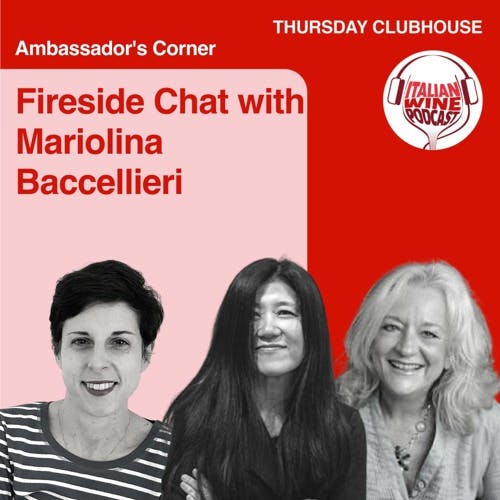
Ep. 872 Tommasella Perniciaro Interviews Mariolina Baccellieri | Clubhouse Ambassador's Corner
Clubhouse Ambassadors’ Corner
Episode Summary
Content Analysis Key Themes and Main Ideas 1. The rich, often overlooked, winemaking heritage and potential of Calabria, Italy. 2. Azienda Bachelieri's commitment to preserving ancient traditions and native grape varieties. 3. The unique terroir of Bianco, Calabria, and its influence on local viticulture. 4. The historical and cultural significance of Greco Bianco and Montonico grapes, particularly in passito wines. 5. The challenges and opportunities for increasing visibility and wine tourism in Calabria. Summary This episode of the Italian Wine Podcast features an interview between Tomasella Permicharo, an Italian Wine Ambassador, and Mariolina Bachelieri, alongside her daughter Beatrice, from Azienda Bachelieri in Calabria. The discussion highlights Azienda Bachelieri's dedication to revitalizing Calabria's winemaking traditions, focusing on indigenous grapes like Greco Bianco and Montonico. Mariolina recounts her return to her family's historic estate to preserve their heritage, detailing their organic viticulture practices and the distinct characteristics imparted by Bianco's unique terroir. The conversation explores the profound significance of their passito wines, which are considered ""meditation wines"" with roots in ancient Greek history. They also touch upon the challenges Calabria faces in gaining recognition and the importance of governmental support for wine tourism. The interview concludes with a discussion of their new orange wine and practical advice for visitors to their winery. Takeaways * Calabria is an underappreciated Italian wine region with significant potential for high-quality wines. * Azienda Bachelieri, a family-run winery in Bianco, Calabria, has been practicing organic viticulture since 1998. * Mariolina Bachelieri returned to Calabria to preserve her family's winemaking legacy, focusing on native grapes and traditional methods. * The Bianco terroir, characterized by a unique microclimate, clay soil, and natural herbs, contributes distinct flavors to the wines. * Azienda Bachelieri cultivates ancient vineyards, some over 100 years old, including ungrafted vines. * Research suggests Montonico is a key ""parent"" grape for many Southern Italian varieties, underscoring its historical importance. * The winery produces a diverse range of wines, including Greco Bianco and Montonico passito, dry whites, reds, rosé, and a newly released orange wine. * Greco Bianco and Montonico passito wines are considered ""meditation wines"" due to their historical depth and ability to evoke a profound experience. * Calabria's wine sector and tourism industry require more support from regional and national administrations to raise its profile. * The winery encourages visits for an immersive experience of their vineyards and winemaking philosophy. Notable Quotes * ""I believe in the quality potential of wines from Calabria, not only because I'm from Calabria originally, but, but I think that this has been a region often forgotten in the wine world map."
About This Episode
The Italian wine podcast hosts discuss their episode on Italian wine club on Club House, where they replay their favorite wine producing and their co-stars. They also talk about the current COVID-19 situation, with many people being free to get vaccinated and restrictions on social distancing. They introduce Mari relevance Bachelieri, a successful wine producer, and discuss her desire to preserve her family's legacy and culture. They also discuss the importance of local and national administrations and the importance of safe safeguarding the demographics of Calabrio. They discuss the importance of sunny and warmer wines, and the use of traditional and organic techniques for creating wines. They also discuss the importance of "any" and the differences between grapes and their parentage. They also discuss the importance of "any" and the importance of "any" in the wine production. They also mention the importance of "any" in the wine production and the importance of "any" in the wine production. Finally
Transcript
Welcome to the Italian wine podcast. This episode is brought to you by Vineetili International Wine and Spirits. The fifty fourth edition of Vineetili was held from the tenth to the thirteenth of April. If you missed it, don't worry, go to benitely plus dot com for on demand recordings of all the sessions from the exhibition. Welcome to this special Italian wine podcast broadcast. This episode is a recording off Clubhouse, the popular drop in audio chat. This clubhouse session was taken from the wine business club and Italian wine club. Listen in as wine lovers and experts alike engaging some great conversation on a range of topics in wine. If you enjoy listening, please consider donating through Italian wine podcast dot com. Any amount helps cover equipment, production, and publication costs, and remember to subscribe and rate our show wherever you tune in. We'll get started. So today, as you guys know, I see. Let me just say hello to a few people, Paul. I hope to see you, Monica, Annie, Melissa. I see Andrea. So I guess I guess we can kinda get started. Like, I you're my boss. Is it okay if we start? Yes. Yeah. Sure. Okay. So, as you know, like, he's the clubhouse manager. He's been doing a wonderful job chasing everybody down for for the, there's actually a lot of work, behind this. And you guys know that this is the Italian wine club on, on Club House. And all of these episodes, we replayed on Italian wine part podcast where it gets a huge, huge amount of listens. So we're very happy, and the Ambassador's corner is very popular. This is where our our Italian wine ambassadors get to choose their kind of quote unquote favorite wine producer and do kind of a deep dive into whatever they think would be appropriate. So let let me just reintroduce to you our Co Montula. Her name is Thomaslla Permicharo, and she has this company called Good wine habit. How are you pre pronounce it? I'm always from Azenas. So she is a client, but she lives where in Sweden. Yes. What's the weather like over there? Well, actually, we are being very lucky because it's quite sunny, at the moment, and quite warm. Are you coming to Venice Lake? No. I'm not. Unfortunately, not this year. I have, lots of work during those those days. Yes. Yeah. So I know you want you're an APP for, of course, the w set. I and I know you grade, like, some, Mark papers because some of our students were in the diploma program, they have you. Okay. They're a mentor. So you're quite you're quite famous being for being harsh. That's good. I think. Yes. Of course, to Mozilla, I've met to Mozilla. We've met to Mozilla because she did the via program. When when did you do the via program? I'm not wrong. It was two thousand and seventeen. Right. You did the seventeen program. And and since since then, what have you been doing? You're I'm it's kind of your full time job, right, the APP Yes. Exactly. So, I created the, the APP in, two, in twenty seventeen. So I've been teaching WSTT courses here in Sweden from level one to level three. And, and I also teach that diploma online, with London with the flagship school. But alongside the WSTT education, as I'm in Italy, Italian, and one ambassador for Sweden. I also organized master classes tastings here in gothenburg, especially, especially with a with a well focused on Italian wines. So I'm also Balpolicella specialist for the Swedish market, entitled by the consortium of Unival Pollilla to promote, a little bit more the Val Pollilla wines here in, in Sweden. So the same, Camenzuela. What about what about the COVID situation. I know, of course, the suites, they were very reluctant to get the, the vaccinations, and they were very free from the get go. What is the current situation now? Well, the current situation is basically I think it's a little bit better than Italy, in terms of cases. So we, I mean, we copy this spread around, of course, but it's not it's nothing nothing serious anymore. So many people have it, like, say, with mild symptoms overall. So hospitals are in a good, situation overall as well. So, yeah, I mean, it's also true that they don't test, anymore. So we don't know the exact numbers of cases we have. But, but Swedish people have always been quite, free compared to other countries in, in Europe, for example. Right. A great advocate for, you know, the herd community, philosophy. Right? Yeah. They've never said it, clearly. And but, really, they allowed us the virus to move around a little bit more, which maybe this was good because now the situation is okay. But we had hard times here as well. What we didn't have was lockdown at all. This is not in the Swedish constitution. It's not possible to force people to stay at home, close at home. And, we didn't wear masks. Yeah. I mean, like, everything was left on, each person's responsibility. So if you wanted to wear a mask, you could do that, otherwise it was your choice and not to wear it. You needed to, for example, to keep distance from people. There were some basic rules, that, could help with, controlling somehow the, the spreading of the virus. Yeah. So I suppose that meant then the probably the the wine consumption. I mean, the wine business was not as effective negatively. Right? No, not that much. I mean, for example, wine bars, restaurants are never closed. They just have some, reduced time for opening. So instead of closing at midnight, they were able to stay open until like eight PM when the COVID situation was really, really, you know, serious. But apart from that, I mean, you could have could go even to a wine tasting. There were measures inside the restaurants. So in terms of a location of tables, for example, number of people admitted but there was no green pass, no, no closing of these, public spaces at all. Alright. Alright. Okay. Yeah. That was just, of course, I haven't seen Thomas, like, in a very long time, I picked before the pandemic, I believe. So that was just a quick catch up. And now back to the show. So Thomasela, tell us why you, you've chosen Mariolina as your producer to be called on today. Yeah. Well, first of all, I want to thank you for having me on the ambassador's corner and giving me the chance of interviewing, the agenda, Bachelieri. There is more than one reason why I chose the Adiana Bachelieri. First of all, I believe in the quality potential of wines from Calabria, not only because I'm from Calabria originally, but, but I think that this has been a region often forgotten in the wine world map. So my first thought was to shed a light on this region. We probably know about in the most recognized the Chiro denomination, but there are many other, denominations in the region that deserve attention. So Bianco, which is the village where the agenda Bachelier is located, is one of these. It's a place of very old winemaking traditions since the Greek time, and it has, a rich and logical and cultural heritage, especially found in the suite, aceto wines made from local grapes, like Grereco Diianco, and Montonico. Secondly, the Adienda, by Chalier is one of the top notch references in the area in my opinion. So I think that their wines are the expression of Bianco's teruar and, good examples of the big quality potential Calabian wines can have. Okay. Great. So what are the particular learning objectives from this call that we should expect from you today? Well, I think that, listening to this interview, will probably push our listeners to find out more about Calabrian wines, also to dive deeper into the diversity of grapes and styles that will be on the Chiro. We will listen to a story of passion of strength of love for a region that has been known for so many years. And that now thanks to, mindful producers like Mariolina, is starting to show the world that it deserves a special praise place, in the, in Italian wine. Okay. Great. Before just before, I hand over to you the mic I wanted to remind everyone. We've started a new, kinda YouTube channel. It's called mama jumbo shrimp, and we've just dropped the three part series of our sicilian, Chitaskolastica because I I see Paul and Fanny in the audience. They came with us. I would say they're a bit imperfect, but I I guess, you know, it's better than nothing. So I hope you can you guys can see what we've done. It was intense three days, and then they stayed on for the tastings, but, just so that you can have a look at what we did in one of our favorite regions, which is Aetna. So over to you, Thomas. Thank you so much, Steve. Okay. So, just to give a few words to introduce, Mariolina Bachelieri. She was born in Regio Calabria in nineteen sixty two. But she left Calabria in nineteen eighty to move to Florence, touscany, where she worked and lived until the two thousand and nine. That year, she decided to move back to Calabria to take care of her families, winemaking business and properties, focusing on Calabrian native grapes, and other cultivars such as olive trees, bergamot, and wheat. Her working philosophy is to recover the old vineyards planted, with ancient varieties, like, for example, Montonico, Gregobiano, to produce wines that can really express the uniqueness of the local terroir. Her very first bottle, with her name on it, was Greco Divianco doc two thousand and six. And since then, he has been a a wine success with many national and international awards received for her wines. We will listen about this directly from, Mariolina and her daughter, Beatrice, who will join us in this interview. So welcome, Mariolina, Beatrice. I'm so happy to have you. Welcome. Thank you very much to having the photo of me and my daughter, Beatrice. Hi. Hello. Hello. Thank you so much. How are you? Fine. We're good. We're good. Thank you. Good. Thank you. Perfect. So, let's kick off the interview with the first question. Can you give us a brief introduction about the agenda Bachelieri? Explaining a little bit more about, when and how it all began? Yes. The history of the company, as you say, in my name, with my name on Labble, was born in, two thousand six with my first harvest of Greco Bianco Di Bianco. Deactivated lens, which include in addition to being a yard, also orange is Bergamot's lemon, olive trees. I've been, only the four centuries, but really the passion for wine and wine making has always been a family thing. My father has always involved me in running the business. Oh, that's great. So, for example, how many actors do you have just to give an idea to our listeners of the property? We have fifteen hectares that we, cultivated, directly because the there are much more that they have, our, other persons that, that are not the, our, our properties, but the efforts that we, cultivated directly are fifteen. Okay. In in in total the the company as a hundred hectares. Okay. So just before talking a little bit more about the grapes, so you you you plant and uh-uh the wines you produced. Can you tell us what inspired you to come back to Calabria after many years as spent in Tuscany and, to jump into the wine world because I guess you were working in another, field in another business and it was not wine. Yes. I never really left. Yes, I did move away from Calabrio to Florence when I was eighteen, many, many years ago. But several times, I, again, I returned to Mative Land. I traveled back and forth. And, one day in two thousand nine, I just realized that it was time for me to actually preserve our family's heritage. So I moved back for wood. Four years, there was talk of, an, unable wine. And, this is the first bottling of Grego Dibiancopacito was born. Okay. So, was an easy start in this world? I mean, do did you have any precise vision of what to do, how to do it, even, considering the eventual challenges that you would have overcome. So, hi. It's me. It's Patricia. My mother, you know, when she started, she began quite naively, she really it was more about passion and the joy of taking over and being finally home. And she really went by the by, you know, learning as you go. And, she was lucky enough to have great professionals that help there to get, get ahead of the business, how to do it, how it works, and mixing. So what it was traditional about one making and, Bianco and Calabrio, and the new model techniques that are really needed for making wine today. So she she didn't really have a vision. She was more enthusiastic about it. I remember I was still in Florence, and she will call me and explain everything very happily. And so maybe now it's more serious. Now it's definitely professional. And back then as well. It it was more about joy, really. Okay. That's great. I think that, this is what, you need when you start, a business like the joy and passion, possibly. So I guess you also, decided, for example, not to choose, to work with the international varieties, but just to focus on local grades and native grades. Is it correct? Yes. Yes. Thomas, in fact, because I I I think, everybody have, mission And, as I doesn't know, be because, but I, I, in, in, in, in me, there was something that, tell me go away. Go away. You have to preserve. You have to preserve what your father and before your father, your grandfather, your grand grandfather before they left to me. And I have, and and, you know, it was a moral obligation. Yes. About this, about my my land, about my Calabia. I I don't know. It's it's a passion. It's a love. It's it's a family. The the the company is a family. It's a it's a family business and Yes. Yeah. That's good. I mean, I think that that was, good to have these boys, you know, inside of you saying to, go on with the tradition and, not to lose. The heritage and the culture, as well. So now let's talk about the teruar. Can you tell us what makes your site at Bianco in the province of Redjokahabria? So special and so perfect for beauty culture. I'd say, it's, Bianco is a tiny happy island. Thanks to peculiar microclimate. The weather is warm and wind, which means the sea breeze reach the grapes. The earth is actually made with, clay, rich of, in minerals. There are also lots of natural herbs, which we don't remove from, vineyard. For example, we don't, do not practice chemical weeding. For example, herbs are liquorice that you can find in every hour wines. The airbag, they add flour, to the wine and, the, the, the, the, the company, since nineteen ninety eight, was organic farm. And I, I, I, continued, what my father start in a so many years ago. And I think that it's important, to give to perhaps some client, a wine, and not only are a good wine, but a healthy wine may made with grapes, that we produce. We don't buy, grapes. We have the, our grapes. And, Bianco is, I, I think, we are lucky, to to leave in the ankle. Yeah. So I guess that, yeah, the there is like a very mild, Mediterranean climate as well. Do you have altitude in Bianco, or is it just a little bit more plain? The plane with plane. But you have the c. I'm not too much. Okay. But it's very close to the c. The onions. Yes. Yes. Yes. Yes. A few matters few methods. Okay. Great. So, yeah, one of my questions was what, your approach to beauty culture is, but you already answered. So it's organic Viticulture mainly. So you don't spread any chemicals, in the fields. Okay. And I think that that is, absolutely important. If you want to make a good wines, you need to have a very good grade. So if you have good ingredients, you can make, very good, at least, very good wines. Okay. So, going back to the terroir, Bianquen Calabria in general are still not so well known abroad. What do you think should be done to increase the visibility of this region? I believe that regional, local and national administrations should do more. Only recently in last year, years, they have finally grasped the importance of all different realities and heritage of Calabrio, the importance of safe safeguarding the demographic richness. And, that there is also a market for us more producers who believe in what they do and feel guidance of a natural heritage, cultural diversity, beat food or or vineyards, is an asset. Right. So we can say that even, I mean, for example, tourism and, technology, beauty culture in general can go by hands somehow. So Yes. Yes. If people come and try your wine and visit your area, possibly they they would be interesting in finding out more about the region and other, even other denominations in, in the region? Yes. Definitely. There's a there's such a variety of wines and grapes, and landscapes, traditions, even languages. So one, one small site that can be maybe Bianco, or I don't know, the Castaviola should lead to visiting and getting to know the other realities that make Calabrio. So, yes, And, of course, there's also the archaeological the, the archaeological side of all of this, I mean, this was, so having thousands of tourists in Florence to visit the museums because we've been there and not having so many tourists visiting the archaeological sites here in Calabrio and understanding the link between the archeology history, and wine, all food, all food, really. It's something should be done, definitely. Yeah. Absolutely. That's great. I mean, you have a vineyards that can be considered even a cultural heritage. Can you tell us how old they are and, what do you do to take care of them? Yes. All my vineyards can be considered the cultural age age. The younger ones, I'm sorry. The younger one, once at least forty years, the oldest, about one hundred. Some and sapling at sapling vineyards, one ungrafted in any case, wine Calabrio was produced even before the Greek arrived, hundreds of or there are, hundreds of rock milestones, palmetto root pastry. I don't know. It is correct milestones. Yes. Very many in the area around Bianco, and they are archaeological evidence of this. In any case, I am personally grateful to Greeks for bringing us, perhaps maybe, perhaps maybe the seeds. I I, I, I don't think they, a ride with the vine because the Greek, bringing us a Greek and montonic grapes varieties. We tend to them with, with a mix of traditional knowledge and model technique, techniques, machinery, whatever possible. So Yeah. So I I I read that you have, also, as far as study about the Antonico grape that you have. Is it correct? Yes. Yes. I'm in in in any case, there are many, many many history about this, but I I would just like briefly to mention, a publisher's study of the Doctor. Which shows that the pedigree of main saddles vines, for example, Cartarato, TBbo, and beyond, for example, San Giovanni or Trebiano, We find Mantoni because as a second parent. This study is, has been published on, American Journal of Enology, in twenty, seventeen. And this is a study very important, ma'am, because they, they, they are, an heritage more much more important for the many of virus or or Italian vines, not not only Southern wines. Okay. Yeah. So Mantonic was also, yeah, it can be from this study. They said that Mantoneagle grape is the, let's say, the parent, variety of many, many, other grapes. Yes. Yes. So, is it possible for visitors to have a look at your old vineyards, I guess? So when they visit your winery, you organize a tour of these, old vines Yes. Sure. We love it because, people love to to to see the vineyards to speak with us and, and, having the possibility of seeing the vines in person, like, they're real for real. You know? Yes. So they they get to understand how it's done, how it's tended to, and really seeing the differences between, every, and each grape, because it's not, obviously, the Greco grape doesn't look like the Montonico grape, And these grapes doesn't don't look like the Nerello grape. So they understand they get a better understanding of what we do and what we are trying to to tell what's our message and our mission as a company. So it's, it it's very nice having people, yesterday. We had a a group of people, really, and it was it it I think it's beautiful. It's, human exchange and a way of, spreading, really spreading the message, really. And And, yeah, it's not very common either to visit a very, very old demiards. So the vines, the very old vines are beautiful on their own just to, you know, to be seen. So this is a plus you have. And, I think that, yes, for visitors, it's absolutely point of interest. Yes. Yes. We we don't have nothing to hide. Yeah. Absolutely. Yes. So we talked about your approach to Viticulture. What is your approach in the winery? So how do you produce your wines? So do you use like a natural approach, to to beautification? How do you do? What do you do to produce your your wines? Well, it is a mixture of techniques, really. We try to go with traditional methodology as far as possible. And but as of recently, especially the last ten years, we had to take into account the climate change because it it it is a problem. It is a problem. And you you really need to watch watch out what's happening, and the weather, and and everything. So, we at peak, the r the r vest doesn't happen with machinery, at all. This this will would absolutely destroy the vineyards. Okay. So there's maybe the first steps are more delicate, very, as I said, traditional. And then, of course, there's, everything that that that's the machinery and, and everything that's needed to make wine also in a more hygienic way than it used to be you know, at the beginning of the last century, you can't just squeeze the grapes with your feet anymore. Yes. And then every wine has, its technique for making it. So when it comes to Pasito, Greco and Montonico, you there's a set of days where you can pick the grapes and then, they lay under the sun for seven to ten days. And then you press the grapes, which have become raisins at that point. And then from then, you proceed with the, the machinery and you make the wine. When it comes to red wine, of course, you, press the grapes and you leave the liquid because it's still not wine. It's almost there Mhmm. To, on, on the press, pills. So that that, you know, that's that's different techniques. So you can't just go with one one one way fits all, you know, and that's that's going to temperatures and, which better enhances the aroma and sense, so, you know, that's different. That that this allows us to, experiment a little bit. So we we can even create different wines with an unexpected twist. So but then you're gonna talk about this later. So Later on. Yes. I'm not spoiling anything. No. No. No. Do you use do you have oak? Do you use oak for aging, for example, for specific size of one, I guess? Okay. So stainless steel mainly for fermentation and then, eventual aging in in oak. Yes. Yes. It's a breeze. And is it like old oak? Can you walk? What kind of, oak? Is it? Okay. Second news. Yes. Second use oak. Okay. Great. So I guess that, you probably use old, orc just to preserve the varietal expression a little bit more. So, yeah, to to to give a more, I mean, pure idea of what the grapes can deliver in the glass. Yes. Yes. And, it's important for us that, Grapes can explain, himself without, I think nothing. Yes. Yes. Yes. Yeah. That's great. So coming to the wines now, we we have talked about how you produce the wines, but we would like to know what styles of wine that you produce. Okay? So if you can give us an idea of the range, products you have. Yes. We make the two pacita wine, Grego de Bianco, and Antonico, two white wine, secanyo, and Ramos, two red wine, eroce, and Ramos, r o c wine, violet, and orange wine, drums. Okay. So what are the grapes, used to produce these, these wines? Gregory bianco is, seven percent. One hundred percent. One hundred percent. Greco Bianco, Monteco, one hundred percent Monteco Bianco. Sicano is one hundred percent Greco Bianco, early harvest. And Ramos Bianco is, De Bianco, and, fifty percent, each other. And red wine pierogi is, one hundred percent, Nerello. Dromos is gallopo and Nerello, fifty percent each. Rocet wine is, also, Gallopo Narello, fifty percent. And, the orange wine, is fifty percent, Greg obianco, and Antonico Bianco. Okay. So from what we can, see it's, basically, native grapes and some of them are really local. You can find them only in specific areas of Calabria. Like, for example, the Guadalaj is not so common to find the plantings of Guvardavalle. But you have great, in Guarda Valley to use, and, yeah, the Nerello, in the Gallop, of course. So this is the the most famous, the star grape of Calabrio, we can say. So is there any of these wines that you think most represents your winery, the at the end of bachelieri? I think, in is in Greco Dibiano, but in the last years, we have, many, satisfaction, about Piroci, and Cicana also, the red wine and the white wine, monovitineo with only one variety of grapes. And the, also, the last year's, m Antonico Pascito, because, they seems that was, less famous that, Gregory Bianco, Indeed, there's a very, very special, and all over the world, they loved, also Montanoico. I think most of the famous is Grego de bianco Pacifico. I I, I don't know, since what is the the the the the wine that that best represents, us? Yeah. Well, you are really one of the very few producers treasure in the tradition of making historic suite passitos, from Grego and Montonico grapes. And I have to admit, that when I tried your Montonico, I tried both the Greco and the Montonico, but, the Montonico, when I tried it, I felt like in heaven, it was a wow, a wow experience. So, they are made in a very similar way, but they are different than in the glass So can you briefly explain to us what are these differences and, yeah, how you can you, describe them to invite our listeners even to to try them? The difference, differences are in the vine, really. The vines, leaves are different. Greco berries are over shaded, thinning, peel, m, mangonico, are around more resistant peel, the grapes, look and taste different. Their identity, if you will, age with a wine and be become, ever more evident. I will describe Greco as warm and silk and montoni was strong and persistent deep. Gregco, and and montonico represent a thousand of years of history. That are Eurek, and I wouldn't define them as, sweet. They are more like meditation wise. They can be paired with the, the set or cheese, but they're the that's so much more to them. They create a speech, special warm atmosphere. Even, I say in Italian. If you are alone, they keep you company. If you are, with friends, they make you happy. I think something, I think everybody can, find, best, reason to to to to that the reason to drink? To drink, the best, reason to, to drink them, or or the other, because, there are many there are something mythological in, in, in, in this. And only when you draw, do drink, you understand. It seems like it appears in the Greek temples, for all the future future, future, future, drinking, Mantonico. In fact, in a Greek language, Mantonico, means dive in a territory. Do you understand? I don't know if Yes. I mean, when whenever they join for my English No. No. That's good. That's great. I would like to explain me as usually do in Italian because I I am I I I would like to have many words to explain. And so No. Grego, the, in the the, ancient test, for example, relatives, they, they say, wine to make law, or or or to have more courage, in war, Greeko and Montana are, middle. Yeah. So if Greco gives you the courage to go into a war, yeah, the Guantanamo can, make you able to speak with god because, as you mentioned, Greeks did when they try to many many answered texts, also impounduous speaking with god. So so it's true. Yeah. What I found, is that the Greco in general is quite floral, for example, is a little bit more delicate than the Montonic. As you said, Montonic was quite a strong austere. It has these a naughtiness, these notes of, even tobacco chestnut, that makes it absolutely wonderful and very, very interesting to try. I think that there's no other wine pasito wine like that. So I absolutely encourage our listeners to search for your montoni going to try it because it's a real experience. Okay. That's great. What are the main markets where you export your wines by the way? Because our listeners are based on in different areas of the world and not only Italy. So what are the main markets where you sell your mind? At the moment, we are in Australia, in Israel, you know. Yes. In in Canada, in Canada, Okay. The market is very, very important for us. Yeah. So you're having also a good, success there. I mean, customers like your wines and, I I can speak about Sweden because I know that, they are selling very good. People like it. People love it, especially, when they try it in a wine tasting. I can see some time. So when I I include your wines, their reaction, they're very, very surprised. So, as I said, look for them and try them. It's the only way to know, what they are able to, to express in the glass. Okay. You mentioned before that you made among your styles or wines that there is one that is, a new coming which is uh-uh the orange wine and orange wine. So can you tell us what pushed you to produce such a style? Because it is not the traditional style in Calabrio. So how the wine, how is the wine made? And, yeah, what are the reasons why you decided to produce an orange wine? Yes. It's true. It was originally made for the Canadian market. It is not traditional at all. But since we got, it dried with Cicano using the graco grapes, to make a dry and white, instead of a seed of wine, we said, why not? Why not try and give an, an unexpected tree such tradition? It's made like a Calabrio farmer who have made, made this red wine. But we actually use two white grapes and treat them like we do with the, the red grapes, like the red, white wine pierogic, with, maturation on the skins, in So skin contact. Yes. Yes. Yes. For, five eighty our, hours. And and then, born at the orange wine, and, actually is my favorite eye. I can't explain. I I haven't, so so much expect, expectative, but, there have been very, very a surprise for me. And, I'm happy. Yeah. So it's a blend of Greco and Montonico, you said? Yes. Yes. Okay. So it's masqueraded on skins, for a few hours. So they get it gets five eight hours. Okay. And then is it aged in oak as well or is it just stainless steel? No. No. No. No. No. Just the steel. Okay. Okay. So, and are you already selling it, or is it just a new release? It's it's a new release, which was made for Canada. Canada. In Canada, it began selling before Italy, really. Okay. And but now, yes. It's selling in Italy too, and it's it's it's going very well, really. People appreciate it and understood that it was different, and they really liked it. So it's it's going great. Okay. Perfect. That's good to to hear. So the last questions, do you have any more new projects coming up in the near future. I really I I don't know of it because the, means happens. There is one I've been toying with years, the popular sparkling wine. The market demands it, but, to be honest, personally, I'm not a fan of sparkling wine, so kind of keeps, being postponed. But, I don't know. May may maybe a sparkling wine, I don't know. Let me check what do what do you think about? It's up to you. I mean, it's, I don't make the decision about this, but You never know. It might happen. In my death, yes. Exactly. Well, that's great. This was our, last question. So thank you. Thank you so much, Marjorie and Marjorie for answering all these questions. So it was a real pleasure for me, to, interview you. I hope our audience now will book a trip to Calabrio and visit your winery and have the chance of trying the wines with you. And listen to your story. So I will give the room back to Stevy now. Hey. Thank you so much. Thank you. Malina, I have a question something more practical. How do you get to your winery, like logistically? I mean, obviously, we'll have to, pick a plane. What what is the nearest airport? To get to our winery. Yes. There are several airports, thankfully, in Calabrio so far if they don't shut down one of these because politicians always took stupid stuff, but there's an airport in Reginalabia and, one in La Mesa, especially La Mesia is very well served by Ryanair and companies such as this. So they the the the trip is not is not expensive, really. You can get here with a few euros. And and then from what the this that would be for the Europeans, but and then you get to LaMecia, and then how how far is it from LaMecia, the airport? One hour and a half of driving, really. And then this it's really about the car. Yes. Yes. So you would have to run, rent a car from the airport. Is that correct? Yes. Yes. Okay. And what about coming from, you know, from America? Because Paul Bologna wrote on the chat, like, he said, the tourism billboards of Calabrio that I see at the airport makes me want to visit. So, like, you know, if we were to come, you know, to Calabrio, you know, just a group of us would we get that from from, let's say, from America internationally? From Rome, I suppose. Right? Like from Rome or Ramon? From Rome and Lam. And then there are flights from the Rome and Lam. So you need to reach one of these two cities. And then it's down to La Mesa. Otherwise, I don't know I'm not sure, but they were discussing this. Maybe there's a way of reaching from Catania, which is in Sicily. Oh, how far is it from Catania? Catania is a couple of hours really because you have to reach them, Messina, and then take the boat. Right. Right. But it's from Milan or Rome. So you get from America, America, Milan, or Rome, and then La Mesa. Yeah. Of course, you know, let let you know, I don't know if you know, we organized as a group, like, the street that's Alaska. You know, we were talking about it actually last time. We saw some of our, friends, and we were talking about Calab, but he has a destination. So, you know, just just a question about that logistics thing. So you guys, Liza, do you want to come back and tell us, what's going on before we hit the minute we break? Yeah. Sure. So we're going to have actually, I'm chatting with him right now. For next week, we're going to have an interview Evan Giuliani, and to be interviewed by Emilia Marini. So that's gonna be next week Thursday at six pm Italian time zone. And then we're gonna have a, a break for for the minutes emergency? Yeah. Because then we'll all be in APnea. Actually, everything starts next week. I'll see I'm looking forward to seeing some of you. Also, next Wednesday, it will be on a different channel. There is a maze row, call with John Norwood, who's one of our Italian wine ambassadors, of course, and he will be interviewing at seven PM, however, Italian time, Andrea Pierro Pan. They've, I know they've built a lovely, new winery here, if anybody would like to ping them. So that's it for now. And thank you so much to Mariela and Marjolina, MBa Fricia, for helping out there. And thank you. You guys take care. And I hope to see all of you very, very soon. Thanks for listening to this episode of the Italian wine podcast brought to you by Vineetly International Wine Affairs EXhibition, the biggest drinks trade fair in the world. Remember to subscribe to Italian wine podcast and catch us on SoundCloud spotify, and wherever you get your pods. You can also find us at italian wine podcast dot com. Hi, guys. I'm Joy Livingston, and I am the producer of the Italian wine podcast. Thank you for listening. We are the only wine podcast that has been doing a daily show since the pandemic began. This is a labor of love and we are committed to bringing you free content every day. Of course, this takes time and effort not to mention the cost of equipment, production, and editing. We would be grateful for your donations, suggestions, requests, and ideas. For more information on how to get in touch, go to Italian wine podcast dot com.
Episode Details
Related Episodes

Ep. 2789 ColleMassari: a long-term vision rooted in Montecucco with Giuseppe Di Gioia | On The Road With Stevie Kim
Episode 2789

Ep. 2788 Ep. 14: Austria and Hungary | Study Smart for your WSET Level 3
Episode 2788

Ep. 2785 From Volunteer to Speaker at TEXSOM with Samantha Cole Johnson | TEXSOM 2026
Episode 2785
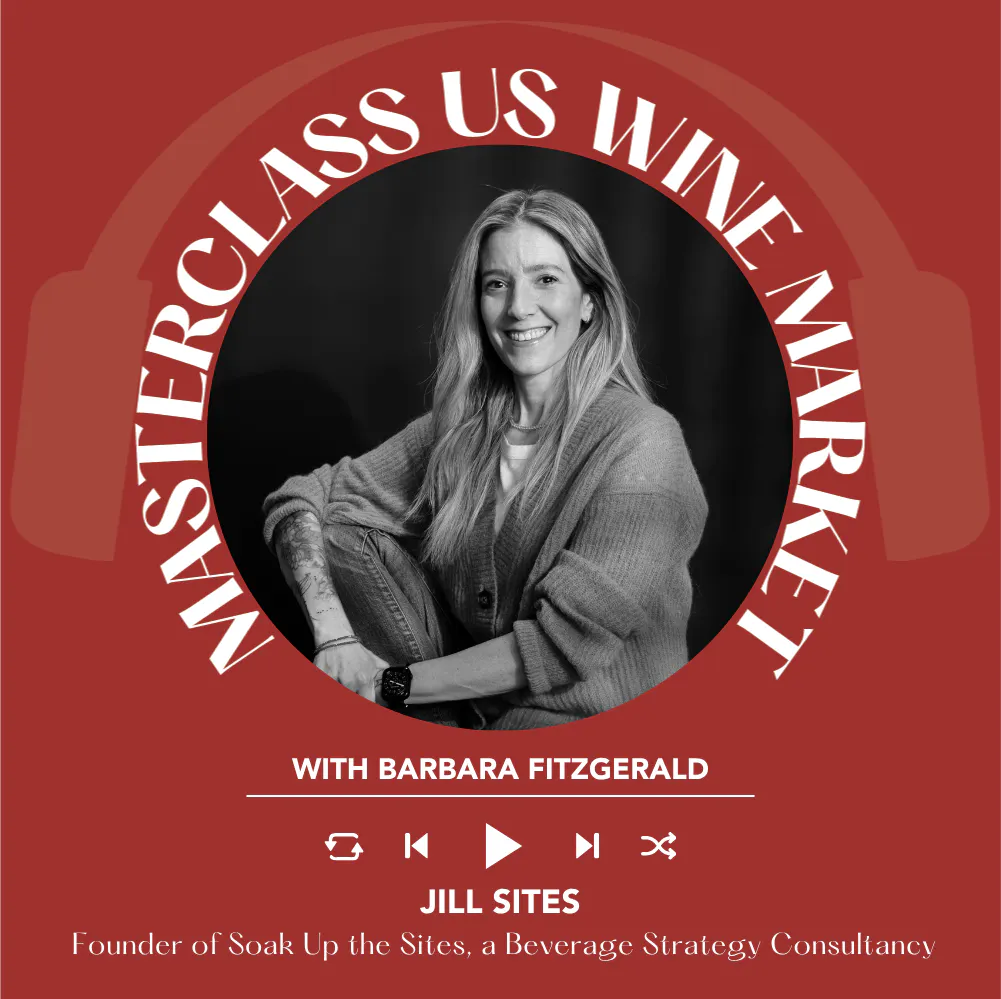
Ep. 2766 Inside the U.S. Non-Alcoholic Wine Market: What Wineries Need to Know with Jill Sites | Masterclass US Wine Market
Episode 2766
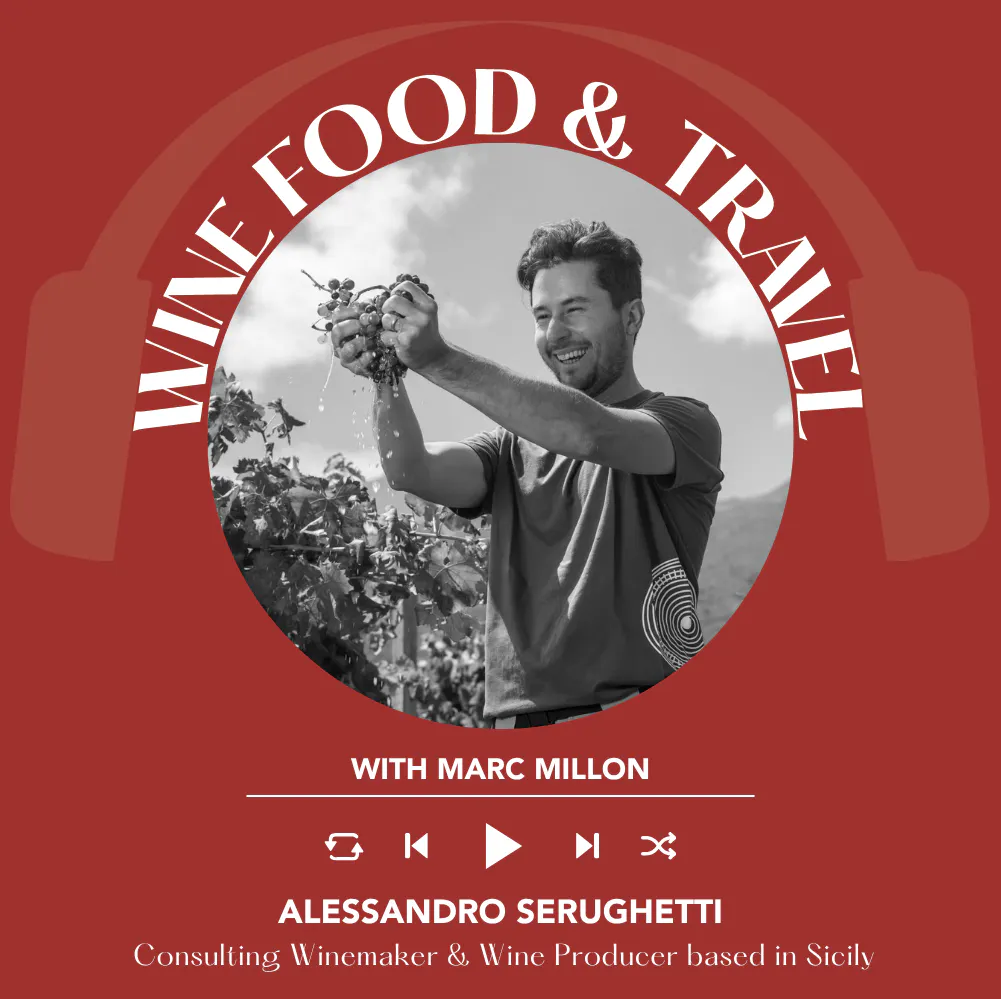
Ep. 2761 Winemaking and Consulting Across Sicily with Alessandro Serughetti | Wine, Food & Travel with Marc Millon
Episode 2761

Ep. 2759 Part 2 – The VIA Educational Program & Italian Wine | Heart-to-Heart Conversation with Sarah Looper
Episode 2759