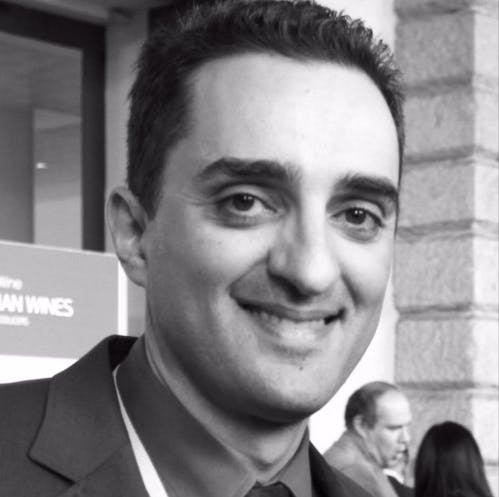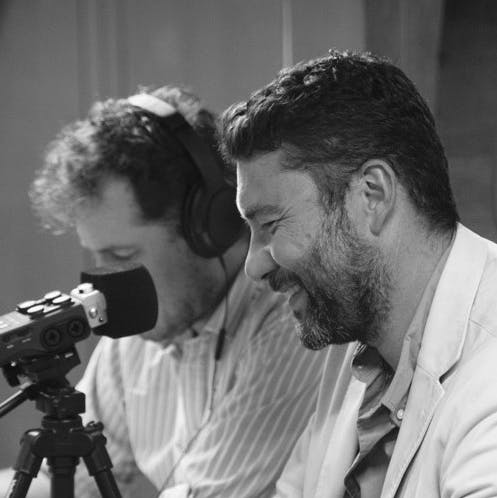
Ep. 125 Monty Waldin meets Matteo Santoiemma (Ognissole Winery) | Discover Italian Regions: Puglia/Apulia
Discover Italian Regions: Puglia/Apulia
Episode Summary
Content Analysis Key Themes and Main Ideas 1. The Onusole winery's organic and biodynamic viticulture practices in Puglia. 2. The unique terroir and diverse native grape varieties cultivated in Puglia, particularly Nero di Troia and Primitivo. 3. Puglia's rich historical significance as an ancient winemaking and trading region. 4. The rising appeal of Puglia as a tourist destination, driven by its authentic ""Maseria"" (country houses), distinct cuisine, and cultural heritage. 5. The integral connection between wine, food, history, and the natural landscape in defining Puglia's identity and visitor experience. Summary In this episode of the Italian Wine Podcast, host Roni Walden interviews Matteo Santoyema, General Manager of Onusole winery in Puglia. Matteo introduces Onusole's location in Canosa di Puglia, detailing its unique limestone and sandy soils and commitment to organic and biodynamic winemaking practices. He discusses their primary grape varieties, including the prominent Nero di Troia and Primitivo, as well as several white varietals. The conversation delves into Puglia's ancient winemaking history, noting Canosa's historical role in wine production and transport. A significant part of the discussion highlights Puglia's growing tourism appeal, attributing it to its authentic ""Maseria"" (fortified farmhouses), exceptional local cuisine (such as durum wheat bread, specific wild herbs like Lamapsciouni, and special mozzarella production methods), and diverse geographical features. The episode concludes by portraying Puglia as a multifaceted and ""unmissable"" destination where wine, food, and history are deeply intertwined. Takeaways * Onusole winery in Puglia practices certified organic and biodynamic viticulture, prioritizing respect for the local environment and biodiversity. * Puglia boasts a rich array of grape varieties, with Nero di Troia and Primitivo being key reds, alongside whites like Bombino Bianco and dry Moscato Bianco. * The region, particularly Canosa di Puglia, has a documented history of wine production and global trade dating back to ancient Greek and Roman times. * Puglia is an increasingly popular tourist destination, offering authentic experiences through its unique ""Maseria"" (historic farmhouses turned into accommodations). * Puglia's food culture is a significant draw, featuring distinctive products like durum wheat bread, wild indigenous vegetables, and unique mozzarella production methods. * The discussion emphasizes that Puglia's allure lies in the holistic experience of its wine, food, profound history, and diverse landscapes. Notable Quotes * ""Canosa Diipulia, was very well known for Vazivinari. So production and transfer in of the wines all over the world."
About This Episode
The speakers discuss the Italian winery Onusole in Julilia, where the wines are stored in a river system and are a pandemic-related industry. They also discuss the use of olive oil and the importance of protecting the biodiversity. The rise of P Emeralds and their flavors, including their use of different crops, is discussed, along with the cultural and food culture of P Emeralds, including their unique style and rich tastes like Durum wheat and Gerano bread. They recommend visiting P Emeralds and recommend a tour of the winery.
Transcript
Italian wine podcast. Chinching with Italian wine people. Hello. This is the Italian in my podcast. My name is Roni Walden. My guest today is Matheo Santoyema, who works for the general manager for Onusole. Onusole is a winery in puglia. Whereabouts in puglia are you? Yeah. Puglia is And where is puglia? Is Pullia? Yeah. Pullia. It's south Italy. Mhmm. It's on the East Coast. Right. Yeah. And, Adiateka and Union, we have boats. So in the seasides are two. It's really long. It's a five hundred kilometers deep, eight hundred kilometers, costs, but there is also an inland in Pulia. So where we are which is called. Yes. That's where my father was from. Yeah. Yeah. I don't believe. I appreciate. Yeah. It's it's it's it's fifteen kilometers far from us. Yeah. So what is what do you call it? The table? Why why did I have that name, that particular part of Pullia? It's it's a particular part, between, is the the the center note of Pullia, really flat. It's a young soil. When you say young, how many millions of years old? It's it depends from twenty thousand till two millions years old. It depends on areas. And so really flat, but it's it's not where we are exactly. It's in the neighborhood. Right. So where's the vineyards? So the vineyard is in Kanosa de Poulia, that, is a, an area called the PD Mujana area. So which is the foot of the Mujia area? Yes. Foot health. Yes. Yes. Yes. The foot. And so we started with the fifty meters, till two hundred, the fifty meters. Us up to the level c? Limestone, like soil. So what does the limestone soil do for the wines? I mean, and which grape varieties do you have? Oh, yeah. And normally, when you think about Pulia, you think, about the primitio, yeah, and negromaro. First, we produced Privetivo in Joyo del Cole, which is an area of five hundred meters up to the Realty in organic, but mainly, we produce Nero Detroit. Right. So tell us about that. Nero neutral is a great not really the one. It's a it's a black grape of Troy. Right. Exactly. There is a town in the neighborhood called Troya, but also there is a Greek culture in all over all over the puglia, which is, Troya, you know, so those are the finishing Greeks that are around about six hundred BC. Is that right? Yeah. About from one thousand depends. And canossa very was very well known in both in Greek and lighting culture, for example. So our town, which is canossa Diipulia, was very well known for Vazivinari. So production and transfer in of the wines all over the world. You find, Vazivinari from Canada in London, and you you search and you find it. So, basically, the wine in the ancient period was was stored and transported in these vases, and obviously when a ship sank or, you know, wine was sold to another country. The vase remained and maybe got unburied, but was then excavated by an archaeologist. So we know how these wines travel when they traveled and where they were traveling to. Right? Right. It's a really historic wine. Yeah. Yep. Yeah. So you said you're organic. Yeah. Are you certified organic? Yeah. It's a it's a because you're where we look at that tomorrow. If anybody that doesn't know, so he's a tuscan based analogist, but he's he's biodynamic, he's a scientist, so he's not like one of these people who's head up in the clouds. He's a very rational chap. So the fact that you're working with Luca, I would imagine you're working biodynamically and doing it properly, because he does it probably. Some people don't do birote damage properly, but he really does. Is that right? Right. Right? So what does that bring to the wine and this biodynamic, weedy beardy stuff? Yeah. It's a first of all, a pandemic, as, as you know, because, I search, you know, it's an agriculture practice. First of all, and so we have to think about a lot of, a a patient and attention, in Vineyard first, first of all, and a respect of about the, wall inside, inside environment. So, we are really happy about the fact that in our neighborhood there is an environment that helps us in in do what we do. Does it, will you find it in one place then or not? Yeah. Yeah. It's, makes life easier, doesn't it for biodynamics or organics? Yes. It's a it's a low on position. So you find, different culture, mainly is oil. So olive oil, you know, in our neighborhood. So it's not intensive agriculture practice. We own, thirty six sectors and eleven are not vineyard just to protect the the biodiversity also in, in, our vineyard and winery. So how much do you got thirty six sectors of land? How much is vineyard and how much is olive and how much is is forest or wild? Yes. It's, twenty five is vineyard. We have three hectares olive trees, and the rest is, pints and, quercusillacs. So both Have a green oak? Yeah. Yeah. Both, quercusillacs and, rovere lies and other, you know, the style of, Quercus. And the rest is, T moved. Clowed time. Yes. We have, you know, moisture like that. Right. Yes. He loves that soil, doesn't it? Does that affect the wine though having time growing well? Do you get a bit of flavor in that in some of the red wines or not? And the red wines flavors particular, maybe you feel that the the team and also the stupidity also because the soil is sandy soil. Okay. So I'm gonna ask you about these grape varieties again. So you have pretty muchivo, which, yeah, is also called Zinfandel in the US. Yeah. Neuroy. Yes. Correct. And then you have a Montepulciana, which is obviously well known from nearby Abruzzo. Correct. And in the and for whites, you have Bompino Bianco. Yes. Correct. And Moscato Bianco So let's let's talk about the white wines first. You have three white wine grape varieties, Mosquito Bianco. Yes. Shardonnay and Bombino Bianca. So let's start with the Bombino Bianca. How do you make that? Is it a dry still wine or a sparkling wine? Still? And, typical flavors? Typical flavors. The nose is, mediterranean vegetables. So even Salvyan rosemarino, just a little bit. Sage and rosemary. And the chardonnay, how do you make that still or sparkling? Still with the bambino bianco. And you can blend. Yes. We don't be on bianco. Moscato bianco. Moscato bianco. It's just, eleven rows. So little Okay. Production is, we call in our area real, real muscat, because normally use it to produce muscato di tranny, which is sweet, but we produce dry. Right. Okay. So, and Trani is a local port Yeah. Pre pre port. And so for the reds, you make a Joy decoderic, which is obviously a red. We are not, yet ready. We are producing two thousand seven seventies. This the first Vintage. Okay. And the multiple channel, did you for that red wine variety, did you make that as a hundred percent varietal? Or do you blend that with a bit of primativa as well? We, multiple channel, we have it with the narrow detroia because normally narrow detroia is ISCD, very good tenants. So they want to put channel helps in balancing in the new vintages that for us means three years before anyway. So and that one is called the Blenzco Bercciato. Bercciato. That's what it what does Bercciato mean? Is Bercciato is a particular stone. That's a very nice, question. Is a particular stone from Castel de Monte, which is a red stone because it's full of, iron oxidation, right? And so the the door of, a Lemonte around the door. There is this stone called Breciado. It's an idea of, belonging, terroir, which is Casa Lemonte, and which is our doc. So Casa Montte was a, or is, a amazing, an amazing town with an amazing castle, which is sort of hexagonal shape that was built by, for, rather, at the second, who was a hugely important person in Europe and, in Pullier, in particular. And if you go there, the reason he designed it as a hexagonal shape was it means it's very, very easy to defend, and it's very hard to attack. He was a super bright guy, massively influential, very tolerant of religion, color, sex, and creed. It's quite unusual at the time. So that is why, obviously, a super bright guy, and that's how he built this amazing palace fortress Castel Monte. When how is tourism changing the face of Pulia? Because it's really on trend now, isn't it? Pulia? Yeah. It's it's on trend because it's, an area, of course, of the sea. It helps, it helps a lot. But also, people search Maseria and out authentic food. So what is a masseria? Masseria is a country house. It's a country house that started from the medieval period till, until now still. And so it's a it's a house with the agriculture around. Yeah. So it's it's a it's a farmhouse in the center of its own farm. And they're beautiful. They're normally like one story, aren't they? They're not like two two stories. Yeah. It it it depends on areas. You find even fortified sometimes just for the attacks because in the in some period there were. Yeah. Because the sea is quite close if you would land by sea and attack and try and steal stuff. And yeah. And so we had the, so so many domination from Norman and Svabian, you know, we had these same problems. Yeah. They came and got us. Yeah. Yeah. And, so, and then after four hundred years of, Spanish culture. So we had to protect the costs. Okay. So just briefly about the local food, Pulia has some of the best food in Italy. I think, particularly the bread has a very lovely bread made of durum wheat, Gerano which is, sort of a yellowy colored brown. Absolutely. Beautiful full of flavor. And just driving around Paulio, I mean, in some respects, it's like almost like a land that time forgot. And the countryside changes incredibly. We have these iron rich soils, these very dark red, almost soils. When you go down to it, then you have the white sores, like the limestone sores. Then you have the inland area of Pulli, which is kind of it's like it's like another world isn't it? It's what about Mars, but with with, valleys where some of the grain has grown. That's a place to cover, isn't it? Yeah. It's placed to this car because it's very, different. You know, five, hundred kilometers deep is is a lot with so many cultures. So in Saliento, you you want your own identity. Right? Which is the peninsula in the peninsula. Italian peninsula. So that's the home of negromaro. Yeah. He's trying the negromarvedi in, main salento and in the area of, find the primitivo, as you find it, enjoy the color, which is in the heart of Pulia. And after that, there is Castalermonta area. Let's say, which is the center of Pulia, the Moja area, the the hill, the the highest, part which have. And the north, there is the gargano and the the down here, which is the the horn that we have in puglia, right, which is another particular area. And every one of these areas has his own culture and so a style of production, even wine. And and food. I anything. Food food is, I think the center part of Pulia, the area we are is, very well known for indigenous herbs, vegetables, spontaneous that you find. So there is a richness of that. Even Is that a lampashauni? So what does it Pashona? What is it? Yeah. It's it's something like an only defined in, in the ground. The fifteen, or twenty centimeters deep, and you're using different ways. It's a little bit bigger. So, you know, everybody try and make it like, to bring the sweetness out, you'd cook it, in padilla, and at the saucepan, you'd warm it up and heat it, and it goes, I guess sort of sweeter, doesn't it? That bitterness tones down. It caramelizes a little bit. And sometimes What about your mozzarella as well? You're very Wow. Wow. Wow. That's that's my town. So, Joy del Colle and also there is Andrea that produced mozzarella. Mozzarella style is a is a cheese, you know, very fresh from cows. Mhmm. Yeah. So it produced from cows. And there is a particularity now. This is produced with Sierra nestor. It means that you use a part of the production, you made the day before to the day after. So that that's it's like Levito Madar, right? Yeah. Mother, mother East, so it's in the case of the bacteria, I think, isn't it? Yeah. It is. Yeah. So, the cows of that, this area of moisture are used for producing mozzarella, and also other cheeses, especially we have something from sheeps because in Pulia, we had, you know, Transumasa, especially the central area. It's my father and used to go in when he was eight, because it was dirt poor, didn't go to school, and at, you know, four in the morning or five. And then when you have to get up and and add him. Yes. Nippek, where he go? Milk the the sheep. Morning time morning time, morning time come off at all during evening time. Minavino Mhmm. For example, it's one of the highest part comes from five hundred to six hundred meters up to the level c, and is where it starts the high. Alta Morte. Alta Morte. And beautiful stones because we have not to forget that the tranny, which is with Romanico style, a lot, the the the church of Sanicola Plegrino is white on the blue sea. It's, it's the stone. From that area. Yeah. The sea, the the the color of the sea there around the on the Pullian coastline is also spectacular. So, basically, I think we talk more about tourism and food than we have about wine, but, the winery is on Yisone. Well, I've been talking to Matteo Santo, who's the director of the estate and to a puglia, and pugilien food, and pugilien wine, and pugilien history, and pugilien terwar. So it's an unmissable place, honestly go there. And we honestly, we should have talked more about the wines, but we haven't, we just got really a bit sidetracked by the beauty of pugilien. So I hope hopefully, everybody listening enjoyed that. And if you don't believe us, go to Pulia. You can fly to Bari. You can go down to Cemento. You can go to Mandoria. You can get lost in the forest. You can get lost in the in the pastures. It's a fantastic place. Thanks for coming. Visit us. Thank you. Great. Nice love. Follow Italian wine podcast on Facebook and Instagram.