
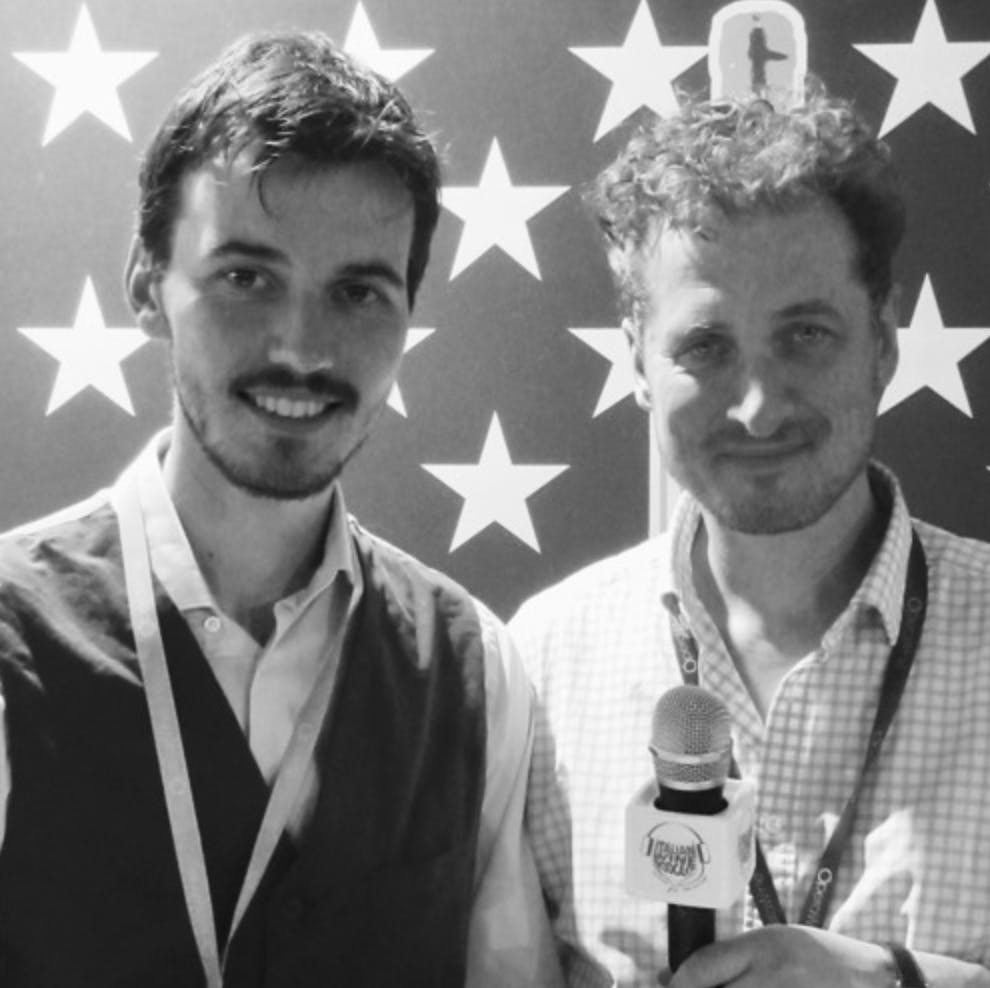
Ep. 137 Monty Waldin interviews Simon Grosjean (Grosjean Winery) | Discover Italian Regions: Valle d'Aosta
Discover Italian Regions: Valle d'Aosta
Episode Summary
Content Analysis Key Themes and Main Ideas 1. The history and generational legacy of Grosjean winery in Aosta Valley. 2. The unique and challenging terroir of the Aosta Valley, including its climate and soil. 3. The focus on indigenous grape varieties specific to the Aosta Valley. 4. The winery's commitment to organic viticulture and sustainable practices amidst environmental challenges. 5. The balance between local tourism and international export markets for Aosta Valley wines. Summary In this episode of the Italian Wine Podcast, the host (Montewood) interviews Simone Grosjean from the Grosjean winery, located in the bilingual Aosta Valley. Simone discusses the winery's history, founded by his grandfather in 1968, and its current status as a third-generation family business. He highlights the unique and often challenging aspects of winemaking in Aosta Valley, characterized by steep slopes, rocky soils, and a dry, desert-like climate in summer, necessitating artificial irrigation. The conversation delves into the indigenous grape varieties cultivated, such as the white Petit Arvine and red varietals like Petite Rouge, Fumin, and Cornalin, discussing their flavor profiles and characteristics. Simone explains their organic farming practices, including the use of cover crops, and the reasons behind their commitment to sustainability despite the increased costs and difficulties. He also touches on their market, serving both local tourists and international exports, and offers personal insights into his love for mountain activities. Takeaways - Grosjean winery is a third-generation family business founded in 1968 in Italy's Aosta Valley. - The Aosta Valley is a unique wine region known for its bilingual culture and challenging mountain terroir. - The winery cultivates specific indigenous grape varieties, including Petit Arvine (white) and several reds like Petite Rouge, Fumin, and Cornalin. - Grosjean practices organic viticulture, employing methods like cover crops and drip irrigation to manage the dry, rocky conditions. - Winemaking in Aosta Valley is described as expensive and difficult, largely due to the terrain and climatic conditions. - The winery's market includes significant local tourism and export to countries like the US, Japan, Australia, and Scandinavia. - Commitment to organic farming is viewed as a logical step towards a healthier and safer environment for future generations. Notable Quotes - ""We are a bilingual region, actually. So we speak both French and Italian, and we have a dialect inside, which is between the two. A patois."
About This Episode
Speaker 1 from the Italian wine podcast discusses their language and estate, explaining their Italian and English language and their seven-year-old estate. They offer direct selling and discuss their production methods and flavors. Speaker 1 asks about selling wines by personal and Speaker 3 explains that they do everything in English and have a-house-made wine. They also discuss their preference for animals and their use of artificial irrigation and cover crops. Speaker 1 asks about Speaker 3's cover crops and why they use them, and Speaker 3 explains their use of manual tools and their use of animals for gardening. They also discuss their use of cover crops and the benefits of organic farming. Speaker 1 thanks Speaker 3 for their experience and hopes to live in a better place in a safer and healthier place.
Transcript
Italian wine podcast. Chinching with Italian wine people. Hello. This is the Italian wine podcast. My name is Montewood. My guest today is or, imo Grojon. Perfect. From the Grojon winery, and you are in aosta, validosta. Yes. So you presume you speak several languages. Yeah. We we are a bilingual region, actually. So we speak both French and Italian, and we have a dialect inside, which is between the two. A patois. Patois. Yes. That's it. But what do you I mean, do you feel, you know, if there's a football match, I don't know if you like football, but just and it's Italy versus France. Mhmm. Who do you want to win? Mittany. Yes. Of course. Of course. Okay. We are Italian. We live in Italy, and I speak more Italian than French, actually, and Okay. So for me, it's Italy. So tell me about the estate. Was it your grandfather, dadfino, who founded it? Yeah. In nineteen sixty eight, that's it in fifty years ago. And actually, the next month, we will have the the anniversary for the celebration. And, he founded the estate because he actually already had an estate, but like many people at that time, they used to have more, like, cows, some wine, some crop. And in nineteen sixty eight, he actually decided to put just wine to own wine business because, his wines were pretty much appreciated to our local fair. So a little belittle is a son, starting get inside the company? He had five didn't he? Five son. Yeah. And now the next the last year, me and my cousins got inside the company. So now we are the third generation, and, the family still goes on. We are really happy with that. We will see the future what we'll bring. Now what about your main wines and grape varieties? You make a petite Arvigna? What is that? Redle white? Petitavina is white. Went wine. Typical flavors? Yeah. Actually, Petitavina's classic called Mountain wine comes from Valain, Switzerland, and the flavor is mountain, like, many fruity, but also freshness and acidity, vertical wine. And, I think that, the mountain wine is the the typical flavor that you can find on it. I mean, we're talking like light yellow fruits or dark orange fruit? No. Yellow fruit better. Yeah. And a little is it the wines a little bit citric or? Yes. A little bit. A little bit. Not fresh. But, it's fresh in quite a lot. Yeah. So what sort of alcohol level do you bottle that? Patisavina? Yeah. It's between twelve and thirteen depends over the years. But dry. It's bottle dry. Complete dry. Yeah. Yeah. Yeah. And is most of that sold locally to tourists? No. We sell also in US, Japan as well, Australia. And, but mainly, our market is in Valida, because it's a touristic region. So alpha of the production goes there, and we want to export also to come closer to the tourists that came to our places, and they were they want to taste their our wine at their home. So Can you sell direct? Can you send wines to them by personal? We do, yes, something, direct selling when we don't have a distributor. Like, for example, up to now in Scandinavia, we don't have, and so we can work directly with the private people. Now, you also make a wine from a great variety called Petierge, the little Yeah. The little small red one. A small red one. Yes. Exactly. And, Petierge makes Terette is a blend, wine, eighty percent of Petierge, and he's actually main red wine of that part of the region. So that's a denomination, Tourette. Yes, the denomination. So that's just t o r r e t t e. Yep. Correct. What is the pity rouge main flavors? What does that give to the wine? Bread fruit, like, soft ones, like strawberries. Strawberries. Yes. Okay. And then you have other grape varieties like Vien de Nous, ducet, Fuma, and mayola. Is that right? Yeah. We in the Tourette, you can put, only our octopus red wines. It's an indigenous grape varieties, though. Indigenous varieties. And we have, for example, also Fumeng on a land that, each year, we can choose which one to put on it. And the last, years, we were it was almost only Petyevoush Colonel and a little bit of Permetha. Right. So what Fumenga, what does that taste of? Fumeng is, like the sound the names, sounds like is smoke. Okay. Or there is like kind of smoky flavor, and, also deep, dark, fruit, like, raspberry, for example. And, Cornaline. Cornaline is, it's really the most fruity red wine that we have. Really fresh, but still really good for the aging process. Does it have a lot of color or not? Yes. Kind of color, really refreshed, really, sparking color in a way. Right. Yeah. Bright color, compared to Fume, which is darker in color. And we're at the Vienna Yeah. Vendor News, we don't do Vietnamese, impurity. Mhmm. We just do in we just put the small quantity that we have in our vineyards in, interact. Vendor News is another indigenous, and some local producer do some kind a endonous impurity. And typical flavor? The endonous actually is, more like a pitiable, just so all strawberries and, raspberries. Yeah. And the ducet? Ducet. Actually, we don't have it anymore. Okay. It's, But when it was around, with the smell off? Yes. I actually don't know because we I never tasted a dulce one hundred percent of a dulce. So I the berry, the the grape is, kind of, big one. And, but the flavor, actually, I don't know because I never tasted, I think, impurity dulce. I mean, you I imagine your vines are on quite steep slopes. Yeah. Really steep slopes. Are they are they terrorists? Some of them, yes, because in the past, it was the way of doing. Now we are changing a little bit where we can for working in some time with machines and also for working in a better way, the organic wines. How easy is it to be organic though, though? I mean, I imagine weed control is very difficult. No. Actually, our survey is not that difficult because it's really windy. The soil is really dry and really full of stone and sanding, so it's, refreshing the water goes away quite easily. And, so we don't have to do many treatment as compared to Pemanta, for example, which we are very close. And also, the precipitation are really slow. We live in a kind of desert like climate in summer. We are we really it's mandatory to use artificial irrigation. We use drop by drop, and so it now is really difficult because we need to work a lot on the vineyard, but in the other way, organic wine goes quite easily compared to other regions. Do you still I mean, would you like to get animals back on the on the farm or not? Well, not for having animals, but we, ask some friends who bring some sheep in winter for, eating the grass, for example, for the grass control. The last year, not because it was, hot or really snowy or really dry. So there was no no grass and, but, not cow, not, horses like other friends and What are you doing in your spare time? Do you sort of run mountains. Yes. Of course. I mean, that's great. Yeah. Yeah. I love climbing, alpinism, skiing. Honestly, I I had no idea about that. So when you look like a very fit guy, you're very slim, tall. Yeah. Yeah. Go a guy that could sort of strangle a horse with his bare hands on it. Yeah. Yeah. I'd like. Alright. Hey, you won't like to do that. We're gonna have thousands of letters now if you can play anywhere. So it's your top wine, the, it's called a vigna, which is single vanilla that's? Yeah. Vineeroveta is the name of the vineyard. Vineer means vineyard. Roveta is, our main, biggest vineyard that we have is, five, hectares more or less, which is the biggest in a survey of single property. It's such a small compared to other region, but for us, it's quite big. And, Vineyard actually was an really old vineyard that when my grandfather started planting other vineyards, it was only food. It was a forest. But in the ancient past, like centuries ago, there was many, many, many vineyards in, in the area, and Vineer Roberta was one of the, the best. So for us was kind of, logical to replant a vineyard there. And, the the terroir is really fantastic. So, it's a is it about six hundred meters, that one? Yes. Six hundred, seven hundred more or less. And the soil type? Sand, and stone all this time. It's a pretty rocky. Yeah. Really rocky is a glacier, from the worm glaciation that left some stones, some granite from on blank there, and the soil, the soil is really poor and sanding. So do you break a lot of tools when you're trying to work the soil? We don't work the soil. You just leave. We just leave the grass grow, and then we cut grass. Yeah. So you'd like mulch it. It's called a mulching isn't Kachamatore. Yeah. No. We don't use that. We just we do we do mechanical weeding, cutting the grasses as, as much as But you're not plowing the soil, though? Are you? No. Because you break the plowing. We just, yeah, we just do that the first time when we plant the vineyards because we do, I a non English name, salvation. Cover crop. Okay. And after that, we we just do normal wetting because, it it's kind of possible to to work the soil at too many stones. Okay. I'm gonna ask you about your cover. I love cover crops. What do you sow mainly as cover crops? Oh. And why? In English. Pavino? Yes, Pavino. So that's, beans that provides nitrogen, which is a bit of food for the vines, or also. Yes. A little bit of salsa. That's barley, barley's good because if you, have problems and you go to the doctor, and you have to a bad blood. You they give you porridge, which is, a barley, which cleans your system. Kind of white barley. And sometimes we use a trefoilio. Which is clover, which also provides nitrogen and if it's a flowering clover attracts beneficial insects. Yeah. Yeah. Yeah. That's it for the adult and Cool. I'm sure your beetles are absolutely stunning in in summer. Yeah. It's kind of wonderful in summer because, the the vegetation grows to the full, and we know this is the best time because we just have to control everything. It's going well, but the is not so much. The best work, the the the most work is in, between May and June and beginning of July when we have to work the vineyard to grow up to the the right side. And then we have to wait for the weather because the weather in our region is, the and, it's really changing because the process that is changing all the time in the last years. And so it's kind of difficult to think in the future, thinking advance on what will happen. If it would be a dry year, and then last year, we experimented a really bad frost, but in the it was really a drought and really warm. So every year is changing, and that is the kind of difficult work. Thanks to the irrigation system, we can work at least against the the drought and, and the dry seasons. But also the organic matter that creating with your cover crops gives you a bit of a buffer. It it makes your sword a bit more spongy and it holds on to it can hold on to water for longer. Yeah. The the that's really amazing. But sometime in summer, the last year, for example, the grass couldn't grow almost anymore, because it was so, so, so, so dry. And just the drop by drop system under the road could work a little bit, but, really, really difficult here. Okay. Well, we always think of, the sort of alpine areas as a paradise, but obviously, it's an incredibly marginal and difficult and expensive place to make wine. So these wines, these wines are real just the fact that you're doing it organically, sure it's, an added cost to you, but I think long term, it will pay off. I'm gonna say that because I'm a big Yeah. It's really, really expensive for those guys. Yeah. But for us, it's the most logical thing to do because we want to live in a better place in a safer and healthier place and or at least is the first thing to do. And, and I think that in the future, it would be really a nicer place than now because everything will be a little bit more organic and, more healthier. So we'd hope so. Very nice way to end the interview. Thanks a lot to Simone from the eponymous, or, probably people won't understand what that is. Just want to say thanks to simon Grosjean, from the Grosjean winery in the Valle de Loster. Thanks for saying this about your cover crops, and the fact that it, it isn't a paradise to grow wine. It's very difficult with dry, dry climate, anyway, and dry climate because of climate change. Thanks for being so, direct and and sharing your experience with us has been really nice. Thanks to you. Great. Thanks a lot. Follow Italian Line Podcast on Facebook and Instagram.
Episode Details
Keywords
Related Episodes

Ep. 2787 Prosecco Superiore by Dr Susan H. Gordon | Book Club with Richard Hough
Episode 2787

Ep. 2784 The Other Side of Valpolicella: Volcanic Soils & Sparkling Wines with Francesca Marcato of Talestri Winery | Wine, Food & Travel with Marc Millon
Episode 2784

Ep. 2780 The Bridge between the Past and the Future of Wine with Serena Costanzo from Palmento Costanzo on Etna | Clubhouse Ambassadors' Corner
Episode 2780

Ep. 2773 Trento DOC: one of Italy’s finest sparkling wines with Alessandra Caroni of Maso Martis | Wine, Food & Travel with Marc Millon
Episode 2773

Ep. 2749 The Many Faces of Etna: Climate, Contrade and the Art of Volcano Winemaking with Federico Graziani | Wine, Food & Travel with Marc Millon
Episode 2749

Ep. 2744 Ep 25: Pantelleria, Salina e il fascino del vino insulare | Pellegrinaggio Enoico con Attilio Scienza
Episode 2744