
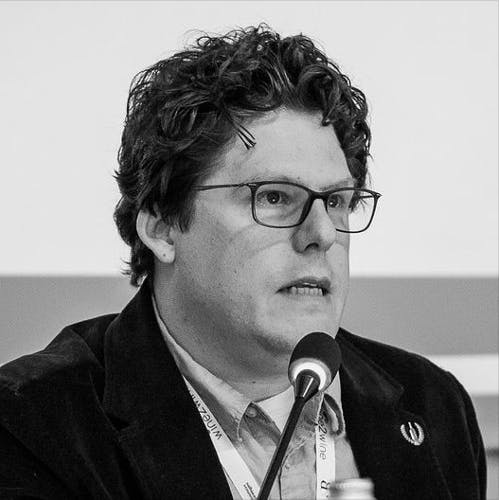
Ep. 94 Monty Waldin interviews Mike Madaio (Palate Press) | Discover Italian Regions: Emilia-Romagna
Discover Italian Regions
Episode Summary
Content Analysis Key Themes and Main Ideas 1. The personal and professional journey of Mike Madello, highlighting his transition from web design to pioneering wine blogging. 2. The evolution and challenges of digital content creation, particularly in the early days of blogging and its current state. 3. The intersection of technology and the wine industry, including slow adoption rates and regulatory hurdles. 4. The unique appeal of Italian wines for discovery and their diverse regional offerings. 5. The role of personal traits like introversion in shaping a career in writing and online communication. Summary In this episode of the Italian Wine Podcast, host Mike Millen interviews American wine writer and blogger Mike Madello. Madello shares his background, from a childhood influenced by his home economics teacher mother's cooking to his early career in web design and user experience research. He recounts how he started blogging about restaurants in the Philadelphia suburbs around 2003, a time when online content was scarce, allowing for rapid growth. As an admitted introvert, Madello prefers writing as a means of expression, valuing the ability to thoughtfully craft his words. He expresses his passion for Italian wines, particularly their diversity and the endless opportunities for discovery. The discussion also delves into the practicalities of blogging, including monetization challenges, maintaining editorial independence when receiving free samples or hosted visits, and the wine industry's lagging adoption of e-commerce due to restrictive regulations (e.g., in Pennsylvania). Madello emphasizes the future of content creation lies in diversification beyond text into video, social media, and podcasts, focusing on storytelling rather than just reviews. Takeaways - Mike Madello's career path involved leveraging early digital skills to become a pioneer in food and wine blogging. - The early 2000s offered fertile ground for bloggers due to a high demand for online content and limited supply. - Introversion can be a strength for writers, enabling thoughtful and deliberate communication. - Wine blogging typically offers limited financial remuneration, often supplemented by advertising or small payments. - Italian wines are a source of constant fascination for Madello due to their immense variety and potential for new discoveries. - Content creators face challenges in maintaining independence and avoiding perceived bias when interacting with the industry they cover. - The wine industry has shown slower adoption of modern e-commerce and digital technologies compared to other sectors, partly due to complex regulations. - Successful content creators must diversify their output across multiple media formats (text, video, audio) to adapt to changing audience preferences and platform algorithms. - Storytelling is increasingly valued over traditional reviews or ratings in wine communication. Notable Quotes - ""Being an introvert, it's it's nice to, be able to think about what you wanna say before you actually have to say it."
About This Episode
Speaker 1 and Speaker 2 discuss their writing and writing appeals, including their interest in writing and their own writing. They discuss their past writing projects and their interest in creating websites and advertising. They also talk about the challenges of balancing advertising and social media usage in the wine industry and the importance of diversifying oneself and creating longer form text content to appeal to different audiences. They also discuss the potential of technology to replace the experience of live wineries and the potential of e-premise to move behind other industries. They mention their past writing projects and their interest in creating websites and advertising.
Transcript
Italian wine podcast. Chinching with Italian wine people. Hello. This is the Italian mind podcast. So one of my guests today is Mike Madello. Mike is an American wine writer and blogger who lives in Pennsylvania. That wasn't your native state though, was it? That was why Virginia and grew up in Massachusetts, actually. So were your parents involved in wine, one writing, blogging? No. Not at all. My my mother was actually a a home ec teacher, and so she is the one who taught me how to, to cook and get into food and and wine, sort of, what teacher? Home economics. Oh, home economics. Yes, home acting. So you were a good baker than we are. Yes. I'm I am variants of cooking and and, more into cooking than that don't have to follow a recipe. But Oh, well, how did you or your family end up in Pennsylvania? My dad's a physician, actually. And so, we moved around a little bit, and I moved there when I was in high school. And Do I age wise? Maybe fourteen years old. And Is that tough. It's quite a tough age to move as as a lesson. Yeah. I mean, is that why you became a wireblock you had always angst inside you? Yes. Well, I'm a very introverted person. So that's why I like to write, and it was difficult to move at that age for sure. But, can are pretty resilient, even though it was hard. It was probably probably harder as as an adult than it is as a kid. So So when did you start writing? Do you like to write a diary when you were small? I was like writing in school. Just enjoy doing it. Creative writing. Creative writing, you know, any sort of writing. I, as I said, being an introvert, it's it's nice to, be able to think about what you wanna say before you actually have to say it. So that's that's why writing appeals to me so much and why I'm, sweating profusely right now. You are. Yeah. It's like minus five in the studio. And, you'll be fine. Don't worry. Entroverted people often have the best interviewees because they're they're not show offs. Yeah. They can be boring as hell. And, so far now I'm checking. I'm checking. Okay. So, obviously, you've got this sort of artistic streak streak. So did you get that from your who was the creative type with the food or from your dad. You presume he was quite a scientific guy if he was in a position. Yeah. And I have a I would say a little bit of both. So, yeah, I think the creative side is pride for my mom. Yeah. Okay. So when did you start how old are you, by the way? Am forty two years old. Alright. Matt was not obviously your strong point in school, was it? I just don't remember that. So when you left, how do you call it high school? Did you go to university? I did. And what did you read or study? I studied leadership. Really? Yeah. Why? Because I did not know what I wanted to do with my life. Right. And do you now know what you want to do with with your life? Hey, it's evolving every day. I think, you know, the wine blogging thing has certainly been fun for a while. I was looking to expand that. But when did you when did you graduate? Which year did you graduate? So graduated from college in the late nineties and, went into computers and actually done a lot of work in, like, computer web design type type work. So we used one not a pioneer, but this was when, you know, the internet was becoming no. Correct. Yeah. I think I got my first email address probably about nineteen ninety eight. Yeah. That sounds about right. Yeah. Yeah. So that was about the time I was getting into it as well. So were you like a computer scientist or not? So it's interesting because I I can say studying computer science in school and, I didn't like it because it was that sort of coding just staring at, you know, code on the screen. And I later found the sort of design side, the, the way people use computers to be much more interesting. So not the back end. Yeah. The front end product. Correct. Yeah. Okay. So you left school. I did. Yeah. Several job rejections. Yeah. Yes. And that with any periods off that way, you'd literally had no job at all, or have you always been self sufficient? Some short periods, but, for the most part, I've I've been able to to keep it going. Flipping burgers at McDonald's. Do you ever do that? Not quite. Okay. No. So what was the last job you had before you became a world famous blogger? I studied and I still do this. I study, the way people use computer products. Computer products being being what a mouse or a No. Like a website. Yeah. Mostly software websites, apps, things of that nature. So you when you say you study, so I'm a researcher, so I I observe people using different types of products. Well, secu cameras in people's houses? No. They're, they they know that they're being served. But how does that work? That it just track everything they do on their computer and phone. Yeah. I think it's, you know, it's you it would be just like you and me sitting here, but I'd be looking over your shoulder as you were trying to do something on your computer. But not physically, but you have, like, you're not actually physically standing over something are you? You can be. Technology obviously allows us to do that remotely as well. Well, it's just some break wind. You're leaning over the shoulder. You you actually wanted to be as realistic as possible. So dogs barking and kids screaming is a good thing. Seriously. Yeah. I never knew people did that, honestly. Yep. So you'll literally look at what they're typing or what or how they're googling to Yeah. Coin the phrase. Yeah. And so what what do you trying to derive from that to trying to make the experience for them for them better or to make it easier for the likes of Google or Facebook, whoever to sell advertising and products to them. I mean, it's a little bit of both because, you know, typically there's a business behind it. So who's paying you. The great site in Google. Google business is paying you, but, the point is to make it easier for people to use the software. Hence bit money. Yeah. Okay. Yeah. So you've got quite a commercial streak then. Yeah. Well, you gotta you gotta be the bills. Right? Okay. And so, obviously, a man man with computer skills and commercial street ends up being a blogger, which is not necessarily known for its remunerative joy. No. No. Definitely not. So how did that start? About fifteen years ago, I started writing about restaurants in the area where I lived, which is the suburbs of Philadelphia, and this was back when there were not a lot of bloggers, not a lot of content out there. I was in the days of city search. People might remember before yelp before, you know, urban spoon and insights like that. So it's like early two thousands? Yeah. Yeah. About two thousand three. And, the the nice thing about about it then was that there was people looking online for content and not enough content out there. And I think I was blogging about restaurants, but winebogging kind of picked up around that same time. You had, you know, some of the early wine buggers like Aldairo, pornography, and, you know, terrorists, a few others you know, it was it was this sort of perfect moment where you had all these people looking for this content and there wasn't that much content out there. So if you were somewhat dedicated to it, it was relatively easy to kind of build up traffic pretty quickly. So I remember that was the first I heard the word blog. I was at a friend's house actually. She looked at master of wine, and she said I've just started my blog. And I said, what? I'm currently talking about. I have no idea what that is. And why would you enter? Did you explain it with her? Why would you wanna do that? You know what? For me, it was just a creative outlet. I as I said, I was like writing and I just thought it would be fun. I actually was was doing it on music a little a little while before that really just to get free CDs, but Did you know anything about music? I did. I mean, I I went to a lot of live shows and listen to a lot of music at the time. And then, sort of on a whim, I started talking about this, the restaurants in my area because I was sick of going online and and not finding anything about them. So, and clearly there were a lot of other people interested in that, and they just, you know, start com start pouring in. So you started blogging. So what was your blog called? It's called mainline dine. Main line dine. Yeah. So the area I live is called the mainline. It's like the suburbs of Philadelphia. The mainline. Yeah. So what kind of suburb is it very bourgeois middle class? Is it hickey? The main mine is like the high end, high end silver. I wasn't expecting nothing less. Yes. That quality guy like you. Yeah. Well, I I, yeah, I I live on the far reaches of it, but that's okay. Okay. So you're you're basically appealing to affect really, presumably knowledgeable, safely middle class, presumably predominantly white audience for that blog. Yeah. Okay. And now you're blogging about are you blogging about wine? Yes. Okay. So what's your wine blog called? Well, I'm doing I'm I'm working in a couple different places I've got. There's a site called Pallet Press, are you familiar with that website? Yeah. Someone And tell us a bit about it very briefly. So, essentially what it what it is, and it's been around for a while, but it was, it was started as essentially way to bring a bunch of bloggers together posting under the same masthead so that instead of each person having their own individual blog, let's let's have one place to go to to get, a bunch of different perspectives. So This just makes it easier for readers, is that? Newspaper. Yeah. With a several columnist Right. Contributors. Right. And it makes it easier for the bloggers as well because, you know, you have this sort of group of people that that are promoting, your stuff. So I don't see that you just send a couple and then somebody else sticks is online. Well, so I'm actually, serving as an editor there on the editorial board. So I'm blogging myself there and also editing and posting some of the other stuff and my technical web design background. I'm doing that kind of stuff for them as well. Okay. So you do it a boat. I mean, what's your in terms of wine when you're writing? What is the thing that really floats your boat? I obviously love Italian wines. That's why I'm here. The checks on the post. And, you know, for me, it's always about discovering something different. And that's one of the things I love about Italy is that no matter how much you know about it, there's always something around the next corner that you haven't tried before and, so just constantly kind of looking out for the next interesting or even weird, weird wine. Which will be in your view. And what have you had recently that was either outside your sort of daily Sure. Ambit. Well, certainly yesterday, the gravner tasting was very interesting. The sort of, oxidized orange wines aged in, and for a. I'm not sure that, you know, for me personally, I'm gonna go out and buy a bunch of that stuff, but it was it was definitely interesting to to try, something a little bit different. I'm not sure how, you know, broadly appealing that's gonna be. So the market, although I I I sort of hate the the whole, like, that it's the next big, whatever, seems to never actually come true. I've been hearing hearing that Alianca is the next, barolo for years, and I'm not sure that that's ever gonna happen. So Yeah. Although it is a sort of scene as one of Italy's tree. Yeah. I mean, it's a great wine and I I love it and it but it's, you know, to the point that, is it gonna be collectible like something like Barolo? I'm not sure we're at that point, but, and, you know, I sort of hope we don't get to that point because I like buying it. Yeah. I agree with you. Yeah. It's one of those expect. But you I think you could say the same about Canticlassica. I keep on banging on about Cal Canticlassica partly because it's near where I live. New York tuscan guy. Yeah. But, you know, it's just so undervalued. The the best ones, particularly the ones that haven't been screwed up with the great. For sure. Yeah. I'm sorry for undervalued. It seems like the trend is moving away from that that more and more people are Yeah. Itching though. So that that should be good as well. Slowlyy. I think there will still be the dieharts that that want to, board over five. I've went to board over just I've never seen anybody with San Joese in Bordeaux. Correct. And I I don't see lots of Cabanet in, especially Malo. Anyway, but let's talk about that. That's a whole thing. We're here to talk about you. So the palette presses are sort of a, like, almost like a collective of, I mean, do you get paid? How do how do you always get paid. Yeah. There's, there's a small amount. It's it's not, you know, it doesn't necessarily pay the bills, but it there is a a small payment to to bloggers, based on, you know, a small amount of advertising money. So Right. So so it does does carry advertising. So it's basically people click on the site, read an article, maybe get shown an advert, and that's how it's funded. I mean, that is pretty much the way that unless you either have a subscription, you know, you pay ten dollars a month or whatever to log on to Shutter, to blog dot com, whoever it is, or is the advertising? Yeah. When do you feel uncomfortable? Isn't a loaded question at all. Do you feel I mean, do you feel that that compromises in your independent or do you not even know who or care who the advertisers are? Yeah. I mean, in in that case, I think it can. In the case of Palipress, it doesn't at all because I don't know who the advertisers are. Nor do I really care. But I will say that in my history of blogging, it that is something that is an issue. Not only from an advertisement standpoint, but, you know, people send you free wine. And one of the reasons I got out of the restaurant game was discomfort with the idea of going to an opening of a restaurant and trying to evaluate it independently when the people sort of know who you are and that's the classic thing with the restaurant critic, you know, wearing disguises and all that kind of stuff. But, you know, you have the same thing in the wine space, you know, you go visit a winery or you, they send you wine or or whatever. And so it it can be difficult to to balance that. I, I feel like I do a pretty a good job, but, you know, there's always room for improvement. Yeah. I suppose if you visit at Widery and they obviously they're not gonna get out the oxidized crap that no one has ever bought, they get the best bottles out. Yeah. And I mean, you know, sometimes you go and you love it and sometimes you don't. It's it's a way that's always the challenge is that if you someone has put the time into spending some time with you or sending you some wine or whatever and it doesn't come across as well, it is it is tricky sometimes. I tend to try to only write about things that I like back when I was doing restaurants, you know, you had to write negative reviews. And that was never a pleasant thing, but I felt like, you know, people are gonna go spend their money there. They need to, you know, they're looking to me to tell them what to expect and and I tried to be honest as honest as I could. Did you ever get any bad feedback from restaurateur saying, oh, this might be there. I just know what he's talking about. Oh, god. So that was fifteen years ago and to your point, nobody really knew about this blogger thing. So you'd get like these angry letters from chefs and that always crack me up. But I did some favors as well. I would have I can remember a number of times where somebody posted a a negative comment about a restaurant and the chef sort of tore into them and I just deleted the comment and said, I'm doing you a favor by not posting this, to the saying. Okay. So what is the future? I mean, do you ever see yourself moving away from wine writing? Do you ever get bored by it? The churn, the fact that it is not always incredibly well paid? And there are few very few wine writers, I think. You really do make a Yeah. Big living. So it's interesting you that because tomorrow at wine to wine, I'm gonna be speaking about sort of the state of wine blogging and how the industry is evolving. And I was asked to talk about wine writing or wine blogging, and I started preparing for my presentation, and and I had a conversation with Stevie Cam and she said, but wine, wine blogs are dead. Right? And in in her always very direct way. And so in preparing for the the presentation, and I've been doing this myself anyway, just started thinking about, like, what is next? How is it evolving? And, you know, for me, it beyond just blogging. It's any sort of content creation. I think is interesting. And, you know, there's video, there's social media, there's photography. There's so many different things. There's podcasts obviously. So there's there's a lot different ways, and I think we have to diversify ourselves to, you know, maintain sort of that interest and that influence in the industry. Doesn't that really depend on who is listening though? You know, do we always know our audience as writers or creators of whatever it is, as you say photography or or an article or a podcast? Not necessarily, but I think that different people respond to different types of content. So if you're able to diversify yourself, if you have long form text content, that's gonna appeal to certain people. If you have a video that's gonna appeal to somebody else potentially, maybe there's overlap there. But but I think that long term, the people who are able to sustain in this industry will be people who are able to kind of reach different audiences. Also, if something changes, you know, to analogy changes all the time. If Facebook changes their algorithm for posting videos, you don't want that to to ruin everything that you're you've been working on. So Isn't isn't and I've got friends that work in the movie business, movie critics review a movie, bambi, everybody throughout on the planet, everybody will see exactly the same movie, exactly the same film, everything will be the same. Whereas, you know, anybody that tries to bottle the wine, even if it's got the same, it's always gonna say slightly different. Yeah. But isn't that aren't we sort of beating our ourselves up by pretending that we offer some form of truth about something that is incredibly nebulous. Yeah. I agree. And that's actually why I've gotten away personally from writing any sort of reviews, giving any sort of ratings. I'd much rather just tell a story. And, you know, I think that that's really the the thing that's gonna connect with people most is if there's an interesting story. It's like the classic thing, you know, why does wine taste better on vacation? Because you're on vacation. Wine's gonna taste better if you know the story. If it's an interesting story and it connects to something that you're passionate about. Yeah. I don't agree with that. I can't have mixed feelings. I really hate writing tasting notes and, I just think that's so useful for me and me only really. Yeah. I mean, speaking to myself, it's good to, it's good, you know, and I I'll go on cellar tracker and write a tasting note. But to your point, yes, other people can see it, but it's really for so I can remember remember it more than it is for, for other people. Essentially you talk about so what about storytelling now? We have so many tools to tell stories, not just the written word or even the oral word. We have obviously podcasts. We have video, as well as still paper books and electronic books. Do you see any novel forms of communication that we could utilize to tell these stories? Technology is always changing. Someone asked me, earlier today. You know, what's what does it look like in five years? And, you know, it it changed so rapidly that it's really hard to say. There's a lot of people in in the commerce industry that are interested in like augmented reality, virtual reality right now. I'm not sure exactly what that means, but I was chatting with a a white maker earlier when we're talking about if there was to have the person sort of experience the winery without actually having to travel to the winery. That could be a really interesting, really interesting thing. How to actually do that? And I'm not sure, but, you know, as technology improves, there's definitely, some interesting. But you could sort of get the Google mobile they're gonna be with this three or four d camera. Yeah. Yeah. And I mean, you know, they have I mean, how interesting would that be? I don't think of anything worse than, you know, some scratchy terrible film. Yeah. Was it called Google Google The Road thing when it go the that, Google Earth or whatever or Google. And it's also quite invasive as well. I mean, if you're if the day that the camera gets there and you've just done a really shitty job in the wire, it's filthy. Oh, yeah. Oh my god. Sarah looks like an abattoir on a bad day. Yeah. I mean, I don't think would be more controlled by the winery so they could they could put their their best foot forward. Well, that's even worse though. They make it look spick and span and the wine stays like shit. So so you kinda can't win, can you? Unless it's like literally having live feeds from wineries. Yeah. Which I mean, again, is not I don't know. I mean, the wifi here in Italy is never very good, but Because three cameras on you at the moment. Other than that, I think it's, as technology improves, the sky seems to be the limit with this sort of stuff. To your point, will that ever truly replace the real experience. Probably not. But, that's that's sort of a broader conversation for, human evolution, that I don't know that we have time to do that. I don't know. I I think technologies have evolved. I don't think we anymore. I think we've kind of almost very depressing. Yeah. A little bit. I think the people from that that wally movie that just sit in the chairs and float around. Yeah. No. I didn't see the end of that. I found that too depressing. Well, you're you're quite a laconic guy, you know, you're quite shy, and I can see why you're, I mean, if anybody best what, your career would be. And I met you for, like, too. And I say, either I he's either a trained spotter or he's he's blogging about something really boring like wine. Yeah. That's totally boring. That's a lot of I mean, I'm just saying that, you know, you're you're quite quite quiet going. That's that's that's your way of singing yourself, isn't it? Yeah. I mean, as I said, I'm I'm far more comfortable on writing because I can sort of go over it in my mind and and put the words exactly how I wanna say them whereas right now you and I are just chatting and I'm just spewing at them out. No. No. You kind of you kind of, I mean, your career has been very, you know, the fact that you sort of right there at the beginning almost, and taking notice of computer code and and the potential that Yeah. And I mean, I, you know, one of the reasons that the wine industry interests me in general is that I feel like it does tend to run a little bit behind some other industries from a technology standpoint. And so, you know, having worked in some other industries and seeing some of the potential of some of these technologies and then thinking, man, there's so much opportunity here for wine or reason and other places like that to, to get some of the stuff done. And, you know, even e commerce as as as pervasive as it's become and just to sort of an assume thing in everyday life, e commerce and wine is still, you know, much further behind. But isn't that because wine is heavy child and subject to lots of regulation. Yeah. I mean, that's that's a huge part of it for sure. We're seeing that change to some extent very slowly, but it's it's changing. And I think it's one of those things that the e commerce first train is moving and and at some point it's gonna, you know, the wine industry is gonna need to get on board with that. You know, I live in Pennsylvania, which is one of the most restrictive states in the entire, United States. There's like, you know, it's government control. All wine has to flow through this government agency. And so it's a nightmare to to ship and do things like that. But even that, you know, we we have wine in supermarkets now. We didn't have that last year. So Oh, that's incredible, isn't it? It's thinking of a country like America when they wind. You know, you can go, but you can presumably go and buy an AK forty seven. Yes. Yes. Yes. You can use those, I do know because I've never tried, but certainly it it seemed like at some point it was easier to get, wine outside of Pennsylvania that it would be easier to get a gun than wine that's not sold in Pennsylvania into Pennsylvania. Yeah. Maybe you should change and if you had to change state, which state would you live in? Would you live with the hippy dippies in for you, would you guys stay on the on the East Coast? It's, it's fine. I mean, you know, you go to California one country and it certainly has, you know, there's there's there's something appealing there, but there's also the East Coast were very, a little bit harder. And so, you know, when I'm in California, people say, oh, can I help you? I I, you know, what's this person's motivation? Why are they? What do they do? What do they want from me? What they may just be be being nice. Okay. Mike, my day. I think we've got everything we need from you today. Thank you so much. And we'll send you an invoice for this as well. For a minute. I'm joking. By the day, it's really, great to have you on the podcast. And, you know, they often get to interview super computer geeks and, sort of pioneering bloggers. I've done a lot and I've done a lot in this interview, actually. I'm glad I'm about. I kind of always look back and, you know, what you were doing in the early two thousands of what I was doing. I I was doing classic. You talk about wine, people missing the boat, and I was one of those. So now, thanks very much for hammering that home to be all those years later. That's okay. I I missed many opportunities to monetize and and maybe cash out, during that time as well. So Well, this podcast will be, we'll see a change in your future. Yeah. There you go. Thank you. Just send me ten percent. I will. Nice to meet you, man. Alright. Thanks a lot. Take it easy. Follow Italian wine podcast on Facebook and Instagram.
Episode Details
Keywords
Related Episodes
Ep. 395 Milena Pepe | Discover Italian Regions: Campania
Episode 395

Ep. 246 Federico Zileri Dal Verme (Consorzio Bolgheri DOC) on the Bolgheri DOC & Supertuscans
Episode 246

Ep. 194 Henry Davar (Vinitaly International Academy Faculty) on Verdicchio | Discover Italian Regions: Marche
Episode 194

Ep. 139 Monty Waldin interviews Joe Bastianich (Bastianich Winery) | Discover Italian Regions: Friuli Venezia-Giulia
Episode 139

Ep. 134 Monty Waldin interviews Donatella Adanti (Cantine Adanti) | Discover Italian Regions: Umbria
Episode 134

Ep. 131 Monty Waldin interviews Gelasio Gaetani d'Aragona | Discover Italian Regions: Tuscany / Toscana
Episode 131