
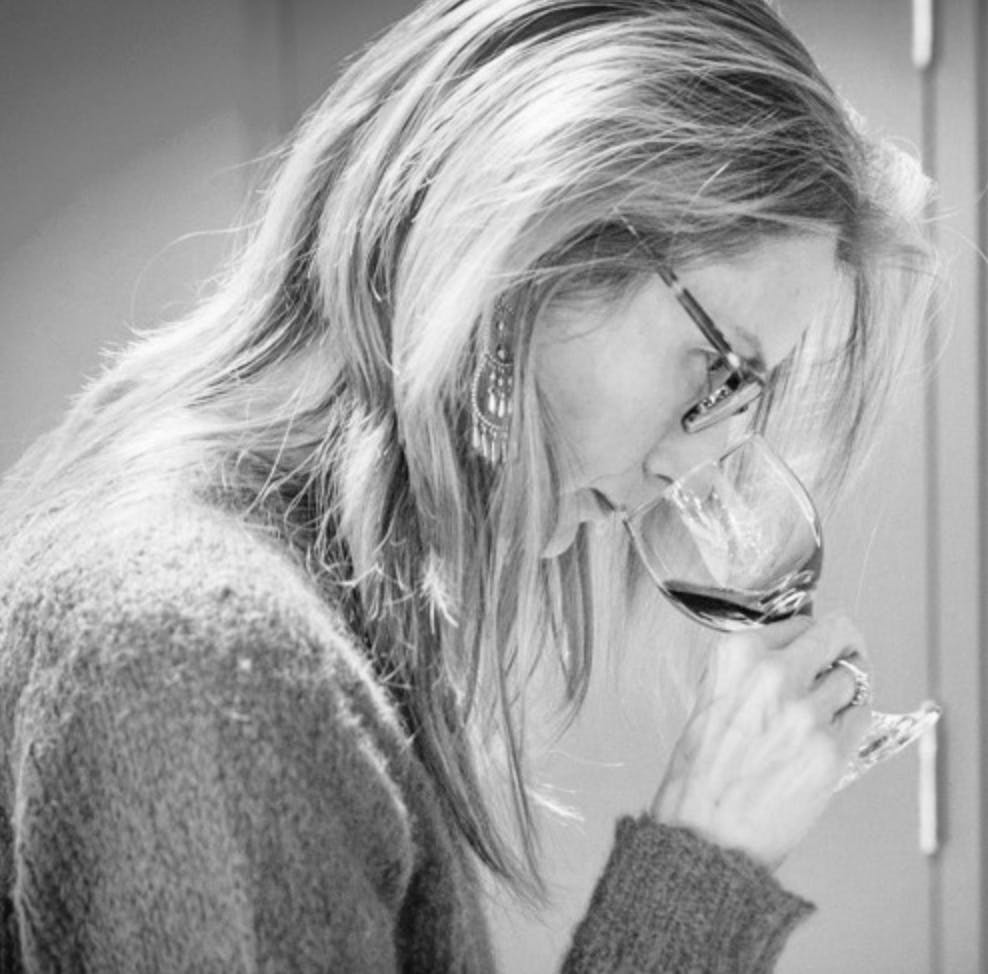
Ep. 159 Monty Waldin interviews Michaela Morris (Vinitaly International Academy Italian Wine Expert) | Education meets Business
Education meets Business
Episode Summary
Content Analysis Key Themes and Main Ideas 1. Mikaela Morris's personal journey from linguistics to a career in wine, with a focus on her evolving relationship with Italian wine. 2. The importance of wine education and the role of professional programs (WSET, Maestro Program) in developing expertise in Italian wine. 3. The challenges and strategies for effectively promoting and understanding the diverse world of Italian wine in international markets, particularly Canada. 4. The integral connection between Italian wine, food, and culture as a means of understanding its complexity. 5. Market trends and consumer preferences for Italian wine in North America, and the influence of sommeliers in shaping these trends. Summary In this episode of the Italian Wine Podcast, host Monty Waldin interviews Mikaela Morris, an Italian wine specialist and educator. Mikaela shares her unconventional path into the wine world, starting with linguistics and an in-depth study of Burgundy's terroir. Initially resistant to Italian wine, she recounts a pivotal experience in Piedmont (Barolo) in 2004 that ignited her passion and understanding for it. Currently, Mikaela dedicates her time to Italian wine education, teaching WSET Diploma levels and launching the Maestro Program for Vineidley International Academy in Vancouver, primarily to wine professionals. She discusses common difficulties students face with Italian wine (denominations, pronunciation) and highlights the high level of curiosity among Canadian wine professionals. Mikaela emphasizes the crucial role of food in understanding Italian wines and observes a growing trend towards lighter reds in the Canadian market. She advises Italian producers to collaborate more closely and target sommeliers for effective promotion abroad, stressing the significant influence of sommeliers in the North American market. Finally, Mikaela expresses her deep connection to Italy and her desire to split her time between Canada and Italy (specifically Bologna) to continue her educational mission. Takeaways - Mikaela Morris's initial ""hatred"" turning into a deep love for Italian wine after experiencing Piedmont firsthand. - Wine education, particularly at a professional level, is critical for demystifying and promoting Italian wines. - The Canadian and specifically Vancouver wine market shows a strong, ""insatiable curiosity"" for Italian wines. - Integrating food pairings into wine education enhances the understanding and appreciation of Italian wine's structure and flavors. - There is a growing trend in the Canadian market for lighter Italian red wines. - Collaboration among Italian producers and consortia is essential for successful international market penetration and promotion of lesser-known varieties. - Sommeliers in North America are highly influential in introducing consumers to diverse Italian wine offerings beyond mainstream choices. - Mikaela Morris plans to maintain her Canadian ties while deepening her involvement in Italian wine education from Italy. Notable Quotes - ""I didn't well, because I hated Italian wine."
About This Episode
The speakers discuss their experiences with Italian wine, including their background in French wine and their desire to teach people to understand the structure and flavors of wine. They also discuss the insatiable curiosity of people to understand the structure and structure of wines, and the difficulty of describing Italian wines in the current market. They suggest working together to promote a region and offer advice for wine drinkers, emphasizing the importance of working together to promote the Italian wine industry and communicate about the language of their region. They express a desire to be a part of the Italian wine industry and are happy to be in the US.
Transcript
Italian wine podcast. Chinching with Italian wine people. Hello. This is the Italian wine podcast. My name is Monte Walden. My guest today is Mikaela Morris. Welcome, Mikaela. Thank you. And I'm so happy to be on the show with you. That won't last Right. Let's get into it. The first question, how did you get into wine? You want the short answer or the long answer? I was studying linguistics in at university, and I did an exchange program in France, and I had to write a paper on anything to do with French culture civilization. And I chose the wine region of Burgundy to write on. Why though? Was that a random choice? I was sort of into you know, I liked wine. I was working in restaurants, so I had started tasting wine and and enjoyed it, but I really didn't know that much. And I guess I knew this slightest thing about burgundy that it was quite a a difficult or complex region to get your head around, and there was this word terroir that I'd never heard before, and I wanted to discover what that was. So that was what my thesis was on, was on the Terra a tradition of, burgundy. Brilliant. So how old were you at that stage? I don't wanna get depressed. I mean, like, were you eighteen? Were you twenty five? Were you sixty six? That that was in nineteen eighty eight. So so now I'm gonna reveal my age. So that was You were young and and and yeah. Yeah. Yeah. Yeah. I'd already had done some traveling. So I was in my early twenties and I the first day that I got there, I met a man who had a website for the wine region of Burgundy, and he asked me to translate for him on the spot for this website. And this is ninety eight. So in at the time in France, the internet was not a big thing, but he was pretty forward thinking. So I ended up translating for him on the spot that day, the first day I get to Burgundy. What written translation or voice translation? Yeah. Ritten translation. And I ended up translating for him for three years for his website. And So that was an incredible stroke of luck. Yeah. And he was also married to, the daughter. I think it was a Jose in jeremy chamberta. It happened to be the grandeur de bourgogne. So he got me into all of these tastings, and I was at Klobugeaux at a tasting, and at some point, I was I was freaking out about a wine. I just it was incredible. And he asked me what I was gonna do with my linguistics degree, which is what I was studying. And I said, I don't know. I'm studying it because I'm I'm enjoying it. And he said, well, why don't you look think about a career in wine? And I didn't even realize that there was there were careers in wine, and it was a light bulb. They honestly was the the light bulb went off for me, and I've never back. So how did you get into Italian wine? I hate I didn't well, because I hated Italian wine. Well, that's the end of the show. Nice to have you make it. I didn't get Italian wine. So my background was French wine. It was it's like your, your mom's cooking. That was I, you know, where I fell in love with wine and what I understood and what I knew. And I was doing a lot of work with Italian. I was parting me with French wine. So getting into Italian wine, I didn't really yeah. I I didn't really understand it. I didn't really know much about it. And, I was studying my WSTT. I can't remember what level now, probably level three. And I remember having a barolo, and I'd heard all about Neviolo and how amazing these wines were. And I just I tried the wine and I just didn't get it. It was like I'd hit a brick wall, but I knew that there was something there that I wasn't getting. So I was curious, and I I kept tasting Italian wine. And eventually, I got hired by, importing company that specialized in Italian wine. And the reason they hired me was to source French wine for them because I have been doing that at a private wine store. So it's an important calendar you're talking about. Yeah. And so they had a great Italian portfolio, and I just started learning about Italian wine, and then finally, well, I had started for them. I guess started working for them in two thousand and four. And in March of two thousand and four, and then in October of that year, I went to be Monte. And It's the first time. Yeah. I I remember opening my door when we got to in castelloni, Falletto. And I opened the door, from the car, and it was foggy, and you couldn't see anything. It was everything that I had imagined Pimonte to be. It was harvest so I could smell the fermenting grapes. I I swore that I could smell truffles, as well as the Ferrachet factory. And I just I the the aromas were so amazing, and then tasting wines after that in the region and sort of smelling the region in the wines, and all of a sudden, it made sense to me. And I fell in love with Italian wine and have not looked back from that either. So what are you doing now in Italian one or with Italian wine? I'm doing a lot of education. I've done I've been teaching for a long time. So who are your who are your students though? Who are my students? So I I've taught the wine and spirit education trust for long time now. Most of the classes that I teach are the diploma level. Sometimes I sub for levels two and three where we have perhaps more, less people working in the wine industry. But generally, the people that I'm teaching do work in the wine industry. And recently, I launched in Vancouver. The Maestro Program for Vineidley International Academy. This was again mostly to, to professionals, so to, so to some all yay's, people working in, in wine stores, and the enthusiasm for Italian wine incredible. What is a typical question when people get stuck with a tiny wine? Are they get they get confused with the denominations, the, DOCGs, or is it the grape varieties, or the towar, or what do they get most stuck on? And how do you unpick the stickiness? How long do we have? Fifteen seconds. I think there's always confusion around, you know, is this a grape? Is this a region where is it? How do I pronounce this? I don't even want to say this word because I don't under I can't pronounce it, and I'm, you know, talking the perspective of the students. But in general, I think the question is, tell me about this. Tell me about where it's made. Why they make it like this? Why does it smell and taste like this? What do they eat with it? I I think In general, and I'm talking about the Canadian Somoye or the Canadian professional. There's a pretty high level of education there, and there's a lot of curiosity. And especially, I would say, in Vancouver, it's a very dynamic market and a very young market for wine professionals. Overall. There's just this insatiable curiosity. And they just people just they wanna learn. And and one question feeds into another. Okay. And I think the most important thing is that they're tasting the wines along with whatever the discussion is. Because sometimes the the flavors and the structure of the wine is something that they're not used to, but they're very open minded and and want to understand it. Okay. When you talk about the sort of structure, you're saying that Italian wine can be quite difficult sometimes, like brunello and Bernola, these these quite tannic wines. I'm not saying that. Is that the pre of difficulty? Is that what what they feel? They want softer wines in that market? No. I don't think that they want softer wines, and especially, I would say, the professionals. Yeah. No. I I don't think that they they they want softer wines. I think maybe we were used to a lot more California wines. That's the the biggest selling imported wine in in British Columbia's California wine, but Italy is second. I think that some people think North American palette is very sweet, and I do think there's a lot of people who, you know, I would say maybe the average consumer who likes wines that are a little bit softer. But again, I'm teaching to professionals and people who are working in restaurants, and they see how these wines go with food. So I had think that it's difficult for them to get their head around the, the structure, the tan and the acidity. And the other thing too is that I always have food in, in those classes. And I think that really, really helps. Well, I mean, you actually bring food. Mhmm. Stuffy baked yourself at home. This sounds so folksy. It's great. Well, I used to, to avoid studying. I used to bake. Oh, I don't. Are you serious? Yeah. I don't I don't have a lot of time to do that anymore. Apple apple pie or Sure. Sure. Sure. Apple pie cakes, muffins. That's no good. Let's not let's not get into muffins. Okay. But, no, I the place that I teach from, it's actually attached to a cheese store. And so they have cheese and charcuterie. And they make of their own things as well. So I try to find something that comes from the same region as the region I'm teaching about. Okay. Did you cycle round Italy when you were younger? I did. Yes. You haven't that's a little just a little detail that you haven't so far shared. The first time I came to Europe, I brought I came up with my bicycle and I ended up cycling around, Europe for three years. And I spent a a few months in Italy on my bicycle. Not really realizing how Haley it was. And in fact, I was in I had been in Corsica and I had been in Italy and then I'd gone to Cors and I came back to Italy and I'd met this couple from the states who were also cycling around the world on on their can I say that with, inverted commas? Thank you. And, I said, well, we'll we'll we'll cycle through the hills, the hill towns of Tuscany Numbria, and they're like, that sounds great. And then we were cycling through the hills of Tuscany Numbria, and wanted to kill me and they actually ended up leaving me because they were looking for, I mean, slightly easier, cycling territory. But yeah, anyway, I I loved it. And then I think it was a great way to discover the the country for the first time coming Did you speak in Italian then or not? No. I spoke French. What I've always said about the Italians is they wanna be understood and they wanna communicate, and they're also very generous and very patient. So I didn't ever have a problem communicating, even if I didn't be Italian. What do you see as the next trends in Italian wine in your particular market in Canada, British Columbia? Oh, well, I think and again, I'm talking sort of about professionals and and engaged consumers. There is a trend towards lighter reds. And I think that Italy offers some really amazing, interesting, cool reds that are a little bit lighter, like Pelleverga or Farpato or whatever that may be. And I think that because there is a push as well from the sommeliers, a lot of the importers are starting to to bring in small amounts, of these wines. I don't think that they're necessarily gonna be mainstream, but as a as a it's a growing trend within the, the professional liking immediately, for sure. Working Italy or Italian producer, Italian trade bodies, or can sort through their group of producers at the Canti Plasica Consorter. How can they up their game abroad to make their wines more understandable or more easy to buy or easy to easy to, easy to get not meant to be a political questions, it is. I know it is very good. I'm not trying to catch you up. I mean, what what what simple things could they be doing to make your life easier, Paul, the lives easier for people like you, vorogation, education? I think working together. And a a great example of this would be for Dikio, for example, I don't understand why we don't have ten Virdicchio listed in our market. And I when I say listed at the government, wine stores, I think it's a great, great Friday. Well, first of all, I think it's a great great variety from Italy in terms of its complexity, age ability, the range of of styles that you can get. But I also think it goes so well with our cuisine and and our lifestyle. The problem is people don't know it. And the the best way for people to get interested in and to start to understand it anyway would be if the producers worked together and came together en masse or if there were ten producers or fifteen producers and came and classes for for the sommeliers because that's where these wines start in the restaurants that the sommelier's pouring them for the consumers. And so I think working together and trying to promote a region or a great variety together is huge. But I mean, the power of the somme is still sort of all encompassing in the North America market. Is that what you're saying? I think it's very important for sure. For I mean, for sort of wines that are not sort of everyday supermarket wines, should we say? Absolutely. And because I think, I mean, we where the market that I'm in in British Columbia, every every province in Canada different. In our market, we have government stores and private store private wine stores. In the government stores, we have product consultants, and some are good at their job. But we have there's not a lot of them. And then we have the private wine stores that are a little bit more niche and boutique, and that's where very engaged customers go. So when you're looking more for approaching all sorts of wine drinkers, the restaurants really are the place where people are gonna learn about about wine. And and because we have this young dynamic industry of, of of of Somoyais that wanna pour great and interesting wines. They're yeah. This is this is where people are learning about wines, and this is where I think the slightly different than the beyond Pino Grillo, beyond Prosecco. This is where people are going to taste those wines. So for you, you're Italian wine specialist, and you live an awful long way in Italy. When are you going to move to Italy and where are you going to move to? And that is definitely the leading question. Okay. And you're not allowed out of the studio until you're offered. In full. So, I'll answer the second part first. So That's very clever because you think I'm gonna forget the first part. Exactly. So I I I love Volonia as a as a city. I don't know it as well as some of the other cities in in Italy, but I was charmed by it. And it's very central. So from a practical standpoint, just getting around by train, or plain. It's accessible, and, not quite as far out as somewhere like Turin or something like this. And it's pretty flat if you still got that bicycle. I like hills. And I love Lambrusco. So, you know, if I'm in the food, there is so amazing. I could say that for anywhere in Italy, but, so I sometimes think about buying a little place there because I do come to Italy frequently. I'm here at least three months out of the year if not more, and I'm happy to be here even more than that. I still like to have one foot in Canada. I love I love my market. I when I say my market, you know, where I'm from, but I also love the industry in in Canada and I want to be a part of that. I want to be there to help with Italian education. It's really important for me. I would go back and forth between the two countries So I'm not gonna I'm not gonna give up my Canadian citizenship or my Canadian passport anytime soon, but sometimes I think about buying a place here for sure. Well, if you do come and you do move here, I'm sure you'll be made very welcome by the Italians. You do a great job promoting and communicating about it. I've got a huge respect for what you do. Thank you so much. And I really put a enormous amount of effort into what you do, and you're a brilliant communicator and educator. Thank you very much. Thank you so much. Thank you. Follow Italian Line Podcast on Facebook and Instagram.
Episode Details
Keywords
Related Episodes

Ep. 199 Monty Waldin interviews Bernardo Pinto (Zahil Importadora) | Education meets Business
Episode 199

Ep. 195 Monty Waldin interviews Sue Tolson (Freelance Writer and Editor) | Education meets Business
Episode 195

Ep. 193 Monty Waldin interviews Niklas Bergqvist (Sommelier at Vinkallaren Grappe) | Education meets Business
Episode 193

Ep. 192 Sarah Heller MW (Vinitaly International Academy Faculty) on tasting | Education meets Business
Episode 192

Ep. 185 Sarah Heller MW (Vinitaly International Academy Faculty) on Barolo | Education meets Business
Episode 185

Ep. 163 Monty Waldin interviews Will Predhomme (Sommelier & VIA Italian Wine Ambassador) | Education meets Business
Episode 163