
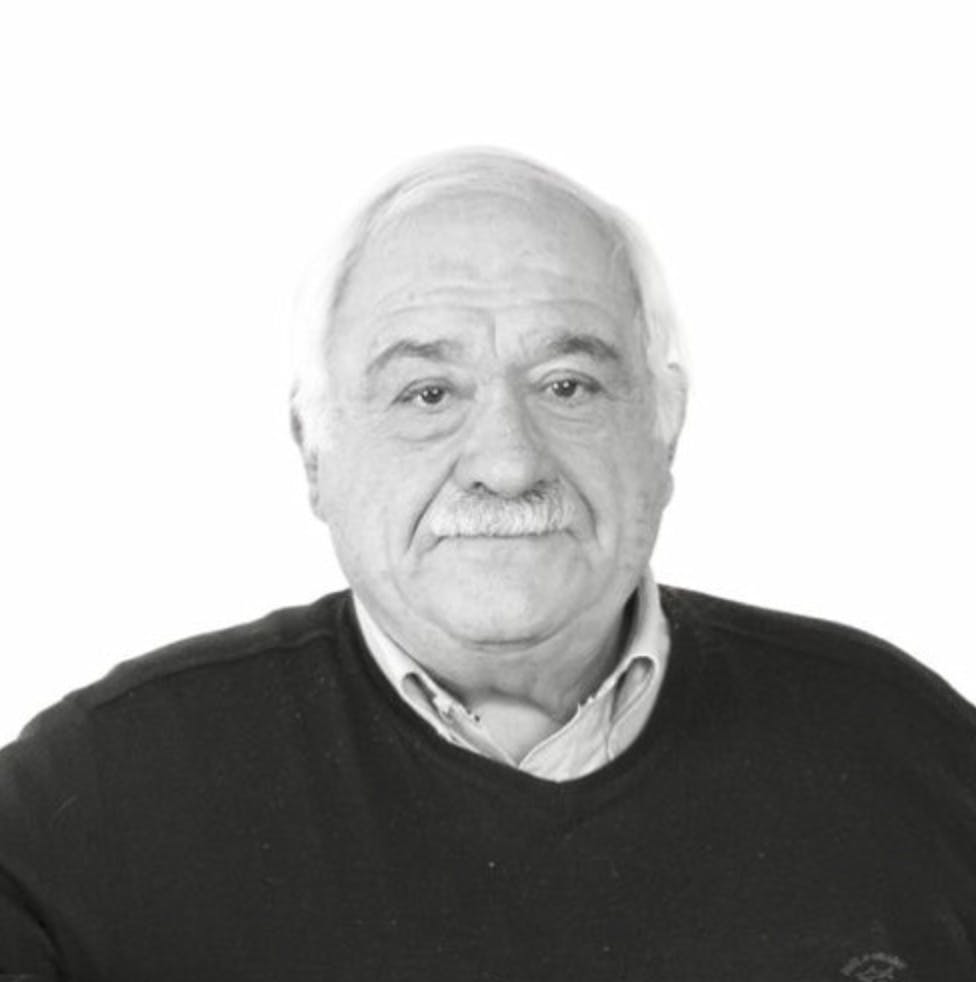
Ep. 272 --ENGLISH-- Attilio Scienza (VIA Chief Scientist) on Malvasie Part 2
--ENGLISH--
Episode Summary
Content Analysis Key Themes and Main Ideas 1. The historical connection between Malvasia di Candia Aromatica and Leonardo da Vinci's vineyard in Milan. 2. The application of molecular archaeology and DNA analysis in identifying ancient grape varieties and their origins. 3. Debunking historical misconceptions regarding the geographic origin of Malvasia di Candia Aromatica. 4. The significance of specific Italian regions (Po Valley, Piacenza) in the history and cultivation of certain grape varieties. 5. The intersection of viticultural research, historical narratives, and cultural production (e.g., novels). Summary This episode of the Italian Wine Podcast continues the discussion with Professor Attilio Scienza, focusing on the Malvasia di Candia Aromatica grape and its surprising link to Leonardo da Vinci. Professor Scienza recounts how Leonardo, upon moving to Milan, was gifted a villa with a vineyard that survived until 1943 when it was destroyed by bombing. Remarkably, the roots of the historical vines remained viable underground. In 2013, the University of Milan undertook a project to reconstruct Leonardo's vineyard, using molecular archaeology to extract and analyze DNA from these ancient roots. This research identified the grape as Malvasia di Candia Aromatica. Contrary to initial assumptions that ""Candia"" referred to Greek origins, further investigation revealed its true origin to be a small village named Candia in the Po Valley, near Pavia, where the Atalani family (owners of Leonardo's villa) also had property. The DNA analysis showed the variety was more closely related to other Po Valley grapes. Professor Scienza describes the Malvasia di Candia Aromatica as highly original and aromatic, often vinified into pleasant sparkling wines. He also mentions a novel, ""El vigneto da vinci,"" inspired by this story and promotes his book, ""San Giovanni, Lambrusco, and other vine stories,"" which delves deeper into grape origins. Takeaways - Leonardo da Vinci owned a vineyard in Milan, cultivated with Malvasia di Candia Aromatica. - The roots of Leonardo's vineyard vines survived historical destruction and allowed for DNA analysis. - Molecular archaeology revealed Malvasia di Candia Aromatica's unexpected Po Valley origin, not Greek. - The ""Candia"" in the grape's name refers to a village in the Po Valley, not the island of Crete. - Malvasia di Candia Aromatica is an original, aromatic variety excellent for sparkling wines. - The story of Leonardo's vineyard inspired a detective novel, ""El vigneto da vinci."
About This Episode
The hosts of the Italian wine podcast discuss the origin and ancestry of European grape varieties, including the story of the Malvasian decays and the discoveries of the Spanish pine pine pine variety. They also mention the results of research on the topic, including discoveries of the Spanish pine pine variety and the host of a podcast on the topic. The speakers discuss the origin of Malvasir wines, including their sweet and dry quality, and rumors of a Po valley origin for Mal Vasier. They also mention a book called La "time Pedervino and other vine stories, and invite listeners to share information about the research that uncovered Master Sirena Im bullet. The speakers conclude their educational talk on Mal Vasier and invite listeners to share information about the research that uncovered Master Sirena Im bullet.
Transcript
This episode of the Italian wine podcast is brought to you by the new book, San Jose, Lambrusco, and other vine stories. Researchers, Artilio Shenza, and Serena Imacio, explore the origin and ancestry of European grape varieties. In a tale of migration, conquest, exploration, and cross cultural exchange. Hardback available on Amazon in Europe, Kindle version available worldwide. Find out more at Italian winebook dot com. Italian wine podcast. Chinchin with Italian wine people. Hello, and welcome back to another episode of the Italian wine podcast. In this podcast, we will continue our chat with Professor Shencer, Finiti International Academy chief scientist on Malvasir. Now, this is the English language translation of the original podcast recorded with Professor Chienza in Italian. Now, remember, on our website, you will find both the Italian and English language transcripts of this episode. Now in this second part of our discussion regarding Malvasir, we will focus on a wonderful story regarding the Malvasirdi candy variety, Leonardo da vinci, the famous Italian Renaissance man, and his vineyard in Milan. Thanks Artilio, and welcome back. Now we've learned some surprises about Malvasia decandia aromatica relatively recently. Can you tell us the story of the researchers and their discovery or discoveries? Well, there is a good story to tell about the Malvasia Dicandia aromatica, which is not the Melvazir decandia of Latzio. It is something different. Because this Melvazir decandia aromatica was the vine cultivated by Leonardo DaVinci in his vineyard that he had at the Altaulani's house. Leonardo arrives in Milan and is called by Ludovico Elmuro with the task of organizing the defenses of Milan. He's also to organize the Navili or navigable canals, and the parties because Ludovico Elmoro uses Leonardo for his wedding and all the decorations that are designed for this wedding, as was then in vogue. Leonardo, however, in order to work in Milan, must be transformed into a citizen of Milan. For this, he needs a home, and the only way is to give him this villa, which is currently very close to the place where the fresco of the last supper is painted. And this villa has space inside, as was the medieval custom, where one would keep a lawn or a vegetable garden or a vineyard. The vineyard within this particular villa remained until nineteen forty three when it was destroyed by an American bombardment. Fortunately, this vineyard or what remains of this vineyard, though buried with the materials from the demolition of the houses after the bombing has roots that remain vital. They remain vital therefore until our time. In two thousand and thirteen, the University of Milan was commissioned to rebuild Leonardo's vineyard. So we began to dig following the drawing that Leonardo had made of his vineyard. And we found at last that stumps remained these vines that were ungrafted and of course the roots. They extracted DNA from these roots using molecular archaeology, and by comparing the micro satellite profile of these roots against the databases, this unknown specimen was placed near the Malvasir decandia, which is still cultivated in Piacenza, Malvasir decandia Adomattica. Well, we calm down a bit when we saw this result. We said, okay. In fifteen hundred, the Venetians had spread the fame of this wine, and therefore also of the grape from which the wine is produced. And then around fifteen o one, Leonardo frequented areas towards mantua and Venice. So So it made sense that he had absorbed this Malvasir culture. But the most curious thing is that when we had started to compare the profile of this so called unknown grape variety, with that of Malvasir Automatica in a cluster, we saw that this unknown specimen always ended up not closely related to familiar oriental malvers ears. Instead, it was more closely related to grape varieties originating in the Po valley. More closely related Bernarda, Ruke, Sanlambrusco's. This new information contradicted our hypothesis that we were dealing with a Malvasir of Greek origin, and what helped us was also the reconstruction of the origin of the Atalani family. This family that only Leonardo's house also had a property in a village between Pavia and Casto Montarato called candia. Hence, it was not the Greek candia that gave its name to Malvasia Automatica, but instead this small town named Kandia where they cultivated this Malvasir. It was therefore a Malvasir of Po valley origin. In fact, the most important relative is the Malvasir Oderissima of Palmer no longer in existence, which contributed the aroma of the Malvasir de Moscato to this Malvasir. So we have confirmed a Po valley origin for our Malvasir, a very original Malvasir, It can make very aromatic wines. Sometimes it is sweet, other times it is dry. Very often, it is vinified in autoclave producing a sparkling wine, which is very pleasant for consumption during the summer. Goes well with ham, various cold cuts, melon, and so on. I heard a rumor you appeared as a character in a novel, published around the time of the two thousand and fifteen Milan Expo. Care to share? This story about Leonardo's vineyard prompted a writer named Giovanni Negry to write a novel called Elvignieto da vinci, which was published for the two thousand and fifteen Milan Expo. This curious story sees as its protagonist, a certain police commissioner, Cousselich that takes on the case of a kidnapped professor who happens to be me. It would seem this professor was kidnapped because as our commissioner believes there is interest in reconstructing the DaVinci vineyard to make a very expensive wine. It is an interesting story to read, a detective story published for the expo, and of course you can find it in bookshops. Great. I hope they find you in the novel and that there's a happy ending. Now, we conclude the second part of our educational talk on Mal Vasier. By suggesting to our listeners some bibliographical references. Can you point us towards any available resources if we want to learn more about Malvasir or any of the topics you've covered today? To dig deeper into the topic of Malvasir, and also to learn more about the research that uncovered Leonardo's Malvasir Dikandia aromatica, there are two recent books of mine. One is called LaSir Pedervino, written together with doctor Sirena Imazio, and published by Spirling Kupfer, in Italian. The English language translation is also available, titled San Giovanni, Lamborosco, and other vine stories. Within, you can find a whole series of in-depth information, not only about Leonardo's vineyard and Mal vizier, but also about many other great varieties. We cover all the genetic, cultural, and anthropological influences acting upon these vines over the centuries. Perfect. Thank you very much, Atilio. You can also find information about Atilio's latest book in English on our website, Italian wine podcast dot com, and that's all one word Italian wine podcast. Thanks again to Professor Shencer for telling us about Malvezi. And thanks to everyone listening in. See you next time. I hope you've enjoyed our discussion and look forward to our next meeting. Listen to all of our pods on SoundCloud iTunes, Spotify, Himalaya Fm, and on Italian Mind podcast dot com. Don't forget to send your tweets to eta wine podcast.
