
Ep. 136 Monty Waldin interviews Giampaolo Tabarrini (Tabarrini Winery) | Discover Italian Regions: Umbria
Ep. 136 Monty Waldin interviews Giampaolo Tabarrini (Tabarrini Winery) | Discover Italian Regions: Umbria
Episode Summary
Content Analysis Key Themes and Main Ideas 1. Generational Transition and Modernization: The shift from traditional bulk wine production to a quality-focused, bottled wine operation under new leadership. 2. Innovation in Winemaking and Marketing: Giampaolo Tabarini's strategic investments in technology, cellar design, and unique marketing approaches (e.g., simultaneous vintage release) to build reputation and consistency. 3. Terroir and Indigenous Grapes of Montefalco: The distinct characteristics of the Montefalco region's soil types and the importance of native varietals like Sagrantino and Spolitino. 4. The Art of Naming and Storytelling: The rich historical narratives and personal tributes embedded in the names of Tabarini's single-vineyard wines and other labels. 5. Holistic Wine Tourism and Agriturismo: The ambitious vision of creating a ""wine village"" that integrates winemaking with a comprehensive farm-to-table gastronomic and experiential offering for guests. Summary In this episode of the Italian Wine Podcast, host Mike Gordon interviews Giampaolo Tabarini, a fifth-generation winemaker from Montefalco, Umbria. Giampaolo shares his journey of taking over the family winery at a young age in 1996, transforming it from a bulk wine producer into a renowned estate focused on quality bottled wines. He details the significant investments made in modern tools and cellars, and his innovative decision to release multiple vintages simultaneously to establish consistency and trust with consumers. Tabarini explains his meticulous approach to viticulture and winemaking, including the separate vinification of single vineyard plots for his Sagrantino wines, each with unique soil characteristics and historical names. He also introduces Adramando, his award-winning white wine made from the indigenous Spolitino grape, highlighting its unique properties. The conversation culminates in Giampaolo's ambitious future project: a ""wine village"" offering a complete wine and gastronomic experience, where guests can enjoy fresh produce and meats from the family farm, emphasizing a deep connection to the land and family. Takeaways * Giampaolo Tabarini pioneered the modernization of his family's traditional Montefalco winery, shifting from bulk sales to high-quality bottled wine production. * Strategic early decisions, such as investing in new equipment and releasing multiple vintages at once, were crucial for establishing credibility and consistency. * The Tabarini winery's cellar design prioritizes efficiency and comfort, built ""from the inside out"" around the winemaking tools. * Single-vineyard Sagrantino wines are produced, each reflecting distinct soil types and bearing names steeped in local history and family lore. * The indigenous Spolitino grape, used for their white wine Adramando, is noted for its unique late-ripening characteristics and resilience. * Giampaolo's future vision includes a comprehensive ""wine village"" where visitors can experience the full cycle of farm-to-table production, including fresh produce and meats. * The family plays a central role in all aspects of the Tabarini operation, from animal husbandry to cellar assistance. Notable Quotes * ""If you really dream that I do not escape, that I don't go far away... if you want that, I stay here in the village doing your job, something had to change."
About This Episode
Speaker 2 describes their experience as a winning winery and their experience with the wine industry, including their new wine release and successful winery. They have created multiple vintages and released their wine on the market, but have not yet shown their work. They prefer a comfortable work environment and are a strategic winery with a history of finding the right name for their wines. They discuss the names of their wine wines and their plans for the future, including creating a wine village and selling their winery. They express their interest in foreign people and their desire for a new experience.
Transcript
Italian wine podcast. Chinching with Italian wine people. Hello. This is the Italian wine podcast. My name is Mike Gordon. My guest today is Jampaulo Tabarini. Jampaulo's winery is obviously called Tabarini, and it is in Montefalco in umbria, in Central Italy welcome Jampaulo. Thank you, Monte. Right. Now let's go through. Let's start off with your family history. Well, I am the fifth generation winemaker always in the same lens. I got the company when I was very young. I was twenty two years old. The twelfth nineteen ninety six. That is young. Yeah. Really young. At that time multifaku wasn't well known as today it is. So I got this company and mostly my father, my grandfather used to sell wine in bulk to foreign merchants. So the wine was the to look some French. So we didn't have any idea where at the end of one was going through. The French buying Italian wine and pretending it was French. I would never believe it. Yeah. You can well, at that time, usually the merchant is tell to my grandfather that the wine for us for local taverna. But besides they used to collect that the seller was huge. We was speaking about forty thousand, fifty thousand leaders per time. So this is not an amount that an Tavarna. Well, Tavarna can consume it, but in twenty years. So so but you know Grower at that time didn't had the culture, didn't have the knowledge of how the market were. So, they simply trust on what those people used to tell them. And at the end, they got the money. So, yeah, it was quality rather than quality. Yeah. So, they was happy because winery and spring used to be clean. Yeah. Empty. To settle the wine in spring. Exactly. The money is in the pocket. Yeah. So at the end, was working at that time. So when I got the company, first things I said to my family, it was, whoever changed something. This is not anymore the way to go is ahead. The market is changing. Everything is changing. So if you really dream that I do not escape, that I don't go far away. Yes. If you want that, I stay here in the village doing your job something had to change. So it's basically what you're saying. It's my way or the highway. I I did it my way on Sadly. And were your parents happy? Did they say okay? We'll we'll trust you? Well, that was very scared. Really, literally scared. Because we had to invest a lot and change everything grower. Never been investor. Never been men's that was into the industry. So I have knowledge of the commerce and stuff. What did you what did you invest in? Were you talking about stainless steel tanks and high density vineyards. So slowly, we had to purchase the new tools because the old one wasn't working anymore. It should work because technologies was changed because if you wanna sell the wine into the bottle, the wine should be clean and clean. And I didn't I wasn't looking, to make the wine. I was looking to make a miracle. So if you wanna make a miracle, you you need you need of the right tools to make that Okay. So now you've been doing that was early nineteen nineties. So you've had what? Twenty years? Yes. I was twenty two. So, yeah, I I started to run the company. I changed everything. At the beginning of two thousand was time to release the wine on the market. But also there, I keep another decision that was fundamental at that time because the question on my brain was why people should buy my wine? There are many knowns wine So why such people should go on the shelf and grab my bottle? And it's the first issue. So you wanted to get into the consumer's head? Exactly. What is the motivation for buying, Sacramento. So I said to myself, if people should trust me, I need to show them my work, not in a short time, in a long time. Because I can be lucky once. I can be lucky twice. Do you mean you need it to be consistent? Exactly. Give a way to the things you daily do. And so I release on the market three different vintages, So three different vintages of Sanarantino and three different vintages of Montefeld. Instead, goes out in the market two years earlier with the first one. So I don't understand. So are you releasing the wines earlier than normal or you're waiting to release it? I'm waiting for it to release. But how did you pay for that? If you already That's one of the travel No cash in the pocket. So it was literally surviving. But that was good because when we release the free vintages on the market, people touch with their hands. See, oh, first vintages so good. The second is even better. Third one, is improving. These fucking guys working seriously. Alright. So you gotta you you you establish the market. So that was our beginning on on on the market. And the same time, the first two words, shows up. So we broke in the woolly and the multifalco where just a couple of winery used to got the fabricating and but also. So were you getting awards as well in the in the Yeah. So the the wall was literally pushed out and I Were your parents happy? Were they still alive? Yeah. They were happy with it. They are. Were they surprised? Nobody was expecting that. So, we got the first award from, Gamparo. My first, Trebikiri. And that time, I didn't have any name. Trebikiri is three glasses, which is the top rating from a very well known and respected Italian wine critical jam. You're right. After these men huddle words, Kims, is after here. So, and today, we are awarded by a whole the knowns, guide, national internet, national. So we are very proud of what we did. So tell us, tell me about the actual estate. How big is it? What is the soil type? How do you work? My first winery was inside the first winery. How many wineries have you had? I've I I moved my tanks from a rooms to another for many years since I got my There was in one place, right? Yes. Yes. My grandfather had different buildings. There was a room inside the family house that was for fermenting. So the fermentation, the fermentation zone was inside the house. In the middle, there was the kitchen into the side, the fermenting zone. On the other side, there was the cows. So the kitchen was in the middle of such a guy. Exactly. Then beginning up two thousand, I moved all the things, into another building close by the house. Since in two thousand and three, I've been able to start to build a new solar. But the new solar I built in two thousand and three, it wasn't really building in my dreams. So I was dreaming as everybody, you know, we dream for the most beautiful woman. We dream for the best car. We have a lot of dreams. But sometimes, yeah, it's not so easy. Get it immediately. So remain in dreams at that time, but I built the first solar, but I wasn't I didn't have the satisfaction I was looking for. So now the project is improving and the new seller is so nice. I'm very proud. So you gotta say another seller. Yeah. It's almost there. I'm a large in the building. I'm a large in I'm having a bricks of to my mother's every time I can. So what is the difference between the old seller and the new seller? Well, I say all the time, first of all, high work personally helps into the wine. So I do not have worker that take care of my grapes, take care of my wine. I personally do it. So I say all the time that if you wanna do a good job, you should work in a comfortable way. Yeah. And simple. Yeah. As more space you have as better you work. So I I I took a white piece of paper. Completely white, and I start to paint all the tools into this paper. And then after the the tools, I said, okay, now it's time to place the wall and I start to place the wall around the tools. So the walls follow the idea. To the shape of the one who is governed by what's gonna be inside. So when you say the tools, you mean like tanks, presses. Exactly. So all the stainless steel tanks to have fermentation, what, even before, because there's a moment where we collect the grapes into the cellar. You make red and white wine as well. So that means it must be capable of doing. But we are very carefully in the selection of the grapes. So I don't want to put all the grapes inside the same, stainless steel tanks. It's it's it's same. I see all the time that make the wine is like cooking. So I don't wanna take all the fruit and put all the fruits on the pot to make my marmalade. I wanna say, okay, this is a very beautiful apple. I wanna use this. The other one, there are a couple of bags. It's not so beautiful to be very honest. This is a little ugly. So I wanna use this, but this one not. So you wanna select the best grapes. And even more, we are the only winery that since thousand three bottles separately single vineyard. So every corner of every single vineyard is separate. So how many so you mean do you ferment everything apart every block of gold? Exactly. But do you label wines under under single business. How many single vineyard? We have. On label, we are free. Okay. In the seller, I have much more. We usually have eight to nine, seventeen, or every year. Okay. So that can ask you two questions. Okay. Yep. So the first one is just give us names of the three vineyard names that you put on the label. Yeah. Okay. First, that's the first question. Bye. Well, the name of the vineyard, of course, is a historical name that you find on the map, of the twelfth century, something like this. So we have Kola alimachi. It is the highest hill in the southern side of Kola alimachi. Kola alimachi. Kola alimachi. Kola alimachi. Umaki is hawk. Alright. So that's oak forest. Yep. Forest. The next one. Number two. Number two is Campo ala cercqua. So that's field of the Cerca is, a dialect word. In Italian language, Cerca is querca, the oak tree. That's the Evergreen Oak. Exactly. Number three. Number three. It's called a grimaldesco. This is a very long story. Just say it again. Call a grimaldesco. So it's the hill of Greenaldesco. Who or what is a Greenaldesco? Remaldesco, is a greenwald that is a longer bird king that in the sixth century came, it there was a barbarian. There was longer bird. Yeah. We love longer birds. There was longer bird. That, you know, they destroyed everything. They they they were they was Crazy. Crazy. It's really crazy. And so they came in the sixth century to our area to keep the grand ducato of spoleto that was under the church. And of course, as used to happen, the fighter was in town in spoleto, but the king was in Monte facto because, you know, MonteFA is the balcony of umbria. So from MonteFA, you can see everything all around. So it's a very strategically important point in central, essentially, defensive and all that sort of stuff. Yeah. You got it. So the the king was exactly on the hill where today we have the winery. Okay. So we discovered and hold back and there was such name on the map. So we send an historical professor to the Vatican Museum to make a research and study about that and he came back with all the information about this longaber key. What people do just to get the name right on the front of their Sacramento bottle is quite incredible. But it's not yet done because at the same time we discovered that it's crazy. This is one sorry. We've never had. It's alright. Got plenty of time on the machine. Alright. It's fine. So, delivered a photographer to Spain because we discovered that this Long of our king, did these own coins with the own phase on it. So, anyway, we got the picture. And then from the picture, we study another project. We realized that the graphic drawer of the king at such time used a lot of wovals of the same proportion, different sites, but the same proportion to make the paint. So we recreate again the project of the graphic grower at six centuries. So you copy this the way they made the paint and the paint itself. So you're obviously not a man that does things by halves. Yeah. You are you are. I fall in love for such things. Sometimes I have no meaning. We know, but how many things have no meaning and then we we do it? Okay. So that's your so that's your third. So let's just run so long ago. We asked you the question. It seems like several years ago, but let's just give you the three Sacramento six Yeah. Seven years again. So that's the long Lombard hill, the Lombard hill? Right. Okay. Right. That's the third one. So in terms of the taste. See. Quickly. This goes through them one by one. The first one. Wow. Colalimaki is, very deep, dark, rich, full body. All all the seventeen are reaching tenons, but tenons for me means nothing. Is that on very clay y soil? You see. So that's why it's quite okay. The second wine. The second wine is up to the river pebbles. So that's the oak tree vineyard. Yeah. So that's on pebbles. So that's gonna be more softer tannins, maybe a little bit of spice in there. You're right. At number three. Thiemir, Allagan, Morahasid. Right. Let's get the longer parts, the longer one. Give me the name again. Is the colleague Rivadesco that is the most complex one. Because here there we have river pebbles clay. It's a to make. So pick that. Do you pick that in different times though? Oh, no. No. No. No. No. I harvest all the grapes at the same time. High for men, the wine in the same way. High age all of them in the same way. No. No. For the first one, for the third one, because you've got some, stony. So it's like a combination to be some stony solids in place. Or is there a big difference in ripening between the No. Because I used to arrive at I used to be the last winery in the area to harvest the grapes. We usually harvest from the twenty eight, twenty nine of October since the beginning of November. Was that because you wanted to have like an over ripe sexy style or because you just wanted to have phenolic maturity? The second one, a four phenolic maturation first of all, for the ripeness of the tendons, before you told me, aesthetics such wine, I say it's rich in tendons, but these tendons have no meaning, not because I have no meaning. Have a manning. But if the tendons are sweet, they're born sweet, that means that they're right they polymerize along the here and the wine going to be smooth. If the wine born green will be green for heaven. That's nothing to do. So polymerization just means the tannins form smooth chains and which means if there's pulling six chains in the wine, it's gonna be smooth on your mouth. Right? Good job. Right. So, right. That that's the three single vineyard second antennae. See. Right. Second antennae? No. That is not the plural. You're right. That is it. I understand. Correct. This is correct. This is correct. This is No. But that's that's for every rules we have in Italian language, there is an exception. Is Sacramento? It's an exception. So it's Sacramento or is this the? No. Segment the plural of Sacramento is Sacramento. Okay. Many people say Sacramento. There are free Sacramento. Now, for gathered. So brunello, you talk about three brunello. Three brunello. It's Anquiloro. Of course. That's another issue. I want a bunch of brunello. Sorry. This is forget the Italian wine podcast. This is the Italian linguistics class. Well, this is an exception because essentially In this case, it's a whole name. It's not a it's a whole whole name. It's a real name. Yeah. We say real name. Yes. Exactly. Right. So that's right. So you you've got your winery. Yep. You've designed it how you want. Yeah. You've got your three single vineyard or single site. CyGram team. Sygrantino? Oh, yeah. Next. Next. Next. Oh, well, we make, Hado. That is a white wine. What's it called? Addar Mando. Addar to to Armando. Who was our man? Great. You are, you know, you are the first one that you really catch it. Okay. I'm so happy. Thank you for calling up. My brother knows Scott Armando. So the two Armando, who was Armando? Armando was my grandfather. Is it your on your mother's side or your father's side? Oh, my mother's side because I I did before to make a Armando, I did the wine for my grandfather from my father's side. That was the winemaker of the deli. So the name of, my grandfather was Giovanni, and the name of the wine is it the owner of the Venus. So you make two wines for your each of your two grandfathers. Your mom and your dad's dad. See. Oh, that's nice. See. And so I was really embarrassed with the other grandfather. It was the both are passed away. Of course, it was passed away. But I said, I can't do that. So if I did the wine for for one of them, I should do one for the other because they have the same value for me. Otherwise, it's not fair. Yeah. Exact. What did you learn from your grandfather's? Maybe not about wine but about life. If you have a a record or a memory of them, if they taught you something, what would it be? The both, grandfather was wearing a well known in the village. They was very important person in the village because the butcher is for is important. One of your so one of your grandfathers was the butcher. Yeah. Which one? On your mom's side of this? My mother's side. Right. My mother's side. And on your father's side, what was his Well, the wine maker of the village? Okay. So that's usual. So you got basically if you need a glass of wine and a slice of steak, you're sorted. You see the two gram Yes. You're done. Okay. So you made these two wines personalized. What is the difference in styling between the two? Wow. Very far away. Because, the one that I gave the name to my grandfather for my father side. It was a red wine and really hand free level. Something rich for body for daily drinking because the winemaker drink all time. Before lunch, after lunch, my grandfather used to say he was drinking, just twice a day before half of the food. So but means all time. Okay. So and the other one, it's a white wine that literally changed the story of the white wine in Umbria. Adramando was the first white wine in Umbria got three glasses from Gabriel Russo in two thousand seven. And at that time, the only worded one in Umbria was from Antinori family. When we did this, with all the area was more than surprise. So what was special about this white one. What was the great variety? Trebiano is a very first of all is an indigenous grapes. Yeah. There's not really a Cebiano either. It's not no. Well, you know, Trebiano come the word Cebiano come from a latin word that that is Trebonos and is indigenous. It's for this that after the word Trebiano used to follow another word that specify where the grapes are indigenous are. Yeah, Trebiano, man. This is the the wine of the local place. Right? Right. So, Espolitino, because in Flamina, that is the Roma street, that direction, spoleto, that's the zone where you was finding the such grip. So the spolatino grape was actually not a Trebiano. It's a spolatino. And there are many, you know, there are many. What are the characteristics of politino white wine. Well, this is completely different from all the other tourbillono. First of all, because it used to be ripe at the beginning of November. That is crazy. Late right. Very, very late. Usually, turbiano Toscano used to be ripe beginning of September. So very, very rate, ripeness that, give the ability to the wine to stay on the on the planes, during the first winter night. So, basically, it's quite a resistant variety. Can resist a lot. No mold. No diseases. And it can grow on a damp place that gets cold in autumn without rocking. Should be caught. So very resistant. So does it have very thick skins. That's what I see. Double time thicker than a skins of Trebiano Toscano. So what is that? You chew the skin. What does that give to the wine? When when you press the wine, is it quite difficult pressing these thick skins? Oh, yeah. Yeah. Do you slow? Should you slow press, or do you quick press? What is the secret of it? I have have a a very quick, press with a very soft pressure because I have no meaning, goes ahead for a long time. The the first drop that come out are the best. Hold the rest. The free rub. Well, we have two different white ones. The flower, the one we call the flower is the first run juice, the purest juice. You're right. Adormano is only this. Okay. So it's the juice that naturally come out from the skin. Everything is coming from the press. Also, if it's solved just a tiny touch. Anyway, it's not anymore other man though. Okay. It's an entry level. So where does the rest of the juice go? Which one? Which brand does that go into? We have another. We have is the is the godfather of the god. See. Exactly. It's the godfather. Exactly. In the in the right way. On the right way. You know, godfather have a lot of meaning. Should be here. Are you looking at me? No. Hold on. I can see. No here. I don't speak. So that's the two sporty, no, the two sporty ones. Yeah. Next, we done the second teeny. Sorry. And we done the sport Latino. So we have a free potato. No. No. I don't like cricketers. It's not all my view. What for you is is you don't like cricketer because it's difficult to grow or because it doesn't have a lot of flavor? Cricketer usually is bitter. The color is very dark yellow is a grassy. It's easy to the the burrito born green after one second is gold in one second. It's when you drink it, it's all over in your mouth. It's not easy. Try to put him into a side or into another. You want to go where you want to go. So does it lacks a bit of acidity maybe? Well, the acidity is not so high as I wish him to a white wine. If I look to Treviano is the double than the one and we have in the work. It's it's another word. But I don't wanna say that Tribiano is better than Gerbiano is what I like. Okay. So I feel more comfortable with it. Okay. So what about your main your main Mark obviously, you've had a lot of critical success in Italy. Has that helped you sell to foreign markets like, say, America or Yeah. France or Germany or or the UK? We sell the wine, in twenty nine different countries. United States is one of them. So we are in Canada, United States, something like Southern America. In Europe, we are mostly all over with just few exceptions like portugals being Greece. Then we have Asia and Oceania, so Australia, New Zealand, And, of course, as I told you, Asia, so Japan, China. Do you do the studying yourself, or do you have somebody to do that so you can stay in in the town doing your vineyard or winery stuff? I have a guys that helped me. So we used to share our trips all around the world because since few years ago, I was by myself doing this, but it's not easy travel all around the world by yourself and at the same time make the wine. So I was thinking what's best doing in my company and I said, I prefer to have a guy that travel and I take care about the wine. So what does the future hold for you? What is your next project? You obviously got a guy with a lot of energy. Yeah. Well, no. A lot of ideas. Oh, that's now I have to lie down after this interview. I need, I need, and, you know, you know, you know, now I have a crazy project. Now, I'm trying to create a wine village. A wine village. A wine village. It's like, you know, when you go in vacation and there are villages, on the sea with all the amusement that are linked to the beach, the weather, wanna do the same with the wine with no beach, no sand. So because it's not comfortable. I have the sand in the middle of the finger, foot fingers. So when you say like a wine village, what do you mean by that? But how would it be aimed at as well? Would it be aimed at a younger people or older people? I would want Italians foreign people? I want foreigners. I want Italians. I want young. I want holds. I don't wanna make a discrimination. So, so this is not something for the specific categories. For people that love fun, love the wine, want to have a new experience, and they want to enjoy a something new, a funny idea. So they come to the seller and they have everything. There are secret where you can go on the kitchen garden, collecting everything you want. You can have tour in the middle of the animals and take your animals if you wish to take your animals as well. Have you? Yes. Because as I told you, because my grandfather was a butcher. We still have everything. Chicken. We have cows not anymore, but we have pigs, we have lambs, we have dogs, guineafowl, chicken, rabbits, turkey, well, I'm I'm forgetting a pet pigeon, free range wild pigeon, but I'm forgetting something because we are plenty of such things and well, I do. They're all they're all for meat, basically. Do you have any birds like chickens for eggs as well? Or you just Oh, yes. Of course. So, so for the eggs. We have fresh eggs. We make fresh pasta every day. So, and you sell that commercially? No. That's just for the family. It's just for the family and the winery guests. But the so, but the all the other animals, are you studying the meat or not? Or just or is it just for you? No. It's just for us and for the winery guests. So all the winery all the winery guests have everybody's coming to the seller. It's not having something close to the wine that is shot. It's your own production. So how are salami, how are sociology, our head, I worked tomatoes. I worked salad. How are everything? So this is just like a family garden. See. But a slightly larger scale so when guests come. So when you say guests, do you mean journalists? Journalist can be journalists. Can be important sir, but the same time is also one lover that come to the cellar just to have a tour of tasting. So why you should taste my wine with a with a garbage? I don't make garbage. So Okay. A meal in the winery. Obviously, they pay for that. It's not like it's free. No. No. No. No. That tasting are at payment. Of course, the guys discount the tasting at the hand of the tour if they guest the wine. Of course, if you purchase the wine at the end, we discount, the tasting. I have no meaning, ask money if you purchase the wine. So how many how many people do you have to looking after all these animals? It can't just be your family. Oh, my mom and my father and my hunts are taking taking care of all the animals. And, I have my hand cold that was the seller master with my grandfather is now eighty one years old. That is helping me in the seller. That's it. That's great. Yeah. It's easy. Eighty one years old is still working. Yeah. Still working there. Is he? Is it energetic as you? Wow. If you look at him, you believe that it's sixty, sixty five, not older. So I just wanna say thanks very much to Jam Paulo from the Tabarini, Ronnie. You are a force of Nate you? Oh, thank you so much. I need to go lie down after this interview. I need to take all of that. So, but what you're doing is, obviously very unique. And, you know, I like the idea of these single vineyards, single Segolantini. Celantino. Sorry, I should say. And, obviously, the fact that you got your kitchen garden and the whole family is involved. I'm sure sometimes it's very complicated. We family politics fast. Oh, yeah. Especially with the mama. Just wanna say thanks very much to Jamparo Tabarini of the Tabarini wine in Montefalco. Not any winery. It is, obviously, a gastronomic destination. I think having heard about this kitchen garden. Obviously, you made a mark locally and you've certainly made a mark internationally as well with your wines. And within Italy, of course, you are a force of nature. Great to meet you. An issue is the main brother. I need to go lie down. Exhausting into you. It's a great. Great, buddy. Thank you so much. Follow Italian wine podcast on Facebook and Instagram.
Episode Details
Related Episodes

Ep. 2822 Ep. 20: California | Study Smart for your WSET Level 3
Episode 2822

Ep. 2789 ColleMassari: a long-term vision rooted in Montecucco with Giuseppe Di Gioia | On The Road With Stevie Kim
Episode 2789

Ep. 2788 Ep. 14: Austria and Hungary | Study Smart for your WSET Level 3
Episode 2788

Ep. 2785 From Volunteer to Speaker at TEXSOM with Samantha Cole Johnson | TEXSOM 2026
Episode 2785
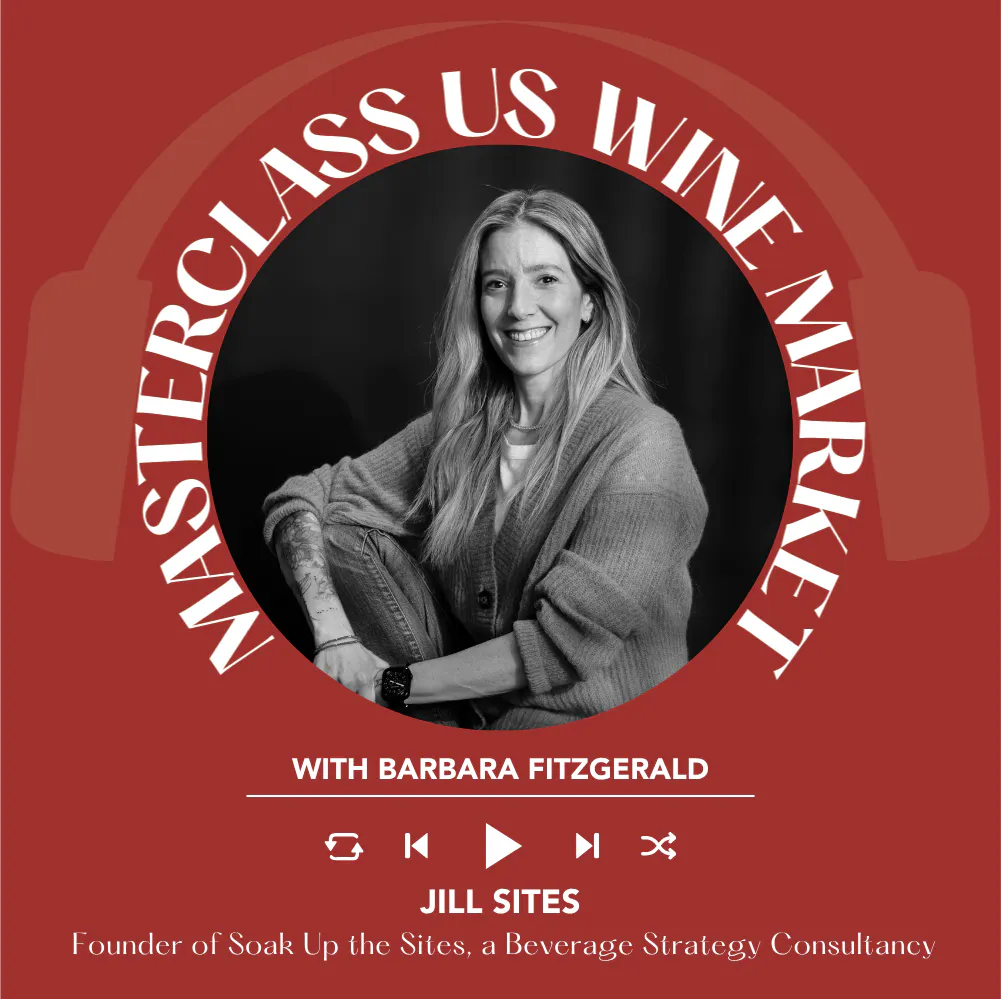
Ep. 2766 Inside the U.S. Non-Alcoholic Wine Market: What Wineries Need to Know with Jill Sites | Masterclass US Wine Market
Episode 2766
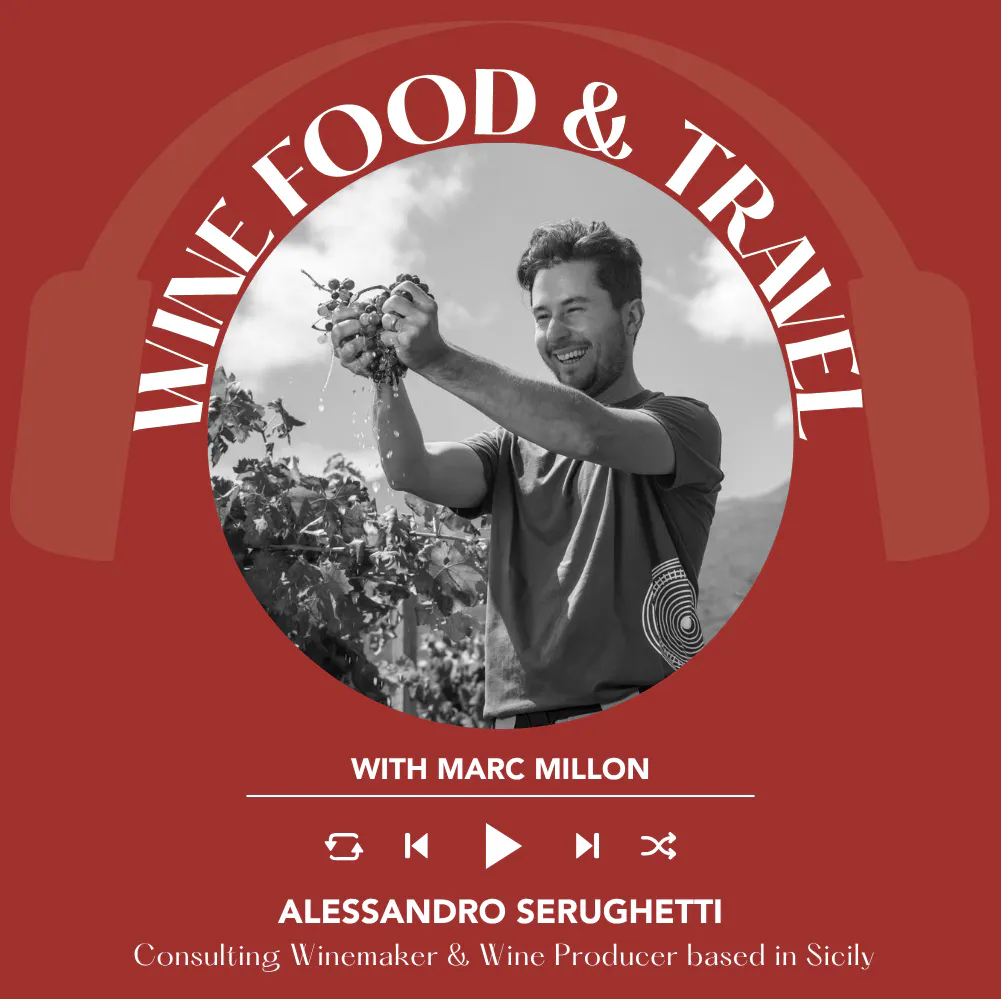
Ep. 2761 Winemaking and Consulting Across Sicily with Alessandro Serughetti | Wine, Food & Travel with Marc Millon
Episode 2761