
Ep. 1471 Marco Gandini Narrates Pt. 25 | Italian Wine Unplugged 2.0
Ep. 1471 Marco Gandini Narrates Pt. 25 | Italian Wine Unplugged 2.0
Episode Summary
Content Analysis Key Themes and Main Ideas 1. Promotion and growth of the Italian Wine Podcast. 2. The ancient origins and historical evolution of viticulture in Lazio, influenced by Etruscans, Greeks, and Romans. 3. The decline and subsequent revival of wine production in Lazio, particularly through monastic orders and the Renaissance. 4. The diverse geomorphology and climate of the Lazio region. 5. Identification and detailed description of Lazio's four main vine-growing belts and their characteristic grapes and appellations. Summary The Italian Wine Podcast celebrates its significant growth, anticipating six million listens by July 2023, while promoting its ""Italian Wine Unplugged 2.0"" book and encouraging audience support. The main content then transitions to an in-depth exploration of Italy's Lazio region, highlighting its strategic historical importance as a cultural crossroads and the heart of the Roman Empire. Viticulture in Lazio has ancient roots, with Etruscan influence in the north (Tuscia) and Greek influence in the south (Campania), each bringing distinct vine training methods. The Roman Empire saw wine deeply integrated into social and religious life, though production faced near extinction during 3rd and 4th-century crises due to factors like economic instability and barbarian invasions. Its revival was largely thanks to dedicated monks and, later, a bourgeois-driven expansion during the Renaissance, fueled by growing wealth and status. Geographically, Lazio is incredibly diverse, with 54% hills, 20% flatlands, and significant mountainous areas, experiencing varied climates from coastal to continental. The region's wine production is organized into four distinct belts: the volcanic hilly belt (home to Frascati and Marino DOCs), the inland sedimentary hilly belt (including Colli de La Sabina DOC), the Apennine foothills (Cesanese DOC), and the coastal hilly strip (Cerveteri DOC). Each belt is characterized by specific soils, grape varieties (like Malvasia, Trebbiano, Cesanese), and local appellations that reflect Lazio's rich viticultural heritage. Takeaways * The Italian Wine Podcast has achieved substantial listener engagement and growth. * Lazio is historically and geographically central to Italy, influencing its viticultural development. * Ancient Etruscan and Greek civilizations played foundational roles in establishing viticulture in different parts of Lazio. * Wine held significant cultural and religious importance in Roman society, despite periods of severe decline in production. * Monastic orders were crucial in preserving viticultural practices during the post-Roman Empire decline. * The Renaissance spurred a renewed interest and expansion in wine production driven by a burgeoning merchant and bourgeois class. * Lazio boasts a remarkably diverse landscape and climate, contributing to varied wine terroirs. * Italian winemaking in Lazio is structured around four distinct geographical belts, each with unique characteristics. * Key Lazio appellations mentioned include Frascati DOC, Marino DOC, Colli de La Sabina DOC, Cesanese DOC, and Cerveteri DOC. Notable Quotes * ""Lazio is a strategically important region, not only because it offers geographical position in the center of Italy, but also because it was the crossroads of different cultures and the epicenter of the vast Roman empire that shaped the rest of Europe and beyond."
About This Episode
The Italian One podcast has achieved success with over six million listeners, with plans to reach a total of six million by the end of July 2023. The podcast focuses on the decline of the European wine industry, including the influence of Greek culture and the Roman Empire on the region. The decline was driven by land transportation, outsourcing labor, and severe political and administrative disorders, including major agricultural and political unrest. The region is also home to a large number of Christian wineries, including the Italian River O and the Marima. The podcast provides background information on various regions and wines, including the Epanine zone, which is more continental than the rest of the region, and the Elan cemetery Hilli Belt, north of Rome, which is made up of a wine growing area, a wine growing area, and a coastal hilly strip.
Transcript
Since twenty seventeen, the Italian One podcast has exploded and expects to hit six million listens by the end of July twenty twenty three. We're celebrating this success by recognizing those who have shared the journey with us and giving them the opportunity to contribute to the on the success of the shows. By buying a paper copy of the Italian wine unplugged two point o or making a donation to help the ongoing running costs, members of the international Italian wine community will be given the chance to nominate future guests and even enter a price draw to have lunch with Stevie Kim and Professor Atilio Shenza. To find out more, visit us at Italian wine podcast dot com. For all the super wine geeks out there, we have a special new series dedicated to you. We are reading excerpts from our new addition of Italian wine unplugged two point o. Winemothers tune in for your weekly fix only on Italian wine podcast. If you want to own a copy of this new must read Italian wine textbook, just go to amazon dot com or visit us at mama jumbo shrimp. Dot com. Lazio. Historical background. Lazio is a strategically important region, not only because it offers geographical position in the center of Italy, but also because it was the crossroads of different cultures and the epicenter of the vast Roman empire that shaped the rest of Europe and beyond. The first evidence of bio cultivation in the region known as Latzoum, the ancient homeland of the Latins, is to be found to the north of the Tiber River in the historic region of Tuscha, which was influenced by the etruscan people who brought Viticulture to all the territories they came into contact with. In this region, the etruscans used live training techniques, training the vines usually for to grow around and up elm and maple trees that grew at the parameters of fields and were cultivated with other crops. The southern area of Latium was more influenced by the Greek colonies that had settled in Campania from the eighth century BC. The Greek colonizers were heirs to a vine growing tradition that feature bush train forms of cultivation, with wooden stakes. Substantial differences survive the centuries during the Roman empire, even after Rome fell under the spell of Greek culture, which, along with the various Olympians' identities, also brought diagnosis, the Greek god of wine, who became known as Bakus in Roman mythology. The cult of Bakus deeply penetrated Roman's social life to the point that wine was used not only for enjoyment in back analysis, but also for sacrificial and mystical purposes. Pieruigi Pizani Barbacani, in his text, LaVite ElUamo, Storia Cortura Shenza, states that the Romans in their relations of political, economic, and cultural encounter, and clashed with the etruscans learn wine growing techniques from the time to the first kings. Following the compass of Latum and the end of the punic wars, the Romans took their wide growing practices and techniques with them wherever they went. With the crisis of the third and fourth centuries AD, while production in Latscrum and Compania, the Roman Empire's most active regions, first decline, damp face extinction. Several factors were involved in this decline, including the development of Landifundia, large agricultural estates, the outsourcing of labor to slaves, and severe monetary crisis, Burbaron invasion, political, and administrative disorder, and insecurity in the countryside. Conditions were so unfavorable not only for Viticulture, but for agriculture, more generally, then many farmers were forced to uproot their vineyards simply to avoid paying taxes and their vines and rapes compelling emperor theodosius to impose the death penalty on anyone who cut down vines or caused a trip to die. In the following centuries, it was only thanks to the dedication of the monks of the benedictine, Kamaldalese, and secession orders that field culture survived. It is no coincidence that the areas with the greatest cultivation of vines and the greatest consumption of wine corresponded with the geographical areas in which there was the most significant Christian penetration. Between the end of the middle ages and the beginning of the renaissance, a bourgeois Viticulture emerged stimulated by those merchants who having grown reach through trade now invested in Viticulture and agriculture. An expanding population and the increased purchasing power of the bourgeois class from whom wine was a symbol of status and wealth combined to stimulate a steady expansion in overall wine consumption. Towards the end of the Middle Ages, two cultural and economic hubs provided the driving forces for the development of agriculture in Central Italy that will later represent the centers of the birth of the Renaissance itself the papal Court, and the Tusman municipalities, in particular, Florence, Sienna, and Luca. In fact, Rome and the papacy extended their political and administrative influence over the central regions of Italy including Latium, umbria, Marque, and Romania, while the Tuska municipalities represented the benchmark for agriculture and especially Viticulture, as demonstrated by the famous fresco cycle, Allegoria, Edefecte Delborneo, Deligre of good and bad government, by unproachable Ranceti in Siena, as well as in the numerous works published by the Roman Curia. During the same period, an important wide growing tradition developed in the Castelio Romani, thanks to the fertility, out of volcanic soils, around the lakes of Albano and Neni. Gem morphology. Lacio is a region located in the center of Italy. With the Terrainian sea to the west, it importers tuscany to the northwest, only up to the north, market to the northeast, APruzzo, and Melissa to the east, and companion to the southeast. The region is characterized by remarkable variety of landscapes, being fifty four percent hilly, twenty percent flat and the remaining part maintenance. The climate also follows the automatic variability of the terrain ranging from nine to ten degrees in January to twenty four, twenty five degrees in July, with rather little rainfall in the northern coastal area, while it is more abandoned in the southern and mountainous areas. Are you enjoying this podcast? Don't forget to visit our YouTube channel, mama jumbo shrimp. For fascinating videos covering Stevie Kim and her travels across Italy and beyond. Meeting winemakers, eating local foods, and taking in the scenery. Now, back to the show. In the Epanine zone, located an inland part of the region and on the border with La Bruso, the climate is more continental, especially in the mountains. My production is centered around the hellest trip that geologically is covered by the deposits that emerged from the numerous volcanic areas present throughout the region. This include Montevosini and Lake Bolsena, the volcanic area of Vico volcano, the Montee Sabatini and Lake Bracciano, the Coli Adani, and finally the Montecimini. The entire vine growing area of lazio can be subdivided into four belts. The volcanic heli belt, the inland sedimentary belt reach in inter mountain basins to Ebonite reliefs with their Calcarios soils and local volcanic coverings, and a coastal heli belt and reclaimed areas of the Marima of Latio and the Pontin countryside. The former includes the Aleatico degraduli DOC ablation with its ample amphitheatre of volcanic rocks surrounding Lake Lucina. The large volcanic edifice of Monteviascone, not far from Viterbo, in the southern part of this lake is also an area of some importance with very rich and fertile soils where Tregiano and Malvasia grapes are cultivated. To the northwest, on the remains of the ancient Latium volcanic complex, is a frascati dog area, and on its slopes between albano and the plains is a marino DOC ablation on soils that benefit from a western exposure and on which Malazier Trebiani Belone and Pobino are grown. In the second zone, the ELAN cemetery Hilli Belt, North of Rome, there is a wine growing area border to the east by the Tiber valley, and the Monte Sabatini, which are characterized by the Coli de La Sabina DOC ablation. Between Sora and Casino stretches the wide basin of the Valetti camino and the southern edge of which is Athena, which gives its name to the denomination of the same name, where great varieties such as Cabanee, Merlo and Chirra Arro. Moving on the Appenine foothills, the Cesanese d o c vine growing area rests on the carbonate platform that also includes the northwestern offshoots of the Monte Ernichi and Montea Filagi. And the whole area is made up of the typical, wrap, literitic soils, and the trishes of limestone accumulations. Below four hundred meters above sea level, the soils consist of sandstone with volcanic tops erupted from dilation volcano called urbani. In this area, with reddish brown soils, Chizanese and Chizanese de fille are cultivated. Which are characterized by pergola training. Finally, the fourth area, the coastal hilly strip to the north of Rome, where white varieties are mostly cultivated includes the coastal strip and the area derived from the reclamation of the marshes between Tarquigna and the Tiber Delta, where the Cervetri DLC appylation also extends. Listen to the Italian wine podcast wherever you get your podcasts. We're on SoundCloud, Apple Podcasts, Spotify, ImaliFM, and more. Don't forget to subscribe and rate the show. If you enjoy listening, please consider donating through Italian wine podcast dot com. Any amount helps cover equipment, production, and publication until next time.
Episode Details
Related Episodes

Ep. 2822 Ep. 20: California | Study Smart for your WSET Level 3
Episode 2822

Ep. 2789 ColleMassari: a long-term vision rooted in Montecucco with Giuseppe Di Gioia | On The Road With Stevie Kim
Episode 2789

Ep. 2788 Ep. 14: Austria and Hungary | Study Smart for your WSET Level 3
Episode 2788

Ep. 2785 From Volunteer to Speaker at TEXSOM with Samantha Cole Johnson | TEXSOM 2026
Episode 2785

Ep. 2766 Inside the U.S. Non-Alcoholic Wine Market: What Wineries Need to Know with Jill Sites | Masterclass US Wine Market
Episode 2766
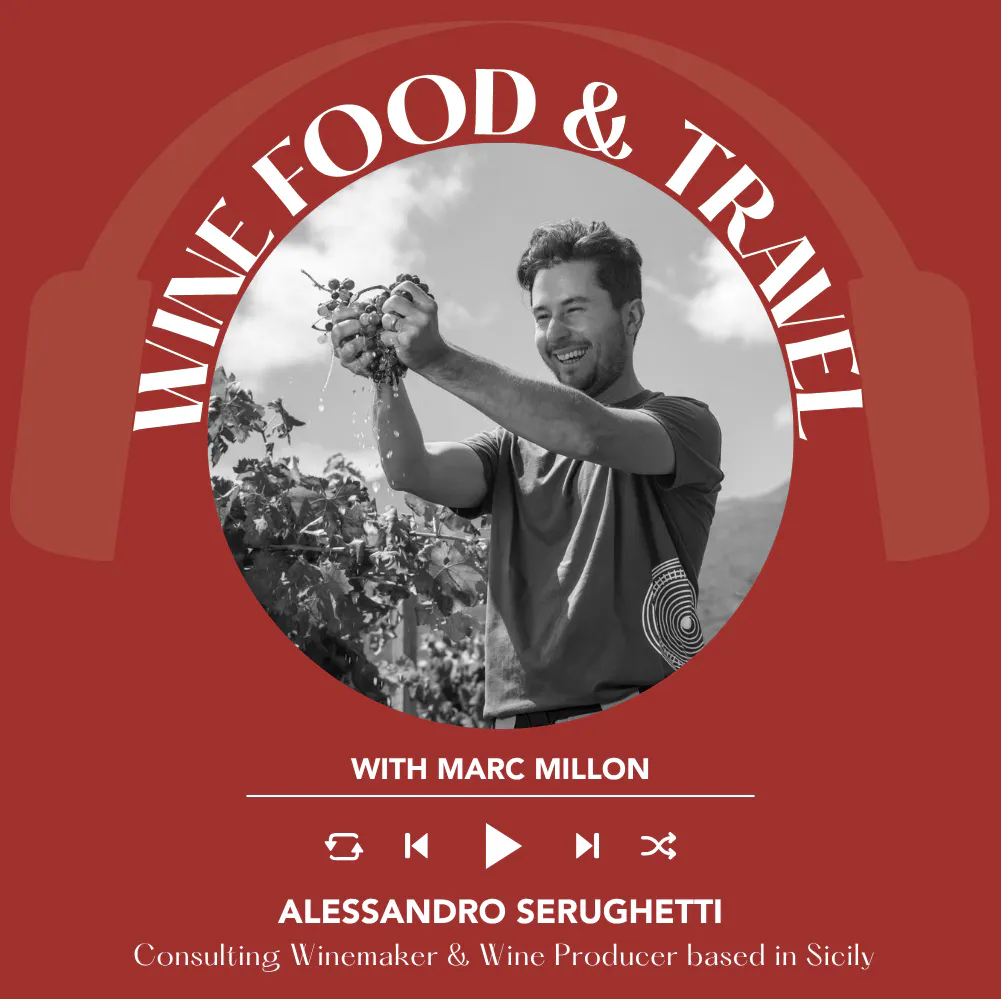
Ep. 2761 Winemaking and Consulting Across Sicily with Alessandro Serughetti | Wine, Food & Travel with Marc Millon
Episode 2761