
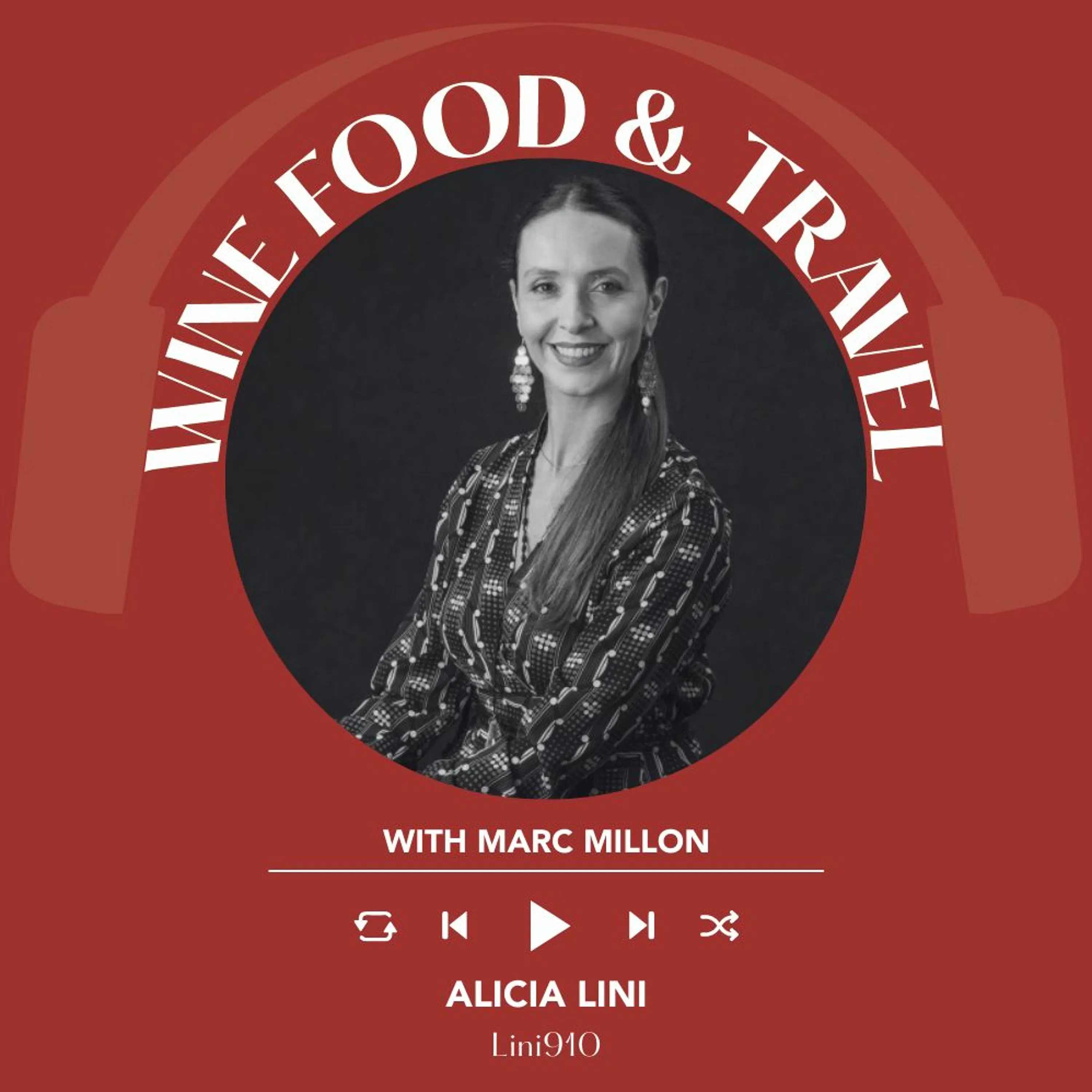
Ep. 1565 Alicia Lini | Wine, Food & Travel With Marc Millon
Ep. 1565 Alicia Lini | Wine, Food & Travel With Marc Millon
Episode Summary
Content Analysis Key Themes and Main Ideas 1. The historical evolution and ""revolution"" of Lambrusco wine, championed by wineries like Lini 910. 2. The Lini 910 family's four-generation legacy and commitment to producing high-quality, dry Lambrusco. 3. The versatility and food-friendliness of authentic Lambrusco, particularly with the rich cuisine of Emilia-Romagna. 4. The gastronomic significance of Emilia-Romagna as the ""stomach of Italy,"" featuring Parmigiano Reggiano, tortellini, and cured meats. 5. The tradition and intricate production of authentic Reggio Emilia traditional balsamic vinegar. 6. The immersive experience of visiting family-run wineries in Emilia-Romagna. Summary In this episode of the Italian Wine Podcast, host Mark Millen interviews Alicia Nini, a fourth-generation member of the Lini 910 winery in Emilia-Romagna. Alicia recounts her family's history, which dates back to 1910, and their significant role in transforming the perception of Lambrusco from a cheap, sweet wine to a celebrated dry, elegant, and versatile sparkling wine. She highlights the family's unwavering commitment to quality, including pioneering the production of Lambrusco using the traditional method (Metodo Classico). The discussion emphasizes the perfect synergy between Lambrusco and the rich, traditional foods of Emilia-Romagna, often referred to as ""the stomach of Italy,"" such as Parmigiano Reggiano, tortellini, and local cured meats. Alicia also briefly touches upon their family's authentic traditional balsamic vinegar production. The conversation paints a vivid picture of Emilia-Romagna as a destination for wine, food, and cultural immersion, encouraging listeners to experience the region firsthand. Takeaways * Lini 910 is a fourth-generation family winery established in 1910, known for its dedication to quality Lambrusco. * The winery played a crucial role in ""revolutionizing"" Lambrusco's image, advocating for dry, elegant styles over the previously prevalent sweet versions. * Authentic Lambrusco is a versatile and food-friendly wine, designed to complement the rich cuisine of Emilia-Romagna. * Emilia-Romagna is considered the ""stomach of Italy"" due to its world-renowned culinary specialties like Parmigiano Reggiano, tortellini, and prosciutto. * Lini 910 was among the first to produce Lambrusco using the more complex and expensive traditional method (secondary fermentation in the bottle). * Traditional balsamic vinegar, particularly from Reggio Emilia, is a highly aged and regulated product with a deep historical connection to the region. * The region offers an authentic ""work hard and enjoy hard"" mentality, inviting visitors to experience its unique blend of culture, food, and wine. Notable Quotes * ""Emilia Romagna is considered the stomach of Italy in a way."
About This Episode
The hosts of the Italian wine podcast discuss their journey to meet their guest, A mineral Nini of Lini nine one o. They talk about the "slackrus" label and how it is a revolution in the Lambrusco wine country. The success of traditional Italian wines in the "slackrus" industry is discussed, along with the challenges of maintaining the quality and authenticity of traditional Italian wines. The "weirdness and action" of traditional Italian wines, and the "weirdness and action" of traditional Italian vines, are also discussed. The "weirdness and action" of traditional vines, and the "weirdness and action" of traditional Italian vines, are discussed, along with the excitement and versatility of traditional vines. The tour of the winery is also offered, and listeners are encouraged to visit.
Transcript
Since two thousand and seventeen, the Italian wine podcast has exploded. Recently hitting six million listens support us by buying a copy of Italian wine unplugged two point o or making a small donation. In return, we'll give you the chance to nominate a guest and even win lunch with Steve Kim and Professor Atilio Shenza. Find out more at Italian One podcast dot com. Welcome to wine food and travel. With me, Mark Billen, on Italian wine podcast. Listen in as we journey to some of Italy's most beautiful places in the company of those who know them best. The families who grow grapes and make fabulous wines. Through their stories, we all learn not just about their wines, but also about their ways of life, the local and regional foods and specialities that pair naturally with their wines. And the most beautiful places to visit. We have a wonderful journey of discovery ahead of us, and I hope you will join me. Welcome to wine food and travel with me, Mark Millen, on Italian wine podcast. Today, we traveled to Emilio Romania to meet my guest, Alica Nini of Lini nine one o. A family winery now in its fourth generation, making highly acclaimed glambrusco wines, utilizing both the Martinotte as well as the methodo classico methods of traditional method of secondary fermentation in the bottle. Alicia, thank you so much for being my guest today. How are you? Really happy to be here with you, Mark. I'm very happy to have you as my guest. I tasted your wines this past year and was really excited by them. So I'm really interested in learning more about your story. First of all, for our listeners, to give them an idea of where Lini nine one o is located, tell us about regio Amelia, about the Po valley, the food valley, this area along a great Roman road. What's it like where you are? What's the countryside like? The best. It's the best. I'm really passionate about, our land. Emilia Romagna is considered the stomach of Italy in a way. It's where we produce parmigiano reggiano tortellini, Talieto, So we need this light wine as Lambrusco is to enjoy even more, you know, this amazing, culture about food. So the Lambrusco has to be light fruity has to be a very simple, but elegant wine at the same time. So just for our listeners now, we're really in the heart of Emilio Romagna. Near Modena. Is that correct? We are just in the middle between the province of Virginia and the province of Modena. We are just, exactly in the middle and the little town is called, so we are not far you know, from both, today. I'm imagining you had a very hot summer. Very hot summer and very cold winter. Okay. Yes. Yes. But it's an exciting moment now, Alich. The grapes are ready to be harvested. Has a harvest begun? Yeah. And, just this week. So we are very excited. And, we have managed work because the winery is, you know, renew itself. I'm ready to to leave for the states. So it's a really full moment. I think. And so an exciting moment. An exciting moment, a hundred percent. Now, Lini nine one o, the name of the winery now alludes to the fact that the history goes back to nineteen ten. Yeah. Tell us something of the story of your family in making wine in this part of Emilia Romania. It was my great grandfather that started to produce wine in the nineteen ten, and then the generation of my grandfather, and then the generation of my dad, his brother and sister. And me and my cousin and my brother now. So I represent the generation number four. And, really, in more than a century, you know, the description of our story is really, different, difficult And, you know, the words change so many times, not just the word, but also the wine word, in a way, but really, really fascinating. Of course, the wine word that I'm living now is really different from my grandfather, you know, of course, from from my great grandfather, but in a way, also from the generation of my parents as well. Tell me your own story, Alicia. You didn't actually always intend to go into the world of wine? Well, you know, I study a classic ballet. So I just wanted to become, you know, a classical ballerina, but then, you know, just start to grow in my mind the the idea that, one day, I could join the winery, the family. And after, you know, I took my bachelor's degree and my master's degree in UK, I want to sit there for PhD, but my dad called me back and say, you know, just try to join the family business. And if you like it, you will stay if you don't like it. If you, you will go back wherever you want to go. So I come back and I joined. I really like it, and because we are here connected, so definitely I stayed. So and it's been marked really tough in the beginning because, at the time, almost twenty five years ago, the perception about Lambrusco was still cheap and sweet, and my family tried to fight for decadis and never came down to the compromise to produce, a sweet coker in a way. So it's been really tough, try to fight and affirm and try to get, a really cultural, educational approach, about palette and where you should expect from a good class of Lambrusco. And in a way, we try to step back instead to promote, leaning, the family, and our culture, we want to promote, a strong territory in itself and what the quality could, symbolize, you know, the real territory and the real authenticity of Lambrusco. Absolutely. That that is so interesting because as you say, Lambrusco has been a wine that has not always understood the real Lambrusco has experienced in the region in a media as opposed to, you know, the huge quantities that are exported and perhaps gave that name to the wine, but when I've traveled to the air, I've just been so excited by how well the wines you've alluded to the Salites, of how well the wines go with the local foods, and we'll talk about that a bit later. But at Lini, you have been really at the forefront of something of a revolution in the Lambrusco wine country. Would you say that's true? It's true. A hundred percent. There was a very deep revolution on the first the revolution that my family tried to make it. And I think in the in the name of my dad, that when he just joined the family as well, and he became the winemaker for our family, he decided to not come to any compromises and, was really tough at the time, Mark, because the the majority of Lambrusco exported was just sweet and was Abambila. And, in a way, you know, I can say in a provocative way that that a tablet doesn't exist. There was an invention in a way because you cannot enjoy, a place of tortellini, and, plates, of, tappelletti. We say, or a place of, lasagna or a slight of Pulatello with the sweet wine, just the opposite. The Lambrusco has to be dry, very clean, very net, sparkling, but, you know, in a very slow way. So has to incorporate the bubble has to be simple but elegant as we said, in the beginning. My dad said, if we have a chance to make it, we have at this level. And, instead, to see the bad aspect, we wanted to focus on the the top, and we never stop it. My family is famous because we have been the first star to elaborate the, Brisco grapes also through a classic method. And these were the time where even most difficult to maintain this, process, very elegant, but also very expensive. And nobody understood that, at the time, because the contents was cheap and sweet and, you know, obtained it in a very quick way. Do you understand? So the opposite was, to obtain, like, Bruce going in a month, in years, through a natural fermentation through directing into the bottle like a champagne. So it's been, you know, a very unbelievable challenge. Wine spectator just, recognize the quality of this, Lambrusco, and this has been, you know, a new beginning. That's really interesting. And also, of course, that would have been the recognition that wine's Bector gave when they selected your wine for opera wine for a hundred best Italian wines with a Lambrusco, amongst one hundred best Italian wines, and very important and prestigious selection, a very important wonderful opportunity to taste these wines. It's operator wine takes place just before we need to be. And I had a chance to taste your wine for the first time. Last year at Opera One. And I remember I was very impressed. You were in very good company with some of the greatest names in Italian wine, and so that must have been very satisfying for you. Well, you know, step by step, we are trying to rebuild, you know, the talents, about the authentic, Lambrusco. And, every single market, and, from the price, of course, to people that work in this sector. And also, you know, every single consumer are really seduced, are really attracted, you know, about the authenticity. There is no bluff You can obtain on Bruce going a week of fermentation. Our entry level stay between at least three or four months and natural fermentation, double fermentation. And this is the best satisfaction, you know, when someone recognize, inside the class, the real quality and the real authenticity. There is nothing, to understand. So it's really amazing. It's really fluent now. Just, be there in a very authentic way, and, everything happened. And I have to say that this is a really special moment for our winery for our family because after many years, where we insist that we fight, I'm in the states every month. I need, you know, really many, many people. And very also people that study, people people that dedicate, you know, about, how to learn, how to understand the territory. Nebraska is really big family. You know, there are many clones, you know, there is in Nebraska, Sanbrisco, many. And, every veritas give you something different and how to interpret this, is fascinating. A little bit about a few of these important varieties because they are very different. Lambrusco disorban, making that pay a lot. It's a big it's a big family. And, I think What is the most important for you? For my family or hundred percent to Salami, you know, which is, for my dad, with the winemaker, is the one that give to the final result to more urgency. But this is our experience, you know, that we are talking about, interpretation and action and, personal taste. There is a, an objectively interpretation and a subjectively interpretation. Surbari is amazing for its own freshness, amazing acidity, and Grasparos is more full in terms of color. Is really full red, Lambrusco version and probably more round, in a way, but there are many. And I think that this is the special challenge for everyone to find, the best that that you can, you know, you can find a match with many things because, yeah, we were talking about food, and, of course, the when you join, and Bruce got together with our food, the territory is amazing. But at the same time, in being, away. In many occasion, I experienced Namosco with the fish, with the salad, with the sandwich, with the pasta, not just with the traditional place, which is the Of course, the the best and the top. Wind to wine business forum. Everything you need to get ahead in the world of wine, supersize your business network. Share business ideas with the biggest voices in the industry. Join us in Verona on November thirteen to fourteen twenty twenty three. Tickets available now at point wine dot net. So, Alicia, these various varieties of Lambrusco that you just explained, so far, grasparos, Salamino, and others actually mean that Lambrusco isn't a single line. There are a variety of styles, some deepen color, some light in color. And actually, Lambruschko becomes a really versatile line, and you can have different Lambruschke when on different occasions. Would you say that's correct? Is perfect. Yeah. It is correct. One hundred percent. Nebraska is a very versatile wine. It goes, in many occasion. I think that we try to explain this, versatility and, and people are really surprised. It's just eleven ball, the majority of the times that you can enjoy a glass of Longrozco. So the pleasure and, the drinkability is just there. It's a very food friendly wine. So no food in all in Brisco. Some food, yes, in San Francisco. Yes. You can enjoy La Brisco. What food? The foods of your area are some of the most delicious and famous in the world. Let's talk about the really typical, a cucina of Amelia. Yeah. I The things that go so well with your wines. Yeah. I'm really, really like, Ervasona, which is, is a kind of, spinach cake. Yes. Then you can enjoy every moment during the day from breakfast to lunch as a palliative, is amazing. Made with parmigiano or with somebody caught, some eggs, and you can have a weedle without pasta. There are many recipes. And I think that this is, really cool. I enjoy it with, just as light of prosciutto parmigiano reggiano is a finger food. I like which is kind of a fried pasta that is with the salume. Oh, I love with the tortelli, pancake, and the spinach. So the tortelli would be really typical of that. Yeah. And tortelli. Parmesan cream, parmigiana cream. Of course, you're making me very hungry. It sounds nice. Yeah. Me too. And, you know, why you are enjoying all of this food? A bottle of Landrozco is like, I don't know. Goes, just because this food is really rich, we need this light wine in order to reset, re prepare the pallets to enjoy again the food. So It's just, a dance between food and wine, food and lambrozco, food and lambrozco. I love that. Just a dance and you as a dancer are telling us this, and I think you are absolutely right. It's an example of where the wine is in perfect harmony with the local food. Yeah. As you said, that richness of the food needs the freshness of Lambrusco, the acidity of lambbrusco. These dry lambbrusco that really are made to be drunk with friends, casually, happily. It's a happy wine. Exactly. It's really happy wine. And, I think that people are really surprised to enjoy this pleasure, this quality, and this drinkability altogether, altogether. So, I think that the evolution of, Lambrusco is amazing. And, this assess is, unbelievable now. It's really unbelievable. Yes. I think it's it's I'm full circle now, and Lambrusco is a sort of wine that many of us are looking for. As you say, it's a little bit lower in alcohol, and it's a wine you can really drink very enjoyably on many, many occasions. When I travel and I find myself in many different contests, I had the opportunity to enjoy Namusco during finger food party, during a barbecue in a really elegant dinner, our masterclassico, Milizume, Lamrusco grapes. I enjoy this. In my personalized in front of the TV, just, around the table with my friends, so it's really, really versatile. And, I think that you can enjoy Lambroosking many, many different occasion. And this is, is a part of, the idea that you you should have a bottle of Limbrusco in your fridge during every occasion. Yeah. Absolutely. Just as we've been speaking about real genuine serious Lambrusco, the wines you're producing as opposed to the wines that perhaps gave Lambrusco its previous reputation. There's another product I'd like to speak briefly with you about which is the, is it the modem or the arreggio that you're The arreggio, which which again, I think it's important for our listeners to understand the difference of real genuine traditional Valsamic vinegar as opposed to the industrially produced. So maybe just a few words. Well, my family start to produce this, with the generation of my great grandfather, and we never stop. Historically, it was, a kind of, dory. So when a baby girl was born, you put away some viral off balsamic. And, hopefully, when she was ready to get married, this was a part of a family gift. This is historically what family were used to make it. And, my family did this for a personal use, and, and then we just don't want to devulgate the pleasure and the quality of an authentic traditional balsamic vinegar. This is an amazing product that has, I don't know, we spend more than twelve years, in order to obtain a little bottle of balsamic. And, this is considered, you know, red lobster. And then there is silver. Is, even if, you know, sorry, is, the silver is, more aged. And, and then there is the gold, which is sometimes more than twenty five or thirty years old. And, of course, each these are qualifications from that are granted by the consortium. Is that correct? Yes. Because it's a it's a very, very well regulated for the traditional La Cheyto Valsamico, which is very important. Now just to how perhaps one might best enjoy that, maybe just a few drops on a piece of parmigiano regiano. And the Casa of Lambrusco. When we start to enjoy the balsamic, you in a way you should hand it to enjoy the wine because the balsamic is the final closing your palate. And, he's amazing with the parmigiano reggiano. He's amazing on ice cream. Okay. And, it's top on strawberry. Mark. We just talk about food all the time. But this is Amelia. You wanted to know about Amelia. This is Amelia. It's, you know, you drive a Ferrari. You enjoy the balsamic vinegar. You drink a good glass of our Lambrusco, and this is the energy, and and you hear pavarotti. And you hear pavarotti. Yes. And you hear pavarotti. And I think that this is is an atmosphere, and, really, authentic, allergy that you can have here in Emilia. I think it's important that people come to Amelia to experience to experience Lambrusco as it is in the area to taste these wonderful foods. To learn about the culture and the history. And so I'm I encourage our listeners to make sure that they visit when, they're next in the area. Can people visit the lini winery Yeah. You are very welcome. People are welcome. They can get in contact with the winery by email, and we fix an appointment. The tour and everything is really familiar. You know, just join the family, I will be there. You know, you will have a tour with me and the little days there with me. It's really a family contest. Someone said, that, what Emilia didn't have, they created. And it's really true that our mentality, our DNA, just work hard and enjoy hard. And I think that, who, has the opportunity to join, to to experience the familiarity can brief exactly this, such as the beauty, but at the same time, a contest where people work hard and then, you know, the pleasure of food and wine is just there that is waiting for you. Well, absolutely wonderful. I look forward to visiting myself hopefully sometime soon. Alicia, thank you so much for being my guest today. I've really enjoyed our conversation. I enjoyed tasting your wines earlier in the year, and I look forward to sampling them again as soon as I can. But in the meantime, thank you very much. I hope the harvest goes well, and best of luck with everything. Thank you so much, sir, from my heart. Thank you. We hope you enjoyed today's episode of wine, food, and travel. With me, Mark Millen, on Italian wine podcast. Please remember to like, share, and subscribe right here, or wherever you get your pods. Likewise, you can visit us at italian wine podcast dot com. Until next time.
Episode Details
Related Episodes

Ep. 2822 Ep. 20: California | Study Smart for your WSET Level 3
Episode 2822

Ep. 2789 ColleMassari: a long-term vision rooted in Montecucco with Giuseppe Di Gioia | On The Road With Stevie Kim
Episode 2789

Ep. 2788 Ep. 14: Austria and Hungary | Study Smart for your WSET Level 3
Episode 2788

Ep. 2785 From Volunteer to Speaker at TEXSOM with Samantha Cole Johnson | TEXSOM 2026
Episode 2785
Ep. 2766 Inside the U.S. Non-Alcoholic Wine Market: What Wineries Need to Know with Jill Sites | Masterclass US Wine Market
Episode 2766
Ep. 2761 Winemaking and Consulting Across Sicily with Alessandro Serughetti | Wine, Food & Travel with Marc Millon
Episode 2761