
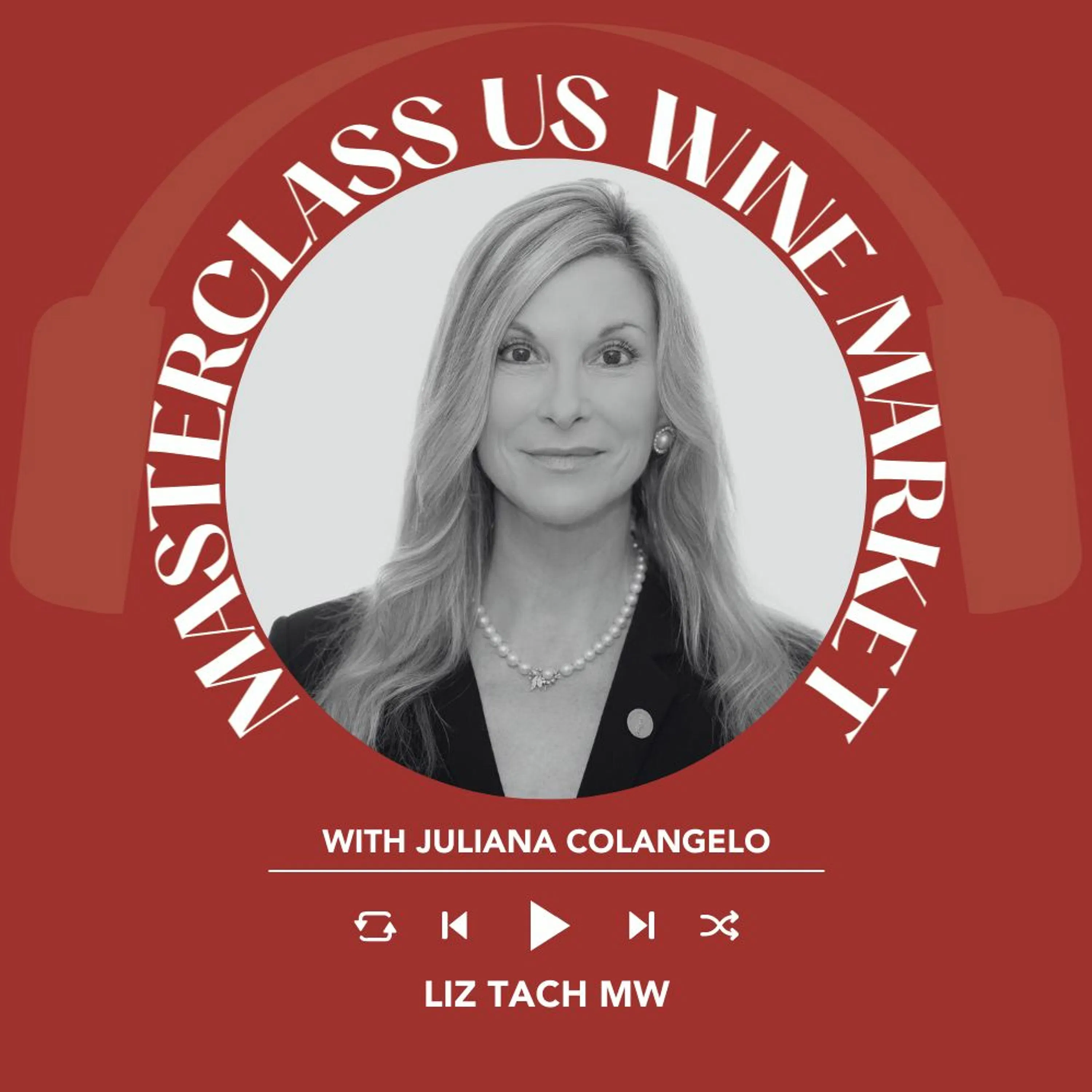
Ep. 1614 Liz Tach MW | Masterclass US Wine Market With Juliana Colangelo
Ep. 1614 Liz Tach MW | Masterclass US Wine Market With Juliana Colangelo
Episode Summary
Content Analysis Key Themes and Main Ideas 1. The mission and research focus of the Wine Market Council in analyzing US wine consumer behavior. 2. Current trends and challenges in US wine consumption, particularly regarding generational shifts and economic factors. 3. Actionable strategies for wineries to adapt their marketing and sales plans based on market research. 4. The importance of transparency, sustainability, and innovation in connecting with modern consumers. 5. The value of data-driven insights and networking within the global wine industry. Summary In this episode of Masterclass US Market, host Juliana Colangelo interviews Dr. Liz Tash, MW, president of the Wine Market Council. Liz shares her personal journey to becoming a Master of Wine and then delves into the core functions of the Wine Market Council, a nonprofit established to provide forward-looking research on US wine consumer habits and trends. She highlights that the Council's extensive data is primarily for its members (including a call for more Italian trade associations to join) to inform their business, marketing, and sales strategies. The discussion covers critical market insights, such as the recent decline in US wine consumption volume, now exacerbated by inflation affecting consumer spending. A significant concern raised is the lower wine consumption among younger generations (Gen Z and younger) compared to Baby Boomers. Liz, quoting industry expert Curtis Mann, offers three key recommendations for wineries: avoid price increases in the current economic climate, enhance transparency about wine ingredients and sustainable practices, and embrace innovation in product appearance, new categories (like non-alcoholic wines), and wine cocktails to better compete in the evolving beverage market. The episode concludes by emphasizing the necessity of understanding consumer needs and fostering strong industry relationships. Takeaways - The Wine Market Council generates crucial research on US wine consumers that helps wineries refine their market strategies. - US wine consumption volume is decreasing, with recent inflation also impacting consumer spending on wine. - A key challenge for the wine industry is the lower engagement with wine among younger adult demographics. - Wineries should prioritize transparency regarding ingredients and sustainable practices to meet consumer demand. - Innovation in packaging, new product formats (e.g., non-alcoholic wines, wine cocktails), and marketing is essential for attracting and retaining consumers. - Networking and cultivating strong relationships are fundamental to success in the global wine industry. Notable Quotes - ""Our mission is to provide forward looking research on the US wine consumer... on their purchasing habits, their attitudes, and their trends."
About This Episode
Liz Tash, a professor and wine writer from the Y Market, introduces the Master Guinea US Market's master class and emphasizes the importance of providing data and marketing research for the US wine consumer. The organization provides high level data and research studies, promoting wine consumption and lifestyle, and emphasizes the need for industry-wide discussion and action items based on the data. They use research data to determine hot trends and trends in the wine industry and emphasize the importance of sustainability and its impact on the industry. The group emphasizes the need for tangible action to support their efforts and offers resources for finding the right locations for the Y Market Council.
Transcript
Since two thousand and seventeen, the Italian wine podcast has exploded. Recently hitting six million listens support us by buying a copy of Italian wine unplugged two point o or making a small donation. In return, we'll give you the chance to nominate a guest and even win lunch with Steve Kim and Professor Atilio Shenza. Find out more at Italian One podcast dot com. Welcome to Mastercost US Market with me, Juliana Colangelo. This show has been designed to demystify the US market for Italian wineries through interviews of experts in sales and distribution, social media, communications, and so much more. We will quiz each of our esteemed guests at the end of each episode to solidify the lessons that we've learned. To sharpen your pencils, get out your notebooks, and join us each week to learn more about the US market. Hello. Welcome to Masterclass US Whitemark. It. Today, I'm thrilled to welcome Liz Tash to the Italian White Podcast. Doctor Liz Tash, m w, is a professor, wine writer, and consultant based in Napa and Sonoma, California. She also holds the position of president of the wine market council, a nonprofit dating needed to provide a forward looking market research on US buying consumer buying habits, attitudes, and trends. Liz is also an award winning author and educator specializing on why business strategy, marketing, leadership, and executive development, and why in my style. She's published nine books and over two hundred articles. Incredible. Welcome to the show Liz. It's so great to have you here. It's a pleasure being here today. Wonderful. So before we dive in today's discussion, Liz, about your new role with the White Market Council, tell us a little bit more about your background what led you to become the first woman in California and the seventh woman in the US to become a master of wine that's so incredibly impressive. So we'll let you hear a little bit more about your story. Oh, thanks, Juliana. Well, I actually fell in love with wine during college. I had a girlfriend take me to the Napa Valley to go wine tasting. And by the third winery, I just I couldn't believe how beautiful the vineyards were, how wonderful the wine tasted, being around such a beautiful scenery and with friends, and it was just fall in love with wine. And so from that point on, I actually started studying wine on my own, met my husband, turned him into a wine drinker and then we started traveling the world together. So now I've been to almost all the major wine regions of the world in seventy five countries. So wine's always been a passion since a a young age, but my, my PhD is actually in, human resource management. So I did work for ten years in industry, before transitioning to the university to be a professor of wine business and, human resource management and leadership management, and then along the way after I wrote my first wine book, I got, approached, a recruited sort of by two MWs to apply for the program. And at that time, there were no women in California. In fact, I know West coast who'd yet become an MW. And And what year was that, Liz? That was two thousand and six. Okay. So not that long ago. In this century. This century. You're right. That makes me feel better. Anyway, yes. So two thousand and six, and then it took five years. So I became an MW in twenty eleven. And, yeah, then I found out I was the first woman in California to become an MW in the the governor of the state of California, the legislature gave me a nice big plaque and award. And so that was great. And it's wonderful being an M. W, because it opens a lot of doors. You have this access to this incredible network of brilliant people around the world, and you just get a lot more opportunities too. Yeah. Absolutely. And would you remember some of those first liners that you visited? I'm just curious about that trip because it sounds like it was so transformative. Oh, yes. So the one, I still never forget it. The one I fell in love with wine was Behringer. Oh, okay. Classic. Standing there. We had done the tape tour, vineyards, And we had an incredible tour guide. I'll never forget her. She was so mesmerizing and engaging, and we were standing there, drinking our wine, looking out over the vineyards, and that at that time, we were in that solar sort of old house there at Behringer. And I thought, this is the world I want to live in. And it came true. That's for sure. Yeah. Well, that's amazing Liz. And, you know, today, we're gonna focus our conversation on the Y Market Council on your new role, and you mentioned you're part of the NW Network and community, which brings so many incredible opportunities and resources. And now you're leading one of the leading market research companies with that Y Market Council. So wanna talk a little more specifically today to you about how wine companies can actually use the data and market research that the wine market council generates to inform their marketing and sales plans. So our three key takeaways for today's master class what we're really excited to learn from you are. Number one, the most current and up to date resources for US market research and data and and learn a little more about where white market council is pulling its data from. Number two, how to go about interpreting and deciphering market research and data. Also as a doctor, I'm sure Liz, you've got some great tips for them at academia that can apply here. And then finally number three, how to apply market research and data to a US focus sales and marketing plan because, you know, after all, we're here all to master the US market. So, let's just dive in and first off, Liz, tell us a little bit more about the Y Market Council, what the organization does, how membership works, and a little bit more about the focus of its work and research. Yes. Excellent. And great great objectives, Julianna. So, yeah, so wine market council was established in nineteen ninety six in Napa, California. And it's a nonprofit organization. And so we're a scientific nonprofit. And so we are set up. Our mission is to provide forward looking research on the US wine consumer. We focus on US wine consumers, on their purchasing habits, their attitudes, and their trends. And so our members are wineries, growers, distributors, importers, trade associations and affiliates. And affiliates might be universities, banks, media firms, and so forth. And I did wanna just point out trade associations because we have, like, Nappabella Vintoners. We have New York wines, wines of Washington. We have wines of New Zealand. We have wines of Germany. We have wines of the Rome in France, but we still don't have any amazing associations from Italy. And so I'm putting out that little little, note there that we would love to, welcome some Italian, trade associations as members because there's lots of benefits in terms of Yes. The research we provide. So every year, we do three to four huge research studies on the US market and the US, mainly the US consumer. Okay. And all all that data is only shared with our members internally. Now we do sort of high level press releases and articles and presentations like this one, where we we provide some of the high level data. Right. But all the nitty gritty detail data is reserved for our members because that's part of what they're paying for their membership. Of course. And then we also will even do customized data sorts for them as well. We do lots of webinars. We're gonna be starting up our in person conference again, which is a once We do once a year. It'll be a New York one year in in Napa the second year and sort of back and forth. Everything is also, taped and online. So if you can't attend that, you can always watch all the research, you know, you know, at your leisure. Right. And then what some of our larger wineries really appreciate is we make access in the universities. We make access all all of the big excel files to people who love it. Love to crunch numbers. You know, they can they can do that as well. That's incredible. Yeah. So it's it's really wonderful. We've been doing this research for, you know, twenty seven years now. So we've database that people can dip into. And we asked our members. We just completed a survey, a membership survey asking them, you know, how are they using the data? And I'll just share the top three ways that they are the benefits are great. Ninety two percent of them say that they are using the market research. We give them to help create their business, their marketing strategy, their sales strategy. Yeah. So yeah. So that's really what our intent is. Our intent is to help wineries sell more wine Right. In the US market. And that's includes wineries from all over the world. So not just US wineries, So, like I said, anybody can be a member if you're in the line a global wine industry. Right. And for Italy, I mean, US is the number one export market. So I'd imagine, again, there's there's so much value in this data. Yeah. We do oh my gosh. Americans love Italian wine, and you know that, Joanna. They sure do. With number one wine we import into this country, everybody loves Italian wine. Of course. Yeah. And, you know, part of what we're trying to do is we're trying to promote wine consumption, you know, in a responsible fashion. Mhmm. Because, you know, wine is part of the good lives. Right. And, so that's that's part of what we do. Yep. And that's so important today, right, Liz? Because, you know, we're seeing statements coming out from the World Health Organization. Looking at alcohol being regulated the way tobacco is and it's gonna be coming more and more. And I think as an industry, we need to be promoting, you know, moderate consumption and the lifestyle of drinking wine in a in a positive way as as an industry and getting that message out there more and more. I think it's only gonna gonna become more critical. I agree with you one hundred percent. Yeah. You know, we're we're recommending wine consumption in a in a moderate fashion, you know, to to make to help improve life, relationships, you know, romance, you know, food, you know, all the all the wonderful things that wine can make better in life, but obviously in a very, you know, responsible drinking in a respectful manner. Mhmm. Of course. So tell us a little bit more ways about some of these consumer studies that the wine market council is publishing. Maybe talk to us a little bit about some of your your recent findings, and also just a little bit about the process of how these studies are being conducted? Yes. Excellent question. So we basically since we're a member funded, we have a research committee that's made of members. People, you know, say they wanna be on the committee, and the committee meets twice a year And what they do is they look at what's hot. Like, what are the hot trends? What are the things the wine industry really wants to know? And so they're the ones who select the three to four studies we do per year. And so then we take we actually use seventy five percent of our funding to do research studies. And so one of the studies we've been doing since the very, very beginning, I sort of I call it the profile of the US wine consumer. And we do it every two years, and we're doing it again right now. And Okay. We started calling it a benchmark survey, a benchmark segmentation survey. So it tells you everything about the US wine consumers, you know, where they live, what kind of wine they like, you know, what the occasions are they drink wine? How much money they spend on wine? And so it's this really great thing to just help you tap into what are the hot trends, what do consumers really want right now? And so that's that's sort that's our benchmark survey. We do that every two years. Right. And been two years. Yeah. So then it's like whatever whatever's hot. So for example, last year, we did a survey on wine ingredient labeling, you know, because it's being mandatory in the EU, but not yet we're trying to figure out if US consumers want it. We also did one on multicultural consumers, how to connect more with all the Hispanic, Asian, black Americans who are not drinking as much wine as white American ins. And so we wanna make sure that we are, you know, more into equality, and reaching out and connecting with these consumers. This year, we did one on this whole. We call it the wine category shift testing study. It's basically looking at, okay, why are people drinking last wine? We know part of the reason is the wellness trend, but, you know, what else is going on? And where are they shifting to? If they're shifting away from wine, What are they drinking instead? You know, are they drinking juice and tea? Or are they drinking beer? You know, because people are shifting away from alcohol in general. Right. Yeah. And then what can the wine industry do about it? So that's what that that big study is going on right now. I'm very curious to to hear the findings of that one. That kinda leads me to the next question I have for you, Liz, is that, you know, we've all we've seen the research and the stats around why an exemption declining globally and especially in the US market with the rise of RTDs and spirits. But also just with people drinking less as as one of the key factors. So I know you're doing that study right now, but based on previous experience and and your own expertise, do you think are some of the most important and relevant findings as it relates to declining consumption of wine in the US market? Right. So what we've seen is, for the last two years, volume of wine has gone down. That that means the sales volume. So people are buying less wine. But until just recently, they were spending more on wine. So even though volume was declining, the wine industry was still making a good amount of money, so people weren't that concerned until just this year. And I what happened this year is inflation just just really hit people. Yeah. So what we're starting to see is people spending less on wine now. Right. At that sort of down shifting and price trading down we call it is happening. But if you look at the general numbers, and I always like to say, you know, wine's been around for eight thousand years. It's not going to pay. That's for sure. And if I look, we have charts so in US wine consumption over the last, like, I don't know, like, since the nineteen thirties. And you are always gonna see these sort of ups and downs. Like, in the nineteen nineties, we went through a period where wine consumption went down, and then came back up again. So I sort of think we're going through one of those again. So right now, our our our leaders per capita is eleven. Okay. Eleven leaders per capita. And last year, it was eleven point three. A better. So it's not like we've dropped a lot. You know? So and and to to this is a number that I think people need to keep in mind is that thirty three percent of all Americans drink wines. That's a lot. Yeah. Thirty three percent. And then the and that's I'm sorry. Those are adult Americans. Right. Of course. So when we look at the numbers there, that's seventy nine million Americans, age twenty one and over drink wine. Yeah. Seventy nine million Americans. That's bigger than the whole country of France. That's huge. France only has sixty seven million people, and that's including kids who can't drink wine. So, you know, well, that's why we're the largest wine market in the world. Even though it's only thirty three percent of American strength wine, That's seventy nine million people. That's that's like a nation right there. So so that that's something I like to say to just keep it in perspective. But, Jilliana, the numbers that are bothering us are the younger generation. So Right. When we break those numbers down by generation, if we look at all seventy nine million wine drinkers in and we just look at that, only twenty five percent of that total are gen z and younger and more because, you know, the people in Right. You have thirty three percent who are older millennials. So keep in mind, older millennials are now in their thirties and early forties. Right. That's my demographic. We like to call ourselves. The Jitteriatric, millennial. And I just had a conversation with somebody today. They're like, you know, Liz, why why is a lifestyle thing? When you're really young in your twenties, hear out drinking beer and, you know, experiencing a lot of cocktails. Yep. And and it's oftentimes not till you get in your thirties and you're maybe married with the mortgage and kids that you start drinking more wine. Well, you start staying at home more too. Right? And instead of going out to the bars, you're hosting dinner parties and, you know, you're you're drinking a bottle of wine with your partner on a Friday evening. You know, they're just the the lifestyle like you said exactly you're aging into that, the category in a in a different way. Yeah. And I I I totally agree. Wine to wine business forum. Everything you need to get ahead in the world of wine, supersize your business network. Share business ideas with the biggest voices in the industry. Join us in Verona on November thirteen to fourteen twenty twenty three. Tickets available now at point wine dot net. So it's not that bad, but here's the the slightly concerning thing. Is that thirty eight percent or almost forty percent of wine consumers are baby boomers or older. So we're talking sixties and older. So, and everybody's living longer. So that's good. But, you know, as we get older, people do drink less alcohol. So all of these things are sort of like a warning sign to the US wine industry and anybody selling wine here. Right. And it's not just happening here. It's happening all over the world. Is that, hey, we need to we need to wake up and pay attention to this. Yeah. You know, we need to understand what's going on. We need market research to tell us, you know, what strategies we can use to continue to connect with the consumers we have and to and to attract new consumer segments. Yeah. Absolutely. And you gave a great presentation earlier this year in January, unified about some of the things that the wine industry and wine companies can do to connect with new consumers, whether it's, you know, transparency around their their practices with sustainability and and sustainability, meaning social sustainability and how they're treating their employees and also, you know, environmental sustainability, what they can do with new packaging, what they can do with marketing, digital. So, I mean, there are solutions out there, right, and and I think it's just about continuing to encourage our whole industry to be thinking about how we're talking to the next generation. I'm really understanding and recognizing that They're much different than the boomers. They grew up with technology and a cell phone, you know, glued to their eyes and we we've we've gotta treat them very differently than than we've marketed to previous generations. You are exactly correct. It's definitely a shifting tie, but, you know, opportunity as well. So, you know, as you mentioned earlier in our in our conversation, I think ninety something percent of the wine market members are applying to research from the Y Market Council to their US sales and marketing plans. So talk to us a little bit about how they're doing that. How do you see them directly implementing the work you're doing into their sales and marketing? Plans? Yes. So I just had one of our member companies tell me today that our multicultural study we did on how to attract multicultural consumers completely changed how they marketed a couple of their wine brands. They changed the wording. They changed the advertising, the images, the graphics, the messaging. Yeah. All based on what we because what we did is we went out and interviewed a lot of people, in those segments. And try to understand more about what it is they were looking for. You know, you need to understand the words that people use. You need to understand the values that they hold or the the occasions you know, when they're when they're interested in drinking wine. So that that's that's what that's what we do with our research. So another another example is, this is a trade association. We did a study on sustainability two years ago, and how it was becoming more and more important, and they went and completely in their state started. They did not yet have a sustainability program in their state. So they started one, and now they have, like Wow. They have, like, almost fifty percent of their online reads that are getting certified sustainable. So now they can put it on their labels and talk about it on their websites and talk about it with consumers. So they basically adopted a sustainability strategy as a state you know, based on our research. Oh, that's incredible. That's huge. Excited to see the research applied, you know, in the in those tangible ways. That's amazing. I know. We yeah. We like to get we like to get testimonials In fact, we're out trying to get more of those now. I know. It's important to always show the work that's being done and and how it's impacting. That's that's really exciting. So, you know, you have a lot of trade associations, binary members as well. For listeners who made their newer and their positions in wine marketing and sales and they're newer to the wine industry, you know, how might you suggest going about taking a report like the wine market council by publish on multicultural marketing for the wide consumer and digesting that. Like just some tangible tips and advice. I think for some, maybe I'm speaking from myself two years, sometimes that I can feel a little bit daunting if you didn't have statistics degree or an MBA. So just talk to us a little bit about some of your tips and tools for digesting this information. Yeah. Well, and, you know, Julian, you're bringing up a really good point because, sometimes, you know, the worst thing you can do, actually, is just do a data dump and say, here's the data. Yeah. You're like, okay. Great. So now what? What do I do with it? So what we're trying to do on our webinars, and we just started this deliberately, this this last month and this last webinar we did, where I said to the presenters, okay, I need each of you to come up with three key takeaways or action items based on your data. So, and we literally we I did a I did a rehearsal with him, a dry run, and we put their takeaways on the slides. And so That's right. So they they basically said, and and the things that they said, I thought were brilliant. One of them said, we had the, Curtis man. He's the main, he's also an MW. He's one of my my students. I coached him in the M W. Oh, amazing. Yeah. He's the head buyer of all alcohol for all Safeway, Albert since, in the United States. So Wow. That's a big job. And, yeah, he said that they're just starting to see consumers trading down in price point in line in the last two months. And he said he gave three takeaways. One, now is not a good time to take a price increase. He said, you know, that's that's one high high high recommendation. Don't do it right now. You should have already done it, you know, last year. Yeah. Number two, he goes more and more consumers are looking for the organic or sustainability, the transparency. They wanna know how the wine was made. What's in the bottle? They wanna know more about calories and carbohydrates. And Right. And and he said, you need to figure out a way to to give them that information, you know, either on include our code or on the label or some way. He goes and he goes it's silly because wine, you know, wine is actually relatively low calorie, like a five ounce glass of white wines. It is. Yeah. A hundred and twenty calories and, like, four carbs, and and red wines, a hundred, and maybe forty calories, and five carbs. So, you know, it's actually really low, but we don't communicate that. And almost all wine is actually made with very few ingredients. Now there are some exceptions, of course. But for the most part, especially small family producers, they're they're they're making their wine in a very natural fashion, but they're not communicating that. Right. So he was like, tell the consumer more about what's in the bottle, how you're making it so forth. And then the last thing he said was innovation because wine industry needs to get more attractive labels, more attractive bottles, even new wine categories, like more nonalcoholic wines, it tastes good. Right. Coferments. Right. Coferments, I know are coming back in vogue and pinkettes and some other styles that are lowering alcohol. Exactly. Anything that can make wine stand out, you know, using some of the innovation tactics we see in spirits because spirits does that so well. Right. More wine cocktails. You know? I mean, there's tons of beautiful wine cocktails around the world, but nobody talks about them. And those used to be popular. Right? I mean, before my time, but, I I think, you know, those were a thing, like, in the late eighties and and early nineties. Right. Well, repackage So all good ideas come back around and repackage the wine cocktail in a cool sexy way. Right. I love that. Yeah. Compete with those RTDs. They're ready to drink cans and spirits caught tills, you know. And there's some great brands out there doing that. Like, there are a few. Colombia, and there's a few, but, like, yeah, we need more. We need more. We need them, like, in stadiums and games and arenas and concerts. We need them in the right occasions too where there's mass consumption. Right? So Exactly. I love seeing. I think I went to basketball game last year at the new chase center. I love that I was able to get why in a can instead of drinking you know, of your Oh, it's so wonderful. And consumers like it too. Definitely. Yeah. So so that's just an example of key takeaways coming out of the research. So and we're we're we're trying to do more of that. The other thing that you know, I'm new to this job. I've only been in it two months. I did a big, member survey to find out what the members wanted and and the benefits. I was trying to find, okay, what what are you what are you doing with the data? And that's how I found out what they were doing with the data. But they, suggested we do more infographics. And I love that idea. Oh, okay. Yeah. An easy way to digest data that makes sense to people. I think we're gonna just start doing that too. We haven't real I don't think we've done that. At least I haven't found it. And believe me, I've gone through files and files. Twenty five years of data. Yeah. That's that's great. So there's a it sounds like you're looking at ways to make the data that you're collecting or digestible for members putting it into formats where, you know, you have experts, like Curtis, you know, breaking down their takeaways and and really making it more tangible on visuals, which I think are so key. The way we digest information now in this digital era is so visually driven. So, that's exciting to see some of those changes that you're making. And Yeah. And we hire we hire top research firms to do these things too. So they're very, very rigorous, very scientific, so we get them to help present the data to. And then we have partnerships. We partner with Nelson. So, in fact, they were on our last webinar. We partner with SIP source and and other sources of data because we we just do the US one consumer. Right. But we also, you know, because there's a lot of data out there. So what we tried it we're trying to do, I had a consumer. I have one of our members contacting me yesterday and say, Liz, can you just put everything all into one ten minute presentation? Yeah. All of those different numbers and everything, you know, from all the different studies. And I'm like, well, sure. I I guess I can. You know, we can do we can do that. At a high level because, you know, people wanna know how many millions of cases of wine were sold in the US each year and how many billions of dollars were made. And, you know, we know all that data from our partnerships. So we usually share that. Yeah. That's super helpful. Well, Liz, it's been great speaking with you, and I wanna make sure we've got time in our episode to do our rapid fire quiz that we do at the end of every episode, to really help our listeners better understand the US market. So try to your best place to answer these questions in one sentence or less. So, question number one, what is your number one tip for mastering the US white market? Number one tip. Get to know the US wine consumer and be clear on your business strategy. Great advice. Fantastic. Number two, what is something you might have told your younger wine professional? Because I know you've had a couple different professions self about the US market and wine. Network more. Never forget that a global wine industry is really a family, and it's all about relationships. I love that. Definitely. And then finally, because so many of us travel for our jobs, and I know you mentioned you'll be in New York soon for the white market council event, and I'm sure for other things too. What's your number? What's your favorite travel hack when you're traveling for work? The fifteen minute power nap. I love it. That's a good one. For me, you're camping more than fifteen minutes, because then I won't wake up. So it's gotta be short. It has to be short. I agree. It has to be short. When you know Einstein used to take fifteen minute power nap, so you and I are in good company. I'd love to hear that. And it's just while we while we were talking and talking to you about, you know, why as a lifestyle, I did pull up the quote from Robert Vandamy that Karen McNeil included in one of her recent newsletters. But why is struck moderately and intelligently it's part of gracious living. I think, you know, that's that's the message. Hopefully, we can continue getting out there through the the great work you're doing at the wine market council and other organizations. And, you know, think just keep spreading the word. Right? So much of it is that. Exactly. I love that quote. Thank you for sharing that. Of course. Well, Liz, thank you so much again for joining us on the Italian White podcast today. How can our listeners connect with you? Several different ways. So the easiest way is to go to the wine market council website. Okay? W I n e, wine, and then market and then council all lowercase dot com. So we are listed as a dot com, and you can connect with me there. Or, of course, you can you can email me as well. Okay. Fantastic. Thank you again, Liz. It was so great to have you here today. Alright. Thank you, Juliana. Excellent interviewing on your part. Thank you. Thank you for joining me today. Stay tuned to each week for new episodes of Master class US wine market with me, Juliana Colangelo. I remember if you enjoyed today's show, hit the like and follow buttons wherever you get your podcasts.
Episode Details
Related Episodes

Ep. 2822 Ep. 20: California | Study Smart for your WSET Level 3
Episode 2822

Ep. 2789 ColleMassari: a long-term vision rooted in Montecucco with Giuseppe Di Gioia | On The Road With Stevie Kim
Episode 2789

Ep. 2788 Ep. 14: Austria and Hungary | Study Smart for your WSET Level 3
Episode 2788

Ep. 2785 From Volunteer to Speaker at TEXSOM with Samantha Cole Johnson | TEXSOM 2026
Episode 2785
Ep. 2766 Inside the U.S. Non-Alcoholic Wine Market: What Wineries Need to Know with Jill Sites | Masterclass US Wine Market
Episode 2766
Ep. 2761 Winemaking and Consulting Across Sicily with Alessandro Serughetti | Wine, Food & Travel with Marc Millon
Episode 2761