
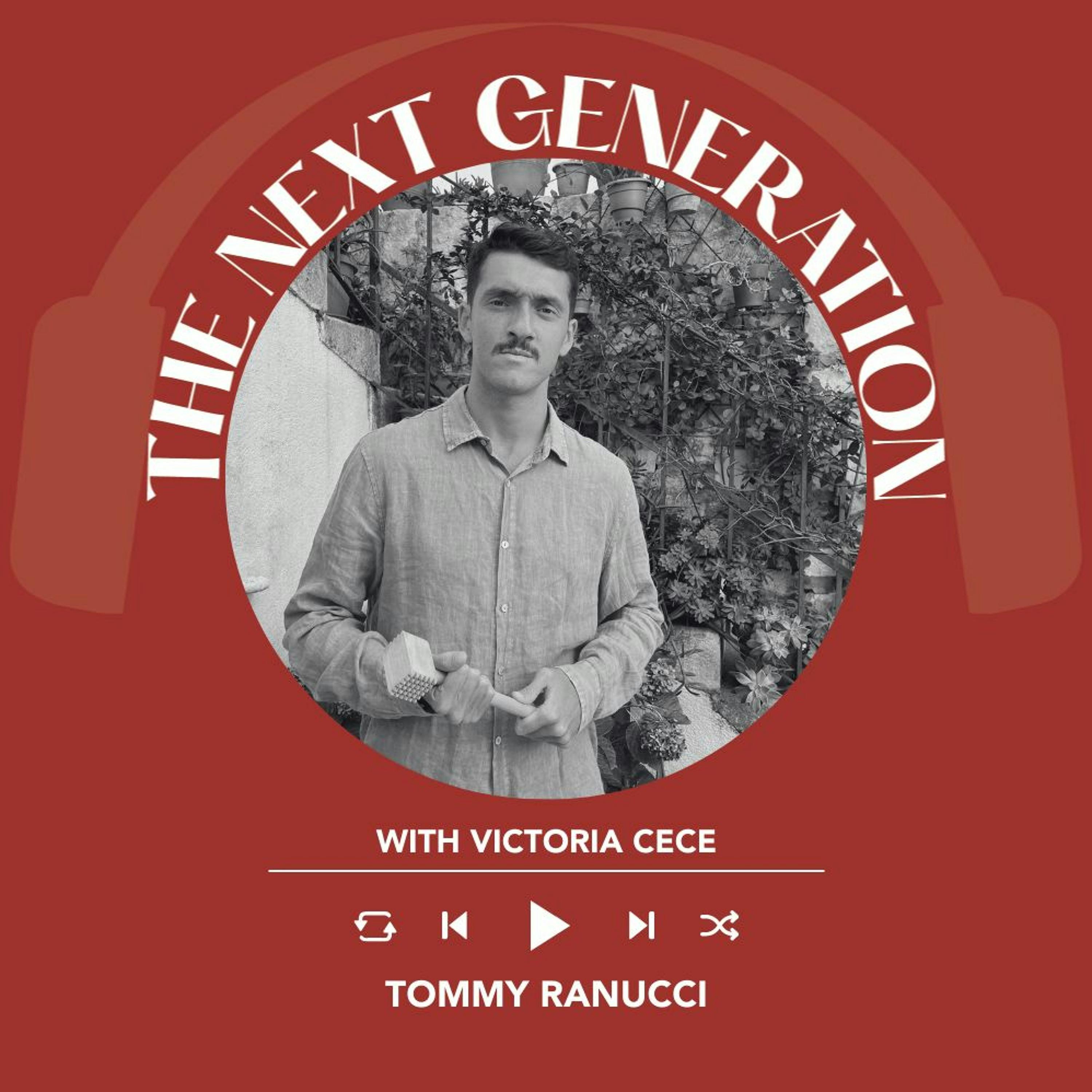
Ep. 1633 Tommy Ranucci | The Next Generation
Ep. 1633 Tommy Ranucci | The Next Generation
Episode Summary
Content Analysis Key Themes and Main Ideas 1. The intersection of personal family history and Italian-American food identity. 2. The complex and evolving concept of ""authenticity"" in Italian and Italian-American cuisine. 3. The role of food writing and social media in shaping food perceptions and traditions. 4. The importance of seasonality and regional diversity in Italian food culture. 5. Discussion of Italian wine preferences and the richness of Italian varietals. Summary In this episode of ""The Next Generation,"" host Victoria Cece interviews Thomas Rannucci, also known as Maso, a 26-year-old Boston-based food writer for Eater Boston. Maso shares his upbringing as a product of Italian and Irish heritage, deeply rooted in his Italian great-grandparents' immigration story. He discusses the emotional significance of his Nana's traditional meatball recipe and the challenge of replicating unwritten family dishes. The conversation delves into the often-controversial topic of ""authenticity"" in Italian food, emphasizing that ""authentic"" is multifaceted and subjective, stressing the importance of understanding the story and evolution behind a dish rather than strict adherence to rules. Maso highlights the growing recognition of seasonality in American food culture and touches on the beauty and diversity of Italy's wine regions, particularly his preference for Nebbiolo from Piedmont. He concludes by observing a trend of American recipes being embraced and given an Italian spin in Italy's culinary future. Takeaways * Thomas Rannucci (Maso) is a food writer for Eater Boston, passionate about Italian-American cuisine. * Family history and recipes, like his Nana's meatballs, form a deep connection to culture and tradition. * The definition of ""authenticity"" in food is complex and should be approached with an open mind, focusing on the story and evolution of dishes. * Social media often creates rigid rules around authenticity, which can stifle culinary evolution. * The concept of food seasonality is gaining important traction among consumers in America. * Italian food is characterized by its vast diversity and continuous adaptation. * Maso enjoys Nebbiolo wines, particularly from Piedmont, noting that Italy has the most indigenous grape varietals globally. * An emerging trend in Italy's culinary scene is the adaptation of American recipes with an Italian twist. Notable Quotes * ""Authenticity is a multi-fast word because authentic to you is a completely different thing than what authentic to me would be..."
About This Episode
The Nextiva podcast features speakers discussing their backgrounds and favorite writing and writing projects. They discuss their love for Italian cuisine and their family history, including their grandfather's reputation as the best cook. They emphasize the importance of honesty in eating and the evolution of food culture, highlighting the need to listen to authentic recipe and understand the differences between Italian and American culture. They also discuss the trend of guest requesting more information about Italian foods and offer suggestions for how to navigate the multi-channel process. They end with a brief discussion of their favorite regions and their family backgrounds.
Transcript
Since two thousand and seventeen, the Italian wine podcast has exploded. Recently hitting six million listens support us by buying a copy of Italian wine unplugged two point o or making a small donation. In return, we'll give you the chance to nominate a guest and even win lunch with Steve Kim and Professor Atilio Shenza. Find out more at Italian One podcast dot com. Welcome to the next generation with me, your host Victoria Cetje. This is your podcast to learn about all the cool things Italians thirty and under are up to in the food and wine scene. And yes, that includes all the best things to eat. Hello, everyone. Welcome back to, another episode of the next generation. Today, we have a lovely guest on straight from Boston. I know that doesn't sound very Italian, but there are many Italians and Italian Americans there. Today, we are speaking with Thomas Rannucci, also known as Maso or Tommy, whatever you like to call him. Tom Thomas. Chow, Tommy Stai. How's that? How's it going? It's going well. How are you? I'm doing well. I'm doing well. Beautiful Friday, October thirteenth day in Boston. But, yeah, excited to be here. Thanks for having me. I know. Thanks for bringing it up. It is Friday the thirteenth. This is an extra spooky episode. Very spooky. I know we're gonna be talking about all the things that lie below Rome. A little spoiler for whoever's listening today. So on that note, We have much to talk about today, much to learn about from Thomas from Mazo. I think I like Mazo better now that I'm saying your name more. I'm gonna call you Mazo. Yeah. That's cool. It sticks. Like, my cousin, he gave me the nickname of it a few years back. And I was like, that's that's sticky. I like it a lot. So, yeah, let's go with that. I know. A sticky nickname. I I get it because I, in high school, you probably read my last name and you're like, in English, it's c c, but in Italian is Shaja. And so, like, in in in high school, all all the kids called me c c, like, on my tennis, like, team and everything. And then, like, junior year, one kid figured out, like, how to pronounce it in Italian because I wasn't gonna be annoying about it. And then it was, like, it stuck. Like, everyone called me Chia. Like, they couldn't, like, let it go. Yeah. I was like, okay. That's a great nickname too. And you didn't have to modify it. I know. It's good to have these kinds of nicknames. Today, of course, We can talk about we're gonna talk a lot of things about Boston, about your Italian family. But first, we wanna talk about you, Maso. Who are you? How old are you? What do you do? Yeah. For sure. So Yep. I'm Maso. Like I said, got that nickname. Kinda has developed into a a cooking alias for me. So Tomazo shortened Maso. Yeah. So I'm twenty six years old. I am born and raised in Boston. So kind of a typical product of Boston where I got my dad who's all Italian, my mums, all Irish. So that's kind of my background there. Born and raised ever since, you know, my nono and Anna came over on the boat from Italy. So, yeah, been based here, been doing a lot of traveling, but, you know, Boston's always been home based. I write for eater Boston, which you know, is is a subset of eater magazine. And, yeah, it's it's great. I get to be involved with, you know, the Boston cooking scene, the restaurant scene, get to hear from, you know, a lot of the eaters out there on know, what the trends are and what's going on, and it's a great way to just kinda stay involved with something I'm passionate about. Awesome. And so how long have you been writing for eater? Good question. So I actually started right around when COVID started. So I wanna say, like, late twenty nineteen, they they posted out, you know, an ad really just saying we're looking for freelance writers, people who wanna get involved more with, you know, food writing and I basically just sent them a lot of different works and blogs that I'd done in the past. And they're like, this is great. You can, you know, here are some assignments you can get started on. So I I've been writing with them, you know, off and on since then. So, you know, almost almost four years now. And is there, like, a favorite thing you've written about or, like, a the funniest thing you've written about? Oh, so one of the first pieces I did actually was, was about a very small kind of unknown Italian enclave in Massachusetts. So people from, you know, Massachusetts, Boston area, the first place they always think of for Italian is the north end and Yeah. North end's great. It has unbelievable Italian food, a great rich history of Italian America. But there's a little enclave just outside the city on the Newton Watertown border. It was So it's about fifteen minutes outside the city and it's called Nonantom. And, you know, locals call it the lake. So the lake is a very, you know, Italian esque enclave that has a lot of great Italian food in history, but it's very it's not very known to be, you know, to get Italian food there or or speak Italian with some of the locals and whatnot. So that was probably I don't know if it was funny, but, it was just, like, a really fun project that I got to work on, got to, you know, see a lot of the places there, how it's kind of developed over the years and whatnot. So, yeah, I mean, if you're in the Boston area or not, in and looking for something different. Definitely check out known Anthem. That's super cool. And also it's very on brand with this Friday, the thirteenth, like the lake. Oh, yeah. Yeah. There we go. Hopefully, no slash. It's sauce. Yeah. We're gonna keep referencing that. Or don't know. I know that everyone starts that argument, and something that we're both Italian American that you hear all the sauce or gravy thing, which is just foreign to Italians Yeah. Over here. But, like, that is is there? I don't even know in Boston. Do you call it sauce or gravy? My understanding is that gravy is a big New York, New Jersey thing. Up here, it's I'd say ninety nine percent of people are are sauce people, myself included. What about you? What do you think on? So my background's kinda weird because it was both. Like, I heard gravy a lot, like, from my aunts in Jersey, like, you know, gravy. Like, if the accent is, like, you know, seared in my brain, but I also would go to Italy a lot in the summer. So, like, and my mom would call it Sauce. My mom's an American. I mean, not Italian, sorry. So Yeah. Yeah. I heard both growing up, so, like, I never really felt like I had to stand by one, but I think you're right. I think the gravy thing is very much. It's like a mix between New York and Jersey. But I say sauce though. Like, if you were to catch me on a random note, I would say sauce because gravy, my mom being American, I think Yeah. Like Thanksgiving grapes. You think, like, turkey. Yeah. Exactly. Yeah. So that's that's exactly how I want it. Like, I hear gravy, I think, brown, the brown stuff that you pour over mashed potatoes. Exactly. And then there's also white gravy, which is, like, I never really go for it because it grosses me out. But It's like a whole thing. Like, after I lived in kind of the, like, I did live in the south for a minute. And, like, it's the food, I mean, obviously it's very different there. But I was like, ah, like, if you have biscuits and gravy, sometimes it's like the, like, the white sausage gravy. Oh, okay. I honestly won't think I've had that before, but I'd I'd give it a go. Yeah. Yeah. It is really good. Yeah. I won't lie. Yeah. It's it's all related. I know. So I'm talking Italian wine podcast. I'm talking about biscuits and gravy, but that's food. Yeah. It's all about re hydrating bread. That's like the core of Italian cuisine. Like literally reviving bread half the time. So that's how I'm gonna correlate it right now. Anyways. Super cool. So speaking of Italian food and you, let's talk a bit about your relationship with Italian food and your Italian family. Can you tell us a little bit about them and why you're so close to your roots? Yeah. Absolutely. So my family is where about so I'm third generation. So I think I'm third generation. My no no we call him no no, but he's actually my great grandfather. He came over in the early nineteen hundreds with his brother. They were thirteen and seventeen respectively. And they had, you know, a lot of siblings that stayed in Italy, kind of the that story you hear all the time. They left the Metsojourno, you know, just south of Rome to find better life, to find better opportunity in America. So He came over when he was thirteen, worked at the Hood rubber shoe factory, and really just kind of, you know, made his mark in America coming here. Growing up, that was something that, you know, we were always told by my dad. And, you know, fortunately, he lived till he was a hundred and four. So I actually have a lot of memories with him, and, just being in his house and and whatnot. So very fortunate for that matter. But, yeah, I mean, just growing up with with that as kind of my starting ground as who my family is, what the story is, that's very that's kept me very in touch with my roots and more importantly wanting to connect with them as much as possible. So while the generational gap was there, definitely have influences, you know, on wanting to connect with it as much as possible. And, of course, that comes back to the cuisine and all the traditions that were passed on you know, down my family line. So in in terms of cuisine, my nana, she was from Palestrina, just, you know, thirty minutes outside of Rome. And she had this reputation and this little enclave within an enclave in Boston for for the Italian neighborhood that they were in. It was called Bug Village, and it was in Brighton, Massachusetts. So, a neighborhood of Boston. And she had this reputation of being the best cook within this Italian community. So, I mean, Victoria, as you know, having that reputation is it's it's not something that Italians will will give to other Italians. So kinda knowing mad and how she had a rep even among the Italians to be, like, the best cook there. We had a lot to live up to. So, you know, she had her meatball recipe, you know, all these different recipes Ricardo. That, you know, we try to I try to replicate them. She was somebody that never gave recipes out. So that's kind of been a very fun experience on my end because all that we really have now is my dad, my aunt, all their stories on what it tasted like, what different ingredients that she used that, you know, you wouldn't see at your typical Italian American joint or even Italian restaurant, in Boston or Italy wherever you are. So that's kind of a long winded answer of of kind of how why I'm so in love with, like, my family's cuisine and background and whatnot. But, yeah, So I wanna go back. I didn't wanna interrupt you because that's really beautiful and I'm really thankful for you sharing it. Yeah. But what is your rakata pot? So rakata pot? Oh, you said hi. I thought you said a rakata pot. And I was like Oh, no. I was like, what? I was really curious. Ricardo pot. I was like, is this something I'd like because I was like, never heard of that. I needed to recall the pie. I was like, oh. Hey, the ricotta pot sounds fantastic. I know. Right? I mean, that can take on a lot of different meanings in this climate, in this cannabis climate. But, that clears up my question, but, I think that that aspect of storytelling and carrying down those traditions because I totally understand. There's just things that, you know, people in your family make it. And it's not just the it's not the recipe. It's the method and, like, as as everyone says cheesily, it's like the love that they put into it. Yep. And I think it's It's so nostalgic for that way because even though it's so special, it's so sad because you can't, like, you, you know, you'll never replicate it, but you can always, like, have that memory. Absolutely. But that's so special. I mean, except the recall to pie, not pot. Gotcha. Was there, like, one specific dish that was your Nana's, like, signature or at least, like, for you. So I think it has to be her meatballs. And, you know, like we were saying, it did get lost in time the exact recipe. But, you know, my mom has taken that on and she has an Irish background, but she knows just how fantastic they were in the reputation they had. So she's kind of developed her own meatball recipe. And I would say that that would be the signature dish and, you know, as cliche Italian American as it is, you know, spaghetti meatballs. You know, it it's all about the story. So, yeah, while it is cliche, I I would say that's our family's signature dish right now. I love being creative and trying different things in the kitchen. So having something that I always go back to is honestly kinda tough for me, but just based on the nostalgia involved with it, it's definitely the meatballs. You know, I had meatballs all over Boston, Palmette, all over Italy, and I still think my moms are the best as biased as that is. But, yeah, that that would definitely be our signature dish and our family. I mean, trust me. It's the same thing over here. Like, everybody's mom or NolNum makes the best whatever it is of that area. And, like, that's just gonna be how it is. Like, you know what I mean? And I think for, like, totally get you because mine only made the best meatballs. And I'm not gonna argue with you on your habit because I, you know, we can't transfer the the taste in the romas. Right. That is one thing that actually was just talking about it the other day that, like, it's I can make them really well. But, like, the way you know what I think it is, and and you probably feel similarly is that the pot of meatballs, and with my nul nay, was it was mostly meatballs, but then she had the south beach on and a bit of in there. It was like the unifying pot of the family. Like, if you came into my grandmother's house, that pot was expected to be there on Sunday. And if it wasn't there, you're like, wait. Like, you're like something's wrong. You know what I mean? And Something's all. Yeah. Exactly. Like, and and as my mom, I got older, like, sometimes she didn't have it because she, like, she was either tired or something. So then you would know, okay. Like, or my uncle would try to step in and make them. So for me, it's like, I I totally get it because it's it sounds so cliche when everyone's like, oh, yeah, the meatball thing. But, like, at least in my family, like, we it wasn't, like, the spaghetti and meatball thing is obviously a stereotype that's just, you know, just grew over time. As, like, it was more about the pot of meatballs, you know. And I'm actually curious. Like, my my enola never made like, my grandmother never made spaghetti with the meatballs. It was the sauce with macaroni, and then we ate the meatballs separate, or you can eat it with your pasta if you wanted. She didn't care. But what pasta did you guys eat your meatballs with? Yeah. So Or like the sauce. That's a great point. And it's so true how the pot of meatballs transcends food or just pure nourishment. It has way more meaning and and like you said, like, coming home and just seeing it on the stove and brings everyone together. There is just so much more emotion involved than the actual food itself. We did it the, you know, the spaghetti and meatballs way. So we served them with the spaghetti. Recently, you know, I do, like, homemade pasta with it, which is awesome. When my nana did it, she would do kind of, like, how you do it in in Italy. So there'd be the pot, all the different meats inside simmering away, cooking into this just pure deliciousness. And then you would have those separately, but you could use, like, the sauce that had been cooking all day and served that with macaroni or whatever first course was there. So, yeah, that's another way. It's kind of evolved. So we've even more Americanized it just doing the traditional, like, serve it over spaghetti and there you go. We also have you know, some nieces and nephews now. So from a pure East point of view, just serving it all together at once is just, like, easy with them, the kids can eat, get it out of the way. Like I know. It's it it's funny you bring up, like, the younger nieces and nephews and whatnot because, like, even, like, if they're younger cousins, they're almost it's not like they're in a different generation, but they're getting a different experience because maybe they don't get to engage as much with the Nolna, but they still get to enjoy it. And, like, they have their little preferences of what they like. Like, I have one younger niece that doesn't like tomato sauce. So, like, my family will make her, like, pasta and Bianco or something like, like, just, you know, butter and, like, pot me down or something. Wine to wine business forum. Everything you need to get ahead in the world of wine. Supercise your business network. Share business ideas with the biggest voices in the industry. Join us in Verona on November thirteen to fourteen twenty twenty three. Tickets available now at point wine dot net. And I think that's the most beautiful part about food. You know, I'd love to hear your thoughts on this because you are a food writer and food writing now requires social media engagement as we know. And, like, people, what I find, is people strive so much to put culture in, like, a box, you know, especially Italian food. Like, they they people, like, really wanna find opportunities to shame other people for what they do. And it it was something that, like, In the beginning, I used to, like, kinda, like, revel in some of the rules myself because I wasn't living in Italy, and I was, like, you know, you kinda miss certain things. So you're like, yeah, you do the cappuccino only in the morning. Blah blah blah. But once you, you you stop thinking like that, a lot of these things, like, is there differences across Italy or even in Italian American communities, like, between, like, we were just talking about before, like, Jersey and Boston. But it doesn't make anything less Italian or Italian American. Right? Like, I wouldn't, like, sit here and, like, be, like, Oh, well, sorry. Your Nona's not, like, legit because, you know, she lets you eat it with spaghetti or whatever. You know what I mean? Right. Right. And so I guess sorry. I am a I'm good at ranting, but my point is here. I'm I'm curious what your thoughts are on that of, like, navigating the Italian American and Italian food space as a a food writer. Yeah. No. That's that's something that I I love that topic because like you said, authenticity is a multi fast word because authentic to you is a a completely different thing than what authentic to me would be or authentic to, you know, my no one or anybody else for that matter. And the way I like to think of it, especially in today's world, with social media and everything being so, oh, you have to do x y z for it to be the authentic version. Carbonara comes to mind right away, but even beyond that, you know, like, something that, you know, goes back centuries. I love thinking back to wrong because, you know, I I've lived there. I've I love the food there and, you know, some of the some of the dishes that exist there. What is authentic then could be completely different to what's authentic now. So I think the biggest message that I try to deliver to people when this whole topic of authenticity and, like, tradition comes around is keeping an open mind and keeping open ears. So you really wanna hear what makes something authentic. So, yeah, like spaghetti and meatballs, what's what's authentic about that. Think beyond the recipe, what's the story behind it? What is it that makes this authentic to you? And there's, like, like we said, there's a lot of answers to that. So there really isn't a right or wrong. It's more of a hear what they have to say, hear what they're cooking, hear what they're eating, hear what they have been eating, and then listen to why that's authentic to them, or why that is a recipe, why it stood the test of time, why it's still here. And of course, you know, with social media and people in the creativity and people not only cooks, but the people eating the food, there's always gonna be different renditions of these authentic recipes that come out. And, of course, you're gonna you're gonna hear the, you know, the social media warriors that are out there. You know, this isn't authentic. This isn't that. And, you know, while while it's good that they're holding true to a a certain value that they're familiar with, it does kinda stunt the evolution of food and, you know, what food comes to over the years because You know, carbonara wasn't a thing two hundred years ago. This is something that's relatively new, and that's something that only really emerged because of this this change to authenticity, this this creativity that's involved with food. We're ranting, but we're we are italian. So we love to talk. No. A hundred percent. You more have the platform to rant because this is an interview to showcase you. I am here to listen to all of it and and everything you said, it's it's it's super important and of course, bringing up carbonara because that's probably the most controversial dish of Italian cuisine at the po at the moment. And I I'm very happy that you brought up the fact that of the newness of in of a lot of Italian dishes of of a lot of Italian cuisines because, you know, World War II did a number on Italy and and then the economic miracle after the way that affected it. It really defined a lot of the dishes, or at least set their evolution like Karabunata. And so I think it's really important. It's exactly what you said is to listen and not come in with, already a judgment or or or as I say a way to shame somebody because you have another opinion. It's it's understand why to them this dish matters, why they chose the ingredients, and have a conversation. Because food is constantly, like, it's it's its own culture. It's always evolving and adapting. And I think that's why people it's I think it's so ironic because people love Italian food so much because it's so diverse and there's so much to enjoy. Like, of course, you love pasta because it's good, but you love it because there's like a bajillion kinds of pasta, you know. Like, you never get bored. But the reason there's a bajillion kinds of pasta is because of all this change that's happened in this one small area that's, like, what? Like, Italy itself is, like, just a bit bigger, I think, than, like, Arizona. Yeah. Relatively, it's it's a small spot with just concentrated with all this different stuff that we're talking about, you know. Exactly. And, I'm glad also that, and you mentioned before your families from my family being from a similar area. The area our families are from in the province of Roseunona is, like, such an interesting place because it's right south of Rome. It's was under the kingdom of two Sicilys to an extent. Like, palestiniana, maybe not, but, like, where your, you're saying your grandfather was from, Valacorca? Or Yeah. So when he came over, it was still considered Compania. So it wasn't king of two Sicilys. He's not that old, but No. No. I I mean, like, just the area of the influence. Right. Yeah. Yeah. Yeah. Of course. Just that area alone, like, the Meto journal, and it's so close to Rome. It's so close to Naples, but they've even just being between those two kind of metropolis is those two epic centers of different culture of having, you know, the Napolitano versus Romano cultures and whatnot. They've almost developed their own sense of community and, you know, La Chia, the that area that they're in there, very underrated, not very well known, but absolutely gorgeous not to kinda stray away. But, yeah, I mean, even there, you drive, you know, you drive twenty minutes to a different city and they call they call some the same food, something else just because of the stories and how that food developed there. And, you know, there's always a story behind why something is called something. Yeah. I mean, I was I was making new tea the other day, and you know, that just means naked and it's it just translates to the naked part of the ravioli without the pasta. So that in itself is a story of why something is called something. It's also fascinating. Yeah. There's so much. And, like, oh, you made me think of, pasta facioli because where my family is from, they call it Lagane Fazulu. Okay. Because Lagane is, like, the pasta they make there, which is, like, short, but, like, thick, almost like, like, a wider, but not quite No. And you're absolutely right. And going back to the, like, the, the aspect of the storytelling, like, from your perspective with these new generation of eaters and drinkers Yeah. What do you find that they're going towards. What makes them interested in eating, Italian food or drinking Italian wine? That is a great topic that I've dove into just kind of in my own thoughts and and in my own writing and whatnot, but I think there's a trend towards this very ambiguous authentic word. So, you know, we've seen in New York City, for example, Rocioli is now there. A very famous Romanrataria and Salumeria, and that's now in New York City. Very accessible. People see that. They say, wow. This is a top tier restaurant food spot in Rome. Now it's in the palm of my hands in New York. I can, you know, I can take the tea here and go get authentic Roman food, whatever that is, or Damikele, centuries old, pizzeria. That's also now in New York. So I think there's this trend where what people consider and and what is not fabricated, but what is kind of pushed as being authentic is so much closer to consumers now, even traveling. It it's it's no longer a luxury to travel. I I mean, it it is still a luxury, but it's more accessible, I should say. So people have this broader environment at their fingertips to recognize what they feel is, you know, a traditional food from a certain place. And I see that not only in the in the consumers, but also restaurant owners and people that are putting out new dishes and trying to kind of stay on top of the food game, there's a lot of these mixes of authentic sticking to a cuisines kind of staples and and whatnot. Something I think of is, you know, seasonality as well. So seasonality is something that is emerging more and more. You're not going to restaurants in the summer anymore and and expecting to have something that you'd have in the winter or people are are becoming more open in comfortable with the idea that, you know, you can't have artichokes in Rome in late September or or October. That's that's something you have in the spring. And, you know, ten years ago, somebody would say, well, that's ridiculous. I want artichokes. I want those now. It doesn't matter what month it is. Now it's it's more so, ah, that makes sense. Let's try something else that is seasonal. That's fresh. That's readily available and and at its peak deliciousness to consume now. You know, you and I know that that's been something that has been instilled in in places like Italy and across Europe, but in America, That was never something that people recognized. And, I think that's more of a trend that I'm seeing now. And, and, yeah, it all goes back to kind of accessibility and things being more at your fingertips and chefs getting creative there and transitioning this consumer norm that you can get whatever you want whenever you want. But at the end of the day, that's that's not how the the agricultural world works. You know, you have to eat seasonal. You have to eat what is there at that specific time, which I love. I think it's to kinda summarize that. I think we're going in a great direction in the food world. So, yeah, I'm really excited about that. Well, I'm happy to hear that you're positive. I mean, not that I'm not, but, like, I'm very positive as well. But, no, it's it's you bring up some really valid points about, like, how there's a lot more education on certain aspects of how, you know, growing your food works and what foods are available and and I don't wanna open up this box because we're about to wrap our interview, but the concept of seasonality in America and having a culture that is very much rooted in commercialism. And of course, it's not like it'll be where there's these despite, you know, maybe dishes being young, there are there is this this, you know, centuries old understanding of of seasonality and cuisine and, availability. I'm happy that you're saying that you see that younger people are aware of this, especially because knowing that from a younger age is really important and to be able to go in with a mindset of maybe not taking, you know, their their culture with them when they travel to a place and also looking for those those, experiences where they can have them like you brought up with Roshaldi, which is really interesting, because, I mean, I've gone to virtually many times, like, all the, you know, so the Maria remixa, and it's and I I've yet to go the one in New York. I almost did one night, but that's another funny story or another time. I'll I'll keep the cliffhanger on this podcast. Maybe I'll share it another time. But before we wrap up, I wanted to ask you a super important question. Really, like, super important question. What do you drink? What don't I drink? Okay, wine. Let's keep it to wine because despite us talking about food on this podcast, it is the Italian wine podcast. If you forgot. Yeah. So with the cooler months coming up, I am extremely excited to get back into some some deeper red. So, specifically, love Nebula. So my first time in Italy was in Piamonte. Kind of fell in love with that. That grape right away, the the barbaresco Barolo regions, everywhere up there. So, yeah, right now, my go to is the nebbiolo, really anyone around that region. It's it's kinda hits home for me. Have you tried to pair Abiola with the meatballs? Yes. My mom's name is Barbara. So Barbara is, like, that's kind of became one of our favorite ones. So we we have that a lot. My sister's of it. But, yeah, that's that's a great pairing. I think. I bet I yeah. It's such a reliable Yeah. Just it's not a I don't say table one and literally, if you know, that's all, it's not a table one, but I mean, like, to have on the table. It's just, like, it goes so well with, so many dishes. It's one of my favorites as well. Yeah. It's delicious. Pimonte, just overall. I mean, I think in in the US, it's a very under not underrated, but just unknown region to get wines. Like, you get a lot of just cabernets from out west, which is great drinking and whatnot. But, you know, you can find very, very great, northern Italian reds that are reasonably priced and I I love going for those and what, maybe I'm biased just because that's, you know, the first first time I was in Italy and the first time I was drinking great Italian wine was just happened to be in Bimonte, but Hey, yeah, it's it's delicious drinking one. Oh, no. Yeah. No. Piamante is quite the wine region. Everyone has their favorites across Italy so different just like the food, but that's the beauty of it all. I mean, Italy has the most indigenous grape varietals in any other country, which is insane. Mazzo, before we wrap up, we are going to finish this interview how we always finish it with five things in well under five minutes. Just to cover a few bases of what we discussed today, and then you are free to go and hopefully eat a delicious Friday lunch. Absolutely. Sounds great. Alright. Perfect. So whenever you're ready. Alright. I'm ready. So where are we? Where are you based? We are in Boston, Massachusetts. Fantastic. Can you tell us about the featured dish we talked about today? My name is meatballs. A very special part of my family of where they immigrated to in Boston. One of the secret ingredients that she had in it through the grapevine through the generations was pine nuts and white raisins. Wow. So a little, like, sicilian almost action, like, neapolitan, sicilian. Wow. See, we didn't learn that earlier. He saved the best for last. Exactly. Okay. And where is your family you're telling family from? They're from Central Italy. Some in Frocinone, about an hour south of Rome, Palestrina, which is about thirty minutes outside. And then also on the East Coast in Kiette Diabruzzo. Cool. And back to the meatballs, what is your go to wine pairing? Oh, let's stick with the Nebula Northern Rubost. Red. Perfect. And finally, can you share with us one trend you see in the Italian or Italian American food world? This might cause some debate, but trend I'm seeing in Italy's culinary future is the kind of embrace of American recipes and kind of putting an Italian spin on that. And again, that could be a whole other podcast, but Oh, for sure. Yeah. I'd I'd say that. And you're saving good things for last, and can't open my mouth because we have to wrap. Yeah. Well, I guess we'll have to talk about that after. But Yeah. Thank you so much, Mazo. I really appreciate you coming on the pod today, and sharing all of your story, what you do. And I wish you the best of luck. With all the things. Thank you. Yeah. Thank you so much, Victoria. I got to see me, like, this was this was so much fun. I'm happy you had fun. I did too. As always, a big good answer for hanging out with me today. Remember, you can catch me on the Italian wine podcast every Sunday, and anywhere you can get your pots.
Episode Details
Related Episodes

Ep. 2789 ColleMassari: a long-term vision rooted in Montecucco with Giuseppe Di Gioia | On The Road With Stevie Kim
Episode 2789

Ep. 2788 Ep. 14: Austria and Hungary | Study Smart for your WSET Level 3
Episode 2788

Ep. 2785 From Volunteer to Speaker at TEXSOM with Samantha Cole Johnson | TEXSOM 2026
Episode 2785
Ep. 2766 Inside the U.S. Non-Alcoholic Wine Market: What Wineries Need to Know with Jill Sites | Masterclass US Wine Market
Episode 2766
Ep. 2761 Winemaking and Consulting Across Sicily with Alessandro Serughetti | Wine, Food & Travel with Marc Millon
Episode 2761

Ep. 2759 Part 2 – The VIA Educational Program & Italian Wine | Heart-to-Heart Conversation with Sarah Looper
Episode 2759