
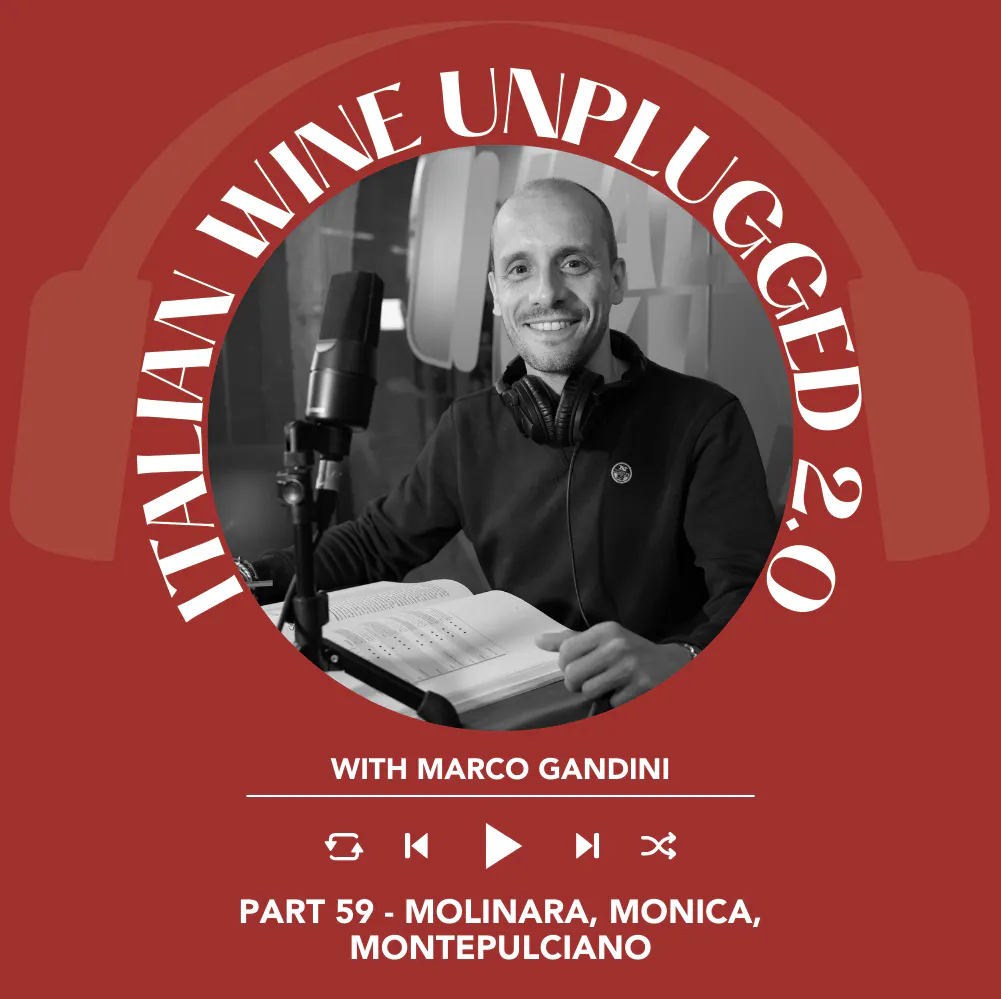
Ep. 1828 Marco Gandini Narrates Pt. 59 | Italian Wine Unplugged 2.0
Ep. 1828 Marco Gandini Narrates Pt. 59 | Italian Wine Unplugged 2.0
Episode Summary
Content Analysis Key Themes and Main Ideas 1. Detailed profiles of three Italian grape varieties: Molinara, Monica, and Montepulciano. 2. Vineyard characteristics, cultivation challenges, and adaptability of different grape varieties. 3. Sensory profiles, specific wine styles, and ideal food pairings for each grape. 4. The historical context and current status of traditional Italian grape varieties in specific regions. 5. The role of the Italian Wine Podcast as a community platform for wine education and resources. Summary This segment of the Italian Wine Podcast focuses on providing in-depth descriptions of three distinct Italian grape varieties: Molinara, Monica, and Montepulciano. It begins with a brief introduction to the podcast's mission and offerings. The first grape detailed is Molinara, a blending grape from Veneto, known for its delicate aromas, high acidity, and susceptibility to oxidation, explaining its declining role in Valpolicella blends despite its potential in Bardolino. Next, the profile covers Monica, Sardinia's third most planted variety, highlighted as a vigorous, high-yielding grape that produces easily approachable, ruby-hued wines meant to be drunk young, often with a slight chill. Finally, the podcast extensively describes Montepulciano, Italy's fifth most planted grape, primarily found in Central Italy. It details Montepulciano's challenging cultivation (late ripening, uneven ripening, high alcohol potential) but also its adaptability and rich anthocyanin content, producing deep ruby/purple wines with ripe fruit, spice, and earthy notes. It covers various styles from light red to oaked, and the distinctive *Cerasuolo* rosato. Each grape profile includes its typical aromas and flavors, specific wine styles (dry still, frizzante, rosato, sparkling), and classic food pairings. The segment concludes with a reminder of where to find the podcast and how to support it. Takeaways * Molinara is a delicate, high-acidity blending grape from Veneto, whose characteristics have led to a decline in its use despite its historical significance. * Monica is a popular, easily approachable Sardinian grape that produces soft-tannin, red-fruit wines best consumed young and often chilled. * Montepulciano is a prominent, yet challenging, Central Italian red grape known for its deep color, ripe fruit profiles, versatility in styles (including *Cerasuolo* rosato), and strong food pairing potential. * Grape characteristics like disease resistance, ripening patterns, and yield significantly influence their cultivation and popularity. * The Italian Wine Podcast serves as an educational resource for detailed information on Italian grape varieties and wine regions. Notable Quotes * ""Molinara: ...its delicate aromas and high acidity may still find a place in certain blends..."
About This Episode
The Italian wine podcast is a community-driven platform for Italian winegeeks around the world. The hosts offer free copies of their latest book and a new series on their website, including a mix of small and big wine-gakers. They discuss the characteristics of Italian wines, including their success in the restaurant world and their use of blending grapes. The wineyard has various varieties and styles, including monobarytes, blended grapes, Mon cupangano, Monte Puciano, and Monteppucciano, and is a popular destination for many farmers. The wines are typically made with a medium plus acidity and tannins, and they are typically made from a combination of black fruit, brine, and wood vessels. The quality of the wines is also discussed, including the high alcohol content and tannins.
Transcript
The Italian wine podcast is the community driven platform for Italian winegeeks around the world. Support the show by donating at italian wine podcast dot com. Donate five or more Euros, and we'll send you a copy of our latest book, my Italian Great Geek journal. Absolutely free. To get your free copy of my Italian GreatGeek journal, click support us at italian wine podcast dot com, or wherever you get your pots. For all the super wine geeks out there, we have a special new series dedicated to you. We are reading excerpts from our new addition of Italian wine unplugged two point o. Wine lovers tune in for your weekly fix. Only on Italian wine podcast. If you want to own a copy of this new must read Italian wine textbook, just go to amazon dot com or visit us at mama jumbo shrimp dot com. Molinara. Description a blending grape from Veneto. Its name derives from Moreno, the Italian word for mill. Another theory also connected to the idea of the mill is that because of its heavy white bloom, it appears that the grapes are covered in flour. It is also known as Uvasala Rosanella near lake garda. And as in Its role is now limited. Zero to ten percent in valpolicella blends. Though its delicate aromas and high acidity may still find a place in certain blends, particularly in Bardurino near Lake Garda. In the vineyard, high a lean with medium sized bunches and berries fairly disease resistant, susceptible to oxidation, sensitive to high humidity, and difficult to extract color. This characteristics combined with competition from other blending grapes have led to a decline in plantings. And the last pale ruby hue tending almost toward a rosato collar and showing delicate aromas and flavors of raspberry fruits, blood orange, and alpine herbs. Live acidity and a marked celine streak can oxidize easily. Specific styles, dry steel wines. At the table, speck, beef or games too, Palenta with mushrooms, hasta carbonara, Osobico, Brazville shanks, and aged cheese, associated regions and DOPs. Amarrone de La Balicello, DOCG. Bardolino superiore, d o c g, Balpolicella, d o c, soon to be, Panchrack producers. Circoligiri Buioni. Description, Sardinia's third most planted variety and though originally brought to the island by either Spanish or French, it is now grown almost exclusively on the island. Monica may also not be a single variety, but rather a number of unrelated ones that go by the same name. It can be monovarietal or blended with other autochtenous grapes such as and bovale. Monovarietal bottlings are increasing. End of vineyard, vigorous, high yielding and dependable producer, making it a favorite among farmers. However, care is needed as it easily become override resulting in wines with excessive alcohol and the glass, offers an easily approachable wine with a ruby hue, soft tannins, and red fruit flavors. It is meant to be drunk young and often with a slight chill. It has additional aromas and flavors of Mediterranean herbs, orange rind and tobacco. Specific styles. Dry still with Frigzante Barlynx increasing. At the table, sardanian Frigula, or chilled with most seafood associated regions and DOPs. Monica di Sardinia, DOC, Monicadicali, DOC, Mandro Lizai, DOC. Benchmark producers. Monte pulchano. Description found mainly in the eastern regions of Central Italy, Montepuchano is the country's fifth most planted grape and second most planted red grape. It accounts for at least fifty percent of vineyard plantings in Abruzzo, and it is also the most important red in the neighboring region of market, as well as having a considerable presence in Melissa. Traditionally blended with other adoption as grapes. Montepuchano is usually the dominant influence in the resulting wines. There is no relationship between the grape Montepuchano and the town Montepuchano. Which is located in Tuscany and produces the sangiovese based Vino albida de Monteciano, DOCG. However, until the beginning of the twentieth century Monteciano was confused with sangiovese which may account for its name. End a vineyard. Though widely planted is by no means an easy variety to work with. It is not disease resistance. And also suffers from uneven ripening even within the same single bunch. Additionally, it is late ripening in general and requires a long growing season for its seeds to fully mature. Constsequently, it accumulates sugar quickly, yet the tendons mature late, leading to wines potentially very high in alcohol. High yielding pergolas are sometimes used to increase production but it expands our quality. However, Monteppucciano is adaptable in the vineyard and can perform well in the mountainous inland terrain as well as in the coastal environments. It tends to perform best on placed soils as it is sensitive to water stress. And the glass. Reach in an anthocyanins Monte Puciano shows a deep ruby or purple hue. It is prone to reduction and can exhibit associated aromas. Overall, it is characterized by ripe and cherry, spiced black plum, blackberry, Brambleberry, damp woody earth, oregano, and licorice. Its medium plus acidity and tannins help balance this sometimes overly generous fruit flavors. If not well managed, the synchronous ripening can lead to greedier tenant and harsh green vegetable character. In its dry style, it can range from light and easy drinking to fully butted, fruit forward, and with velvety tenants. Matter versions may be oaked with some producers using significant amounts of various sized wood vessels for aging. Monteupulciano can also be produced in a rosato Risei style with a color range from pale pink to pale ruby. Those label cherazuolo cherry tend to be deeper pink in color with a fleshier mouth fill. With more tenants and complexity than typical Rosay wines. Tenezuela wines are produced, dry, and rarely have any residual sugar. Specific styles. Primarily vine at still dry, red, and rosato, but can be verified sparkling or sweet, air dried. At the table, classic pairings for Montepulciano are typically braised meats, reduced sauce, rich meaty casseroles, and strong cheeses. Cherazuelo pairs particularly well with cured meats, such as local mortadella de la dicanto, and can be an excellent foil for grill or barbecue meats as well. When vinified lighter and fruitier with moderate alcohol, monte pulchano can be a good acting payment to spicy dishes associated regions and DOPs. Tulu, Dorretto Lazy, DOCG, Montekul channel, the brutes of DOC, Cheres one of the brutes of DOC, Controvera, DOC, market. Of d o c g, Lacio Castelli Romani, DOC, Ophelia, Castell Monte, DOC, Benchmark producers, Emidio Pepe, Valentini, Macharelli, Chirelli, Listen to the Italian wine podcast wherever you get your podcasts. We're on SoundCloud, Apple Podcasts, Spotify, HimalIFM, and more. Don't forget to subscribe and rate the show. If you enjoy listening, please consider donating through Italianline podcast dot com. Any amount helps cover equipment, and publication costs. Until next time.
Episode Details
Related Episodes

Ep. 2822 Ep. 20: California | Study Smart for your WSET Level 3
Episode 2822

Ep. 2789 ColleMassari: a long-term vision rooted in Montecucco with Giuseppe Di Gioia | On The Road With Stevie Kim
Episode 2789

Ep. 2788 Ep. 14: Austria and Hungary | Study Smart for your WSET Level 3
Episode 2788

Ep. 2785 From Volunteer to Speaker at TEXSOM with Samantha Cole Johnson | TEXSOM 2026
Episode 2785

Ep. 2766 Inside the U.S. Non-Alcoholic Wine Market: What Wineries Need to Know with Jill Sites | Masterclass US Wine Market
Episode 2766
Ep. 2761 Winemaking and Consulting Across Sicily with Alessandro Serughetti | Wine, Food & Travel with Marc Millon
Episode 2761