

Ep. 1932 Trebbiano Group, Vernaccia Group by Kevin Di Lucente | Italian Grape Geek
Ep. 1932 Trebbiano Group, Vernaccia Group by Kevin Di Lucente | Italian Grape Geek
Episode Summary
Content Analysis Key Themes and Main Ideas 1. Distinction and detailed analysis of Italian grape ""groups"" versus ""families."
About This Episode
The Italian wine podcast is a community-driven platform for Italian winegeeks around the world. The podcast offers a free copy of their book, My Italian Great Geek journal, and gives an opportunity to share personal stories of travel and tasting with Italian wine. The podcast discusses the Trebiano group, representing fifteen different grapes in the case of the Trebiano, and their potential uses in the wine industry. The speakers also discuss the differences between Trebiano and other wines, including their popularity in Italian wines, and their history of the "renacha group" and "renacha group." They also mention the history of the "renacha group" and its potential for diversity in the taste of wines.
Transcript
The Italian wine podcast is the community driven platform for Italian winegeeks around the world. Support the show by donating at italian wine podcast dot com. Donate five or more Euros, and we'll send you a copy of our latest book, my Italian Great Geek journal. Absolutely free. To get your free copy of my Italian GreatGeek journal, click support us at italian wine podcast dot com, or wherever you get your pods. Welcome to the Italian GreatGeek Podcast. Join us as we explore personal stories of travel and tasting with Italy's must know grape varietals. Chart your own course with my Italian GreatGeek Journal. Your personal tasting companion to accompany the series. Available now on Evisaw. With thanks to Calangelo and partners for their generous support with this project. Hi. I'm Kevin De La Quintente in addition to being an Italian wine ambassador with Ven Italy International Academy. I'm also a certified specialist of wine with the Society of wine educators. And an Italian wine professional with Italian wine central. Now, I could go on more about me, but you're not here for me, are you, you're here for the grapes. And quite frankly, we don't have time with today's topics. So today, I won't be talking about just one grape. I'll be talking about two groups of grapes. And when we talk about groups, we're talking about grapes that share a similar name, but are not necessarily usually at all related like the families of grapes that you find. In our case, we're going to chat about the Trebiano group first and then later the Renacha group. Which represent fifteen different grapes in the case of the Trebiano. There are a couple that share some sort of relation. It's likely based on what we can tell that Trebiano is also of Mediterranean origin. So Trebiano like many grape names has multiple theories. And I love the way that Italian wine grapes are named based on historical attributes, what the grapes presented in the vineyards, their history, and and the way they moved around the country. Among the theories for Trebiano are that the name originates from the Trebia River in Amelia or mania. It could also be a reference from a wine plenty of the Elder mentions in one of his texts. However, what seems to be The most popular theory is that the name originates from a Frankonian term meaning vigorous chute, which I will certainly not try to pronounce here. So what I'm about to say is a broad generalization and the subject is certainly more nuanced, but all the Trebiano seem to share some similar traits. They usually have a high vigor, a high yield, long and large bunches, and they ripen later and are adaptable to different tear wires. So you can imagine that for many reasons, these traits were very desirable, and wines made from Trebiano were even considered luxury items in the thirteenth and fourteenth centuries. Okay. So here's a list of some of the Trebiano's. Trebiano Sabrucese, Trebiano toscano Romagnolo, Trebiano Espolitino, Trebiano de Lugana, Trebiano de suave, Treviano Nino de Espagniano. Of course, there's more. And of course, many of these also have synonymous names. For example, Trebiano d Lugana is also known as Turbiano. Let's dissect these grapes a little bit further. Starting with Trebiano Abrucise. That is the name of the grape, but the wine made from it is Trebiano Debrutso doc. It's also interesting to note that a hundred percent varietal wines are rare. Historically was often confused with Trebiano Tuscano, Bambino Bianco, and Pessarina and the vineyards. And therefore due to that confusion, the wine ends up being a blend, even if unknowingly so. So Bambino Bianco was actually long thought to be a synonym of Trebiano seize, but as we know now is a distinct cultivar and it's actually even possible to make a Trebiano Albrutise, a doc wine with up to eighty five percent bambino bianco in the blend. As these grapes have different needs in the vineyard, you can imagine that treating them all the same and making a wine for them can drastically vary the final quality or outcome. Not to say that a wine made with blended grapes is going to be bad or or lower in quality per se, but just interesting to note. So a little bit more about the grape. Unlike other Trebiano grapes, they usually remain deep straw, green, even when ripe, the color of the grapes. Fast it can drop fast. It's important when the harvest happens to preserve this freshness. Vine training and pergola is sometimes employed to protect the grapes from the sun and careful attention is given to the altitude of the vineyards. It likes rolling hills close to the sea but not sun or heat. There are actually altitude limits as part of the DOC depending on exposition. Texturally, the wines could be a bit more like an unoaked chablis. They're dense on the palate with bright acidity and usually savory and can have a flinty mineral quality. Fruit flavors of lemon, apple peach, white flowers, like acacia and orange blossom, as well as, honey and almond are all potentially present in the wines. The grapes can easily oxidize due to high polyphenols, and a reductive winemaking is sometimes employed to counteract this. Though some argue this creates a wine more like a sauvignon blanc, which is less true to the variety. As someone who tries a lot of Italian wines, I can can't even be certain. I've had one that is a hundred percent for idle, although I'm sure many of my contemporaries can affirm to have done so. Producers to check out a Valentini, Tiberio, Machcarelli, Illuminati, and Valeriaale. So these wines in the market that I work in. I work in Western New York. New York is a great wine market in the United States. Certainly, the city of New York, which is about six and a half hours away from where I'm at right now by car, sees a lot more interesting varietals. And I would say that you do see the Trebiano, the brusso wines here and there. On the shelves, but certainly there's not a huge amount of them. You will certainly see some of these, for example, Mesierale is found quite commonly in my market. So Treviano Brutese, he shares genetics with the umbrian Treviano Spolatina, which we'll chat about briefly as well. But First, let's move on to Trebiano toscano because that's the big one I think. This was until quite recently the most widely planted white grape in Italy. However, current data supports that Glera and Pino Grijo have recently leap frog Trebiano Tescano due to their respective popularity. Obviously, Persecco is huge. Pieno Grigio is huge. Trebiano is related to the grape of Swave fame, Garganega, and is also known in France as uniablanca, where it's used as part of the blend to make Conyak and armagnac along with Foley Blanche and Colambar. In Umbrieta, it's called proconco, and is used as a blending component in the wines of Orvieto. It's also used to make balsamic vinegar. It was first mentioned in documents from Sienna, and in addition to being grown all over Italy, and in parts of France is grown in many other parts of the world, including the US and Australia, which is a testament to its adaptability. It was used in a crossing with another hybrid grape which created another hybrid grape called Vidal Blanc used to make world class ice wine in Canada. I actually live quite close to Ontario where they make some of the best ice wine in the world. Back to Italy, you'll find it allowed for use in many DOC wines in Tuscany, in the Venato Lombardi, there's, lugana, which goes in the Venato and in Lombardi. Trebiano Tuscano is late budding, loves the warmth, highly adaptive, high acid, which lends backbone to blends such as Vincento. It has aromas in flavors of lemon and chamomile. Although with age, it doesn't necessarily further complexity on the aroma spectrum. I've quite recently had the Tunuta di Capizana Trebiano Tuscano, which hails from the tuscan appellation of Carmignano. It's a wine they started making only a couple years ago. And was aged for a bit in barrel with Lee's contact and botanage to add complexity. So not necessarily probably a common way to handle the grape. However, my favorite association with Trebillon Tescano is with Vincent. I'm going to get a little personal here. So in two thousand five, a true angel and my sweet cat daffodil came into our lives and brought us immense joy for eighteen years until she left the world. To commemorate her life, my wife and I opened a bottle of two thousand five, Avenue nay's evening santo di Montipuliano and as is the tradition in Tuscany, we dip these little cookies known as Cantucci into the pleasantly sweet wine which had notes of dried fig nuts in a core of acidity provided by the Trebiano, which I think is a fitting tribute to a cat. I would regularly call my little sweet cookie. Quickly, I'd like to give mention to Trebiano Spolletino, which I mentioned earlier as being related to Trebiano Brutise, grown in the townships of Paleto in Montefalco in Umbria. Also found in Orvieto. It also shares a genetic tie to Grequeto, the Orvieto, which is another grape using the Orvieto blend. Something to pay attention to though is if the wines made taste like a Misscato Bianco, for example, it's likely they're blending other local aromatic grapes in the wine. It's not a hundred percent varietal, but as we know is the case with most of the Trebiano wines, they're quite often blends. You should seek out producers such as Fongoli, Tabarini, Antonelli, and San Marco. You can find Vincentos in my market. You can find lots of Treviano wines, Cola Yugani wines. You can find I think you can blend a little bit of Treviano into those, I would say that because they're not necessarily a hundred percent varietal, it's sometimes difficult to pinpoint these wines in our market. Another couple treviano grapes, before we move on to the next group are some of my favorite. And that are, Trebiano de suave and Trebiano de lugana. Although these wines are technically linked to Verdicchio, the one from suave being identical and the one from lugana, being very closely related. And as I mentioned, it's usually referred to as Turbiana. Interestingly, Verdicchio likely originates from this area of Italy, Verona, and, only later found its way to La Marque due to the migration of farmers from Verona after a bout of the plague in La Marque. I love historical little tidbits about that. You can actually trace an anthropological migration and, and it includes the grapes obviously because the people were taking them with them. So I love the wines made from these grapes, and I regularly drink the Trebiano di Swave called Mesifiki from Swavia. And the lugana from Zenato, and they make a couple different luganas. These areas tend to be warmer than the Marquay. So the wine's a little bit more full bodied and waxy in comparison. The wines are textural and they often include floral aromas, almonds, Hallmark wintergreen or mint note and a saline quality. Lastly, we can mention Trebiano Romagnolo, which is found mostly in Emilio Romania, often co planted with Trebiano toscano, and unsurprisingly productive, as is the case with its Treviano group friends. Wines made from it can be more dense with a right for fruit profile and are a step up in quality from the Oldvino, Tuscano. Wines of Treviano Romagnolo can be made sparkling as is also the case with the wines of lugana. So Zenato makes a sparkling lugana. Food pairings just to to cap off the Trebiano group real quick. They can range from the aforementioned Cantucci with Vincento to Lakefish and creamy risotto with lugana and pecorino cheese, seafood pasta, and pesto with Trebiano da brusso. But obviously as variable as all the wines can be, you can also have many, many more pairings. Are you enjoying this podcast? Don't forget to visit our YouTube channel, mama jumbo shrimp for fascinating videos covering Stevie Kim and her travels across Italy and beyond, meeting winemakers, eating local food, and taking in the scenery. Now, back to the show. Okay. So on to the Renatcha group. As I mentioned, the Renatcha is, Renatcha group is a group and not a family of grapes. So they're not at all related. Next, one of them is red. So Vernacha, like many grape names has multiple theories as it was the case with Trebiano. Among them are that the name possibly originates from one of the five towns of the cinque terre, Vanaza, but what is more widely believed is that the name derives from the word Vernaculum, which roughly translates to local grape and like what was the case with the popularity of the Malvasia group, Vernache became somewhat of a brand name and spread due to its popularity. We can find mentions of Vernacha and text dating back to the twelve hundreds in San Jimignano and in Sardinia going back to thirteen ninety seven. While there are several grapes that are called Vernacha outside of what I'll mention here, we really are talking about the three grapes, Vernacha di San Jimignano, Vernacha di Orestano and Bernacciano. So let's dissect them a little bit further. Veraccia di san gimignano is both the name of the grape and the d o c g wine made from it. Interestingly, Verinacciano was the first registered d o c wine in nineteen sixty six. It was later elevated to DOCG in nineteen ninety three. It is named for the hilltop medieval tuscan town around which the grape is grown. San Jimignano, of course, famous for its towers. The grape is also found in the where it's called Piccabon. It's a white grape with high levels of tannin and a relatively lower city and relatively neutral profile. So when I say hi tannin, obviously a lot of white wine is made in a way where they're not extracting tannin because they're separating the skins from the juice immediately. So it can be tannic, if you leave the skins in. In the glass, you'll find usually a pale yellow color with green tinges and notes of lemon zest, sage, and almonds. It's typically a savory wine but can still provide some fresh crisp qualities. Some reserve wines even spend time in oak adding a vanilla character as a result. Producers to seek out are Penizzi Montenidoli. I actually have a nice olive oil for Montenidalee right now that I'm using. And Chisani. Although, personally, I've drank more from a producer called Sanqueria. So on to Vernacha di orestano. Once again, Vernacha di orestano is both the name of the grape and the d o c wine made from it. It's found on the island of Sardinia where it has a small number of plantings of mostly old vines anywhere from thirty to fifty years. The wines made from it can be normal dry table wines or dry fortified wines. However, the fortified or licorrosa wines are less common. What is common is to rest the wine in barrels not completely topped off at about ninety percent capacity, which encourages the development of something called floor, similar to what happens in the production of sherry wines. Some of the wines spend a long time in these barrels, and therefore become highly oxidized and have their alcohol levels boosted due to the evaporation of water. This happens slowly due to the protection of the floor, which has its own unique, fermentative, and oxidative metabolism. The quality of these wines can be on par with high quality sherry wines. However, in recent years, unfortunately, this style has fallen a little bit out of favor with the general consumer and the production is a little in jeopardy, let's say. Most of vernaccia the Artistana wines have flavors in aromas that are complex because of this process. You know, in the glass, you'll find things like dried apricot, bitter almonds, hazelnut, orange rind, wilted flowers, really cool things. Producers to try our Contini and silvio Carta. My only experience though personally as many Italian wise as I try is on both occasions when I was a judge during the five star wines, wines without walls that happens in verona, we've got to try a few of them, but unfortunately we're not granted access to which producers were trying as we're trying them in the moment. But, as I was trying them, we we know what grape and what area we're trying it from. It's very cool to be able to try these wines because I certainly don't see them ever in my market here. I imagine they're somewhere in New York City probably, but Certainly in, western New York area, there may be one or two places the company I work for does not sell one. We're one of the bigger imported distributors in the US. So you can imagine that even in markets where it's popular, it's somewhat difficult to to find these wines at least in the United States. So lastly, This is the cool one. And this is a red grape. Unlike any of the other two vernacha grapes mentioned, which were white, of course, professor Ettilio Shenza believes this wine is basically Garnatcha. And therefore, also related to Canalaro and tokari Russo. So there's a relation there. The planning of this grape is very low, though. There's less than twenty one hectares. It's found in the La Marque near the Metelli cazon where they make Verdicchio. Obviously, we talked about verdicchio and the Trebiano group. The wines made from Renachanera either sera Paterona doc for the dry wines or Vernacho de sera Paterona docG for either the dry or sweet versions. The docG wines are sparkling and they actually undergo a rather confusing process where there's three separate fermentation. So at harvest, about sixty percent of the grapes are fermented as usual while forty percent hang out on straw mats to dry. And later fermented. Lastly, the line either sees a third fermentation in tank or in the bottle. So either Charmont or in the bottle, not necessarily similar to Champagne, but in that same regard, which obviously makes the wine sparkling. The resulting wines can be somewhat like a Lambrusco and the glass you find slightly intense aromatics of strawberry, cranberry, clove, underbrush moss, quinoto. There's a bitter finish I've not been fortunate to try wine from this area. I would love to. Other than the Verdicchio de Matellica wines that I've tried lots of, but I know it's only a matter of time for I get my hands on a bottle. And based on the small quantity of plantings, I also think this is probably even more difficult to source in my market than Vernacho diorestano, but not impossible. There's a Italian wine geeks like us all out there and we're all calling for these wines from time to time. Food pairings for the vernatcha grapes. I'm sure you can imagine there'd be a whole wide array of possibilities being, both white and red grapes. So with vernatcha di san gimignano, things such as cod, white meat, shellfish come to mind, Vinacci de Oristano, you can utilize the wine during dinner and after dinner for dessert serving with things like blue cheese, dark chocolate, almond biscuits called Amarati de Oristano in Sardinia. Vernacha narrow wines supposedly pair well exceptionally, although I'm a vegetarian, but there's a spreadable pork sausage called, I believe I'm saying that right, which is a sausage that's cold smoked over juniper berries and a hand air dry. It sounds delicious. And that's pretty much it for the Renacha group and the Trebiana group. Thanks for listening. And I hope you are all enjoying wonderful Native Italian grapes out there. Listen to the Italian wine podcast wherever you get your podcasts. We're on SoundCloud, Apple Podcasts, Spotify, HimalIFM, and more. Don't forget to subscribe and rate the show. If you enjoy listening, please consider donating through Italian wine podcast dot com. Any amount helps cover equipment, and publication costs. Until next time.
Episode Details
Related Episodes

Ep. 2822 Ep. 20: California | Study Smart for your WSET Level 3
Episode 2822

Ep. 2789 ColleMassari: a long-term vision rooted in Montecucco with Giuseppe Di Gioia | On The Road With Stevie Kim
Episode 2789

Ep. 2788 Ep. 14: Austria and Hungary | Study Smart for your WSET Level 3
Episode 2788

Ep. 2785 From Volunteer to Speaker at TEXSOM with Samantha Cole Johnson | TEXSOM 2026
Episode 2785

Ep. 2766 Inside the U.S. Non-Alcoholic Wine Market: What Wineries Need to Know with Jill Sites | Masterclass US Wine Market
Episode 2766
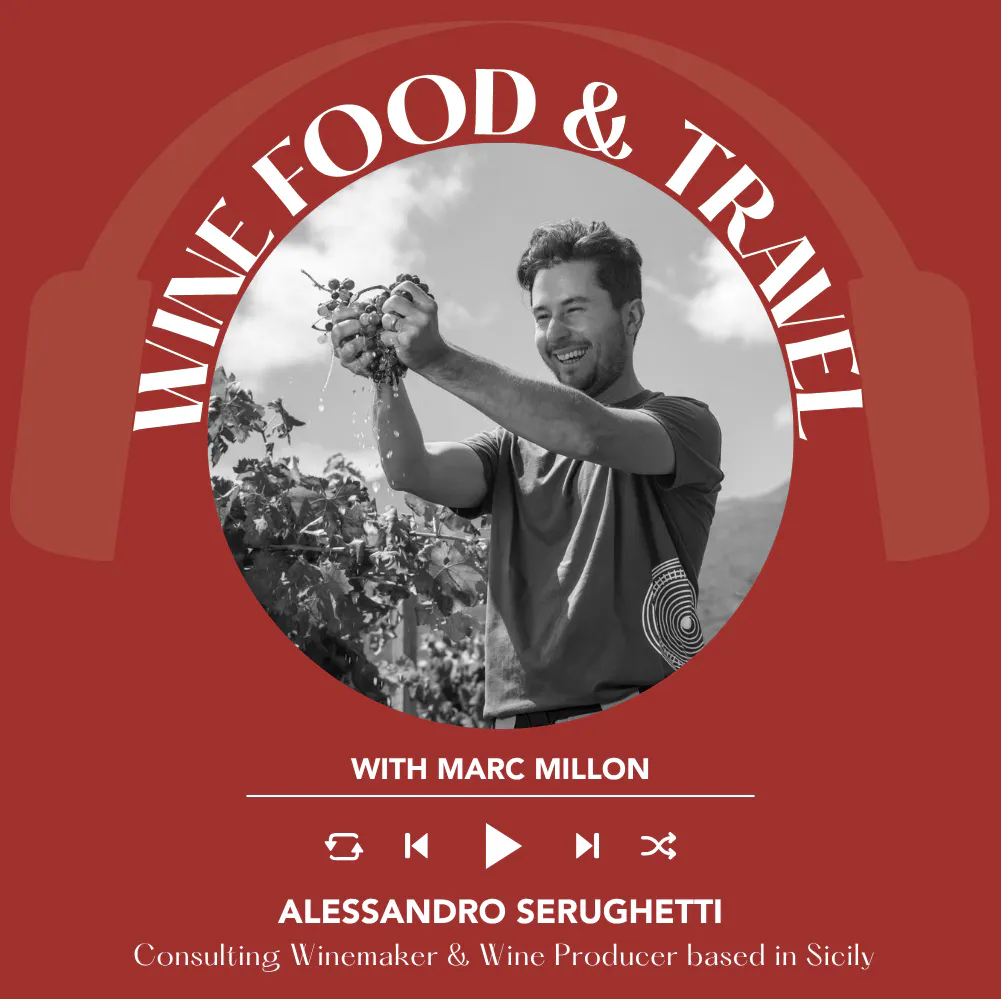
Ep. 2761 Winemaking and Consulting Across Sicily with Alessandro Serughetti | Wine, Food & Travel with Marc Millon
Episode 2761