
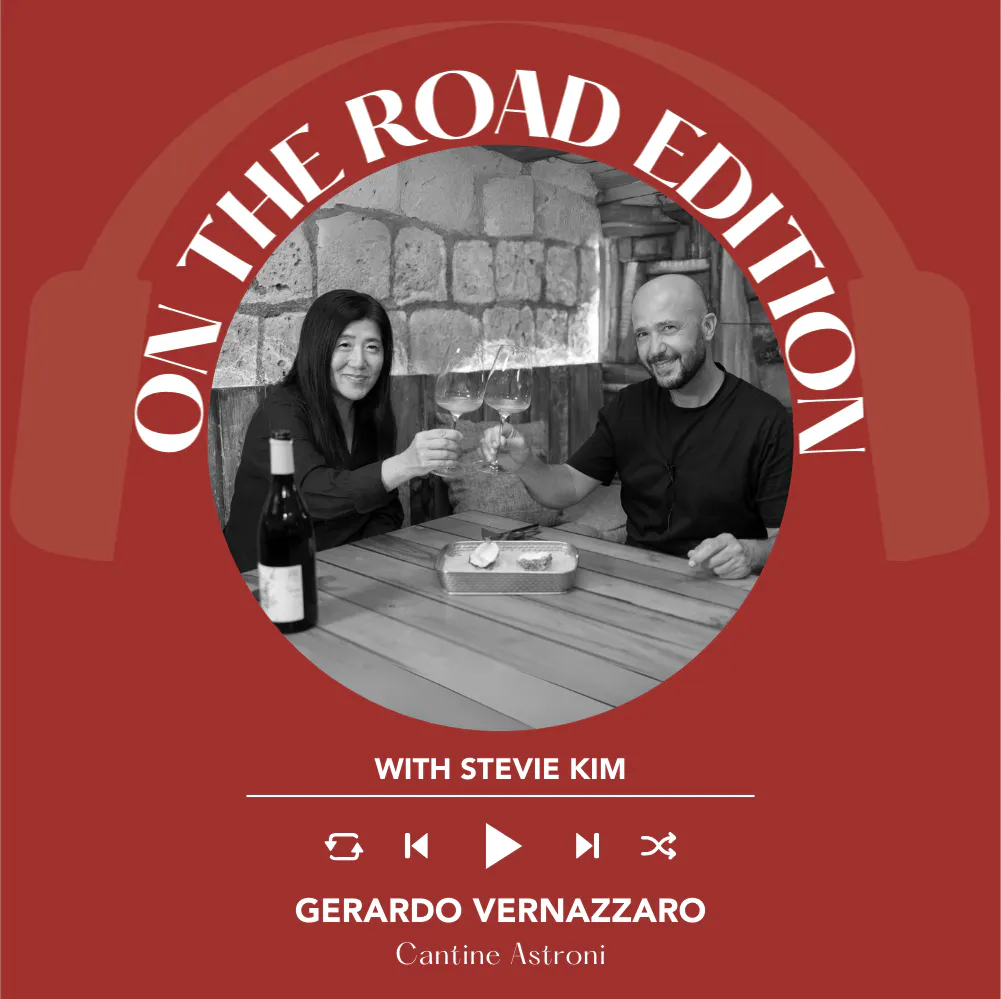
Ep. 2044 Gerardo Vernazzaro, Cantine Astroni | On The Road With Stevie Kim
Ep. 2044 Gerardo Vernazzaro, Cantine Astroni | On The Road With Stevie Kim
Episode Summary
Content Analysis Key Themes and Main Ideas 1. Exploration of the unique Campi Flegrei volcanic wine region in Italy. 2. The history and philosophy of Cantina Astroni, a fourth-generation family winery. 3. The distinctive characteristics of Falanghina and Piedirosso grapes from Campi Flegrei. 4. The influence of volcanic soil on the wines, imparting specific flavors and lower alcohol content. 5. The resilience and future potential of indigenous grape varieties like Falanghina in the face of climate change. Summary This episode of ""On the Road Edition,"" hosted by Stevie Kim, takes listeners to the Campi Flegrei region, northwest of Naples, to visit Cantina Astroni. Stevie interviews Gerardo Vernazzaro, the winemaker and a representative of the family's fourth generation, whose winemaking journey began in 1997 after studying oenology in Udine. Gerardo explains that Cantina Astroni is named after the Astroni crater, a WWF reserve where their vineyards are located. The winery focuses on two main local varieties: Falanghina (white) and Piedirosso (red), producing eight labels, including a sparkling Falanghina Charmat. The discussion centers on ""Vigna Astroni,"" their flagship Falanghina, noting its unique volcanic characteristics like smoky notes and saline sensations, attributed to the region's volcanic sand. Gerardo highlights the distinct differences between Falanghina from Campi Flegrei/Vesuvio (volcanic, lower alcohol) and Sannio (argillaceous, higher alcohol). He also emphasizes the historical resilience of these Greek-introduced varieties to hot conditions, making them adaptable to global warming. The episode concludes with a food pairing suggestion for Vigna Astroni: pasta with fish and tomato, or rich, fatty fish. Takeaways - Campi Flegrei is a unique volcanic wine region located northwest of Naples, known for its crater vineyards. - Cantina Astroni is a fourth-generation family winery deeply rooted in the Campi Flegrei terroir. - The winery's focus is on indigenous grape varieties: Falanghina and Piedirosso. - Wines from Campi Flegrei, particularly Falanghina, exhibit distinct volcanic characteristics like smokiness and saline notes. - Falanghina from Campi Flegrei naturally tends to have lower alcohol content (12-12.5%). - These ancient Greek-introduced grape varieties are remarkably rustic and resilient, potentially well-suited to global warming challenges. - The Vigna Astroni Falanghina is a flagship wine that truly represents its volcanic terroir. Notable Quotes - ""Campi Flegrei is in the northwest of Naples, a few kilometers north to Naples."
About This Episode
The speakers discuss the origin and production of Italian wines, as well as the differences between themarter and the rest of the world. They also talk about their plans for pairing the wine with different foods and sharing their ideas for the future. They mention their partnership with the Italian wine scene and their vision for the future. The speakers invite viewers to check out their YouTube channel for more interesting content.
Transcript
Who wants to be the next Italian wine Ambassador. Join an exclusive network of four hundred Italian wine ambassadors across forty eight countries. Vineetly International Academy is coming to Chicago on October nineteenth is twenty first. And while Mati Kazakhstan from November sixteenth to eighteenth. Don't miss out. Register now at Vineeti dot com. Welcome to another episode of On the Road Edition hosted by Stevie Kim. Each week, she travels to incredible wine destinations interviewing some of the Italian wine scene's most interesting personalities, talking about wines, the foods, as well as the incredible travel destinations. Hello. My name's Stevie Kim, and welcome back to Italian wine podcast And this is absolutely the campi Flegre special. And we're better to start than here right now with Cantina Astroni. I'm here with the winemaker from the family business Shorardo, Charles Gerardo. Alright. So first of all, tell us, everybody knows where amalfi coast is in Naples, but where are we? Where is exactly Kampi Play grey? Campi Fregae is in the northwest of Naples, a few kilometers north to Naples. Now we stay and up the crater. The one of biggest crater, called Astroni crater, is one of the biggest in caldera, in the big caldera flag day. Astonia actually is w w f reserve, and we grow our vineyards on the reserve. So So is it safe to say that Cantini Astroni takes the name of the creator of this park? Of course, Astroni is a family company and, When did it start? You started it. Right? I start with my cuisine. We represented the fourth generation of this project, the family company, and the family, is Varketa family, and, born in the eighteen ninety one. We represented the fourth generation, and I am forty seven I work in the winery with my cousin, Christina Vincenzo, and the order. So you're the fourth generation of the wine business, but the wine making really started with you. Right? I started to make the wine in the nineteen ninety seven. When I approached to study in the north east in Udine, in a Fruliovenetia, Julia, I started to study analogy. Why didn't you study in Avelina with Luigi? At the time, there isn't, an technology school in the south. Uh-huh. There is an only two in Milan with the atelio Shenza. Right. We know atelio. Professor. And in the north east in Uudina with, Roberto Zironi. Kind of an overview. How many labels? How many wines do you make? In Campiflegre, we have only two variety, farangina, white grape, and, PD Russo red grape. And, with two grape, we produce a eight label. And one of these is sparkling. We produce sparkling Charmak with the farangina. In this place, we stay in the Crater. We produce this wine. It's a vineyard to only one of our reservoir. Okay. So if this is your flagship wine, is it correct? Yes. Of course. It's represent the name of the winery, the name of the Crater, and the name of the wine Vigna Stroni. It's a very representative to the local position with the volcano. It's a very representative wine for us. Alright. So how many bottles are you producing of this? Four thousand bottles. So not very much. And in this vintage, we produce only two thousand and sixty. Okay. Let's try this. This is the current release. Yes. Of course. So tell me what's so special? Tell me some characteristics, both in the vineyards, so Viticulture and winemaking. The vineyards are now over thirty years old. So you actually planted this vine when you started. It's two years before. For me. It's a very representative to the del war. And it's very volcanic wine. You find a smoking note, salting sensation, like a sea water, especially salting wine. Now we test two thousand nineteen. I think the Falangino, this special wine need two, three years for going to market. So let me ask you a question. What is the difference between a Falangina from Campislegre? Of course, it's a gross generalization. From this area as versus, I don't know, vesuvio or Sanu, what is the main difference? Can you tell the difference when you're doing a blind tasting? Yes. Yes. It's very easy to find a difference. Falangina campy filagree is very similar to falangina in Visuvio because we have two volcanic area and the the falangina is the same variety. In Benavento, you have another variety completely different you unpelographic, characteristics. We have volcanic sand in Campifler gray, volcanic sand, black sand in Bezuvio. In Sanio, we have, Argillus, Argillus calcareos, and the variety is completely different. In the Campifler gray, we have, low alcohol, twelve twelve point five in Sano. It's very easy to find Falangino with fourteen degree. Oh, okay. Fifteen point five in medium, small rich Has it always been this way, even with the climate change? It was in escalated to a higher alcohol. I think a twelve point five is a naturally low alcove because of this variety, Salangina, especially, Salangina, and the Peru so stay in Campiflegre area six hundred before Christ, with the Greek when arrived in Terenic coast, and used to volcanic soil, to very hot soil, and now is very rustic, very rust variety, very interesting for global warming because it's ready to the worm. So it could be the wine of the future. And of course, everybody loves volcanic wines. Is there anything else you would like to tell me about this wine? I think it is very interesting to the binary arts, to the grape, because many Viticulture or to the south of France, arriving Campifre Gray to study the falangina and the period also for change our variety, your variety is very interesting. About this wine for me is more representative for my my work, for my winery, and it's very representative to the terroir. Campy flavor. It's a volcano in a glass. What is your vision? What is your ambition for this wine for the next twenty five years? For the minification, I don't change. It's indigenous, very, long time on the lease in steel, stainless steel in ox, and the more time, in a bottle for going to market. But if the difference is the age of the vineyards. Okay. One last question before we go. I saw it last night that your friends with all of the restaurateur in the area who started with you. Your friends started the restaurant business and you started the wine business, the wine making, rather. So how would you pair this wine with what kind of food, what kind of dish I think it's very good to the pairing with pasta, with the fish and tomato. We need the rich fat fish or tuna, or sample fish, or pasta with the shrimp, we need the richness of of this Alright. And that's a wrap. So thank you very much, your order. Thank you. Thank you. And, Tada Gatsi. Bye. Thank you for joining us on another installment of On The Road Edition. Hosted by Stevie Kim. Join her again next week for more interesting content in the Italian wine scene. You can also find us at Italian wine podcast dot com or wherever you get your pods. You can also check out our YouTube channel, mama jumbo shrimp, to watch these interviews and the footage captured of each location.
Episode Details
Related Episodes

Ep. 2822 Ep. 20: California | Study Smart for your WSET Level 3
Episode 2822

Ep. 2789 ColleMassari: a long-term vision rooted in Montecucco with Giuseppe Di Gioia | On The Road With Stevie Kim
Episode 2789

Ep. 2788 Ep. 14: Austria and Hungary | Study Smart for your WSET Level 3
Episode 2788

Ep. 2785 From Volunteer to Speaker at TEXSOM with Samantha Cole Johnson | TEXSOM 2026
Episode 2785

Ep. 2766 Inside the U.S. Non-Alcoholic Wine Market: What Wineries Need to Know with Jill Sites | Masterclass US Wine Market
Episode 2766
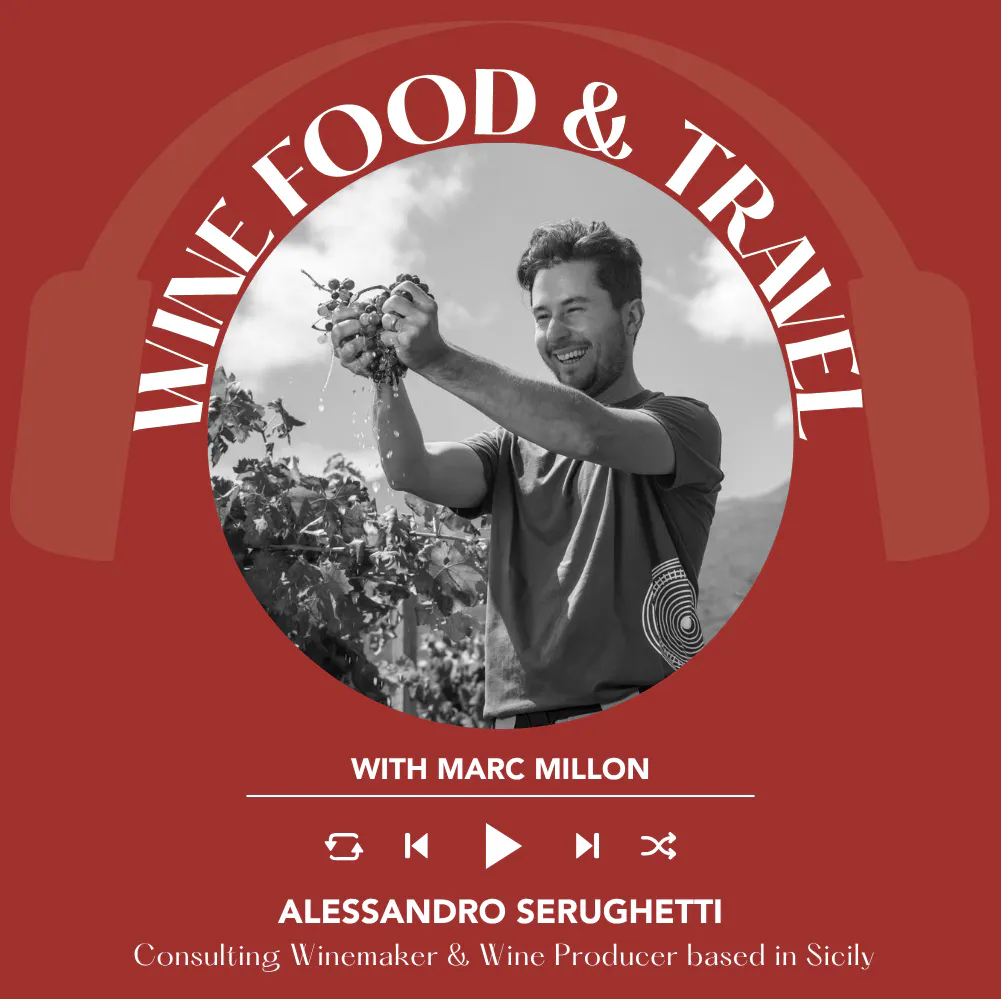
Ep. 2761 Winemaking and Consulting Across Sicily with Alessandro Serughetti | Wine, Food & Travel with Marc Millon
Episode 2761