
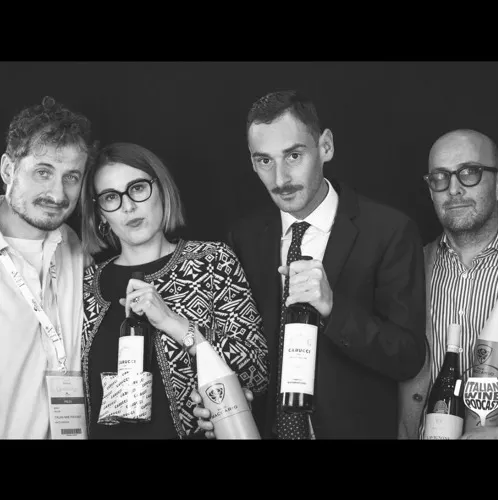
Ep. 215 Monty Waldin interviews Alessandro Carucci (Carucci & Pico Maccario Barbera Chinato project)
Ep. 215 Monty Waldin interviews Alessandro Carucci (Carucci & Pico Maccario Barbera Chinato project)
Episode Summary
Content Analysis Key Themes and Main Ideas 1. The characteristics and production of Barbera d'Asti wine. 2. The creation and unique properties of ""Carucci,"" an aromatic, herb-infused wine/liqueur. 3. The role of Carucci and the ""Barbera Tonic"" cocktail in Italian aperitivo culture. 4. The combination of acidity and bitterness as key flavor notes in aromatic wines. 5. The lively and sometimes chaotic nature of Italian podcast interviews. Summary In this episode of the Italian Wine Podcast, host Monty chats with Gianluca Cariniti, owner of a winery producing Barbera d'Asti, and Alessandro Carucci, who crafts a unique aromatic wine (liqueur) named ""Carucci"" using Cariniti's Barbera d'Asti. Gianluca describes his Barbera d'Asti as fruity, fresh, and acidic, with notes of red fruits. Alessandro then explains that Carucci is an aromatic wine infused with 15 herbs, including quinine, gentian, artemisia, cinnamon, and bitter orange, with five secret ingredients. The product, which has a 20% alcohol content and is made in tanks, is designed as an aperitivo (before-meal drink) or digestivo (after-meal drink). The popular ""Barbera Tonic"" cocktail, made easily with Carucci and tonic water, is highlighted as a simple yet effective way to stimulate appetite and introduce consumers to red wine as an aperitivo. The discussion emphasizes Carucci's distinct combination of acidic notes from the Barbera and bitter notes from the herbs, making it ideal for the traditional Italian aperitivo experience. Takeaways * Barbera d'Asti is characterized by its fruity, fresh, and acidic profile. * ""Carucci"" is an aromatic wine/liqueur made from Barbera d'Asti, infused with 15 herbs, including secret ingredients. * It has 20% alcohol content and is created by infusing herbs into the Barbera d'Asti wine for three months. * Carucci is designed as an aperitivo or digestivo, stimulating appetite with its bitter and acidic notes. * The ""Barbera Tonic"" (Carucci + tonic water) is a popular and simple aperitivo cocktail created to introduce red wine to consumers in a new format. * The interview captures the lively and sometimes unstructured nature of Italian conversations. Notable Quotes * ""It's very fruity and fresh. At the nose, we can feel some red red fruit, ripe as a blackberry, raspberry."" (Describing Barbera d'Asti) * ""This product is an aromatic wine. He's a he's a aromatic wine with, Barbara grapes. He's, only infused at the, but, the infusion. It's a it's a liqueur."" (About Carucci) * ""He's a the perfect, associate's only a similar of Ermut."" (Comparing Carucci to Vermouth) * ""Alessandro is created this cocktail for a aperitivo. So before the meal."" (About Barbera Tonic) * ""Inside the Karuchi, we have a two note. It's they, got the the acidity note and the bitter note."
About This Episode
The speakers discuss various topics including the use of Barbara wine, grapes, and a "lesson glass" bar specializing in a "lesson glass" barberatonic product. They also talk about a "red passion" bottle of alcohol called Bab The Vander and a "lesson glass" cujini Dittorino recipe. The importance of digestive drinks and their potential to stimulate appetite is also discussed. The conversation ends with the customer expressing gratitude and expressing their love for the brand.
Transcript
Italian wine podcast. Chinching with Italian wine people. Hello. This is the Italian wine podcast with me Monty, all in my guest or guests today. It's gonna be a little bit of a chaotic podcast. So bear with us, is, the first guest is from which is in Babederasti, Guimonte. Yeah. And the owner is Vitalliano Macario Mhmm. And Piccocario. So you wrote Babber Adasti? Yes. Yes. We we talked us on on this, variety. And your name is quickly? Janluca Kariniti. Okay. So, Janluca, what do you do with your with your barbaric grapes? You make, Barbara wine? Yes. Yes. We made the three three steps of Barbara. The first step is our best seller. Mhmm. And then we made the other two steps of Barbara, one, Barbara, LaVignon, and the top line is, top barbera is, echo. Okay. And very briefly, if I have a normal, Barbara, dusty red wine, what are the main flavor vers and, is it an acidic wine? Is it, just the flavors? Just the main flavor. Yeah. It's very it's very fruity and fresh. At the nose, we can feel some red red fruit, ripe as a blackberry, raspberry. Is it a little bit bitter, a model? No. It's it's a little bit acid. Okay. Incidity is a good acidity. Okay. As well as making Babederdasti from your estate. You also have a project in which your grapes are used by somebody else whose name is. Is Karuchi? Mister Karuchi. Is mister Karuchi here? Yeah. Yes. Allison. Come on. Come on. You come over here. We're in Italy. It's a little bit chaotic, but, we love it. So, you know, you come over here. We're in the studio that's the size of a a a matchbox, and we have very large Italians as in its tools. It's okay. I'll translate. Okay. What's your name? My name is Alecando Karucci. Okay. You look at the microphone? He's creative. Yeah. You're not it's like he's going to the microphone like he's recording a Michael Jackson album. Here it is. Hi, we're we're like a Frank Sinatra. Hello, my Kinardo. What is this product and what is it made from? This product is a a aromatic wine. He's a he's a aromatic wine with, Barbara grapes. He's, only infused at the, but, the infusion. It's a it's a liqueur. Is that right? Yes. Yeah. Yeah. He's then infused by, but fifteen Ervesur in the in the red wine, LaVignon. So, basically, you you take some Babbera Dasty wine. Yeah. So they're it's like an infusion of herbs in the Babbera Dasty wine for a three month. Three months. Okay. And is that in the how do you do you do that in in a tank, in a barrel. In a tank. What is the alcohol level of the the twenty grade? Okay. So do you add any spirit? Yeah. Yeah. It just was. It's a spirit. Great spirit. Yeah. Like a distal duster. So that's a clear spirit. And me. It's okay. Yes. He's a the perfect, associate's only a similar of Ermut. And what color is, your product? It's a kynato. I'd, I do he's always looking. You're looking at your wife. He's like, I got my people on earth. It's like, am I allowed to say that it's rare? I love. I love them. I know you love your wife. We love your wife. It would be possible to. Alright. The red passion. That was a red passion. The red passion. Okay. So give me the names in Italian. Of some of the herbs. One by one. Okay. Kina. So that's quinine ginsiana, which is a plant called gentean, artemisia. So artemisia is a member of the mugwort family. I think we've got the mug walk family in the in the studios with us today. Carry on. Cinnamon, cinema, and basically. Aranchamaro, which is bitter orange. And then you And so when Five secret secret secret and other five secret herbs. Okay. Okay. So we're in a very small studio. There's not much oxygen in here. We're gonna leave you in here until you give us at least one of the secret ingredients. Did your wife know that the secret ingredients? Zeodaria. Zeodaria is one of the ingredients. Yeah. Is, impossible to It was a secret. To replicate. Okay. So, I I I come into a bar and I order a barberatonic. How will the barman serve me the tonic? The barberatonic? How does it work? How does it work? Do you have a glass boss? Are you gonna your wife is gonna explain? Come on. You come and say, hi, hi. What's your name? You prefer me? Oh, I I feel a little bit careful about that. I I like both of you, to be honest, but for very different reasons. Okay. Okay. I remember meeting you guys in, in Marola, and, I just thought you were a little bit crazy, but I I think you have a fantastic product. Now just to explain, if I go into a barbera tonic Yeah. What is the call? It's creating a in a in a my bar. We have created a bar. You're a wine bar. Where's your wine bar. It needs a and what's it called? It's cujini Dittorino. Turing in cousins. Yeah. Turing in thousands. And, So I come to the bar. I find you behind the bar. It's born. The barberatonic is born in my bar. And I I order barbera it. How are you gonna how are you gonna prepare that for me? What kind of glass do you start with? Yeah. We use uh-uh the wine glass. We put the heist and the carucci and the tonic water mix and serve It's that's it. It's it's finished. Is is it So really easy to do the cocktail. It's possible every So even your husband's capable of making one, is he? Yeah. Exactly. He's got he's obviously got one talent. Yeah. He's just funny. Isn't It's okay. It's okay. It's only for a cocktail. Okay. Now is it is it something that you would have with food before a meal or after a meal? Yeah. Alexandra is created this cocktail for a aperitivo. So before the meal. Exactly. It's important. It's a we have a creating this character for to bring close the adult consumer, and, for the the wine one the red wine, or is preferred, the barbera. And then, we have created a this bottle is possible to drink after dinner. For example, if you want to put a gin inside. The Barbera tonic is a little bit dry. Or then if you want, it's possible to drink carlucci alone. It's the same to digestiva. It's a digest. It's a that digestivo is, a digestive. So the idea is that it stimulates your appetite. Exactly. Yeah. Yeah. Yeah. And it's like slightly bitter, but it's Yeah. Yeah. It's important because, inside the Karuchi, we have a two note. It's they, got the the acidity note and the bitter note. The acidity is from to Barbara LaVignon. And the bitter note is from the herb, Alessandro put inside. And then this combination is perfect for creating the Italian aperitivo. And then for, if you drink Caruchi or if you if you drink barberasonic, you drink wine after theperitivo. Oh, Okay. I don't know how we got through that interview, but we seem to have managed to survive. I wanna say thanks to my guest today. Thank you too much. So your name just say goodbye, your name? Goodbye. I Okay. You thought they were a little bit. Thank you. I did think you're a little bit crazy. Honestly, I did. I'm not being rude. Okay? I'm being honest. And and I thought, you know what? Let's give it a go. And, it is a lovely product. I'm I'm not an expert on digestives, but again, it, digestive drinks, delicious. It really is. It's, and it just as you did, does stimulate your appetite. Thank you. Thank you. We try. And now I need to go and lie down. Yeah. Okay. Yeah. Great to see you guys. Great to meet you, and I wish you every success with your brand. Thank you. Thank you. Hello, Italian White Podcast on Facebook and Instagram.
Episode Details
Related Episodes

Ep. 2822 Ep. 20: California | Study Smart for your WSET Level 3
Episode 2822

Ep. 2789 ColleMassari: a long-term vision rooted in Montecucco with Giuseppe Di Gioia | On The Road With Stevie Kim
Episode 2789

Ep. 2788 Ep. 14: Austria and Hungary | Study Smart for your WSET Level 3
Episode 2788

Ep. 2785 From Volunteer to Speaker at TEXSOM with Samantha Cole Johnson | TEXSOM 2026
Episode 2785

Ep. 2766 Inside the U.S. Non-Alcoholic Wine Market: What Wineries Need to Know with Jill Sites | Masterclass US Wine Market
Episode 2766
Ep. 2761 Winemaking and Consulting Across Sicily with Alessandro Serughetti | Wine, Food & Travel with Marc Millon
Episode 2761