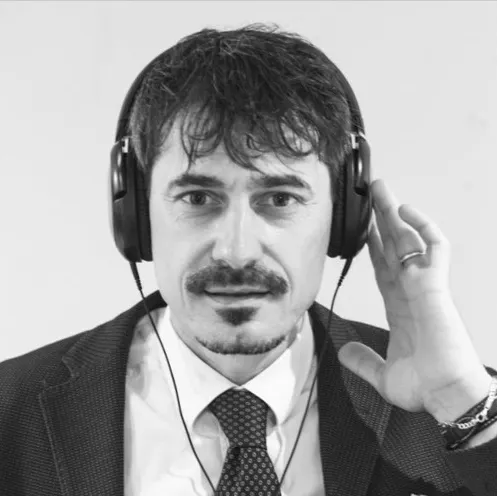
Ep. 224 Pierangelo Tommasi (Tommasi Family Estates) on Amarone and other Italian wines
Ep. 224 Pierangelo Tommasi (Tommasi Family Estates) on Amarone and other Italian wines
Episode Summary
Content Analysis Key Themes and Main Ideas 1. The generational growth and geographic expansion of the Tomasi family wine estate across Italy. 2. The diversity of Italian wine regions, indigenous grape varietals, and winemaking techniques employed by the Tomasi family. 3. Specific characteristics and aging philosophies for iconic Italian wines such as Amarone, Brunello, Aglianico del Vulture, and Primitivo. 4. The influence of terroir, including elevation and soil type, on the unique profiles of wines from different regions. 5. The balance between preserving traditional winemaking methods and adapting to market demands and future opportunities, including wine tourism. Summary In this episode of the Italian Wine Podcast, host Monty Waldin interviews Pier Angelo Tomazi, a fourth-generation member of the Tomasi family of wine estates. Pier Angelo recounts the family's history, starting with their Valpolicella winery in 1902, and their significant expansion into various major Italian wine regions. He provides detailed insights into their holdings and winemaking in Veneto (Valpolicella, Lake Garda, Soave), Tuscany (Montalcino, Maremma, Chianti Classico), Basilicata, Puglia, and Oltrepò Pavese. For each region, he discusses the specific indigenous grapes, the unique terroir, and the distinct winemaking processes, such as the appassimento method for Amarone and the use of traditional large oak barrels for Brunello. Tomazi highlights the challenges of distinct varietals like Alicante Bouschet and the late-ripening Aglianico, as well as the success of wines like Lugana due to tourism. The interview concludes with a discussion of the family's future plans, including expanding their hospitality business and the recent launch of a new luxury brand, De Buris, back in their home region of Valpolicella. Takeaways - The Tomasi family has grown from a single winery in Valpolicella in 1902 to owning estates in multiple prominent Italian wine regions. - They produce a wide array of wines, showcasing Italy's diverse terroirs and indigenous grape varietals. - Traditional winemaking methods, such as the use of large Slavonian oak barrels and natural air drying for Amarone, are central to their philosophy. - Geographic and climatic diversity across Italy results in significant differences in grape characteristics and picking seasons. - The Tomasi family is exploring new ventures, including expanding wine tourism opportunities at their estates and developing new luxury wine brands. Notable Quotes - ""Everything started in 1902 when my great grandfather Jaca Montumazi started his own small winery in the Valicella area."
About This Episode
The speakers discuss the success of Kirito's Rosy wines, their success in Amaroni, and their plans to expand their projects in the south. They also discuss their plans for a new project in the west and their plans for a new project in the west. They mention their plans to expand into other regions and their investment in Tuscany. They also mention their success in finding and producing wines, including Otrepo, and their plans for a new wine project called De Buris. They express their love for the podcast and invite others to visit their respective countries.
Transcript
Italian wine podcast. Chinching with Italian wine people. This podcast is brought to you by Native Grape Odyssey. Native Grape Odyssey is an educational project financed by the European Union to promote European wine in Canada, Japan, and Russia. And joy. It's from Europe. Hello. This is the Italian wine podcast with me Monte Walden. My guest today is Pier Angelo Tomazi from the Tamasi family of wine estates. Welcome. That's it. Okay. Just give us a little bit of background about your your family history and how you've come to have estates in all the major regions in Italy. Well, I represent the fourth generation of the family along with, eight other members were actually quite a large family. Everything started, in nineteen o two when my Greek grandfather Jaca Montumazi started his own small winery in the Valicella area. So the northern part of verona, which is where we were kind of born and raised. And generation after generation, the company has grown, spending, acquiring more vineyards in the region. First of all, in the Babicella area, to become, more, say, premium, amarone, Babicella wine producers. And then later on, we also expanded acquiring vineyards in in the rest of verona, meaning lake garda and soave. Okay. Just give us a bit more detail about the, the Veneto side. So you're making red wines, white wines, and sparkling wines there, I guess. Correct. And and Rosier as well. Okay. So what what do you mean denominations? So the main denominations are Marona, Marona Chascico, Repasso, Valicello. I mean, all the family of the Valicello wines, but then we also produce lugana, which is our, say, most important and premium white wine project in Verona. And as of Rosette, for instance, there is the Careto de Barulino from La Carta. So those are three denominations that have had a lot of recent success. I mean, Garda is obviously an incredible tourist spot and a track a lot of wealthy Germans from Munich driving down over the weekend. So prices for those wines are quite high, aren't they? I believe they're in a way. They're very good value, though. Ligana Wides. Yeah. Ligana has probably represented. I mean, the exempt role of how a wine and a wine region more in general can gain from the visibility and the notoriety of the tourism. As you mentioned correctly, I mean, from, especially from Southern Germany. Lots of I've enjoyed spending their summer holidays by Lake Artado and they've been drinking and enjoying and drinking lugana, for years. And and as a consequence, I mean, the German market is by far the biggest market for this operation. The trend is growing. I mean, there is not only South generally now, actually at, open to discover new wines and and lugana, as such. So I see a bright future ahead. Just remind us quickly what the main grape for the lugana white is? Well, it's actually called Turpiana, turbiana is the indigenous cologne part of the more known Trebiano family. So we can say that Tourbiana is part of Trebiana, but it's a specific one grown in the lugana area. Okay. You mentioned Cierro. Mhmm. Which for me is one of the most urgent wines in Italy at the moment. What's changed for Kirito, which is an explain is what Kirito is and and where you think it's going? So Kirito is actually say Kirito de Bartolino to be more precise. It's the Rosay wine produced in the Bardolino DOC area to point this on the map south east part of Lagarda. It's produced with the primarily at least with three indigenous varietals, Corvina, Arondinella, and Mourinara. And, so red grapes that, and, and the wine is, like, really unified with the skins of, very shortly. Like, just a little over one, one day. It's been existing for a long, long time. If I am actually totally correct, I believe that this has been the first Roset Italian Roset one to gain the DOC years ago. And generally speaking, we see a growing demand for Jose wines were wide, and Kerator is actually one of them. An historic Jose wine that is now gaining a little more attention. Getting more attention? Because in terms of color, it's been made a little bit lighter in color. I believe this is part of it. We personally also change a little bit that in our unification process. I mean, we used to make, the Erocarrot a little more pink. Now, it's much kind of more towards, aramato, correct? The copper. Yeah. You're right. Yeah. Did you change the blend then? Did you did you get rid of some grape varieties? No. No. No. No. We've been making that with the same grapes as we used to do a long time ago. It just a matter of a, probably, a, a, shorter, a quicker skin maceration in order to, get less color extractions from the skins. And the complete contrast to that would be amarone. Yeah. Exactly. Amarone is exactly the other way around, I mean. So some of the success in Amaroni in five words, Namj? Oh, five words. I mean, if you tell me five, five pages, then I can, do that. Five words, did you go well, unique, for sure. So what what is Amaroni? That's what it is, and then, and why it's so unique, and why it's such success. So, certainly, we can say, we can tell about a marone as a one of the really top, Italian red wines. No question about it. How do you make it? Well, first of all, where do you make it from the Babicello area? Use in indigenous varietals in the blend, Corvina and Rondinella are the mandatory varietals. And what makes ameron unique is the way you make it. You have to dry the grapes for, say, usually ninety to one hundred days. We tend to do more one hundred and ninety. The longer you dry them, the more concentration you gain from. So you're picking the bunches by hand. Correct. And you're keeping them as intact bunches. Well, and you're taking them inside. You put them in in smaller baskets on on larger bamboo racks, and you let them dry using natural air circulation. So you have to imagine big, we call them dry and loft areas where it really let the grapes dry for so long, getting the air circulation. And when pierangios is, drying, like, the ways you explain about the drying, you can actually dry, not artificially, but you can have rooms that have air conditioning. Right? Yeah. And you go for the way. We go more financial way. Let's say that, the, the real main enemy to the drying process is humidity. So you have to get rid of the humidity. And when, when you have humidity, meaning if the weather outside side is humid due to rain or fog. That's just something you have to avoid. It's a time when you can possibly help yourself with some sort of dehumidifiers. But otherwise, you the the more natural you dry, the more you obtain what to what what your objective, which is actually dry. I mean, dry grapes meaning concentrated juice with natural sugar. So, basically, the water in the grapes evaporates, and then that makes the sugar more concentrated. Correct. I mean, the the goal is to lose forty to fifty percent of weight, which is the amount of water that has to evaporate. What's your favorite meal with a bottle of a maroni? Rad meat beef is definitely my my favorite. I mean, the the the more you age a maroni, I Maroni is one of those wines that can really age forever. Alright? One quick step backwards. After the drying, you humidify, you age the wine minimum three years in barrels, and then you bottle. And then as as you release, the one is supposed to be ready, but in the same time, you can say it's still young. The longer you age it in battle, the longer the longer the story, the better it becomes. So to answer your question, when the Amerona is still among younger vintages, so to speak at preferred with some beef. The older the amaran is, it goes more with game. Moving to another very famous red, Bernona de Montecino. You have an estate in Brunocino. What's it called? It's called Casizano. Mhmm. We're about is in Montecino. So that is actually located in the southeast part of Montecino in, just above, Santangolin Colle, which is a little hilltop village. And, and, in fact, Casizana is one of the highest elevation, vineyards of the entire Bo Montecino, the illumination area. What are you about? It was five five hundred and something meters above sea level. Yeah. Quite high. We purchased Casizano in, two thousand fifteen. I was gonna say the a state was founded in nineteen ninety by the previous family, the previous owner. And then in twenty fifteen, we had the opportunity to achieve a goal, which is more it was more the goal. It was a dream. I've been dreaming about pursuing and instead the Montecino for a long time. How big is how big is the same? It's actually twenty two actors under Vine. It's fifty three actors in total, including woods and and knowledge trees. So twenty two actor under vines, one hundred percent grown with Sanjovese of Brumello, San Jose Grasso grape. So just the this is one of the warmer regions of Montalcino, Santanderlin Corle. But the fact that Eureshi on top of the hill, I guess makes it a little bit cooler. Yeah. Pretty much. Pretty much. In fact, I mean, there is, there is, there is, there is one style aisle, in the Brunello, the Casizano State produces, which is actually, I mean, the elegance. Eleagons is the key. We will never ever be able to produce a bigger, bolder, brunello, where it's not that warm over there. So elegant guarantee is, is, is the key. What about aging? Are you going for new barrels? Are you going for classic, team? We work one hundred percent with a traditional booty. So, Livonian oak barrels only. Yeah. I, I mean, I don't wanna impose my opinion, but I if I was where you are, I used to live in Santentially, I would be doing what you're doing. I think New Oak would would just, you know, it makes it too heavy. Well, I believe so. I tell you, on the other end, we have never experimented a smaller barrel yet, but, we want, in a sense that, it's not really the philosophy of our family. And this reminds me or or brings me back to the tomasi state up in the Babicella area. Where, we work primarily with large La Vonoque. We have a few French hospitals there as well for a couple of IGT wines, but, when it comes to the real classics from the region of Marona paso by pulicera classic, etcetera. We only work with large level, you know. A classic Bruno from Casisano. What's your favorite food match? And you can't say beef. This this one. I can't say beef. No. Well, if I cannot say beef, then I would say cheese. Really? Yeah. Yeah. Chees out like raw cheese or toasted cheese or blue cheese. Really? Yeah. That's my, you know, I that's my favorite cheese, in general, and I enjoy every meal. I mean, as you don't allow me to say beef anymore. Because otherwise, I would have said beef as well or maybe wild boar, wild boar, perhaps. So he's wild boar allowed. Well, I'll have to just speak to our legal team about it. Alright. But in terms of blue cheese, which particular blue cheese? Like a soft cheese are running cheese, soft cheese, I would say. No. Yeah. And again, I believe that that depends on the vintage of the brunello dough. I mean, the younger, the brunello is maybe a kind of a softer type of cheese. I mean, the older, the more HD maybe something a little more, I mean, a little stronger in flavors, perhaps. Okay. Next, let's go down south to Bazidi Carter. Yeah. You having a state there? What what's it called? So in, two thousand six in, we decided to expand our projects, down in the south, and we had the opportunity to buy a stake, the majority stake in a very, historic and well established winery called Paternoster. Paternoster has been a family owned winery since nineteen twenty five. And, again, just a couple of years ago, we had the opportunity to enter with two their family members as our partner, and and one of them was actually Fabio Makapater Noster is the analogist, still is the analogist of of this state. We're talking about really an Nikon, in, in the region. I mean, one of the very first wineries that believed in the area, we're talking about the Volthure region. So Northern basilicata at the feet of this quiet silent volcano called Volthure in. So it's if you saw the word in English, you would look like vulture, but they call it vultor in there, and it it looks like a vulture without outstretched wings, doesn't it? Yeah. The seven peaks. Yeah. Yeah. Yeah. Yeah. It's quite high elevation as well. I usually explain this area as an unusual southern Italian region, if you will. In a sense that you're quite down south, but being so high in elevation and based on volcanic soil, the microclimate is quite different than, for instance, Apulia or Campania, which are only two hours east or west, but, but on a much lower altitude there. So, I mean, what's the difference in picking dates for your safe to Montalcino in Santander in Cole and to basilica. So if you allow me to include also the Amerone, as an example, I mean, we usually start picking the grapes for a maroon in the middle middle or second half of September. And then as we were saying, we're gonna we dry them all the way through January, but the picking is made middle end of September. At the latest, whereas we do Bruno starting somewhere like, middle of October. The Allianico is in the very end of October. Sometimes early November as well. It's amazing. Yeah. It's a bit you're you're so far south, and you would think will be picked like in the end of August, but it's one of the latest regions, isn't it? And if you're not the latest perhaps. Yeah. Is it? So, I mean, that's really very much part of the characteristic of this grape, Alianico And when we talk aaliyah about Alianico, we need to really be clear. This is Alianico dilvultura, which is different than the Alianico grape and wines produced in Apulia for instance, or sometimes in Campania. This is a specific clone that grows in the area. As we just said, I mean, high in elevation, northern part of the city, which end up making a wine that is really full bodied, but quite by dry, reaching tannins with a huge aging potential. What's your favorite food match with that one? You know what? To be honest, I I don't think I've really found the perfect food match yet. I'm still I'm still kinda discovering. Yeah. I mean, I've been What didn't work then? No. And I don't say that there was something that didn't work. I believe that I have the opportunity so far to taste the younger vintage of Alianico and other vintage of Alianico. And I to say that the the really the more you age it, the the better it becomes, which is, in a way, strange for me as a producer to say because usually when you release a new vintage, you want the vintage to be ready. And so And you want it correct. But with the allianico, the winter you really need to wait. What about with some of the cheese? It's like the, Lamuka padolica? Yeah. That's kind of cheese. It can you explain what Amuka padolica padolica is? So you can explain that. Probably more than me. I'm not gonna do, okay, it's a it's, it's the local kind of, cow, and, the cheese is, ageable, and it's quite spicy. And I can't, I know, Padolica is a cow that gives comes out the wrong end. Yeah? Correct. So it's a cow that's born. I can't remember what's head first off. It's head first, isn't it? Normally, cows have come out feet first. And so they, when they birth, the baby cow or calf comes out head first. Yeah? Yeah. That's an interesting story. And, so we're actually gonna do a veterinarian podcast as soon as we finish this one today. Okay. And then we might move into aeronautics or other. Okay. So now, let's stay in the south. Yeah. You mentioned Pollia just now. Tell us about your estate in Mandori. What's it called? It's called, Surani. Actually, Maseria Surani, and I have to say that this is the first project that we, started in Southern Italy. If I may go quickly back to the beginning, it was in nineteen ninety seven when my generation stepped in and took over from our fathers that we decided to expand the wine project outside of Veneto. And therefore, Apulia came in twenty eleven. It came before Montalchino and members, Idicata. And that was the time when we were thinking that southern, Southern Italian project would be a perfect fit for our wine portfolio overall. For a number of reasons, we thought the puglia should be the region to go. And, we're in puglia in in the era, which we consider the high art of the primitivo, wine regions. So, Manduria. Manduria is the land of the first DOC that was created for the primitivo, Primitio de Manduria. So we purchased an existing state, based on fifty five hectares, primarily grown with the primitivo grapes. And here we are. A few years later, I can say that it's been a fascinating project. We just mentioned the Allianna could have been picked, in a very, very late. We now talk about Primitivo de manduria or Primitivo grape, which is one of the very first grapes that we pick, towards the end of August, very early September though. This is a very hot area, isn't it, Manduria? Very old, very old area. You are very close to the sea. We're just about ten kilometers from the, from Yonkixi. And, yeah, so you can imagine the climate there is really hot. It's fairly flat as well, isn't it flat? Pretty much. Pretty much. So But you have a lot of old vines that exist it's it's quite a bit. If it does a disease, it's quite hard for diseases to cause problems. Right? We still have, some a few actors with the very historic, so called Alberlo, training which is a bushfire. And then the majority law is actually with Guiyo, which is part of, to be honest, of the project, and the way that the previous owner of Masaria Surani, in a way planted the the entire estate. And your final domain is about We have two more in the family. Yeah. We have, what was actually our first project in for back from nineteen ninety seven in in Marima, in Southern Tuscany called Poggio Altuffo. We're now actually actually one brand with two estates, one in the very south of Tuscany in the very south of Marima in such an amazing, beautiful city, called Petiliano. If I haven't been there guys, please go because it's an amazing experience and a touristy city. And then the other estate is slightly more northwest from Petiliano in Scansano. So Scansano also neighbors montalcino. It's closer to Montalcino than what Petiliano is. Let's say that from the Marema where we are at to Montecino, and time wise, it would take you about, say a couple of hours of, of a nice drive in a sense that you enjoy a beautiful telescope landscape. I I agree. It is one of the most beautiful jobs. And I agree about Petiliano. So the two, the differences between these two, you make, you're making mainly white wine in Petiliano, red in in the Scottsano? It's actually not in the other, not the other way around. It is actually not the case in a sense that you are right thinking that in Petiliana, you make more white. But when we purchased, they state and the vineyards, which were ninety nine percent based on white grapes. We decided to re blend them with more white, the red grapes there, though. So we make more red wine and white. What do we do as white vermantino, which is one of the indigenous varietals from that part of Tuscany? And that's the only real, white wine part of the Pojuel two four portfolio. And then we mainly work with red grapes such as San Juiza, cabernet sauvignon, there is Alicante Bousche. There is a little bit of, petiver dough as well that we use in blend. So much quite deeply colored reds there with Anacante in Petigante, in particular, we we we actually work with the Alicante Buche. Yep. And the soclon of Alicante, which has the, not only the dark skin, but the dark juice as well. In France, it's called a, which means a a steiner, a red steiner, brings a red field to the wine, which is usually used for, in blends to give a bit more car extractions. We decided some years ago to produce a hundred percent alicante boucher wine, interesting project. A wine that has It's super brave to do that, isn't it? In a way, I would say so. I Did it work? It it does work. It's not the easiest wine to sell, to be honest. I mean, I was gonna say this is This is really a wine that you have to find some ambassadors to be leaving and and really sell it to the to to the market. When you produce a sangiovese Cablin or a hundred percent cap, you produce wines that the average consumers were wide on the steppe, and they can buy either at the retail level or in restaurants. When you produce Nalecante Boucher, you have to have real ambassadors, Sommelier, so primarily on on trade, Oreca. Business, that are, involved with this wine, they get in law with this wine, and they believe it, and then you take the chance to explain it and propose it to the clientele. Do you think the white wines in Petiliano will bounce back in terms of getting more recommend? It's a historic wine. I know you, I can understand why you say that, you know, it was a it was a very hard sell for you and you sort of switched the focus a bit to merge. But do you think there's future for that wine? Well, you know, it's a beautiful place. It is a stunning place. Well, I I have to say though, to be fair that when we started a project in ninety seven, it not that we didn't believe in the, Bianco Di Petiliano as such. We just wanted, to have more red wines because it was our first project outside of Veneto and in Tulsa. When I mentioned, Cizano a while ago, being being in Montana State, being like a dream that became truth. This means that it was at the time when we bought Petilia in Petiliano that I was looking for something in Montalcino already. That was in ninety seven. We purchased Casidano in in twenty fifteen quite many years later. So this means that for some reason, we couldn't make that investment earlier. We decided to stay in Tuscany with our project, and here we are with Marema. And and therefore, it was more red wines that we wanted and needed to have. It's not that we didn't believe in the white there. It's just that we needed more red wines in the portfolio. We still have Verintino. We have a white. We believe in the white. Is that area coming back when it comes to, you know, white wine success? It's hard to say. It's hard to say. I cannot really say if it is gonna happen or if it is not gonna happen. I believe it will depend on how the region will open to more wine entrepreneurs, like we did a long time ago. They can bring to the area a little more long term projects if you like. Okay. Vision and, a clear objective of of development. So just one final word about pogio l two four. What does pogio l two four mean? So starting from two four two four. I don't know if you can really correctly translate in stuff or to the t u f f that that is actually volcanic soil. Poggio is the typical Italian word used primarily in Central Italy. So Tuscany and and umbria as well, as far as I know, that refers to these very beautiful rolling hills that are typically part of Tuscan area. So as we are with Pojal two point eight state union up up at four hundred meters above level and the entire landscape is based on these beautiful rolling hills, so called Pojo. We decided to create the brand name, combine the way the landscape looks like, and the fact that that is based on volcanic soil. Okay. Let's go to the Otrepo pavese. Otrepo pavese's? Where is it first of all? Southwest part of Lombardi. So approximately one hour southwest from Milano, not too far from PMont, in fact, It's a, it's another beautiful region up on hills, quite famous for primarily for pinot, Nero pinot noir grape. And so it's an area historically known for sparkling wines, and again, primarily based on pinotaro. There is a bit of chardonnay, and other varieties there as well, but pinot noir is really the that is the land for that. What do you make? Are you making mainly sparkling or totally sparkling wines then? We do actually produce their, so far what we have available are two white and a rosette brute both produce with pinotaro. And is this traditional method or shall my method? That's actually share my method. But we bottled about a year ago, two champion, classical methodo, a pinonero, one hundred percent, which will be released in twenty twenty one, so in two years from now. So we are gonna grow our portfolio with both the Sherman method and classical method as well. And then we also bottle and produce, actually, and bottle a little bit of Moscato, which is another varietal quite well, established in the area. What does that mean? I mean, Ultra, that means beyond, and po is the longest reaver of Italy. And, the area is just south of the river. That that's why they say Ultra on the other side of the river pole. So on the side of the river pole, you would think that there is a river going across So you would imagine the area to be flat. On the contrary, this is up on hills. Cassello, the owner that we own there is actually up to, more than four hundred meters above sea level. Okay. So your final, estate is, you're saying in Kenti Glasgow where you have a state, a stake in La Masa. So, La Masa, where is La Masa in Kenti Glasgow, which, which, township is actually located in the so called, Kong cadoro, the Golden Shell, one of the hottest spots in the Canticasico area, and more specifically in the, little town called Pansano. And Pansano is, a little town with the wider commune of my brain's gone. Gravein Kiente. Gravein Kiente. And it it is a hot spot literally in terms of, in terms of climate and in terms of fame. I think it's a really up and coming, I guess, historic area that's become very, very famous. I mean, you know, a a a company like you investing in Canticlassico, you you think that if you're investing in Canticlassico, that means that there is something about this region that is making that is happening right now. Is that Is that what you feel? Yeah. I agree, though. I mean, we decided to invest there, and I have to say that La Masa is not a hundred percent Thomasi Family project, though. We are in partnership with, we actually have two partners, and one of them is, the found under and and the owner of La Mesa until we got the, this business together. Who's still the wine man in the, in the business in the company? What's his name? Jão Paulo, Jão Paulo Motto and his team. So we decided to do, you know, consider this opportunity, a to enter in an amazing small boutique brand. Secondly, two, in a way, sort of complete our Toskin project, if I can say so. I mean, we started in a long time ago in, in Petiliano, then we greet you the Marema project with Scansano, as we mentioned, so all under the Poduel two four Estate brand name. And then Montalcino a few years ago. So, Canticlass ago is certainly an area. As far as I can see as a producer and as a wine consumer too, there is a quite intense comeback for the Canta classical wines worldwide, which is quite promising ability for the area. So you'd said that this looks like your last investment in Tuscany. So if I'm a Venus Nobili producer, that I'm about to retire, and I'm looking I'm looking for a nice lad like you to come, I was, hey, Monty. I'll I'll I'll take your family, winery off your hands, and give you a nice price. Well, that's not gonna happen to being a nobleman. You know what? I mean, never say never. I mean, you made an example of, you know, nobody now. So I just want to avoid any possible misunderstanding or gossip. We're not looking at any other further in the area. But I mean, generally speaking with us and the family, I mean, I can really say never say never. On the other end, that we have plenty of projects coming up in in some of these existing states. So some renovation to create some hospitality business as well, which is already part of our family. We have an hospitality business here in Verona with two hotels in a restaurant also. So we might do something in in Montalcino and and in Marema as well. Actually, we already own an Agri tourismo by Portual Tufo. I have to say though that, scoop coming up everybody. There is something. There is another project which has is which was officially launched last year October. So that's not really new, but, we're kind of working hard to to make it go. It's his own way. And it's called De Buris. What is De Buris that that's the luxury brand, the luxury new project of my family, myself located here in the Valpolice area. So I can say that after traveling throughout Italy for a number of years with the Buddhist we have kind of come back. The Buris is simply the name of, a fourteen hundred Venetian Villa, called the Buris in the heart of the Balicella Classic region, where there is a cellar, with the Slabona pales, and where the the wine produced, which is a number on a reserva, is actually, it spends its long time in aging. This wine is made in the most prestigious hillside vineyard that we own in the classic of a Pulitzerular region called La Groleta. Again, a project that it in our family and our mind back in two thousand. And, last year, October, so eighteen years after the first day we thought about it, we were happy and able to launch the first vintage, which is a two thousand and eight. Great. So I think we've done everything. Yeah. I hope so. I know you gotta run. Just wanna say thanks. Yeah. Happy to be happy to be with you joking. Yeah. No. It's a I would continue a lot more. Yeah. If you if you if you do buy another just I'll give you my number, right, my mobiles before we leave. You'll be one of the first people that I will inform. So I say thanks, to Pierangelo Tomazi. My guest today on the Italian wine podcast for explaining the family history and all the estates associated with the Tomazi family. Very citing range of wines. I mean, if I'm not a trade buyer, you know, I don't, you know, that's one of my weak points is you probably know anyone who listens to this podcast about the commercial side. We got a great lineup. You know, if you're like a football team, you say, yeah, you gotta, you know, you got all the all the bases covered. Yeah. No. I agree. So, okay. And if we do have a scoop, you got my email. I have your email. I have your cell phone. I have your everything. You got you can spume a GPS, right? You just track me. Put a little tracking device on me. You will not escape away from us. Okay. Thanks a lot, and I hope you enjoy visiting. I will enjoy. Thank you for having me with you. One last thing, though, whoever is gonna listen to this program. You are very warmly welcome to visit us anywhere in Italy, anywhere we are. To, in a way, touch with your hands that what, we have explained so far is true. And, and, and we can really enjoy some good time together. So thank you very much for having me, and you have a good week in Italy too, Thanks very much, Brianna. Bye bye, everybody. This podcast has been brought to you by Native Great Odyssey, discover bring the true essence of high quality wine from Europe. Find out more on native grape odyssey dot e u. Enjoy. It's from Europe. Follow Italian wine podcast on Facebook and Instagram.
Episode Details
Related Episodes

Ep. 2822 Ep. 20: California | Study Smart for your WSET Level 3
Episode 2822

Ep. 2789 ColleMassari: a long-term vision rooted in Montecucco with Giuseppe Di Gioia | On The Road With Stevie Kim
Episode 2789

Ep. 2788 Ep. 14: Austria and Hungary | Study Smart for your WSET Level 3
Episode 2788

Ep. 2785 From Volunteer to Speaker at TEXSOM with Samantha Cole Johnson | TEXSOM 2026
Episode 2785
Ep. 2766 Inside the U.S. Non-Alcoholic Wine Market: What Wineries Need to Know with Jill Sites | Masterclass US Wine Market
Episode 2766
Ep. 2761 Winemaking and Consulting Across Sicily with Alessandro Serughetti | Wine, Food & Travel with Marc Millon
Episode 2761