
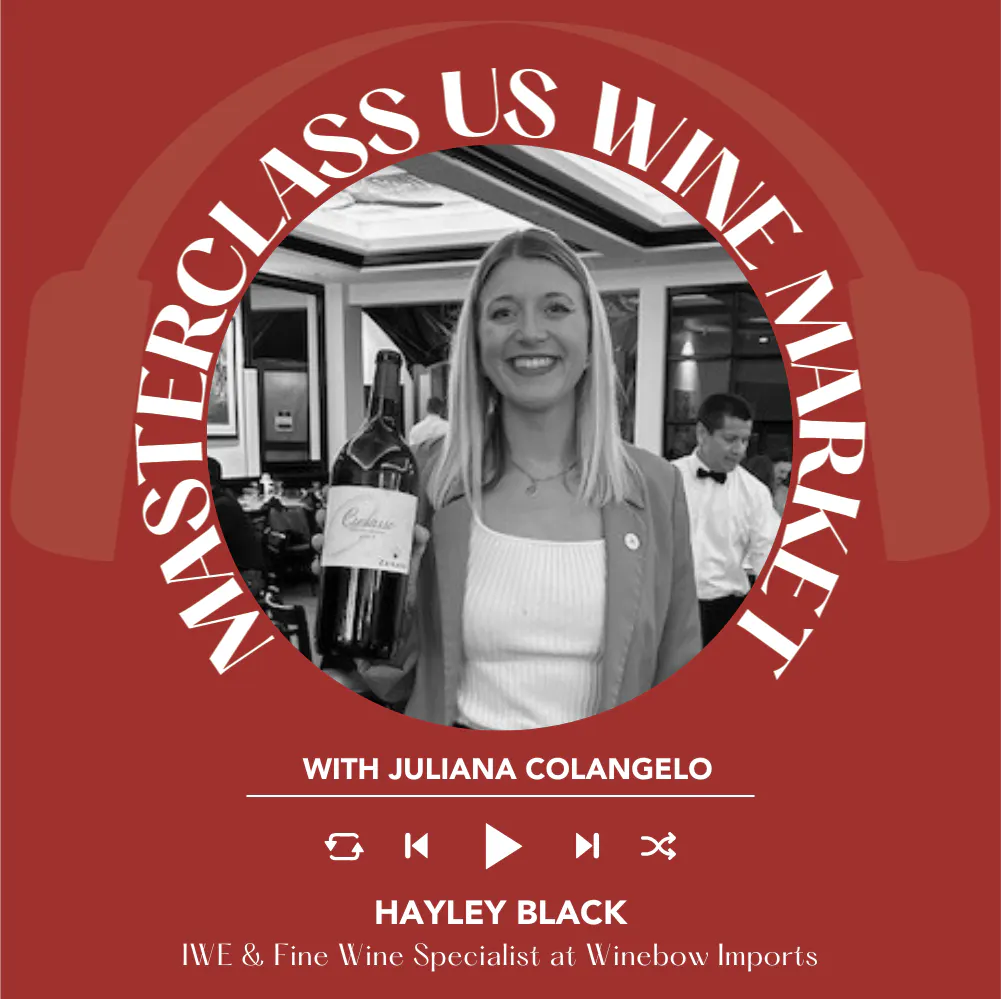
Ep. 2287 Juliana Colangelo interviews Hayley Black | Masterclass US Wine Market
Ep. 2287 Juliana Colangelo interviews Hayley Black | Masterclass US Wine Market
Episode Summary
Content Analysis Key Themes and Main Ideas 1. Infusing creativity, ingenuity, and fun into the marketing and sales of Italian wine in the US. 2. Strategies for facing market headwinds, including tariffs, non-alcoholic/low-alcohol trends, and new health considerations. 3. The role and approach of a fine wine specialist in the US import/distribution market. 4. The importance of making Italian wine approachable and understandable for trade and end consumers. 5. The value of education, community, and in-market presence for Italian wine producers and sellers. Summary In this episode of the Italian Wine Podcast, host Juliana Colangelo interviews Haley Black, a fine wine specialist at Weibo Imports, focusing on strategies for marketing and selling Italian wine in the US. Haley emphasizes the importance of infusing creativity, fun, and a positive approach into her role, especially when addressing market challenges like tariffs, the rise of non-alcoholic beverages, and new health trends. She describes her ""overlay role"" at Weibo, which involves direct sales, education, events, and content creation for high-end, esoteric Italian wines. Haley highlights tangible ideas for approachability, such as fun food pairings (e.g., Brunello and potato chips) and making trade tastings engaging with themes like the 80s/90s. She also discusses how her past experience as a buyer informs her current approach, stressing the need for Italian wineries to provide accessible information (websites, social media) and make their in-market presence impactful. The conversation also touches on the significant role of the VIA program in building knowledge, confidence, and a global community among Italian wine professionals. Ultimately, Haley advocates for shifting the mentality from ""doom and gloom"" to seeing challenges as opportunities to engage consumers and trade in new, exciting ways. Takeaways - Bringing creativity, fun, and positivity is essential for effectively marketing Italian wine in the US. - Market challenges (tariffs, NA/Lo-ABV, Ozempic) should be viewed as opportunities for adaptation and new engagement strategies. - Making wine approachable through engaging activities (e.g., quirky food pairings) can attract new consumers. - Building strong brand ambassadors and providing excellent service are critical for success in the US market. - Italian wineries should prioritize accessible online information (website, Instagram) and impactful, authentic in-market visits. - The VIA program offers valuable knowledge, confidence, and a supportive community for Italian wine professionals. - The wine industry needs to adapt to changing consumer behaviors, viewing trends like non-alcoholic options as complementary rather than competitive. Notable Quotes - ""How can we bring more creativity and fun to the marketing of Italian wine for trade with end consumers?"
About This Episode
The Italian wine industry faced challenges during the pandemic, including lack of alcohol restrictions, tariffs, and headwinds such as tariffs and alcohol. The importance of creating creative and fun marketing materials, hand cells, and creating positivity and happiness is emphasized. The company emphasizes the importance of building brand ambassadors and tasting different types of wines to bring attention to the market. The challenges of the industry are discussed, including the need for more fun and approachable marketing materials, the importance of finding a balance between local and global presence, and the challenges of selling Italian wine. The company emphasizes being flexible and open to new ideas, finding trouble hops, and being a "monkey expert" to make wine more accessible to people.
Transcript
So, Halian, today's episode, we're gonna focus a little more specifically, your strategy around infusing creativity, ingenuity, and fun into your role at Weinbo and and how you market and sell italian wine. So our three key takeaways are gonna be number one, how can we bring more creativity and fun to the marketing of Italian wine for trade with end consumers? Number two, what are some tangible ideas and examples of things that you find are working right now in the market for Italian wine? And finally, how are we facing some of these headwinds, tariffs, non alcohol, no low, olympic, twenty, twenty five head on for Italian wine. So lots to discuss excited for this conversation. So let's dive in. Hello. Welcome to Masterclass US wine market with me, your host, Juliana Colangelo. This show has been designed to demystify the US market for Italian wineries through interviews with experts in sales and distribution, social media, communications, and so much more. We'll will quiz each of our esteemed guests in every episode to solidify the lessons that we've learned from the episode. So sharpen your pencils, get out your notebooks, and join us this week to learn more about the US market. Hello. Welcome to Masterclass US wine market. Today, I'm thrilled to welcome Haley Black to the Italian wine podcast. Haley's based in Seattle, Washington, and has been in the industry for almost twenty years. She's a certified Italian wine expert with Vanidalia International Academy and also has her w set diploma. Haley, it's so great to have you here. Thanks for joining me today. Thanks so much. I am excited to be here with you. Absolutely. So for starters, Haley, tell us a little bit more about your role and your position with Weibo just to orient our listeners. Absolutely. So I've been working with Weibo imports for about five and a half years now. Weibo is kind of one of those unique models in the US industry where, you know, we started as an importer. We are an importer, but we also are a distributor in many states throughout the country. So I'm on the import side, and I'm on a really specialized team. I'm a fine wine specialist for the company. There's only six of us nationally, so we're kind of spread out throughout the US. And I cover the West Coast, so seven states, Alaska down to California and kind of the surrounding areas I like to say. And our focus really is if you ask my boss, he says we take challenges and make them opportunities. But we kind of represent the upper tier, the top twenty percent of the portfolio. So items that are allocated, higher revenue, and also more hand cells, really kind of esoteric or unique regions of the world, things that require you to be in front of someone with a bottle tasting it that requires more of a story. Right. Absolutely. I'd love to just start with some definitions for the listeners, but when we say fine wine specialist for an importer, What does that role typically entail? Is it a direct sales role or more of an educator? How do you define that role at least for yourself and your position? Absolutely. So it is I like to say an overlay role where it kind of encompasses multiple things. So it is sales on the ground. I almost say that it's direct marketing on the ground in a sales form. Right? So a lot of it will include events and activations, special trade tastings, or consumer events, a lot of education within our wholesalers and then also within our wholesale team and then background as well. So creating materials that will help people and our partners. And I think, like you said, for those specialized Italian, more esoteric wines, what a an important role to have that education. And, like, you said, that on the ground sales and marketing opportunities. So that's awesome. So, Haley, in today's episode, we're gonna focus a little more specifically on the US market, of course, title of this podcast, and the challenges, which there are many that we're facing, but specifically for Italian wine, and we're gonna focus more specifically on your opinion and your strategy around infusing creativity, ingenuity, and fun into your role at Weibo and and how you market and sell italian wine. So our three key takeaways are gonna be number one, how can we bring more creativity and fun to the marketing of Italian wine for trade with end consumers? Number two, what are some tangible ideas and examples of things that you find are working right now in the market for Italian wine? And finally, how are we facing some of these headwinds, tariffs, not alcohol, no low, olympic of twenty twenty five head on for a time line? So lots to discuss excited for this conversation. So let's dive in. For starters, Tali, talk to us a little bit about how you're approaching this year differently in your role at WIMO. Absolutely. So I think I've always approached my role somewhat differently, but particularly this year, And even towards the end of last year, right? We're seeing challenges in the market, but I think the first thing that I'd like to talk about is positivity, and you brought it up fun. So it's something that we talked about when we tried to decide what to discuss today. And, you know, when you look at wine, when you look at our industry, one of my favorite things when I first started learning about wine was I read a quote from Oz Clark, and he said wine is meant for Eness. And when you look at it historically over time, that really is an important point to focus on no matter what you're doing. Sales, Smolier. And so I'm really trying to focus on that And everything that I do this year is how do we bring happiness to people, whether it is a consumer, whether it is trade, whether it is my suppliers, and then from there, how do you actively promote it and at the end sell it. Right? So Right. I think that positivity and happiness piece is something that often gets forgotten, especially in sales. Right? There's competition. There's all of these things in the market. So first and foremost, that is kind of the approach and then being kind of unique in what we're doing. So how do you stand out? How do you make a point of difference in the market that still provides a service for whoever you're working with, whether it is our wholesale partners or the trade directly or the end consumer. So being the best service in that regard. And I really love that human approach you mentioned around starting with positivity and and having this. Right? I think could all use a little bit more of that in this day and age, especially with the headwinds you're facing, not just as a a wine industry, but, you know, just what's going on politically globally. So I'd really appreciate that approach, and I think it's something really valuable to think about. Maybe more tangibly, like, what's something you're doing day to day in order to bring more happiness and positivity to work? Like, what are some ways in which you're infusing that into your day to day? Great question. I think, you know, when you look at tangible, efforts in the market, it's really about building brand ambassadors around you. So in this kind of like doom and gloom, I feel like that we're talking about and facing a lot when I'm in market, it's shifting the conversation whether it's with someone I'm working with, one of my wholesale partners, like, if I'm in their car, shifting the conversation to the things that we were passionate about, and then how we translate that passion when we're at an account with a trade buyer or how we translate that passion to the consumer. And I think the other big tangible pieces is, you know, we are all wine nerds to a certain degree in this industry. That's kinda how started. And I think we've swung the pendulum a bit far, and we've made it almost too unapproachable for a lot of people. So it's almost depending on where you are and who you're with. It's making things approachable and fun in a certain way. So whether it's comparing, you know, wine to something that is more understandable to someone, or it's doing something like potato chip and wine tasting So where we're tasting brunello and potato chips, which is something that you would never think of. Right? But something that helps people find an approachability to it. Yeah. I love that. Bruno and potato chips. It was the best pairing in that tasting. Well, we did a bunch of different Italian wines with the potato chips. And, actually, it was really hard. We were trying to figure out how to pair doritos, the cool ranch doritos, which is just like wild weird flavors with wine, and the best pairing was just like a vaupulicella superior vare. Just that cherry with kind of like the spice and cool ranch. So that was actually my most fun pairing of the lineup. Yeah. You can do a lot a lot of different things with potato chips, and I also just I love chips. So or crisps, I should say about a ton of crisps. Yes. Who doesn't? But, yeah, I mean, I think, Haley, you know, what I'm hearing from what you're saying is it's like having more fun with these wines, introducing them to people in maybe unexpected ways that are more approachable especially for the consumers out there. I mean, Italian wine is vast. We know and and complicated. And I think also for the the songs, I mean, there's a lot of new songs out there before in their early twenties and they're mid twenties that are still learning about wine. That your wine can be daunting. We have to figure out ways to make it fun and memorable. And, yeah, what what could be more fun than than chips and and Bruno. So I love that approach. And, you know, Haley, you've been on the the buyer side before your role at Wibo. So how did that experience working as a buyer in retail and restaurants inform your approach today and your role with Wibo? That's also a great question. You know, I live in a unique area when you think about competition in wine. Right? So I'm based in Seattle. So and I sell imports now. Right? But they make amazing wine here in Washington state. And I also work in California, which is the same case. I think there's a unique note on the West Coast where as a buyer, when you're putting together a list for a restaurant, you're trying to support the local market, the domestic palette, and then also have this really well rounded list that represents the world of wine. That's included in that. But a lot of your people coming into the restaurant are also wanting to try something locally or try something, you know, of the area that they're at, whether it's California or Washington. So you do have a a unique competition added there. With Italian wine list or an import list. And so considering that, I think that's always something that I consider now in my role is how do I the space is probably more limited on these lists or maybe on these shelves, or the competition, you're always gonna be kind of instead of looking at it as a competition to the local market, how do you appease that palette to a certain degree? What kind of wines maybe are good parallels? Or how do you, you know, educate and get them to try something? Because a jump from, like, a Bordeaux blend in Washington state to a barolo is a huge flavor and palate jump. And you also may not have a complaint on the floor anymore. You might not have support on the floor in the same way. So just figuring out is it, you know, staff trainings, offering extra services that have always existed, but knowing that They might need more of that, more of that support now that now than ever. So being able to do that or create materials or do tastings, whether it's a floating winemaker dinner, or you're there to help kind of pour and not even pour, but just talk to tables and offer that support has been really successful in certain instances. Yeah. That makes a lot of sense. And like you said, Hey, like for the West Coast, you know, not only Are you competing against all other imports? You have a whole local wide market. Like, you mentioned that you have to be cognizant and aware of that, you know, it's selling. What's that saying? It's like selling ice to an EscMO, you know, that it's not something necessarily they need. So it's finding that right balance of giving them a comparison, giving them something interesting, but also again providing that education to allow them to integrate it into their wine program. What would you say are some ways in which, you know, maybe our listeners, many of who represent telling wineries in Italy can do on their side to help make this daunting task easier for their US partners and importers and distributors. I would say access is always a great thing, you know, when someone is looking for information, like, we have information at our fingertips now. Right? So have a good a good website or something really accessible. So where people can get information quickly. I think that's a huge thing, a really helpful thing. Spending time in market, I always say yes. You know, if the market is flooded with a lot of people, but presence in the market and being your best self. So keeping in mind Whatever you're doing if you're going to visit a market, you're creating those brand ambassadors for your brand, but also for you. So whether you're the winemaker or the family member or the producer, or maybe you're the importer the, you know, the brand manager or what what have you. When you're sitting in that car with someone, they're listening to you. They're paying attention to how you act. They're paying attention to how you treat people. They're paying attention to how you talk about the wines and, you know, your passion is gonna be infectious. Right? So just keeping in mind your presence is so helpful and so impactful. And it also goes back to that idea, you know, If you are in a market where there's a lot of domestic producers, those producers are seen in restaurants a lot. Right? Those producers are seen in the market a lot. So you coming even if it's once a year and being really impactful makes it different. And you can't be here all the time. So when you can't, you can provide accessibility to those people so they can find you, whether it's a good Instagram page or a good website, being able to have good materials that give the information that people need that are out there selling your wine. Yeah. It might sound like a basic thing. Website and Instagram and and materials, but it's so critical and so important. So it's something to really make sure you're investing in and you dedicate the resources to building out know those materials. Hill, you're also mentioned earlier an Italian wine expert through Via. Talk to us a little bit. You know, many of our listeners are part of the VA community as well. How is that program impacted, you know, your your work at Weibo and and what was your experience with the VA program like? Absolutely. Yeah. I did Via in twenty sixteen. So it's been some time. It's crazy how time flies. But Via is an incredible community. I think that's the first thing. You know, it's incredibly challenging program and exam, but it's so rewarding for the journey that it takes you through. I think when people land on via, it's because they have a certain passion for, obviously, wine, but Italian wine and culture, not just the wine, but also the culture. And the whole process of it really connects you on a global level, and outside of that, that connection when you're taking the course, going through the process of learning, taking the exams, you stay connected with everyone, and it's this community that has kind of grown over the years and stayed in touch and networks together really helps each other out outside of just exams and school work. Right? What are your challenges in this market? What are your challenges in this market? Are you overcoming them? People really talk and help each other. And it kinda has grown this really special place that I think is quite unique to our industry and really, really special. So I've loved that piece of Via as far as my experience after becoming an expert, you know, I feel I've had the opportunity to really kind of travel and work with a lot of incredible people, knowledgeable people, people that have been in the industry for quite some time, people that are new to the industry. And really, I think the biggest thing is is, you know, I always tell when people are doing via ambassadors, the hard part. Expert is, like, where you get very niche, but Just going through that ambassador. That's ninety percent of it. Right? That's a huge huge piece of the program. And just the process of it alone just makes you that much makes you much more confident and stronger and able to, really speak to Italian wine and wine as a whole in a very specialized way, which is creates a lot of confidence just in the industry as a whole. Right. And, and like you said earlier too, when you're selling these geekier wines. It's like having that knowledge base, and there was other people that are passionate about it as well. It makes such a big difference. So just the proliferation of the community has been really cool to see. And I I love too that it's national. I mean, you've got telling my ambassadors and experts really around the country. It's not like it's concentrated only new in New York where I am here in Washington. I know there's a big community in California, Las Vegas, you know, really all over, which is really, really cool to see. Yeah. And we all really work together, try to stay in touch to that degree too. You know, when I go to I was in Las Vegas and Nevada actually working last week and connected with three different ambassadors. So And, you know, they're all in the industry to a certain degree too. So it's how can we partner and help, you know, Italian wine as a whole to be successful or more successful. Right? Yeah. Absolutely. Haley, as we wind down, I did wanna talk a little bit about, you know, we mentioned at the start of this conversation. I have tariffs, not out. Ozempic, all these headwinds that we are facing as an industry right now. What are some of the challenges that for you are most top of mind? In your day to day out of the many that are out there right now. Absolutely. I know. I think we can we can all perseverate on tariffs, but we're just kind of, you know, you you can make preparations, but also I've been really kind of focused on you know, how you take this non alcoholic, low alcohol sort of movement or even this movement of just people that are uninterested in wine and look at it as you know, an opportunity. Right? So I'm not saying everybody making wine, make non alcoholic wine, please don't do that. But it's something I was actually thinking about a lot recently. I was at a cocktail bar. A lot of cocktail bars are now listing cocktails in order of ABV, like low, no ABV, low ABV, right, to higher ABV drinks. I don't think that's gonna happen for wine anytime soon because it's too niche in that regard, but I think that's really an awesome opportunity for us because you look at someone. I live thirty miles outside of the city, and I live in a place where I have to drive. Like, public transit is just non existent, really in in Seattle. And so you know, I go out and I wanna be social, and a lot of people do. Right? Let's say I'm out with someone that's, you know, younger than me, my best friend's younger sister who's in her early twenties. We go out. We're having a social time you get a cocktail, and then this is a great opportunity to, like, lead into a wine beverage where you can take something that is higher alcohol and then go to something that's lower alcohol, or maybe you have a mocktail and then you have a glass of wine. So it's trying to figure out how things fit into how the new world or setup of things are are working. And I think there's plenty of opportunity, and I don't think also everyone's stopping drinking. It's more how you fit wine into that piece if they're gonna have one glass while they're out, or are they drinking at home? And it goes back to that overall approachability of our industry. How do we make things approachable and easy for people to understand that don't understand wine right now. And I think continuing to focus on those stories and the authenticity that wine brings to the table, which is something that's super important this next generation. So that's something that we're thinking about as a whole right now is, you know, we've been doing trade tastings that are eighties and nineties themes where we're hiring BJ's and encouraging people not to wear, you know, their blacks or their suit that they have to wear to work to our trade tasting, like, come, have fun, taste wine, learn about it, give them a different environment because all these All these new buyers are are those people too that are trying to learn and understand where wine fits into their program. So making it fun for them too. And we've seen double digit growth in markets that we've done those sort of trade events in. Wow. Very cool. So It's it's really, I think, kind of, again, shifting that mentality of doom and gloom, and all these things we can worry about is what are things we can shift or change for people that we are worrying about? So giving more opportunities to people and not over explaining something or getting too nerdy, but giving an opportunity to people enter into the wine world in a different way than maybe we did. Right. I love that. That idea of, like, making the the tastings. We're drinking wine after all, so make them feel more more fun for people. And then also what you said about the non out space. I wholeheartedly agree. I mean, I think not going away. So let's figure out how we're integrating it. I don't think people are necessarily all or nothing. We know that you have your consumer and our multi category drinkers where they're drinking via spirits and wine, and now you just add your adding on out into that pie. So not that they're not drinking wine, but they are probably drinking a little less, and they're and they are exploring mocktails, but it's figuring out how your brand fits into the equation and how you can can speak to the buyer as well. So absolutely. And I I, again, Haley, really appreciate and, I've sure our listeners will, too, your really positive approach to to some of these challenges. So as we wind down, we'll do our, rapid fire Q and A. So if you can do your best to, answer these questions in statistical sentences, that would be great. Question number one. What is your number one tip for mastering the US wide market? Be flexible. So every part of the US is a little bit different. Be open to doing something new. The scenery has shifted. Right? We talked a lot about that today and be authentic and and positive. Right? You're creating brand ambassadors of you and what you're selling. So people are paying attention to how you act in market for sure. Absolutely. Great advice. Number two, what is something you might have told your younger professional self about selling Italian wine in the US? Oh, man. That's a hard one. You know, if I look back at my younger self, I was, like, the extreme nerd. Right? I was the Via Italian wine expert learning the all the different clones of San Giovanni and those don't maybe necessarily make sense when you're selling wine, or marketing wine in the US market. They give you some definite confidence. So I would tell my younger self if you're selling wine, you're, again, gonna have to be flexible and able to kind of adjust and versatile to different people. So you might have to be a nerd at one place, and you might have to be really general, or maybe just speak to scores at another place. Right? So it's not all about one thing or the other. That's a lot of sense. Absolutely. And finally, we're all on the road a lot. Sounds like you cover a lot of territory out there in the West Coast. So what is your favorite travel hack for when you're out working the market? Oh, travel hack. Okay. So This won't work for everybody, but my favorite is my list curler. Oh. So I have been seen on many planes and trains with my little heatless curler. It's like a little rod that I, like, wrap around my hair and it makes me look fresh if I'm on a plane for five hours or whatever it may be. So for all you ladies out there, heatless curler. I mean, obviously dry shampoo too. But, no, that's my favorite trouble hack. And then also stuffing your socks in your shoes, If you're like me, I'm tall. I have big feet. So my shoes take up half my suitcase. The socks go in the shoes, and it gives me more room in the suitcase. Awesome. I'm gonna love both of those. They need to look into that. He was curler. Well, Helen, thank you again for joining today on master class two exploring market on the timeline podcast. How can our listeners follow along with what you're up to out in Washington with Wango? You can follow me on Instagram and places to be, you know, and see where I'm going, what I'm doing, and bottles of wine that I have open and I'm tasting. And you can also see my really cute dog ringo star. He's a corgi, so people like him too. Fantastic. Alright. Thank you again, Haley. Thanks for joining me today. Thanks so much. Thank you for joining me today. Stay tuned each week for new episodes of Master Class US wine market with me, Juliana Colangelo. And remember, if you've enjoyed today's show, hit the like and follow buttons wherever you get your podcasts.
Episode Details
Related Episodes

Ep. 2822 Ep. 20: California | Study Smart for your WSET Level 3
Episode 2822

Ep. 2789 ColleMassari: a long-term vision rooted in Montecucco with Giuseppe Di Gioia | On The Road With Stevie Kim
Episode 2789

Ep. 2788 Ep. 14: Austria and Hungary | Study Smart for your WSET Level 3
Episode 2788

Ep. 2785 From Volunteer to Speaker at TEXSOM with Samantha Cole Johnson | TEXSOM 2026
Episode 2785

Ep. 2766 Inside the U.S. Non-Alcoholic Wine Market: What Wineries Need to Know with Jill Sites | Masterclass US Wine Market
Episode 2766

Ep. 2761 Winemaking and Consulting Across Sicily with Alessandro Serughetti | Wine, Food & Travel with Marc Millon
Episode 2761