
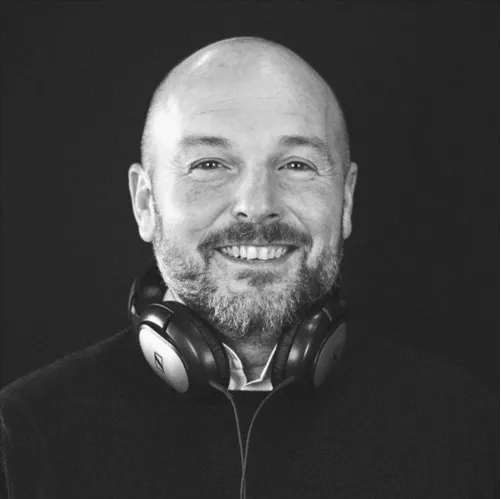
Ep. 234 Alessandro Gallo (Castello di Albola) on Chianti Classico and Chardonnay
Ep. 234 Alessandro Gallo (Castello di Albola) on Chianti Classico and Chardonnay
Episode Summary
Content Analysis Key Themes and Main Ideas 1. The unique terroir and winemaking philosophy of Castello di Albola in Radda in Chianti Classico. 2. The significant influence of high altitude, specific soil types (Galestro), and diurnal temperature variations on the style of wines produced. 3. Alessandro Gallo's comprehensive role as General Manager, Winemaker, and Vineyard Chief, and his emphasis on viticulture. 4. The distinct characteristics and production methods of different Chianti Classico tiers (regular, Riserva, and single-vineyard Gran Selezione) and a Cabernet Sauvignon-based Super Tuscan. 5. The winery's commitment to vineyard management, including a move towards organic practices, and the focus on producing elegant, long-lived, and food-friendly wines. Summary In this episode of the Italian Wine Podcast, host Monte Ward interviews Alessandro Gallo, General Manager and Winemaker at Castello di Albola in Radda in Chianti Classico. Alessandro shares his background, from Piemonte to Tuscany, and discusses the unique characteristics of Castello di Albola's vineyards, situated at high altitudes (up to 700 meters) with poor, stony, and well-draining Galestro soils. He emphasizes how these extreme conditions, coupled with significant day-night temperature differences, contribute to wines with remarkable acidity, elegance, and longevity. The conversation highlights the winery's philosophy of prioritizing vineyard work, including a transition to organic practices, over cellar intervention. Alessandro details the production of their various Chianti Classico wines, emphasizing the blending ""puzzle"" of different parcels for complexity in their core Chianti Classico, and the selection processes for Riserva and single-vineyard Gran Selezione (Il Solatio, Santa Caterina). He also touches upon their Cabernet Sauvignon Super Tuscan, Achiola, and the aging potential of their high-altitude Chardonnay, Poggio Alfated. The discussion consistently underscores the importance of terroir and viticulture as the foundation for their wines. Takeaways - Castello di Albola is located in Radda in Chianti, a high-altitude area within Chianti Classico. - The unique terroir, characterized by high elevation (up to 700m), stony Galestro soils, and significant diurnal temperature shifts, results in elegant, acidic, and long-lived wines. - Alessandro Gallo, GM/Winemaker, strongly believes in the importance of vineyard management and is leading the winery towards organic certification. - Chianti Classico DOCG is distinct from Chianti DOCG, and Castello di Albola produces a range of Chianti Classico wines, including single-vineyard Gran Seleziones. - The winery also produces a high-altitude Chardonnay (""Poggio Alfated"") with notable aging potential and a Cabernet Sauvignon-based Super Tuscan (""Achiola""). - The philosophy at Castello di Albola prioritizes the vineyard (""Viticulture"") as the primary driver of wine quality, with winemaking focusing on expressing the terroir. - Chianti wines, especially those from this region, are considered highly food-friendly. Notable Quotes - ""Castello di Albola is in Radda in Chianti as a very, very small village, but on a three today is also important village for production of Chianti Classico."
About This Episode
Speaker 2 and Speaker 4 discuss the challenges faced by the wine industry in Radha village, Mexico. They discuss the physical and chemical characteristics of wine, including the lack of blockbuster quality and the need for natural and nutrient nutrients. They also talk about the open vineyard in Radha village and the use of organic crops to grow them. The goal of the state is to work with parcel, and the success of the reserve is due to the selection of the best shapes of Grapes from various vineyards. They discuss the importance of high quality wine in the industry and encourage Speaker 2 to keep going.
Transcript
Italian wine podcast. Chinching with Italian wine people. This podcast is brought to you by Native Grape Odyssey. Native Grape Odyssey is an educational project financed by the European Union to promote European wine in Canada, Japan, and Russia. Enjoy. It's from Europe. Hello. This is the Italian wine podcast with me, Monte Ward. My guest today is Alessandro Gal Alesandro is the general manager, winemaker, Vineyard chief. He's everything that there is to do with Castello di Albola, which is in Canti Clasico, and which is one of the wineries owned by the zone in family. Welcome, Alessandra. It's always great to see you. We we we talk a lot about, together about vineyards and winemaking. So now, we're gonna get this on audio. So it's pretty lovely have you in the studio today. So briefly, where are you from in Italy? How did you get into wine? I come from Piamonte. Yeah. Sorry for my English. Oh, your English is very good, don't you? No. I know. Absolutely. No. But I will try. Yeah. I come from Piamonte. I I arrived in, Tuscany fifteen years ago. I arrived in, Castello di albala fifteen years ago. So what did you study at university? I studied in, Alba, first of all, in, it's a high school in Alba fourteen, twenty years. And and, later I have a degree in, chemistry in Torino. I'm also family wine. She or family had a winery. Yeah. It's just not a winery. It's just a piece of veneers. But, you know, piedmont, wine, vineyard is like a green garden, you know. And so wine is, together at the house in the front of the house. So wine is a little bit, like, something that is in the blood. Sure. And after chemistry, I started to work in Pivante. And in two thousand and four, I moved in to Ghana. Alright. So you were, working, obviously, at that point. So let's just talk about the taewar, which, which village in Canti Glasgow is is Castaro di albula. Castel de albula is in Rada in Chianti as a very, very small village, but on a three today is also important village for production of Chianti Glasgow. Because, where is it? It's a middle between the Florence and Siena. So right in the middle of Canticlass. Yeah. Yes. It's right in the middle, and there's, forty kilometers to Siena, and fifty two Florence. So right in the middle. It's a highest, probably a highest village in, in Kianti area. And he's, very historical because, in the middle age, it was the leg of the County, the county league. Yeah. The county league. And at that point, Radah was the the capital of, this this part of Canty. So very, very historical for a production of really, I mean, it's the physical, Alejandro said, it's the physical heart of what is now the Kianti classical docG, and obviously Kianti classical docG is different from Kianti docG. That's another wine entirely. So, the physical center. So what are the challenges. I mean, albula, I saw the albula. Let's give us some idea of the terrain, the altitude, the soil types that we're getting about. So it's quite extreme, isn't it? Yeah. Absolutely. Yes. Absolutely. Yes. It's, for soil is one of the biggest, state in the in the Radha village, of course. And, it's, also the higher part of Kianti. So the land, the soil is very we can say say poor. It's a rich in, stone, reaching a cholesterol and reaching alberez. So that means that the soil is very draining and the help to to the roots goes down to find the mean general, the water to have a wine that is not, very concentrate, but our wine fine, very thin, very elegant, the nose, very floral. So when you when you say thin, what doesn't mean it's like meagre wine you eat, while Cassandra is saying is they're wine, they're not blockbusters. No. You can't make a blockbuster in, in Radna. No. No. You know, it's, if you think that Radda is, with the state of Castalo de albola is on between the four fifty to seven hundred meters. Seven hundred meters. Yeah. We we grow the chardonnay, seven hundred meter on the sea level. Well, we grow San Joseville, six hundred meter on the sea level. And that's that altitude, the the the style of wine. It's, amazing because, it's, acid. We have acidity. We have longevity, finance, acidity. That is the style of castel de albo. It is in rada, in general, right? In rada. So six hundred meters in Montalcino, which is further to the south and warmer and has a different kind of top topography. That's the upper limit Yeah. In Montalcino, which is warmer. So here, we're further north, a little bit further inland. It's more continental if you wanna put it that way, but there's there's altitude of six hundred meters. This is where you start getting, or you do get the high wire sangiovese, this sangiovese with with tautness, with nerveosities, you could call it, these sort of mouth watering wines that are not heavy. They have intensity, but they're not heavy. Exactly. Exactly. This is, this is right. Right? So what are what are you doing in the vineyard? You obviously know these conditions are how they are. You're not trying to force the vines? What is your approach in terms of cover cropping or pruning and things like that? We we work more and more in the vineyard. Of course, so the wine of a Rado Castello di albola wine are wine that grow in the vineyard. So more and more. We we are closed at the at the Viticulture. For example, we are in going to to to be organic, also in castero di albola. And not for to say organic, but because organic means to know better what's up pending the vineyard. And, for example, the soil today, it's the no of the soil. We do natural, nutrient with the grass that we planted. Cover crops? Yeah. Cover crops, for example, one on one, but we used to change the pruning to cordonas Purnato to Guyo. And, we have, we had a school in a Castillo de alvaro by c simonette and Sears. The famous, pruning, Yeah. School from Freeway. Yeah. Yeah. Exactly. We we we finished that, but we added that. And, of course, the management of the vineyard today is so so important because to have a great fruit today is essential to have a great wine. So many of your vineyards are it's a very forested area, right, where you are. Yeah. Many of your vineyards are quite ice later. So already your high is continental. It's cool. And you've got the cooling effect of the forest. What does this mean for for ripening, and the possibility to make white wines? What? One of the effect that I observe serve overall is the that castello di albola this altitude have is the the difference temperature between, day and night. You know, there's a very good, if you think that Nobel Family came in the in the August, because the in the night, it's, it's fresh. It's cooler. No? That's it's very okay for the maturity in August, September. That's two months. So that's very important for the maturity of the grapes. So you get cool nights and also means the grapes take a little bit longer to warm up in the morning. Exactly. Exactly. Exactly. That's for me, for example, in Rada at that altitude. It's very important. Of course, for the chardonnay, I grew chardonnay at seven hundred meter on the sea level. That is a mountain. So what's the name of that wine? The fairies of the of the, yeah, fairies. Yeah. Ferries. It's ill. It's just a fantastic white because and it's it's not true that, the area that grow red just grow only red. It's possible to grow also a great white, and I think Poggio alfate is a great one. So it's like like a little bit like, burgundy. So Poggio alifate. Mhmm. What is the vineyard shaped like? Is it is it a where is it? Is it surrounded by forest? Is it on it? It's, between the forest is in between in the forest. It's three actors of, of the chardonnay, of vineyard, and between, the forest is a flat, a flat hill. So it's a plateau. Yeah. Platter by forest. Yeah. And you sometimes call it a tongue of Lando lingua. It's a tongue of land. Okay. I'm I got into my wine shop. I heard the podcast. You know, I gotta try one of, the castellity albula wines, and I kinda quite like the sound of this guy, the sound that always seems a bit crazy, but, and I buy And I think, oh, now should I age it, or should I open it tonight? What are you gonna tell me? I think, poggio lefate, you can wait more than four, yeah, more than four. Absolutely. Of course, people want to, to drink, white wine. Easily, and, just, and quickly. Straight away, but, for me, not for that wine. I have, we have in the state, podular photo of, here, and, and absolutely, it's much better after three, four years. What's your favorite dish with it? It's a good wine. You can combine with everything. But I don't know, cheese, for example. Okay. So what, even after a meal or just if you're having a little snack, a glass of white wine, a little bit of cheese, the poggio Faticio. Yeah. Why not? Next, we're gonna get into the real business, the Kianti classic. Yes. Castello di alvola. Yeah. Fraciza. It's your signature wine. Right? Yes. It's a main, it's a main why we are in the middle of the pro of of Kianti area. So we produce Kianti Classic. And, we produce Kianti classic for ninety percent of the of of bottles of, of, Castello di albola. We have, different version different label of, of, casta, the Gulf of Candy classical, because also because in Candy classical, we this, there are different, different level, also for low, can the classical or regular? Can the classical reserva? Can the classical graciletsion. Alright. So we'll so the Castaro Dialbola Canti classical docG, as well as called. This is the the biggest production wine. Yes. And in your view, and what you say, this is the wine that's most representative of the estate, because it comes from all of the vineyards. Diventina. Yeah. It's very true. Enteclassico, regular canteclassico is a combination as a blend of so many different vineyards, so represent the style of the of the of the state. Is it difficult for you at harbors because you've got all these different plots of San Juervais and and, picking them at different times? Do you ferment them to according to the same recipe? Or do you have No. No. No. No. No. Absolutely. No. Today, the the goal of the state. I think the goal of the winemaker is in a state like Castel de albala is to work with a a lot of parcel. You say, parcel? Yeah. Parcel? Like a jigsaw, and then you can Because that's it's a position. It's like a painting. No? It's like a puzzle. And so you plot more pieces of the as all do you have a more possibility to combination. Yeah. The more complex image you can create. Absolutely. Yes. Let's talk about the reserve. Yeah. Parents is a different story because reservea arrived from, to choose the best essential is grapes from different vineyard, not a lot. Four six sevens vineyard that we go. We know that vineyard. Of course, for the experience, etcetera. And from this, that vineyard we choose the best sangiovese. We work alone. Okay. And after in January, February, we blend together and we grow together. So, basically, the reserve is a selection of the best shapes of that year Yeah. From various in the yard. Yeah. And they fermented them the the worktop part in the winery, and then in the spring, they're blended. That is the preserver. So, okay. Yeah. This is a reserve for us. For me, reserve wrap, it's a very nice wine to taste the fine sangiovese of Castor de Alvaro. If you want to, if you ask me to taste the the style, the good style. I'm sorry. The style is Cantic acid, but the good style of Castel de albol, I'll give you a bottle of reserve. So you mean the you probably when you make say good, you probably mean representative. Yeah. Yeah. Yeah. Yeah. Yeah. A good representation. Okay. Yeah. What about gran selizione? So gran selizione, just so we're all clear on this. There's all a confusion Yeah. For us, it's About hang on, hang on, about what it is. So Grencioni means a chianti classico ricevah that is grown, harvested, and bottled by the winery whose name appears on the label. So it is State grown estate bottle. And that's really, really important. That is that that is what makes Getanza, let's say, any different from, say, a reserve, because you can make a reserve, you can buy grapes, water from somebody else. Getanza, let's say, you cannot do that. This is an estate grown wine. Okay. Very to very true, but more, I say that for Castello di albula, an answer that's on it, represent, for us, the single vineyard. So the the top level in the sense that at the single vineyard represent an expression of San Juvis for that area. And So it's a sing it comes from a single vineyard. In this vineyard, I think, isn't is it near the castle? Is, we have, today, we have more than one We have more than one castle. And That's impressive. There was only one that is. Last time I've invested for me here. You guys are quick builders. No. More than one grand city on him. And, the first one is call it, Ile solatio, very, very little, very little production because it's a one actor. And the second that arrived last year that we were were were very happy because, this one, the great success is a Santa Katarina. That is a very close at the castle. But the future, we have we we think at some other and why, because we think that that in a state, like a Stella is a quite big state in the medium, in the terms of, neighbor. It's a little bit bigger. The possibility to grow a single vineyard could be an interesting idea. Okay. So the center caterina granciletsioni, which is a single vineyard. Yeah. Am I writing saying this comes from around about five hundred meters? Yes. It's a five hundred meters or it'll be It's just Pretty cool. Yeah. Yeah. Is that salt? This is totally salt. So, otherwise, it wouldn't write here. Yeah. Yeah. It's a it's a totally salt. This is just under the the crystal. And what is it on his own clay or gravel or clay? It's difficult. It's a stone. It's a stone. It's tony. It's called Chisto. She yeah. Chisto. Yes. Okay. And what's nice about Galestra is is, it's like a compacted but friable sword. And so what are you gonna explain you on? It's it's cholesterol. It's, it's it's freeable. In the wintertime, you can, break. You know, if you break it in your hands. Yeah. Yeah. Yeah. Bring it in your hands. Yeah. And so it's, it's a soft oil that, it's not a lot. It's not clay that give you a power for the vineyard, but permitted to the roots, to cause, town, and to find, their, the nutrient, and the water, etcetera. Okay. Let's just have it said one more thing about, which is the Guanta Lizzioni. You love talking about this one. I know. So this is another hundred percent Sanjuvezi. Yeah. And this is from a very small single vineyard of roundabout. What does solatio means it means that the sun, exposed at the sun. Some face. Yeah. Some faces. So, Latio, was it the first, you know, that's the first thing law, first first law. Fine. It was first experiment, the first exercise, in terms of a single vineyard in Castorodialbala, and we started in two thousand and six. And, because a single vineyard is not to be the best, or I don't know, have to be different. And How's Tabisone personality? Yeah. Yep. Yeah. Exactly. And so that you owe us that? Is it a little bit spicy because it's such high altitude? It's spicy. Yep. Yeah. And it's more fruity. Who's Santa Catina? It's a little bit more powerful in in terms of San Giovanni of Castel de albo related at that. Okay. And what about the achayola? What's that? Achayola? Achayola? Is another style of wine. A chayolo, it's, no, it's a classical Supertoscano. It's, Supertoscan. Supertoscan. I think I prefer Supertoscano. It's much better. You should copyright that. Great. I will. I will. It's, it could be like an aftershave. Super Toscano. It's much better, you know, than Super Toscano. It's a long story in Casto di albula. Nineteen eighty eight another four hours of tape, so you could tell the story if you want. Don't worry. Take it. It's Cabernet Suvignon. It's not San Luis. So it's another style for that because it's another variety. So, Cabernet Suvignon on it. It's more, it's more, it's more, strong wine. It's, it's a wine that, I have the shoulder, you know, her shoulder. How old is the vineyard? Can cabin very, very old. It's the oldest vine today in custodia was more than forty years old. So it's even older than you? No. I'm forty six. Amazing. You won't be about that four thousand three. No. The time. That's That's the property. No. I I was born in, nineteen ninety six. Okay. Yeah. And me seven. Yeah. Yeah. So what about the, how old is this cover day serving your vineyard? Very young, or is it an, an ancient relic? No. It was, think that, this vineyard was grafted. Okay. The cowbird, near sovignon, was graft. Graft it onto him. It was Sandjui, is it? Okay. And there were older vines. Okay. So and for this one, you do use a little bit of oak barrel. Yeah? Yeah. In the aging, we didn't speak about, aging because, we, for Sanjui's and for Candy Glassco. Capiclassco, Candy classical is era. We we use normally big cask. For the single vineyard, we do, half an alf in between, because and tonal. So French Yes. Five hundred liters. Yeah. Exactly. French oak. And for, Super Toscano, so, we do normally we use normally break. Okay. So, in a nutshell, Castela de Albolar is a biggest state, but what I'll Sandro and his team there have done is to break this, very, very complex turmoil, and I'm a look anti glass. They're almost a very extreme place to break it down into its constituent parts and to manage and work work, and grow, and ferment, and age, and bottle, these wines each according to its own needs. And, for a big estate owned by a big company, this sort of level of detail is what gives you those marginal gains, each one of these marginal games as a as a as a wine seller. It's a very competitive market. And what has been nice about listening to Alessandra? I know Alessandra. Well, in that, we speak often. The vast majority of what he said today concerns the vineyard, the Viticulture, the sites, the soils. We've spent very little of our time talking about winemaking. And that for me is a great indication of somebody, and also for a company that is on the right track. And I I know you can say that about many, many, many estates globally, of course. But I I do think this is, I do like the way that you guys are working. Obviously, there are always improvements to to It's always a pleasure to see you. You always got a smile on your face. I mean, I think you're doing a really great job. Get out. It's not just in Tuscany but in, Maraimo and the sister and all the rest of her. So keep it up, but don't stop. Keep going forward. Yeah, I'll come back to Oliver on it there. Absolutely. Quickly. Yeah. There there you will find a very good bistek. A bisteker. This whole conversation about wine had nothing to do with podcasts. It's about dinner. That's what it's about. In general, wine is very close at the dinner and lunch and food in general. And, you know, you know, Kiandi, it's, why there's a food friendly vary with with friends. And you said that was a big spaniard. Alright, Cassandra. Thanks, sir. Thank you very much. This part cast has been brought to you by Native Grape Odyssey, discovering the true essence of high quality wine from Europe. Find out more on Native Grapeodyssey dot e u. Enjoy. It's from Europe. Follow Italian wine podcast on Facebook and Instagram.
Episode Details
Related Episodes

Ep. 2822 Ep. 20: California | Study Smart for your WSET Level 3
Episode 2822

Ep. 2789 ColleMassari: a long-term vision rooted in Montecucco with Giuseppe Di Gioia | On The Road With Stevie Kim
Episode 2789

Ep. 2788 Ep. 14: Austria and Hungary | Study Smart for your WSET Level 3
Episode 2788

Ep. 2785 From Volunteer to Speaker at TEXSOM with Samantha Cole Johnson | TEXSOM 2026
Episode 2785
Ep. 2766 Inside the U.S. Non-Alcoholic Wine Market: What Wineries Need to Know with Jill Sites | Masterclass US Wine Market
Episode 2766
Ep. 2761 Winemaking and Consulting Across Sicily with Alessandro Serughetti | Wine, Food & Travel with Marc Millon
Episode 2761