
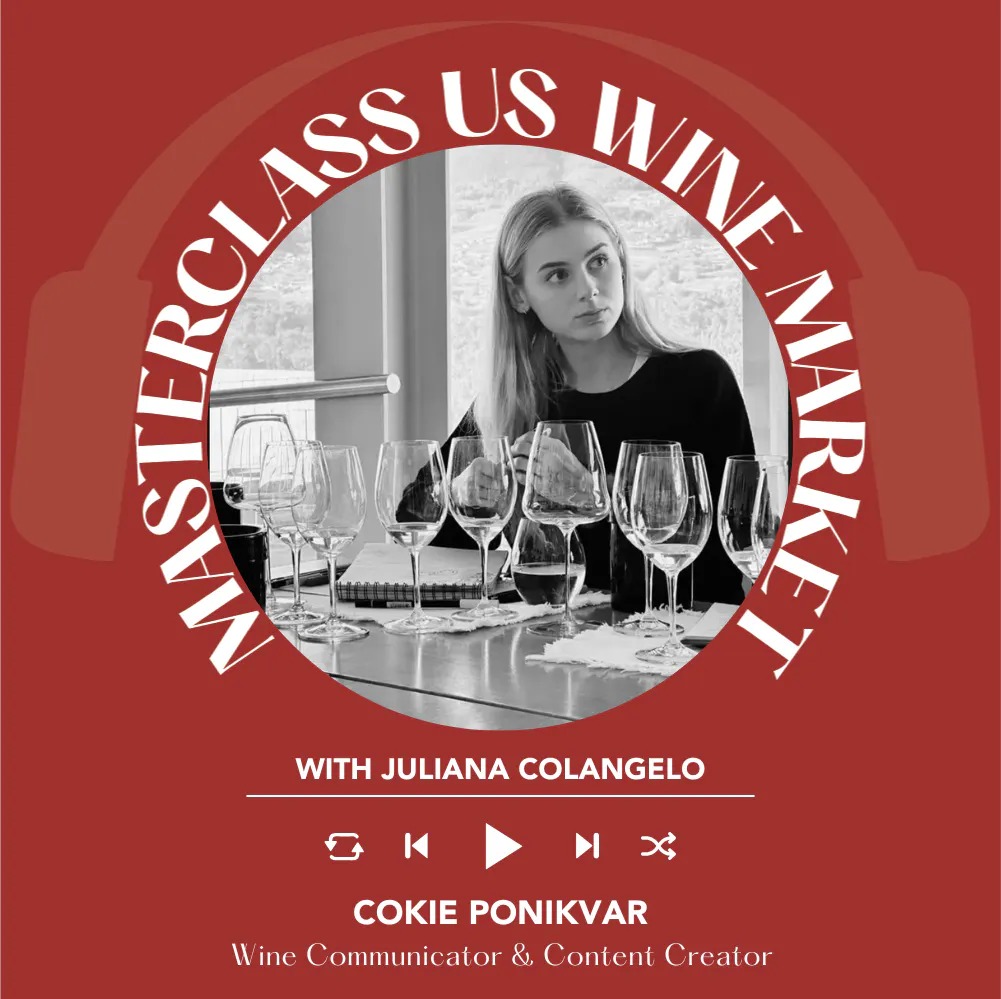
Ep 2350 Juliana Colangelo interviews Cokie Ponikvar | Masterclass US Wine Market
Ep 2350 Juliana Colangelo interviews Cokie Ponikvar | Masterclass US Wine Market
Episode Summary
Content Analysis Key Themes and Main Ideas 1. Understanding and appealing to the Gen Z wine consumer in the US market. 2. Cokie Pawlikvara's unique perspective as a Gen Z wine professional and educator. 3. The critical role of authenticity and human connection in digital marketing for wineries. 4. Challenges faced by young people in the wine industry, particularly regarding perceived unwelcoming environments. 5. The inherent appeal of Italian wine through its connection to culture, food, and specific wine styles. Summary This episode of the Italian Wine Podcast features host Juliana Colangelo interviewing Cokie Pawlikvara, a Gen Z wine expert currently studying for both MS and MW exams. The discussion focuses on how Italian wineries can effectively market to and engage with Gen Z consumers in the US. Cokie shares her journey into wine, inspired by the ""SOMM"" movie, and highlights Gen Z's characteristics: ""excitable,"" open-minded, valuing experiences, and willing to spend on things they care about. A significant part of the conversation addresses the often unwelcoming atmosphere young people encounter in the wine industry, which can be a major deterrent. Cokie emphasizes that Italian wines have a natural advantage due to Italy's universally beloved culture and food, and Gen Z's preference for lighter, lower-alcohol styles. For marketing, she advocates for wineries to humanize their brand through authentic online content, showing behind-the-scenes processes, and celebrating their teams rather than just aesthetic bottle shots. She stresses the importance of creating value for the audience with every post. The episode also briefly touches on the non-alcoholic wine market, noting its growth but also current quality challenges. Takeaways - Gen Z is an ""excitable"" and open-minded generation willing to invest in experiences. - The wine industry often alienates Gen Z through unwelcoming attitudes and a lack of respect for younger consumers. - Italian wines can leverage their strong cultural association with food and travel to attract Gen Z. - Authenticity and human connection are key to effective digital marketing for wineries engaging Gen Z. - Wineries should showcase their teams, vineyards, and production processes to create engaging online content. - Over-marketing and overt sales pitches can be a turn-off for Gen Z; value creation is paramount. - Lighter, lower-alcohol wine styles, often found in Italy, align with Gen Z preferences. Notable Quotes - ""Gen Z people are not this other animal that is completely foreign to the world... they're just people that are growing up."
About This Episode
The Masterclass US wine market host introduces a quiz to test listeners on their favorite wine tasting, and Cokie Pawnekutive shares her experience studying for both the MS and MW exams and how she found learning about wine through watching a movie. Gen Z consumers want to learn about wine and are excited about the trend of younger people drinking less. They suggest focusing on the excitability of this generation and being open-minded to experiences. They also discuss the appeal of Italian wines and the excitement of Italian wine, which is a beautiful and low-pressure wine with great taste and potential for marketing. They stress the importance of treating customers with respect and being open with their wines, and provide advice on how to be authentic in wine marketing.
Transcript
Cokey is currently studying for both the MS and MW exams, and she shares her studies with the world for her online education platform, Kokey's world of wine. What we're really excited to talk about number one, like, how is gen z consuming wine? Number two, what is gen z's perception of Italian wines in particular. And then finally, like, bringing it back to the practical sense, how can our listeners who might be a marketer at Italian winery or like myself marketing Italian wines in the US better kill to gen z drinkers. Hello. Welcome to Masterclass US wine market with me, your host, Juliana Colangelo. This show has been designed to demystify the US market for Italian wineries through interviews with experts in sales and distribution, social media, communications, and so much more. We'll will quiz each of our esteemed guests in every episode to solidify the lessons that we've learned from the episode. So sharpen your pencils, get out your notebooks and join us this week to learn more about the US market. Hello. Welcome to Master Class US wine market. Today, I am thrilled to welcome Cokie Pawnekvara to Italian Whitepop tests. Cokie is currently studying for both the MS and MW exams, and she shares her studies with the world through her online education platform, Cokie's world of wine. Welcome to the show, Cokie. It's really fun to have you here. Yeah. Thanks for having me super excited. Yeah. Absolutely. So for our, listeners, cooking and I met about six months ago preparing for the unified wine and grapes symposium, which took place in January, and we worked together on a panel around gen z wine consumption. So really excited to bring that topic here to the Italian wine podcast as it remains to be so relevant. But before we dive into the topic, cookie, tell us a little bit more about your journey into the world of wine and how you're decided to ultimately be studying for both the MS and NW all at once. Yeah. So I think I really got excited by the wealth of information there is to learn about one from a young age that it was super cool to be able to blind taste and I kind of just had my eyes set from w set one. I remember walking into the class and, like, sent to the instructor who was an MW, like, I wanna be an MW, and I was just nineteen. And I never never let it down. So also alongside doing the assembly exams husband super great. I think they both compliment each other really well. So, yeah, I'm having fun studying for both of them. And that's awesome. I love that early passion. How did you even walk into a w set and tell us a little bit about what led you even to, like, getting into that classroom for the first time? Yeah. So I didn't really know where to start at the beginning and that was, something that had been suggested to me was to do the w set program. So as soon as I was illegal, which is nineteen in Canada, I took the course and they'll be set one, and then I think COVID happened so that kind of messed it up for a little bit. But, yeah, I ended up in the class just because I had heard that is a great place to start. And I thought it was pretty good at the beginning. I think it's a great way to start. So, yeah, start simple. Yeah. Absolutely. And, you know, today's topic is about how as a wine industry and Italian wineries in particular can engage the gen z consumer. So I'm curious what inspired you to even want to to start studying wine? Like, how did you find yourself even looking for the WSM program? Yeah. Well, I learned about it through watching the song movie, to be honest. I usually don't really say that, but I kind of I'm gonna stop ignoring that So, yeah, that's what happened. I was seventeen. I saw the movie, and I thought, woah, that's cool. I think there's a line from Brian the clinic in the movie, and he says, people either hear about what we do, and they think, woah, like, that's so cool, or they respond with, wow, that's so cool. I wanna do that. And I just like spoke to my soul. Yeah. I was just about to graduate my school and I had no idea what I was gonna do. So this kind of fell into my lap and I have this really intense work ethic and and competitive side. And so it it just kind of spoke to both of those things. And I think it's so relevant to the world. People wanna learn more about wine, and it's difficult. Like, it's kind of like walking through clay, like, a a pool of clay. Just so difficult learning about wine. So any way that I could find myself to be helpful to the world. I kind of I was like, okay. This is a good possible opportunity for me as a career slash to keep me excited. Yeah. You can never stop learning. So I love that. Yeah. I think that's so true. You can never stop learning and for our listeners who aren't familiar with your platform, just for everyone to know. I mean, cookie, you you do such an incredible job of breaking down wine for the average consumer, but also bringing this really youthful, exciting lens to it. So I think it's great what you're doing. Excited to dive in a little more in the episode about what you have on their horizon. But for today's episode, we're gonna talk about a topic that comes up in lots of headlines in the last few years. How do we approach gen z? How do we get them to drink more wine? Kokie is a gen z yourself and someone who has really embraced this passion for wine and and not just wine but education. There's no one better I could think of to really talk about this topic from the consumer lens and from the gen z lens, I should say. So what we're really excited talk about I'll say our three key takeaways for today or our number one, like, how is gen z consuming wine? Number two, what is gen z's perception of Italian wines in particular? And then finally, like, bringing it back to the practical sense How can our listeners who might be a marketer at Italian winery or like myself marketing Italian wines in the US better appeal to gen z drinkers. So let's just start with talking a little bit about the gen z wine consumer. How do you think the gen z wine consumer really differs from previous generation of wine drinkers. Yeah. It's a good question. This is such a hot topic. I think that there are so many angles that you can approach this question. I think that first of all, gen z people are not this other animal that is completely foreign to the world. Right? Like, they're just people that are growing up and people who are older were younger at once as well. So I think that not treating them like aliens is a great way to start. Like, gen z is just, like, they're just people and they're adults, some of them. They're very excitable. I think that's a main feature I find in them is that I guess in us is that we look for people who are excited about things and pretty much anything that's exciting to someone is contagious. The excitement is contagious. So I think harnessing that really helps to speak to the gen z. There's always been talk about younger people drinking less. Yeah. I think I talked about this on our panel, but speaking with Janis Robinson, I I was talking to her about this, and she said people were always concerned about younger people drinking less, but the consumption now is actually going down. So that's a new thing, which may be a little bit more concerning. But, yeah, like younger people sure they don't drink, they don't drink as much as maybe they used to. To me, I think as a winery, as a producer, as as a region, you can really set yourself apart, and I don't think the trend means human gloom. I think focusing on the excitability of this generation is a way that you can outperform the stats, and I don't think like, focusing on the trend is necessarily, like, the best way to approach it. So I think thinking about gen z as this really open minded generation that is excitable, loves traveling, loves experiences. Yeah. They younger people tend to not have as much money, but I also think that they're willing to spend money on things that take care of it. Right. Open minded, excitable, want to have new experiences open to spending money. And I I think we can also think about too. Gen Zies at a a point in life that maybe not many of them yet have families to support and mortgages pay off. So they might have some more expendable income when it comes to spending money on Y and N experiences. You know, I love what you said there about, you know, gen z is excitable. Like, that's exciting. Right? We should embrace that enthusiasm as an industry as well instead of you know, focusing on the negative. I mean, there's the reality of declining consumption across all generations and the industry at large, and that's a a world we're living in, that we do have to face, but it doesn't mean an excuse not to try new approaches and embrace embrace this new generation and and really talk to them in their language. So I appreciate you kind of using that term excitable. I I really like that. On that note, what is exciting to you right now, Koki, about Italian wine, you know, I'm sure you're you're studying it from that tech technical lens, but what's exciting you most right now about the Italian wine category? I think Italian wine has a really cool sort of angle because Italy is this completely loved country around the world. Right? Like, it's known for good food, beautiful destinations, early warm culture. And I think that I think with that, it's kind of a universally accepted thing. So for me, what's exciting, I think that Italian wine is this such a beautiful thing with food. I think something that could be expanded upon in marketing. And in terms of exciting itself, if you're talking about what excites what's exciting me recently about San Juan, I really like lighter styles of Italian wines. I think that's also something that a younger people tend to prefer. Is this like lighter, lower alcohol, less extraction styles, and especially in Tuscany, like, some of them are so beautiful, which showing particular tour really excites me. I know it's an inexpensive wine, but I really like it. I also, someone recently served Soldera blind to me, which is for those who don't know, a really expensive wine, like, I don't know what, a thousand or two thousand dollars a bottle probably declassified brunello, dimontal chino that has all this craziness attached to it. So, anyways, it's a really light style, and it was so exciting, one of the best wines it has. Almost like I don't know. I don't wanna say it's like Pino, but it's like a pretty pretty wine. Yeah. So I think the delicate Italian wines are super exciting to me right now, but and also to the to the generation, I think. Yeah. I think what makes Italian wine have that appeal to a lighter palette is the acid in it. Right? There's so much acid in Italian wines that which makes them also really food friendly as you mentioned, but I think also makes them have that lighter feel So I like that approach. Yeah. I think like you said, you know, Italy has this culture that is so beloved universally, right, that Italian wineries, I think can embrace more and and really look at, expanding upon in their marketing, not to mention like you mentioned before, the the food and wine angle and and those experiences too. You're obviously in the wine industry cooking yourself and studying and and hanging out with a lot of wine industry people, but I know you have lots of friends too that are not in the wine industry. What do you think is most intimidating to them about wine? It's a good question. So I think it's something that a lot of wine professionals don't get to experience, and I am lucky enough to still lucky in some ways, I guess, to still experience this, is a missed treatment of young people. And so sometimes when I'm going around to whatever things, I completely mistreat it by lying people. I know that it's not the wine that's doing this and it's just someone who had a bad day or doesn't think that young people are are important or something who's doing that. So it definitely gets to me sometimes, but it's exhausting being a young person experiencing wine because Right. It's like you're trying to swim upstream human. It takes a special song in a restaurant to make it an enjoyable experience for a younger person. I wouldn't say the average is a positive thing. To be honest, like, harshly, I've had some horrific experiences at wineries at tastings at restaurants that I know, or you just kinda know is because you're younger, maybe because of female too. I don't know. It's hard to say, but definitely younger is a big doctor. So I think that's very intimidating. I've spoken about this before, but I had a birthday recently. I went to a restaurant, super famous restaurant for wine. I had driven two hours just to go to this restaurant for wine. I studied the wine list. I knew what wine did I wanted, and I one of the wines wasn't good. It was actually low protein which worked. And I knew what this one should taste like. It didn't taste like that. And I was completely the songs just were like, no, no, no, no, no, and and I was in tears on my birthday, and they wouldn't take it back until eventually they did. It was just terrible. And I could feel it's because I was younger that I wasn't worth their respect. And so that's just an example. Like, yeah, it's exhausting. So I think when you're an older person and you're enjoying wine, you just are given a little bit more respect. I think as a younger person, it's exhausting to have to put up with that. It really turns you off versus if you're at a cocktail bar, that's not gonna happen. You're not gonna be treated that way. So I think at wineries at trade tastings, those are all opportunities to be really welcoming to younger people And one by one is a great way to get people younger people into wine because you can really leave a huge impression and turn that younger person into a brave fan of your wine so easily by just making them feel validated, telling them why you're excited about it, and then they'll never forget that. And maybe they'll become really powerful customers, or maybe they won't, but they'll tell all their friends, they'll post it, whatever. But you can't think about those trade offs. You have to do it because you care and because you actually want to get them excited. I think that's what's intimidating the most about wine for younger people because the wine itself in the glass is like this delicious liquid that smells great and tastes great most of the time and it's not scary. It doesn't bite. It's a culture, it's a people around it that have the chance to make this really exciting or completely terrible that makes you never want to drink wine again. And so that's the difference. It's such a small behavioral difference that is it has nothing to do with what you're doing in the vineyard, how much you're spending on frost fans or anything. It's just like how you decide to act that day. Yeah. And how you treat the consumer. I mean, I think Yeah. It's a pretty simple thing, Koki, that you're you're alluding to here is that the industry is not welcoming to younger people. So how can we blame them? For not drinking more wine. If they feel shy or they don't feel they're taken seriously when they walk into a tasting room or they try to order a bottle of wine from the wine list. So at a very human basic level, it's it's respect in treating people with kindness and openness and not making assumptions based on age and appearance. I mean, it's kinda like the scene in pretty woman, or she walks into the boutique and, you know, it isn't taken seriously. Right? Like, it's never judge a book by its cover just to go back to a a very basic trope, but I think that it's a reminder to our listeners that if you want to engage the next generation of drinkers and see younger people drinking wine, start by treating them well and welcoming them into your spaces, into your experiences. And being open with them as well about your products and about your wines. So, yeah, I think that's a great response and a a really good reminder for all of our listeners here. What else, you know, cookie as we think about the gen z consumer and what could interest them in wine. What are some other ways do you think that a winery, whether it's an Italian winery or any winery in the world could really better engage with the consumer? Let's talk first from an online presence because obviously now digital marketing is critical. To success for most wineries. Let's talk about it from an online perspective. How could a winery better engage with this consumer? Yeah. I think online presence is I get it. Not something that most people want to do because they're focused on their job, whether it's line making or exports or Viticulture. And so in order to have those people do their jobs well, like they can't have distractions and social media is kind of this thing that's knocking on your back and being like, hey, like, you should really be doing me, but I know you don't want to. So I I think that's the situation from what I understand from what a lot of people have and it's annoying. I really sympathize. I think that I really don't see almost any wineries living this vision that I have for social media for them and this is, it's showing people what's going on. What's going on? And what are you doing? Because you're already doing all of this ridiculous stuff behind the scenes to make your wine. So why not show people what's going on. That's ridiculous. And just let them take them along for the ride. Yeah. You know, you can imagine if the winery is featured on its show or a movie and it it's on Netflix, then it's really famous. And also gen z, I would say, They really like to celebrities people. And I think that as a winery, you have such a cool opportunity to celebrities your team and also your line. And I think seeing social media as this thing where it should be, like, it should look aesthetic and it should just be pictures your bottles with nice backgrounds, like, this is not gonna work anymore. Everyone's doing that. It's not effective. It looks nice, sure, and you're doing it. Okay. But do if you really wanna take it to the next level and you actually want effectiveness, like, you gotta put your knees into it and you have to yearly get involved. You have to show people what's going on and get them excited, show them why you're excited. Like, maybe you're a winemaker, and it it's really not that complicated. Like, it's not that you need to do all this editing. You could just post a story. Just hold the button down and you just talk and you're like, maybe driving to work, or you're walking into the vineyard to, like, shoot, like, last night. It was really cold. I'm really worried that the grapes might be frozen, or I'm really worried that we have frost damage. So let's go find out Or, hey, like, I'm really excited to go today. It's I just love what I do. It's kinda have to top up here. I was like, or, I don't know, literally anything. You could just explain what you're doing, and I think that's a really, cool way to engage with people. And then the important thing is to do it in English because if you want to engage an international audience, I see a lot of producers doing this what I'm talking about, but, like, in a foreign language or their language, which isn't it depends on your market. If you want to be domestic, right, But if you want to reach more people, you're just kind of limiting yourself by not doing it in English. So I think that's another helpful thing. Yeah. Just really making sure that you're interacting with your products, I think is is really effective. And also innately your Instagram page or social media, whatever, is going to be marketing machine, you don't need to do marketing actively on there. I think by just showing people what's going on and telling them about the region, about your buying, like, actually making the page something where people are gonna be better after, like adding value with everything you post. Why should someone follow you? Like they have to hit follow. There's this thing called a ratio and if you have a bad ratio, it's not cool. Like if you follow more people and you have followers, so every follow is worth something. So earn your spot and make them better off than if they didn't follow you. So, like, teach them things, like, you know, it's a really cool opportunity, I think, to teach people things. It's that simple. Like, is the person better off after watching this than when they started? That's what I asked myself. Every time. Yeah. And if you do that often, I guarantee you you'll go to a huge one. Yeah. I think that's so critical. What you just said is bring value is the viewer better off than when they started after watching what you just posted. Did you give them something of value? Did you share an experience. Did you make them laugh? That's a value. Did you teach them something to about lost in the vineyards? Right? That's a value too. And I think those are all really valuable insights that you just shared and I'm really as well. I think the biggest thing is don't overthink it. Like you said, don't always make it so formal. Bring some life and personality to your brand. Show yourself on the camera. Speak in English if possible. If not, maybe subtitles. Right? You can you can voice over text too if that's if there is someone who doesn't English that you wanna highlight on your page, but bring that human element to it, not just the bottle. Obviously, people need to know, you know, what your bottle looks like. You can include information of where to buy it, how to find it, but I think more than anything like you said using social media as a platform. To humanize your brand is such an opportunity for wineries. Absolutely. I think also, like, over marketing is a turnoff for gen z. So if you're overtly saying, like, buy this, buy that. Like, Yeah. They know what your winery name is because they're smart and they can see it in your username and maybe have a link to where to buy it. But even that, like, if they wanna find it, they'll find it. So I don't think they need to hear so much about that, but they actually wanna hear things that are exciting to you because that excitement shows through. Totally. Absolutely. I do wanna ask you cookie about non alcoholic wines because it's a big magnet that's growing a lot in the US at least under more Italian wineries making non alcoholic wines. I went to a non alcoholic wine tasting at Van Italy a few weeks ago. I have two bottles sitting here on my desk for research. One that is Italian actually this kind of cool label. What are your thoughts on non alcoholic wine? Well, what did you think of your tasting? We tasted mostly all Italian wines. There was one French wine called French bloom that I felt like accomplished really creating the mouth feel of wine better than most non alcoholic wines I've tried. It really actually had this, like, yeasty quality to it that I'm curious just to understand how they achieved. But I would say out of the six wines, only two I would drink. The rest had that. What I have come to find for non alcoholic wines, this thinness to the palate and this like almost stevia like quality of like a fake sugar in them. So I'm not likely the target consumer for non alcoholic wines, but at the same time when when I run training for a marathon, I try to cut back on consumption I really appreciate if I'm out to dinner and I can order something non alcoholic that's so delicious. I do think there's a big opportunity. But, yeah, what did I think of the tasting? Yeah. Two out of six were palatable, fun of that way. Yeah. So I think that's kind of what I expected to hear something along those lines. I think that, you know, it's a very tough game if you're making non alcoholic wine. I can't imagine how difficult it is to be strong in that market because Yeah. I mean, already whines about marketing. How can you set your bottle apart? We know a lot of people pick wines based on inside jokes or labels that look nice or something. Right? So in the non alcoholic space, it'll be around the same I personally re downloaded the diploma, w said diploma book. And when I took it a few years ago, no non alcoholic one was in there, it now is a topic in the book. So, that's interesting. What are my thoughts on it? Personally, honestly, I have not had one that I really enjoyed yet. I think it's a tough game. Like, there's kombucha, there's juice, there's teas. There are all these things that are really delicious, non alcoholic cocktails that are make it really difficult to compete with. I think that, yes, young people would drink less. I mean, that's what the numbers are saying. I haven't had people I haven't heard a lot of people saying, like, oh my gosh. I love this one. No. Polycom. Not really. Right. Kind of a boring answer, but let's keep trying. I'm excited to see what comes next. Yep. Exactly. Exactly. My palettes open. My palettes open. I like that. Cokies has been so much fun. I feel like we could talk forever, but as we wind down, we'll do our rapid fire quiz. We do at the end of every episode and you're used to studying. So this will be a breeze for you. Try to answer these questions in just a couple sentences. That would be great. So number one, what is your number one tip for mastering wine marketing? I think my number one tip is, yeah, to be authentic. I mean, it's so cliche, be authentic. Be enthusiastic. Tell people why you're excited. Just show them why you're excited. I think that is a great way to master wine marketing. It's just like genuinely show them why you're excited. I think that this whole, like, perfectly tailored, beautiful, sharp edges, aesthetic thing is kind of in the past. We don't need that anymore. Like, you could be casual. It could be roughly edited. That's fine. Just show them why you're excited and get it out there. I think that's a really important thing. Like, leverage this excitability factor. Leverage excitability. I think that's a an incredible tip, and I love thinking about it in that way. Number two, what is something I mean, you're already still quite young, but what is something you might have told your nineteenth when you first walked into that first w set class about the wine industry? About the wine industry. I mean, if I was getting myself advice, I would have said, like, hurry up and go through the courses faster. They're reviewing exams. And I was like, I don't know if I'm ready for it and I kinda pushed off. Like, it's just more fun when you go fast. But, about the wine industry, I kind of wish that I discovered the idea of moving to Europe sooner. I think that it's a really great place. So I am just kind of in the process of moving to Europe. I think it's such a great place. It's just a different beast of Hawaiian industry. So, yeah, I think to experience European wine culture is really special. Yeah. I love that. Move to Europe. Great advice, especially right now. And finally, we we all travel a lot in this industry. You know, you mentioned you're moving to Europe right now. What's your favorite travel hack? Travel hack. Oh, I have a few. You can share a few. Go for it. Okay. So I'll go really rapid here. First one I recently discovered, if you ever get a priority tag for your bag, keep it and attach it to your bag in the future and your bag will come out first. Great one. Another one. Always see if you can get a row to yourself for those long flights just to go to them right before and be like, hey, you know, is there any opportunity to upgrade, and then they say no, and then they feel bad because they just let you down, and then you're like, is there any chance of a row? And if you have a row, that's just amazing. Yeah. So many more tips. Don't go to Japan because the toilet seats are heated. And when you get home and you go to the bathroom, it will be so cold that it's almost makes the trip not worth it. No. I'm kidding. I recently happened to me in the middle of the night. I sat down. I was like, bah. All the toilet seats in Japan are heated, and it was so cold. Sorry. That's a lot of information, but if you made it this long in the podcast, that's your treat. On that note, Koki, thank you so much for joining me. This was so much fun. Yeah. Thank you. Listen, I always follow along with you. So I guess on Instagram, yeah, you can find me at Cokie's World of Line, and, yeah, try to keep things adding value and excitable. Awesome. Thanks again, Cokie. Thank you for joining me today. Stay tuned each week for new episodes of Master Class US wine market with me, Julian Colangelo. And remember, if you've enjoyed today's show, hit the like and follow buttons wherever you get your podcast.