
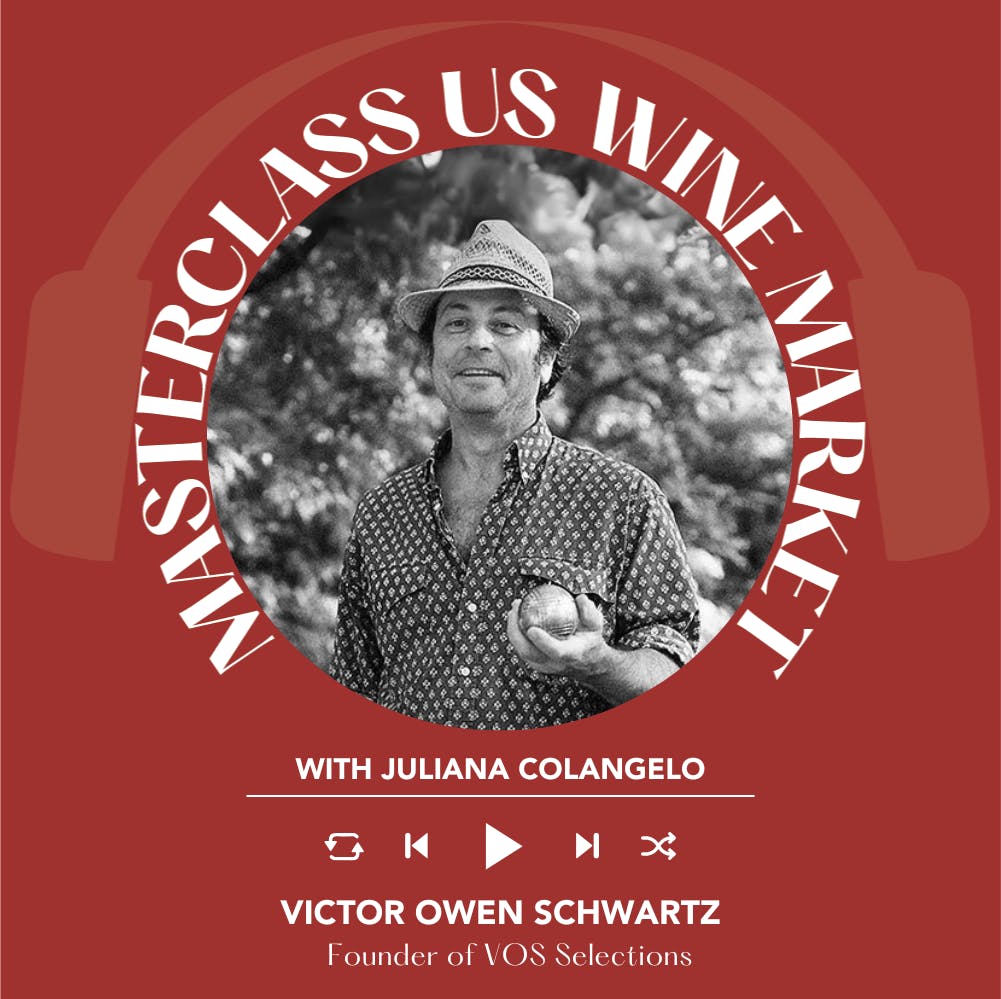
Ep. 2374 Juliana Colangelo interviews Victor Owen Schwartz of VOS Selections | Masterclass US Wine Market
Ep. 2374 Juliana Colangelo interviews Victor Owen Schwartz of VOS Selections | Masterclass US Wine Market
Episode Summary
Content Analysis Key Themes and Main Ideas 1. The legal challenge against Trump administration tariffs on European imported products, particularly wine. 2. The severe financial and operational impact of tariffs on small U.S. wine importers and the broader industry. 3. Victor Schwartz's personal journey and motivation as the lead plaintiff in the VOS Selections vs. Trump lawsuit. 4. The call for industry-wide organization and public pressure on Congress to combat tariffs. 5. The non-partisan nature of the tariff issue and its ""existential"" threat to small businesses. Summary In this episode, host Juliana Colangelo interviews Victor Schwartz, founder of VOS Selections, a wine importer, about his role as the lead plaintiff in a landmark lawsuit against the Trump administration's tariffs on European imported goods, especially wine. Victor recounts how he became involved in the case, initially intending only to provide background information, but ultimately feeling a ""moral imperative"" to become the lead plaintiff. He thoroughly explains the devastating impact of even a 10% tariff on small businesses like his, highlighting critical cash flow issues, reduced ability to support diverse products, and the inability of small family farms (suppliers) to absorb such costs. Victor discusses the lawsuit's legal basis, challenging the administration's use of the International Emergency Economic Powers Act (IEEPA) to impose tariffs without Congressional approval, and acknowledges that the recent favorable decision is merely ""step one"" in an ongoing legal battle. He emphasizes the overwhelming positive response from the industry and the public, particularly from Italy, and stresses the urgent need for the wine industry and all small businesses to organize and apply pressure on Congress to prevent future tariff implementations, regardless of the method. Takeaways * VOS Selections, led by Victor Schwartz, became the lead plaintiff in a lawsuit challenging Trump administration tariffs on imported European wine. * The lawsuit argued against the use of the International Emergency Economic Powers Act (IEEPA) for tariff imposition without Congressional oversight. * Even a 10% tariff is highly detrimental to small wine importers due to narrow profit margins and the requirement to pay tariffs upfront. * Victor Schwartz took on the lead plaintiff role out of a sense of moral obligation to protect the wine industry and small businesses. * The initial court ruling in favor of VOS Selections is an important first step, but the legal and political fight against tariffs is ongoing. * The issue of tariffs transcends political affiliation and requires a united front from the industry and small businesses to influence Congress. Notable Quotes * ""I was just looking to, you know, find really interesting delicious wines [and] bring them back here... That was not what I was trying to do [sue the president]."
About This Episode
VOS selections, Inc. and the founder of VOS, Victor Schwartz, discuss the case and how it began, emphasizing the impact of proposed tariffs on the wine industry and the importance of contracting and cash flow for small business owners. The case is a surprise to the founder and was incensed by the administration and illegal power grab. The legal process for a decision on a lawsuit is also discussed, with the need for the administration to respond before a decision is made. The importance of organizing and collaborating to prevent tariffs is emphasized, and industry and small businesses are encouraged to win the case and prevent further tariffs.
Transcript
Victor is the founder of VOS selections, a wine spirits and socket importer based in New York City. He has been in the news quite a bit recently for the Casey helped establish against the most recent round of Trump tariffs against European imported products and most notably wine in this case. Today, we're gonna just talk about a few key points and the highlights of what's been going on over the last several months and especially last week. And number one, we'll talk about how the lawsuit came about. Number two, what does this case mean for the future of tariffs? And finally, you know, number three, you know, how can Italian wineries, the wine industry importers continue to remain vigilant while we're dealing with the uncertainty of the tariff? Hello. Welcome to Master Class US wine market with me, your host, Juliana Colangelo. This show has been designed to demystify the US market for Italian wineries through interviews with experts in sales and distribution, social media, communications, and so much more. We'll go quiz each of our esteemed guests in every episode so to solidify the lessons that we've learned from the episode. So sharpen your pencils, get out your notebooks, and join us this week to learn more about the US market. Hello. Welcome to Mastercost US wide market. Today, I'm thrilled to welcome Victor Schwartz to the Italian wine podcast. Victor is the founder of VOS selections, a wine spirits and socket importer based in New York City. He has been in the news quite a bit recently for the Casey helped establish against the most recent round of Trump tariffs against European imported products and most notably wine in this case. So Victor, first off, I know you're quite busy. Thank you so much for taking the time to speak with me. I really appreciate you being on the show today. My pleasure. It's great to speak with you. So you founded VOS in nineteen eighty seven. Did you ever think you see your company's name on a Supreme Court case? No. What did your company thirty eight years ago? A resounding no. I don't think I'd be unique in saying that when I founded my little wine company, that was in the game plan, seeing my name in a lawsuit against the president of the United States. That was not what I was trying to do. I was just looking to, you know, find really interesting delicious wines Right. Bring them back here, find a community that was interested in the same things that I was interested in, and sell them. And that was the play. Right. And that's what they're doing for thirty nine years until this year. Yes. Exactly. And it's quite fascinating and interesting the directions that Wine can take you in in including this one. Yeah. Certainly unexpected. Yes. Absolutely. So Victor today, we're gonna just talk about a few key points and Sure. And the highlights of what's been going on over the last several months and especially last week. And number one, we'll talk about how the lawsuit came about. Number two, what does this case mean for the future of tariffs? And finally, you know, number three, you know, how can Italian wineries, the wine industry importers continue to remain vigilant while we're dealing with the uncertainty of the tariffs. So for starters, can you give us a little bit of a a background on the case VOS selections, Inc, versus Trump and how it began? Well, how it began, the Liberty Justice Center is a nonprofit organization that's really behind the case. I was introduced to Professor Elya Soman by my nephew. Elya Soman was my nephew's former law professor at George Mason University, which I always like to point out is the Antonin Scalia School of Law. So I'm gonna understand where where they're coming from, but that's okay. I found out that Professor Somen was beginning a lawsuit against the tariffs. This was back in early March. And, you know, being in the wine industry, we've all been hyper aware we started mating with the US WTA, United States Wine Trade Association back last August out of concern about what could be coming down the pike. And, unfortunately, it did come. And when I heard about this lawsuit. I said, god, I'd love to talk to this guy. Just tell him what's going on in the wine business, get some interest in our plate. Right. So it was it was a Sunday. I emailed Professor Soman, and I was shocked. He got right back to me. Clearly, he's like, my story. And we had a wonderful conversation, and he said, oh, you gotta really talk to the lead counsel on this case, Jeffrey Schwab, which I did, like, couple of days later, and told him the same story. You know, god, we're on the front line. You know, we're the we're the canaries in the coal mine here. We're importers. Right there. We're gonna be most impacted by these proposed tariffs. And that was all nice, and that's really where I kinda left it. I just thought I was gonna, you know, be, you know, educate them on what was going on in the wine business. So giving you thought you'd be more background and research. Yeah. I didn't have any intents of, like, suing the government or anything like this. But the next day, he said, hey, would you be interested in joining our case? We have a, you know, a group of small businesses, all from different fields. There were no other wine businesses, but they're all importers, and they were all be severely impacted. They were all small businesses like mine. And I said, yeah, sure. I'll throw my hat in the ring. Yeah. I'll put my name on that, and that was cool. But then a few days later, they came back to me and asked if I would be the lead plaintiff. And that's when I started thinking, wow, what is this sounds serious? Yes. Anyway, I've had a lot of trepidation. I've looked at my family Again. Thanks to their lawyers. I even know, I know an AG at New York State in New York State, Latisha James' office. You know, they understood the ramifications of being a lead plaintiff more than I did. But, you know, at the end of the day, I just felt like here we are all complaining about our inability to do anything about all the different things that were going on and certainly specifically about the tariffs. And I just thought, well, if not me, who? Right. This thing just landed on my plate. Like, there it is. You can do something, Victor. You know, you've been to this business for, you know, close to forty years. I don't know what's gonna happen, but how could I possibly not take this opportunity? And it was good for, like, the wine business and small businesses across America. And there it is. Boom. You know what I mean? The door is wide open. You know, it just would have been like I just felt this moral imperative. You know, I gotta do this. I have to do this. I don't know what's gonna happen. You know, let the chips fall where they may. I need to do it. And it was kinda like that. That's pretty serendipitous, but also very brave for you to take that risk in terms of putting your name on the case. And I'd like to believe others would do the same. Yes. I would like to believe the same. Victor, can you tell us a little bit more? You know, we know that the lawsuit argues that the international emergency economic Power's Act doesn't authorize the imposition of tariffs in this context. But could you tell us a little bit more about why VOS became the lead plaintiff or why they felt that your company had the greatest argument in order to be the late lead plaintiff in this case? Well Look, I cannot speak for the lawyers, and I've actually never asked them this question. Why did they pick me? I think it would probably be a number of factors. Certainly, one is that our company and our industry is so clearly impacted negatively by these tariffs. They must have liked my story. They must have liked the way I was speaking about the story. I guess. I I I don't know. You know, I'm not this is not my bailiwick. Right. So I don't know how you choose a lead plaintiff. I did learn later, which was kind of funny. Later mean, like, last week, I was reading the Wall Street Journal article, which I highly recommend because they go into more detail about it. Okay. They were looking for a lead plaintiff. These guys are out there. They're constitutional. This is a libertarian public interest law firm. Right? This is what they do. And they saw what was going on. They were really incensed by the power grab of this administration and illegal power grab. In their eyes, and they said this is a really important case. So they wanted to find Elite plaintiff, and I discovered from reading the the journal article that a lot of people did not wanna step up. They're kind of like the guy was feeling like this is, you know, okay. I'm not I'm not for this, but god, I don't wanna put my neck on the line. Yeah. Because you can understand. I mean, you can see what how this administration operates. Right. There's a risk involved. Absolutely. I just I just barreled ahead. So I I don't know. I, you know, I hope nothing happens. Well, here we are, you know, or Tuesday, June third, and the news came out last week. So we're almost a week out. So what is the response been like? I know you've been doing tons of interviews, but what is the response been, like, from the rest of the wine industry, but, you know, just in general. Oh, much much much much more than I ever would have thought. All of our contacts, all of our emails, you know, our website, it's blown up in a way that's unbelievably clearly this case has hit a very, very raw nerve. In America, in the wine industry, for small businesses, in foreigners, people are contacting me from around the world patting me on the back. You know, putting, you know, elevating me, like, the it's kind of it's kind of embarrassing. You know, the and there was an article in the Cortiada de la Sarah. Italians love me. They say, you're a rock star. They're saying David versus Goliath. I mean, it's it's crazy. Wow. Okay. So many Italian interviews, I had two interviews with Rai last Friday. One was not a Zoom, and one, they came to my office. They have a little production company here in the city, and they were in there and filled me. But, I mean, it's it's kinda crazy. That's amazing. And and heartwarming too is like, this is such an important topic because it it just touches on anybody and everybody. If whether you're in business or you see what's gonna happen to your little family farm. And, I mean, those are the kind of people I work with. I'm working with small farmers from home. Right. But it it has such such a raw nerve. It's That's amazing. It can really a statue of you somewhere in Italy being constructed as you speak. I'm afraid to go there. I might get mobbed, you know. Oh my gosh. Maybe I should just I should just give everybody a VOS selections hat, you know. You go around. It's like, oh my god. You not start. You know, it it's it's wild. You know, it's really wild. And it'll be more I don't know why, but more than any other country has really Wow. That's interesting. So you've gotten more responses. I don't know why. Maybe there's a thing they feel like some some connection. I don't know. Very interesting. That that is. Yeah. You know, passionate people in Italy Yeah. And you say that we're here on the Italian wine podcast. So that's great to hear. So how about, you know, in terms of operations, what is the implication of this case for a wine importer like yourself as we move forward? I mean, it's it's very, very impactful. You know, people who don't really understand our business or businesses in general think. Oh, ten percent, you know, ten cents on a dollar. How impactful can that be? But, you know, if you're in the wine business, you know that at the end of the day, if you make five percent net profit at the end of the year, that's kinda where you are. Maybe maybe a little bit more, but you're that's where you are. Ten percent tariff, that puts you under water. Right? You can't eat that. Despite what the administration thinks you can do, you're gonna eat that, or your suppliers are gonna eat that. Our suppliers are like us. They're they're small family farms. How could they possibly absorb that? And then, of course, it's the importance of cash flow. You know, anybody that knows who's running a business, the cash flow is the real key thing in terms of the success of running a business, the fuel of your business, and a tariff is a cash flow killer. Because as I like to point out, we pay that tariff right up front. Right. At the port, this is before we have sold a single bottle. So even if we raise the price, let's say we raise the price ten percent, you're not gonna see that for months until you sell that container's worth of wine. Right? Where's that money gonna come from, especially in a small company? Larger companies, they have access to cash. They have got more money floating around. They can do different things, etcetera, etcetera. Small company doesn't have that kind of flexibility. So what are we going to do to come up with ten percent when we bring a container in, which you have to pay right then in there at the port before we can get our goods. Exactly. That's a that's a big challenge, isn't it? Absolutely. And, you know, it's pretty simple when it comes to business in that way. You have to sell more, you have to spend less, right, and it comes down to where can you spend less? We're gonna sell more. We as we were just talking before the show, we're in a contracting market. Right. My business is not a great business these days. So contraction is definitely the key word. Contractraction is the way we are gonna be able to do. We're gonna contract our inventory. We're gonna contract. Our orders will be smaller. Our support of our wineries will be reduced. Right? We all know that wineries make a number of different couvees sometimes quite a few. Right? Mhmm. We can represent all those coupes, not if they're not turning over. So we're gonna focus more on products that are turning over. And if it's not turning over quite as fast, which might be some of the more interesting products that we carry, we're gonna have to put them to the side for a moment. Also, it's through effect bringing on new products. We know our business is a very risky business. Right? We have to invest a chunk of money into a new product, a new venture, a new domain, and think, hey, I think this is gonna do really well in the market. It's great. This is great stuff. But you bring it in and you try to talk to people about it and sell it to them. Well, that's a risky thing. Right? You don't you don't have it guaranteed. We can't afford to take those chances. Why? Because our money's tied up by having to pay the vig to the government. I mean, it is a little bit like that. Yeah. It's a strong boss, strong man coming in, dare I say, you know, the mob coming in and saying, hey, I want ten percent off the top. It's nasty. Yeah. No. It's it's a layer of business and it's complex in terms of how everything gets to market, and it's also resource intensive. So as you said, every dollar really counts and even that ten percent can be extremely detrimental. So going forward now, legal team that you worked with giving you any indication of kinda what comes next in terms of the lawsuit, is it there be a part two or is it finished for now? Like Whoa. No. No. It's no. No. Look, as elated as we were last Wednesday when we got the decision. We all knew that this was only step one in the legal process. Of course, we expected a response from the administration. You know, they have legal mo methods to to go forward. They're going to appeal, etcetera, etcetera. So what has happened is they went in front of, I guess, it's the district court in Washington DC, which is the second highest court in the land, second only to the Supreme Court, and they gotta stay a hold on the decision. Okay. And I believe that ends June ninth is the date that I was told. So the administration has until then to come up with their response. Understood. Okay. Then that court will have the ability after that to make a decision. I believe that the, the administration has also gone to the Supreme Court asking for them to pick up the case right away. I I I'm not a lawyer, so I'm not gonna speak as an expert on this part of it. Lot of people do think it's gonna go to Scotis. Okay. I'm not so sure. I have my own theories about this, but, you know, that's the way I'm thinking, but we don't know. There's certainly it certainly needs to go through the legal machinations of the courts. Those are the next steps, and that's what we will be doing, and that's what my legal team will be pursuing. Okay. Got it. So we're gonna come next week, and I imagine you're gonna be very busy between then and now continuing along. On this journey and this path. Is there anything, you know, you're putting your name and your business out there in quite a massive way with this lawsuit? But is there anything you might give as advice to other of us in the industry right now? Are there importers? Yes. Yes. Because I know this is not the end. If you listen to things that the administration is saying, I was interviewed by, the BBC last week. They played a clip of Peter Navarro You know who he is. Right? Speaking. And basically, he's very extreme. You know, tariffs are his thing. He's been talking about tariffs for that, I don't know, last forty years. He thinks this is the greatest thing. And it's it's a bizarre philosophy that I don't think any other economist agrees with. They are dead set on implementing tariffs. Yes. We are going to win. I'm very confident that we are going to win regarding the particular case we are in, which challenges the authority of this administration to use IIPA. Right. The International Emergency Economic Powers Act to impose tariffs because he they don't talk about tariffs in IIPA, nor did he go through Congress, which IEPA requires. So this is a specific case, and we are going to win this case because our our case is so strong. However, it is not the only way the administration can impose tariffs. It was just the easiest backdoor way that they try to slip them through, you know, in with an executive order. Right? You just say it on the executive boom, and it's done. I mean, it's the kind of autocratic approach this administration has taken a great number of issues. They have other ways. They're gonna have to go through Congress. There will it'll be more cumbersome. There will be some limitation, but it's, like, six months of tariffs. There will be some nastiness coming. So this is no time to sit back and to say, great. We won. Let's move on. There's no tariffs. There are still tariffs now. And believe me, there will be tariffs. I mean, the administration controls Congress. And as we've seen, Congress, it just lays down to whatever the administration wants to be done. I am very concerned there will be tariffs in another method. And I am, and and people I'm talking to, and I already started talking to some smarter people than myself when it comes to social media and stuff, just starting to organize wide industry and all small businesses, we need to organize. I think we've started on something, you know, for whatever reason, I've got a platform. I am gonna use that platform to keep this in the forefront and to get us to put this word out there. Because here's the thing that's really in there's a couple of things that are very interesting. This is a completely nonpartisan thing. So whoever you voted for, last year is just not the issue. The issue is that these tariffs are very bad for businesses, especially small businesses. And the fact is it crosses all aisles. And that that's I think it's one of the reasons that the administration did not want to go through Congress because the Congress, unlike the administration, they have to answer to their constituents. So my feeling is we need to win in the court of public opinion. And I think we've already started on that by last week's decision, and that's why I think there was such an incredible, overwhelming outcry I see the result just in, you know, my little world. We need to pick up on that and win this case in front of Congress. And we Right. Undo that. If we put pressure on Congress, I think we can win this case, but we have to do that. And that's what the wine industry needs to do. And that's that's what I'll be working on in the next few weeks just after we see, you know, how the courts decide and and how the administration decides. However, the alternative has made the administration says, well, this is This is not a place to go down. This is not a fight we wanna fight, and they'll find some way to save face and to back out of the tariffs. That would be wonderful. Right. I don't know. I'm not counting on that. I don't know what you think. Yeah. Well, not what I see. What type of crystal ball in this case, but like you said, there's determination. This was Yeah. Number one. So it seems like Victor, you're very motivated to organize and get the entire, you know, industry and other partners now engaged behind this movement to come together to continue the fight essentially. It's an important one. It's an existential fight for our industry, again, for small businesses. Right. For all small businesses. All small business across America. And in fact, really overseas too. But Absolutely. It's really very impactful and very negative, and if I may add complete it was completely unnecessary. Yeah. Well, thank you for putting yourself out there and taking on this fight. We know how much of a commitment this is and also just the risk that you're incurring as a company and as a person. So thank you again, Victor, for being on the show today. And and during this incredibly busy time, we really, really appreciate your time, and and thank you again. You're very welcome. And I I'm really happy to do it. Thanks for covering a such an important subject. Absolutely. Okay. Thank you. Thank you for joining me today. Stay tuned each week for new episodes of Master Class US wine market with me, Juliana Colangelo. And remember, if you've enjoyed today's show, hit the like and follow button ever you get your podcast.
Episode Details
Related Episodes

Ep. 2789 ColleMassari: a long-term vision rooted in Montecucco with Giuseppe Di Gioia | On The Road With Stevie Kim
Episode 2789

Ep. 2788 Ep. 14: Austria and Hungary | Study Smart for your WSET Level 3
Episode 2788

Ep. 2785 From Volunteer to Speaker at TEXSOM with Samantha Cole Johnson | TEXSOM 2026
Episode 2785
Ep. 2766 Inside the U.S. Non-Alcoholic Wine Market: What Wineries Need to Know with Jill Sites | Masterclass US Wine Market
Episode 2766
Ep. 2761 Winemaking and Consulting Across Sicily with Alessandro Serughetti | Wine, Food & Travel with Marc Millon
Episode 2761

Ep. 2759 Part 2 – The VIA Educational Program & Italian Wine | Heart-to-Heart Conversation with Sarah Looper
Episode 2759