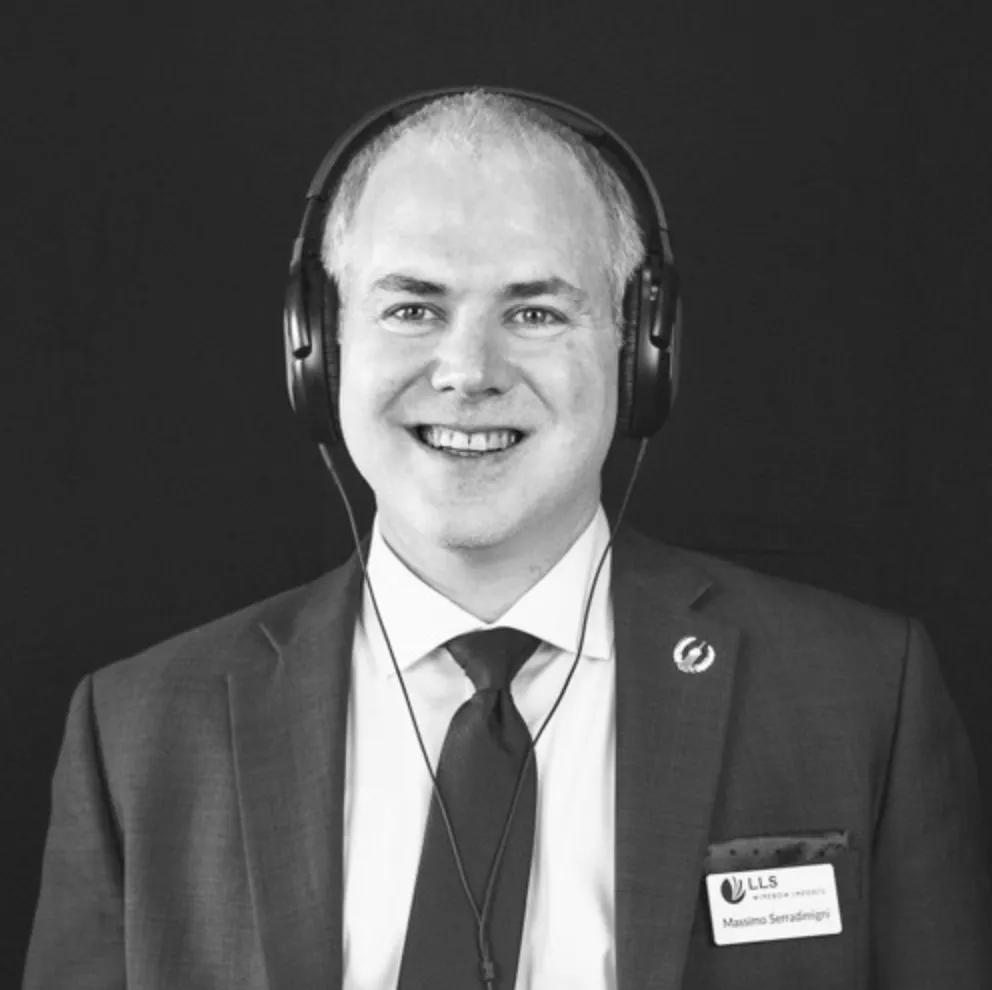
Ep. 241 Massimo Serradimigni (Winebow Imports) on the U.S. wine market
Ep. 241 Massimo Serradimigni (Winebow Imports) on the U.S. wine market
Episode Summary
Content Analysis Key Themes and Main Ideas 1. The history and mission of Winebow as a major importer of Italian wines in the US. 2. Current trends in Italian wine consumption within the US market, including shifts in consumer preferences. 3. The growing consumer interest in diverse Italian wine regions, native grape varieties, and organic/biodynamic farming practices. 4. The importance of wine education in making complex Italian wine offerings accessible and appealing to consumers. 5. The challenges and opportunities associated with different wine categories, particularly the polarizing nature of ""natural"" wines. Summary This episode of the Italian Wine Podcast features host Monty Waldin interviewing Massimo Cera Dimigini, a Portfolio Specialist for Winebow, a prominent US importer of Italian wines. Massimo, whose family roots are in Modena, shares the foundational vision of Winebow, which was established to bring the vast diversity of Italian wines to the underrepresented American market. He discusses significant emerging trends in US wine consumption, noting a demand for lighter, cleaner white wines, and an increasing appreciation for organic and biodynamic production methods. Massimo highlights the burgeoning curiosity among consumers for lesser-known Italian regions and indigenous grape varieties, a shift he attributes partly to the accessibility of information online. He underscores the critical role of effective wine education in simplifying these diverse offerings for the public. Massimo also details his work at Winebow, including unique promotional events and educational initiatives, and touches upon the market's enthusiasm for volcanic wines versus the divisive reception of natural wines due to consistency concerns. Concluding, he expresses a personal desire to explore the wine regions of Southern Italy, including Sardinia, Sicily, and Campania, contrasting them with his extensive experience with Tuscany, and shares his dream of making ""super whites"" in Friuli. Takeaways * Winebow was founded with the aim of broadening the perception and availability of Italian wines in the US beyond traditional offerings. * Current US trends favor lighter, cleaner white wines and wines produced with respect for the environment (organic/biodynamic). * There is a growing consumer curiosity for exploring unfamiliar Italian wine regions (e.g., Montecucco) and native grape varietals. * Clear and simplified wine education is essential for empowering consumers to explore new and diverse Italian wines. * Natural wines face market challenges due to perceived inconsistencies, unlike organic and biodynamic wines which are well-received. * Portfolio specialists like Massimo use varied events and educational programs to promote wines. * Southern Italy and its islands represent significant unexplored potential for wine tourism and production for those familiar with more common regions. Notable Quotes * ""His [Leonardo Ocasio's] vision was that Italian wine was underrepresented in the United States."
About This Episode
The speakers discuss the impact of Italian wine on people's taste and the shift towards lighter, cleaner whites. They emphasize the importance of wine education and the need for steer conversations. They also discuss their approach to learning and their love for the Italian wine market. They express excitement for the Italian wine market and their favorite places in Tuscany, including a wine garden and a mountain vineyard. They offer free tickets to Italy and a wine garden and mountain vineyard.
Transcript
Italian wine podcast. Chinching with Italian wine people. This podcast is brought to you by Native Grape Odyssey. Native Grape Odyssey is an educational project financed by the European Union to promote European wine in Canada, Japan, and Russia. And joy. It's from Europe. Hello. This is the Italian wine podcast with me, Montewood. My guest today is Massimo Cera Dimigini. Dimini. Oh, man. How about on Sabanek. That was done. That's just okay. Hello. This is the Italian podcast. My guest today is. Masimo. Where are you based and what do you do? I live in Chicago, and I'm a portfolio specialist for weinbo. First of all, your name, do you have any Italian blood? And if so, where is it from? A little bit. Both of my parents are from Moldina. They immigrated to Chicago in nineteen sixty nine. I was born there in seventy two. Just to remind us, I was modern which region. More than as an emilia romagna. Okay. And is that a little Lambroosco territory? Exactly. Lambrusco, prosciutto, Permigiano. So how did you how did you land around trucks? Yeah. You're right. I mean, you're quite you're slim. You're, I mean, you're well built, but you are still you're in shape, though. Yeah. Thanks. It's not easy with mama's cooking. Yeah. Okay. So you're working for wine bow. What is wine bow? And how did you get to work for them? What were you doing before? What was your per course? Or as I said, entertaining? What was your journey? Sure. So I'll start with what is wine bow? Wine bow was started by Leonardo Ocasio in nineteen eighty. Out of his garage in New Jersey. He was one of the first Garagista importers in the United States, and his vision was that Italian wine was underrepresented in the United States. Things were like Belicella and so and Lambrusco were around certainly Chianti, but he felt like Italy had such a rainbow of wine's colors flavors to offer that he thought that, you know, he should start importing other regions, other grapes, other styles. So he thought wine, he thought rainbow, he put them together, and that became wine bow. Wine bow has since grown into more import divisions. The Italian part of our portfolio is called Leon Arcano selections as an homage to to Leonardo, of course. So what's happening in the US in terms of trends regarding Italian wine? What are people drinking? And what are people what are what are what are people changing? What are the future trends? Sure. I mean, certainly, we all know what's happened in with Persec. Ago in recent years, that's been an absolute explosion. But as far as trends that we're seeing today, I think certainly a shift to lighter, cleaner whites getting away from rounder, Oakier ones. In fact, we're coming out with a promotion called Not Your Parents WhiteWines. We're trying to highlight some of these. That's a good one. Absolutely. In general, certainly people are interested in respecting the environment, so natural farming, organic. It's not really about the certification, but more so how people are working in the vineyards. Sure. Okay. When you go to it, how often do you go to Italy per year? A couple of times, I would say. Okay. So when you go, how do you you need to fly in and just say, I'll I'll take a punt or not. So you actually get everything sorted out beforehand. And what are you looking for at the moment? What's hot? I don't get any trade secrets of future trends, but I mean, where do you think what is strong at the moment? What is get stronger. I think some emerging regions, whereas, you know, certain varietals or areas of Italy used to be accursed to have on your wine list or sitting on on the shelves of your wine shop. Was that because they were difficult to explain what they're exactly. Sure. And maybe it wasn't just the customer not understanding them, but whoever was selling them, having a hard time understanding them and conveying, you know, what they were about. Today, I think that's totally shifted where people are really interested in what haven't I had, you know, what what do I wanna try? That's new. So now it's a blessing. Emerging regions like Montecucco, in Tuscany is really exciting. Just have the Montaccino? Exactly. And, on top of that, just, certainly varietals that people haven't tried, and we all know how rich Italy is in those. So native varietals native what the wines made with native, attending wine grapes, Zach. Is that the sort of, is that sort of part curiosity on behalf of consumers or even all wine our owners, and part because, the professionals like you and then the, the, again, same. I think I certainly have a story to tell, don't they? Yeah. Absolutely. And it's a combination of the two. I think it's the the consumer certainly being more curious as driving that. How much work do you have to do? Obviously, we have distribution chains, but with not only the official quote, media, the the wine journalists and the big shots, but people posting stuff online, how how can you steer the conversation? I think that's actually a a a real benefit the the internet age, right, where I think the reason people used to not want to get into these obscure things is to not sound silly. And today, there's so much information at our fingertips that people are are really are are going out there and trying to seek out what they don't know. Okay. And why and how important is wine education do you think? Is that is that is that incredibly important? Just just to familiar, just to make people feel comfortable and not scared of of the new and the different, the diverse. Right. And I think the best educators really break it down into understandable things, you know, relating it to, to, wine regions or grapes that people do understand and saying, if you like this, then you'll like that. And just trying to not, you know, over complicate things. Okay. So what's what's a typical day for you? Why There is no typical day. And that's really what I love about my current job. I actually took a personality test, before I started with a a different job. We took this podcast. We weren't we weren't sure if we'd let you in the booth. So And it said the best. I hated repetition. I absolutely hate repetition. So this is just fantastic because we do different things every day as portfolio specialists. We really focus on different kinds of events. We do one called quattro money where we bring in chefs from Italy. So that's four hands. Yeah. Exactly. Chef from Italy who are associated with some of our producers. We do things like crew night where we have fifty restaurants across the country, pouring the same wine out of large formats on the same evening. Sounds good. Absolutely. And then we do a lot, of educational things. We have different focus periods, for all of our sales people across the country. We did one on a brusso recently. We did one on Kianti. We did a focus period on volcanic wines and together with our marketing department, a portfolio specialist helped to put these things together. It's interesting the ones you told me that the the volcanic wines I suppose to, I mean, John Charbo for the Exactly. We're in an absolutely fantastic book on on volcanic wines. I highly recommend that. It was a big reference for the program. And do do do people sort of pick up the taste of that volcanism in the in the wines? Not me that they pick it up, but there was that, of all the programs we've done recently really translated to the most enthusiasm in the market for sure. I guess I went to Aetna wines and, Volter de wines. Exactly. Vave as well with volcanic soil. So many years. Wave was the one that kind of freaked people out. They're like, wow. That's volcanic soil. And you've already tasted everything to volcanic and non volcanic as well. Absolutely. So what about, weirdy bitty ones like organic biodynamic natural? Is that still on message or it? There were people getting a bit bored of that whole thing now. I think organic and biodynamic certainly on message. Natural wine is a little bit polarizing. Finding with people in the market just because you want a little bit of consistency and then natural wine seems to get away from that sometimes. So is that a for you, obviously, and, you know, you don't want, people that you're dealing with on a professional level saying, you know, we bought this wine and, I don't want to say natural or not, but No. Right. It's it is kind of we found the actually, it's pretty almost unsellable because of the condition that is in. Is that is that a headache for the guy that or the woman or the company that bought it, or is it a a problem for you as the the portfolio guys? Right. Difficult, isn't it? We'd have to go down there. It's not mine. When I put you on the spot, I don't mean that. No. Not at all. I think it's just, you know, going back to the consistency again. So you're selling a natural wine to somebody, you know, and they come back and say, hey, this this other bottle we opened is nothing like what we tasted. Yeah. Okay. So what haven't we covered so far. Maybe what I was doing before Weibo, I spent three years with, Oscar Faretti's concept called Italy in Chicago, which was really a deep dive for me into the world of Italian wine. Certainly, I've been working in Italian wine. Did you say Italy or something else? Italy e a t a y. Exactly. Okay. That's a great name. It's a fantastic, concept. So go on and spit that one out again. Yeah. So Italy is now about thirty five stores throughout the world, and it's a huge Italian marketplace, with restaurants inside of it, retail components, and Oscar really believed that Italy was only at about ten percent of its capacity for exporting food and beverage. So he got together, you know, he used to be in the electronics bill business rather. And, he got together with smaller artisanal producers and and gave them a, route to the marketplace. Okay. What's your I'm giving you a free ticket to Italy. Yeah. And you can fly wherever you want. Fantastic. And you can go to three different regions Great. Whether you work with those regions or not. Absolutely. Where are you gonna go and why? So I haven't done much traveling in Southern Italy at all. Okay. And this is after ten trips in Italy total. So I haven't been to the islands. Sardania would be stuck number one. Sicily would be stop number two and certainly companion number three. Alright. All in the south then. Absolutely. Is that because you've already been to Tuscany four thousand times? Exactly. Right. Yeah. What was your favorite place in Tuscany? Well, like I mentioned earlier Tekuco. How you doing that? Really, really pristine production is growing year over year. The number of producers is increasing, and it really offers like this incredible microclimate that's perfect for organic Viticulture. Yeah. But this one basically is kind of on the edge of a volcano it says the bottom end of Monta Montalcino on the way to the coast. So on the one side, you got the the the sunny beaches, the typical Tuscant tourist beaches, and on the other side, you got Montyami Art, which is the biggest peak in central Italy, which has a huge influence on the climate. And, you got some fantastic, so mountain vineyards there as well. Right. Right. I think my my view, I'm a I'm a little bit, of a gristle when it comes to Montecucco. I think, I'd like to see a few more winder, a little bit smoother textures. Sure. But the wines have improved recently. So another one, I'm gonna give you a vineyard. Where would you go? Oh, boy. You get a free vineyard and you can make whatever wine you want. It'll be taste great. Where are you gonna have whether I have that? And you're not allowed to say Bruno, though. No. God. No. Not at all. Actually, I'm gonna go completely in the opposite direction. I'm one of the things that first me so excited about Italian wine, whereas the white wines are free. Brilliant. Okay. So these, you know, these big whites, just really lush big alcohol and and crafted incredibly well. But they're turning they're turning those down though, aren't they a little bit. Little bit. Those very, but very salty. Would you be making, like, quotes, normal white wine or skin contact whites? I think I'd be making super whites, yeah, blend of the, you know, Bianco and Grijo and whatever. Okey or not? I don't think so. No. Okay. And what is favorite gesture when you come to Italy? Oh, god. Tortellini, but certainly So that's not the modern influence. It is the modern influence. And unfortunately, I still have to find any his good mamas. You can take the boy out of Italy, but you gotta take Italy out of the I wanna say thanks very much to my guest today. Massimo Cera Dimigini. Can I get it? Right? Yeah. Abastanza. Abastanza. Just about, from Weinbo imports. Great to talk to you. You're very bouncy Eric. I'm sure you're very successful in your job. We love your personality. Pleasure was absolutely wonderful. And, you got that link to Italy, and, we hope to see you back in Italy as soon as possible. You bet. Yeah. Nice one. Excellent. Has been brought to you by Native grape Odyssey, discovering the true essence of high quality wine from Europe. Find out more on native grape Odyssey dot e u. Enjoy. It's from Europe. Follow Italian wine podcast on Facebook and Instagram.
Episode Details
Related Episodes

Ep. 2822 Ep. 20: California | Study Smart for your WSET Level 3
Episode 2822

Ep. 2789 ColleMassari: a long-term vision rooted in Montecucco with Giuseppe Di Gioia | On The Road With Stevie Kim
Episode 2789

Ep. 2788 Ep. 14: Austria and Hungary | Study Smart for your WSET Level 3
Episode 2788

Ep. 2785 From Volunteer to Speaker at TEXSOM with Samantha Cole Johnson | TEXSOM 2026
Episode 2785
Ep. 2766 Inside the U.S. Non-Alcoholic Wine Market: What Wineries Need to Know with Jill Sites | Masterclass US Wine Market
Episode 2766
Ep. 2761 Winemaking and Consulting Across Sicily with Alessandro Serughetti | Wine, Food & Travel with Marc Millon
Episode 2761