
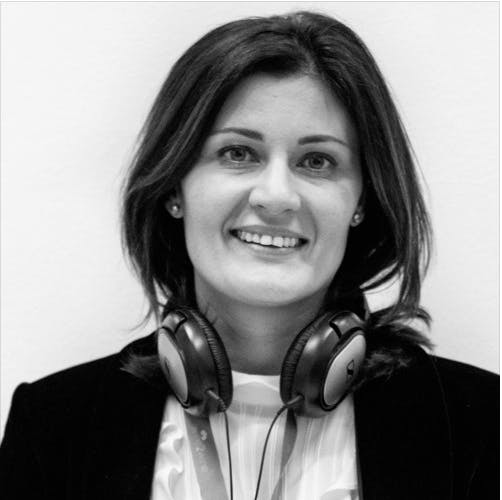
Ep. 257 Gaia Gaja (Gaja Estates) on the family estates in Barbaresco, Montalcino, Bolgheri, and Etna
Ep. 257 Gaia Gaja on the family estates in Barbaresco, Montalcino, Bolgheri, and Etna
Episode Summary
Content Analysis Key Themes and Main Ideas 1. The multi-generational history and evolution of the Gaja winery in Barbaresco, Piedmont. 2. The revolutionary contributions of Angelo Gaja (Jr.) in modernizing Italian winemaking. 3. The expansion of the Gaja family's winemaking ventures beyond Piedmont into Tuscany (Montalcino and Bolgheri) and Sicily. 4. The balance between tradition and innovation in family-run wine businesses. 5. The impact of climate change on modern winemaking practices and vineyard management. Summary In this episode of the Italian Wine Podcast, host Monty Waldin interviews Gaia Gaja, the fifth-generation family member of the esteemed Gaja estate in Barbaresco. Gaia traces the winery's history from its founding in 1859 by her great-great-grandfather, Giovanni, who started by making wine for his tavern. She highlights the pivotal role of her grandfather in elevating Barbaresco's reputation and especially her father, Angelo Gaja Jr., whose ""hurricane-like"" innovations revolutionized winemaking in the region. Angelo introduced concepts like single vineyards, modern viticultural techniques, and even planted international varieties, challenging traditional norms. Gaia also discusses the family's expansion into Tuscany with Pieve Santa Restituta in Montalcino (1994) and Ca'Marcanda in Bolgheri (1996), and a new project on Mount Etna in Sicily. She emphasizes the blend of continuity and subtle evolution within the family business and how they are adapting to challenges like climate change. Takeaways - The Gaja winery was founded in 1859 by Giovanni Gaja, beginning as a tavern wine operation. - Five generations of the Gaja family have been involved in the business. - Angelo Gaja (Jr.) was a pioneer in Italian winemaking, introducing single vineyards, modern viticulture (e.g., green harvest), and even international grape varieties like Cabernet Sauvignon to Piedmont. - The Gaja family has expanded its winemaking operations to Montalcino (Pieve Santa Restituta), Bolgheri (Ca'Marcanda), and recently to Mount Etna in Sicily. - Family businesses like Gaja balance traditional values with continuous innovation and adaptation, particularly to challenges like climate change. - Winemaking today involves slowing down sugar accumulation in grapes due to global warming. Notable Quotes - ""My grandfather had one only mission in life that was, putting the tiny village of Barbaresco on the map."
About This Episode
The speakers discuss the history and culture of Italian wine winery, including their success in revolutionizing the industry and creating a single vineyard in Barbara. They also discuss their success in shaking the industry and creating new words to reapproach every detail. The speakers have a new project in a different area, but they are still building a new wine from eight r two. They have a strong respect for family traditions and love for their traditions.
Transcript
Italian wine podcast. Chinching with Italian wine people. Hello. This is the Italian wine podcast. My name is Monte Walden. My guest today is Gaya Gaya. Gaya is the fifth generation of her family to work at the Gaya estate in Babaresco, in Italy's Piamonte region. You are which generation? I'm the fifth one, together with my sister, Rosana, and with my brother Giovanni. I'm the older of the tree. Three. Okay. And work, altogether. My brother started last year. So Really? Yep. All three together. So let's go back. Let's wind back in in time. When was the estate actually founded and by whom? Well, we are we were lucky to be the fifth generation because we have four generation before us that that worked very, very well. Giovanni was, the first one. Giovanni was, my great, great grandfather, and was a farmer living in the village of Barbara, making wine for his tavern. So it was already a particular farmer. When when was he when did he start then? The winery was founded in eighteen fifty nine. That's when he started to produce wine. But, at the time, big part of of the wine was, sold in jars. He had a le tavern. The tavern was the place where people were coming for, eating and drinking, and sometimes they were bringing away, wine. So that's how it started the the the the commerce of, of wine. And, the the the the production of wine from, jars, but it was also one of the very first bottles, as well, because I have in my cellar several bottles that, that are, that they were bottleed by him with no vintage. Sadly, I I can't really be, sure about which vintage was it because often he was planting vintages together. So he was just calling it, Barbara Escreserve. But he started. And then he had, eight son, sons. Eight sons. Eight sons? Yes. Same wife. And, only one of his son, sons took over. And that was the second generation. His name was Angelo. And Angelo, and, he's a very special wife, special because he was a power full lady, clotilde Rey, together, they represented the second generation. And they they managed to run the winery from the nineteen ten, nineteen fifteen, up to nineteen thirty seven. And then in nineteen thirty seven, father came along. And my grandfather, I remember him. I have a lot of memories of him. He died in two thousand and two, and he was, very proud, very accomplished man. You could sit in his, in his eyes. My grandfather had, one only mission in life that was, putting the tiny village of Barbaresco on the map. He was a producer of Barbaresco. He was the mayor of the village of Barbaresco. He had an unbelievable faith on the fact that the best one in the world was Barbaresco. And, and this, totally in rational faith, actually, I I I am grateful that he had an irrational faith because, in years of misery and tough time, he used all the savings he had to try to buy, some sides that, in the village he thought were the best. So, he didn't really, continue the attitude of, of his father of trying to have the best sides and, try to protect the dignity of his wine by by not releasing the wine when he thought that was not, qualitative enough. It's very, unusual the way he was behaving, because, in, in during the war, in the forties, in the fifties. Every time, due to the climate, due to the rain. He was not achieving a a a perfect quality. He he was not selling it. He was selling to other producers. So in my region, historically, all the most, respected users were not producers of Barbarisco as we are. They were producers of Barolo. Barolo, it's an area that is just a twenty kilometer far away from Barbarisco. And it's an area that, because of some historical reason, always made wines that they were more fracture, the more ageable, more, more complex. And so the producers of Barbaresco, regardless of how good you were trying, were always considered the producer of a wine that was a lesser wine. And my grandfather didn't accept that. And, and so he made the name for himself by, putting very rigid parameters in in the quality that he was trying to make. And then, my father came along. My father finished the winemaking school in nineteen sixty one. What's his name? My father is Angelo and he's now seventy nine years old. So he has been, behind every aspect of, of our winery for, more than fifty years. And this last fifty years, thanks to my father, have been years of revolution and, very different, way of, of behaving. So when you say re revolution, what are you referring to? He has been like a hurricane. When he joined the winery of of my grandfather, regard less of the fact that the winery was successful, that the name wasn't recognized, that my grandfather was was able of, of selling his wine in the best places in, in, in Italy. Despite that, when my father came in, started to revolutionize the the the vineyard. We started to, introduce a new technique, starting to replant, with a higher density of plants per actor, look for different grafting, introduce green harvest, the short pruning, in the vineyard. They also started to experiment, because he's he's very curious. He started to experiment with varieties never planted before in Piedmont. So he had the ambition of trying to make, a great, a great, blanca Greek cabernet. So we have a a single vineyard, the cabernet, which is called Armagi. It's a tiny production respect to the ninety percent of what we produce at this nebula, but it's a very important cabernet. What was it called Armagi? It's called Armaji. When when I say their magic, usually, I I I remember this sound. I don't know if you hear it. It was it's the sign of the head. Yeah. When you slap your head when someone says something to you, when you put your your your palm to your head, you got a new idea to Yes. My grandfather was always looking at this vineyard, and he was screaming. That means, what a shame that here in the best one of the best sites we have is south facing in the center of the village of Barbara. You planted something that is not the best. But Iet ever, Nebioiro. But it's a very important, it's been a very important wine for us because it proved, too many people that they were not so accustomed and so not so aware of the beauty and qualities of Nebiola. They could understand more easily. The quality that we were looking to produce, the ambition that we had, the terwara of our land through a variety that they couldn't, that they could understand. International varieties in Piamonte have not been as important as they have been for toscana. Many producer planted, after us, Cabernet or Merlo, to blend with, with Nebula. We always keep it, on his own. Yeah, one only Cabernet, actually a bit of Cabernet Frank and Merlo. But it's, it's a vineyard that, for me, represents, the crazy, disruptive, futuristic ideas that, that my father had. Iconoclastic. Yes. The attempt of shaking, the the industry of wine and trying to attract, also the attention to a region that was not receiving enough of, of attention. So he revolutionized our, our pyramid of production. So my grandfather was making one wine, Barbara. My father was one of the very first producers, to introduce the concept of single vineyards. So today, we make single vineyard, the isco as well. What are the names of those in here? Costausi. Sorry Tildin, sorry San Lorenzo. Sorry San Lorenzo was came out in nineteen sixty seven. So in this until the sixties, you didn't have, producers that make him the the the the cons except, in our area was, which, by the way, is not wrong. The concept of, finding a balance by, blending different sites and having an Ebola coming from different areas of Barbarisco to make a Barbarisco. The concept of blending actually was so, explore that sometimes they were blending vintages, and not always the wine was only made with the biolo. So the purity Burity came, from nineteen sixty seven, from the moment that, the DOC was introduced and so it became by law and necessity to have a wine only made with Nebula before, not not because people didn't care, but because each producer had a bit of his his own secret recipe that was including also a tiny bit of local varieties, a tiny bit of barbera del Cheto that were planted into the vineyard. But, my father And at the time, he was was not the only one. And the the the very first producer that started to produce single vineyards was Bruno Chacosa with the, Falletto, and then Prunatto Renatorati, my father, Avieti, start did a different way of expressing, the wines, you know, that the concept of single vineyard, the start of the dinner, and today is very largely, applied by everyone. And actually, the consortium now is, authorizing, may put on the map and authorize the, the use of, Minceione Geography and Juntiva, which are basically the cruiser. Name signs? Name signs. He has been a revolutionary, even in the communication of the wines. It was, the first one to use a a dialect word on on a label. Usually, when you have to sell something, you try to use a a very, if not pompous, but anyway, a very, so ophisticated word. You you call a wine, a state of art, Latage, a opus one, you don't use a humble language, like, like dialect. But, the first time that he that dialect word was used on the label was, with the Souri San Lorenzo. So Souri, it's a dialect, word that my father wanted to use, to define a crew. So instead of using a French word, the crew, which by the way, today, you are not even allowed to use a, the name crew for a foreign Italian wine. But since the beginning, he started to use a he looked in our vocabulary for, a word that could have the same meaning, but, in, in our language. So Suri represents for has, the top of the hill that looks the side. And that's how we call, the top of the hill, facing south. Sorry. It comes from the word, the soul. Sorry. Sorry. Then it continue also. The the I just explained before the name, the name Darmaje. And he also has been very experimentative in the in the winery. So he's not afraid of, walking away from tradition, and the questioning tradition, is just part of, I understood of, of who he is, but not only question in tradition, and everything in anyone and even himself. So he introduced the new oak. He tried with the smaller barrels. He tried, with the different fermenters, little by little with him, the wines, a little by little is starting to change, and they started to resemble more, himself, and and I like that because when I drink the wines, I can I can see my father in in the wines I I drink? Today, the wines, they also resemble a bit more me and my sister and my brother because, we are coming as a new generation, bringing our energy to bring forward the many projects that my father has in his mind and that we, are happy to bring forward. And, also, we bring our taste, our style, which in part is, the style and the taste that that we grow up with, and so is part of who we are. I think that the beauty of a family business is that, is that there can be a continuity. You don't have a, you have a continuity of an attitude of certain values that you bring in your work. And that you that they come from from the family that you grow up, in. But, slightly bit, the wines are changing because today we are more involved and we are doing the tastings, and, we, we implement our palette and our minds. So what are you changing in Piamonte? Is it in the vineyard or the winemaking, the oak treatment? No. We don't have to make a real big revolution, sir, but our work is like, like, probably your work, like, every work is not only one thing. You have so many details that you have to take care of. And so our job today is to reapproach every tiny detail and, consider it. So every little detail can become a major project. It can be highly reapproached. And we reapproached accordingly to how the world is changing. And especially today, we are you just have to look at the climate that was changing. So in a world it is changing, we have to change accordingly. We we have to pay attention to different parameters, respect to the past. For sure in the past, in the vineyard, all the work was done in trying to achieve a full ripeness to that was so complicated to achieve to achieve a degree of alcohol, that was you were trying to achieve, not twelve point five, but thirteen, thirteen point five alcohol. Today, all the vineyard, all the management of the soul of the car a piece reapproaching trying to slow down the alcohol, the the sugar accumulation is is like riding horses that, today you have to pull because they're going too fast. Great. Great analogy. Yeah. So in terms of climate change, because you don't just tap your that's your family estate in, in Babaresco. Mhmm. You also have, the family also has an estate in, in Toscano. Yeah. And it's called, what's it called? The estate then? No. No. No. We have two estates. One, a small estate, are twenty seven actors, in total, and is a little winery that we bought. So it was an existing winery with existing vineyards. It's called Pieves Santa Tituta. And, my father, bought it in nineteen ninety four from a man that was retiring, and that was, looking for someone that could continue to carry his, his property. And the is a Montalcino. And that is a Montalcino. There are there are analogies between an Abiola and sangiovese. Just the fact that you use one only variety that are very prestigious historic wines, it's already enough to understand why from Barbaresco, we moved it to, to Montalcino. And then two years after, the family was growing. My my brother was born in ninety three, and so my father felt so optimistic and so excited about the future of guy, you know, that there is a man that can carry on the name for I'm joking. But that's also why my name is Galia Galia. It was the firstborn, and he was very concerned that I was never gonna care in the name Galia. So just reinforcing it for him was a was a way to solve the problem. But in ninety three, my that was born in ninety four, we bought a PIV Santa Resitut, and then in ninety six, my father got excited about the idea of starting from zero completely a new project. This exciting him because I think he was also in his fifties. So he he was looking for a new challenge, not that he didn't have enough, but he was looking to, to learn and by by by starting from zero, in doing things. Usually, you need it happens that you hesitate, or that that happened to him, or that you buy an existing, winery. But for him, Camarcanda was an opportunity to, design it, in every aspect since, Virgin land. And so in the area of Balgary in an area totally different from Montal Chino, totally different from, from Piedmont, in an area that doesn't have the evocative allure of the traditional Eastern de modern Eastern, even the beauty of local varieties, in an area that we can consider is the new word of Italy. He started to start his his new project. And so we bought, an important, piece of land because, we started from eighty hectares of land that we bought in nineteen ninety six. And, I'm lucky because he arrived quite early. He was not was not we are not pioneers, in in Bulgaria. Actually, we arrived in Bulgaria because pioneers before has, gave us the confidence in insane, this series, an area that has an incredible potential and can make beauty fuller and ageable wines. So with incredible respect for the great wineries like Saskica and, and Doranilai and whether tasks in the Cartamak and Mikilles Art and Lemacchiole, we, decided to challenge ourself with a with a new project. And so now we have three wineries. But next year, there's gonna be a surprise because, always my father decided at the age of seventy nine, decided to, start a new adventure in Sicily. And on top of Aetna, on the volcano. So we say that now on the volcano, there is an And, together with, Alberto, which, I like very much, and that shares, with us and especially with my father, an attitude, a pride and also seriousness in in approaching work that, we we like very much. Together with Alberto, we bought, thirty actors of, Karicante and a little bit of Narello Mascareze. We don't have yet, a a a a a CD. We are working on building it. But next year, we will come out with a little bit of a wine from eight r two. Brilliant. It's so nice to have someone that speaks with such respect for the family traditions and love for the family traditions. And speak so clearly and, you know, your dad's obviously had a plan for everything he's done. Nothing was left to chance, and, he's enjoyed enormous success. And, it looks like his legacy is in very good hands. Obviously, I haven't met the rest of the family, but, you spoke very eloquently and very clearly, about your family. It's it's not that we always agree, but for sure I have great respect for, for, all his, ideas and everything, he did, and and we continue the direction, sometimes with some, sometimes we also convince him, that our way is, can be different from his, but, But it's a little bit for Vina, a little bit. And he sort of it looks like he's agreed with you. And then that she he hasn't agreed with you, or is he like that, or is he just like, okay. Is he very black and white? He's, no. He's not black and white. He's a tactician. He's not black and white. He's a tech yes. But, I have to admit also that there is no black and white, and that there are always, different shades, and there is never, something that is only positive. There isn't the good and the bad in everything you you do. And it's nice to have him every day reminding us, and showing us that, there is something that you do that you think is eighty percent good, but there is a twenty percent, bad effect, and that you should, solve the problem. So he's, challenging, but, very inspiring. That's a great note to leave things on. I wanna say thanks to GuyGard for coming in today to talk about the family winery or wineries in three of, the most prestigious regions of Italy. You spoke an incredible probably eloquently about your family, and, we've all got a clear idea of of the history of the estate, and the impulses that have guided its success over the years. Thank you so much. Thank you. Bye. Thanks for tuning into the Italian wine podcast. Our channels are soundcloud, iTunes, Spotify, and Himalaya FM are also widely available on other podcast apps. Our official website is Italian wine podcast dot com, and that's all one word. If you're using iTunes, feel free to rate the podcast or write a review. Thanks. Follow Italian White Podcast on Facebook and Instagram.