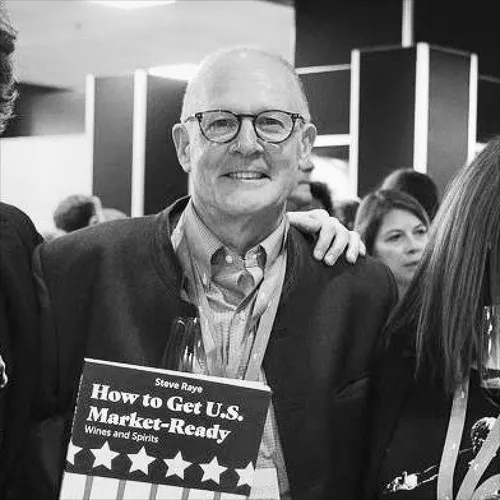
Ep. 404 Steve Raye U.S. Market-Ready | Import Options Part 2
Ep. 404 Steve Raye U.S. Market-Ready | Import Options Part 2
Episode Summary
Content Analysis Key Themes and Main Ideas 1. Strategies and options for wine and spirit brands to enter the US market. 2. Analysis of specific import pathways, including large distributors, private label chains, control states, wine clubs, and nontraditional models. 3. Pros and cons associated with each US market entry option. 4. The challenges faced by new brands in the US due to market consolidation and competition. 5. The evolving landscape of e-commerce in the US beverage alcohol industry and its future potential. Summary In this episode, Steve Ray, author of ""How To Get US Market Ready,"" discusses various options for importing wine and spirit brands into the American market, drawing from his thirty years of experience. He details the pros and cons of five specific import pathways: large distributors that also import, chain retailer exclusive brands (private label), direct import through control states, wine clubs/flash sale sites, and nontraditional/new models like e-commerce platforms. Ray highlights that while large distributors offer built-in networks, new brands often struggle to be a priority. Private labels can provide immediate volume but limit brand reach. Control states help establish initial traction but are not a scalable long-term strategy. Wine clubs offer low support costs but also restrict brand exposure. Nontraditional models are innovative but still in development. He concludes by emphasizing the increasing difficulty for new brands to find importers due to distributor consolidation and the growing imperative for alternative solutions, particularly given the lagging but promising potential of e-commerce in the beverage alcohol sector. Takeaways - Entering the US wine and spirits market is complex and requires understanding diverse import options. - Each import strategy (large distributor, private label, control state, wine club, new models) has unique advantages and disadvantages regarding reach, cost, and brand building. - Large distributors prioritize major brands, making it hard for smaller, newer brands to gain attention. - Private label and direct-to-consumer models offer quick sales but often limit wider brand development. - The US market is undergoing significant consolidation, making traditional importer relationships harder to secure for new brands. - E-commerce represents a significant, yet largely untapped, opportunity for beverage alcohol sales in the US, with regulatory changes expected. - Securing an importer is only the initial step; true success requires ongoing strategy and adaptation in a challenging market. Notable Quotes - ""experience is what you get when you don't get what you want."
About This Episode
The speaker discusses the pros and cons of import options for the US market, including limited competition, marketing costs, and the need for experienced brokers. They emphasize the importance of finding solutions for different states and building the brand through a scalable and repeatable approach. The speaker also emphasizes the importance of understanding all options and starting with someone, but acknowledges the difficulty of leveraging sales from retail stores and consumers. The speaker also discusses the importance of e commerce and the need for federal laws to relaxed regulations on interstate sales.
Transcript
Thanks for tuning in. I'm Steve Ray, author of How To Get US Market Ready. And in this podcast, I'm going to share with you some of the lessons I've learned from thirty years in the wine and spirits business, helping brands enter and grow in the US market. I've heard it said that experience is what you get when you don't get what you want. My goal with the book and this podcast is to share my experience and the lessons learned from it with you so you can apply those lessons and be successful in America. So let's get into it. Hello, and welcome back. This week, we finish up the pros and cons of the ten options to import your wine or spirit brand into America. And number six on our list of import options, is a large distributor that also import, and most of them do that. The pros of that is they you've got a built in distribution network and probably pretty easy integration into it. They would have an existing Salesforce. They have built in efficiencies. There's some, efficiencies certainly in terms of margins and also combined functions of both importer and distributor. You may get more attention here. Than you would with a large national importer because, distributors tend to operate on an individual state basis or group of states, and that may benefit you depending on where your focus is. Their primary business is distribution and sales. So if you can solve the import question with the distributor, that's great. But, of course, there are some negatives. The big one is the distributor is focused on defying the needs of big internationals like Diageo Bacardi, Purno, Treasury, and so forth. And chances are you will never be a priority, but you may be a strategic imperative. If you are important in their portfolio versus what their competitive situation is in the states in which they do business. The second is that, well, they're not really in the brand building business. They tend to have marketing people And they are very transactionally focused and focused on sales, which is a good thing, I think. But they're not in the brand building business, not to my sales friends. They'd say that's probably a good thing because sales isn't necessarily always a friend of marketing. Depends on your point of view. Third is, they can't or don't work with multi state chains on or off premise. Those chains have operations outside their markets. So while Southern may be operational in forty markets, and you're working with, making this up a big steakhouse chain that has operations in the one state southern doesn't have penetration that can be an issue. These are all solvable problems, but it's something to consider when you're looking at these options. Next, It's difficult to get distributors in states where this distributor does not operate. And what I mean by that is distributors are not interested in helping competitive distributors make money. So if there's that one state that Southern's not in or r n d c or whoever it is that you're working with, They may be less interested in taking on your brand because they don't wanna help their competitors or someone who might be a competitor down the road if they expand into that market. The next, number seven option in terms of importing a wine or spirit brand into the US is chain retailer exclusive brand. Now whether you call this, private label exclusive owned brand. There's all kinds of variations on the theme, but the common theme beyond them is that that brand is only available for sale by that particular entity. And examples of chain or retailer exclusive brands include Totalwine, Costco, and Bevmo in California. The pros of using a exclusive brand is it's set up to use clearing importers and clearing distributors in that, and they can take advantage of DI direct import savings. And we'll talk about DI in the glossary later in the book. Bottom line is the retailer has more room to price aggressively because they may be look alike products, but they're also making a lot more margin. And it's also a great way to establish distribution in multiple states quickly, not that someone's gonna take you on and bring you nationally right away, but the potential is there. So I'm good. You can expand rapidly, but you're also only gonna be in a limited number of accounts. That could be a good strategic move or a bad strategic move. It depends on your situation, and you have to think it through. Generally, there are minimal marketing costs because they don't need to fund distributor incentives or consumer awareness programs. Basically, what happens happens in store or in in store communications, meaning they're mailing lists and so forth. And in the case of total wine, winery direct promotions that you see on the shelves. And the last one, which may be the most important one is immediate volume with the first order. And that could be a huge, huge benefit to brands that may not be well financed from a capital perspective, but it isn't the primary reason why you wanna use them. It's kind of like a benefit that comes along with. But there are cons. The first one being that the extra margin that a control brand generates usually doesn't accrue to the supplier unless you have a really well negotiated strategic arrangement that maybe extends beyond just one brand. The second con is that you're limited to selling through only that retailer or retailer group. And if business is good, that's fine. If you have unlimited potential for production, that may not be a strategic long term smart thing to do. Also, if they lose interest in your brand for whatever reason, you're kind of trapped in that retail environment. There's also a limited opportunity to grow the brand outside of dedicated distribution. And also, there's not going to be any on premise business generally speaking unless you do private label for an on premise operator. And lastly, the business is limited to the states in which that particular retailer operates. So If you've got, steakhouse, for example, that's in forty eight states, and the importer that you're working with doesn't have distributor relationships in all of those states, that's a problem. All of which are solvable, but something to think about as you evaluate your opportunities. Number eight on our options to import brands into the US is direct import through a control state. And a lot of people don't think about this, but control states such as Pennsylvania and New Hampshire, which are control states for both wines and spirits do a lot of direct buying on their own. One of the pros working directly through a control state is The brand gets established traction, measured velocity at retail, and you can use that as a basis to establish interest and credibility with other import options. To again, redress the question of what is the risk of carrying this brand? If it's already selling in an existing market, then that becomes a scalable and repeatable strategy. One of the other pros to think about there, maybe it's neither a pro nor a con is that you need an experienced broker with relationships in that specific state who can facilitate the deal. Now this is true not only of the control states in the United States, but also particularly the LCBO in Canada. On the negative side for DI direct import through control state, Obviously, it only works in that one state. You're still gonna have to find your solutions for other states. If you're working with a broker, that broker generally only knows one state. He's expert in that state, but none others. And the third one I think is the most important strategically is it's not a scalable strategy. It's a great step one to get your brand into the US market, establish some credentials that the brand sells as consumer demand. And leverage that success with expansion into other markets. You're still gonna have to demonstrate the strategy to promote it and build the brand. In the case of a controlled state, normally, that would be done through store displays and tasting events with that particular state. But presumably, those are programs that are both scalable and repeatable. Number nine, wine clubs, flash sale sites and the light. And those include wines till sold out, the Wall Street Journal wine club, you know, times wine club, naked wines, and a couple of others. And they're all kind of variations on the theme, and really almost a extension of the idea of private label. So let's go into the pros. It's an option to at least get a beachhead in the US. Granted is a lot harder to expand a brand that has been introduced by a specialty site like this because they just don't fit with the concept of brand building. This is all very much opportunistic sales. The second pro is relatively low support costs for, you know, the supplier. The retailer assumes the burden of marketing, securing customers, and, and, basically, that's what you're buying into. So they're gonna buy it at a relatively low price, and you're done. They take care of everything else, logistics, storage, selling, marketing, shipping, and customer service. And the third pro on that is it can represent a good opportunity for volume via a simple sales shipping inventory and labeling process to a single customer. So once again, it's a way to get your feet wet, but it doesn't have a whole lot of extendability built into it. And the cons of wine clubs flash sale sites and so forth. The primary con is they have limited reach to only their customer base. Now the good news about that is it could be a very large customer base in the case of the Wall Street Journal Club, but it's very difficult to expand that into a brand selling in, shall we say, more traditional channels? So the result is there's no real brand building for the long term, and they're often one time purchases. Good way to move a particular product or a second label perhaps not the best way to move distressed inventory or out of vintage wines as an example. Every sale involves a DTC shipping direct to consumer shipping cost to the retailer, meaning lower margin to suppliers. So generally, the way these things work is they buy exceler relatively cheaply, and then they consolidate everything into a larger order to save on shipping and logistics and all the rest. So it's an opportunity for a one time sale. If you have some inventory to move, but it's not gonna be long term brand building. And particularly important, I think, is that it's an off premise solution only. It really don't have any presence of significance that I'm aware of in, the on premise. And I would make one other point of difference regarding wine dot com. I don't include wine dot com and wine clubs or flash sale sites. Wine dot com is really just another retailer. They happen to be exclusively or ninety nine point nine percent exclusively online, but they function as a traditional retailer. And bringing this chapter to a close, number ten on our list of import options is nontraditional or new models. And they could be everything from Libdib on the very creative innovative side, Dalatera, which is a very, unique Italian focused import company. And I would also add in wine dot com as an e commerce site. So the pros on that is it's ways to stay legal, but still maneuver through the three tier system and achieve cost savings and deliver better margins. And that's kinda the strategy of these innovations, and they're gonna vary depending on what their specific structure is like. The second, pro for non traditional new model is, once again, you can establish your track record of success, velocity, and potentially key accounts, which you can then leverage to grow that base of brand building that you've established. On the flip side, the cons or the negatives, many of these are models in, proving mode. They're not really established yet, although with the impact of COVID nineteen, a lot of them have had dramatic leaps forward, particularly delivery apps like drizzling and so forth. They also have limited distribution and portfolio. Again, this is being, addressed through some who are taking a look at the, infinite warehouse model and being able to sell from, given distributor or combination of distributors' virtual inventory, if not actual inventory. One of the other negatives is there's no sales staff dedicated to the trade because it all happens online. So it's somewhat difficult to leverage the sales that you get from that into mainstream retail. And then also mainstream distributors don't like wines that are available outside the system because they often hit the shelf at prices that are below three tier pricing. As we get more experience with this category and e commerce in particular, this con is becoming less and less important, and people are finding ways to address the needs and concerns of distributors and build in margin for everybody without antagonizing other people. So that was a review of ten different import options for the US market. And in most cases, most of those are not going to be applicable or appealing to you. But I think it's important that you understand all of the options that are out there. That you can figure out what is the right strategy for you. Because as I like to say, it's important that you get started with somebody, but that doesn't necessarily mean that they're gonna be your forever importer. So I suggest you take a little time to think about and digest this information. At first glance, it can seem overwhelmingly complicated and recognize that you are not alone in this nor are you the first new to the US supplier wrestling with the problem finding an importer? Precisely because it has become so difficult. With more doors closing than opening for new suppliers, it is incumbent on new brands to look long and hard at alternative solutions, at least to get started. At the time of this writing, I've seen one alternative strategy achieving critical mass in the US, and that is Libdib. And I expect more will be coming down the road. And the reason is simple because the need is there. Remember that existing brands are facing the problem for a second time. With distributor consolidation, the distributors have been shedding smaller brands that may not fit their new structure and supplier alignment. So you're basically competing with brands that have already been in the market that have a documented track record in the US, and establish distribution and consumer pull. So if you thought your job was hard before with distributor consolidation, it actually gets harder. Additionally, and this is absolutely true during the period of COVID nineteen and what I think is going to follow, we're seeing e commerce laws that restrict interstate sales between retail stores and consumers and imported wines and spirits selling direct to consumer will be relaxed. Right now during COVID nineteen. A lot of, freedom has been given to accounts in terms of, takeaway cocktails and sales of wine bottles that used to be illegal for accounts to sell. Many states are making those changes permanent. Keep an eye on what the Supreme Court does with a lot of challenges that are facing it, but I do know that Bevac is one category lagging woefully behind every other category of consumer goods in terms of e commerce sales. Some of the numbers I've seen is that Bed Alk is something like four percent and beverages are up in the twenties. Certainly books are like fifty percent and shoes are above that. So we know that the opportunity is there or that the that the head space is there. Market forces ultimately will put pressure on regulators and the import distribution channel to put e commerce of wines and spirits on an equal footing with things like footwear and books. Remember the metaphor that I used earlier, the brands face three locked gates in sequence in front of a brick wall. Finding the right import solution doesn't take you through the end of that pathway. It's barely the beginning, but it is the first place to start, and there are easier solutions than just considering the agency brand model. Thank you for listening to part two of two on the ten options to import your wine or spirit brand into America. As always, this is how to get US market ready presented by the Italian wine podcast. One of my favorite history stories is the voyages of, Captain Cook on the endeavor. Here's one quote he made. He said, I had the ambition to not only go further than man had gone before. But to go as far as it was possible to go.
Episode Details
Related Episodes

Ep. 2822 Ep. 20: California | Study Smart for your WSET Level 3
Episode 2822

Ep. 2789 ColleMassari: a long-term vision rooted in Montecucco with Giuseppe Di Gioia | On The Road With Stevie Kim
Episode 2789

Ep. 2788 Ep. 14: Austria and Hungary | Study Smart for your WSET Level 3
Episode 2788

Ep. 2785 From Volunteer to Speaker at TEXSOM with Samantha Cole Johnson | TEXSOM 2026
Episode 2785
Ep. 2766 Inside the U.S. Non-Alcoholic Wine Market: What Wineries Need to Know with Jill Sites | Masterclass US Wine Market
Episode 2766
Ep. 2761 Winemaking and Consulting Across Sicily with Alessandro Serughetti | Wine, Food & Travel with Marc Millon
Episode 2761