
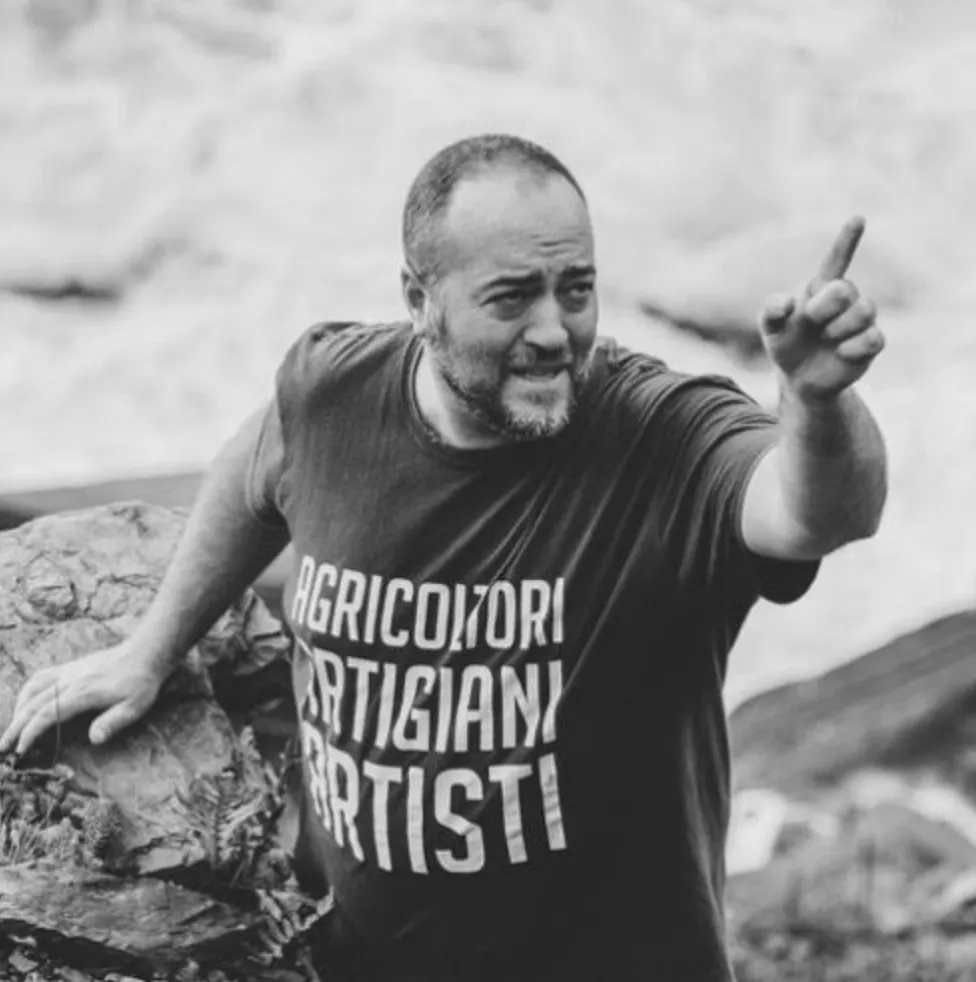
Ep. 405 Samuele Heydi Bonanini
Ep. 405 Samuele Heydi Bonanini
Episode Summary
Content Analysis Key Themes and Main Ideas 1. The unique and challenging ""heroic viticulture"" of Cinque Terre, Italy. 2. The production of Sciacchetrà, an award-winning sweet wine from Cinque Terre. 3. Samuel Bonanini's family history in winemaking and his efforts to revive and grow the family winery. 4. Traditional and natural winemaking techniques, including grape drying and fermentation without added yeast or sulfites. 5. The global market and appeal of specialized, high-quality niche wines. Summary In this episode of the Italian Wine Podcast, host Monte Waldin interviews Samuel Bonanini of Azienda Agricola Possa, located in Cinque Terre, Liguria. Bonanini discusses his winery's Sciacchetrà 2018 vintage, which scored 98 points at Five Star Wines 2020 and was awarded ""Best Sweet Wine."" He explains the etymology of ""Sciacchetrà"" as ""without water,"" referring to the dried grapes used. Bonanini details the arduous process of ""heroic viticulture"" in Cinque Terre, where all work is done by hand on steep terraces, with only a small monorail for transport. He shares his family's history, noting how his grandmother's generation closed the winery, and how he revived it from 800 square meters to four hectares over 24 years. The Sciacchetrà production involves meticulous hand-selection of grapes, a 3-4 month drying process, manual destemming, natural fermentation, 28 days of skin contact, and aging in small barrels for a year, with no filtering or added sulfites. Bonanini describes Sciacchetrà as a ""meditation wine,"" best enjoyed by itself or with Gorgonzola cheese or dry fruit cake. He also discusses his diverse international markets in Japan, the United States, Belgium, Germany, and Singapore. Takeaways - Sciacchetrà from Cinque Terre is a highly acclaimed, unique sweet wine. - Winemaking in Cinque Terre is extremely labor-intensive, characterized by ""heroic viticulture"" on steep, terraced vineyards. - Samuel Bonanini has successfully resurrected and expanded his family's winemaking tradition in the region. - Azienda Agricola Possa employs traditional, natural winemaking methods, including grape drying, skin contact, and eschewing filters or added sulfites. - The wine is considered a ""meditation wine,"" emphasizing contemplation and solo enjoyment. - Despite its niche nature, the winery has established a strong presence in diverse international markets. Notable Quotes - ""Our work is only by hand. It's impossible yours, mechanical."
About This Episode
The best sweet wines in cinque are won in a small publicity event in Livarches, Italy. The winery uses traditional methods to make their wine, including organic certification and selection of the best grape. They also use natural nuts and wood and natural sulfide or wood to create their wine, which is a long process and requires no use of anything. The winery offers help with success and a promotion for donating through Italian wine podcasts.
Transcript
Italian wine podcast. Chinchin with Italian wine people. Hello. This is the Italian wine podcast with me, Montewalden. My guest today is Samwole Bonanini of Adienda Agricola Posa, the Bonanini, Samwole heidi. Whose cinque terre Chacquetra, d o p two thousand and eighteen vintage, scored ninety eight points at five star wines the book twenty twenty, which, of course, also includes wine without walls. Here's how the wine was described by the judges, bright and beautifully dense amber yellow, thrilling enveloping aromas of candied orange peel, dried apricot, and dried raisins. Temperature constantly changes the wine and it's magical. Rich can lead fruit dominates with a good structure and a refreshing acidity make sure we're left wanting for more a great wine here here. The cinque terre Chacitra, d o p two thousand and eighteen, was awarded the best sweet wine or the milieu or vino Dolce. Many, congratulations. You have to ex you have to pronounce the wine that you've been awarded the prize for cinque terre. How do you is that right? Yeah. Okay. Can you say can you say the name of the wine so that we can we can We know exactly how to say it. Yeah. His name is Shaqueta. He is a very old name, that means, is a two different work, is a word. A one of the by the old Latino with a means, without, water. So he's a wine, by grape, that is without water. Okay. So it's drawing the grapes. Yeah. Okay. And you were awarded the best, sweet wine, Evino, Milio Rivino Dolce. Congratulations. So let's just wind back a bit. The the family winery is in which region of Italy? Yes. We are in Livurian, in Chincuatera. We are a very small, production because, in Chincuatera, our work is only by hand. It's impossible yours, mechanical. We have only a small, monorail for transport, the grape between the terraces, but the other work is only by hand. And so is, we are a very small production. We are only four actor and alpha, you know, all in terraces and all in, usually here in the in the part of the Chinguenteric, Only one part is in an island in front of Portov Energy. It is Palmaya Island, where we have about three thousand meter, and we produce another type of wine. Okay. So When was the winery founded? Was it, your family or your grandfather? I have my my grandmother that, was a wine producer, but, she closed the winery because usually Chincuatera is, in all the Chincuatera, the generation of the grandparents close all the winery because it's a period, a historical period where it's, impossible, live with the wine. And, all the people have to go in, for find a work in another place. For tonight, Lee, now is, we have a good market, and, I starting to clean the terraces of the family, and I I buy other terraces. And, I starting with eight hundred meter. And today, we have a four Hector and Alpha. And, it's my work of the last twenty four year. Well, so you started with less than one hectare. Yeah. And now you have four. That's and that if anybody listening, saying, well, that's a very small vineyard. In, from what we're hearing from Samuel is, it's actually quite a big vineyard because It is very steep, and it's incredibly time consuming. It's a heroic wine. It it would be, what we would call it. Okay? So in the winemaking, are there any particular or special techniques that you use, to make the wine. Yes. For the Chakra, we use the traditional method, and it's very complex because, we go for every plant. We select only the best grape, the perfect grape. Usually is the best grape that we find very near the sea. And, we cut, and we put, in a special local for, a weight that's dry. We wait about three, four months every year is difference, depending by the dilemma. And then where we're starting to make a Shaqatra is very particular in process because we take all the single grape by hand, because we want to select only the best grape for making the jacket up. And, in the end of the the days, when we finish, we use my child over eight year old for pressed by foot. It's very important to use a child because, it's more light. And then, we may we start in the fermentation, in natural method with, without other yeast. And then we have twenty eight days of contact skin. And when we finish, we put all a small baric of a one hundred liter, is a a part of baric compare wood and other part of share rebooting. And we maintain for one year in the wood. After one year, we put all together in steel, and we wait. When the the wine is green, we go in the bottle. But it's a very long process because we don't use, we don't use filter. We don't use nothing for clear. Only the natural time. Okay. I mean, obviously, you really love what you do. I mean, what you do do is, as we said, heroic sort of, visit culture and the various stages of making this wine. Yes. Because here, is the is the network that, decide because, it's impossible to use nothing in the land. And, I decided to don't, to don't use nothing in the winery. So we don't never use Easter. We don't ever use, filter. We don't use, nothing for clear the wine in all the type of the wine that I produce. And, I finish in the two thousand seventeen and, to produce a wine without a short fight more. I like to use, only natural sulfide or the network that the decider, the, the the flavor of the ear, the climber or if you take more sun or less sun if rain or not, And with, every year when I want people ask me, notice by one year, I have to describe it before the clima. And, And then, we we, we just, and after we, you can drink the wine. We are very happy to have this premium. It's a it's very happy because, I'm very, very, very small, product. And if I arrive to this level, is very important for me and for, all the work that, we have, in the last twenty years, because we work every year in the, in the natural method. And now, I know that, is the good method for work. For this particular wine, what local dish would you drink it with? But, for for the Chagetra, I think that is perfect, the cheese, gorgonzola cheese, or, many, many cake by dry fruit. Or I think for me, the special time for drink the Chagetra is only with the wine. And, it's for, first day in silence, and, drink wine. Avino de mediciglione. Yeah. Meditation wine. Yes. Okay. And, do you sell how do we buy your wine? Do you sell direct? Do you sell online? Yeah. I know. I sell, I have a here in, a local market that is mine. Then, then, I have a distribution in Italy, and I have a different market out of Italy. And, and that is very either I work for the with the Japan. I work with the United States, with the Belgium, Germany, Singapore. I like to have a different kind of market. Mhmm. Okay. Listen, it's been really great to talk to you. And congratulations once again, on your success at five star wines this year, twenty twenty. And, your wine is a very special one, and it's a very niche wine, but it's a really heroic one, and and you've explained beautifully, the trials and tribulations, and also the joys of producing that particular wine. Thank you so much for for your time, Samwane. Congratulations. You deserve everything. You deserve your successor. Great stuff. A lot of respect for what you do, and, and don't give up and keep producing those wonderful wines and those niche wines. And don't let them die out. Don't let those vineyards die out on those steep hills. Okay? Thank you. Listen to the Italian one podcast wherever you get your podcasts. We're on SoundCloud, Apple podcasts, Himalaya FM, and more. Don't forget to subscribe and rate the show. If you enjoy listening, please consider donating through Italian wine podcast dot com. Any amount helps cover equipment, production, and publication costs. Until next time.
Episode Details
Related Episodes

Ep. 2822 Ep. 20: California | Study Smart for your WSET Level 3
Episode 2822

Ep. 2789 ColleMassari: a long-term vision rooted in Montecucco with Giuseppe Di Gioia | On The Road With Stevie Kim
Episode 2789

Ep. 2788 Ep. 14: Austria and Hungary | Study Smart for your WSET Level 3
Episode 2788

Ep. 2785 From Volunteer to Speaker at TEXSOM with Samantha Cole Johnson | TEXSOM 2026
Episode 2785

Ep. 2766 Inside the U.S. Non-Alcoholic Wine Market: What Wineries Need to Know with Jill Sites | Masterclass US Wine Market
Episode 2766

Ep. 2761 Winemaking and Consulting Across Sicily with Alessandro Serughetti | Wine, Food & Travel with Marc Millon
Episode 2761