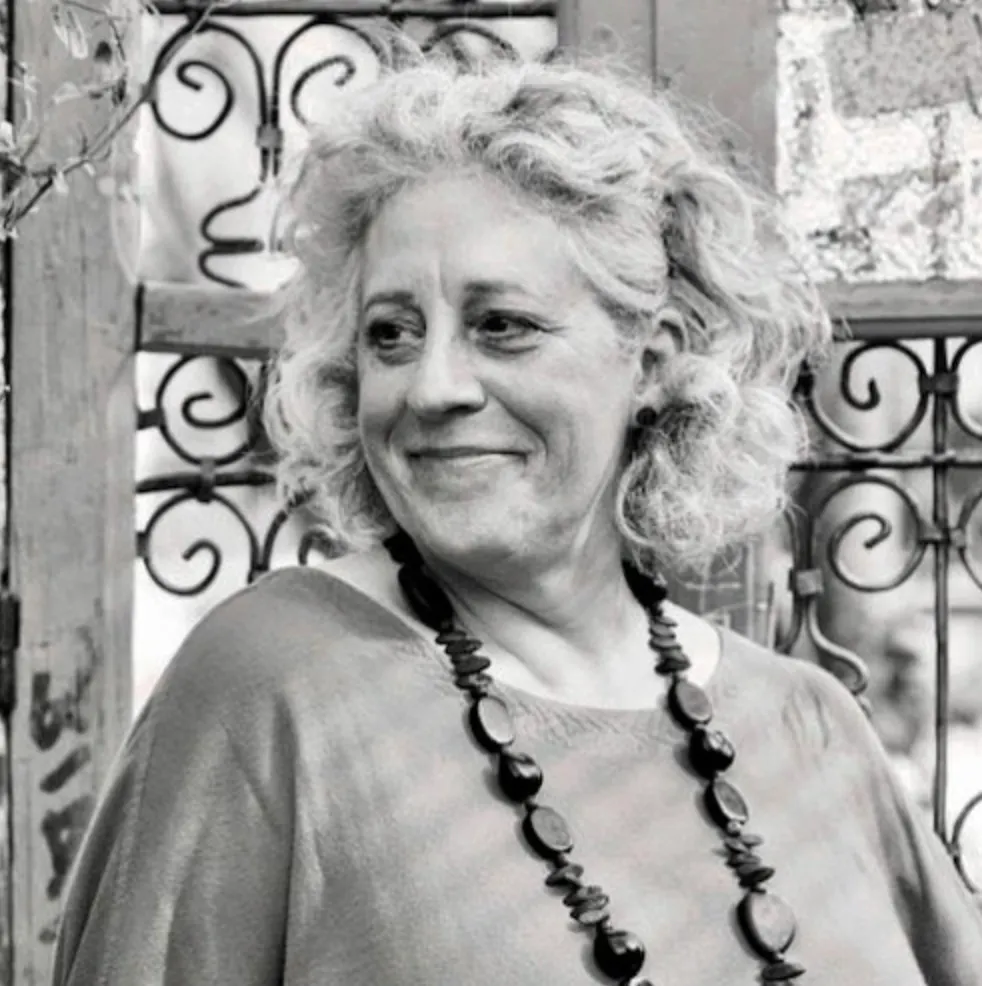
Ep. 436 Elizabeth Gabay MW
Ep. 436 Elizabeth Gabay MW
Episode Summary
Content Analysis Key Themes and Main Ideas 1. The evolution and perception of Rosé wine, challenging prejudices and commercial trends. 2. Elizabeth Gabbay's expertise as a Master of Wine and author of ""Rosé: Understanding the Pink Wine Revolution."
About This Episode
The speakers discuss the lack of professionalism in the wine industry in Italy and the potential for new wines to be made without the traditional style. They also discuss the success of Rosy in Italy and the importance of "ar passion" in wine tasting. The speakers emphasize the need for marketing to reach a wider audience and mention the upcoming release of a new wine in Hungary. They also discuss the history and cultural significance of the wine industry and the excitement of the upcoming release of a new wine in Hungary.
Transcript
Italian wine podcast. Chinchin with Italian wine people. Hello. This is Italian wine podcast. My name is Monte Ward, and my guest today is Elizabeth Gabbay or Gabbay. Don't know if it's Gabbay or Gabbay? How do you say? Well, I think, yeah, we're either way, really. It doesn't really matter. I'm not fussy. But you should better get there because you're in a France, but gabbae, isn't it? Think of think of the grape. Think of the grape gamay. That's always the easiest way to look at it. Hello. This is the Italian wine podcast. My guest today is Elizabeth Gabbay, which rhymes with Gabbay. I've just been told. So Elizabeth Gabbay is a master wine. Elizabeth became a member of the Institute of Masters of wine in nineteen ninety eight, and she has been based since two thousand and two in Southern France. Where about in Southern France? Are you? I'm just north of nice, about seventy kilometers north of nice on the Italian border, the national park that bridges Italy and France, and I'm at a thousand meters high up in the Southern Alps. Oh, that sounds good. But how did you end up there then? Was it a love of Italy or just, what what was the reason? Well, we originally we looked around provence because I think that I was working a lot with provence wines at the time. And really didn't like it. It was a very, very big expat community, lots of pink villas with blue swimming pools, and it really wasn't what we wanted. So We saw advertised in the village a hotel with fifteen bedrooms, and my husband and I do like having a party. So we thought we'll look at the hotel. We didn't like the hotel. And there was nothing else available. So we looked in Burgundy, Bordeaux, the lua, alsace, anywhere that had vineyards. And we kept on thinking, you know that hope that little village with the hotel, that was such a nice village. And after eighteen months, we came back and decided forget the vineyards. Let's just go for the village, love the atmosphere. So it was a could occur for the village, really. Okay. I knew you settled in easily, I would imagine. I didn't really speak French when we moved in. So I had two small children at school, and all I could talk about was malolactic fermentation and barreques and that sort of thing. So that was a bit difficult. And you don't realize. I think until you move into a rural village that outsiders are outsiders for a long time. So now we're local, but took a long time. So you, you're a specialist in many things, but you did write a book. I think it's the only book I know of its type on PinkWines, Rosay. Why did you write a book on Rosay? It started off as a joke, which sounds dreadful. I was talking to classic wine library about another book, and I jokingly said, oh, what about a book on provence? And they said, we'll call you back. And ten minutes later, they called back and said, maybe not provence. What about a book on Rosay? And I I wasn't a Rosay drinker. So two thousand and sixteen. I was not a Rosay drinker. And I thought, well, that'll be easy because there isn't a lot to write about on Rosay. And so I said, yeah. Sure. I can do that. And then it just spiraled out of control, really, from there. So now I drink a lot of Rosay, of many different types. But it did not start off as a passion, a private passion. I mean, what we did you have sort of a negative expectations of Rosay? Cause it's always been missed a little bit in the wine trade, as sort of frivolous, not a proper wine. It's neither red, and it's definitely not white. Did you have some of that prejudice, or did you soon kick that and and really get into the, the the the spirit of things? Yeah, I was completely prejudiced. You know, it's, living where I live, which is much more rustic and rural, very, very scornful of the Santropay, Jose on the beach image. That was not something I really liked. So I would say before I started writing the book, I avoided drinking any Rose wine at all. It was just not the image I liked. And then when I started doing the research, yes, there was an enormous amount of incredibly dull bottles sent to me. I mean, mind blowingly dull. And then occasionally, you'd get a producer who would say my wine is completely different. It's spontaneous fermentation and amphora, and it's dark and nobody else likes it. Do you want to try it? And so then you I started to realize that there was actually so much more to taste. And I still don't really like the very commercial pale pink style. It's still not my taste. Why? Because it's over sweet or just boring. Well, it's it's made to a formula. So I have spoken to producers who wanted to make Rose because it was commercial. And I said, well, how did you make it? And they said, well, we looked on a website for a provence estate, minimal skin contact, cool temperature fermentation in tank. They bought this yeast, so we did the same. And there is an enormous amount of that enormous, identical, identical Rosays. But isn't that isn't that kind of part of the deal, though, that that is just what you sign up to if you're a if you're a dedicated Rose, they drink it with not much ambition. Just in the same way. So most a lot of chardonnay can just be derivative. Yes. It's I guess it's the equivalent of, you know, as you say chardonnay or sauvignon blanc or mass produced cabinet sauvignon. And but I think what I what I find particularly interesting about Rosie is that there are a growing number of producers who are prepared to challenge that, and that's really exciting. And when I speak to consumers and I say what what do you expect from Rosay and you challenge them, and they're usually quite surprised that they've never thought of any it'd been in another style. They accept the fact it's always the same, and you have to really push produce consumers and say, would you always drink the same sauvignon blanc for the rest of your life? So why would you do the same with Rosay? And and that's what I find most exciting. So when we get into Jose or Rosato in, Italy. Like, I think it was quite a surprise that there are far more than I actually thought there would be. But you in your book, which is by the way next to them, but the full title of it for everybody, It's called Rosay understanding the Pink Wine Revolution, and that was published by infinite ideas, and it's based, the company's based in Oxford. And, you said that in in Italy, there are five hundred potential roses or Rosata, wine styles, in the Italian rule books for the various denominations. And half of these, more than half of these are actually doc, which is I found incredible that there were so many potential for doc Jose Wind, and Italy, was that was that big? It's phenomenal. It's phenomenal. So what I found when I was researching the book, nobody oh, well, nobody. A lot of people did not take me seriously. I did get a lot of people in the wine trade saying, but you're a master of wine. Why are you bothering with Rose? And I did get that also with a large number of wine producers. So I was faced with these four hundred plus appylations in Italy, and I thought, just I just had no idea where to start. Absolutely no idea. So I approached a number of people, you know, just as a normal consumer, you're looking for Italian Rosay. Where do you start? And really had to work hard. So I honed in on various regions, and the book was published. And then loads and loads of producers approached me and said, but you didn't include us. So my draft Italian chapter, if I ever do another book is much, much bigger. I have learned so much more in the past two years since the book came out. The to that chapter is completely different. So what are the main centers of production in Italy for Jose? What are what are the what is the main region? I mean, I've got it written down in front of me, but I want you to tell to tell us what it is. Yeah. So I asked various, people initially about volume, and they said they couldn't tell me because they was it was by the color of grapes planted. So red grapes. So Kirito, up by Lake Garda, Bardolino, Kirito de Bardolino is a big one. Pulia is massive. I made the mistake of looking at appalachians, but of course being Italy a lot of people are choosing not to do it in appalachians to do IGT. Calabrio has quite a lot. And then I think Do you include Pino Grigio? That must weigh the figures in a different way. That's quite an interesting one. And then there are all the red wine areas that are also, you know, Piedmont and Tuscany who are increasingly making rose. But I think Rosay is just everywhere, isn't it? I mean, a Kiauretto is growing really fast at the moment. I think they've double they've their production or their sales have gone up five times in the past five years. But that does that reflect engines in Italy or just a response to international markets? I mean, Rosa has been, I'm not saying a boom line, but it's it's always it's perennially popular, obviously, for the summer. But it's lost some of it's kind of, the negative connotations with Rosay, we're being more more, adventurous when in our wine drinking. And, surely there's gotta be, if the Italian are making more Rosay, then it must signify more interested at the commercial level. I actually think volume by volume, Jose and Italy has gone down, in recent years, but I think quality has gone up. So there's been a shift initially from bulk volume that isn't particularly good to much better, Jose. Kyoretto have changed since twenty fourteen from being a slightly darker byproduct of red wine, to being provence style pale pink, which has increased their volume of sales to export sales and tourism, which I'm not, to be quite honest, I'm not a hundred percent happy about because I think it's standardized and neutralize the character. Cheraswolo are also playing with going paler, which is really sad. I love negromaro Rose from Pulia. I think that that has phenomenal potential, and some of the Aetna rosies, not all of them, but some of them are really, really exciting. So there is a lot of playing around with this combination of traditional provence style innovation. So I wouldn't say there's one region at the moment, but there is it's there's some exciting things happening. Okay. So if if we we're not gonna be masters of wine, but I mean, a firm or you are, But, you know, in the exam, and you've you you've you've given three roses. One comes from Aetna. One comes from Pulia, and one comes from, I don't know, course, say, a a Ramato style, which maybe you can explain what it is. Of the differences just in general between those three. Okay. So let's start with Romato, which is a much more it's quite a coppery colored wine, and it's a sort of very classic adriatic style, pinot gris, longer skin contact, which really bridges the gap between being an orange wine and a rosy, which is why I really, really dislike defining wine by color. I think that is a very old fashioned way of, judging wine and the vinification is far more important. So because that's got greater skin contact, I think it for me, it has slightly more texture, slightly more phenolic character to it. If you're going to pull you up, say, for a negramaro Rosay, fantastic acidity. I mean, can have really, really beautiful acidity. So the Last year, I had a negramaro rose from nineteen seventy six, and the acidity was so good. It was still vibrant, still fresh. Lot of sort of a floral roses, bit of bitter orange, And if they include the muscatel grape in it, even more floral, so that's very pretty. And then when you go to wetner, I don't know. This is this is the multimillion dollar question. Do we taste more minerality? Or is it just a flavor that we think we taste more of? So if you have higher altitude, volcanic soil, more minerality, the higher up you go, you can have more ripe fruit and concentration and good acidity. So a bit more wine style if it's in a traditional style. So that's what I would really look for. I mean, what would the what would the base, variety be for Annette Narosi typically? It's Norella Mascoresi. Is the, the main grape variety. So there's the one from, Fudo cavalieri, which is a thousand meters high on the south slopes of Aetna. Just has amazing ripe concentration and minerality and acidity. And I think the current vintage is twenty sixteen because it's it's just got power and fruit and is gorgeous. Often when we do, blind tasting competitions, whether it's Decanta or Five Star, which is, they've been Italy, tasting. How do Italian wines fare the the Rosier, the Rosatta wines? How do they fare in those competitions? So I had for the five star, we had a flight from Pulia. That was massively disappointing. The wines that was sent in later discovered that there was some brand names that I think aimed at the American market, why they had that residual sugar in. I have no idea, but they were so disappointing. I had I don't think. I'm not an Italian, you know, I'm not I don't speak Italian, which is a big hindrance. I can understand quite a bit, but I don't speak it. But I my impression is that a lot of Italian producers of Rosay Either they sell really good stuff, and it's a niche product and it sells out, and they don't need to bother with competitions, or they lack the confidence to say, let's put our wine in a competition. I I really felt for the competition, the best Rosets in my my series of panels were not the best, which was a shame. Okay. So, let's just do a few random regions. Blake garda, versus Val tenancy. So Val Tennessee, which is the groppello variety, quite nice and sort of strawberry fruity. Very very classic mineral strawberry fruit. The Bardolino with Corvina, I think in a blind tasting, very similar to Bojali Rosay, Corvina and gamay, very, very similar cherries, much more mineral style. So strawberries versus cherries on both sides of lake garter. What about, Piamonte? We we don't associate it. So I don't in my mind. Whenever you say Piamonte, you're just thinking Avaresco Barolo. Thank you very much. And don't think about Rosay, do they? Anybody up there make decent, Rosay, and if so where? They do, make Rosay. A lot of the time, it's because they're exporters or their importers say, can you add a rose on? So I've met quite a few producers who have absolutely no idea how to make a rose. So they just sort of make it and add it in. But so many different styles and so many varieties. I don't think you could say there's a Pierre Montezay style at all. It's that is still still being created. So it just depends on the variety. What about Tuscany, the Carmignano area, for example? I've not heard any from there. I'm doing quite a bit of work with Marima Rosay, which has been quite interesting because it's a region very close to the sea. So which gives it added freshness. So they have a range of variety, San Giovanni, Grandache, Aleccanty, Punyatello, Chilio Jolo, plus all the super tuscan type varieties. And they're proving to be quite good. So I think Tuscany actually has a lot of potential, especially for quite gastronomic roses. They they as far as I can see, they tend to be They're either the very delicate provence style or there's some really quite gutsy Rosets coming out, which I rather like. So now you've got a soft spot for the Maramo, the, the Tuscan Coast. What about Yep. There must be a difference between, I don't know, Rose from from the coast or one from up near, Florence, for example, Carminiano, Barcoreale, wine file that. What would the differences be? So the ones I've tasted from further in, and I I have to say I'm not an ex bert here, and I haven't tasted a lot. The ones I have tasted were trying to be far more international and provence style. So from other areas in Tuscany, I was not I have not yet picked up more regional styles. And that is something I would really love to see. I but there were so many in international provence style pale pink from elsewhere in Tuscany. I'm weak. I'm very happy to be disproved. Okay. We'll have to go. I'll I'll have somebody from, the powers that do. We'll have to get you, and you and your rucksack down to, parts of Italy. Fantastic. What about, you know, sweetness levels. I know we sort of touched on that a a little bit at the beginning. Is there anything that Jose produces in general in Italy should be doing that they're not doing at the moment in your view? And then you go on about this international style and the sort of the the provence, sort of, mimicking. And I can I can see why that's irritating because, it's he's got a huge variety of great varieties, and they should be being a bit more ambitious? Is that what your beef is? I think for me, my ideal, and it came an ideal list on this, I would love it. If Rosays were produced in the same way as a white and a red wine, that if I was tasting blind, I would be able to pick up markers for what the variety is. I'm not a great one for just saying, well, I'm drinking this wine because it's got alcohol and it's pleasant to drink. I'm not interested, really. I I want a wine with character. I want to be able to taste a wine and say, wow. That is just full of chili a jho low, cherry fruit. It's floral. It's pretty. It's really delicate. Or this is a rose made with, Montebocciano and, you know, the I just I want to be able to taste the grape variety. For me, that is what is exciting. And I don't feel them as yet the wines that I'm seeing are being all being produced like this. So you you do quite a few master classes, at trade shows and conferences, and I'm sure so you do a lot the for your fellow masters, one of the students, at least. What are the common conceptions regarding, pink Rosette Rosato wines? So I think there's a lot of surprise that I mean, it's it's quite interesting actually. You know, it's Italy produces so much Rosay. I think it's washing the top three, Spain, France, and Italy. I think they juggle with it. And if you talk to people about Italian Rosay, they will say, Pina Grigio, pink, rosé, and Kyaretto, and then nobody will be able to think of any other rosé unless it's a specialist, wine person. So I think most people are pretty amazed that Italy produces any other Rosay. Even if they've drunk it, weren't to pay attention, I think in America Negramara Rosay because of, five roses, which has a very, very big market. But if you asked somebody about five roses, they probably wouldn't know where it came from or anything about it or even maybe might not even know it's Italian. Five roses doesn't sound Italian. So there's a big marketing gap for the outside world to actually know Italian Rosets exist or the variety that's there. Was is five roses the one that has the sort of military ling. Was it the American soldiers? Yes. So when The American general that was sent into southern Italy at the end of the war, actually, he was chosen because he came from Italy. So he could speak Italian. So he arrived And one of the things he had to do was basically keep the troops happy just to keep things going. And they had beer, but he wanted to find wine. And the local mayor of, Salento was a wine producer. So he said I've got this wine. I make this rose, but they didn't have bottles. The only bottles they had were the empty beer bottles that the American GI's had. So they rebottled the Rosay into beer bottles, and there are various stories why it was called five roses. I think he had five daughters, and it was called five roses or whatever. So the GIs drank that Rosay and they liked it. So when they went back to America, it was imported. It followed them. This was the Rosay they liked. So it became the first bottled Rosay in Italy, and the first Italian Rosay After the war, the American GI's were very influential. They they brought back Matish Rosay and Lances from Portugal and five roses from Italy, very influential in the Rosay market. It's amazing that little bit of history that, a lot of people probably would never dreamed about or imagined, these sort of almost random coincidences. Well, if you go to the, They have the most amazing museum of the the original old bottles, the photographs, the letters between the American army and the vineyard. They kept all of that, so fascinating to go and see. How where do you stand on, Lambriscoe Rosato? I've had some really nice. I mean, I like Lambriscoe. Good Lambriscoe. I really, really like. And I've had some good Rose, Lambriscoe. I like it. I don't like it, you know, obviously not the sort of the sweet fizzy stuff, but I find a good acidic Lambrisco. I mean, it's great with local food, with aperitif with a Palmer sort of thing, also I like it. Not too alcoholic. Not too alcoholic. Yes. With with the future of Rosay lies or Rosatta in in general and, in a tech in Italy in particular. I was told by somebody that Italians will not drink Jose because they like to have wines with a historic lineage that there is this creation of an association with six regions that make Rosay historically with local grapes. So you have the two Kyaretto, Chercuolo, Debruzzo, Castel del monte, salento, and chiro, and this is this historic movement. And they are making enormous strides in building up this idea that Roset is as much part of Italian heritage as red and white wine So I think that is quite significant in terms of marketing Italian Rosay, so that it's no it's not being swept under the carpet as a cheap cheerful jug wine. And the fact that Maurema are now they have an association to promote Rosay. There's a bit of growing pride amongst Italian producers that their Rosay is worthy to be shown, and that for me is the direction that Rosay is going. It's this growth in producers saying, not just volume. We really want to produce a top quality Rosay. So that is brilliant. I'm really excited by that. And I I think that will move forward once restaurants reopen in the world. I mean, you you got a degree in history and you said that you love the sort of cultural history behind, the wine that we drink today, the wine styles that we that we know and love, the the evolution of, traditions. Is that something that drew you to Rosay or is it, something that is lacking in the promotion of Rosay? And, you know, it's almost Rosay's almost a wine without any kind of backstory. I think that's a big I mean, provence markets, Rose, saying they were the first people to make Rose two thousand years ago with the Roman empire, which is a bit of a strange thing to say because you'd have thought the Italians would also be making it if it was the Roman empire. There is an enormous amount of history with Rose. I think it's an older style than red and white wine. I would love it if more people were interested in that. I spent a lot of time when I was researching the book looking into the history. Partially because I think if people are aware of the history, they have more confidence in creating a regional style, having confidence, having pride that their local style is equally valid and has a reason. So, for me, that is important. I would like to see more darker roses, chloretta, Chercuolo. I think that would be if people could understand that that was historical and traditional, they would be happier to produce it. Mhmm. Yeah. So there's a bit of marketing needed to, to get that message out, I guess. You're involved with something called rock rock and rose. What is rock and rose? So Rock and Rosay started, during lockdown, and, Sumi contacted me and said, can I just do an Instagram live with you about Rosay one evening? So we had a chat about it, and my feeling was there was a lot of so I have to admit I am not twenty one. And if you look on Instagram, there's an enormous number of twenty one year olds in Bikinis, drinking Rosay, and getting this lifestyle thing. So I said, I would love it if I can do Instagram live on Rose and debunk wine snobbery cause there's an enormous amount of wine snobbery going round and move away from the twenty one year olds in Bikinis. And let's talk about Rose in a fun, approachable, but knowledgeable way. So we do once a week. We do a half hour chat. We talk about the winemaking, how it goes with food, where the wine comes from, the style, just to introduce I mean, the most of the people who watch it are wine merchants. It's not reaching a wider public than that. And most of them are saying we didn't know there was the so much variety. And so we just do this chat. It's very easy and reaches out to a wider audience. I hope. What are what are a couple of killer, food and wine matchings between a rosato and and food? Well, this is sort of quite a difficult one, because we're both vegetarian. So we don't do any of the the big meat dishes. What we did find was that Rosays, which have slightly more fruit and acidity, such as negramaro, actually, they're the one wine that goes with anything with tomatoes. Which is quite unusual. It doesn't have the tannin, and it doesn't have the the white fruit character. So some of these high acidity roses go really well with tomato things, classic, the cheese dishes, and some of the more tannic roses, so This is why I say, definition of Rosier is quite difficult and reaching out to people with different styles, but I see nothing wrong with a Rosier that maybe has a bit more organic structure from being bled off the row the red wine or San Diegoese, which is a much, much more structural Rosay, really does work well with more robust food. So those are things that have been quite unusual, but Sumi bin Indian has actually thrown spices at these wines, and the Rosays have survived it remarkably well. So none of the usual, you've got to have grilled fish with a salad to go with Rosay. We've actually found far more adventurous flavors. Go very well, which comes back to another problem with the rose image. If it's pale and delicate, amazingly enough, there are people who have said to me, it must be low calorie then. Haven't worked that one out. So if it's low calorie, this is when you have plain grilled fish and salad. So then you've got a low calorie meal. That's interesting about that. It's, it's mind blowing. So, yes, I would say, I mean, I've had fried food with Rose, the freshness vibrancy doesn't fight it, cheese, vegetables. It's an incredibly flexible wine style. Okay. So, niche topic, Rossella wines, But you are amazingly an expert on the wines of Hungary, Latvia, Israel, rivera del doero, southeastern France. How how do you do it? How can you keep all the flakes spinning? Well, hungry. Yes. I've been working in Hungary for, oh, fifteen years. So I don't really specialize in Tokai, so mainly in the rest of the country. And I've, yeah, know that at that I've really enjoyed Slovakia is a new one. And in fact, I'm making a rose in Slovakia this year, which will be launched next year. It's made from Bla Frankish and cabinet sauvignon, carbonet sauvignon's on volcanic soil, spontaneous fermentation in barrel, and so it'll be bottled next summer. Would that be quite a tonic work day then with those two varieties? It's well, it's been, it does not not much skin contact. It's in well, no. It did have skin contact. It had twenty hours skin contact, so it's actually very dark. And I haven't been able to taste it because I can't go to Slovakia, but I've been told the fruit is great. It's going to be fairly full bodied Rose, I think, but it's not going to have Rose on the label. It's a dark pink wine, fermented, not on the skins. I didn't want Rose on. So between those two countries, there is actually quite a diverse difference between Hungary and Slovakia. So, yes, I do have to juggle mentally because there are hungarians in Slovakia and some of the grape varieties are different. Israel just because I've I know a load of winemakers from there. That's fairly classic. A lot of very French style winemaking. And I have to say my son was a sommelier out in Israel last year. So that kept me up to date with a lot of what was happening. Southern France, south eastern and southwest, and I'm doing a lot of work in Longgedock at the moment. And Rivera del Doro, I was out there last year and Sigales, but I only for Rosay. I can't say that's my expertise. I would love to know more about Spanish, Rosay. Just as I would like to know more about Italian. So I would really say Hungary, Slovakia, a bit of Romania, southern France, and then Spain and Italy and Israel sort of added on It is. It's impossible to be a an expert in all of these. No. Anyone who says they're a wine expert, I don't believe. I'm sorry. You can't be. Well, it'd be great. The powers would be that listen to this podcast. I'm sure we'll get you, to spend a lot more time in Italy. Elizabeth. Oh, that would be fantastic. It's nice to have someone who, who's both knowledgeable and, forthright. You know, you you you speak it as, as you see it. And, in other words, that's always a a for me, a very good thing, especially in the wine trade where we're often afraid afraid of offending people. And, but I like the way you speak truth about Rosay. That's very it's underrated because there aren't there aren't that many really, really great Rosays around. And you've made that point very, very clearly, I think. And, And I and I'm I'm on your side. I agree. And I think there's a lot more that we can get out of Rosay, not just, in Italy, but elsewhere as well. I hope so. One day, I want to be able to do, master class of my favorite Rosays. That's that'll be fun when the world opens up again. Alright. Elizabeth, it's been fantastic to talk to you. And, not the way you speak, so so forthrightly about one of your, lifelong fashions. Thanks very much, Elizabeth. Take care. Thanks a lot, Monty. Bye. Listen to the Italian wine podcast, wherever you get your podcast. We're on SoundCloud, Apple Podcasts, HimalIFM, and more. Don't forget to subscribe and rate the show. If you enjoy listening, please consider donating through Italian wine podcast dot com. Any amount helps cover equipment, production, and publication costs. Until next time.
Episode Details
Related Episodes

Ep. 2789 ColleMassari: a long-term vision rooted in Montecucco with Giuseppe Di Gioia | On The Road With Stevie Kim
Episode 2789

Ep. 2788 Ep. 14: Austria and Hungary | Study Smart for your WSET Level 3
Episode 2788

Ep. 2785 From Volunteer to Speaker at TEXSOM with Samantha Cole Johnson | TEXSOM 2026
Episode 2785

Ep. 2766 Inside the U.S. Non-Alcoholic Wine Market: What Wineries Need to Know with Jill Sites | Masterclass US Wine Market
Episode 2766
Ep. 2761 Winemaking and Consulting Across Sicily with Alessandro Serughetti | Wine, Food & Travel with Marc Millon
Episode 2761

Ep. 2759 Part 2 – The VIA Educational Program & Italian Wine | Heart-to-Heart Conversation with Sarah Looper
Episode 2759