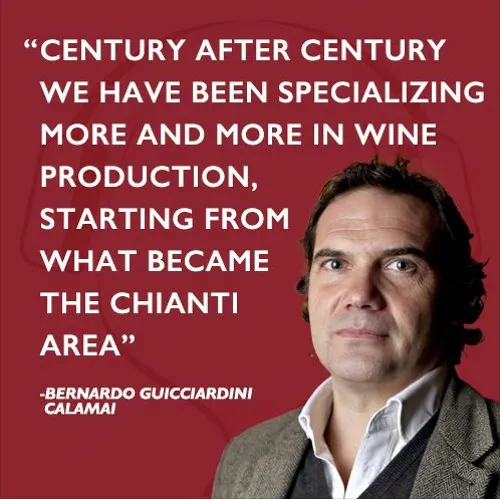
Ep. 505 Bernardo Guicciardini from Conte Gucciardini Vinicoltori | Monty Waldin
Ep. 505 Bernardo Guicciardini from Conte Gucciardini Vinicoltori | Monty Waldin
Episode Summary
Content Analysis Key Themes and Main Ideas 1. The extensive history and evolution of the Guicardini Calamai family's winemaking tradition. 2. The unique identity, characteristics, and historical origins of Morellino di Scansano DOCG wine and its local Sangiovese grape. 3. The distinctive terroir and coastal-influenced climate of the Maremma Toscana region, particularly around Scansano. 4. The economic dynamics of Morellino di Scansano, including market distribution and promotional challenges compared to more famous Tuscan appellations. 5. Strategies and adaptations employed by winemakers in the region to address climate change and ensure consistent production. 6. The growing appeal of Maremma Toscana as a comprehensive tourist destination, offering more than just wine. Summary In this episode of the Italian Wine Podcast, host Monty Waldin interviews Bernardo Guicardini Calamai, President of the Morellino di Scansano DOCG Consorzio. Bernardo begins by sharing his family's remarkable winemaking legacy, dating back over 900 years in Tuscany, and their more recent establishment in the Scansano area of Maremma. He delves into the origins of ""Morellino,"" the local Sangiovese grape, named after dark horses, and highlights the region's ancient winemaking history, extending to Etruscan and Roman times. Bernardo describes Morellino's distinctive terroir, influenced by sea breezes and varied altitudes, which yields a powerful yet elegant Sangiovese. He details the production (around 200 producers, 10 million bottles/year) and blend requirements (minimum 85% Sangiovese), distinguishing between vintage and Riserva wines. While noting Morellino's strong ""value for money"" in the Italian market, he discusses the challenges of promoting it globally against more renowned Tuscan wines. The conversation also explores Maremma's emerging status as a tourist hub, blending wine, gastronomy, and outdoor activities. Finally, Bernardo addresses climate change, explaining how producers adapt through irrigation and new clonal selections to maintain quality and consistency. Takeaways - The Guicardini Calamai family boasts a winemaking heritage spanning over nine centuries. - Morellino di Scansano is a DOCG wine predominantly made from a unique local clone of Sangiovese, named after ""morelli"" (dark horses). - The Maremma Toscana region, particularly Scansano, offers a distinctive coastal-influenced climate that produces powerful yet elegant Sangiovese wines. - Morellino di Scansano provides excellent value for money and has a strong presence in the central and northern Italian markets. - Maremma Toscana is gaining recognition as a diverse tourist destination, combining fine wines with local cuisine, history, and outdoor activities. - Winemakers in Scansano are actively implementing strategies like irrigation and new Sangiovese clones to mitigate the effects of climate change. - The varying altitudes within the DOCG contribute to different wine profiles, with higher vineyards often yielding fresher, more mineral characteristics. Notable Quotes - ""My family started producing wine in Castello di Poppiano... and the year we go back and we find the documentation that we were there is 1199."
About This Episode
The speakers discuss Morolino, a famous and famous name associated with Italian fruit, particularly the hybrid of the fruit of the horse and the fruit of the mor butteno, which is a hybrid of warmer fruit. The town of Ganzano is difficult due to the decrease in cases, but the company is seeing success with their own production. The speakers also discuss the importance of promoting the local market and the value of the area for consumers, particularly in the context of climate change and the rise in agricultural concerns. The river in the area is causing drought problems, but the wines are maturing in the same direction. The speakers thank their audience for helping them with their family history and encourage them to subscribe and rate their show.
Transcript
Italian wine podcast. Chinchin with Italian wine people. Hello. This is the Italian wine podcast with me Monty Walden. My guest today is Bernardo Guicardini Calamay. Bernardo is the president of the consortio of Morolino, this Gonzano, d o c g, in Tuscany, but not the welcome. Thank you very much. I'm sorry for my long, name and family name that is also a bit difficult to pronounce. Very with Chardini, various historic family. Just give us some background about about your family history that goes back hundreds of years. Yeah, Mati. Yes. My family started, producing, wine in Castello Dipo piano that ties, or winery that is located close to Florence in the hills surrounding Florence. And the year we go back and we find the documentation that we were there is eleven ninety nine. So more than nine hundred years. And for sure, the time, not only producing wine was a typical medieval, farming activities so different products, beside the the the wine then the century after century, we have been moving and specializing more and more in wine production. And, so we started from, what became the Kianti area, Kianti and Kiati Coli Ferentini. And then we have been, start our wine activity in beautiful Marima in the Skansano area. And we bought at the end of the eighties, a piece of land in the beautiful, on the beautiful hills of Scansano, where we have been building from scratch our state, that is Masi Imandorla. Name of it is Masi that means boulders because it took us three years of digging, and exploding big boulders before we were able to land the the first vineyards. And as anyhow being, exciting, experience. And, yeah, we felt in love more and more with, Wisconsin and with morellenos cansano, and this is why we have been investing in the last year a lot in this, state. We'll be producing morellenos cansano, and I've been proud to be nominated, the president of Muralino, where I have today many friends, through friends, and we are doing, all our best together with a producer who let Muralino, this Consano grow in the right direction. And I hope we are doing a good job step by step. And thank you so much for the support. Okay. So when we talk about Morolino, what is Morolino? Morolino is, the name of the wine for sure, and this name was a name that was given to the San Jose a local grapes. And the reason why we're called the morellino is because the color of this grape of the fruits were reminding the color of the coat of the local horses. They're called the morelli, and they have very dark intense coat that remind the color of the wine. And these horses were the horses that was used to draw the carriage of the, I would say, the more the wealthy people living in the flat land in front of the sea. And during normally, the summertime, they were moving up the hill to Cansano because the climate there was much better because the flat land was more kind of a swamp. So in summertime, you know, a lot of mosquitoes and at the medieval time, a lot of, disease. So they were moving from the province up the hill to Wisconsino. That is about five hundred meters elevation, and the the climate, they're always been, fantastic. And, I've been finding that, historical evidence that, the one is producing the area since the two scan time. So we are talking about even earlier than, before Christ. And then with the Roman Empire, still, we have evidence of production of wine in there. Mhmm. And also, if you go into the the town of Ganzano, if I'm correct, it has some of the houses there, are beautiful. They date from the fourteenth and fifteenth, centuries. So it's really well worth a visit that the the town itself, the center of the town itself. Okay. Tell us a bit of the territory of, of Ganzana, and the production, how many how many wine growers make, Marolino, the sangiovese, and Marolino rizansano, how many producers are there? And, where are they growing their their wines? Is it on hills or on the flat or by the sea, or or how does it work? The beauty of the area, first of all, as we've seen before, we are located in the south, the coastal area, Southwest coastal area of Tuscany. The area is when no Marima Tuscana. We consider this, the Italian, Colonya, let's say. And going back to the to the United States, you know, talking about horses, I forgot to tell that, they're very famous. Also, the breeders and the farmers, using these horses and breeding the horses, all the buttery that are considered the Italian cowboys, so we could say that, Wisconsin is kind of a it was, and it is a kind of the far west, of, Italian far west, I would say. So just going back to the horses anyhow, going back to the area, the Morellino Disccano, the nomination extends from the coastal area, till, the Mount Amiata inland. And on the edges, the borders is the limited from, two well known, they're not huge rivers, but, we're called Ombroni and an albenga. So we go from the flat lane, in between the the hills and the and the seaside. Going up the hills, Cantano is is one is on top of, what maybe the highest hill that as I was saying is about five hundred meters. And then you keep on bringing it to the amount that is much more in the inland. We have, about one thousand five hundred hectares of vineyards, and the producers are two hundred producers approximately, and we are producing on an average, I would say, around ten million bottles a year. Okay. And what is the blend for, Morolino Discanzano? How much sangiovese or Moreno has to be in the wine? Yes. The Tuscan, agriculture is San Giovanni, and the cpenery of, Maurino considered having eighty five percent San Giovanni, and the fifteen percent, complimentary have to be, toscan recognized complimentary grades. But you can also make a hundred percent Sanjay, if you want to. Yeah? For sure. Yes. At least eighty five. And then you can do one hundred percent. And then we have, two different kind, the, the, I would say the vintage morelena, then we get the reserve that has to be aged at least two years and one of these in wood has to go be aged in wood. What are the main market for for the wines? The main market, would say, for sure, the local market, more the central part, so talking about Italian market, the central central and North part of Italy. We are not well distributed in the south of Italy. And I would say that this represents approximately seventy percent of, our, sales. And the thirty percent then is export. And when we talk about export, mostly, we have to consider Northern Europe and, United states, where we are there, but we have to do a lot to grow and to get, much bigger part of the market, making people knowing much more about, more lean on this cancer. Is it is it difficult? I mean, in terms of promotional activity to get foreign buyers, you know, whether they're, Canadian or or American or Asian to listen to the Morolino de cansano story when they may be more interested by the sort of, brunello, the kind of, the the really, really, really famous, the really expensive wines. Do you feel a little bit left out sometimes in Sanzano? You know, it's a matter also, takes time, but, especially, I give you an example for the local market during this crazy year with the big equality, that we have had, on the market for sure, especially the Eureka market, as you can imagine, has been, very, very difficult, with, a decrease of thirty certain cases of four forty percent. Morino has been able to keep a good volume of sales. Also, thank you to the sales in big retail stores, where we are very, very strong. And we are well known to have a very an excellent value for money. And, as we were saying talking about four, the quality of Moreno, discountsano in the last year has has been growing very, very much. So you have great wines, very competitive, prices. And this is something that is getting more and more interesting also on the export market where more consumers are aware about for sure of Tuscany and about the area, Marima Tuscana, that is becoming a very interesting touristic area because it's one of the most uncontaminated areas, not only well known for, very good quality wines, but also for the quality of life for other excellent products you can find over there. So great food, great, restaurants, great places for, horse riding experiences, biking experiences, and, for, of course, without forgetting the costellator. That is beautiful. We have great islands in front of us, isola Delba isola Delio. So is, you know, people I think, is falling in love more and more with the with this area. And this is helping promoting our wines and proving that you are capable to produce extremely good wines. It's quite nice having that mix of, seaside and and red wine, I think. What about any typical dishes for the modelino in your area? Typical, you know, is is, for sure, I would say more kind of meat food, as you know, so I would say the tasty kind of pasta with the meat sauce or wild boar sauce, excuse of steel wild boars of, or, I would say grilled meat. I mean, the local food, as you know, you you, you know, very well, the area is kind of a tasty food that is a perfect match matching with, with the morellino, this cansano, wine that, the characteristic, morellino, this can is this, is a unique style that is given from a unique climate. I would like to go back to what you were saying before mentioning that is an incredible combination of, the war and climate because being close to the seaside, we are the we get this effect of the sea breeze that is regulating the the the temperature that is going very dry and hot during the day, and it's dropping down during the night. And this help a lot of perfect maturing of the grapes that, allow us to produce a unique kind of sangiovese. And the main characteristic is being powerful It's most of, toscan Sanjobeza wines, but at the same time, very, very elegant with very rounded, tannins, a smooth fannins. And this is, the most the the main characteristic of Sanjobeza. And us, I can tell you our since as producer, producing in Canti in Canti Classic and in in Wisconsino area, the San Giovanni, that we are growing over there. They, they allow us to produce a wine that is, ready much earlier than in the other denomination. So, a wine, this characteristic of being a fresh place and, dry at the same time, with very smooth onions. And, having, as I was seeing, also, a good body and, overall, balance of the one. So this combination of, and, and climate allow us to do this. Going mentioning the, also, we have to mention that for sure is different. It's a wide area. On the flat land, the for soil. You have much more, acid, alkaline kind of soil rich of marine sediments, you know, where, they were the the marshlands that we were talking about before. And as might go up the hill for sure, the soil is changing. It's getting more stony, sandy, which in some area, you have a bit more, of clay. So it's yeah. This is changing, but the the the main protagonist, I would say, is the is the climate. Being so close to the to the coastal area. Okay. I mean, how high what what is that? Where where are the highest vineyards? Roughly, what's the altitude? The highest star, I would say the highest is around three hundred, three hundred fifty meters. Okay. And what would the area be? Is it in in one of the villages there? Or what's the name of the Hello. The villa just the villa just, you know, that as we were mentioning, it's Casano. And if this is a higher one, then we have, Fochelle Roseto. Groceto is in the flatland. Then we have Campanatico. Maliano is another one a bit higher, maniano, Rocalbenga, and, Sonia. These are the different towns around of which, you can find the the Venus. But the highest one, I would say, are the one around Mangiano and Scansano. I mean, did that once very, very different to, compared to a a coastal wine. What would be the differences in taste in terms of the texture, the tannin, and the fruit expression? For sure, as you can imagine, as much, as you go up the hills as much, you have, the this characteristic of being fresh, having, this kind of, I would say, also given from the soil, it's a more mineral characteristic of the wines for sure. On the flat land, the grapes are already earlier. They sometimes tend to mature more than on the on the on the hills. So I would say characteristic of, the hilly areas is, is the one of producing a typical Muralino, that is already in an early time in the year after. And, as much as the the wines are are maturing, either the wines from the flat land of from the hills, they are going on the same direct direction, so developing, I would say more in the same, direction. And what about wine making in terms of, do are all the wine does the wine have to see oak or can it be bottled with no oakaging? I don't know for sure. The the regular Moreno is not, you can do whatever you want. It could be, steel, buts could be cement, could be oak. So is there is no regular imitation. And I would say that we touch Lino is mostly done without any wood. Then we have it at least one year has, to go through the wood. And then is, I would say, unknown or hidden category that, is quite, there you can find a few wines and very good wines. There was other one in between the vintage morellino and the recerba. They I would say it's kind of a transition wine. Okay. But, Nada, what about climate change? What are the wine growers of Ganzada? You did mention that, they were in broadly speaking two different terawatts, one in land and higher, one, lower down and nearer the coast. What are the difficulties climate change and how are your how are your wine growers coping with it? You know, Monty, in, in our area, we are used to the problem of, the drought because it's, this area, it doesn't bring that much along the year. And what happened in the last years, normally when it's training, it's raining really hard, in a short time, a lot of rain. So this, had, to make, force us to make some changes and to adjust the way we are growing and and treating the wine trees and, also the soil and, and for sure, you know, that in the area, we are allowed to water the plants the wine trees. So we have irrigation systems in the penny of the states, especially in the states located in the areas where it's raining less. This allow us to control the watering of the of the wine trees and to have a consistent production year after year for sure, you know, that global warming is effectively creating changes, but it can happen as it happened in two thousand fourteen. That has been a very rainy year, or you can have years as two thousand seventeen that was extremely hot and dry. So there isn't a a precise, a rule you know, on, what to do in certain situation. But today, we have instruments to handle this and to adjust the way we are working the the the soil and the and the working on the wine threesome and the with the the watering and being able to have, you know, anyhow consistent, production. This year, for example, the vintage two thousand nineteen has been quite, you know, we have a drought of, water. Then luckily, at the end of August and beginning of September, we have had some, good consistent, rain, but not, you know, we kind of, summer storms, that normally where you get, a lot of water in a short time that is not helping at all because the soil, as I was mentioning, is mostly sandy, stony. And so the water just runs away very, very, very fast and, so, you know, this is true. Things are changing, but technologies also changing new clones of, Sanjay, are used to be more resistant to the change of the climate. And so, you know, as much changes are happening, we are also adjusting, the way we are working to make sure that we can have a good, good harvest and good quality wines. Okay. I just wanna say thanks to my guest today, Bernardo Guicardini Calamay. Thanks very much for telling us about your family history, which is fascinating and also for the joys of the Ganzano region, and seems like there's a lot going on with the coast and the horses and the very diverse so well that you have definitely a region that is underestimated in my view and ignored it in my view. It's a very beautiful place, and there are some very fine wines. And I look forward to coming and seeing you in person and sharing a glass of wine with you Bernada. Thank you so much. Thank you, Monty. Thank you for helping us to promote morellino and the fantastic area where morellino wine is produced. Thank you very much. And I look forward to see you as soon as possible. Thank you so much. Listen to the Italian wine podcast wherever you get your podcasts. We're on SoundCloud, Apple podcasts, Himalaya FM, and more. Don't forget to subscribe and rate the show. If you enjoy listening, please consider donating through Italian wine podcast dot com. Any amount helps cover equipment, production, and publication costs. Until next time.
Episode Details
Related Episodes

Ep. 2822 Ep. 20: California | Study Smart for your WSET Level 3
Episode 2822

Ep. 2789 ColleMassari: a long-term vision rooted in Montecucco with Giuseppe Di Gioia | On The Road With Stevie Kim
Episode 2789

Ep. 2788 Ep. 14: Austria and Hungary | Study Smart for your WSET Level 3
Episode 2788

Ep. 2785 From Volunteer to Speaker at TEXSOM with Samantha Cole Johnson | TEXSOM 2026
Episode 2785
Ep. 2766 Inside the U.S. Non-Alcoholic Wine Market: What Wineries Need to Know with Jill Sites | Masterclass US Wine Market
Episode 2766
Ep. 2761 Winemaking and Consulting Across Sicily with Alessandro Serughetti | Wine, Food & Travel with Marc Millon
Episode 2761