
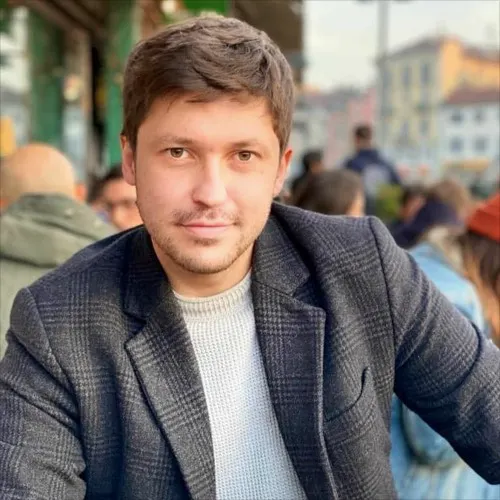
Ep. 575 Matthias Oertel | Monty Waldin
Ep. 575 Matthias Oertel | Monty Waldin
Episode Summary
Content Analysis Key Themes and Main Ideas 1. The adoption and implementation of biodynamic farming practices at Tenuta Del Fontino. 2. The ""from the wine to the glass"" philosophy emphasizing minimal intervention in production. 3. The characteristics and production details of Tenuta Del Fontino's diverse wine portfolio, including new natural wines. 4. Challenges and adaptations in viticulture within the Maremma region of Tuscany, particularly regarding climate and soil. 5. Current trends in the global wine market, focusing on consumer demand for transparency, storytelling, and natural wines. 6. The business strategy of a small-to-medium winery, particularly the importance of agriturismo and direct sales. Summary In this episode of the Italian Wine Podcast, host Mark Millen speaks with Matias Urdell, the estate manager of Tenuta Del Fontino, a biodynamic wine farm located in Maremma, Tuscany. Matias, who transitioned into wine after studying law, shares the estate's deep commitment to biodynamic farming, a philosophy initiated by owner Heidi Puner in 2010. He details their use of specific biodynamic preparations and how these practices contribute to ""fresher"" and ""more expressive"" wines, adhering to a ""from the wine to the glass"" approach with minimal cellar intervention. Matias provides an overview of their key wines, including Folliavento, Sophie, and Optimus, and discusses their recent venture into producing natural wines, emphasizing spontaneous fermentation without additives. He also addresses the challenges of farming in Maremma, such as drought and hard soil, and highlights how the estate manages these through innovative methods like utilizing a private lake for irrigation and planning to integrate animals into vineyard management. Finally, Matias discusses market saturation and the growing consumer demand for transparency and storytelling behind wines, which natural and biodynamic wines address effectively. Takeaways * Tenuta Del Fontino is a family-owned biodynamic wine farm in Maremma, Tuscany, run by the Puner family. * Matias Urdell, the estate manager, has a unique background, transitioning from law studies to wine. * Biodynamic farming, including the use of specific preparations, aims to produce ""fresher"" and ""more expressive"" wines. * The winery follows a ""from the wine to the glass"" philosophy, prioritizing vineyard health and minimal intervention. * Tenuta Del Fontino produces various wines, including traditional labels and new natural wines with spontaneous fermentation. * The Maremma region presents viticultural challenges like drought and difficult soil, managed through strategic irrigation and farming techniques. * The wine market is increasingly saturated, leading to a consumer demand for transparency, authenticity, and product backstory. * Natural and biodynamic wines align with current market trends by offering a clear story of origin and production methods. * Agriturismo is a crucial sales and marketing channel for Tenuta Del Fontino, particularly for direct sales to Swiss, German, and Austrian markets. Notable Quotes * ""Our main idea is is like from the wine to the glass. So as as we don't have many big impacts in the cell and the wine cellar, but we just apply our this kind of pandemic treatments in the wineyards."
About This Episode
The owner and manager of Tenuto Del Fortino in Tuscany, Italy is co-mingled with a family of winemakers and is co-mingled with a family of winemakers. The current state manager explains that the property is a family-owned business for over 25 years and is co-mingled with a family of winemakers. They use dynamic preparation, aromas, and technical treatments to improve the taste of wine wines, and their approach to small and medium businesses focuses on offering wine experiences and increasing direct sales. They use their animals for lawnmowers and are open-minded about the natural aspects of their wines and their three main varieties and key labels. They visit their wine wines to see the natural aspects of their wines and how they affect their taste.
Transcript
Italian wine podcast. Chinchin with Italian wine people. Hello. This is the Italian wine podcast. My name is Monte Walden. My guest today is Matias. From tenuto Del fontino. Matias, did I get your name correct? So I don't think I did. It's just fine. I'm afraid. No. It it's right. It's true. It's Matias Urdell. There we go. Okay. So just just where is tenuto Del Fortino in Tuscany? And what is your contribution to the estate? Are you the owner or you're, the manager? What do you do? So, the fontino, the biodynamic wine farm to a fontino is located in the Marima area. Munizability of, Massima, which, which is a really, pretty, small, medieval village situated in the midst of a unique Mediterranean Machis, and also kind of characterized by the mineral air due to its immediate vicinity to the Mediterranean Sea. My function, my role in this state is, yeah, I'm a state manager. I'm managing also the hospitality part, but also the binary part because the total of fontino is the state, which extents or more than seven hundred acres is has now been running by the bunch of family. So it's a family owned business for over twenty five years. And, today, it's co managed by the second and third generation. Okay, Matius. How did you find the estate? I mean, are you from Italy, or did you study winemaking or administration? How did you get that? Honestly, I came across through my law studies I am I also me. I was born in Switzerland, near to Zurich. Then I was growing up in the north west in the northeast region of Italy, South Carolina. Probably, it is a really known known region, wine region. And then I went to Milan for law studies. And, doing my law studies, I came across many good winemakers and also friends of mine, which are for example, in modern art producing, Lambrusco and or my cousin, which is back in artuology and is producing his own wine. So, I started having a certain passion for it. And I got interested because I had any know how for it. And so after my law degree in two thousand twenty, I got a chance to involve myself and to develop myself within this new reality here in the in Tascon in the Marima, and I took it. And, yeah, and, I'm, I'm, I'm quite learning a lot, and, but, my passion is increasing nowadays. And, yeah, I'm happy to be here. Probably really an unusual career. Yeah. Your your, your backstory is very interesting from going to study something academic to end up being a a vineyard and a and a winery manager. So in the the Fontino estate is quite large. Seven hundred hectares, I think, twenty hectares of vineyard. And let's say a little bit about the vineyards. And also the way that you manage them, you mentioned biodynamics. Was that your idea? Or was it the owner's idea? It still has been always the owner's idea to be to be quite honest when the miner started in two thousand ten, Heidi Puntre, she she believed in yet in this organic and biodynamic farming. The problem it was and this is still this problem that there weren't any good analogists which could offer the necessary know how for the practices and so on. Now I'm speaking, like, about now this, we are since four years, we are in it in this bidenomics process, and our analogists, Andrea and Eva, they are really, really good in it. And probably, technologists have convinced the the Puncher family to to start doing so to start this kind of of farming of winery. And So we are working mainly with these dynamic preparations. For example, such as five hundred, the five hundred one and five hundred two. I don't know. Nobody, if maybe the audience doesn't know what what you are talking about. So for example, the five hundred This is, horn manor, which for us is really important because it stimulates the microbial activities. So deep root growth and even promotes the formation of humus, which is, which is really important for us. Then after the after five hundred, we're using our five hundred two. The achilea, it's called in Italy. Its rich is, it's zero. And, this is this one is rich, in sulfur and potassium. And has, in fact, a particular ability to regulate the sulfur and potassium process. For our soil, this is much important. I think this is a way of of of farming of binary, which It's really satisfying. You can also see the results. And therefore, yeah, it was a quite good decision. Okay. So you mentioned the effect from your view about the effect of biodynamics on the on the, on the taste of the wine. Can you say exactly what changed in the wines. Was it the the the perception of the acidity? Was it the clarity of the flavors and aromas? How would you describe the differences in wine now pre biodynamic and post biodynamic? I would say These are more honest right now. These are willing to this, to this purchase. The the wines are more fresher than before. From our principle, our main idea is is like from the wine to the glass. So as as we don't have many big impacts in the cell and the wine cellar, but we just apply our this kind of pandemic treatments in the wineyards. We are really, really, It's it's like having a friendship with the nature. And this is make sure that our wines are, as I told you before, fresher, they are more expressive in their any of any of them notes, of their notes. And, yeah, you need to see it. You it's it's it's you need to taste it. It's it's really difficult to explain. Let's talk about some of the wines. That you make at the estate. If you start with the, the, Sophie rosso, and then tell us about the fullamento, and then the optimus and the Montecio wine, you just go through the wines that you may, and then, I can ask you questions afterwards, okay, about the wines. In total, we feel around, like, fifty thousand bottles a year. Of these of those fifty thousand, four thousand go to full avento, around five thousand to Optimos and three thousand, Sophie. And finally, two of them, so two thousand bottles to both Joy here solely. And around, like, one thousand bottles to our Camira approved. For sure, for avento has been considered always considered our noblest label. Also due to its complexity, it is like it's made by fifty eight percent of carbonate, twenty five percent of Sierra and twenty five of Malo. We will allow him, like, two years, in the, in the Oak barrel, and then one year in the bottle. At the same time, the Sophie, it's kind of the it's it's the fresher one. It's made by a fifty percent, chile giolo and fifty percent of sangiovese. So the cherry flavor, it's really present in it? This is my opinion. It's it's kind of the it's the the nicest part of this wine. And the sangiovese makes it makes the sophie. Yeah. It gives him the freshest part. And then we have, for sure, our most interesting bottle of or label. This is the Optimus. Also called a dynamic label because the best pure verity is praised with this one every year. So since two thousand sixteen, almost six two thousand sixteen, it has been Sandra Visa. And it seems that it, we'll have to step aside aside for the very first natural wines of twenty twenty, which we will, launch, this summer just to give the audience a a short a short insight beyond, these free labels We have also the pocho ideas solely, which is our white wine. I see white wine. Ninety percent Verintino and ten percent sauvignon blanc. And then, we have the chimaera brewed It's our bubble. It's hundred percent of Verintino. And as I told you before, we are June fifth two thousand twenty. We started to produce our first natural wines. Two weeks ago, we modeled our first Kimira Rosay, which is now in the bottle, and, we're waiting for the second fermentation in bottle, which is going to be also a fontino bubble. Yeah. These these are our wines, our main labels. And pro probably it's really interested to know which, which market we are targeting as as a small reality as a small estate. I can tell you, we, as a fontino, we sell like, ninety percent of our production to our own clients in the Agiturismo. This is, equivalent to the Swiss German and Austrian markets. In order to increase within the next the next years, increase the direct sales, However, we focus a lot on offering wine experiences. For example, we have our horseback riding tour with subsequent visits to the winery and wine tasting. This is to wave the idea for the that our convention for the next the years. These can be purchased, for example, online. And therefore, we are also very satisfying for us on the Italian market. Talking about our markets, it's really interesting probably and to talk about about the trends. The trends we think will be important to analyze. The wine market is right now in this area. It's really saturated and more than even before. And I think it's due to a huge know how in this industry, a far advanced technology and also result in competition. High quality wines are no longer rare and many small, as well as medium sized binaries here in this region have to become more innovative innovative. So natural wines my opinion are only one of several possibilities. And this trend for sure is reinforced by a broader, by a broader public. More and more young people, but also older people are not considered to have any significant knowledge of the winery in the industry are now drinking, for example, good wines on a regular basis. So what exactly is going on the on the many minds of consumer in two thousand twenty one? This is for my question, there is a desire for background knowledge, who is behind this bottle, where is it, produced, what method is used in the management of the winery, and what is the story behind this wine? Yeah. For sure we are trying to risk to to to answer all those questions within the next years. And, therefore, I think natural and biodynamic wines can be a really interesting solution. Because what's what's really different from other wines, we as we, we, for example, the the grapes, they do not undergo any chemical treatment. So no added sugar and teams or additives. And, innovative part is for sure the fermentation, which is spontaneous. So we do not add any selected yeast in the laboratory, but only yeast naturally grown. Of course, I I'm I'm sure that some problems will arise in the future since we are constantly playing with an uncertain variable, and this is the name is called nature. But for now, I think This is this is the most innovative, direction for the for many of our clients when they visit our, winery, they are asking us, for example, about the oak we use, you know, and, for the first six years of this winery, we were used to to use fresh oak, American oak. Also, really important for, labels like for Lavento. But nowadays, we use and we rely on third generation of berries. So because this, to give the wines less complexity, this is also expression of this, of the biodynamic principles. And as I told you before, we, as we don't use yeast either, As our acknowledges, so, Andrea and Dave, I have convinced us that the natural yeast present in the skins are sufficient in order to start the fermentation process. But it's hard to believe, but it's true. So, yeah, that's the kind of This is, yeah, the fontina present. For sure, I I think that in in in the future, we, we rely more on on our animals in the wine yard. Probably in concrete terms. This would mean, to use the geys as natural lawnmowers and to have fertilizers, as well as for sure also our horses for tilling and blowing in order to burn the soil with less machinery. And, tasks increase its fertility. There are really there are many in order innovative and creative ways as a small, medium, winery, you could, and you can, for the target for the next years. Very interesting what you were saying about this, farm organism idea with the geese and, a lot of biodiversity and sort of natural natural farming if you like. What is your approach in the in the winery? I would imagine that you, prefer making wines doing when you're making the wines to do, not much making, if you see what I mean, you want things to happen spontaneously just to, just describe your, your wine making philosophy and how it's changed over the over the few years. Just a few more little details about the link between the vineyard, this natural approach in the vineyard, and the natural approach in the winemaking, just your your philosophy and where you see the future is going for you and for the te te Nuta del fontino. To to to to approach and to explain a little bit more, this, or our kind of, philosophy, we could dog and dog shop forever about our wines and especially about this biodynamic approach. But I cordially fact invite everyone to visit this, our wine, because these wines, these natural wines, for sure, they need to be explained, but especially especially shown. So as I often recommend to our guests, you need to take the glass of wine in your, you know, in your hand, look at the curse of any vineyards, be aware of the climatic influences during the year, and then taste the drop. For me, this means recognizing the natural according to the principles from the wine to the glass. Natural the the nature as I told you yet or the climate change is this, right, this uncertain variable. I'll make you another example. It's like our area has to struggle with very long periods of drought. So our good fortune is that we have access to our own private lake and can use it to irrigate our entire wine yard. This constant heat also makes it difficult to control the sugar content of our grapes So in mid high summer, it can happen that a few days have extreme effects. All these elements, you can you can smell it. You can taste them in our wines in these natural ones. So, also, they see, as we are strongly influenced by the proximity to the sea, They may run and see the mineral nodes are strongly present in our wines, especially, for example, in our WebMDino. So in the podjoy, they are solely. For sure, it's the biodynamic requests much more work in the wine yard than in the in the winery. Our area makes it for sure. It doesn't it's not so easy in our area. So for example, our soil, if you look, if you even look to our soil, place and red sands reaching hermetic bevels to work on them, it's really, really hard and asks a certain patience, a certain, a certain know how, a certain experience, which you gain over the over the years. And at the same time, we have average of talking about the rain situations. We have like fifty eight milliliters of rain on average per month. That's nothing. So on the other hand, on the other side, you can be happy because there is no danger of bacteria or other diseases, but on the other hand, you have these long periods of drought. And this is, for sure, something stimulating this, this challenge, this, this battle against the nature, and but playing with the nature. And I'm also I'm already looking forward to to see what's coming next. Okay, Matia. So just, gonna do one one last, question for you about the, the wines that you make. You see, if you just go through the the the red wines that you make one by one, I would say the Sophie and then the Optimos and the, Castel Dirutto, and that it was a Baya. So our main grape varieties are, I've studied before, and, sangiovese. Beyond this main, beyond this main grape varieties, we have three important labels, which is Sophie, fifty percent, three hundred dollar, fifty percent, sangiovese, the best pure verity every year, and then the full Avento, which is fifty percent, carbonate, twenty five percent Sierra and twenty five percent below. Okay, Matius. And I think, is I'll ask one last question. Is there anything else that you haven't been able to talk about that you want to talk about? Yeah. No. Okay. I'd just like to say thanks to my guest today from tenuto Del fontino, Matias Eirtel, Thanks for explaining and enlightening us a little bit about the, life on the Tuscon coast in Masa Maritima in Roseto province in Tuscany. Looking at the website, it looks absolutely beautiful place. It's interesting that you mentioned about that little lake that you've got, there's a wonderful photo of that lake. And when you see it online, you just wanna dive straight in. So, obviously, and I'm sure you're very, happy to have visitors, in Masa, Maritima. Thanks a lot, Matias, and I hope to see you in Tuscany. Okay. Take care. Thank you very much. Have a nice day. And you too, Matias. Listen to the Italian wine podcast wherever you get your podcasts. We're on SoundCloud, Apple Podcasts, HimalIFM, and more. Don't forget to subscribe and rate the show. If you enjoy listening, please consider donating through Italian wine podcast dot com. Any amount helps cover equipment, production, and publication costs. Until next time, Chinching.
Episode Details
Related Episodes

Ep. 2822 Ep. 20: California | Study Smart for your WSET Level 3
Episode 2822

Ep. 2789 ColleMassari: a long-term vision rooted in Montecucco with Giuseppe Di Gioia | On The Road With Stevie Kim
Episode 2789

Ep. 2788 Ep. 14: Austria and Hungary | Study Smart for your WSET Level 3
Episode 2788

Ep. 2785 From Volunteer to Speaker at TEXSOM with Samantha Cole Johnson | TEXSOM 2026
Episode 2785
Ep. 2766 Inside the U.S. Non-Alcoholic Wine Market: What Wineries Need to Know with Jill Sites | Masterclass US Wine Market
Episode 2766
Ep. 2761 Winemaking and Consulting Across Sicily with Alessandro Serughetti | Wine, Food & Travel with Marc Millon
Episode 2761