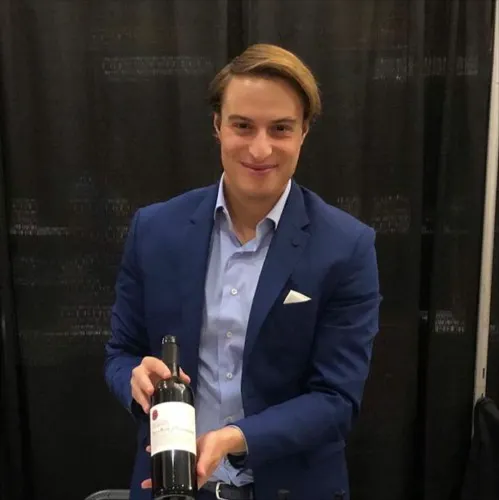
Ep. 580 Pierpaolo Guerra | Monty Waldin
Ep. 580 Pierpaolo Guerra | Monty Waldin
Episode Summary
Content Analysis Key Themes and Main Ideas 1. The ancient and rich history of Tenuta di Capezzana, a winery with documented production since 804 AD. 2. The unique terroir and historical significance of the Carmignano region in Tuscany, particularly its tradition of blending Sangiovese with international varieties. 3. The commitment to organic farming and natural winemaking principles at Tenuta di Capezzana. 4. A detailed overview of Capezzana's diverse wine portfolio, including DOCG Carmignano, Super Tuscans, and highly acclaimed Vin Santo. 5. The personal and professional journey of Pier Paolo Guerra, illustrating a path into the Italian wine industry. Summary In this episode, Monte Gordon interviews Pier Paolo Guerra, the Export Manager for Tenuta di Capezzana, a winery steeped in history located in the Carmignano region of Tuscany. Guerra recounts his personal journey from growing up near Carmignano to becoming a sommelier in London, then studying enology, and finally joining Capezzana. He highlights Capezzana's extraordinary historical lineage, with evidence of wine and olive oil production dating back to 804 AD, and its current ownership by the art-collecting Contini Bonacosi family. The discussion emphasizes Carmignano's unique terroir, which he compares to Bordeaux, and its historical role in integrating international grape varieties like Cabernet Sauvignon, even suggesting the Medici family effectively made the ""first Super Tuscan"" 400 years ago. Guerra details Capezzana's organic philosophy and natural winemaking techniques, including the use of green manure and indigenous yeasts. He elaborates on key wines such as the Carmignano DOCG Villa di Capezzana (their flagship), the Carmignano Riserva Trifiano, the pioneering Super Tuscan Ghiaie della Furba, and their award-winning Vin Santo di Carmignano Riserva. The interview concludes by inviting listeners to visit Capezzana's hospitality center. Takeaways * Tenuta di Capezzana is one of Tuscany's oldest wineries, with its origins tracing back to 804 AD. * The Carmignano region has a unique terroir that historically proved suitable for international grape varieties, notably Cabernet Sauvignon. * The Medici family's influence led to early blends of Sangiovese and Cabernet Sauvignon in Carmignano, predating the modern ""Super Tuscan"" movement by centuries. * Tenuta di Capezzana is certified organic, employing sustainable practices like green manure and utilizing indigenous yeasts for fermentation. * Carmignano is the *only* DOC/DOCG in Tuscany that legally mandates the inclusion of Cabernet Sauvignon (10-20%) in its blend alongside Sangiovese. * Capezzana produces a critically acclaimed Vin Santo di Carmignano Riserva, which was recognized as the ""best sweet wine from all over the world"" at the 2019 International Wine Challenge. * The winery offers extensive hospitality, including a bed & breakfast, wine bar, tours, and a cooking school. Notable Quotes * ""Capetana, it's very special because it's one of the oldest winery in Tuscany. We found the documents from eight zero four AD..."
About This Episode
Speaker 1 and Speaker 2 discuss the history and culture of Tuscany, a winery in Italy. They discuss the winery's ownership, the winery's ownership, and the importance of Tuscany's "veil and elegant wines." They also discuss their organic approach to agriculture, their favorite foods, and their own experiences with their wines. They recommend Tuscany to small producers and mention their hospitality center and wine bar. Speaker 1 praises Speaker 2's bravery and plans to visit CapGeneration when it is possible.
Transcript
Italian wine podcast. Chinchin with Italian wine people. Welcome to Italian wine podcast with me Monte Gordon. My guest today is Pierre Paulo Guera, He is from tenuto, the Capizana, on the commercial side. So, just listen, before we start, what's your actual role at, Capizana? So I am the export manager for tenuto, the Capizana, and I've been working for Capizana from the last, two and a half year. So where are you from, by the way, my bottle? I was born and raised, thirty minutes away from Carmignano. The the small village is called La Chano. Is actually in the opposite side of the Montal Barnum. It's very close to here. And did you, when you were small, did you want to work in the wine business? Were your was your family involved in wine at all? I actually didn't. My grandfather used to make his own wine because he owned one actor vineyard in La Chano. He had his own cellar, but I was I wasn't involved in the wine business business until I went to London when I was nineteen years old. I actually, left, easily to improve my English. And I've heard that the hospitality business was doing very well in London. So that's when I decided to leave and to improve my English by working in the hospitality. So I started working in the restaurant business, and I was very lucky to leave, with other sommeliers. Which got me very involved in the wine tastings. They were studying for the for their master Court of Sumeras, to be Advanced Ramirez. So that really helped me to get involved in in the wine business. So then I decided to study at the WSTT. I got the sub the second level. And then I became, Sumilating in my, last experience in in the restaurant business. I was working in my fair as a head familiar. And also, and and that's when I decided to to move back to Italy to study analogy at the University of Florence. So now I still I'm starting the fourth year of university almost finishing the the my studies. It took me a while because I was working while while I was studying, and and Capetana hired me two and a half years ago. I actually started in the hospitality business And then after just a few weeks, they sent me straight away to the United States as a brand ambassador. And that's that's when I started, working in the in the book. Okay. What what makes, what why is, Capetana to give it a full name? Why is it so special in in terms of its history in Tuscany? So Capetana, it's, very special because it's one of the oldest winery in Tuscany. We found the documents from eight zero four AD, which is certifying the production of olive oil and wine at that time. It was the carlo manual time. And, Capizana, it's certainly predisposed to the, viticulture and the olive trees growth. At that time, during Carlo, there was a soldier called Martino, which was looking, for a place to start to make wine, and he decided to make it here at Capetana. We found this contract, between this farmer and, the church of Siano, from eight zero four. And it was a rental contract between the farmer and the church in order to to let the, property of Capetana to the to the farmer in order to make wines and also olive oil. Yes. Interesting. It's also the site with, an etruscan site with etruscan tombs, I believe. So it's got a lot of history, to it. So one of the most historic wineries in Italy, I would have I would have thought. So who owns the, winery at the moment? So the winery right now is owned by the Contini Bonacosi family with the with the fourth and the fifth generation of the Contini Bonacosi. They bought the estate in, nineteen twenty two with Alessandro Guantanamo Bonacos and Victoria continuously. They made a fortune between the nineteenth and the twentieth century by collecting many pieces of art and dealing those pieces of art with great art collectors from the United States and, they were traveling all around Europe in order to collect those pieces of art. They actually lived in in Spain for a while, and they felt in love with, with the chateaus. They really wanted to buy something similar to Chateau here in, in Tuscany. And at the beginning of the twentieth century, they decided to come back and live in Florence. The beginning, they, used to live in Villa Victoria, which is now the Congress Palace of Florence. And in the meantime, they were making wine and olive oil here at Capizana. They actually bought the estate in nineteen twenty two. And they continue on across your family is very is a very important family for Florence. Because they gave their entire entire collection, to the Yufitsi gallery. If you go to the Yufitsi gallery now, there are nine rooms, dedicated to the continued democracy collection. They were our collectors, and they started straight away to collect every single bottle of wine they they make. And, you're very fortunate and very lucky to have, bottles from nineteen twenty five all the back in our wine cellar. They're also very good at taking cuttings from vineyards outside of Italy, notably from Chateau Lafite in Bordeaux. Tell us a little bit about why that so important. That that was very important because, the continued amount of cost, especially, Hugo continued amount of cost, he was a close friend to Eric De Rochild, which owns two grand crew in France, Chateau Lafite, a Chateau Lafite rochilde, And, because of their relationship, he was able to, take some cuts of coveredness, Vivignan, from Chateau, from Bordeaux, and plant them here, at Capizana. You have to know Monty that here, Capetzano, we have a very similar terroir, to Bordeaux because we have we are very close, to the up and nine, the task and a million mountains, and we are located in a slow to the Montalbano. We are actually, northwest of Florence. It's just forty minutes away, from the city. And also, the the soil is very similar to bordeaux. Because it was originated by seashore crocks. So we have very, a very diversified type of soil. We call it a k a chaotic kind of soil because we have in some in some vineyard, we have limestone, in some other, we have clay, in some other alberese and Galesto rocks. It's very diversified. And because of the distance within the mountains, we have this beautiful cool breeze, which makes our wine, well, our wines very elegant, but also longleaf. Do you have a particular preference when you're tasting the wines in the cellar at, harvest where all the lots are kept separately? Do you have a preference for the kind of silkiness of the shift or the directness of the line stone or the frankness of the clay? Monteu, to be honest, I I love this mixture because, is is a mixture that allows to have very complex wines. We we had a tasting in in October with, with some journalists and, we were tasting twelve different vintages from nineteen thirty, to the latest vintage two thousand seventeen Vint, Vila Bica Vutsana. And we found even the nineteen thirty alive, you know, it was unbelievable. All this wine can age, very, very well. You know, the the Magic family, during the renaissance, they knew that, Carmignano was the perfect place to grow many different kind of, grape varieties. Katrina de medici, which was was married to the king of France. She actually brought Cabernet, Aleicante, and some other international varieties here to Cabetana, because they knew that this terrace, could easily help those kind of freights to, grow. And at that time, they wanted to make a wine with more structure with a higher amount of polyphenols that could travel very well. So they started to to try many different kind of plants. And at the end, they found Sanjay and cover me the perfect blend, to have a wine that can that could travel and also that could that could age very very well. So the medici actually made the first super task come, four hundred years ago. You know, it's weird because sometimes when I talk to people, about the super Tuscant history, which was from the sixties. The medici found the perfect blend for Tuscant wines, for elegant Tuscant, wines already in the, in, during the renaissance period. Yeah. It's interesting. I mean, it it is one of those unique aspects of of of where you're coming from about this idea of, Tuscany border or international blends. And, you know, you're right that people think it's a modern phenomenon, but it really isn't. It's a very traditional or historic, phenomenon, particularly in this part of Italy. And also, it's interesting to have those border varieties at slightly higher elevation compared to where they normally are in border, for example. Okay. So, the estate is also certified organic. Why did why did the why was that change made? And is everybody happy being organic? We're actually very happy to be organic. It's our, philosophy to have healthy, soils for the future generations, but also for the people which are working for Capetana. It used to be part of the fourth generation. Actually, he actually passed away two and a half years ago. He was very passionate about the organic agriculture, even when it wasn't fashionable, you know. He really believed in the organic and, it started straight away with, some agriculture practices such as, the green manure, for example, which is based on the planted leguminous such as fava beans in order to naturally add the atmospheric nitrogen, to the soil. We avoid the chemistry in the vineyards. We are, trying our best to fight to fight any continuous illness very, naturally. And also this organic philosophy is brought in the verification process. We use a very low amount of of added sulfites, and, we also do spontaneous fermentation with our own in the indigenous from, since two thousand thirteen, the University of Florence comes, every year to study every single strain of Sacoramisha Chervisia in our wine cellar. As you know, the Sacoramisha Chervisia brings is on unique aroma during the fermentation process. And, since two thousand thirteen, we could reach fifty nine different, strains of, Sacramento is. So that's very important to have very unique wine. Our wines, I believe, they're very unique and they're talking about the terroir that we have. We don't like to use the yogurt use of the oak, for example, even, during the maturation of the wine, we use a very low amount of new oil. It's just ten percent of new oil, and we love to use, for example, to know, which is a little bit bigger than a a baric it's a three three hundred fifty, five hundred liters of container. So you're, I mean, you're lucky where you are as well in terms of, you know, the altitude and the cool, conditions you've got. So you've got a decent acidity in the wine, which helps aging as you mentioned already, but also does make winemaking a little bit more easy to be a little bit more hands off. Yes. Exactly. Yeah. Let's talk about some of the wines because you make a tremendous amount of wines. So if you just, go through, I don't know, let's start off with the we start off with whatever whatever you want, but, some of the key red wines, that the estate makes. So I would start from, Bancorelli Harmignano is a very representative wine for, Capetana. We were actually the first to make Barcoreale in nineteen eighty four, and Barcorelli Harmignano became a doc in nineteen ninety four. So if you wanna compare our, denomination to Montalcino, Barcoreale, it's something similar to the Montalcino. So it's the, younger version of Carmignano. It is made with the younger vineyards, but it's a beautiful approach to our land. It is made with the traditional Carmignano blend, so mostly San Jose and a little bit of carbonate. As I said before, carbonate, it's, it's almost a local, varieties for Carmignano, because what was brought here in the Renaissance. So by the law, Carmignano is the only denomination in Tuscany where a minimum of cover net is required in or in order to make the DOC or the DOCG blend from a minimum of ten percent to a maximum of twenty percent and, added to the sangiovese. And Barcoreale was actually a wall the that was built by the medici family that was surrounding the commune of Carmignano, Podjakayano and Karata, that the medici built to distinguish theirselves to the rest of the grandeur. They loved to come here, during their, leisure time because the wines were were already very good, and also they were using this area for hunting. They started to build many medicinal villas in this area because if you go to Kianti or, Sienna, you see plenty of castles because those areas were areas for battling during the war. The those hills here in Karmignano, where the secure heels for and the countryside for the Madishi family. So that that's when they started to make, and to build beautiful, medicinal villas, such as the the one that we have in Artimino, for example, which is a a UNESCO pastor morning. Okay. Tell us about the the reserve. So we have, the carmina. They actually the flagship line is, our villa de Happetana, which was the first label, designed by Alessandro Huntinacosi. The blend always been the same. Mostly San Jose with a little bit of covering. Nowadays, we make it with eighty percent San Jose and twenty percent covering. And, it's our flagship line because the label was, designed by Alessandro Huntin and, it's, very recognizable as a as a label. It's white with this beautiful font that was actually designed by Alessandra Montecosi, And that's the wine that we, are very fortunate to have Vintages pulled it back from nineteen twenty five. Since two thousand six, we decided to hold back, three thousand up to four thousand bottles every year of this wine to put them back, on onto the market ten years later for this ten year project. So, the the year that we released, the Villaica Pedsana, we also released a ten years older Vila de Capizada just to show the market the potential of aging of our carmeniano. Yeah. So you guys, it's like a reserve, isn't it? A reserve, not a reserve, but a reserve. It's, a library release. And, you know, Yeah. And so it's booked after by the estate in perfect conditions at its age. So when you put it on the market, it's ready to drink. Yeah? Exactly. Yeah. We do this service for the market. So, I mean, for the validity, Capetna, either the normale or the the, yeah, reserve, but what is a good food match? What is your favorite food match? Of course, a florentine steak. So we we recommend it very rare at San Way. But any kind of meat would be good with with our with our ability habitsana, honestly. I had it with, with deer, for example, but any kind of meat, it would be very good. Another carmeniano that we make is our triffiano and triffiano is a reserve. Triffiano is actually a villa, which is located a few kilometers away from this from the estates is another property of, of Capetana. And, we used to live in in Truciano for more than thirty years. And in nineteen seventy nine, he decided to vinify the three single crew vineyards, nearby the villa. And, at at that time, he decided to make a carmeniano reserve a So this wine is a truly beautiful task and wine. It's more a brunello style of wine. It has, eighty percent of San Jolese and ten percent of carbonate and ten percent of canayolo. Our canayolo is a is a masala selection that we have been doing for fourth generations. It's a beautiful canayola with small grapes. It's not like the big canayolas that we see around in Tuscany. And, I think it's a beautiful wine, very austere. It needs a little bit of time to be understood, but I it's it's it's actually one of my favorite that we're making. You know, obviously, Philipiano, and you said there were three single vineyards. Is is that why it's called Treffiano or not? Was that just coincidence. No. I I I think I think the name, the name of the Villa comes from the Ruchel Life family, and the Ruchel Life family, were the one that built Trifiano along with the Madishi family, at the time of Leppoldo, the Madishi, the the the the Lucia became the, Medisha accountants. And they wanted to have this beautiful villa that has a microclimate into a microclimate because it's the last, hill before Florence and it gets the sunshine first day in the morning, and the sun goes ve goes away very late during the day. So we have a in in in a heap and higher amount of, polyphenols and the beautiful maturation of the grapes. So that's when we decided to make our own, reserva, from Trifiana. Okay. Tell us about to guaya de La Furba. What's that? Guaya de La Furba. It's very difficult to be pronounced, especially in English. Maybe guaya was much easier. And the name Gia de La Furba means gia means pebbling soil, rocky soil. There is, a book written, by Franches Coretti, there was a physician and the biologist, at the time of the medici, which is called Baquintoskana, and it used to say that Carmiano wines, were the favorite wines of the medici of the grandeurqui, and they were coming from the Rocky soil. Because you have this, a good presence of skeleton in, in our, in our, soil. And so Guy means pebbles, and, fulba is a small stream that, flows nearby the first vineyard of, Galla Furba. So that's why the name Galla delafurba. It's like a wine that comes from pebbling soil nearby the river Furba. So it's a long story. And, the wine was born in nineteen seventy nine, at the same time that Trishana was born, but it was actually the first wine in Tuscany to be vinified in Barrique with a bordeauxais blend. So at the at the time in nineteen seventy nine, it was one third of cabernet Frank, cabernet Swignon, and Medlo, like the traditional bordeaux lace blend. And then since nineteen ninety eight, when Benedeta Contini Bonacosi took over the position of winemaker, she decided to change the covering front with the Sierra, which gives a little bit more of spiciness to the wine, which is a little bit more round. And I believe it's a great, great plan. I know, you know, now those wines are called Supertuscans. But as his own brand and history, it doesn't need to be defined, supertuscant. Monanera Bora Korsi was, first owner of Cabetana, in, late, fifteenth century. She was the one that built, Villaa Dica Petzana, which is the core of our winery. I would really commend to come and visit us because this part of Tuscany is actually not very well known because we are such a small denomination. We account just for thirteen producers We are the smallest UCG in Tuscany. But it it has so much history, which is difficult to be, you know, tell in in just twenty minutes. We have an hospitality center with a a beautiful bed and breakfast and also a wine bar. And we do wine tours. We also have a beautiful cooking school for for our customers. So I would recommend to come to visit Capetana when will be possible. Hopefully, hopefully soon that we think, if the vaccine start to go well, we believe that this summer, we can we can already cost you at Capizano. Okay. You've got, two more wines to talk about, which, two very interesting wines, which are your vinci santa, your vinciardo di carbonaro, and the reservea, which are fantastic wines. Can you just tell us a little bit about those two, please? So Vincent, it's it's a wine that goes against any any, analogy, low because it's a very traditional wine made in Tuscany. At Capitezana, we've been doing Monsanto for a very long time from centuries. And Benedita, learned how to make this wine from the one that was before her, and, it's very traditional. It's a wine that is made, with the best selection of our Treviano grapes. Trebiano is another grape that we do a masala selection from, four generations. Our Trebiano is a we we we call it a pink Trebiano. Trebiano Rosa. It's a it's a Trebiano with that means that the grapes are well divided one to each other. And we do a selection of those grapes in September when the grapes is a little bit under ripe because we need lots of acidity to contrast and to balance the sweetness at at the end of the process because our bin sump is a sweet wine, of course, and it has more than two hundred ninety grams of residual sugar, the liter. So if you don't have enough acidity to balance the the wine would be very sickening to the drink. So we do this selection, early in September, and, we put those grapes, in, in, in, small boxes, in the small food boxes. So we bring the grapes, in the apartment room in the Vincent, where the grapes, stays to fully dehydrate for up to five months. It's very important that the room, hasn't any humidity. The grapes, they have to be absolutely perfect, until they are vilified. After their those four months, they are vilified, and they are taken to a room, which is called Vincent. Where are the Ratelli are very small, chestnut or, cherry cusks, where the wine stays for up to seven years. By the low, to make the vincante decarmenia reserva, you should store the wine for three years at Cabetana, we keep it for at least six years. It's a wine that makes us proud every single vintage, even though it's, you know, it's very hard work to get to the to the wine because it takes at least seven years or eight years to to be ready to be drunk and to be, enjoyed by the market. But it's a wine that makes us very, very proud every single vintage. Not not last, in two thousand, nineteen with the reserve of two thousand eleven. At the international wine challenge, we won the best rewind from all over the world. And that was an amazing achievement for for this wine because we were competing with, much more famous sweet wine like, sotern or Porto wines. So it was a a very great achievement for So Yeah. What's nice about it is you've got that outfit of altitude and coolness to give the backbone. So the sweetness is, it's obviously sweet, but it's refreshing rather than cloying. And I think that's one of the great advantages and also just the the way that it's made, you know, the time in oak, it's, it's a very, very complex winder. The most underestimated wine style in Tuscany, the Vincanti, Vinesanti, for sure. And hopefully, people will switch back onto them. Because they are wonderful, unique wines. Pierrepao, I want to say thank you to you. You've spoken very eloquently about tenor de Capetana. A beautiful estate, very, very historic, a lot going on there. Huge improvements made over the last ten, fifteen years, and, we wish you and your team and everybody there every success in the future. And I will come and visit. Okay? Yes. That that's what I what I was about to say. Please come and visit us monthly anytime you like, It would be a pleasure to be here. Yeah. Your explanations and descriptions have, been very concise and very, very elegant, well done you. Thank you. Thank you, Monte. No worries. Take care. Listen to the Italian wine podcast wherever you get your podcasts. We're on SoundCloud, Apple Podcasts, HimalIFM, and more. Don't forget to subscribe cribe and rate the show. If you enjoy listening, please consider donating through Italianline podcast dot com. Any amount helps cover equipment, production, and publication costs. Until next time.
Episode Details
Related Episodes

Ep. 2822 Ep. 20: California | Study Smart for your WSET Level 3
Episode 2822

Ep. 2789 ColleMassari: a long-term vision rooted in Montecucco with Giuseppe Di Gioia | On The Road With Stevie Kim
Episode 2789

Ep. 2788 Ep. 14: Austria and Hungary | Study Smart for your WSET Level 3
Episode 2788

Ep. 2785 From Volunteer to Speaker at TEXSOM with Samantha Cole Johnson | TEXSOM 2026
Episode 2785
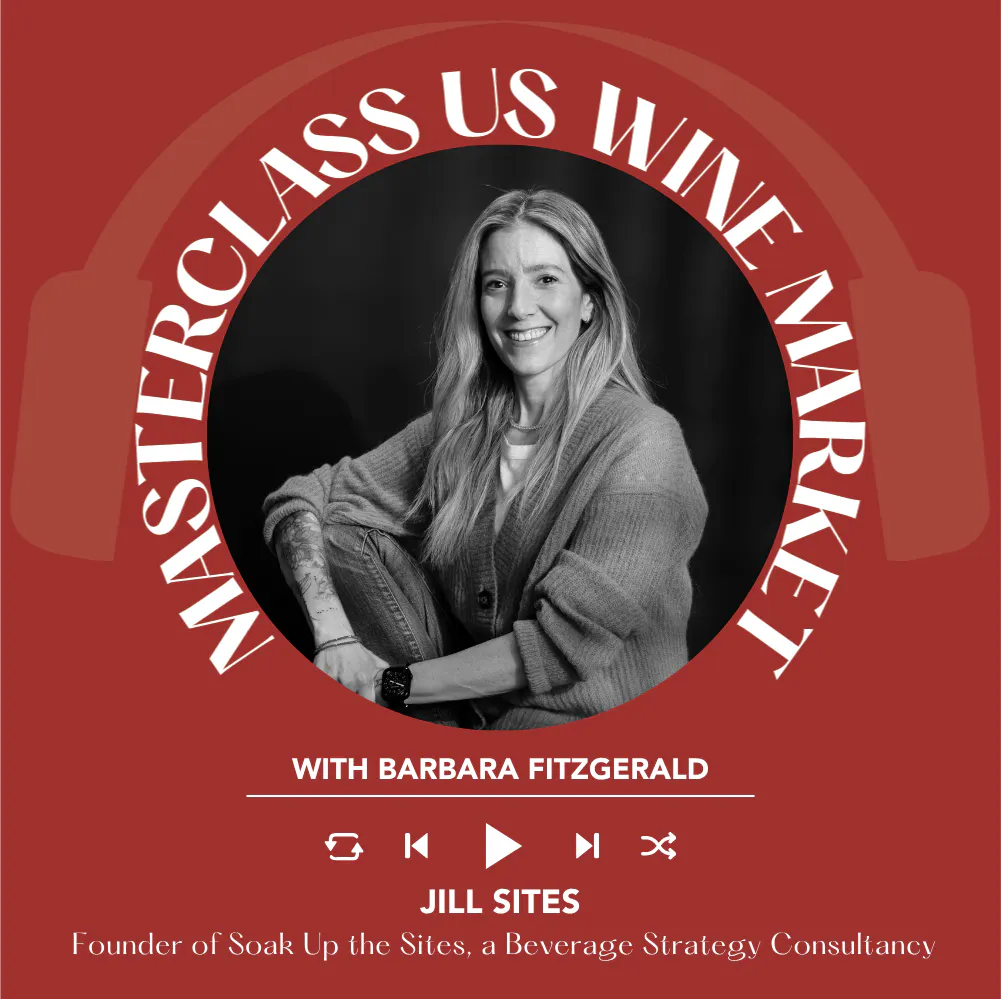
Ep. 2766 Inside the U.S. Non-Alcoholic Wine Market: What Wineries Need to Know with Jill Sites | Masterclass US Wine Market
Episode 2766
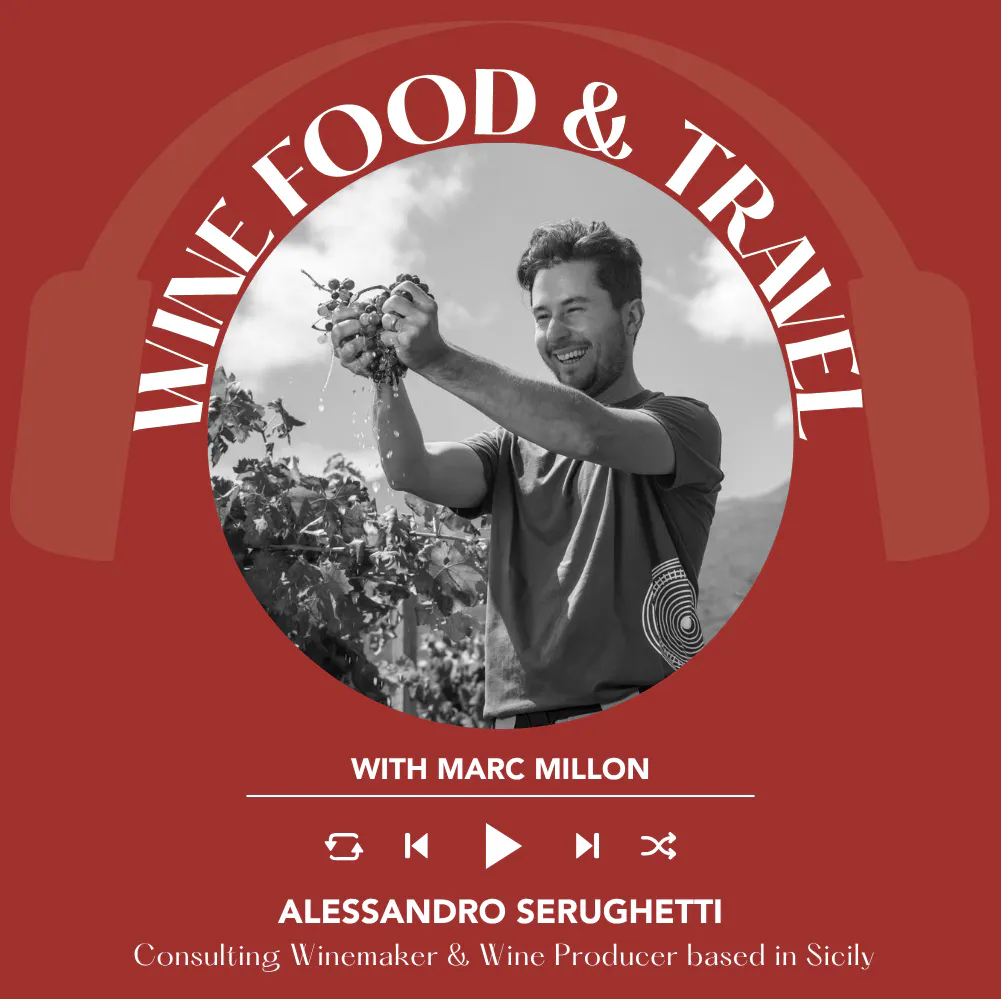
Ep. 2761 Winemaking and Consulting Across Sicily with Alessandro Serughetti | Wine, Food & Travel with Marc Millon
Episode 2761