
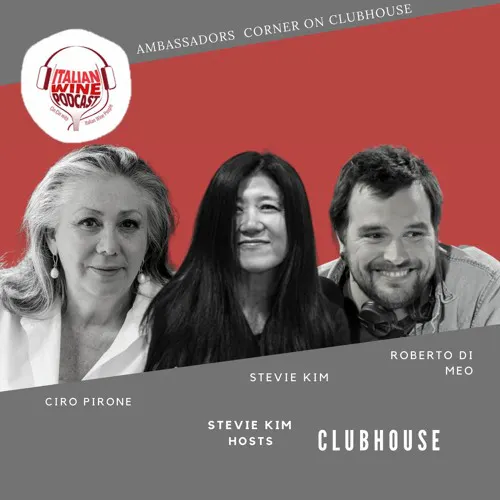
Ep. 632 Gill Gordon Smith Interviews Rocco Toscani | Clubhouse Ambassadors Corner
Ep. 632 Gill Gordon Smith Interviews Rocco Toscani | Clubhouse Ambassadors Corner
Episode Summary
Content Analysis Key Themes and Main Ideas 1. The intersection of art, science, and personal expression in winemaking. 2. Rocco Toscani's unique approach to winemaking at Azienda Agricola Toscani, challenging regional norms. 3. The profound connection between the winemaker, the land, and the vineyard. 4. Adaptation strategies in winemaking, particularly concerning climate change and terroir. 5. The role of personal passions and history in shaping a winemaker's philosophy and branding. Summary This Italian Wine Podcast episode, recorded live on Clubhouse, features an interview with Rocco Toscani, winemaker at Azienda Agricola Toscani, conducted by Jill Gordon Smith, an Australian winemaker and Italian Wine Expert (IWE). Jill introduces Rocco, highlighting his transition from photographer to winemaker, his artistic approach, and his estate's location near Bolgheri. Rocco discusses his philosophy of detaching from the stylistic image of Bolgheri, focusing instead on the unique potential of his land. He details his primary grape varieties (Syrah, Cabernet Franc, Teroldego, Greco) and his obsession with vineyard work, emphasizing that quality fruit reduces the need for extensive winery intervention. The conversation also delves into his distinctive wine labels, which he views as personal reflections. A significant portion of the interview explores Rocco's passion for breeding homing pigeons, drawing parallels between the pigeons' instinct to return home and his own deep connection to his land and winemaking. During the Q&A, Rocco elaborates on his Greco Bianco production, his preference for minimal maceration, and his innovative use of white grapes (Greco) in co-fermentation to manage acidity in his red wines, adapting to changing climate conditions. He concludes by expressing his desire for his wines to be appreciated for their inherent quality, rather than marketing. Takeaways - Winemaking is presented as a deeply personal and artistic endeavor, reflecting the winemaker's personality and connection to the land. - Rocco Toscani actively seeks to differentiate his wines from the typical ""Bolgheri style,"" highlighting the unique expression of his immediate terroir. - Obsessive attention to vineyard health and fruit quality is paramount, simplifying the winemaking process in the cellar. - Innovative techniques, such as co-fermentation with white grapes, are employed to manage wine acidity and adapt to drier, hotter conditions. - Wine labels are viewed as a crucial, personal communication tool reflecting the identity and story of the wine and winemaker. - Personal hobbies, like pigeon breeding, can offer profound philosophical parallels to the dedication and journey involved in winemaking. - Authenticity and the intrinsic quality of the wine should be the primary drivers of consumer appreciation, rather than external factors or extensive marketing. Notable Quotes - ""Wine making is about art as well as about science."" - Jill Gordon Smith - ""The more effort I put into it [the vineyard] and the less effort I have to put in the in the winery."" - Rocco Toscani - ""It's like raising kids... it's amazing. It's an amazing job, and you have a project and you sort of focus on something."" - Rocco Toscani (on winemaking) - ""The labels are... something that reflects my, in a way, my, my point of view of what has to... be shown or how I view the sort of communication that I have to on the bottle."" - Rocco Toscani - ""I would like to have... my wines are selfish because you like the wines, not because of any stories that I could tell."" - Rocco Toscani - ""It's a moment of sharing. So I think it's more about who do you exactly with, rather than what would you need with it?"" - Rocco Toscani (on drinking wine) - ""I'm an acid king. I call myself the acid queen."" - Jill Gordon Smith Related Topics or Follow-up Questions 1. How do winemakers balance expressing a unique terroir with potential market expectations tied to renowned regional styles? 2. What are the long-term implications of co-fermentation with white grapes on the aging potential and stylistic evolution of red wines? 3. Beyond Greco, are there other Italian native white grape varieties that could play a similar role in managing acidity in red blends? 4. How does Rocco's background as a photographer influence his visual approach to branding and the aesthetics of his winery? 5. What are the challenges and rewards of being a ""solitary"" winemaker who prefers to work directly with the land rather than engage heavily in social media or traditional marketing?
About This Episode
The hosts of a wine club meet with guests and discuss their upcoming wine tasting sessions, while also discussing their guest host, Jill Gordon Smith, and their Italian culture. They express their love for Italian wine culture and their desire to grow their own grapes and show their potential in a well-designed image. Speakers discuss their love for the vineyard, their love for wines, and their desire to create a brand. They also talk about their love for birds and their desire to create a brand. They express their interest in traditional wines and their desire to keep their current wines.
Transcript
Welcome to this special Italian wine podcast broadcast. This episode is a recording off Clubhouse, the popular drop in audio chat. This clubhouse session was taken from the wine business club and Italian wine club. Listen in as wine lovers and experts alike engage in some great conversation on a range of topics in wine. And remember to scribe and rate our show wherever you tune in. Before the show, here's the shout out to our new sponsor Fairwind. Federal wine has been the largest wine shop in Italy since nineteen twenty. They have generously supplied us with our new t shirt. Would you like one? Just two fifty euros and it's all yours. Plus, we'll throw in our new book jumbo shrimp kite international grape varieties in Italy. For more info, go to Italian scars dot com, and click donate or check out Italian wine broadcast on Instagram. I'm Joy livingston standing in for Stevie Kim, who is on a plane right now. She has left us. I in charge. She might regret that, but, it's all good. We're good for today, and I have my wine. So does Lika, who's with me here. Thankfully. Thankfully. She's the clubhouse manager. And I'm the producer of the Italian wine podcast. So welcome to the Italian wine club on Clubhouse. Normally, we do these sessions weekly on Thursday, eight pm, CT, but this one is at nine PM because one of our speakers tonight, Jill, is in Australia, and so she's already getting up super early to do this. So we really appreciate it. So this is Ambassador's corner. Where Italian wine ambassadors and wine lovers get the chance to interview their favorite wine producers. These are fireside chat style interviews, and we already have a great lineup but it's never too late to nominate your favorite producer. So you can always hit up Leica on social media. I'm on Instagram, so you can also follow me and reach out to me as well as on WhatsApp. Yeah. Or you can also just go to w w w dot Italian wine podcast dot com. This session will be recorded as always and will likely be released on the Italian wine podcast in one of the coming Thursdays. And we do this to reach more listeners especially for those who can't participate due to the time zone. So I present to you our guest host today, Jill Gordon Smith. She has nominated Raco toscani, So I'll let her actually, talk about Raquel, but I'm gonna just quickly introduce Jill before I hand this over to her. And then, of course, at some point, at the end, she will probably allow for questions from the audience and so forth forth. So she is an IWE and of an Italy international academy expert and principal CEO at fall from Grace wines, the winemaker and boss lady. And she does minimal intervention winemaking In the McLaren Vail region in Australia, and she focuses on Italian grape varieties. She makes Monteputiano, Carignan, Merodabola, and Arnese in clay pots, as well as syrup, And let's see. You do a lot of stuff, Jill. So this is gonna be, she runs a wine and spirit school. She writes. She teaches. She judges. And you are named Women of inspiration at the twenty twenty Australian women in Wine cards. So that's really awesome as well. But I'm gonna hand it over to you. Let's see here. Like, am I missing anything? Or Yes. Well, before we start, we wanted to ask, we're actually very curious about, why you chose Rocco Tuscany as your favorite producer? Good morning, everybody, or good evening. Lovely to be here. Now, why did I choose Rocco? Well, Rocco. I I really love Rocco's wines. We don't wanna give him too big ahead though. He's making really innovative world class wines that I think have personality. And they have a re they're a real artistic expression. And for me, why making is about art as well as about science So I love his wines because they've got absolute drinkability. And for me, that's something that's really important, and I think Raco's wines really do that. So, he also comes from an amazingly talented family who are really passionate about Italian made So I think it's it's wonderful. The real code's making such a beautiful wines from such a beautiful place. So another question, though, why why are your learning objectives, that we should expect for this interview? Really, I'd love people to understand the impact that Italian Native grapes are having around the world, especially in Australia, because they're so important for addressing climatic issues here. So it's wonderful for me to have the opportunity to talk to other one makers like minded wine makers that are, are using native grapes that I can I can use here that really help me with wine wine making? So Thank you so much. Well, okay. So we're gonna give you the floor. So, yeah, go ahead. Your thing, Jill? No worries. Well, hi, everyone. I'd really, am so grateful and so thankful to be able to introduce Oroco toscani to, the Via community. He's a really innovative premium producer. He's making such cool wines. He's the winemaker at Azienda Agri Cola toscani. So I know as a child, she wanted to be a horse breeder and, because he's always loved animals. But he has quite a well known family of Willdan's father. And so he picked up a camera, which is probably the same as his dad, studied, opened a personal studio and went to school to become a photographer. And, worked around the world doing that, but he was called that time to be a winemaker, and now he's a winemaker in, to Salimara, Baritimo. And I know that Rocco considers winemaking to be an artist as well. So, Charles Roko. Chile. Jile, Joe. Thanks so much for chatting to me tonight. Now I've visited your beautiful estate. And seriously, I could really see and feel the passion that you have for the farm, the vineyards, and your product from grape to glass. That was the most important, and wonderful thing was watering around those vineyards. So can you tell us about the grapes you've got on your state, why this particular place is so good for growing them? So I'm buying Casadi money you know, because animal kingdom is a small town close to Bullgate. So it's a very important area that I am in a way considered one of the producers in unlucky areas because I'm really neighboring Well, guys. So it's it's, it's kind of a hard task to, to follow-up. But, you know, when when I came into the winery, I, you know, my my first idea was to really detach myself from what was the original image of this area. So I think it's, you know, it's a it's a very important area and it's, you know, a lot of wines grow really well and, I mean, it's it's, in a way, it's an easy area. It's probably like that. You know, it's, it's made for that, or at least it shows that it's made for that. And, so I grow Sierra. And Tabernes Frank is my primary grapes. And then, I have Terro Hodego. And then, I grow some Greco. I put the white grips because I do cofermentations with the reds. So I I started this way, and I'm still doing it. And but, now I'm also doing a very, very small collection of greco. I do have a pick around four hundred bottles of it, but it's very, very interesting. So probably I'm gonna grow with that too. And, so, yes, I I love this place. I think it's it's so gorgeous. I think you're a coast we're both coastal winemakers, where I am in Clown Valley. It's got a very similar vista. And then when I first stood on your land and look down towards the Iranian sea. I was really struck by, basically, how beautiful it was, but also how familiar it felt for me as as far as the landscape. And, it it is. It's just on the edge of Walgreens, a bit like Puna Warara in Australia, which we grow great cabinet. If you're outside of that region, and even if you're just a meter outside of that delineated area, you're not considered to be in the best area, but the wines are amazing. So does this give you a bit of a freedom to be just on the edge? Yes. Yes. Because, yeah, to tell you, honestly, I I I picked up the the winery it's being a winery that was, I wouldn't say, imitating, but at least going in the in the direction of stylistically of Borgen. So for me, the first the first, the real object was to do my own, do my own thing or at least the the the, you know, I I was I was a photographer. And the good thing about it was that if you don't know, hit your job in Milaro, you pick up the camera and you go to Britlito, and for New York or Paris, and you do your job there, and maybe it works better. Here, I mean, I'm I'm extremely lucky to be here, but, you know, the vineyard is where it is. You can't move it around. So so it's, you you have to sort of find the real potentials of the of the place and sort of work with that and and see what's, you know, what's what's the result and then also the fact that you study a market or, or at least, you know, we, in a way, we make fair fashion. You know, we we we decide what's gonna be next or in a way, so it's it has to be something that has to go outside of a well designed image that, you know, many following this area that is probably not not exactly the the only way to do it. So, my my my objective was to really give my own interpretation of this of this place. And and, you know, and the reason why I came here is because, you know, I I I was born and raised here, and I, and I, and I think that this place has to, in a way, go on and and show that the real potential that I saw that. So this was my central project, you know, to to really discover in a way? What what was really the the the the the great parts of this piece of land? Yeah. So excite. It is so exciting because it's most artistic and creative process scientific So, you know, I love wines that reflect people, but their personalities also their place. But if you can make one anywhere else in the world, I'm gonna put you out of your comfort zone here, where would you do it And what would you make? I don't know. I mean, I'm a big big interlover of Central Mesa. And, I I don't know. I I'm a very, very, very solitary person in a way. And, so probably I would see myself somewhere in some heroic winemaking side of a mountain somewhere where it's, you know, maybe a place where there's a little bit more water than than here because now it's starting to get really dry or, you know, when you depends on the season, you know, when I talk to my friends in by Felina in the spring. They say, oh, it's still snowing here. I'm like, okay. No. This place is cool. Yeah. So, you know, it's, every place has its own story. I think I honestly, I the reason why I came here is so this is the story. Have to tell you this story. I was I was born and raised here, and I, you know, I I I love this place. I mean, I I could, you know, I could do any book for this place. So we went I went with my father in Bordeaux. And the show went terribly bad, but really bad. So I I sort of started to calculate how much longer he could hold on to a project like that. It was just, you know, I don't know. It wasn't really working in a way. And, so I I picked up the the project of wine because in a way to defend my the land where where I was born. So in a way, I have to sort of find the the the the right solution to make it in a way work. And, you know, it's it's, you know, you're I'm I'm attached to this to this place. So it's, you know, for me, seeing things that go better and better every year, it's, you know, it's, it's an amazing thing. It's, I don't know. It's a love story in a way. It is a love story. Absolutely. Do you find so for me, I I can see how connected you are to the land and for me, that's the most important thing is is the vineyard that we we sort of each year we're showing an expression of that particular vintage. It's like having a time capsule of that year. That's what I find so exciting. And I can see that in your wines having looked at, quite a few of your wines now because, you know, I only discovered your wines through Via. If I hadn't come to do the vehicle course, I wouldn't have meant pinter, and I wouldn't have met you and some of the other, you know, amazing ambassadors that we've got there. And I was blown away by just how genuine you work and how country you were, even though you're such a a cool talk, sort of person, like, you you're very much solitary and and country quite shy. So it's really good to look at your wines and see that expression. And I wanna ask you, what part of the process do do you enjoy the most? Are you a vineyard person or a wine a wine person? Do you enjoy the wine making more or the vineyard? I think the whole the whole thing comes from the fruit. So I'm I'm completely dedicated to the vineyard. I mean, this is like, you know, I'm obsessed in the vineyard. It's, I don't know, I cut all the grass in the vineyard by hand with, how do you call the little thing with the strings in the end of it? They just put your daughter in Thailand. Anyway, I'm, you know, I'm, I I I declare it. I'm, obsessive precise, person. I I don't accept any mistakes in the vineyard, and I'm the one that is responsible for it. And I, and I do basically all the work in it. I have my my my guys, my my team, and but it's, you know, it's I think the most important thing is when you bring home the day of the harvest, and this is this is something that, you know, I see every I mean, I see it every year that the more effort I put into it and the less effort I have to put in the in the winery. So Exactly. So it's, yeah, the vineyard does everything. I mean, it's Yeah. Yeah. No. There's, and then, yeah, the the the the winery isn't, you mean, it's important, but at the end, it's just a very, very, very small process that compared to what you do to to bring home a perfect bunch, I mean, it's, you know, it's I honestly, when we do the last day or it's sort of this via coaches that you have to do every year that you get to the end of it and you're like, wow. You know, I I only made it. And it's, you know, this is the the part that really, I enjoy the most. And, you know, it's and and the fact that you see things coming along really slowly and sometimes too fast and, you know, and this is the the the real part that we we do. We have to sort of wait. We have to wait and see when it's the right moment to do things. And and this is, you know, they don't really tell you. You have to sort of constantly be present in it. And and this is what I like. You know, I I really like to stay out there, and, you know, sometimes if they're around Me too. Yeah. I think that's that's the most important thing because you, you know, you can't make good wine from bad grapes. It's all about the grape. And as winemakers, I sort of think your philosophy's pretty much the same as mine as your babysit and guide the wines, but it's all about the fruit you bring in and it's just wonderful to hear you talk about your passion for the vineyard. What's your what's the job you hate the most in the winery? I hate the cleaning. Well, I'm making so about ninety percent cleanings. Yeah. The clean now came off. Okay, team. Okay, clean. Yes. The cleaning is horrible. Yeah, the cleaning. The cleaning. Yeah. But, no, I think it's, I don't know, I I don't really I don't there's not really a moment I don't like. Probably the worst moment is the last day of harvest when it's finished and you say, okay. And now And now we now we have to sell it. So just Exactly. So it's, this is the part that is the less romantic. I think that's the the moment where, you know, to just, you know, hit the streets and and sort of sell yourself to whoever is, you know, it's willing to, go your way. But it's, oh, I I think it's, you know, it's all it's I don't see a bad part of it. It's it's so fun. I mean, it's it's like bringing your kids along. It's it's, it's, it's, like, raising kids. It's, I don't know, it's amazing. It's an amazing job, and you have a project and you sort of focus on something, the, and there it's an amazing feeling. And then if you don't get there because sometimes it happens, because you still work on the sky, you know, you know, the other room for women with the vineyard. So you don't really have the control over it, and and you and then you start really thinking of what am I gonna do next year to really avoid this mistake or and, you know, it's and you restart and you you sort of innovate and wished and and hold. So it's, you know, it's it's fun. So, yeah, It isn't so fun. It's a fun job, but I I hear what you're saying here. There is so much, especially when you to be a good one mate or even bit of cold fist, you have to be a bit of a control freak. And it's very hard, isn't it to sort of at the end of the the harvest to let it all go and think, well, I've made the this one I can make out of those grapes. And now I've gotta go and seal my soul in the trade. It's really hard people in the trade because you're actually exposing your heart and your passion, and you just hope that somebody loves it. Do your family get involved in the harvest? I know you've got two beautiful kids and a gorgeous wife, Paige. How better did that? Yeah. Yeah. They do. They, you know, become become along. They they I don't I don't force them to do it, but, you know, if they if they want to participate, they do, honestly, I feel better when when they don't come. But I but just because it's, you know, I I want them to to have to have fun while doing it because it has to be fun. But at the same time, I then I would lose that control freak situation. That just blows me off, and I on the, I don't concentrate. But, no, it's, you know, it's, I think the harvest is, is that feeling that I wanted to bring back, which I lived when I was a kid. We had a small vineyard by the house, and, in September was always this, like, moment where you sort of yeah. You go in the vineyard, you pick some grapes, but then you have the big dinner, you have, you know, everybody's happy about what happened. And, you know, it's it's sort of a it's a big celebration in a way. So I I I know I wanna keep this thing going on, and, you know, I we have a big dinner on the last day, and, you know, it's it's, in a way, it is a family thing. I mean, my, my, my, the guys that work with me are, So we're part of my family, you know, I see it Monday. And I we we we pass into bad moments, though, we're we're in a way because it's it's really hard and it's it's physically hard to do it, all the way because Yeah. It's a show. In the winter. Yeah. Definitely cold in the winter? No. It's cold when you when you prune, and it's, you know, it's it gets too hot when you have to hot. So select the grapes. And now it's heating. There's not really a a comfortable moment in the video, but it's always. And if it's comfortable in the weather, you have to, like, you're kneeling down and in front of these, you know, creatures that produce whatever we do. And, you know, it's it's it's No. But it's, it's great. It is. It's honest work, Rocko, even and the glamour goes out pretty quickly. Basically. Hey, your labels are amazing. So I know that you're a designer as well. They're really in tax all their fun. They fit in beautifully with your wines, but they're not the traditional style of Italian wine labels. You know, I I grew up in this, and, I I think that, you know, the labels are many times I go into wineries and I buy by buy labels. Honestly, I buy buy labels because it's, it's part of the process. So it's, it's, you know, it has to sort of give you a hint of whatever If you know it, it's better if you don't know it, maybe you can imagine, you know, it's it's the same it's the same thing as, I think as a picture. You know, you you cut out whenever you don't wanna the viewer to see, and this is what I'm gonna show. And so that the label is a little bit a very personal thing that you have, you know, everyone has the it's own story. The, you know, I every bottle of my has a has a personal link to me. And and I think it's it's it's even more important that when, you know, I hand you my bottles, I scared you yes, and I'm giving you part of my family. So it's it's, you know, the labels are, I think, something that, you know, reflects my, in a way, my, my point of view of what has to, you know, be shown or how how I view, the sort of communication that I have to on the bottle to to, you know, even to attract attention, I mean, I don't I don't Yeah. I don't, I don't say no to that, but it's also in a way my own personal thing or tie that, you know, I I I see it behind. I see the ball, and I I have the story to tie to it. I mean, you know, it it it makes it even more personal to me. Do you still get excited when you see your label, and or one of your bottles on a shelf in a retail store or a restaurant table? Yeah. It's pretty yeah. It's so exciting. Then sometimes I see it maybe on the table as somebody that they're not well dressed, then then it kind of bothers me, but, you know, but it's, no, it's it's, you know, it's an amazing feeling. It's, it it's your work. It's like, you see, it's like when you're going in somebody's house and they have your picture hanging on the wall. And you say, wow, it's, it's it's an honor in a way. Yeah. It isn't it feels pretty strange. It's it is an honor. Hey, can I ask you, what grain do you think best is a represent your brand? Is there a great or is there a great plan to plant at this state that you feel would grow really well there? I I'm working on the Sierra, which is, you know, it works very well. We have, we have very loose grounds, very iron rich grounds. In a way, I'm on the same hills as Bullgating. And this hills in front of the sea in Tuscana are called the metallic hills. I don't know if you know there's a town in Isolde, which is called Portofebayo, where it was like a huge mining place for iron. So, you know, I haven't had the the main grades that I grow, and I think a fantastic ex expression here. I honestly, I wouldn't change Friday. Probably, no. I don't know. If I was in the maybe in a different area with different temperatures, maybe San Jose or maybe at my height, at the beginning, could could work, But, you know, it's So you're happy with the grapes that are growing super happy. Super happy. Yeah. And, you know, it's it's, as I said before, I mean, sometimes you have to sort of Yeah. I would like to replant the vineyard in another way or, no, maybe not, but this is the way it is, and I'm gonna make it work this way. You know, it's it's something that I I I have had somebody sort of handed me this beautiful thing, and I am gonna pass it to somebody else. And whoever decided to put this, you know, I I I agree with it. I mean, I'm changing little parts and you know, I'm grasping, for example, the cut olive oil slowly with the geico and but, no, I think I'm gonna continue with, Calvin effect. I think this is the real grape in this area. Yeah. It's, it has an amazing expression, and I have all the producers that make cabinet strike one hundred percent. You know, I think make very, very, very interesting wines. Here. I think what would be wonderful to do is, as I said, McCarranver, where we live looks really similar to, your area, and it'd been really cool for us to make a Sierra over here, and it's a you can come over, make a cigar here with me, and then I'll come over, make a cigar there with you. Sure. Sorry. We hang out and do a colab. K. What do you what do you like to drink when you're relaxing? Are there any other prod and are there any other producers in your region that you admire? I'm a big fan of the surgeries in the, quarantine, Glasgow, and Montagena, but, Yeah. I would, I think more more than fifteen I could win for me. Alright. Much than you said? I mean, I think on how I, I, honestly, I drink very different things all the time. I I I almost force myself to discover new things all the time because we still don't have to be we have to, you know, we have to understand what's what's going on in places that maybe they're more fortunate in a way. They're in very, very good places to produce wine, but then at the same time, you drink wines from producers that are not in lucky areas that can bring out, you know, expressions of wines that maybe you would never think, you know, and you stay in the classic areas and then, and then you don't discover new things, but I really not try to, you know, taste everything I can so that, you know, to enlarge my my knowledge or, you know, things that I, you know, select things that I don't start to analyze, to, in a way, imitate also. I'm not saying I invented anything. It's just, you know, just, you know, I'm sorry. I'm trying to go the closest as I can to something that I really like. Yes. We're taking some inspiration just like you would in art from from other other winemakers. So sure. Now I know you love breeding pigeons, and it was really beautiful to be stayed at your estate. And in the morning, you have this amazing pigeon coom I had no idea that pigeons cost so much money, but how did this fascination start? And what do you love most about your birds? So this thing started, when I was living in Paris, and, I was working in Paris, and I would go on Sundays if this market, the same bird market, and I would sort of buy these birds that I would breed and then, you know, go back to the market. And then one day, I I love to eat peachy peachy because they in in this area, we eat a lot of peaches. So I when I when I decided to come back, I I I wanted to sort of have my own pigeon group with the pigeons that I would eat, but then I started looking on, you know, I was looking for the case DS degree, you know, and then I kept falling into these homing pigeon options. And I was like, Why? My people spend so much money on this one. And so I started reading and reading, and then I sort of figured out that a homing pigeon is exactly as a race horse. There's the the the feeding part. There's the breathing part. There's the racing part. And the then the yeah. For me, it's it's an amazing feeling when you see them come back from a huge race, they can race around one thousand kilometers in one day coming home. And, when you see them coming home, you you sort of you're amazed. The fact that an animal that is released, it's such a distance just, you know, comes home. And for me, they come home for me. They they come home for their own, you know, wife or husband, And they, you know, and but they're attached to the the house. And this is the reason why one of my labels, they put a picture because my whole life, I, you know, I traveled a lot. I I I went from many places, but every time I had a minute, I would jump on a plane or a train and I would go home. So, you know, this this is a sort of something that tied in this place. I'm the first time I I I tried to, you know, release them someplace, and I saw them coming home. I was like, wow. This is, like, it just blew me off. And, you know, I'm from there, I started, and, you know, I I race every, and I I'm very competitive. No. I just test it. I just say the ship, you know, I like to be, you know, I like to do things well. This is, you know, I like to do it. And, so I I started racing pigeons, and it's it's a lot of fun. It's a it's a very nice. It's a it's a very incredible animal in your way. You know, they they're attached to the house and they they fly for hours and hours to come back home and once they're home, you sort of, you price them with all the effort that you can. So this is, you know, it's it's very similar way. It's very similar to making wine. I mean, it it doesn't really change. You know, you put the extra effort. And things just come out the way you sort of thought of them, not always, but most of the times. Yeah. It's I mean, even it's it's wonderful because my grandson used to breed pigeons in in London, we had massive massive pigeons. And when I was flying, spoke to a pilot once too. I said, please don't talk about flying tonight. And what do you like to do? And he said, I breed pigeons. And he said, they're the most aerodynamic bird in the world. Yeah. So you can't get away from that. Is there a piece of design mean, this They are a piece of design. They fly they fly on races that are around four hundred, five hundred kilometers. They fly at eighty on an average of eighty kilometers an hour. This thing's just they're amazing. When they come home, it's just, you know, when I talk about it, give me shimmers. So So these are then that's obviously one of the things that makes you really happy. So what other things make you really happy? Go to the to my page. I mean, this was in the afternoon, in the in the evening when I finished my work. I go to the pigeon house, and I I make them fly, and I sit there and look into the water, and I I look at them fly, and I sort of it's the moment where I sort of detach from everything, and it's, you know, you think how you could do better things tomorrow or in the next month or the next year. And, you know, it's it's that moment where you sort of have that cool down, maybe, you know, a nice glass of wine or But it's, yeah, that that moment is my moment. That's really important to have that, like, a mindfulness, a meditation. Yeah. So where would you like to see your brand in the future, okay? Everywhere? I don't know. I I I would like to to have, you know, to to build a brand or, you know, go in the direction where, my wines are selfish because you like the wines, not because of any stories that I could tell or any, my thing, options that I could use is just the fact that you take home a piece of me or a piece of my my house or my my work or my idea. So it's it's in a way I, you know, I I I love it when people that have sort of a a different head or they they they work or they, you know, they're their their curiosity to sort of jump into something that you, you know, an intimate thing. So I think, you know, my my idea of my my real dream is that, you know, my wines are appreciated because this is the way I make it, but not because anything else. So it's, you know, it's that's the really difficult part that you you sort of I'm not really a big social media or whatever I don't really do. But I, you know, I think the results come from hard work. So when when you see the bottles in places that I like. This is the, I think, the most amazing feeling is when you go to, you know, New York in a fantastic wine winery and you find your wine, you're like, wow. You have to very quietly take a photo of the wireless. Yeah. I know. But without everything, nobody's seeing you and and you can't trust it because it's just strange. It looks like maybe it's like immediate. Yeah. I think you've made the bed. You're like, wow, look at that. You know, I'm sitting by these amazing producers and, you know, I I would have maybe never have thought to be in this spot. So, you know, it's, but I think it's it it comes really, really, really, really, really, really, really, really, really still And, I think who's gonna really enjoy, the effort that we put into it is the ones that come after us, in a way that you build this sort of this piece of, you know, the piece of of your life and you serve every year, you try to make it better, and you try to, you know, and you can't really go and tell people I made it better because it just sounds really stupid. Absolutely, you know, keep you quiet. And, you know, maybe you know that the year that you send a year is not really the best when you made, and you still have to, you know, you can't really say at home. I have fantastic wine sitting in the in the in the winery, but But at the same time, you you think of the year that you made that violin yourself. You put all yourself in. So this is the the dreamy, really cool part is when you when you see your ones and why that you like. That's that's amazing. So I open the floor to some questions. I'm sure there's a lot of our ambassadors. I see Melissa there and Corinne and Hugh, Hayley, showing, Stanley, if has anyone got some questions for Oroco? Tell me this time. Tom, Marco. Jill, Barbara. Hi. Hi. Hi, Marco. So I pasted your wines number of cons and have been very lucky to visit, at your States, with Joe and Corinne and Pinta from back in the day. And so much has changed. You've really evolved, and it's just it's it's been a pleasure to to watch get more focused and tighter in your wines and your mission and what you want to do. So I have a two part question. One is about your white wine, your Greco, because I remember he's seen that back in two thousand nineteen, and, I think you were still trying to figure things out with that. And so I wanna ask you what the genetic material is for the Greco. You know, if it's Cracobianca or if it's, Cracobianca, like, that you assigned in, like, Calabrio or Poulias. And the second part of the question is just, you make predominantly red lines, and I completely understand, the, rules around Bulgeady and and in your area, and Kathleen Nari Timo, to move more towards, Cameron Frank, which I think is absolutely great. During your expression of Sarat, I remember when we were sitting this Stephano Amarini from Cortona, and Mexican, Italy, and, both with Stephanie, you, you guys have the best expressions of of Sarag. In all of it, Aliyah's, you know, obviously in testing. So, you could speak to the genetic material of your Greco and, yeah, what you would like to eat with your red wines. If you can stand on that, I'd love that. Thank you. Where's the Lisa? So the graco is graco Bianco. I took the I grabbed the get on the wood, connection that you do in, I took that, family there. And, I changed it on on their line, since the one you trained, it's, I did it on the first year, the one that you tried was, I masqueraded the grapes for around twenty days, which I sort of took that out, and I I masquerade. I called masquerade for two days before fermentation, then I take the skins out, which I think is a much better expression of this Right? It's more personal in a way. I thought that the over macerated, was a little bit too general in a way. You know, you could make this anywhere. So I sort of I was looking for something that was a little bit of an expression that, you know, could talk a little bit more about this area. So it's, you know, now it's, I think it's much more salty and it's much more elegant. So I think it's working well. And, the other question was, what would I eat? I, you know, I, But, I don't know. Honestly, I I read meat or chicken chicken with, I do a fantastic chicken in the oven with olive that I build. In, here at my house, but it's, I don't know. It's it's a problem. It's very difficult to answer a question of what what you like to eat or what would you, pair it with because it's, I think drinking a bottle wine, it's it's a it's a moment of sharing. So I think it's more about who do you exactly with, rather than what would you need with it? So I think it's, you know, it's a moment of exchange. You know, you use of analyze and you and you paste and you talk about it and you sort of feel the nuances of whatever you are drinking. So I think it's, you know, it's personalized the fact that you can, you know, talk about the wine and then, yeah, you eat. Yeah. I would go with something with meat. Yeah. Thank you. Thank you. Thank you. Thanks. Thank you. Thanks, Melissa. Great question. Hey, Hayley. How are you? Haley. Shaley. I hope you can hear me okay. I'm driving right now. We can hear you. What's your question? It's so good to talk to you all and listen to you, share about the winery it's been. I haven't been there since two thousand sixteen, so it's it's great to see again everything that you're doing. And, but I have a question, just about the sparkling wine that you, started doing a couple years ago, and maybe you guys talked about this already. But if you didn't, if you could just kind of share a little bit about that with the group, So I, thanks, hey. I make a sparkling syrup, Rosier. I, on this on the first year, I came in the one area. I we did the selection of, like, green harvest. And, you know, when it goes to a new place and you sort of start thinking how you can make things work better or, you know, I was looking at all the grapes on router. I was like, too much waste. And so, we decided to make a wine with all the grapes that I harvest that I've sort of make a late green harvest. So right after color change, I I select the grapes of the syrup. So I leave a very good bunches, and I take off on the sort of the clusters or the bad prestriction breaks, and I and I saw very high in acidity and very low color. Still, sort of half of the bunches in a way green and I press I press the grapes, and I start fermentation in stainless steel, and then I bottle the wine, while it's still fermenting. So it's a And when I did it in two thousand and sixteen was something that was completely sort of not cool to do in this area. So I I remember I used to go to places and the the the owners of restaurants would ask me if I brought a beer or something like that. So it was at the beginning, it was kinda hard to have people understand that in this area, we could do something that it will detach a little bit from what was the classic winemaking. So, it's been a fantastic experience for me, and it's it has been something that helped me a lot to analyze also the other wines in a way that you realize that you can do things that are completely different, and you actually like them. I don't say that the other people like, I like it. So it's it's it's fun to make something that goes, you know, and be outside of the normal voices, of your area. So it's, you know, it's a project that continue. I I changed the bottle now. It's gonna be in a clear bottle. So you see that it's with a wonderful formula. And, so it's, you know, it's something that I, you know, it's instead of doing a white wine, at the beginning, I I did that. And it was my my way of saying that I don't want to or rent a vineyard of Vermontino because I need a white wine because in this area, they sell more white wine and red wines. But it was more of the fact that, you know, things can be changed in this area. So that was mine. On my time. Fantastic. Hey, great question. How you look, we've got time. So one more question, Corinne. How are you? Good to see you, mate. Good to see you, Joe. You know, Rolfo, I was just wondering, you you talked about, you know, I guess how important, obviously, everything is, in the vineyard. And maybe some of the changes that are having happening to, you know, climate change course, we we talked about maybe it's getting drier there. Are there some things you've had to do or processes you've had to change in the vineyard to adapt to some of these, you know, new conditions and climate change? Yeah. I so I opened my winery on Saturday mornings, and I have the whole the old timers of the town come and buy the wine bulk wine. And, so this is, for me, it's one of the best moments where they sort of analyze your wines and they give you comments. And this is something that I wanna keep. I I I, you know, I I I like to look forward in a project, but I also like to, you know, traditional part is very important. So, in this area, it's very very well appreciated. Ones that are dark, or they have this, like, powerful look to them. And, and I like this part. I like, you know, wines that have sort of this big shoulders, but at the same time, I I I enjoy acidity, in wines. So I wanted to keep this the fact of, you know, over the override mechanism. Grapes and, you know, if you can continue to keep them on the plan, I I like to, you know, I like to continue and and keep them there. And so to avoid over over structure in a way, I I plant the glycol. I put I I got the glycol to work on the acidity. So I I control my acidities by using white grapes. So it which is a great that, you know, can hold very long maturations. They they can wait the the the red wine. On the Sierra, I use the credit card to, you know, to to hire my activities. And it's something that I I haven't mentioned anything. It's just, you know, they do it in the in the Rome Valley. They use Bioneer, but, you know, it's something that, you know, helps me a lot to have wines that have this sort of power, but at the same time, when you when you sip on them, they sort of give you a little bit of you know, shake and acidity. So it's it's something that I'm very happy with the fact that I particularly go because it's it's really helpful that Gregko and Petimals saying, which which I use, to do this process. And, you know, it's I think it's, you know, we have solutions. This place, it it gets really dry, between June and the middle of August, and then it starts raining again just right before harvest. So Yes. It's dry, but it's, you know, it's an okay dry. I mean, it's, yeah, it's getting hotter, but, you know, this is for everybody. It's it's, you know, you have to, like I said, before you, I can't move my vineyard to Berlin or London I have to stay here. And, you know, it's this is something that, no, you have to sort of find solutions. And this was a solution that I, you know, I think it had a very good result. Good question. And brings us back to one of our learning outcomes is why we use Italian grapes over here. And again, it's for that acidity. I love the fact that you're an acid king. I call myself the acid queen. Robert, thank you so much for Yes. We are so close. Today. It's been fantastic. And I just wanna thank everybody for turning up. I know it's sort of getting around dinner time for you guys, Italy, because I know you eat so late. So I'm gonna pass back. See you together soon for a big vintage party at Rockos. How about how are we gonna be there? Yeah. Sounds good. Thank you so much, Jill. And, Roko, honestly, it was amazing listening to you guys. We sat here with our wine, and we literally just zoned out listening to you guys. It was amazing. And let's see. Next Thursday, it will be Stevie again. And right back. Yeah. Exactly. We're we're actually we we we really miss Stevie. We had some technical issues. And she tends to just know what to do. So anyway, so next week, Stevie, and it's gonna be who is interviewing. Mhmm. Sorry. Interviewing Roberto Dimel. So, yeah, with that said, I am going to, close this out. I appreciate everybody who listened in as well as everyone who asked questions. And Jill. You're awesome. Thank you, Roco, and we will talk to you next week. Thank you so much guys. Bye. Yes. Listen to the Italian wine podcast wherever you get your podcasts. We're on SoundCloud, Apple Podcasts, Spotify, EmLIFM, and more. Don't forget to subscribe and rate the show. If you enjoy listening, please consider donating through Italian wine podcast dot com. Any amount helps cover equipment, production, and publication costs. Until next time, Chinching.
Episode Details
Related Episodes

Ep. 2822 Ep. 20: California | Study Smart for your WSET Level 3
Episode 2822

Ep. 2789 ColleMassari: a long-term vision rooted in Montecucco with Giuseppe Di Gioia | On The Road With Stevie Kim
Episode 2789

Ep. 2788 Ep. 14: Austria and Hungary | Study Smart for your WSET Level 3
Episode 2788

Ep. 2785 From Volunteer to Speaker at TEXSOM with Samantha Cole Johnson | TEXSOM 2026
Episode 2785
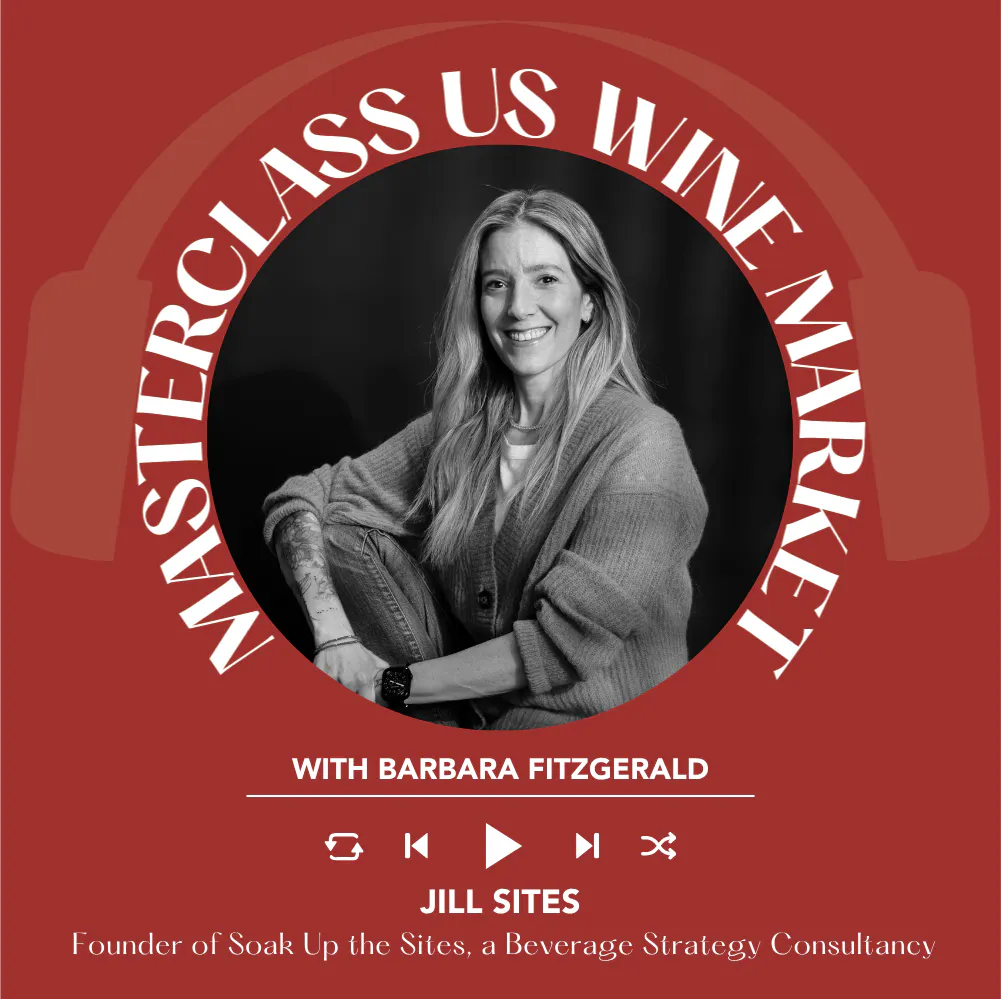
Ep. 2766 Inside the U.S. Non-Alcoholic Wine Market: What Wineries Need to Know with Jill Sites | Masterclass US Wine Market
Episode 2766
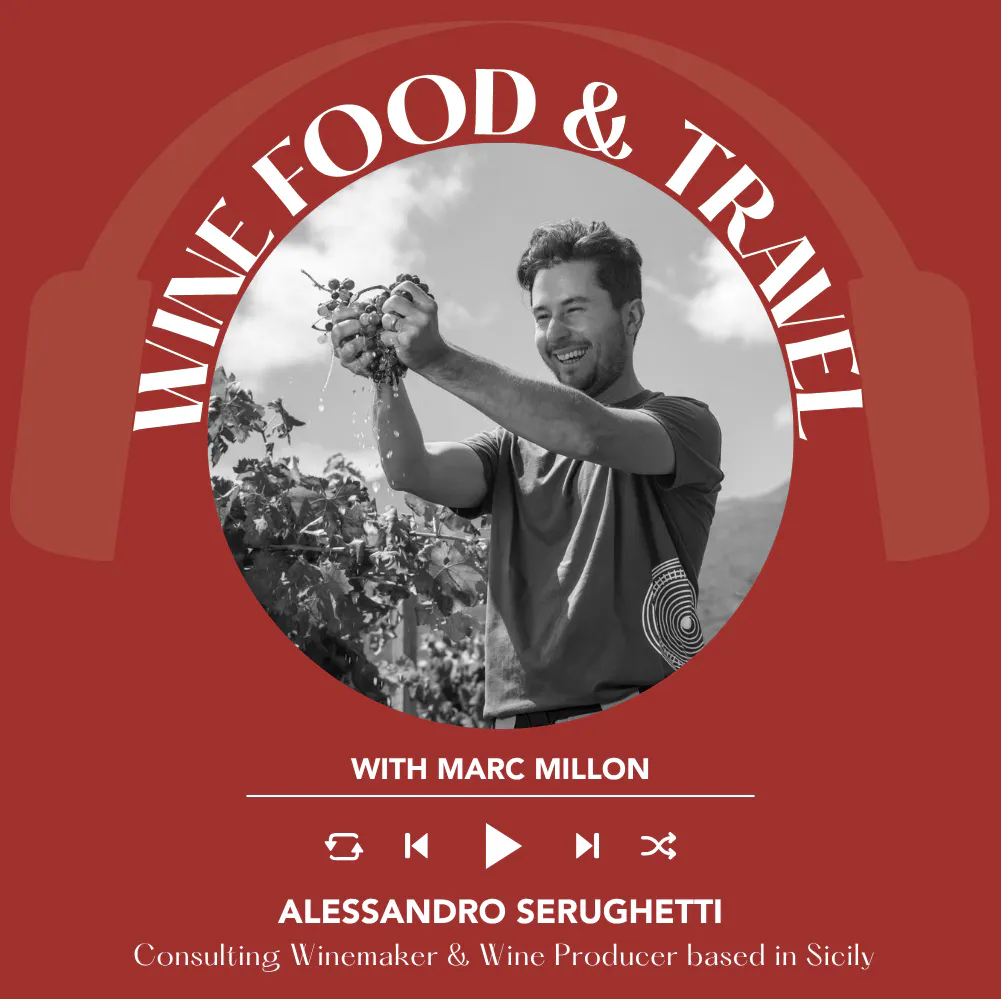
Ep. 2761 Winemaking and Consulting Across Sicily with Alessandro Serughetti | Wine, Food & Travel with Marc Millon
Episode 2761