
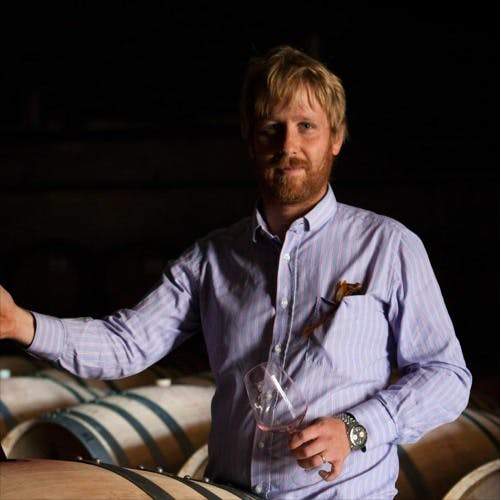
Ep 560 Fabian Schwarz | Monty Waldin
-
Episode Summary
Content Analysis Key Themes and Main Ideas 1. The history and evolution of La Magia winery in Montalcino under the Schwartz family. 2. Fabien Schwartz's journey from winemaking student to leading the family winery. 3. The unique terroir and geological features of Montalcino, particularly as experienced at La Magia. 4. The commitment to and advantages of organic farming practices in Montalcino. 5. Winemaking philosophy and techniques employed by Fabien Schwartz. 6. The distinct characteristics and intended purpose of different Montalcino wines, especially Rosso di Montalcino. Summary In this episode of the Italian Wine Podcast, host Monte Ward interviews Fabien Schwartz, owner of La Magia winery in Montalcino. Fabien shares the history of his family's acquisition of La Magia in the late 1970s and his personal journey into winemaking, including his decision to attend a prestigious winemaking school and his eventual return to lead the family estate. He vividly describes the stunning vineyard views and the crucial environmental factors, such as the influence of Mount Amiata, that shape La Magia's wines. A significant portion of the discussion focuses on La Magia's shift to and certification in organic farming since 2012, highlighting how the winery had already been practicing organic methods for a decade prior. Fabien explains the benefits of these practices, including using cover crops and natural pest control, and notes the growing trend of organic viticulture within Montalcino. He elaborates on his winemaking approach, covering everything from rootstock selection and long skin contact periods to aging in large French oak barrels, emphasizing how the vineyard's natural acidity provides a crucial safety net. The interview concludes with a detailed discussion on Rosso di Montalcino, with Fabien advocating for its role as a more approachable, everyday wine, distinct from its more famous counterpart, Brunello, despite the challenges of its ""number two"" perception in the market. Takeaways * La Magia winery was acquired by Fabien Schwartz's father in 1978/79, building upon a 1974 foundation. * Fabien trained at a prestigious winemaking school in Trento and gained international harvest experience before taking over the winery. * La Magia has been organically certified since 2012, demonstrating a long-standing commitment to sustainable practices. * Montalcino has seen a significant increase in organic vineyards and producers in recent years. * The unique terroir of Montalcino, including high altitude and air circulation, plays a vital role in grape health and wine quality. * Rosso di Montalcino is often overshadowed by Brunello, but Fabien advocates for it as a distinct, approachable, and highly drinkable everyday wine. Notable Quotes * ""to be organic, it not means all only to be organic, to use only the organic product, but it means also to be, sustainable to the environment, find the the right balance in your environment."
About This Episode
The speakers discuss their experiences studying wine and learning about winery, including their organic farming approach and use of copper and sulfur. They also discuss their approach to wine management, including certification and use of organic ingredients, the use of cover crops, and sun exposure. They stress the importance of the Rosarito Montancino wine in winning assurance and the difficulty of selling it. They encourage viewers to consider donating through Italian wine podcast dot com.
Transcript
Italian wine podcast. Chinchin with Italian wine people. Hello. This is the Italian wine podcast. My name is Monte Warder. My guest today is Fabian Schwartz from the La Maja winery in Moltell Chino. Welcome, Fabien. Hi. Hello to everyone. Hello, Montein. Yeah. You're you're one of the privileged guests that this is your second appearance on the Italian wine podcast, who I'm not mistaken. It's a family winery. And you're a big boss at the moment. Tell me a little bit about your family, because they're not originally from Montalcino, are they? Yes. Exactly. Exactly. My father is from, South Terol, so Alto adeje. And, my mother is German. And my families or my, my, especially my father and my grandfather, moved to to Tuscany in seventy eight, seventy nine when they bought the the winery. So at that time, I would say it was it was possible to buy something in Montachino, also for normal human beings. And, so so they they get the possibility to to buy this winery, and they especially in my father, which at that time was twenty eight. So it was actually, I've got a note here saying that Namazhi was actually created in, nineteen seventy four founded. Exactly. Exactly. So Mr. Batolome was the the previous owner. He he planned he get the idea to plant fifteen fifteen hectares, let us say, in front of Santantimo, and, And then, but then he died seventy eight. So he the family started, wanted to to to sell it. So they so that's why then my father bought one. Or in fact, they asked my father if he knew someone in, Alto Adija who could be interested because also at that time, people from Alto Adija, Adija was a little bit richer. So they asked, in this sense, my father, and then he saw the property. He saw how beautiful this place is. And, so they they decided. Yes. Just, but, obviously, we got a video link. And so nobody watching will have any idea of how how stunningly beautiful your vineyard is. When you walk out into your vineyard and you look down the hill towards the hills as well, at the down into the valley, what do you see? Just try and just try and be artistic and and tell us how fantastic the view is. It is. It's spectacular. So the the the nice thing is that, first of all, you have the big mountain in front of you, which is the Montaniata. But just before the mountain, you have Santantimo and Casteno Malte La Bata. And that is the, let us say, the if you if you only look on the on the right or or straight on. And but then if you move to the a little bit on the left side, you also see Castillan Docha. So you have all the Orchard valley in front of you, And, that's obviously very, very, very beautiful place in this sense. And, to be artistic, it's every time difficult to make the description because also depending on the season, it's changing a lot. Now, so you have, in, during the spring, everything is green. So it's you have one idea, and then at the beginning of the summer, start to be you you you start to see a lot of fields yellow, which is very common. It's very, very beautiful. Yeah. When Fabien says in a castellanburg, that's one of the small villages within the commune of Montal Chino. And, you know, Santantimo is a religious Abbey, spectacular building, and it's still inhabited by its, religious followers. And it's one of the biggest one of the biggest draws in Tuscany, I think, in terms of, obviously, outside the florence of, of, for tourism and, and just just beauty as you say. So did you you're born into a wine making you. How did you take to studying wine when you were young, a young, a young man knowing that you would take over the winery at some stage? Yeah. Just let us say that when when I was fourteen, and you have to decide what in which school you want to go, I I I didn't know really what I wanted, but, for sure, I wanted to go away from, to to go outside from Montecino. And, so I watched a little bit the schools, which I could go. And so I saw that this were one winemaking school in Italy, which was the most prestigious winemaking school and in, San Mikaela Ladee in Trento. And so I said, yeah, why not? So I'm going very far away from Monteaccino four hundred kilometers So, and so I decided to go to go there. And then on the school, during the school, I meet few people which bring me to the passion on making wine and all about. With the wine world more than what I had at home. So it was a period which was very, very important for me. Actually, it was safe from not between fourteen and sixteen, not so much, but after that, it was very, very important for me. Okay. So, Fabia, you, obviously, you did your study and you trained, sure, with your father. How did you how did you take to it? Obviously, the studying environment is one thing, but running the winery and having lots of responsibility. Were you happy with that? Were you a little bit nervous? For your parents' nervous? I don't know. It's, yes. I would be. I I I was obviously nervous and in this sense. But after as I say that after school, my idea was not to work at the same moment, at home, but my idea was to to travel around the world, see how it works. And, unfortunately, at that time, my father asked me to to come back home because, two of the employers left. I had to to stay to stay after winery. And, the problem is when you start to to work in your own winery, then it's difficult to go away. And also, in fact, what I did, for to I went to Australia and to to Argentina to make two two harvests. And that because of that during the the wintertime, it was not no. I could I could not work. Let us say like that. And then at the beginning, obviously, it was something where I was a little bit nervous when I when I was making the wine. I would say not in the first years because at that time we still had the winemaking consultant. But then two thousand between two thousand and eight and two thousand and nine, me and my father together, we decided that we could I could try to do it by myself, all the the wine process. And, so the first, let us say, two years were a little bit more more difficult than I was a little bit more nervous. But then year after year, I find my my way to work. Fortunately, I had also some old friends from school, which when I have some problems, I can call them how they call me. It's the same. Also, it's, it's, that's the nice part of, of the one making art. Yeah. I mean, everybody needs, just a confirmation every so often that I do it right. What did you do? What would you have done? But it's good that you I mean, communication in Montagino itself has never was not always been fantastic. It has improved, I think, but with younger people like you who are a little bit more open minded, shall we say? Things have definitely changed for the best. Now, obviously, it's a family estate. Why did you how do you farm? Are you conventional? Are you organic? Are you biodynamic? How do you do No. We are we are organic. We are certified from two thousand twelve. And, in fact, you know, Monte that normally when you, when you ask for the certification, you have three years of conversion. And we asked two thousand twelve when in fact my father retired and I took over the winery because he was never interested to have the the certification because it was too much bureaucracy for him. And, so when I asked for the for the certification, I told them, okay. Like, I can show you that, I it's ten years that we work in our organic way. So I I bring them all the invoices They make the the the analyzes of the soil and everything, and they saw, yes. It's it's probably true. And so I get the certification from the first year, which is something which is very, very unusual. Good that you did that as well that you could And it's good that your father kept all of the records and could show that. And because it's obviously now become almost I mean, do you think people are more open minded about organics these days, either producers or journalists or even members of the public? Oh, definitely. Yes. I mean, it's today, it's something which, it's very, very important and who is organic, who is sustainable in this sense. Also, because to be organic, it not means all only to be organic, to use only the organic product, but it means also to be, sustainable to the environment, find the the right balance in your environment. So it's, because of that, I think it's it's more and more important, and a lot of people, it's looking on that. And I think a lot of farmers and also, wine wine producer or brewers, they see that the most of the time can do it in in organic way, you know, and that, you know, that's I think that, for example, Montachino could be a hundred percent organic probably or, let us say, ninety five percent organic. And without without losing quantity for end quality and quantity in this sense. So it's sometimes it's also you have you have to know that you want to do it. It's, that's awesome. I we have to I mean, if you look, if we look to Montalcino, when I get the certification two thousand twelve, we were, I think, twenty producers which were organic. I think now we are more than eighty. And, I think more than fifty percent of the of the vineyards in Montagino are organic. So that's, I think, a lot changed in this sense. And I'm happy about that. So Yeah. Of the five of the five biggest states in Montacino that have a disproportionate size of vineyards, three of those are now certified organic, which, you know, ten years ago, fifteen years ago wasn't really the case. And obviously, there's a lot of smaller producers like you have, have made that step. It's like the domino effect. I think, you know, they see what you do, for example, and they saw these vines are actually healthier than they were before, da da da da, and I'm gonna it's maybe not such a bad thing to do. So that's a very positive this thing. In terms of the vineyard management, how big is your vineyard and what particular techniques like cover crops, for example, or what do you do in the vineyard to make it look? So nice and makes such great grapes. So we we have, fifteen hectares. It's all sangiovese. What we do, it's, nothing, nothing strange in this sense. We use obviously a little bit of copper and a little bit of of sulfur for the diseases, but for the rest. We so cover crops, and, we try to give organic substances in a very natural way in the sense. And, I think in the last, I can say that in the last ten years, we, we find out a good way in distance. Obviously, how I told you before we try to get, to get the right, the right balance in the environment. Now, so for example, ten years ago, more in fact, more than ten years ago, almost fifteen. We had the problem with the yellow spider, hitting the the leaves, and, a lot of wineries were using pesticides, which in fact were not they they worked at the moment, but then next year, you have even more spiders. So what we decided to do is to find a different way. So in fact, we stopped to work with, with the power software. And so we get, again, the good insects, which are eating the spiders. And, in fact, after three, four years, we we did we stopped the problem. So I think that's the most it's the most intelligent way, so to to work in the vineyard. It's not every time easy, but we we have to try. What about, inter row? Do you, use, sew cover crops? Do you leave indigenous plants between the rows? Over winter, for example. So what we, what we try to do and, in the last years, it's to use between the, between the vines. I don't know how you call that in English. Rifoliano. So that's a clover. Yeah. But it's very little. So it's, It's, you don't have to, you don't have to cut it and, you don't have to work under the, under the, the row. So that's a easy way to, to don't use, chemicals or also if you work mechanically between the the vines, the problem. It's that every time that you sometimes you get, you lose some, some vines, some plants because, you're working too hard. So it's, if you if we can control the the grass under the under the the vines with this kind of plants, which it's it's it would be perfect. So we we are trying. It's on some pipes. It's working on some pipe nuts, but It's keeping it out of the weeds. It's colonizing. You you're choosing what you want to colonize the the inter row. You're not gonna have to mow it every five minutes and compact the soil, shields the soil at the from the heat, the sun. And when it does rain, you get no erosion because the little leaves block the water and then the water can gently go on the ground and not, you know, really, really kill the ground. But I imagine that's pretty cost effective as well. It's it's The the biggest cost is at the beginning. After that, after that, in fact, it's it's even could be could be better. No. It's, because then you don't have to use the tractor. You have you don't have to to do a lot of work. I hope that it will work like that. So it's because like you were saying before, or the biggest, the biggest thing and how you can, avoid the, the the compact of the, of the soil. So that's the the hardest, the hardest work on that. So You mentioned, Mount Temiata at the beginning of the interview, which is, the highest peak in this part of Tuscany. What, and your vineyard sort of sloped down, has the mountain right in front of it. How important is that to the, to conditions in your particular vineyard? Why does it help? So, yes, it's, the Monta Miata. It's, to to have it's very important because, in fact, we are at five hundred meters. So between four hundred to twenty and five hundred meters to to have this slope or to have, it's it's very important because you are looking south. And so you have the first of all, you have the sun effect because we all our vineyard take the the the sun from the from the early morning until the late evening. That's obviously important for the maturation for a good climber and also to avoid the thing that we are quite high. So it when it's going to be cold, it can be very cold, you know, at five hundred meters. So to have the sun, it's very it's obviously very important. And the other thing is that because we are more on top of the hill that's, so it's important because, the the air, it's moving a lot. So you have every time, as I say, it's every time moving a little bit. And so you don't you don't have problems of of mild use and, because you don't have so much humidity. So in fact, that's also very, very important to be on top of the hill or not at the bottom. It's in this sense. It's very important. Okay. I've got a boring technical question about, fourteen SD butte stocks. You changed the root stock, that was being used, which was five b b, Copa, and now you're using one one o, yeah. Why did you change? Because that's very technical because the the COBRA was the old, what, where they were using it during the seventies. And, it's, it's a rootstock, which it's pushing a lot on the on the plant. Exactly. And, the other one, instead it's, it's a rootstock, which is, let us say, technical matter. And, it's the good thing is that it's going quite deep. It makes it so that the plant, it's the maturation, especially, especially it's more at the at the latest part of the of the season. So that's that's why it's, it's also important to use the new ones. Obviously, in the seventies, they didn't have so much knowledge about the rootstocks today. We we have more and more knowledge about the rootstock, so we can decide which one is better for our soil and which which one not. So I think COBRA, it no nobody's more using COBRA in Montech, you know. I mean, you're you have a very interesting position because as you say, you're very high up, you're very solar. You get a lot of weather, but you have a slope, you have air movement, you have the brightness, and the warmth as well. And, so what you're saying is you're trying to let those vines ripen as slowly as possible without, not ripening at all, and getting more freshness into the wine, which makes, I guess, winemaking a little bit more easy. So what what about the winemaking and the aging of the wine? About the aging, like, like, you know, it's, after the fermentation where we, obviously, we are lucky because, especially on the brunello, we work, with the old, old minds So with forty year for which are still from seventy four, so more than forty years. So we can have very high extractions. So we stay on the skins until forty five days on in some vintages. After that, we move in the in the oak. We normally stay let us say between two and a half and three years in oak. We use five hundred titter barrels of, of French oak. Every vintage becomes about one third of New Oak. So obviously the fact to have every time good acidity because we are high that's allowed us to to work, in a easy way. The we don't have we can be a little bit less protected. So, for example, in, let us say, in a vintage where the sanity where the sanity is good, which is, I can say, a normal vintage We have, we never use sulfites until the end of the the the monolactic fermentation. So it's, it's very easy in this sense to work also because you have this, this acidity. You have PH, which are never more than three point five. And that's obviously her quality, but Yeah. That gives you, like, it's like a safety net, doesn't it? It's, you know, but it must be nice that when you're you having that particular tailwind, because it really is a very, very think they'll wear a Montecino, but in some ways, I'm not saying that you can relax because you can never do that as a wine grower. But you've got that kind of that kind of build those building blocks that you know you know that they're gonna be there for you and the winemaking. And that must give you at least a few less sleepless nights during the winemay. You can relax a little bit and have a barbecue during the during the harvest rather than just praying that everything is gonna work. Right? No. No. No. That that that's true. That's true. It's, I I have to say that, the biggest part, it's it's coming, it's coming from the vineyard to pay attention to, to not make, too big mistakes. So that's, that's like that. But and also in the seller, thing, the the thing that everything is here. So that we have. All our vineyards are are around the around the cellar. It's, it's also very important because from when we pick the grapes until we have it in the cellar, it's never more than forty five minutes. So Okay. Tell us about, the wine. Is it called a chile chilego? Yeah. Exactly. Exactly. Yeah. It's our single vineyard wine. In fact, it's, one part of our of our old vineyard. And it's called the cilantro because, we have two cherry trees in the middle of our vineyard. And between the two cherry trees, we every time produce our best grapes, cherry tree in Italian, it's chili. And so we decided so in the with the vintage two thousand and seven, I decided, okay, from that part, I wanted to to make to arrive until the bottle, tilt the bottle separately. Let us try with, a few bar with one barrel. We started to have one barrel. And, now we we make two barrels. But in fact off from that part of the vineyard, we get about ten to twenty barrels. And, at the end, I take the two, three, or four which I prefer, and I I try to to make the right mix. And then we we bottle only two barrels. So we have only thousands at the moment, eleven hundreds, buckles. Final question about, we've gone backwards, but the Rosarito Montancino, do you think when you you make a a a really delicious one, when juicy and fruity and, very hard to put down, do you think Rosarito Montancino is underestimated by people in Montalcino and by by the market. It's it's it's very difficult to answer because it's very difficult to answer because, it's the problem, it's, how in my opinion, it's not undervalued, or we could value a little bit better. But at the end, it has to be one which don't have to be like the, like, like, the Puneval. The problem is that we never speak about the Roso. We every time speak only about the Bruno, that's a little bit the problem. And, the last thing is that when, when you have, when the market is going good for the Bruno, and it's also really good for the Roso. The market that's going bad for the Bernelo. It's also it's going bad also for the rosso. It's more it's impossible to sell the rosso. The thing is that obviously, the the consortium also all all wind producers, we are not spending too much time and money to to promote the Russell, but we we promote a lot to promote. So that's that's the biggest problem for the Russell. But in fact, the the the Russo, it's a little bit the the little brother of the brunello. So it's, the other problem is that a lot of everyone, it's doing, have his idea of the Russell. The the the idea of the brunello, it's very clear, you know, because you have very strange rules also on the brunello. On the Russell, you can, you can do however you want. So there is, there there are some wineries which are, aging the aging the, the Russell also more than two years. So like a brunello in in oak, And then they are wineries which are doing only stainless steel. So it's, you have very, very different rosos, the Montachi, the the Montachino. In my opinion, by myself, I think that the roster should be more wine for every day. It don't have it's don't have to be, like, you don't have to feel that too long, too long aging period. You have to be a wine for the for every day, and that's it's maybe a little bit simpler than the than the than the Panella, obviously. And, obviously, it has to be very drinkable. Drinkable, I mean, that's, it's a wine which when you drink it, you, you want another glass and you don't say, okay, maybe it's better in two or three years. It have to be good at the moment. That have to be the the Ross of the Montecio. And then I think if if you work, if we work on that, if everyone would work on that on that line, it would be not a problem to sell it, and it would be also more important. But the problem of the roster, it will will every time be that it's the, it's the number two. So it's, that's the, that's the biggest problem. So Alright, Fabien. Really nice talk to you. The great interviewee. Fantastic, terroir. Very very approachable wines. Very clear, very precise. I really enjoy your wines. And, thank you. Thank you. Keep up the good work. Okay. Thank you. Bye bye. And I'll see you in Multi Chine. Listen to the Italian wine podcast wherever you get your podcasts. We're on SoundCloud, Apple Podcasts, HimalISM, and more. Don't forget to subscribe and rate the show. If you enjoy listening, please consider donating through Italian wine podcast dot com. Any amount helps cover equipment, production, and publication costs. Until next time, Chinchin.