Ep. 608 Azienda Agricola Foradori Pt. 3 | #EverybodyNeedsScienza
#EverybodyNeedsScienza
Episode Summary
Content Analysis Key Themes and Main Ideas 1. Introduction to Foradori, a pioneering biodynamic winery in Trento, Italy. 2. The roles and philosophies of the three Foradori siblings: Emilia (winemaking/viticulture), Tayo (brand ambassador/commercial), and Marta (biodiversity/vegetable startup). 3. The core principles and practical application of biodynamic agriculture at Foradori. 4. The distinction between ""biodynamic wine"" and ""wines from biodynamic agriculture."
About This Episode
In this podcast, the hosts introduce their upcoming video and discuss their backgrounds and plans to promote their winery. They discuss the pronunciation of Taro Guineago and its impact on the French words "veras"] and "veras." They also explain their vegetable and fruit business and how they grow vegetables on a sustainable and economically viable scale. Speakers discuss the transformation of crops by the food industry and the concept of biodynamic, which refers to the transformation of crops by the food industry. The process of differentiation between different forms of agriculture is explained, and the term "veras"] is related to the transformation of crops by the food industry.
Transcript
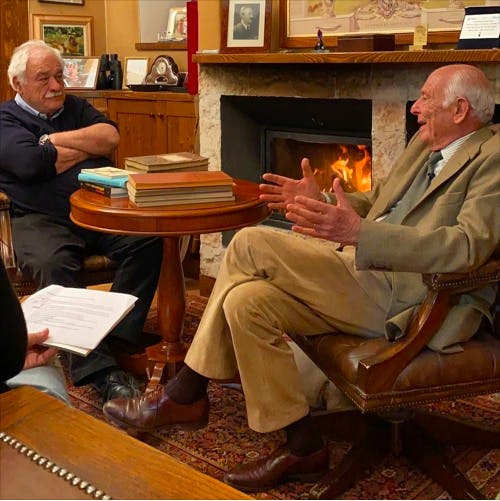
Warning warning. Warning. This podcast contains information in Italian language. In a bad, this podcast contains information in Italian, chinch in. Italian wine podcast. Chincin with Italian wine people. Hey, wine geek. It's nice to have you back. Welcome to this extra special episode of everybody needs a bit of Shenza, where Stevie Kim and il professor take a trip towards A video version of this podcast is available on mama jumbo shrimp's YouTube channel. Check it out. Okay. Go go ahead. You say something. Yeah. And you say something. Hello. I know. It's it's it's past twelve. I thought it was only one person. No. It's okay. This is com complete improvisation. Okay. Welcome everybody. My name's Stevie Kim. With this is a special edition of everybody needs a bit of Shenza. And we're here today visiting, Veradore. Of course, the innovative wine making Institute, if you will, of this area, which is called, very famous for Teroldago, but it's so much more than that. So I'm very great that we're here today because it's very exciting to see kind of the new generation of, winemaking happening. Are you okay with that? No. Okay. We have do we have to start over? Okay. It's okay. As Phoebe began to interview for Adori Broder's and the sister, she realized that her camera may indeed start the recording on wire nail for the cameras. She plays it cool and makes an off cone, but please don't forget that she is the one that always forget to press the recording button. Aya yay yay yay yay yay yay yay yay. So we'll use that as kind of, I guess, like, kind of the backstage. Alright. It'll it'll be like blue first. Are you on now? I mean, yes. He had too much lasagna. I'm sorry. Yeah. This one is Is this on? Yeah. Is this on? It's your phone on. My phone's on. I'm I'm on it, babe. I don't know about you. You're the millennials are not on Are you on? I couldn't. Okay. We're going to start again. Hello, everybody. This is everybody needs a bit of Shanza, special edition on the road. We're here in Foradori. Foradori, of course, is this famous, wine making company in this area of near Dolomiti? I actually have a house up in just above. This is called mezzo Lombard Right? Right. Yes. Right. Okay. So I actually have a small house just like, short distance from here, which I never go in in the mountain house. So I I'm familiar with this area and, of course, of the line. In fact, I came here, like, one Christmas between Christmas and New Year's Eve. I pinged your mom, Emilia, and she wasn't around. She's like, I'm busy, but if you want, I'll make my son come and, you know, open the shop for you. So That's what happened. So I had a chance to meet Emilio before, but I had met Tayo and Mirita. So it's a great it's my great pleasure to welcome them and, grateful that they can sure, share some stories with us. So I would first like to just introduce the three siblings, in order of, I guess, Birth, if you will. So let's start with Emilia. Tell us a little bit about yourself to our audience who may not know who you are and especially Feradori. So since two thousand thirteen, I'm in charge of the winemaking and the Viticulture. But, actually, before coming here in two thousand fourteen, I I studied philosophy. So I graduated How old are you, Lydia? I'm thirty three now. So if You look like fifteen, but yeah. I have a wiser brother. He looks much more mature than me, but, this is, like, genetics as used to shed some of these things. So before coming here, I I graduated in Tubingen, philosophy, and then I I work in some wineries around the world, Shotiabay Blah, and and some stuff. Not a bad place to be. Not a bad place to be. Finally studied in Mupili and and then decided to come to the dolomites. Not only because of wine, also because of skiing, because that's also Yeah. That's your thing. Are you skiing or snowboarding? Skying, but, not on the slow. Well, and Forty pista. Forty pista. Now I see where the name comes from. Okay, Tayo. What about you? You're the middle child with everything that brings with the middle child. Right? That's to be. No. I'm, until I'm thirty one. So, I am the guy in charge of, traveling around and promoting the winery. So I am a big the brand ambassador, if you like. Mhmm. So you're kind of the face behind the new. It's why it's a bit used up and I look older. So I guess Good one. I guess, it's not true that it doesn't use you up to be photographed you know, and all the fans and all, you know, all the Right. Exactly. You you have your fans love, the groupies. Everybody takes a piece of me and so I get older. No. Jokes beside, we, of course, I I share, the decisions with, in the production with my brother. So I'm here doing harvest. We do things together, but most of the time of the year, I'm on the road in Italy and the road, to do, you know, as I as I usually say there is no somebody that wakes up in the morning and thinks about what kind of girl do you want to put on his wine list. So you kind of have to, you know, remember them that you exist and that there is a varieties which are difficult to pronounce, but still taste good Yeah. How do how do the Americans get on with Taro Llego? I don't know. They like it a lot. No. I mean, like, how do they pronounce it? Taro Llego. Taro Llego. Nice. Nice. Mart that nice. Yeah. But it's also it's I mean, even Italian is having a hard time pronouncing it. So it's not really it's a long word. Right. So how how was the how did you because you used to go around all the time, right, because you're the commercial side. How did you live? How did you survive? How have you survived the pandemic? It's not even over yet. Badly? Right. I didn't get the virus, but, Did anybody get get COVID in the family? No, nobody? You know, you can all get, you can sign up for the vaccination now. I don't know if you guys are Novax or whatever, but What? I'm I You are. I'm gonna keep the ride of not answering the questions. Yes. Yeah. Yeah. I kinda figured you're like a no I kinda had that feeling. You are a novaxx. I think the fifth amendment. Yeah. I'm not a novax. I'm not a novax. Because, you know, as of this morning, you can sign up to get the vaccination. South Terrible, it's actually been almost a month. Oh, really? Hey, old man. Okay. Alright. I'm gonna just quickly move over to Marta now just to introduce you. You're the youngest. I'm the youngest of the first three. Right. We have another little brother from another father. Right. Step from them? Yes. Exactly. But I'm the yeah. The the the youngest of the first three, I'm twenty nine years old. Becoming thirty in October. Hopefully, being able to drink cactus again. I'm a mother. So my little son, pacifico is ten months old. I hope by October, I can then part again as I really can. Your son's name is pacifica? Yes. My son's name is Patifico, because his great grandfather was from the America. So my my boyfriend, his father is from the Marqui region, and it's a very rare name. But, it's, yeah, his great grandfather Pachefico. And for me, because of the, Pacific Ocean. So I lived on the West Coast. I farmed in Oregon. I did my exchange here there. I studied environmental science in Firebook in Germany. But I I was able to spend a year abroad at Oregon State University. And, I love the Pacific Ocean. I traveled also to Washington State, to California. I was also in which is Columbia during that year. So I saw a lot of traveling. Lots of traveling before getting stuck here with vegetables, but it's fine. Okay. So tell us a little bit about what you're doing in the company. A different side of business. Right? Yeah. It's like a new startup. If you will. I'm like, yeah, exactly. I'm the startup, vegetable startup inside of the wine estate. So the wine estate is my, let's say, my bank. I would say. So it's my third year of production, and you already said by the fifth year, like every startup, if it doesn't work, you're gonna go back sale wine. No. I mean, it's, my my role in here is to bring in this, side of biodiversity that we claim and work on as good as we can, being a biodynamic wine estate, introducing biodiversity and other production cycles that help us to close the production cycle in general. So I grow vegetables on a small scale. It's about thousand four hundred square meters. So it's less than a quarter of an acre, in between the vineyards under the Pergolang, which are a wide space, terrologo vines. And then, on a bigger field, it's a new project that we're working on. And I supply the local, let's say, private customers that come and some restaurants. And what kind of plantings are you doing? What kind of vegetables? I grow approximately plea between twenty to thirty different varieties, depending on, my mood and the years and how it goes. I grow a lot of greens. So I learn to grow vegetables on a, let's say, sustainable scale and economically viable scale when I in Quebec in Canada. And also when I was in Oregon, I was very impressed about the variety of vegetables that you can get at farmers markets. And the that here, people have a weird relationship with vegetables. They give it for granted that there's vegetables everywhere, but forgot a little bit about the actual taste and the price behind growing our vegetables in a good way. So I do a lot of greens, so salad mixes, turnips, salad turnips, nobody eats here and knows here turnips. I do, all the charred kale. But where do you get the the plants from a nursery? I have a local nursery that produces organic plants. I would like to have my own nursery soon, to be able to bringing the seeds that I actually want the varieties that I want to be growing in my fields because the nursery implies to choose from their own catalog, which is okay, but on certain things, it's not. And so some of the plants I do myself, like, my to make to selection, I do my own plants, same for the winter squash, and some funky stuff that I get from seed exchanging all over the world, especially from the West Coast. And so, sneaking in some varieties that nobody has here. Yeah. So you had mentioned, this concept of biodynamic, aspect of Feradore. Let me ask Dale. So you're the brand ambassador. How how do you explain to your, consumers or even your importers? What biodynamic means, biodynamic, food culture, biodynamic wines. So tell tell us how you explain because of course, you know, your mom was kind of the pioneer, the forerunner in the biodynamic winemaking. Viodynamic, Viticulture, biodynamic wines in Italy. How do you, explain or present yourself, to the audience you have in front of you? Whether there are trade, professionals or consumers? Well, first of all, there is no such thing as a biodynamic wine. There is only wines from biodynamic agriculture. So the unification process, the transformation from grapes to wine is can be regulated by Biodynamic certifications, but in fact, it's it's a separate field. Okay. So how do wine tastes? Of course, is That's a good point. It's impacted by how good the grapes are. But by the name it is about agriculture. It's not about wine. In fact, the founder of by the language style himself would probably not be happy to about wine in general because it's a monoculture. It's it's I mean, it's inevitably a field with a lot of plants that are basically the same. So in terms of, how to differentiate from other forms of agriculture, biodynamics is, has has the traits of a philosophy in the sense that there is Spectrum in which you try to engage with the ideas that are brought upon, by by by Dynamics, which means, you know, in height and enhanced biodiversity, you have the obligation to have animals, you have a What kind of animals do you have? Couse. Cows. And one, and all the secondary animals in a way. The non productive animals, like, dogs and cats, but they don't count. What they're domestic. Chicken. A counter domestic as well. Yeah. Not in in a way. Yeah. Okay. But, yeah. So, basically, biodynamics forces you to, break the logic where you have a problem and you fix it with something that you spray or that you interact with, but tries to work on the resilience of the soil and of the plant itself. So it's basically trying to create, a form of self defense or strengthening of the plant so that you have to intervene less in the moment that you bring this resilience on in several years. So it takes some time to see some, let's say, some results. And we, did the first test on the fee just on the field behind of us, which is a Chazua in nineteen ninety nine. And, you know, you started to see the results in how things grow and how the soil behaves and how many problems less you have when you have actually problematic moments. Like hail or, you just have a more resilient plant, then I don't think that the technicalities of the preference are appropriate here. But You mean the corporations? Yes. Or, But when when did Ferradori become, I mean, embraced biodynamic agriculture? But there is a sort of, Well, this might be a bit complicated, but but by Dynamics, mister Stein, the founder of Biodynamics, was the let's see, the manager of the of the library of, Yohan Volvka from Greater. Mhmm. And, my father had a very strong link to Götte, and he didn't like Buddha. But a lot of the things that he derived from Götte, in his, let's say, agricultural philosophy are actually very similar to what Styno did. So we actually Yeah. That's interesting. So he didn't like he was in Kain about steiner. No. He didn't like him. So that he was a bit too. I mean, he was an ego maniac and that he had some religious traits that he didn't like. And he was also using Guitte's ideas to propose himself as a savior. Mhmm. Which is, you know, you know, we argued. But, so a lot of the things that we were applying in terms of, reasoning about agriculture and the way we're already trying to, you know, propagate plans by seed, and a lot of the reasoning was actually the same. So my mother embraced actually by Dynamics after meeting, Mark Kailmais from Mazas. Mhmm. So he was a little bit the person who gave her more of an access to actually to to Steiner himself. And this was, this was the beginning effect. Thank you for tuning in. Once again, to the special episode of everybody needs to be Shenza. I'll see you next time.