
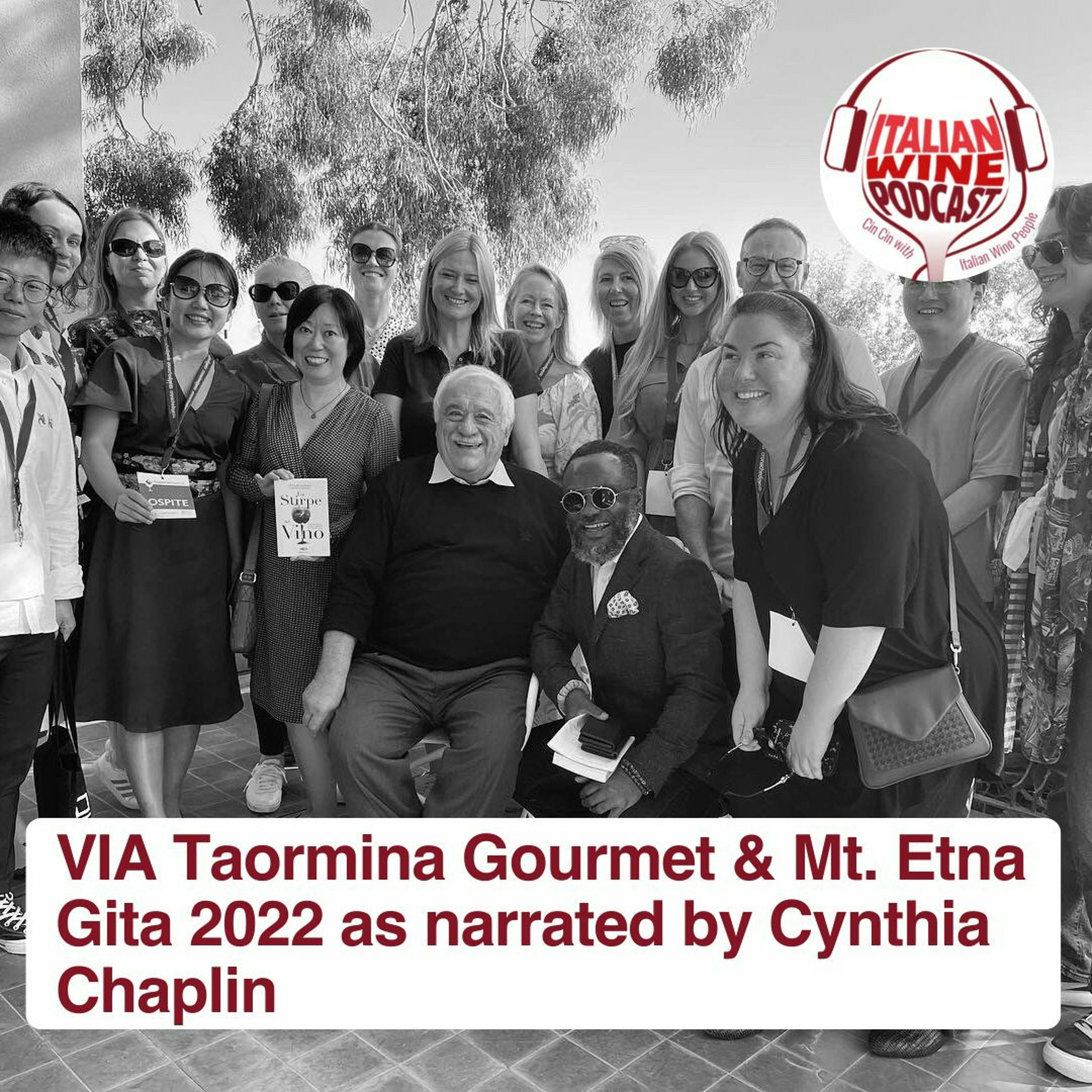
Ep. 1175 VIA Taormina Gourmet & Mt. Etna 2022 Pt. 4 | Gita Scolastica 2022
Gita Scolastica 2022
Episode Summary
Content Analysis Key Themes and Main Ideas 1. The unique volcanic terroir and microclimates of Mount Etna. 2. The blend of historical winemaking traditions (e.g., palmento, ungrafted vines) and modern innovation in Etna. 3. The distinct characteristics, aging potential, and versatility of Etna's native grape varietals, particularly Carricante, Nerello Mascalese, and Nerello Cappuccio. 4. The role of pioneering figures like Salvo Foti in the regeneration and development of Etna viticulture. 5. The importance of specific vineyard sites (contradas) and their influence on wine expression. Summary This special episode of the Italian Wine Podcast documents the Italy International Academy's 2022 tour of the Mount Etna wine region, following their participation in the Taormina Gourmet event. Narrated by Cynthia Chaplin, the episode provides a detailed travelogue of visits to three prominent Etna wineries. The journey begins at I Vigneri di Salvo Foti, highlighting Salvo's foundational role in Etna winemaking. His son Simone showcases their traditional albirello training system, ungrafted vines, and the use of an ancient *palmento* for foot-treading, even for an ""illegal"" wine not permitted by DOC rules. Tastings reveal the region's characteristic acidity and minerality. Next, the team visits Tornatore, an estate with roots dating back to the 1800s, now focused exclusively on native varietals across eight *contradas*. The enologist Angelo and hostess Federicca explain their winemaking methods, including mechanized punch-downs, and a tasting demonstrates the remarkable aging potential of Etna Bianco and Rosso, alongside their special ""Caldera"" wine from ancient pre-phylloxera vines. Angelo's insight, ""It's easy to make wines from Aetna, but difficult to make wines of Aetna,"" underscores the region's complexity. The tour concludes at the strikingly modern I Custodi winery, designed by former engineer Marco Paol, where Salvo Foti also serves as winemaker. The episode details the winery's innovative underground design and offers an extensive tasting of various whites and reds, showcasing how different vintages and vineyard exposures on Etna yield diverse expressions of Carricante and unique blended reds. The episode emphasizes the passion, craftsmanship, and hospitality encountered throughout the Etna wine experience. Takeaways * Mount Etna is a unique and challenging wine region, characterized by its active volcanic terroir and specific microclimates. * Traditional winemaking practices, such as the *palmento* and the use of ungrafted pre-phylloxera vines, are still integral to Etna's viticultural identity. * Etna's indigenous white grape, Carricante, produces wines with high acidity that develop significant complexity and character with age, including notes of petrol and smoke. * Etna's red wines, primarily from Nerello Mascalese and Nerello Cappuccio, are elegant, structured, and capable of long-term aging, offering diverse aromatic profiles. * The concept of *contradas* (specific vineyard sub-regions) is crucial for understanding the distinct expressions of Etna wines. * Innovation in winery design and winemaking techniques coexist with a deep respect for tradition in the Etna region. * The Italian Wine Podcast relies on listener support and donations to continue producing content. Notable Quotes * ""Early in the twenty first century, this inspirational man [Salvo Foti] became one of the backbones for all the winemaking on Aetna."
About This Episode
The Italian wine podcast, YMI Fans, introduces a new initiative called YMI Fans, which is a publicly funded sponsored fundraiser for Italian wine podcasts. The podcast includes a tour of several vineyards and wines, including a vintage from Carracante and bills, a vintage from Aetna's winemaking facility, and a vintage from Aetna's second vintage. The speaker also visits Aetna's winemaking facility and tastes various wines from Aetna, including a new wine from Aetna's second vintage and a chef from Risterante kilometer zero in Catania who gave them a dinner.
Transcript
The Italian wine podcast is introducing a new donation drive this month. It's called YMI fan. We are encouraging anyone who tunes on a regular basis to send us your ten second video on why you are a fan of our podcast network or a specific show. We will then share your thoughts with the world with the goal of garnering support for our donation drive. Italian wine podcast is a publicly funded sponsored driven enterprise that needs you in order to continue to receive awesome pre wine edutainment. Seven days a week, we are asking our listeners to donate to the Italian wine podcast. By clicking either the go fund me link or the Patreon link found on Italian wine podcast dot com. Remember, if you sign up as a monthly donor on our Patreon, we will send you a free IWP t shirt. And a copy of the wine democracy book, the newest mama jumbo shrimp publication. Welcome to the special, the Italy International Academy twenty twenty two, Tarmina Gourmet, and Mount Aetna Gites Colastica series. The last week of October took a team of our staff and fifteen Vine International Academy ambassadors to the annual Taourmina Gourmet event posted by Konacadigusto, and then on to explore several vineyards and wines on Mount Aetna. Of course, we documented the whole experience. Listen in as Cynthia Chaplin narrates her travel adventures. And remember, if you prefer written content, just go to our blog on Italian wine podcast dot com, now onto the show. First day up on Montebello or Mount Aetna to those of us unfamiliar with sicilian dialect, the highest and most active volcano in Europe was the backdrop for a magical day starting with a visit to Evineri Desalvo Faulti at Milo. Early in the twenty first century, this inspirational man became one of the backbones for all the winemaking on Aetna. And today, we were greeted by his son, simone, clearly having inherited an intense passion from his father. Simone took us through the vineyards pointed out that no lava flow ever reached this position where they have dense plantings in the albirello style with vines stake to chest neck staves. We saw the staves themselves for future plantings aging in an open air shed reached by a path covered in the burstly furry chestnut shell husks. Volcanic ash and sand in the soil provide natural fertilizer, along with magnesium and potassium for the green ash and Norella Muschaleza binds, growing it up to one thousand meters above the sea, eight kilometers from the sea, ten kilometers from the volcano. Fault is working with ungrafted vines, which adapt better to the constantly changing soils, with micro verification of each set of vines showing different pH and acidity levels. The winemaking includes amphora, acacia, French oak, and chestnut wood barrels to age the reds, and faulty is still using their beautifully restored palamento in the traditional way. Including foot treading for the Inveniori Rosa. A quote unquote illegal wine because the doc does not allow Palmetto use. We were lucky enough to walk in the Palmetto to see where the foot treading takes place and to have Salvo himself explain to us exactly how the functioning stone and the long wooden handle work to press the skins. Fuddy's belief in preserving some of this old tradition is a crucial piece of the Aetna puzzle. We tasted the twenty twenty one Carracante and Manila blend called Aurora. The twenty nineteen Vigna Milo, which is a hundred percent Carracante, aged in big, neutral balta. The Palmetto Casselli twenty nineteen, the first ever vintage of this red wine, made using whole bunches and some acacia aging. All of the wines, both white and red, had a common acidity running through them, as well as fascinating textures, a flinty minerality, good notes of fruit and sage. It was an enormous privilege for our ambassadors to taste these wines with Salvo and his two sons on their beautiful terrace overlooking the sea on the doorstep of the timeless Palmente that spawned the regeneration of winemaking on Aetna. Our next stop was at Tonatorre where Angelo, the analogist, and Federicca, our delightfully passionate hostess, toured us through the vineyards nearest to the family home, and treated us to a gorgeous lunch and wine tasting at a fantastically long table in the garden. We looked out over the pillow lava hills, and old extinct craters, as well as the ever present Montebello in the distance. The tornatory family has owned vineyards here since the eighteen hundreds, but they are only growing native varietals now in their vineyard plots across eight contratas. The primary winemaking cellar is here in Vald de Mone, and we were able to clamber up onto the catwalks above the steel fermentation tanks to see the mechanized punch down of the caps taking place only days after their recent harvest. Are you enjoying this podcast? There's so much more high quality wine content available from mama jumbo shrimp. Check out our new wine study maps. Our books on Italian wine including Italian wine unplugged, the jumbo shrimp guide to Italian wine, Sanjay, Lambrusco, and other stories, and much much more. On our website, mama jumbo shrimp dot com. Now back to the show. We were treated to Aetna Bianco twenty twenty one and twenty seventeen to see how well Karacante ages and how the pale lemon high acid of the young wines evolves into a deep lemon rounded fruitier, more balanced wine, with petrol and smoke notes. For reds, we tasted Aetna rosso twenty eighteen and twenty fourteen, seeing more evolution from the rosy ripe crunchy cherry twenty eighteen to the tar and rose balsamic herb, nutmeg and plum deliciousness of the twenty fourteen, a vintage that Angela described as the perfect harvest. Another special treat for Via Ambassador was Tonator's new wine called caldera twenty nineteen. Made from vines grown at six hundred and fifty meters above sea level and made using thirty percent whole bunches from pre phylloxera vines a hundred and twenty years old. The wine spent three months in closed cement tanks then pressed and aged in big old oak barrels for eighteen months. The final wine was precise and elegant with notes of tart sour cherry, blood orange rind with soft polished tannins and wonderful acidity. Something we were all beginning to expect from Aetna wines. As Angela said, it's easy to make wines from Aetna, but difficult to make wines of Aetna. Tonatorre is clearly succeeding in this goal. Dinner was at the impressive modern winery y custodi, pride and joy of owner, Marco Powell, a former engineer whose skill is demonstrated by the ingeniously designed winery, mostly underground, where it kept cool by the use of a water system from a natural well located at the bottom of a curving ramp that feels almost like a DNA double helix as you descend. The winemaker here is Salvo faulty himself bringing our day to a full circle. We were able to taste several wines in succession beginning with ante twenty nineteen from old carracante vines growing at seven hundred and fifty meters above sea level. Savory and salty with high acidity and notes of white peach, lemon oil, and fennel. This wine had a flinty mineral character we all enjoyed. The twenty seventeen vintage from a warm, dry, growing season gave us notes of hazelnut, intense concentrated acacia with a hint of mushroom, tart lemon, and anise seed. Altogether a rounder fleshier wine with a good balance of acidity and stupidity. The mild wet and cool vintage in twenty thirteen produced an elegant supple textural wine with lemon cream, saline and slivered almond notes as well as a fresher field than the twenty sixteen. Federico Latici from Cronoke de Guusto was so generous with his time explaining how the cloudy cool raining weather on the eastern side of Aetna was creating the best expressions of Karacante. Helped by deep terraces that drain quickly. Finally, we tasted the twenty ten Marco's second vintage, which had developed a beeswax gardenia, lanolin, textural quality, while maintaining a bright acidity with notes of white miso and sage butter. Reds of the tasting included from twenty twenty described by Marco as cheerful and friendly served to us in gorgeous magnum, spilling the glass with floral notes and hints of pepper, black cherry, unripe plums, crunchy red berries, a light bodied wine that could be served chilled. The Rosato Al Nous twenty twenty one was a blend of thirty three percent Nerella Maskaleesi and sixty six percent Capucho. With a bright pink color, and notes of pink grapefruit, pink roses, tangerine, and strawberry. Marco remarked that Norello Capucu is hard to grow, like planting troubles, he said, and they only produce three thousand bottles of this rose per year. Aetanat two thousand and nine rounded out our night. Made with grapes grown on vines right in front of the cantina, matured in a combination of Barrique and Tonneau, giving the wine an oaky, smoky, toasty, meaty, caramelized blood orange and sweet tropea onion complexity. I can't leave Ecoostudy without mentioning the fabulous chef, Marco Kanizaro, from Risterante kilometer zero in Catania, who gave us an amazing dinner. And wonderful Maurizio, the Court jester head of hospitality at Ecoostudy. Who smiles and jokes had us laughing all night right till the moment of the last group photo where he joined us shouting. I love everybody here tonight. Listen to the Italian wine podcast wherever you get your podcast. We're on SoundCloud, Apple Podcasts, Spotify, HimalIFM, and more. Don't forget to subscribe and rate the show. If you enjoy listening, please consider donating through Italianline podcast dot com. Any amount helps cover equipment, and publication costs. Until next time.
Episode Details
Related Episodes

Ep. 2789 ColleMassari: a long-term vision rooted in Montecucco with Giuseppe Di Gioia | On The Road With Stevie Kim
Episode 2789

Ep. 2788 Ep. 14: Austria and Hungary | Study Smart for your WSET Level 3
Episode 2788

Ep. 2785 From Volunteer to Speaker at TEXSOM with Samantha Cole Johnson | TEXSOM 2026
Episode 2785

Ep. 2766 Inside the U.S. Non-Alcoholic Wine Market: What Wineries Need to Know with Jill Sites | Masterclass US Wine Market
Episode 2766
Ep. 2761 Winemaking and Consulting Across Sicily with Alessandro Serughetti | Wine, Food & Travel with Marc Millon
Episode 2761

Ep. 2759 Part 2 – The VIA Educational Program & Italian Wine | Heart-to-Heart Conversation with Sarah Looper
Episode 2759