
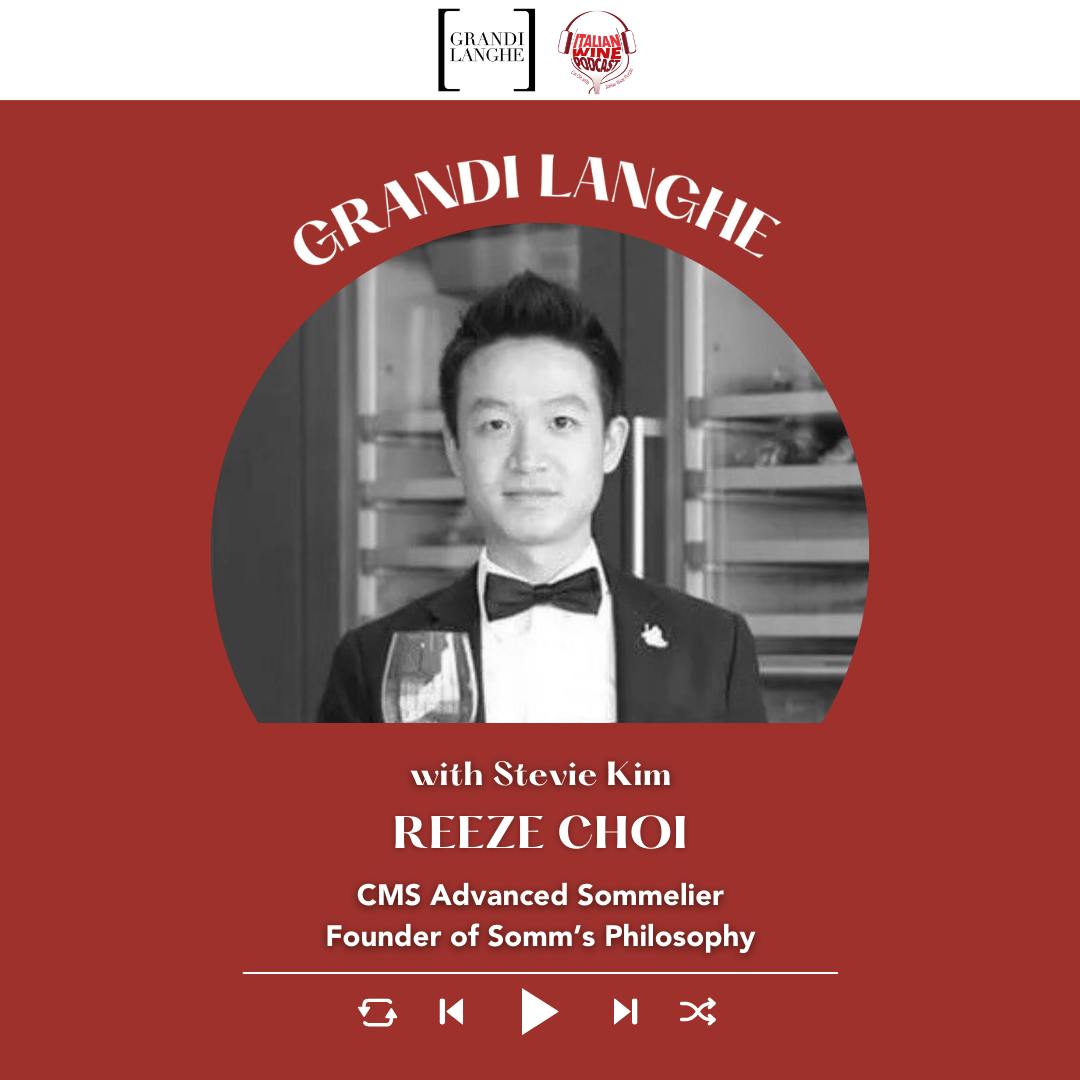
Ep. 2284 Reeze Choi | Grandi Langhe 2025
Grandi Langhe 2025
Episode Summary
Content Analysis Key Themes and Main Ideas 1. An interview with Rhys Choi, a top sommelier and wine consultant from Hong Kong, at the Grande Langhe 2025 event. 2. Rhys Choi's multifaceted career, including his role as a winemaker producing international grape varieties in Hiroshima, Japan. 3. First impressions and discoveries at Grande Langhe, highlighting the diversity of Piedmontese wines beyond Nebbiolo. 4. Emerging wine styles and lesser-known grape varieties in Piedmont, particularly Freisa and frizzante wines. 5. Winemaking techniques and trends, such as delayed grape crushing for improved tannin and color management. 6. Insights into the Hong Kong (and broader Asian) wine market, balancing traditional fine wines with demand for lighter, fresher styles. 7. The profound importance of direct interaction with wine producers and experiencing the wine region's landscape firsthand. 8. Rhys Choi's future career aspirations, including Master Sommelier certification, continued winemaking, and a long-term goal of farming. Summary Stevie Kim interviews Rhys Choi, a highly acclaimed sommelier from Hong Kong (ranked third globally), live from the Grande Langhe 2025 event. Rhys discusses his diverse career as a wine consultant and a winemaker, notably producing international grape varieties like Chardonnay, Sauvignon Blanc, and Pinot Noir in Hiroshima, Japan. He shares his overwhelming positive impression of Grande Langhe, praising its organization and the vast array of 500 producers offering a wide spectrum of wines, including those beyond the celebrated Nebbiolo. Rhys expresses particular interest in lesser-known Piedmontese grapes such as Freisa and emerging frizzante styles. He also highlights a winemaking technique involving delayed grape crushing for better tannin and color control. Regarding market demand, Rhys notes that the Hong Kong market, while appreciating traditional Barolo and Barbaresco, is increasingly seeking lighter and fresher wines. A significant takeaway for him is the incomparable value of meeting producers face-to-face and experiencing the region's landscape, soil, and people, which provides a deeper understanding than any book. The interview concludes with Rhys outlining his future plans to pursue Master Sommelier certification, continue his winemaking endeavors, and eventually transition into farming. Takeaways * Rhys Choi is a top sommelier and consultant who also makes wine (international varieties) in Hiroshima, Japan. * Grande Langhe 2025 is a well-organized event offering a comprehensive showcase of 500 Piedmontese wine producers. * Piedmont's wine offerings extend significantly beyond Nebbiolo, including diverse grapes like Freisa and various frizzante styles. * Modern winemaking techniques observed include delayed grape crushing to optimize tannin and color in red wines. * The Hong Kong wine market has a dual demand for traditional fine wines (Barolo/Barbaresco) and lighter, fresher styles. * Direct interaction with producers is invaluable for understanding the 'story' behind a wine and its production techniques. * Experiencing the physical landscape and culture of a wine region provides a more profound understanding than textbook knowledge. * There's a global trend of consumers drinking less, but better quality wine. * Rhys Choi is preparing for Master Sommelier exams and aspires to do more winemaking and eventually farming. Notable Quotes * ""The most impressive thing to me is that when, yes, we always look at the book and then we understand the information about Barolo and Barbaresco or even Langhe. But, when I was here and I when I see the landscape of the whole regions, that's the most touching thing and the most inspiring parts of the visit."
About This Episode
Speaker 0 and Speaker 2 discuss their experiences with Pierman wine styles and trends in winemaking and vineyard management techniques among producers. They mention a new wine called " Álvaro Maria" and a "good wine" from Hong Kong, as well as the potential of Piermont's wines for the Chinese market and the importance of meeting with producers and buyers. They also discuss the potential of Piedmont's wines in Hong Kong and Asia, including Grignolino and Avery, and express their interest in winning more wines and learning about the craft. They mention a tour of a restaurant where they sell wine and encourage viewers to donate through their podcasts.
Transcript
The most impressive thing to me is that when, yes, we always look at the book and then we understand the information about Barolo and Bab Barasco or even language. But, when I was here and I when I see the landscape of the whole regions, that's the most touching thing and the most inspiring parts of the visit. So maybe I can, I will love to share more to my friends or my clients that's what I have seen in the region, especially the the landscape, the soil that I touched, the the people that I met, so all of these things I want to share with them? As the official media partner, the Italian web podcast is excited to present exclusive coverage from Grande Langhe twenty twenty five. This series feature firsthand a perspective from top producer and buyers as they navigate new styles, vigner denervation. And shifting global markets. Discover, expertise, hidden gems, and the trends shaping the region's future. Tune in every Friday at three pm or visit Italian when podcast dot com for more. Hello. Welcome back. My name is Stevie Kim, and this is the Italian wine podcast on the road edition. We are here at Grande Lande two thousand twenty five. And next to me, I have a World Somelier champion. His name is Reese Choi from Hong Kong. So, Reese, tell us a little bit about yourself what you do. Actually, I was not the the champion, but I I was twenty twenty three, I won the world number threes. So many types of schools. For me, that's a champion. Thank you. In Paris last time, I'm also a founder of a wine consulting company in Hong Kong, Cosms, philosophy. So I'm a so many. I'm a wine consultant. I'm a ambassador, and I'm also making wine in Japan. So I'm a little bit of everything. What are you making in Japan? What kind of wine? Okay. So it is interesting. Maybe a lot of people know about Koshu. It's it's the local grape Japan, but That's what I would have said first. Right? Yes. So, but I'm, mainly produced international grape, like chardonnay, soviet blanc, semillon, and Pinanoa. Oh, goodness. Where are you producing it? Yeah. It's, in Hiloshima, it's a tiny tiny uh-uh town called Miyoshi in the middle of nowhere. What possessed you to go to Hiroshima and started producing international grape varieties. Yes. It's, such a coincidence. So I got a chance, and then, just go for it. I just follow the flow of life. But is it a small production? Yeah. It is tiny, super small production for now. So, Reese, is this your first time in Grande Lang? Yes. It's my very first time. And what do you think about it? Oh, it's amazing. Very Crazy. Five hundred wineries. Yes. Yes. And then, especially when I beside the Columbia, I actually participate to the Barolo and Paparesco Academy. Yes. So you just have to do a Vine International Academy now. Yeah. You know, that's tough. Right? I hope to. I hope to. Yes. I will. And I I will. And this is a very mind blowing. One is everything is super well organized. And, there's five hundred producer here. So you can taste whatever you want and Yes. And also I I found a lots of interesting stuff. So when or usually when we're talking about, like, Barolo and barbaresco or Langue, we also we always talk about maybe nebbiolo, maybe Papella, maybe toceto, but I found a lot more than that here. Excellent. How many wines have you tasted so far? Not many, but we got some meetings and I taste about ten to eleven producers yesterday. So out of five hundred, this is nothing. So I would taste a little bit more today. Okay. So I'm going to ask you some questions now. Are you okay with that? Okay. So question number one, which new or emerging Pierman wine styles have caught your eyes? The sear. Not necessarily just at Granandi, but in general of all the wines from Piamonte. White style. Yeah. I found the white style was not something I want to talk, but the gray variety I wanted to talk about. Like, I I found there's some like, Frissa, some really good Frissa buddhils are here. Frissa. Yeah, Frissa. And if you talk about wine style, I I really impressed by the frisante, slightly bubble fraser. And also, yesterday, I worked in the tasting of a freduno Yeah. For the There was like a master class. Right? Yes. It's like a master class. For two hours? No. It was like a taste more like a taste. Oh, okay. Yes. So I'll taste, about maybe fifteen producers at once. So I can find the disc grape variety not only like something very fresh, but a lots of different profiled from this script. So a lots of lots of different things that are found this year. Great. Have you noticed any specific trends in winemaking or vineyard management techniques among producers? This year. Mhmm. As I said, I participate, the barolo and barbaresco academy. And one winemaking tablets is really impressed because of they told me that nowadays that producer, they start one day after the harvest, they're not immediately some of them, they're not immediately crushed the grape. So that's helped to better manage the tanning and also to manage the color of the wine. So from your market, you know, your colleagues from Hong Kong and and Nature in general, what type of wines are they currently looking for, to expand in the Pied Monte area. Okay. On from Hong Kong. It's a super mature market, as you know, but we have a lots of traditional drinkers, though they always look for Barolo and Babaresco. But since, you know, that's the start of this is temperature of Hong Kong is, like, is too warm. Sometimes, so the drinker's day tends to be, like, to find some more lighter fresher style of wine. So langeuella, something more easier. Yeah. Fraser Bracchetto, and also sometimes they liked, international grip, like, Sophia Blanc from Piermont. There's plenty of them and chardonnay as well. Okay. Fantastic. Which producers or labels A little bit you've spoken about it, have surprised you during your visit in Grandilanca yesterday and during your Federal Academy. Mhmm. Badiano, they purchased mainly Rosa. Okay. Yes. That's was super amazing. So you discovered Fraser. Fraser. Yes. Fraser. And What about Grignolino? I don't have much, six sample to taste it. Maybe I'll find it later. Okay. And also, I have taste Palatino. After that barolo was super amazing. So, yeah, I think that's it. Great. Alright. So looking ahead, what do you see as the biggest opportunity for Piedmont wines for your market. Mhmm. You know, not just Hong Kong, but in extended area of Asia. Yes. And when we look at at the data of the past few years, the people they drink less, but they drink better. So in here, we find lots of great wine, like fine wine like Barolo and barbaresco. So I think that's this kind of category have a huge potential. Maybe they will have more room to grow even though they are doing very well now. So, yes, I think that's this is the, I would say that's the top wine from PM months, will be the, in Asia. And how does it feel? How, you know, how does it how does meeting face to face with the producers and other buyers also? Your colleagues from the rest of the world, shape your perception. How do they influence your perception about Piermont wines. I think there's no a better way to understand the products face to face to talk with the producer. They know the best of their products. So we always say that's okay. We are not, as a souvenir, we are not only pouring the wine, but also sharing the story. So you can always, hear some very interesting story from them. And also, they will have all their different opinions. When you talk to a winemaker, they will share a lot of information of different winemaking technique. That's helped us to understand more the story behind and then all all the different information behind the label. Okay. And after attending, what are the key takeaway or trend you're eager to share with your folks back at home. The most impressive thing to me is that when yes. We always look at the book and then we understand the information about Barolo and Balvirus or even language. But, when I was here and I when I see the landscape of the whole regions, that's the most touching thing and the most inspiring parts of the visit So maybe I can, I will love to share more to my friends or my clients that's what I have seen in the region, especially the the landscape, the soil that I touched, the the people that I met, So all of these things I want to share with them? Okay. So at a personal level, what are your future plans? Are you going to participate again in the so many competition? You'll be making more wine, not just in Japan, maybe in Korea. Who knows? Right? So what are your future plans? You're you're quite young. Right? I'm not sure. I'm thirty seven. You look so much younger. It's the Asian James, you know. You can never tell how old people are. But, what are your future goals? We will have another Asia competition and the World Commission will be in two thousand and twenty six in Portugal this time. I'm preparing for that, and I'm also preparing for my master so many examination. And, in the future, I think that's beside the so many work, I love to do more and do more winemaking, you know, things or So you're like, well, you enjoy winemaking? I enjoy winemaking and especially farming part. I'd love to be a farmer if I have the chance. So, yes, maybe, yeah, in the future, maybe I will switch my position to a farmer or winemakers. How did you get into the wine business in the first place? You know, I work in a restaurant, as a waiter before, and then I In Hong Kong. In Hong Kong. And then I got the chance to taste wine during work. We called taste. And then I found that wine is a super interesting stuff. So every wine has their own different character and then every wine has there's just like a living liquid to me. So I started to learn about wine. I've got my first sip of wine in the restaurant. So and then, yeah, and as I developed my my career in the wine business. Okay. Very good. And that was Reese Choi from Hong Kong, sharing us with his ideas, some insights about the Grande Lange and Piedmont wines here at Grande Lange two thousand twenty five and signing up. It's a wrap. Jada Gaxi. Bye bye. Listen to the Italian wine podcast wherever you get your podcasts. We're on SoundCloud, Apple Podcasts, Spotify, HimalayaSM, and more. Don't forget to subscribe and rate the show. If you enjoy listening, please consider donating through Italian wine podcast dot com. Any amount helps cover equipment, production, and publication costs. Until next time, teaching.
Episode Details
Related Episodes

Ep. 2789 ColleMassari: a long-term vision rooted in Montecucco with Giuseppe Di Gioia | On The Road With Stevie Kim
Episode 2789

Ep. 2788 Ep. 14: Austria and Hungary | Study Smart for your WSET Level 3
Episode 2788

Ep. 2785 From Volunteer to Speaker at TEXSOM with Samantha Cole Johnson | TEXSOM 2026
Episode 2785
Ep. 2766 Inside the U.S. Non-Alcoholic Wine Market: What Wineries Need to Know with Jill Sites | Masterclass US Wine Market
Episode 2766
Ep. 2761 Winemaking and Consulting Across Sicily with Alessandro Serughetti | Wine, Food & Travel with Marc Millon
Episode 2761

Ep. 2759 Part 2 – The VIA Educational Program & Italian Wine | Heart-to-Heart Conversation with Sarah Looper
Episode 2759