
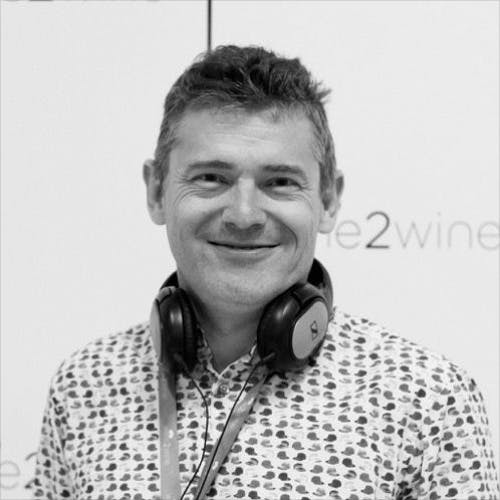
Ep. 276 Simon J Woolf
Interviews with Wine Experts
Episode Summary
Content Analysis Key Themes and Main Ideas 1. Simon Woolf's Career and Personal Philosophy: His transition from IT to a full-time wine career, his roots in self-sufficiency and organic farming, and his unique approach to wine writing focused on personal narratives. 2. The World of Natural and Orange Wines: Exploration of the ""Amber Revolution,"" the emergence of orange wines (especially from Friuli), the philosophy behind minimal intervention winemaking, and the ongoing controversies and definitions within this niche. 3. Wine Consumption and Lifestyle: Simon Woolf's perspectives on sensible drinking, challenging norms like ""Dry January,"" and viewing wine as a food item. 4. The Art of Wine Literature: Discussion about storytelling in wine writing, moving beyond technical descriptions to personal journeys of winemakers, and the unexpected global success of a self-published book. 5. Global Wine Diversity and New Discoveries: Highlighting Italy (especially Friuli) as a ""first love"" food nation and the upcoming focus on Portuguese winemaking for a new book project. Summary In this episode of the Italian Wine Podcast, host Monty Walden interviews Simon Woolf, author of ""Amber Revolution"" and a prominent voice in the natural and orange wine movement. Simon discusses his journey from a career in IT to becoming a full-time wine writer, a path influenced by his upbringing in a self-sufficient, organically oriented family. He delves into his passion for natural and orange wines, explaining how he was drawn to their vividness and the controversial discussions they provoke, particularly regarding the fine line between unique characteristics and perceived faults. Woolf shares that his book, ""Amber Revolution,"" is not a textbook but a narrative of personal struggle and triumph by pioneering winemakers like Josko Gravner and Stanko Radikon. He also touches on his personal relationship with alcohol, including a ""Dry January"" project designed to prompt a more honest discussion about consumption habits. The interview concludes with Simon revealing his next literary project: a narrative-driven book exploring the diverse world of Portuguese winemakers. Takeaways * Simon Woolf, author of ""Amber Revolution,"" specializes in and advocates for natural and orange wines. * He transitioned from an IT career to full-time wine writing, driven by a passion for organic/biodynamic farming. * ""Amber Revolution"" is a narrative focusing on the pioneers of orange wine and their struggle for recognition. * He acknowledges the highly controversial nature of natural wines, particularly regarding perceived faults, but appreciates their ""quirks and idiosyncrasies."
About This Episode
Speaker 1 and Speaker 2 discuss the Italian wine program and its popularity, while Speaker 2 expresses hesitation due to the current celebrity trend of celebrating faulty wines. They also discuss their love for natural wines and their tolerance for "overused" wine. They talk about their love for sustainability and self sufficiency, as well as their interest in learning about the Calio area and the availability of their book in foreign language editions. They also mention their plans to publish a new book on winemaking in foreign languages and their partnership with a freelance journalist to make an orange wine.
Transcript
Are you looking for your next wine challenge? Do you want to taste more than three hundred wines in four days? How about joining a community of passionate, qualified Italian wine specialists, and gaining one of the most coveted qualifications in the wine world? Apply now to Davini International Academy, and you'll have all this at your fingertips. Pedro Balesteros master of wine says, Via is the only Italian wine program that delivers high quality training and serious exam More details on our website, w w w dot vinital international dot com. Italian wine podcast. Chinchin, with Italian wine people. Hello. This is the Italian wine podcast. My name is Monte Walden. My guest today is Simon Wolf. So I mean, where are you at the moment? I'm in Amsterdam Monte where I live. How did you end up in Amsterdam? So I ended up in Amsterdam actually, for nothing to do with wine. Basically, about six years ago, I my main career was in IT at the time, and wine was very much a part time pursuit, and I actually moved to Amsterdam to follow a an IT job. It was kind of chance really both my girlfriend, and I had the opportunity to to move countries, and we thought this could be fun to try living somewhere else. Amsterdam seems kind of nice. Let's give it a try. And you're still there after how many years? We're still here after six years. So, yeah. And so how did you, obviously, you had a sort of previous career? I mean, is your IT career ongoing still or are you a hundred percent wine now? Or do the or or do the do the two coincide? I'm pretty much a hundred percent wine. I mean, Once in a while, I do, maybe a little bit of consultancy or support, for IT clients that I've had for donkey's years, but yeah, wine is pretty much a hundred percent these days, especially after the the the book that I published, year or two ago because that's, that's kept me quite busy. And what's the name of the book? The name of the book is Amber Revolution. So that me, you know, you're an obviously a natural wine fan. How did you how did you decide to follow that sort of tre not trend, if you'd like, but that sort of, style of winemaking, was it just you had a glass of wine and you loved it? Or what was the reason? Yeah. It was kind of chance and kind of not. I mean, I've I've always had a a very strong belief that the the only sensible way to farm is is to farm organically or even biodynamically. So that's that's always been a strong thread in my life. It's something that my parents instilled into me, actually, because we we grew up on a a kind of small self sufficiency kind of farm. So when I first started getting really into wine, and writing about it, I was always more interested in people who were on that side of the of the fence, so to speak. And so of course, if you if you're mixing with a lot of, winemakers who are working with organic visit culture, then at some point, you're gonna come across natural wine. And I did round about two thousand and eight and eleven, I guess. And I was I was stunned, actually, I was stunned by, how vivid some of these wines can be So my initial experiences were very positive indeed, and then I realized that this is this is actually a highly controversial area of winemaking. And so I I I also realized maybe slightly naughty, but it's actually rather fun to write about because people argue about it all the time. So, I mean, for you, it's more than just a talking point for you, though, isn't it? I mean, you obviously got a that, a love of, of these particular wines. I mean, when you say they're challenging, what do you mean by that? Well, what I would I think the word I used was controversial because I I I realized that people have a hard time agreeing on when a, when a natural wine is good wine or what, or when it might have something that some people would term a fault. So I think that's the interesting thing. There's been this kind of search for perfection, maybe in the twentieth century where everybody thought that, the right way to make wine was to use as much technology as possible and paper over the cracks. And of course natural wine the the natural wine philosophy is saying the exact opposite. It's almost celebrating the idea that that wine is often not something perfect. It often has quirks and idiosyncrasies and I think that's part of what makes it beautiful really. I mean, but you're not like, you know, obviously you know that I'm sort of into biodynamics, but I don't consider myself as a fundamentalist. Do you consider yourself as a fundamentalist or or just someone who's very sensible and mindful of what he's consuming. And, what's your what's your tolerance for sort of really funky, really natural wines that some people would say are just so faulty there almost standardized. Yeah. My tolerance is limited. I'm I'm definitely not a fundamentalist. I think the the point that I'm coming from in this is is really it's I'm coming from a very selfish point of what I personally like to drink, and I think more and more as time goes on, I just I don't find wines that have been made in a heavily interventionist way very enjoyable or or interesting. I don't find them enjoyable to drink, and often I can't find very much to write about them either. So that tends to be what draws me to people who are working at the at the limits of minimal intervention. That said, It is very frustrating. When you hear people celebrating wine that is just faulty and nothing else, and I I have limited tolerance for wine where something's clearly gone wrong, yet people are still happy to say, oh, this is wonderful. It's it's so, you know, expressive of the terroir when it when it clearly isn't. And, but I think we're, we're maybe still in an early phase here. There's still, you know, there are still a lot of people who are excited that there's a different niche in wine that there's something that's maybe a bit more dynamic and fun, and it'll take time to shake that down and and maybe sort of throw off the emperor's new clothes in the places where they do appear. I mean, my argument, I mean, I don't know if you'd agree with this, is, is, take your point about the sort of quotes, the modern industrial wines that we were drinking maybe fifteen years ago, because they did a lot of them just taste the same. And, I always have to choose my words carefully, but in a in a, for example, a natural wine fair. If you have four wines that come from different countries, and they all have the same predominant fault for me, that also is a is a sort of, standardization by the back door. And, it's quite interesting to hear you. I think you're on the same page. Yeah? Yeah. Absolutely. And I think there's always there are always wines even in even in the natural wine niche where you can see that actually the decisions that the wine maker has made have had a greater impact on the on the style of the wine than than anything else. But that's something I I accept. I mean, I I do attach an enormous amount to the the drinkability of a wine, and I think that for me is the that's the final arbiter in a lot of cases. So terawara is a is a wonderful concept. I I think as a word, it's hideously overused. Also I think a lot of the time when my winemaker's try to take themselves out of the equation and say, oh, my wine is just about the the place. I think that's actually bullshit. It's almost impossible not to have something of yourself in a wine. You know, there are there are so many decisions that that get made even if it's things like harvest date or, you know, whether to ferment in a cement vat or a stainless steel tank. So ultimately for me, it's have you have you produced a wine which is which is balanced and that I can drink that's refreshing, maybe it's elegant, maybe it's fun. Maybe it is a bit funky, but if it's funky within parameters that are delicious, then that's also fine. Yeah. It's nice to hear you, talk about the consumption that, don't know if if you agree with this. For me, wine is food. It's food is just as an apple or an oranges. And, I'm trying to be careful about what I drink, and you come across as somebody. I mean, you look very fit, by the word, and if you sort of go running and things like that, you're clearly someone that does look after his body. So much so, I was reading that you, documented for a month, everything that you drank. Is that true? That's correct. And I I did that I did that during January, actually, because I was getting so hacked off by the the sort of dry, January, posturing. So dry, January is basically where people don't drink any alcohol, right? A day of a month of no alcohol. They do. And of course, what yeah. What happens is you you see a lot of people kind of being very proud that they're doing this or being very sanctimonious about it. And and I actually think it's quite I'm helpful, and I I would agree with the point of view that many many people have put forward that I think if a lot of people kid themselves, if they take a month off in January, then it doesn't matter what they do for the rest of the year. And there are there are probably even people out there who are they're really drinking way too much, but they they use this dry January as a as a device to say, look at me. I'm fine. I'm I'm, you know, I'm I'm in a good place. And I I don't I don't think it's helpful, and I think in general, the the discussion around whether, you know, whether alcohol is dangerous or, you know, how much drinking is too much is a very is a very poisoned one. Unfortunately, we have a we have a very powerful anti alcohol lobby these days in increasingly powerful election, you can see that in, you know, government recommendations and legislation even. So this this exercise was really just an attempt to draw attention to, you know, let's have a let's have a different discussion. Let's have an honest discussion about how we consume wine or other alcohol and what that might mean. Do you, I mean, do you ever worry about your own consumption? I mean, not we're gonna talk about this all the time. But I mean, you know, obviously in wine, we are, you know, dinners and lunches and tastings and things like that. I mean, apart from that, if you've just say you're writing a book and you're at home most of the day, you know, for a few weeks. Do you just drink anything at any time, you know, lunchtime or whatever, or drinking a lot, or do you have days where you don't drink at all? Yeah. I have days when I don't drink. I very rarely drink at lunchtime unless I'm in a, you know, incredibly beautiful wine region and a winemaker butts of glass or something delicious in front of me. Well, of course, I'm not gonna say no. But yeah, I try to be sensible, but of course I of course I do worry about it. I think I've I've never worried about it from the point of view of worrying that I'm dependent or an alcoholic, but the problem is, you know, I genuinely love wine. I'd I'd love I love drinking it, I love tasting it. So there's always that thought at the back of the mind, you know, is am I gonna get is this gonna go too far? Am I gonna suddenly find that I'm overconsuming? So one of the reasons for my project during January was kind of just as a reality check, really. Let's let's have a look at this and see see what it looks like when I document it, and also see what other people think. You know, I was curious to see if I'd get horrified reactions of you know, people sending me private messages saying Simon, you know, you think it should slow it down a bit old chap, or would the opposite happen and people would say, Crikey, it's so, that's so moderate. And actually, it was more the latter I'm pleased to say. Yeah. You did. If I remember, you'd had one day when you didn't have any alcohol in it. The other other day, you were very honest. It seemed about documents. I had a few. I mean, yeah, I think I had six days six days in January where I didn't drink anything. But I also had some days that were, you know, that were quite, how should we say sociable? To what? Going back to your your family, the idea that you grew up in a sort of self sufficient farm, and were your pet your parents were, I guess, were they were professional farmers, were they sort of hippies? Or because you could, you know, living in Amsterdam, which is a pretty laid back place, is that sort of a theme in your, in your life of sort of living let live? Yes. No. No. The funny thing is even though my parents came from the time of hippies, though they were absolutely no such thing, really, but they, but they definitely picked up on some trends that were developing during the late sixties, early seventies, and they they actually was more my mum. She she grew up, with this kind of powerful sustainability and self sufficiency drive in her family, and they they farmed actually during the the second World War, her her parents were conscientious objectors, and so they chose farming instead of fighting. And my mum always always felt that you know, it was instilled in her that, growing things and doing it in a sustainable way is really the only sensible way you can live. So I think she indoctrinated my father, and and we just grew up with this as a as a sort of powerful life model, really. So they they weren't professional farmers. They they just they they were people I'm sorry, my dad's still alive and referring to him in the past tense, but he is still kicking around. But there there are people who loved food and drink and love to have the, you know, the freshest and highest quality produce that could get their hands on and of course inevitably that draws you towards growing your own things and even producing your own meat or whatever. So what's your relationship with Italy then given that you know, it is known for its food, and a lot of people still do, I'm in Tuscany now, and my neighbors on both sides are growing, growing food, and we have a vegetable garden, everybody has one around here. Is that also a part of your your own, sort of DNA. I can't say it's part of my DNA, but it's I think it's what is true to say is that Italy has probably become my first love when it comes to, a food nation, I think. I mean, when I was when I was younger, I always used to believe that France was the the be all and end all when it came to food and wine. And then I I I sort of had a bit of a revelation really in the From, I guess from about two thousand ten onwards, I started traveling to Italy regularly. It was serendipity in many ways and discovered incredible wines, that fascinated me, obviously, specifically the the macerated wines, a k a orange wines of friuli and so on. So there were so many reasons to keep coming back to Italy, and I think it It really made an impact on me that Italian food is is purely about celebrating the the quality of the ingredients and and not doing too much to get in the way, and I really love that ethic. Is Frulie, one of your favourite regions then? Yes. Absolutely. I mean, it's the especially the Calio, really, when I when I say Frulie, I'm really using that as shorthand for the Calio. And why is that area so special for you? The Calio is special for me because it's it's it's really the area where the modern renaissance of orange wines began and orange orange wine as a topic is just something that's obsessed me for seven or eight years now and obviously resulted in in this book, which I wrote. And then I also find it Called. Called Amber Revolution. It's a great title. That should be your PR. You know, it's a it's a very, Amber Revolution is, it's a very, very good title. Yeah. Thank you. But are you in in that book? Are you sort of quite I'm gonna blindly loving every single wine that wine maker that you that you met or are you being sort of, objective in, in your judgments and and commentaries. Oh, I'm quite objective, but the the thing about Amber Revolution is is it's fundamentally not a guidebook or a textbook. It's actually a story and it's the it's the story of two or three individuals who who really had a fight on their hands to try to convince the world that what they were doing had some relevance and the wines they were producing were actually worth considering as fine wines. So it's a, you know, it's good old fashioned story of personal struggle and overcoming, a massive face of, of, negativity, I guess. Who are the three? Well, I mean, Yoshgo Yoshgo Gravner and Stanko Radic on are two of the the most major characters in my book. Sorry. It's probably slightly more than three. And then, I also talk about several of the the key georgian winemakers who really spearheaded the the kind of parallel reinvention of traditional georgian winemaking. So we're talking about people like Ramas, Nicholas say, or, kiyogi dakshirley. So if you're having a, you're at home, and, and I turn up, and, you put a bottle of, orange wine on the table. What would be a good dish? What would you what would you offer me to eat and say this is a good food and wine match? Well, it it depends on which orange wine, and actually you've given me an opportunity to bang another drum that I like to bang here because I think Orange wine for me is such a broad church. Yeah. There is as much variety in this style as there is in white wine or red wine. So it's rather so in a way, the question you've just asked me, if you ask me, if you put a white wine on the table, what would the food match be? It's the same question with orange wine, so it depends so much. What I what I would say though is that since most orange wines have this textural element, which maybe isn't such a a big part of white wine. In general, they're they're incredibly versatile food wines, and then typically I find if I'm if I'm cooking anything that has a a kind of salty umami element, then I know that I'm gonna find an orange wine that's gonna pair really well with that. But it could be could be meat, it could be cheese, it's it could be spicy Asian cuisine. I've I've had success with almost almost everything, really. Have you ever been tempted to make your own wine? Yes. Kind of. And actually, I have done so twice, so far, just as a collaboration. So I, I helped make up a wine in the Duro Valley. When is it now? Gosh. It's three and a half years ago. And then I also did a collaboration wine here in the Netherlands, and that was two years ago, although we've actually kind of repeated it every year, although with more limited effort from me. Why the douro? Because I have good friends there and in in particular, there's a a winemaking family called the Cavedo family, who I know very well, and they basically, they invited me to come and make an orange wine. So how could I refuse? And what about, obviously you're right? I mean, do you do you do other things? Do you like host tastings and, How do you earn a living? Yeah. It's it it's the usual mixture. I think, yeah, I I host tastings and master classes and, obviously speak at conferences or other events where people invite me. So it's a combination of that, and, yeah, I work as a freelance journalist, again, focusing on natural wine, so, that narrows the options a bit, but and then, the the book, and all the spin offs from the book have actually become quite a significant chunk of my livelihood as well. To the spin offs like key rings and tablecloths and things like that, or spin offs in terms of, speaking and writing and all that sort of thing and, and, yeah? Speaking and writing and also, I mean, the what was quite unexpected, with this book is that, this year, by the end of this year, it will be available in no less than five foreign language editions. Amber Revolution. Right. That's really good. And what are the in the foreign languages? Any any weird ones or It's it's I think they're almost all weird. I mean, the only one that you won't be surprised at is Italy. So it's, it'll be published by an Italian publisher in a a few weeks from now. But it's already come out in a Korean edition and, Taiwan edition in traditional Chinese. And also later this year, it will come out in Japan and in Ukraine. Well, how did that all come about? Did the the people that publishers contact you, or did you actively promote this and convince a publisher to do these translations, or how did that work? No. Actually, in all cases, the publishers contacted me which I I have to say was, it did put a smile on my face because this book was a self published book. It was rejected by every half decent publisher with a wine list on the planet. So it's ironic in a good way that, now publishers are coming to me and and wanting to publish it in other languages. Yeah. I've I've done a book, I like you, just nobody wanted to publish it so I did it myself. And then, it's funny how, I think maybe it's almost like they let you test the water. And of course, as soon as it comes out and then somebody knocks on those, oh, we'd we'd like to buy that book and publish it, etcetera, etcetera, etcetera. So, anyway, I think we've, if if we missed anything out. You could ask me what my next book's gonna be about, perhaps. Alright. Go on. Let's plug that one. Go on. So have you So after the success of, Amber Revolution, do you have any other books in the pipeline? I do actually. So for the, maybe the last five or six years, I've been visiting Portugal quite regularly and really falling in love with the the diversity of winemaking and wines and grapes that you can find in that country. I think far more than anyone than than almost anyone is ever exposed to. So I have a a a narrative based book about Portuguese winemakers, which I'm working on now, which I hope will be hitting the shelves. If if not by the end of this year, then very early in twenty twenty one. So a narrative, you mean, like, their story in terms of what, not just a boring old book saying I tasted this wine and it's smart of smart of raspberries. You're really into the the personal Exactly. The personal narratives. Yeah. I I Exactly. I think I think that that's effectively, that's what I tried to do in Amber Revolution as well is, I talked a lot about it being a book that's, a wine book that's more like a novel, so with the idea that you can you can cozy up to it in bed and and read it and enjoy it and I swear that I won't mention medium plus acidity anywhere. I think that's a good approach. I mean, it's, it's far far more interesting reading about what people do in their their resonate debts and rather than just you know, we fermented this at twenty degrees c for three days, and it smells of raspberries or whatever. That's I think that kind of hopefully hopefully that kind of book is is, on its way out. So, I just want to say thanks, Simon, for sharing your, love of Amber wines, and, explaining to us about all your various projects. You seem to live a very full and varied life, so well done you. Thank you. Well, I'll try to carry on doing that. If these books were, I'll be your PR manager. I'll be the worst PR manager on the planet, but, you won't rumble it initially, but after a while, you will see this guy is completely useless. But, you know, well done to you, you've, you carved out a a niche, and, a niche within a niche, almost. And, you're making a great success of it. I've read you a brilliant communicator. And it was great to interview you. And, I like reading what you write, and, you you're good conversations as well. So thanks a lot. Oh, thank you very much, Monty. Hi praise indeed. Bye, mate. I think that's it. Yeah. Okay. Good. I just wanna say thank you to my guest today, Simon Wolf. For talking to the Italian wine podcast, explaining, his love for Amber wines. There we go. Listen to all of our pods on SoundCloud iTunes, Spotify HimaliaFM and on Italianline podcast dot com. Don't forget to send your tweets to eta wine podcast.
Episode Details
Keywords
Related Episodes

Ep. 2787 Prosecco Superiore by Dr Susan H. Gordon | Book Club with Richard Hough
Episode 2787

Ep. 2784 The Other Side of Valpolicella: Volcanic Soils & Sparkling Wines with Francesca Marcato of Talestri Winery | Wine, Food & Travel with Marc Millon
Episode 2784

Ep. 2780 The Bridge between the Past and the Future of Wine with Serena Costanzo from Palmento Costanzo on Etna | Clubhouse Ambassadors' Corner
Episode 2780

Ep. 2773 Trento DOC: one of Italy’s finest sparkling wines with Alessandra Caroni of Maso Martis | Wine, Food & Travel with Marc Millon
Episode 2773

Ep. 2749 The Many Faces of Etna: Climate, Contrade and the Art of Volcano Winemaking with Federico Graziani | Wine, Food & Travel with Marc Millon
Episode 2749

Ep. 2744 Ep 25: Pantelleria, Salina e il fascino del vino insulare | Pellegrinaggio Enoico con Attilio Scienza
Episode 2744