
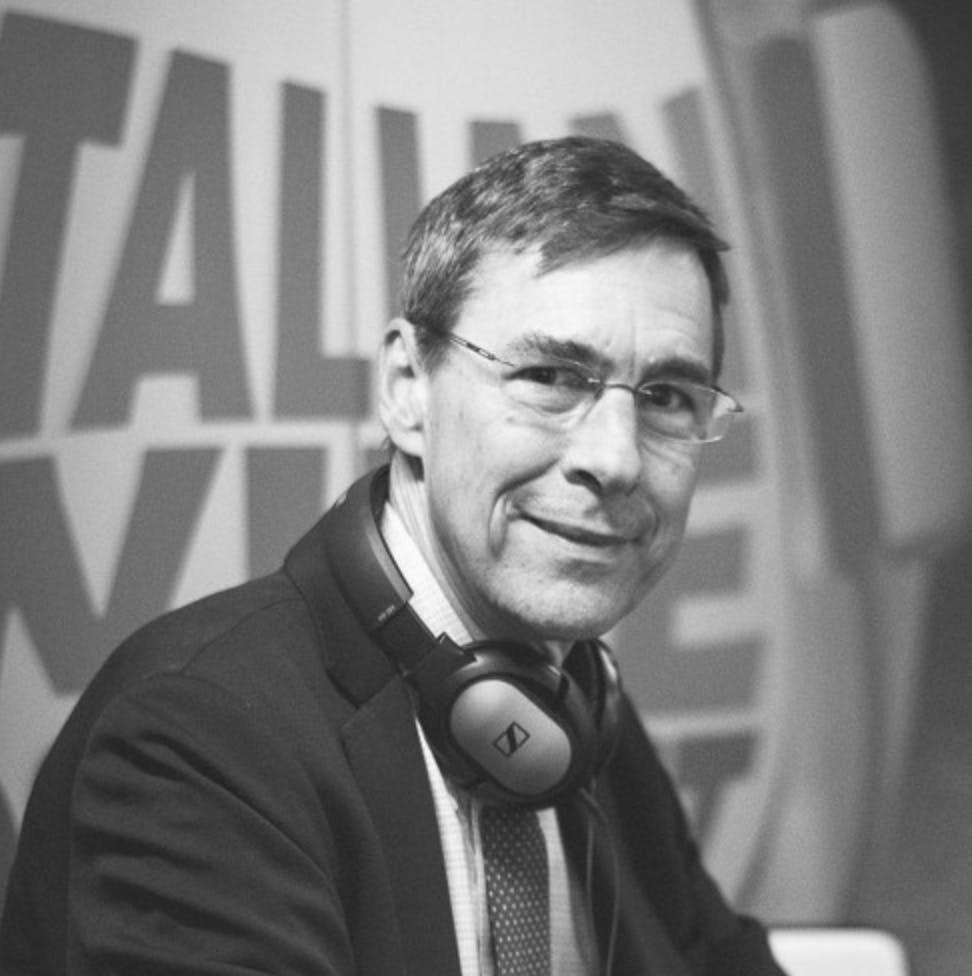
Ep. 200 Monty Waldin interviews Thomas Matthews (Wine Spectator) | Italian Wine Personalities
Italian Wine Personalities
Episode Summary
Content Analysis Key Themes and Main Ideas 1. The personal journey and career evolution of Tom Matthews at Wine Spectator. 2. The historical growth and transformation of Wine Spectator into a prominent wine publication. 3. The pivotal role of photography and visual storytelling in wine journalism. 4. Analysis of the diverse segments and trends within the US market for Italian wines. 5. Wine Spectator's stance on sustainability and alternative winemaking practices (organic, biodynamic) in its reporting and evaluation. 6. The future direction of Wine Spectator, particularly its digital presence. Summary In this episode, host Monty Waldin chats with Tom Matthews, Executive Editor at Wine Spectator. Matthews recounts his unexpected entry into the wine world, beginning as a grape picker in Bordeaux, which serendipitously led to his career in wine journalism. He details Wine Spectator's remarkable growth from a small newsprint publication in the 1980s to a leading global glossy lifestyle magazine today, attributing its success to riding the ""wine wave"" and the vision of owner Marvin Shankin. The conversation highlights the essential role of photography in wine storytelling, particularly through the lens of Matthews' wife, Sarah, a celebrated wine photographer. Matthews then provides an insightful overview of the dynamic US market for Italian wines, segmenting it into the mass-market Prosecco, the high-end collector, and the emerging ""discovery"" markets. He also discusses how American wines largely still follow the French model and shares plans for a significant revamp of the Wine Spectator website. Finally, Matthews addresses the publication's objective approach to natural and organic wines, emphasizing blind tasting for quality over ideological adherence, and expresses his deep passion for his work in the wine industry. Takeaways * Tom Matthews' long and distinguished career in wine journalism began unintentionally while picking grapes in Bordeaux. * Wine Spectator has evolved from a niche publication to a global wine authority, significantly increasing its reach and influence over decades. * Strategic and high-quality photography is considered crucial for effectively communicating the story and culture of wine. * The US market for Italian wines is highly diversified, appealing to different consumer segments, from casual drinkers to serious collectors and adventurous discoverers. * American wine styles, particularly in California, largely continue to be influenced by French winemaking traditions. * Wine Spectator prioritizes blind tasting and objective quality assessment, even for wines produced with organic or biodynamic methods, rather than adhering to specific ideological movements. * The publication is investing heavily in its digital platform with a new, comprehensive website launching soon to enhance user experience and engagement. Notable Quotes * ""I fell in love with the whole culture of wine. The people, the plays, the history, the flavors, and I decided I'm going to orient my writing more towards wine."
About This Episode
Speaker 2 and Speaker 3 discuss their backgrounds and interests in the wine sector, including their experience as a wine spectator and their use of pictures and words to communicate their story. They also discuss the impact of Italian wine on the craft and style of American wine, with Speaker 3 explaining their Italian wine culture and their desire to continue drinking Kianti and unhair. They plan to redo their website to make it easier to use and more engaging, and they have a hinterland with richer internal life than they do. They are a gardener and a gardener is a gardener and they have a hinterland.
Transcript
Italian wine podcast. Chinching with Italian wine people. This podcast is brought to you by Native Grape Odyssey. Native Grape Odyssey is an educational project financed by the European Union to promote European wine in Canada, Japan, and Russia. Enjoy. It's from Europe. Hello. This is the Italian wine podcast with me, Montewood. My guest today is Tom Matthews, who is Executive Editor at Old winespec, tater. Your tasting beat, as they call it is mainly Spain. You've been with a spectator since nineteen eighty seven when I was four years old. Don't rub that in. Yeah. And you were a freelancer living in Bordeaux. You were hired full time by the magazine in nineteen eighty eight, and you first served in the London office, and then you were reassigned to New York. Which state are you from in the States, first of all? Well, I was born in Michigan, but didn't live there very long. I consider myself a New Yorker. I've been there since nineteen eighty two. Okay. So tell me how you ended up in Bordeaux as a young kid or a young a young man, I should say. I'll try to make this a shorter story. You make it long. In nineteen seventy nine, I was living in Spain, writing a novel and ran out of money. And a friend said, let's go to Bordeaux and pick grapes. And I said, why would we do that? He said, well, the food is great. They give you all the wine you want to drink, and the work is easy. I said sign me up. So up we went, and a few weeks later, I realized he was right on two out of three. Work was not easy. So where were you where were you picking grapes then? In a small family farm in entrepreneur, nothing's special, but I fell in love with the whole culture of wine. The people, the plays, the history, the flavors, and I decided I'm going to orient my writing more towards wine. And, after a few years tending bar and trying to be an importer and trying to write. I moved back to France. I'll get into a small village and onto the Meritre to research a book about the life of wine there. So whereabouts where you're not traveling? No. I thought my my journey into one was exactly the same as yours I was at school. I ended up in entrepreneur in Bordeaux, a small family estate, picking grapes? It's a beautiful region, and great people. This was a small village called Roush, in between Casti only born. They had a cooperative. We'd sort of embedded ourselves in the community. And I eventually did publish the book called the Village in the Vineyard nineteen ninety three. But in the meantime, I was freelancing and wine spectator took a chance on me, and then I took a chance on them, and it's all worked out. So that was in which year? Sorry. Nineteen eighty seven freelancing eighty eight full time. So you obviously had the advantage of of being multilingual. Yes. And where did you get your writing skills from? Were you get were you a good kid in school? Yes. But, I mean, a swot egghead? Yes. But a popular egghead? Yes. I had it all. What can I say? And I threw it all away to go pee a great picker in Bordeaux. So when you think, oh, you joined the wine spectator, everyone's gonna think, oh, you know, calamorous life. But in those days, I imagine it's very different to it is now in terms of the interest in wine. How have things changed for you in terms of, in terms of, the wine spectator in terms of size or in terms of editorial content, and also your role within it? Well, I was very fortunate because this late seventies early eighties was a pivotal time for wine in American culture. It really sort of embedded self and took off, and the wine spectator was there all the way. When I joined, he was only ten years old. It had a circulation of less than a hundred thousand. It was still on newsprint. And, Marvin Shankin, the owner, editor, publisher, had a vision that it could be a lot more than that. And through Dintered HardWork and some good hires. We rode the wine wave, and by nineteen eighty nine, I was back in New York working for Marvin in the head office. And in nineteen ninety three, we turned it into a glossy Lifestyle magazine, the one that you see today. And now we have four hundred thousand subscribers and a reach of three million people around the world. So I was working in London that time, and we would stop the wine spectator, and I would always see two things in that. I mean, obviously, I saw you, but I look, I would look up into photography. I know you are as well, with your wife. So we would see Sarah photo by Sarah Matthews. Now who is Sarah Matthews? So in after the great harvest in nineteen seventy nine, I went back in nineteen eighty and was crashing with a friend in Paris, and he was invited to a birthday party. So I tagged along, and that was the twenty first birthday party of Sarah Williams. And I was love at first sight for me. I pursued her. Ultimately, she agreed, and she had a very successful career as an architect and interior designer in New York and gave it up to move to France with me and begin a career as a photographer. And she's today in Argentina finishing up a two week shoot down there she's made a great career as a wine photographer. And she also does films as well, doesn't she? Mhmm. So that mean, you know, two media, you know, journalists were talking about the two very precarious potentially precarious existences. What I liked about the spectator as well was the fact that you did have lavage, but beautifully done photography. And, it's not just saying the kind of lifestyle thing, but it just it's nice to look at. It gives you much better feel often of the place rather than having these really not great photos. How important do you think imagery is what was in those early face. Well, thank you, Monty. First of all, because we put a lot of energy and money into the photography in the museum. Yeah. I see that. It's so obvious. It does not by chance. And we because wine regions are beautiful, extremely beautiful. And vineyards have their exposures, their angle their shadows, their sunlight, and the people of wine are so photogenic because they all have great character, and you can read that character in their faces. So to communicate the story of wine, you have to use pictures as well as words. So is Sarah great at getting up in the morning? There's this photography term called the magic hour when the light is absolutely perfect early morning. Is she the early riser whilst you're just lounging in bed? You must have read her mind or heard her pitch because she's got those vendors up at crack of dawn every day. Okay. We can't even travel together because our needs are so incompatible. No. I don't believe that. You still would you're not like separate hotel rooms. We we just don't go on the same trips. Fear does her trips, and I do mine. Well, let's just say that's what that's professional reasons, though. So that's not because you don't get on. Yeah. No. So who's the best cook in the house? Her mother Nancy is ninety years old lives with us in Brooklyn. She retired from her career as a museum curator in Atlanta and moved up twenty years ago, and she is a fantastic cook. So let's talk about the Italian market in the United States. What's happening? It's it's bubbling over. I think Italy has always been the leader in volume and remains so. And, the value also is growing. I think American are into discovery. They're curious. They wanna try new things, and Italy is an endless source of new things for us. So, I mean, in terms of, trends, I mean, is there that trend to native varieties? Obviously, just entirely Italian wine in general or they are there any particular regions that you think have potential to develop? Well, we did a survey of about fifteen hundred of our readers through our website, wine spectator dot com, and presented the findings at the at Opera wine yesterday. And really, I would say there's there are two or three different markets for Italian wine. There's the prossecco market, which is for people that maybe don't even know that it from Italy, but love the flavor. There's the brunello and Barolo market, which is the collectors, the people who are willing to spend fifty dollars and looking for quality. And then there's the discovery market, the people exploring Sicily, or Sardinia, or Pullia, or Vented or Trentino. So, Italy really can cover all the bases. How does Italian wine influence directly or indirectly the styling of American wines or Credit Californian wines? In terms of acidity or Italian? Or Now, I would say that Americans really are still pretty much following the French model, both in grape varieties and wine style. Do you think that's an error or do you think that's just gonna continue? Or what what do you think that might happen there? That's a good question, Monty. I mean, the efforts with Italian grape varieties have not really worked that well in terms of style and quality in California, at least. So Apart from, like I said, the old time is up in Mendoina where he's in and things like that. I guess you could cause in an Italian variety, although I don't think Oh, actually, no. It is not because what about my film? Italian identity. It has a really American identity. Okay. That's better for Italy because, you know, they're not we're not gonna plant San Giovanni and stop drinking Kianti. We're gonna continue to drink Kianti because that's the best SanJovese. Okay. So in terms of the wine spectator itself, obviously there's print journalism and there's the e form, the electronic form, what are we going to expect from the wine spectator in the future? Well, in about a month, you're going to see a whole new wine spectator dot com. We've spent the last six months rebuilding, revamping, redesigning the website to make it easier to use, and more interesting and more engaging. And I think it's going to be a big hit. I mean, we like to say that if you took circulation as your model paid circulation, wine spectator is by far the number one wine publication, and wine spectator dot com is number two. Right. So how would that work? Would that be free content to hook people in and then a subscription? Yes. The free content is most of it, really. Most of the stories, the news, and, profiles, and such, and then the pay is for the ratings. Right. Okay. Now you talk about stories and storytelling. How is that developing? And what do what is your sort of angle with the with the storytelling of the human aspect behind the wine? Well, we have a weekly column called unfiltered, which is kind of millennial focused. It looks at pop culture and how wine and spirits have infiltrated celebrities and the the youngsters. We also have a contributor named Robert Camuto who lives here in, Verona, who has a column called going native in Europe, and he goes to the little off the beaten path place is in Italy and France, mostly, and Spain, and brings back these beautiful stories of emerging vendors. So in terms of emerging trends, we can probably say it's a sort of maturing trend is whatever you want to call it, natural wine, biodynamic organics, do you see that developing in terms of in the field and also in terms of your readership and your coverage of that? Well, we strongly support environmental sustainability on the part of the wine producers and and in our blind taste things organic, and yes, biodynamic wines tend to score very well. As far as the ideology of it and the sort of militant, partisanship that comes along, we don't go with that. Yeah. I don't go with either. I mean, you know, I know you you know, I'm into my organics and biodynamics, but for me, it's a tool, and good Viticulture, good Viticulture. I think, you know, with your own personal experience of having worked in vineyards, I think it's probably informed you a lot as well into, you know, all the hard work that goes into it and the possible mistakes that you can make and the effect that that that that does have wind starting and wine quality. And, you know, Monty, we judge our wines and blind tastings. So we don't know the producer, we don't know the price. We also don't know if it's organic or biodynamic. So we can't give pluses or minuses for any of those things. We just judge the quality in the bottle. And we think that's counts more than the ideology. Final question, you got a huge responsibility on your shoulders. How do you switch off? What do you do to switch off? Can you switch off? I don't want this to be pretty relaxed. I don't I like what I do. My my life my work is my life. I I'm so blessed to be part of this world of wine and all the people that work so hard to make it what it is. I this is this is my home. What about Sarah? Can she switch off quite easily? Yes. She she's a gardener. She's a She's got a hinterland. She's she's got a much richer internal life than I do. I think you're underestimating yourself. Sure you're being very modest there. So I say thanks to my guest today Thomas Matthew's executive editor at the wine spectator to not be talking to you and, wish you every success with the online version and, keep up the lovely photos. And please send my compliments to Sarah. Thank you very much. I'd love to do it for that. I'd love to meet Sarah, your wife, and and talk just talk photography. I'm a bit of a geek Great. About that. So I'm sure I'll get some tips from her. Thank you so much. A lot. It's a great and lovely interview. Thank you. This podcast has been brought to you by Native Grape Odyssey, discovering the true essence of high quality wine from your find out more on native grape odyssey dot e u. Enjoy. It's from Europe. Follow Italian wine podcast on Facebook and Instagram.
Episode Details
Keywords
Related Episodes

Ep. 2787 Prosecco Superiore by Dr Susan H. Gordon | Book Club with Richard Hough
Episode 2787

Ep. 2784 The Other Side of Valpolicella: Volcanic Soils & Sparkling Wines with Francesca Marcato of Talestri Winery | Wine, Food & Travel with Marc Millon
Episode 2784

Ep. 2780 The Bridge between the Past and the Future of Wine with Serena Costanzo from Palmento Costanzo on Etna | Clubhouse Ambassadors' Corner
Episode 2780

Ep. 2773 Trento DOC: one of Italy’s finest sparkling wines with Alessandra Caroni of Maso Martis | Wine, Food & Travel with Marc Millon
Episode 2773

Ep. 2749 The Many Faces of Etna: Climate, Contrade and the Art of Volcano Winemaking with Federico Graziani | Wine, Food & Travel with Marc Millon
Episode 2749

Ep. 2744 Ep 25: Pantelleria, Salina e il fascino del vino insulare | Pellegrinaggio Enoico con Attilio Scienza
Episode 2744