
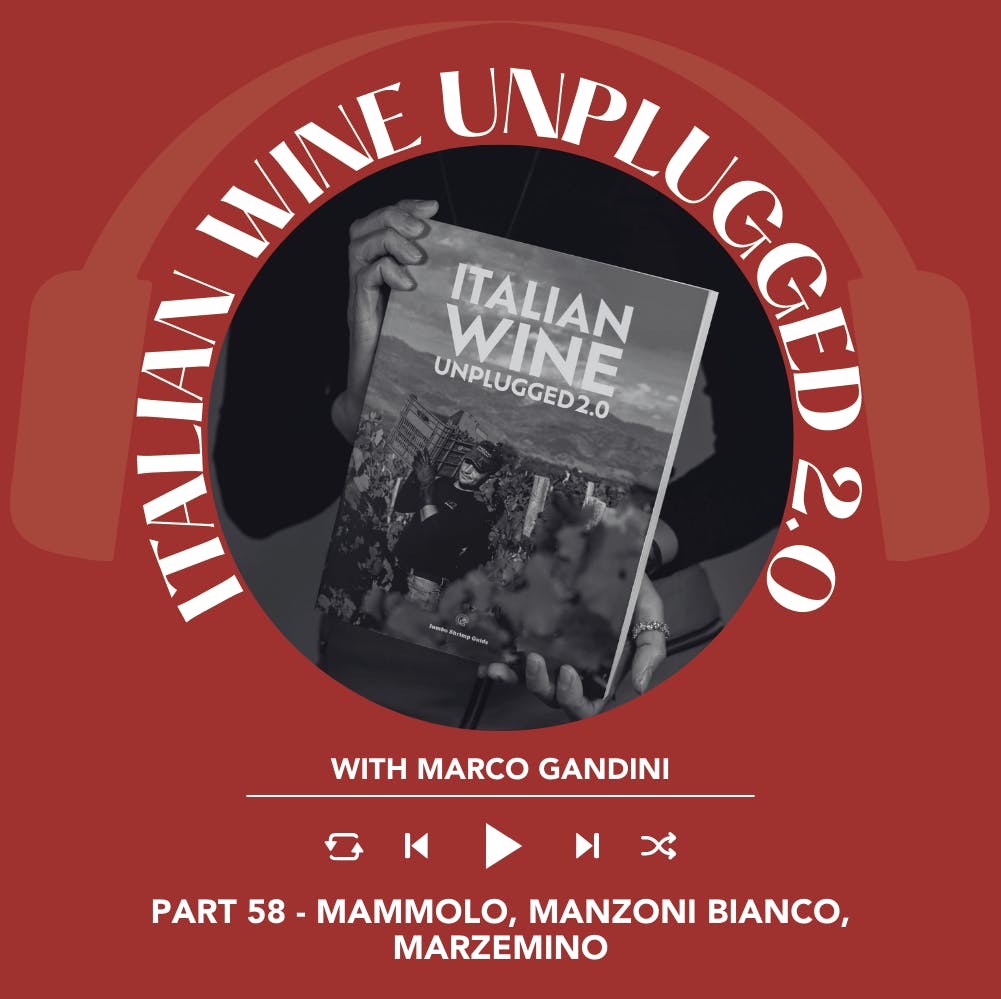
Ep. 1817 Marco Gandini Narrates Pt. 58 | Italian Wine Unplugged 2.0
Italian Wine Unplugged 2.0
Episode Summary
Content Analysis Key Themes and Main Ideas 1. Detailed descriptions of specific Italian grape varieties (Mamulo, Manzoni Bianco, Marzemino). 2. Characteristics, origins, cultivation, and wine profiles of each described grape. 3. Promotion of the Italian Wine Podcast and its associated educational materials. 4. Guidance on supporting the podcast through donations and purchasing books. Summary This segment of the Italian Wine Podcast provides in-depth profiles of three distinct Italian grape varieties: Mamulo, Manzoni Bianco, and Marzemino. For each, it details their typical growing regions, historical context, vineyard characteristics (e.g., vigor, yield, disease resistance), and the sensory profiles of the wines they produce. Mamulo, primarily found in Tuscany, is noted for its violet aromas and use in blends. Manzoni Bianco, a cross of Riesling and Chardonnay, is highlighted for its aromatic, fruity, and mineral-driven white wines from Veneto and Trentino. Marzemino, a dark-skinned grape from Northern Italy, is described with grassy/herbal notes and sour cherry flavors. Interspersed with these descriptions are promotional messages encouraging listeners to support the Italian Wine Podcast via donations, and to explore their publications such as ""My Italian GreatGeek Journal"" and ""Italian Wine Unplugged 2.0."
About This Episode
The transcript discusses the Italian wine podcast and its success in various regions and regions. The podcast is a community-driven platform and offers a free book and a chance to receive a copy of the latest book. The podcast is also a series of wine recommendations and a discussion of specific styles and formats.
Transcript
The Italian wine podcast is the community driven platform for Italian winegeeks around the world. Support the show by donating at italian wine podcast dot com. Donate five or more Euros, and we'll send you a copy of our latest book, my Italian Great Geek journal. Absolutely free. To get your free copy of my Italian GreatGeek journal, click support us at italian wine podcast dot com, or wherever you get your pots. For all the super wine geeks out there, we have a special new series dedicated to you. We are reading excerpts from our new addition of Italian wine Unplugged two point o. Wine lovers tune in for your weekly fix. Only on Italian wine podcast. If you want to own a copy of this new must read Italian wine textbook, just go to amazon dot com or visit us at mama jumbo shrimp dot com. Descriptiono. Description, typically found in Tuscany and used as a frequent blending partner with sangiovese, especially in the vino nobile de Montepulciano blend. The name ma'amulo comes from the word, ma'amola, which refers to the color violet and the flower of the same name. Consider to be a parent of it may be a relative of and and the vineyard, Mamulo is an ancient grape variety as proven by its many biotypes, which are generally not separated in the vineyards. In the glass, as indicated by the name, mamulo wines are defined by violet aromas with flavors of black cherry and raspberry on the palate. It has unstable anthocyanins and produces light colored wines that tend to oxidize easily, which is why it is typically used in blends and only in small quantities. Specific styles, still dry red, associated regions and DOPs. Tuscany, Manzoni Bianco, description, AKA, in Crozo manzoni, six zero one three, the variety was created around nineteen thirty by professor, manzoni, from a Cross of Riesling and Chardonay. Originally, it was thought to be a Cross of Riesling and Pinobianco. Manzoni Bianco is a white wine grape variety and mainly in Veneto and Trentino, North Eastern Italy. It is usually used in the production of still dry whites, many of which are fully buried yet fresh with spices, flora characters, and a touch of minerality. In twenty ten, just over one thousand hectares were planted double from two thousand. It prefers like its parents, cool climates. In the vineyard, it is an early ripener, average budding and limited yield producer. The wines produce limited vigor with an upright growth habit thrives on hilly soils with medium fertility and fresh ventilated climates. The cluster is small, compact, and conical. The red or small berries has thick and pruneau skin and juicy flesh with a distinctive flavor. It is susceptible to sunburn. Train on spur curdun, argeo, good resistant to diseases, notably to bunch rot, thanks to its very thick and strong skin, also resistant to winter cold and late frosts. In the glass, it produces high quality wines, slightly aromatic, fruity, quince, white peach, pear, spice, good body, concentrated, breach and dry with intasha minerality. Generally, acidity is moderate to moderately high and has persistent floral aromas. Acidity and good structure makes it suitable for sparkling production. Specific styles. Joy still whites for the most part. Some examples of sparkling and increased recently more monomerietal production often blended to add spice and acidity. At the table, pasta with onion and chobis and parsley caramelized goat cheese and buttery cheeses like kuya. Are you enjoying this podcast? There's so much more high quality wine content available from mama jumbo shrimp. Check out our new wine study maps. Our books on Italian wine including Italian wine unplugged, the jumbo shrimp guy to Italian wine, Sanja Vazzy Lambrusco, and other stories, and much much more. On our website, mama jumbo shrimp dot com. Now back to the show. Associated regions and DOPs. Coli Barrici, DOC, Coli de Coneliano, DOCG, Coli Ezolani, DOC, Piace, dOC, Venino, DOC, Venezia, DOC, Vicenza, DOC, Bianco de costanza, DOC. Benchmark producers, for Adori, Alois Lakeda. Description a k a, largely concentrated in Tretino Alto Adice, Lambert and Veneto. It is cultivated approximately on one thousand eighty four actors. It is likely an offspring of Terollego, and a parent of Marzimenobianco, and relocated in Northern Italy since the fourteenth century, it was considered very high quality with mozart signing its excellence in Dan Giovanni. Today, the grape is divided into two main groups. Marzamina gentile and Martzamina patovana. In the vineyard, it is a late ripening, dark skinned grape variety. It is a fairly homogenous variety, the main differences being cluster shape and organoleptic features. The medium long cluster with two short wings is cylindrical pyramidal and semi compact. The berry is medium size, spheroid, and blue back in color. The skin is pronounced and rather thick. The thick, slightly pinkish flesh has a simple flavor. It is a very vigorous vine with an upright growth habit. It adapts to every soil type, but it prefers our delicious ones not too precarious or pebbly. Which could compromise its figure. Dry and ventilated climates enhance the quality of the product. It is very susceptible to powder and mildew and sour rock, hence both adequate pruning and rigorous venocanitary prevention as essential. In the glass, the grape has a grassy herbal aromas and sour cherry notes. It possesses great balance in acid and sugar level and produces refreshing berry scented wines. It gives intense ruby red wines of moderately fully body dry and tonic. Specific styles, dry, still red fruity wines. It is often blended in major epilations, like colle de Coraliano, refrantolo Pacido wines, and botticino doc with international grapes, such as merlot and indigenous sangiovese barbera. Pacito examples can be found as well as avocado medium speed, sparkling in the middle of Romania and Veneto. At the table, Rosa Lam with rosemary and garlic and lemon mature blue cheeses associated regions and DOPs. Boticino, DOC Bregance, DOC, Capplianna, DOCG, Cialatica, DOC, carda, DOC, Merlada, DOC, Regiano GOC, Trentino GOC. Benchmark producers, Listen to the Italian wine podcast wherever you get your podcasts. We're on SoundCloud, Apple Podcasts, Spotify, them and more. Don't forget to subscribe and rate the show. If you enjoy listening, please consider donating through Italian wine podcast dot com. Any amount helps cover equipment, production, and publication costs. Until next time, Cheaching.
Episode Details
Keywords
Related Episodes

Ep. 2787 Prosecco Superiore by Dr Susan H. Gordon | Book Club with Richard Hough
Episode 2787

Ep. 2784 The Other Side of Valpolicella: Volcanic Soils & Sparkling Wines with Francesca Marcato of Talestri Winery | Wine, Food & Travel with Marc Millon
Episode 2784

Ep. 2780 The Bridge between the Past and the Future of Wine with Serena Costanzo from Palmento Costanzo on Etna | Clubhouse Ambassadors' Corner
Episode 2780

Ep. 2773 Trento DOC: one of Italy’s finest sparkling wines with Alessandra Caroni of Maso Martis | Wine, Food & Travel with Marc Millon
Episode 2773

Ep. 2749 The Many Faces of Etna: Climate, Contrade and the Art of Volcano Winemaking with Federico Graziani | Wine, Food & Travel with Marc Millon
Episode 2749

Ep. 2744 Ep 25: Pantelleria, Salina e il fascino del vino insulare | Pellegrinaggio Enoico con Attilio Scienza
Episode 2744