
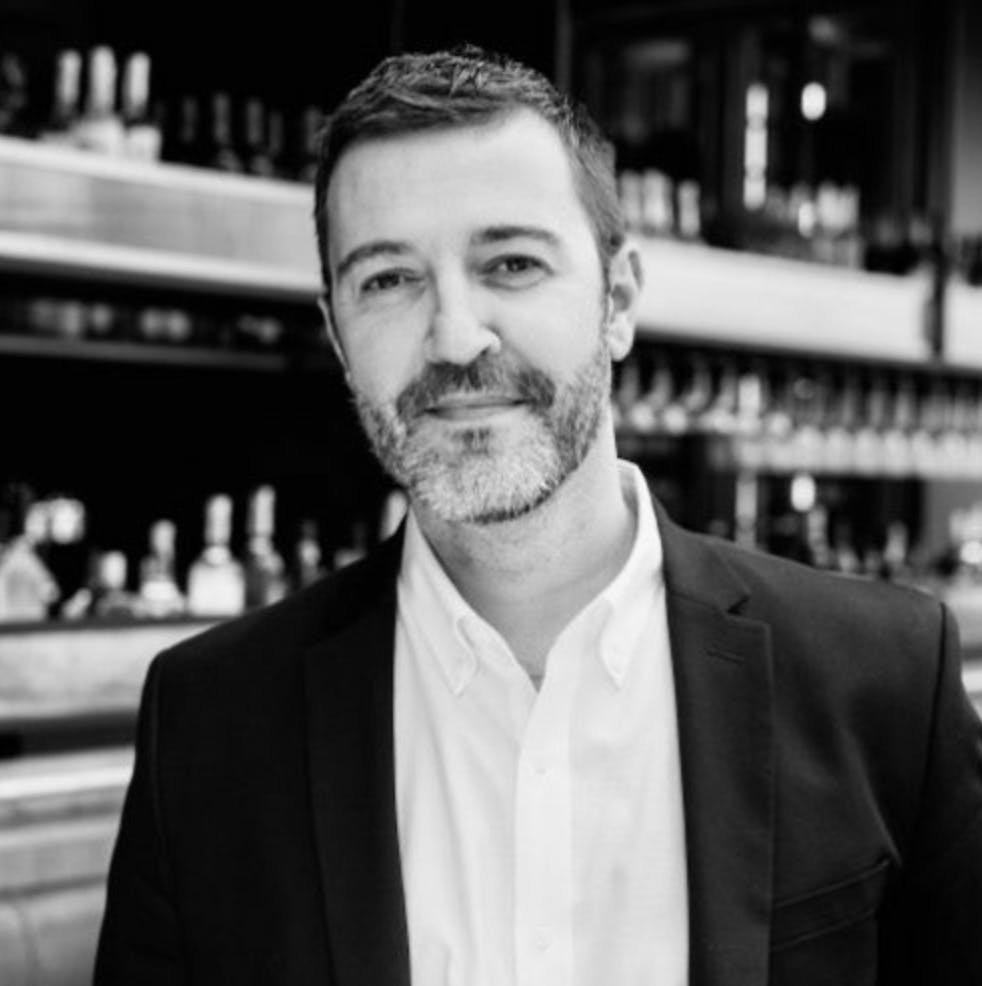
Ep. 425 Steven Sousa | Italian Wine World
Italian Wine World
Episode Summary
Content Analysis Key Themes and Main Ideas 1. Steven Susa's personal journey into the wine industry, from childhood exposure to professional sommelier. 2. The Canadian wine market and viticulture, particularly in Prince Edward County, Ontario. 3. The role of sommeliers and wine programs in Canadian restaurants, focusing on Momofuku. 4. The gastronomic versatility and appeal of Italian wines. 5. Canada's liquor control system (LCBO) and its recent evolutions. 6. Steven Susa's aspirations for future travel and career in wine. Summary In this episode of the Italian Wine Podcast, host Monty Waldin interviews Canadian sommelier Steven Susa. Steven recounts his early exposure to wine through his Portuguese father's home winemaking, which instilled a foundational appreciation. He details his professional path, from studying psychology to working in high-end restaurants and achieving sommelier certification through CAPS. A key discussion point is Steven's tenure at Momofuku, where he significantly expanded the Italian wine selection, highlighting their exceptional suitability as ""gastronomic wines"" for pairing with various cuisines, especially grilled meats. He shares insights into the Prince Edward County wine region in Ontario, discussing its cool climate challenges and successes with Pinot Noir and Chardonnay. Steven also addresses the influence of the Liquor Control Board of Ontario (LCBO) and recent changes allowing restaurants to sell bottled wine, which he views as beneficial for consumers seeking more diverse selections. The conversation concludes with Steven expressing his desire to explore more Italian wine regions, particularly Piedmont, and his long-term goal of integrating deeper into vineyard work and European wine culture. Takeaways - Steven Susa's upbringing with family winemaking fostered his passion for wine. - He successfully transitioned from academia to a prominent career as a sommelier in Canada. - Italian wines are highly valued by Steven for their gastronomic compatibility, especially with red meats. - Prince Edward County is a cool-climate Canadian wine region specializing in Chardonnay and Pinot Noir, facing unique environmental challenges. - The LCBO's control over liquor sales in Ontario has seen recent beneficial changes, allowing restaurants to sell bottles. - There is a growing consumer interest in diverse and ""esoteric"" wine selections in Canada. - Steven Susa expresses a strong interest in deepening his knowledge and experience within Italian wine regions and viticulture. Notable Quotes - ""I think Italian wines in particular really do well. And I think in mo with most cuisines, Italian wines are gastronomic wines for the most part."
About This Episode
Speaker 1 from the Italian One podcast introduces himself and Steven Susa, a guest from Canada. They discuss their interest in expanding their knowledge of wine and learning about the Canadian wine industry. Speaker 2 explains their experience with learning with mentors and their desire to introduce a lighter drinkable wine style. They also discuss their love for wine and its appeal to consumers, as well as their desire to see a seat change in availability of choice. They express their love for Italian wines and their plans for travel to Europe.
Transcript
Italian wine podcast. Chinchin with Italian wine people. Hello. This is the Italian One podcast. My name is Monte Gordon. My guest today is Steven Susa, who is a Semenier, and he's based in Canada. You know, where are you speaking from? I'm in, Consticon Prince Edward County in Ontario, Canada. Right. What's it what's the weather like out there? It's ten AM. It's a brisk morning. It's nice, beautiful, clear skies, and we're gonna get up to fifteen degrees c this afternoon. So you're a weatherman as well as a wine expert. I I like I like your multitask. You like that. I I did. I I'm gonna get a traffic report from you in a minute as well. Well, I just I think normally people think Canada's super cold and especially at this time of year, but it's, it's quite a nice fall day. Perfect for tying down. Yeah. Sorry. Perfect for tying down, annoying English journalists. Is that what you're about to say? Tying down vines, which I'll I'll be doing in, in a few moments after the interview. Really? That's a back breaking job. That one. Oh, it is. Yeah. Especially here. Why are you doing that? Have you got you? Do you got a vineyard, I guess? Friends of mine have a vineyard, about ten minutes from here. It's called Melville Road vineyards, and they took it over a year or two ago is an abandoned vineyard alpino vines that they're restoring to health. And since, since everything that's been going on, I've been in the county for two years now, but I've been, working on the vineyard for the summer. So it's, it's been a fun fun summer getting to know vines and getting a little bit of more about Viticulture. Good stuff. Sounds good. Is Canada your native country? It is. I am a a dual national. I have a a Portuguese citizenship as well, but I was born in Canada. My parents are from the Azores. They integrated here. Many years ago, but I I took advantage of, of getting the Euro passport just in case I wanna be by a beach one day. Oh, really? Good for you. Do you, were you was it a a wine family? Is yours a wine family? I would say, yes, my father would always make wine. Growing up, I I recall that, vividly. Every fall, we would, or he would get grapes. I think they would come from California and and small wooden crates. Kim and his gang of friends in the neighborhood and some, uncles of ours would pass a press around, and we would make wine. He would ferment it in our basement. So there was always smell of fermentations happening in the house. And he would only drink his wine. So there was always wine at the table, lunch and dinner, and he's kinda one of those old school guys, which we always kinda nourished himself with a glass of wine. Is is that what made you? Was that was that the trigger for your love of and career in wine, or was it or did that come from some other source or impulse? I think it must have influenced me because, wine was always around. I think when I was a kid, it was just there. We got to taste wine. It was never, it was kind of a a good culture surrounding wine, a very kind of a European view of wine. So, I didn't love his wines necessarily when I started learning about wines, in the kinda late nineties, early two thousands. This is a lot of the kind of the bigger extracted stuff, but, I think that must have influenced me. I think, when I really got into wine, it was during university. I studied psychology at University at Toronto. And was working in some some good restaurants with good wine programs to get my way through school. And, I think I found. By the time I graduated, I was already working in some top restaurants, managing top restaurants and, and getting it to wines that way. So you're a busy lad. You you, obviously have a very strong work ethic, you know, doing all the study as well as working as well. So what was the next step? I mean, obviously, working part time. How did blind become your professional, career? Once I graduated university, like I said, I was, I was working in restaurants, and I I think by that point, I had decided that, like most people, once you start working in restaurants and it kinda gets into you, it's it's something that you continue with because of the, just the energy, the camaraderie, and I was really into eating and and getting into wine. So I think that's was the kind of catalyst was, just getting exposed to to different wines going to tastings at, at that time, and in Toronto, there was a lot of events happening. And, and it was, kind of, the community was, growing, and there was a lot of excitement around the wine scene. So I think that's when it happened. So you, became a somn. Yep. And so how does the Canadian Association of Professional Soms or Sommelier's? How does that certification work in Canada? There are, provincial, it's it's divided up provincially. And I think caps, if I were to, compare it to others, it's geared towards industry professionals. So it really gets people ready for working in restaurants. There are a lot of industry professional professionals, excuse me, local industry professionals and journalists who would, teach the classes. So it was a really kind of a hands on way of learning and, learning with some of the mentors growing up. It was a good way to get a good understanding of international wines, and you would also get education on the local wine scene as well, which was, which was, advantageous for sure. So how does the, I mean, there are no partnerships with colleges, university. It was just a mentor, basically. We, I took a program through George Brown College, so I think it's still available through George Brown College in Toronto. But, again, it's handled differently provincially. So So tell me about when you were at, I hope I pronounced this, right? Momo Fuku? Yep. In charge of the wine list there, obviously. So and there was a transition, with more Italian wines, represented on the list. Was that you that was responsible for that, or was it somebody else? I'll take credit for that. I took over. I've worked at momofuku in Toronto for about eight years and, initially as service director some more, again, operations and, kinda big picture stuff. About four years ago, I was able to take over the beverage program, which was great to get back into what I really love doing. And, we, opened a restaurant that was, called Cajun. This is around today that was focused around, a hearth. So wood fire grill, a lot of proteins. And at the time, we, we were able and had the opportunity to increase the amount of wines that we had and get a little deeper. And I think for that style of food or you know, that calls for proteins and and grilled meats, that just for me, Italian wines in particular really do well. And I think in mo with most cuisines, Italian wines are gastronomic wines for the most part, And, what I really wanted to achieve was to to have wines that were people associate, you know, steak and cabs, and I kinda wanted to get away from that. I think San Joazy, I think NabilO, Game. We're not necessarily talking about Game today, but I just wanted to introduce kind of a lighter more drinkable wine style to to to that type of dining. Mhmm. So what with wines at work, concentrated but not heavy, but also refreshing with with potentially heavy heavy protein. Right? Correct. Yeah. Yeah. I just I I think when I when I wanna eat or when I'm eating, I enjoy eating more than the average person, maybe, and, wine is always a part of that. So I just heavy wines are just you can't really drink that much and you you just get bogged down and that, you know, you wanna leave a meal with a smile on your face and be able to walk out the restaurant and and not necessarily, you know. Are there any particular lines that you would you could you can name the date or just don't denominations, what I'm I'm guessing you would, you know, like, Piamonte. Are there any particular areas that you that you particularly like? Well, speaking, but producers, I think, I think, the VITs, the VIRAs, the Altares, our Pepe from from the north, wines from Sicily. I think are are quite hot right now. So teranare, the coasters, the Okapintis, the Gulfis. These are wines that are are delicious wines. They're complex. And you just wanna keep drinking them. That's that's kind of what I wanted to introduce to the to the scene again. So what about, I mean, you were sort of a a a big player on social media or you're somebody that's a little bit quieter on social media. I think I'm more of a reserve person. I I I spend a bit of time on there, but, I don't post as much as maybe I should. I need to be a better self promoter, but, I'll work on that over the the coming months, I think. So in your area of, Canada, what are the great varieties that you that you have there, both, you know, Venifera and even, inter specific or crossings? What have you got up there? Well, I'm in Penheadwood County, which is, kind of a cooler site in in Ontario. You might be familiar with Niagara, which is about four hours southwest of us. So we're on, Calcareous limestone here, and we have a lot of, shoreline from Lake Ontario. So chardonnay and pinot noir does, does quite well. We have a little bit of riesling, a little bit of gamay. And the interesting part of this, I guess, part of the world is that, it does get a bit colder than even in Niagara. So over the winter months, we have to hill up the vines, which creates another kind of layer of work. So, we're also now experimenting in this area with geothermal textiles, which allows us to not have to bury up the vines. But it's, it's an interesting part of the world. There's a lot of great producers here. And again, I think Pinot noir and Chardon A are are the standouts. In terms of, liquor control, which is partly regulated in, in your country, is does Ontario have a provincial liquor control border? Yes. The LCBO controls most of the liquor coming in and out of the province or sorry, into the province. Things have been a little bit more lax recently with what's going on, up until recently restaurants couldn't sell bottles of wine to guests, they would have to consume that in their restaurant, but a bit of a lifeline most recently is that the wine, restaurants and and wine bars can sell, can essentially have bottle shops now and and and sell some of the wine. So it's it's, It's a lot better for buyers and and people who want something that's a little bit more. Esoteric maybe, a lot of the natural wines, the bibenamic stuff, the the really funky stuff you really couldn't find in the LCBO, but but now you can go to your local restaurant. And find those easily. Do you think that will be that will provoke a a seat change in in availability of choice in, in your part of Canada, or or do you think things will go back to normal inverted commas after COVID and if it goes away? I think it will. I think, there's always the availability. It's just, for the average consumer, you're you're forced to buy cases, which, is not the worst thing. But for taxing purposes, you, you would have to buy cases. But, so now, being able to buy just individual bottles or mixed cases makes it a lot easier and and, just better for the consumer. So hopefully that's something that'll continue. I know they've just extended that deadline for till the end of the year. If I'm not mistaken, so a lot better for for buyers and the average wine consumer for sure. I mean, how do you think, do you think it's right that the governing liquor control board looks, favors, organic or biodynamic wines? Is that a good thing? Is it a bad thing? Is it, anything we should think about or worry about or be happy about? I think for the LCBO, they're looking for wines. I mean, they're a very big organization. There's, I think about seven hundred stores. So and they have very vigorous testing. So I think just to fulfill orders and to have product and stores. They they need kind of bigger producers or producers that have a more consistent supply chain, which is why maybe the stores are I won't say they're a little can be a little less exciting than maybe, shopping from a, an importer But having said that, I think being around the world, I think, the average European maybe coming to one of the bigger stores would be happily surprised at the selection because you can get very good wines from all over the world. Like I said, if you're looking for the really esoteric stuff, the really funky stuff, you'd have to go to your, agent for that. But, again, it's it's not the worst system in the world. I don't think. I don't I don't know how much time you spent in Italy, but, where are your favorite places that you've seen so far? And where have you where which places Have you not managed to visit yet that you're dying to go and see? I haven't done a ton of traveling. I've been in and around Verona, so, Vapoli cell area, through the dolomites up into, Alta Adi. Was supposed to go to Piedmont. I definitely would love to go to Piedmont, and I think, you know, everyone wants to do Piedmonts this late seems lately. And for obvious reasons, very exciting wine regions and a lot of cool stuff going on. So I think those two for me would be two top choices right now. Yeah. What about, where do you see yourself in, five or ten years' time? Do do you see yourself being in the same, the same place doing the same thing, or have you got more different horizons planned? I'm, I'm happy here. I've been here for two years. Like I said, and it's a bit of a change from from the big city, but I really like, country living for now. The OpenSkyes, Rolling Hills. I really wanna get to know this area, spend some time in vineyards and some of the wineries and and get to know that aspect of the business. And like I said, I'd I'd hope to be in Europe. I think the winters get a bit irritating for for the average Canadian. So, vineyards and beaches and mountains, I think, in my future, Yeah. So that sounds like you. There's a thing. You should write that book. There you go. That's that's your next book. There you go. Yeah. I just got your book, so I'm looking forward to reading that. Yeah. They're great. They'll send you to sleep within about four and a half minutes. So Perfect. Okay. Final question. This is This is a soccer question. Do you follow Toronto FC? I do mildly. I think they were playing a Montreal last night, and I forgot. Portugal was playing actually a friendly with Spain last night. I was watching What about, how fun so do you do this? Yes. I know of him. I had to ask my nephew this question because he's the he's the soccer professional. He's a kid from, I think he's from Edmonton, and he seems to be doing quite well now in Europe. Yeah. I got yeah. I mean, he's not not not a name that's come up. My my team is a bit of a parochial one South Hampton. So, we don't we don't get anyone out of the Champions League. I'm afraid. So I'll say thanks to my guest. Steven Susa, speaking today from Canada, a well known sommelier, a lover of Italian wine, and, obviously, lover of soccer too. I just wanna say thanks to you for coming on the podcast today, and we wish you I hope to see you soon in Italy. Likewise, thank you, Marty. Take care, mate. You're welcome. Listen to the Italian wine podcast wherever you get your podcasts. We're on SoundCloud, Apple podcasts, Himalaya FM, and more. Don't forget to subscribe and rate the show. If you enjoy listening, please consider donating through Italian wine podcast dot com. Any amount helps cover equipment, production, and publication costs. Until next time,
Episode Details
Related Episodes

Ep. 2789 ColleMassari: a long-term vision rooted in Montecucco with Giuseppe Di Gioia | On The Road With Stevie Kim
Episode 2789

Ep. 2788 Ep. 14: Austria and Hungary | Study Smart for your WSET Level 3
Episode 2788

Ep. 2785 From Volunteer to Speaker at TEXSOM with Samantha Cole Johnson | TEXSOM 2026
Episode 2785
Ep. 2766 Inside the U.S. Non-Alcoholic Wine Market: What Wineries Need to Know with Jill Sites | Masterclass US Wine Market
Episode 2766
Ep. 2761 Winemaking and Consulting Across Sicily with Alessandro Serughetti | Wine, Food & Travel with Marc Millon
Episode 2761

Ep. 2759 Part 2 – The VIA Educational Program & Italian Wine | Heart-to-Heart Conversation with Sarah Looper
Episode 2759