
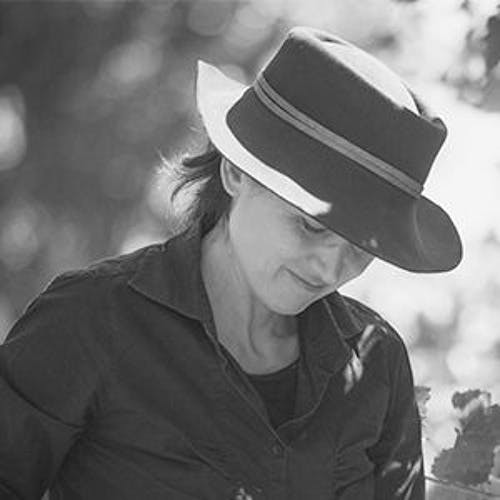
Ep. 480 Dr. Laura Catena | Italian Wine World
Italian Wine World
Episode Summary
Content Analysis Key Themes and Main Ideas 1. The Legacy and Innovation of Catena Zapata Winery: The central role of the Catena family, particularly Nicolas Catena and Laura Catena, in transforming and elevating Argentine wine on the global stage. 2. The Terroir and Diversity of Mendoza, Argentina: Exploring the unique geographical and soil variations within Mendoza that contribute to diverse wine expressions, particularly for Malbec. 3. The Versatility and Evolution of Malbec: Discussing the characteristics of Malbec, its historical use, adaptation to different terroirs, and the balance between ripe, oaky styles and mineral, cool-climate expressions. 4. Challenging Perceptions and Storytelling in Wine: The importance of educating consumers about the complexity of Argentine wines (beyond just ""Mendoza Malbec"") and the power of family heritage and personal narrative in marketing. 5. Beyond Malbec: Argentine White Wines and Other Varietals: Highlighting the quality and potential of white wines like Chardonnay, Semillon, and Torrontés, as well as other red varietals like Syrah and Pinot Noir, showcasing Argentina's broader winemaking capabilities. 6. The Intertwined Argentine and Italian Cultures: Exploring the deep-rooted Italian heritage of the Catena family and its influence on their identity, winemaking philosophy, and culinary connections. Summary In this episode, host Montecillo interviews Dr. Laura Catena, director of Catena Zapata winery in Mendoza, Argentina, and herself a medical doctor specializing in emergency medicine. Laura details her family's profound impact on the Argentine wine industry, especially her father, Nicolas Catena, who revolutionized it by focusing on fine wine production and challenging global perceptions. She explains how their family's philosophy, rooted in an open-minded, creative, and analytical approach, drove their success, including achieving six 100-point wines. Laura delves into Mendoza's diverse terroir, emphasizing how distinct Malbec expressions arise from variations in altitude and soil composition, challenging the notion of a monolithic ""Mendoza Malbec."" She describes different Malbec styles from their portfolio, from their classic blend to the highly specific Adriana Vineyard single-parcel wines, and shares the winery's early realization that excessive oak could diminish Malbec's character. The conversation also highlights Argentina's often-overlooked white wines, like Chardonnay, Semillon, and the native Torrontés, which Laura believes deserve greater recognition. She also discusses her personal project, Luca, dedicated to preserving old vineyards and exploring other varietals like Syrah and Pinot Noir. Finally, Laura reflects on her deep Italian heritage, which influences her family's cultural identity, and offers her favorite Italian food pairings for Malbec. Takeaways * Nicolas Catena, Laura's father, was a key figure in transforming Argentine wine from a commodity to a globally recognized fine wine category. * The Catena family's success is built on a foundation of innovation, extensive travel, economic insight, and a passion for storytelling. * Mendoza's diverse microclimates and soils (varying altitudes and alluvial compositions) are critical to producing the wide range of Malbec styles. * Malbec is a remarkably versatile grape, capable of producing age-worthy wines with complex terroir expressions, and its ""smooth tannins"" make it unique. * Argentina produces excellent white wines (Chardonnay, Semillon, Torrontés) that thrive in its high-altitude vineyards and offer a distinct counterpoint to its red wines. * Laura Catena's ""Luca"" project demonstrates a commitment to preserving Argentina's old vine heritage and exploring the potential of other varietals like Syrah and Pinot Noir. * The Catena family's strong Italian roots profoundly influence their culture, winemaking approach, and culinary preferences. Notable Quotes * ""He went on to, you know, revolutionize Argentine wine, start exports of high-end, like, really create the fine wine from Argentina category around the world."" (On Nicolas Catena) * ""He is an economist. He has a PhD in economics. So I think he also understood that, you know, the future of his region had to do with fine wine, that wine as a commodity... was not a good future for our region."
About This Episode
The speakers discuss the importance of storytelling in the craft of wine, with a focus on the diversity of wine regions and the use of different techniques to make it more appropriate for taste. They also discuss the success of the Malbec region in Argentina and its diversity in taste, with a emphasis on the rich and denser quality of the Malbec Argentina. The speakers emphasize the importance of analyzing the taste of the wines and identifying the Italian language and its impact on international markets. They also discuss the excitement of the Italian wine industry and its potential for quality and value.
Transcript
Italian wine podcast. Chinchin with Italian wine people. Hello. This is the Italian wine podcast. My name is Montewood. My guest today is Doctor. Lara Katena. Lara is the director of the Katena and Zapata winery in the Mendoza region. Of Argentina. And Laura really is a doctor. In your case, what do you specialize in as a as a medical doctor? Emergency medicine. In England, they call it accident and emergency, I believe. Okay. That's very challenging job I would imagine. Now, Laura, tell us about your your father, Nicholas, first of all, because he was instrumental in putting Argentina on the wine map. Yes. Well, he grew up in a winemaking family. You know, he's a third generation. The family was founded by my great grandfather, Nikola Cadena, who came from La Marque to Argentina in eighteen ninety eight. My father had grown grown up in this wine family, but actually he wanted to be a physicist and, he was planning to go study in the United States. He'd gotten a scholarship from Martina. He didn't want to go into wine, and he was supported by his mother who was an academic. She was the headmaster of the local school, and she thought, oh, you don't want to go into the family business, which, you know, was sacrilege in an Italian family because my father was also the oldest son. And, and so he was planning to do something else, but actually, sadly his his mother died in a car accident. And, his his father was, so depressed. He couldn't do anything. And my my father who was very young, you know, he he was, nineteen had to basically take care of the family for a year or two until his father recovered. And and that's how he came to stay in academia, fortunately, because then he went on to, you know, revolutionize Argentine wine, start exports of high end, like, really create the fine wine from Argentina category around the world. So he was obviously a man that was driven, but he's he's very, very creative as well. I mean, what, apart from the the fact that he really did put, Argentina on the map, what are the just a couple of little details that you think were also key in in in the importance of your family? Well, I think that each generation, you know, from my great grandfather making the decision to to emigrate to Argentina, to my grandfather who was actually this incredible blender. He could make a great wine, in magical ways. You know, he had his tricks, like using grapes for multimedia, you know, and and winemaking, procedures. And and he he actually became a very important producer. And then my father had this vision, when he went to California and he saw that the Californians were challenging, you know, the French supremacy and wine And and he said, I'm I'm going to try and do that in Argentina and and really make Argentine wines that can be with the best of the world. You know, today we have six one hundred point wines. That that would have been crazy to imagine twenty five years ago. But in terms of your question about what what are the the things that maybe led to this is I I do think that my father was somebody that traveled a lot. He actually, studied at Columbia University in New York. He was born in a tiny little village, less than five hundred people. But ended up, you know, seeing the world and understanding what was happening. He is an economist. He has a PhD in economics. So I think he also understood that, you know, the future of his region had to do with fine wine, that wine as a commodity, which, you know, that's what was happening with Chile at at that time in in the eighties. You know, it was a very cheap wine all the same. I think he realized that that was not a good future for our region. And I think you you mentioned the word creative. And, you know, my father, is just an incredibly adventuresome person. You know, today he's eighty one years old, and he gets so excited about social media and the posts we're making. And You know, nothing is too innovative for him. And, so I I think I think this this open mindedness, this desire to to try new things has been an an important part of the of the DNA of our family and of the people who work at Cabena. You know, who are all incredibly inspiring and and creative people. So, yeah, I would say that that that and and the last thing is what my father calls. Like, he thinks that luck plays a very important role. I mean, it's interesting you talk about storytelling. And what's interesting about the Catana story, it's, it's, it's kinda like the story of Argentina as well as the story of a family. I mean, is that it can that sometimes be a little bit of a burden to you, or do you thrive on that? The fact that you get this attention and almost all of the time you get incredibly good press because you you do an incredibly good job. Oh, I I mean, you know, for me, storytelling is is, natural, and and perhaps it's because I grew up in a family of storytellers. My father, you know, who was working very, very hard when my brother and I were young. My I have a little sister, Adriana. She has a vineyard named after her, our most famous vineyard, but she was, you know, fourteen years afterwards. So when my brother and I were young, my brother, Ernesto, every night, we would never go to bed until my father arrived. We would lie in the bed, put the lights down. And then for an hour, my father would make up stories, and we would alternate, you know, from a Tarzan story to a princess story. It was a bit sexist, you know, you know, the the but we each got to choose, and my brother had to hear the princess stories as well. And and I liked the Tarzan stories. And, you know, I grew up in a family of storytelling every night. We heard this adventure. And, you know, my father is is so creative with with his storytelling. So it's not that, you know, I sit down and I say, oh, what story I'm going to tell? I feel like everything that happens to me during the day is is out of a movie perhaps because you're seeing it that way. But I agree with you that telling the story in in a in an interesting way is not so easy. And I do work on that because, you know, it can't be too long. People get bored and and you know, it's good to tell the stories that people might be interested in. One example is, you know, somebody, you I always know not to talk too much about my children because nobody wants to spend an hour hearing hear a story about your child, you know. In terms of, what you did for the Argentine wine industry, obviously creating stories means often in wine, the idea of terroir, you know, particular areas of the country or region, that have different points of difference in terms of, in terms of buying expression. You were you were real leaders in that as well. Just give us a brief comment on on Argentina, on Argentine regions as a whole in Saint Mendoza in particular. Yes. Well, you know, Mendoza has ex extremely diverse, because we have, you know, the equivalent of going from the southern Rome to Champagne in forty five minutes, you know, in just a hundred plus kilometers, because we're going from around seven hundred meter elevation to up to fifteen hundred meter elevation. And in addition, we have different soils because usually higher in the mountains, the alluvial soils are are bigger stones, and then further down, it's more clays and scents. So there are these very different techniques. But in terms of storytelling, I tell you everybody in Mendoza knows that the Malbec tastes different in each one of these regions. So we we never understood when people are saying, oh, oh, Mendoza, Malbec is the same. And I was just thinking, well, they need to come and see this. And and I wasn't doing much about it, although it was hurting our category because people were thinking that Malbec maybe was not, you know, a grape of the pedigree of Nebiolo and Caronnissomignon Chamonique, you know, but it does have that that capacity to age, to shine, to make terroir specific wine. And then one one day I got really pissed off because somebody asked me for the tenth time what is happening after Malbec and Mendoza? You know, I'm thinking, you know, this is a two thousand year old grape that my great grandfather planted. His horse vineyard. You know, why do I need to be thinking about what comes after Malbec? And, you know, I I realized that actually, it was my job. It was the job of all the producers in Argentina to explain this diversity in these regions. And and that's what I've been doing, you know, for the last fifteen years. Yeah. It's a little bit like going to Pomerol and saying, why, when are you gonna get rid of the merlo? Exactly. Well, I I actually, you know, that time when when that person asked me, it was a actually a French journalist living in Quebec. I actually said, well, would you ask Ober de Villein, what they're going to plant after, you know, Yeah. Although, actually, today with climate change, some people need to be having this this question. I mean, is that because Malbec is quite fairly resistant to high, heat and also to, luminosity? Well, so actually in the altitude, it's very cold. So, we are planting Malbec in zone one winkler, which is close to the colder parts of burgundy and some parts of Champagne where you would never part plant a bold variety. But because of the combination of the more frequent sunlight, you know, we have more sun. There's not a lot of rain. So we get the cool climate with more sunlight, and that, allows us to have very nice high acidity because of the cool climate but good down in development because of the sunlight that allows for the photosynthesis. And also, there's an effect of the plant, increasing the the polyphenols in the skins to as a protection against the sun that's so extreme at the high altitude. So, I think that, many people think that in those size warm, yes, there are some warm parts, you know, towards the east and the lower altitudes, but very quickly you go to this cool climate. So, for sure, you can make, you know, their age worthy, very fine Malbec, we also make some beautiful pinot noir. There's just not that much planted, and and other varieties. But yeah, it's the the cool climate is something that most people don't know because they imagine, you know, South America has to be warm. So in terms of, people that haven't maybe tried, as many Malbecs as you, just give us a couple of examples of Malbec wines that, your family makes. So different outfits and different soils. And what the differences in taste might be, please. Yeah. So, first, you know, the the general thing about Malbec is that it's a very rich wine. It's got a lot of fruit on the nose. Depending on the, you know, on the altitude in the place, more red fruits, more black fruits, more violets, always has a little natural vanilla. So so the actual malbec grape has natural vanilla whether it's it's made with oak or not. So it's it's very aromatic. It's got quite a bit of density, but then the the the very main distinctive feature is that it's very smooth. Regardless of where it comes from, whether it comes from a very high altitude, lower altitude, it's got these very smooth talents. In fact, when I read a lot, about French, Valbeck, in eighteenth and nineteenth century books, they always said never bottle the cabernet sauvignon alone. Please make sure you blend it with Malbec for the soft tenants. So that's a characteristic that Malbec shares. But now on to your question about different wines, So, you know, we have, a white called Malbec Argentina, which has a label that on the label, we tell the history of the variety through four women. It's it's a really fun label that, has won many awards. You should take a look at it. It's a w w w dot malbecacientino dot com if you want to look at the packaging. And this is a, a blend of, two vineyards, old vines, about fifty, years old average. And it's to me, it's it's your very, like, rich classic, you know, a bit oaky, like kind of the big wine. Maybe, you know, what people think of as the napa style. Now So that's one style of Malbec that you can make, a little riper. And and it has a blend from one vineyard in a warmer region, which is very old, and then one vineyard in the Oka Valley a little cooler. Another wine, that I love to show people. Actually, three wines are the three single vineyards from the Adriana vineyard. This is the vineyard that we have the six one hundred point wines from, and there's one called river stones, one which means elegant microbes of the earth, and it's in honor to the microbes that we've studied in this particular parcel. And the other one is called, which in Latin means, you know, luck of the earth. And these three parcels are literally right next to each other. Fifteen hundred meters elevation. Different soils, some more stony, some more limestone ish, the fortuna terra is more sandy, and the wines are completely different. Yet, you know, they come from places one right next to each other a few meters away. And, these are more violet. They have more, black fruit, the river stones, you know, from these, very slowly soils often have more texture and a little more tenant. For tonight that I I've often been told tastes more like a pinot noir than a Malbec, and, then the Munoz is is, I don't know, just the most beautiful thing. And, and, all these three wines are very age worthy. So I think that those you know, the from the Malbeca Cantino, the more ripe style and the Adriana wines that are more mineral and more cool climate wines, I think those are very interesting. And then we have our classic Katena Malbec that sells all over the world that I call it my chanel number five because you know, it's it's it's a wine that it's in every blind tasting, you know, master wine test. They they put it as as a, you know, a wine to be identified as Malbec, and it's a altitude blend of four different vineyards. And, if you taste it, you you will remember it because it it it tastes like Malbec, you should recognize it. And it's, you know, it's it's it's just smooth and beautiful and elegant mix of black and red food, a little spiciness, very classic Malbec. Was your family maybe frustrated? When there's sort of craze, the the sort of journalist craze in the late nineteen nineties, the hundred point scores, and these big wines coming out of Bordeaux that often tasted very unnatural to me, you a little bit maybe frustrated in Argentina to say, listen, we can make these kind of wines very easily and very naturally because we have perfect conditions for these, you know, nice full bodied Malbec. Did was it frustrating sometimes that, you didn't get the recognition then? Obviously, you've got it now was that a bit of a different area then? You know, I'm I'm I spent very little time on on feeling left out or anything like that. You know, I think for us, we were watching and studying, you know, that This is perhaps something that that is another skill set of my father that for him, everything that happens that's good or bad is to be analyzed. You know, he doesn't celebrate too much. The good things, he doesn't you know, get too sad with the bad things. It's all part of the job, and we have to analyze it. But I do agree with you that, you know, we did think, oh, wow. These wines are getting these scores. We should make wines like this. And we actually did tried doing the three hundred percent oak and, you know, we actually did some trials, to see what happens. And, actually, Marivek is a grape that really soaks up oak. So what we found was that if when we used this extreme oak, the fruit was gone. I think in with cabernet, so if you have a really good cabernet, you can put in quite a bit of oak and it'll still be a nice wine. But this this method of too much oak and too many ripe grapes to me destroyed the Malbec, and and we realized that pretty early on. So we never really went on that path. On the other hand, I feel that I think that the world has become too opposite in that, you know, the Solis and the winemaking community wants mineral wines, high acidity, exotic wines, you know, that have, you know, sometimes, you know, even extreme features of some sort or another. And then, you know, consumers who spend a lot of money on wine actually do still like, you know, ripe grapes and a bit of oak. So that's why, for example, we have the Adriana wines that are such specific wines from terroir that we, are really careful with the oak. We never wanted their meats too much oak, but with the Marvica Cantino, we allow the wine to be a little more of a lot, just a little more ripe and a little more okay. So My view is that there is a place for both styles in the world. What about, other wine styles from Mendoza that don't involve Malbec? You know, just say, for example, white wines, for example. Oh, yes. So you know, very little is known about the white wines of all of Argentina, but, we we make incredible white wines. And in fact, there's just as many white grapes, planted as red. Right now, it's probably a little more red, but there's been times in the last century that there's been many more white grapes. So you have, you know, a lot of really good chardonnay because of the high altitude, and we have two wines, the the Adriana vineyard white stones and white bones that have you know, getting so much recognition. We sell out every year. We release them, and they sell out. And, we have the cardinality of the cool climate. But the creaminess that probably comes from the sunlight and the alluvial soils. So that's an interesting wine. There's also some really good semillon in Argentina that came at the same time as Malbec and used to be co planted with Malbec. So some people have made some really good, semillon. We actually have this blend that we call white clay because it's from this area that has clay soils that's a blend of shedding and semillon, which I don't know that anybody does this. Well, maybe in the law, they do. Do they do those two together? No. Because San Leon is more for Bordeaux. It's a good it's a good blend because you got one sort of low acid grape and one with a little bit more acidity. Exactly. Exactly. And we actually are coming out with this wine because we did some trials, like, about what could we do with the the beautiful white variety? We have in Argentina. And these two go really well together, and they make this really refreshing white wine so that that's interesting. And then we have the total of this, you know, which is a creosha grape. It's one of these, grapes that are some sort of, you know, permutation of the original, grapes brought by the jesuits, and by the, you know, by the Spanish, but then they've interbred in Argentina. There's hundreds of different kinds of native geogas, and one of them is the Dorodese Riochano Rio Rio has a as a part of Argentina, same as Spain, but it's actually an Argentine region called La Rioca Argentina. And this tour of this, I think, is very delicious. It has, you know, these, terpene kind of aromatics, a little bit like wheezing, an an a nice palette, especially if it's harvested early, with high acidity. It's it's just, you know, the most drinkable wine. I'm very a little bit exotic. I make ice cream with it, which I like. No. It's funny. You've got this very sort of quote masculine Malbec, and then you've got the white wine that is a complete contrast semi aromatic, aromatic, and it's kind of nature's provided, the locals everything that they would need in terms of contrast, naturally. So what about your family? Do you have a Italian family roots? Yeah. So so my great grandfather Nikola came from La Marque. And actually, from my mother's side, her grandmother came from, liguria. So, I do have a feeling that I was Argentine and Italian. You know, we even have Italian passports, but basically we were brought up as as part Italian. The being Italian was just as important as being Argentine. And I am also part Spanish, but somehow for my father, because his grandfather had been so important to him, and the Italian side, he felt very Italian. All of us speak Italian. We've spent time in Italy. We speak it fluently. My my children speak Italian, some of my sibling's children speak Italian. We go to Italy very frequently. You know, Maria Poncey, who we did the little session about La Lotte Vita, for, wine to wine, she also said the same thing that her family, you know, would every year go to Italy. It's like the it's like, you know, I don't know how you say that in English. Pilgrimage. A pilgrimage. Right. It's it's a pilgrimage that that that we would we do pretty much every year, to Italy, and, I feel very at home in Italy. I I I feel like the the culture is quite similar to the culture of Argentina. And I think the same thing happens to the Italians, who come to to Argentina. That's why we have a lot of Italians making wine. I mean, those are, like, more recent, Italians coming to Argentina. Yeah. Well, that's what I mean, there are many things that make Argentina an incredibly fun place to be in, but the sort of the Italian, ingredient there is also another, little bit extra. What's your when you're in Italy, you're gonna go out for lunch or for dinner. You can choose whichever food you want, but you're only allowed to drink a Malbec, which is your favorite Italian dish with an Argentine Malbec. What is my favorite Italian dish? You know, I am, like, a fanatic of, Buffalo and the Italian tomatoes, which are so much better than the tomatoes anywhere else other than Argentina, but that's not good for Malbec. You know what? My very favorite pasta is the the because I like very spicy things. And I think that Malbec is one of the few varieties that actually can, you know, stand up to to a spicy, pasta sauce, even a tomato sauce because of the of the sweet cabins, which are not from sugar. They are just a natural thing, about my bank. And the other thing would be Osobuco. I I mean, I've always loved Osobuco. And I think it it goes extraordinarily well with, Malbec. But those those will be it. That's quite a rich dish, isn't it Osabuco can be? Yeah. Osabuco is rich in Malbec. You know, for example, this Malbec Argentina, I was telling you about would go so well with with an Osabu because it's rich and it's it's got this texture and and, you know, the the thing about Malbec is that it's big wine with soft tannins, and there's nothing like other wines like that, you know, and and it has nice acidity but not as high acidity as, let's say, a nebbiolo or a pinot no. So it's it's just a very friendly wine, a very hugging. It's like a wine that hugs you. And so it's good for those, you know, kind of dishes that are that are, you know, like the asabuco, like it's it asabuco is just so so grand, so big. No. Like, it's kinda cuddly. It's big, but it It's cuddly. Yes. Yes. Cuddly. That that is that's like a very good word. I will use it. Cuddly. Okay. I think we've done everything. If there's anything else you want to tell us, do you tell us now? I mean, I know that, there's a new winery project called, Luca. Is that right? Yes. Yeah. Well, no, Luca, you know, started actually twenty years ago. It's my my own, wine, but I I basically look for old wines and I started out buying grapes from growers that were about to sell their vineyards and were selling in bulk and I started making these just amazing old wine wines, and, it's been around for twenty years. It's my own little project. And I'll I the reason it's named Luca is because my son is named Luca, and I couldn't come up with another name. So but it's a good name. For your what are your favorite little discoveries? Obviously, by having the Luca brand or winery. I mean, what extra areas of of, Argentina did you discover via that? Well, you know, for one, I discovered all these old Malbec liners that were on their way to being pulled out, and we really prevented a lot of Malbec from being pulled out because of just one winery. And then other Argentine started following and and buying these grapes. And in fact, the other thing we've done is every time one of these old vineyards is being pulled out, which at some point, they have to be we actually recover the genetic material and we replant it and we preserve it. So so that's been part of the the Luca project that, you know, we also do with Katena. Another thing, that I found was this incredible Sarah vineyard that was a massage selection brought from, the Ron, in the nineteen fifties by a researcher in the Argentine Institute, and he had planted it in his own vineyard. And we found this vineyard, and we make this Sira that is just so beautiful and and so age worthy and and just fantastic. And we're also preserving that, selection. So those are two of the of the gems. And then I also have a Pinot noir project, that, that I'm doing single parcel, Pinot noir from, the name of the brand is Domet Nico, which has been really exciting over, the last two years. Okay. Well, you're a very busy lady. It's the definition of a of a female multi multi tasker. Thanks very much for for speaking with us today. And, we wish you every success with all your projects. We're even more success And just thanks for all the stuff that you guys do and your family's done over the years. You know, when I, I spend quite a bit of time in Argentina, and it just had such incredible potential, and, and it's so nice to see that that potential has has been accepted has it given internationally and international markets. And, I think it's one for me, I think it's one of the best, stories in the last twenty years that, these fantastic wines, and also often very good value incredibly good value for quality that you get, is being recognized. And, and your family without any shadow of a doubt, has has created that. And so, and just the way you speak and the way you carry yourself you know, you come from a wonderful family, and I think your father, is a is an exceptional man. Absolutely, Dave. So, yeah, thank you so much. Well, thank you, Monte, and Listen to the Italian wine podcast wherever you get your podcasts. We're on SoundCloud, Apple Podcasts, Himalayev, them and more. Don't forget to subscribe and rate the show. If you enjoy listening, please consider donating through Italian wine podcast dot com. Any amount helps cover equipment, production, and publication costs. Until next time, to Chi.
Episode Details
Keywords
Related Episodes

Ep. 2787 Prosecco Superiore by Dr Susan H. Gordon | Book Club with Richard Hough
Episode 2787

Ep. 2784 The Other Side of Valpolicella: Volcanic Soils & Sparkling Wines with Francesca Marcato of Talestri Winery | Wine, Food & Travel with Marc Millon
Episode 2784

Ep. 2780 The Bridge between the Past and the Future of Wine with Serena Costanzo from Palmento Costanzo on Etna | Clubhouse Ambassadors' Corner
Episode 2780

Ep. 2773 Trento DOC: one of Italy’s finest sparkling wines with Alessandra Caroni of Maso Martis | Wine, Food & Travel with Marc Millon
Episode 2773

Ep. 2749 The Many Faces of Etna: Climate, Contrade and the Art of Volcano Winemaking with Federico Graziani | Wine, Food & Travel with Marc Millon
Episode 2749

Ep. 2744 Ep 25: Pantelleria, Salina e il fascino del vino insulare | Pellegrinaggio Enoico con Attilio Scienza
Episode 2744