
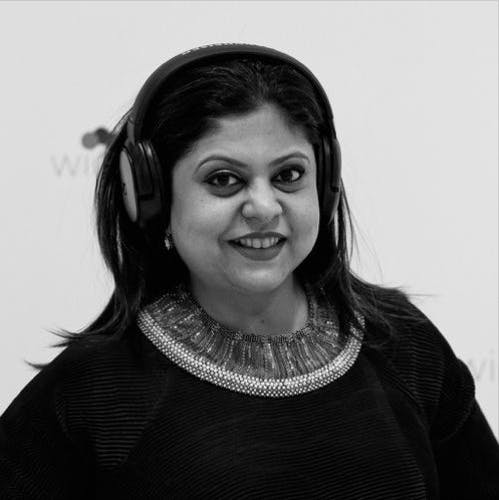
Ep. 265 Sonal Holland MW (Sonal Holland Wine Academy) on the Indian Wine Market for Italian Wine
Italian Wine
Episode Summary
Content Analysis Key Themes and Main Ideas 1. The personal and professional journey of Sonal Holland, India's first Master of Wine. 2. The nascent but rapidly growing wine market in India. 3. The evolution of wine consumption demographics in India, particularly the role of women and millennials. 4. Challenges and opportunities in wine education, retail, and cultural acceptance within India. 5. Italy's strong brand perception and potential for growth in the Indian wine market, including through wine tourism. Summary In this episode of the Italian Wine Podcast, host Monte Wood interviews Sonal Holland, India's first Master of Wine. Holland recounts her transition from a corporate career to the wine industry, detailing her establishment of the Sonal Holland Wine Academy, the Soho Wine Club, and a pioneering wine retail chain. She shares insights from her extensive market research, highlighting that India's wine market is growing exponentially in both volume and value, with women increasingly driving consumption and overall social acceptance of wine improving. Holland notes that India is the world's largest consumer of whiskey, but a growing health consciousness is shifting some consumers towards wine. She emphasizes Italy's advantageous position in the Indian market, where it's strongly associated with ""fine wines,"" despite low consumer awareness of specific regions or grape varieties. Holland suggests that Italian producers should leverage this perception, particularly through food and wine events and by promoting wine tourism, given the large number of Indians already traveling to Italy. She concludes with an open invitation for Italian producers to visit India and understand the market firsthand. Takeaways - Sonal Holland is a trailblazer in the Indian wine industry, having founded educational and retail ventures. - India's wine market is experiencing significant growth (14-15% annually) from a small base. - Women are key drivers of wine consumption in India, breaking traditional social barriers. - The Indian retail experience for wine is evolving from transactional to more specialized and experiential. - Health consciousness among Indian consumers is contributing to a shift from whiskey to wine. - Italy benefits from a strong perception of quality (""fine wines"") in the Indian consumer's mind. - Wine tourism is an untapped opportunity for Italy to connect with Indian consumers and build loyalty. Notable Quotes - ""India is a very nascent, market for wines. It's growing exponentially, but it's still a new new market for wines."
About This Episode
Speaker 2 and Speaker 3 discuss the origin and ancestry of European great varieties, including San Jose, Lambruschco, and others. They explain their journey in the wine industry and their club, Soho wine club, which is a B2C activity for wine drinkers and promotes wine club in India. They also discuss cultural norms and the health revolution in India, where consumers want to drink wine and are advising doctors to advising patients that they drink wine. They are the world's largest consumer of whiskey in the world and the world's largest consumer of whiskey in the world.
Transcript
This episode of the Italian wine podcast is brought to you by the new book, San Jose, Lambruschco, and other vine stories. Researchers Atilio Shenza and Cerrenne Macio, explore the origin and ancestry of European great varieties in a tale of migration, conquest, exploration, and cross cultural exchange. Hardback available on Amazon in Europe, Kindle version available worldwide. Find out more at Italian winebook dot com. Italian wine podcast. With Italian wine people. Hello. This is the Italian wine podcast. It'd be Montewood. My guest today is India's first Master of wine. Her name is Sonal Holland, Master of wine. Welcome. Hi. Pleasure to be here, Monte. Thanks for coming. So we're gonna talk a little bit about you and wine in India and also Italian wine in India. Yeah. That's okay. Great topic. Let's let's go on with it. Okay. So where where's the best place to start? Talk about you first about how you got into wine and why did BMW and I got into wine about twelve years ago, so not that long ago, actually. And it happened obviously over a glass of wine, how cliched. But, at point had come in my career, in my corporate career, where I was looking to reinvent myself and do something entirely unexplored and, you know, swim uncharted territories. So What was your previous career? I used to be in a proper corporate. My last job before I reinvented myself into wine was within as debt listed Fortune five hundred multinational company, whereas the director of sales, I'd been with them for six, seven years. Traveled all around the world. It was a rewarding job. Really good. No reasons to complain, but, somehow I felt something was lacking, and I was, you know, I I just felt like I wasn't doing something that would allow me to project my skills and my, and my talent if I made the essay to to to the extent that I would have liked at the time. And, just decided to quit my corporate career and look to do something else. Are they surprised? You know, this this idea and the seed was planted by my husband, actually. He's British. That's when I get this exotic name from Holland. And he walked in one day with, hey, with an article written by Janis Robinson in FT dot com. And he said to me, you know, you should check her out. You should see what she's doing. And she's she's a great name in the wine industry, but UK based. And She's a master of wine. You should see what it what it means to be a master of wine. And I Googled Jansis, and I was obviously hugely inspired by by the volume of work. She was putting it even, even back then, even more so now. But, I then read up a little bit about a master Wine, and I realized that trying to become master wine is probably harder than trying to climb mount everest. So it's somehow the the opportunity to try and be India's first master of wine struck my imagination. I got I got gripped with the year, and from there on began my journey in the world of wines. And, obviously, you know, my first natural step was to learn about wines. So WST in London was a natural choice, but I realized very quickly that I enjoy wines, you know, and this is my calling, and this this is I'm on Yeah. I got lucky, I suppose. Yeah, really. So I got to live my dream thereafter. So Okay. And now you've developed, I mean, obviously, you, as you said, you're a successful businesswoman before. You've now got your own company or companies. Yes. So, you know, India is a very nascent, market for wines. It's growing exponentially, but it's still a new new market for wines. And I feel that, it's important to be doing everything rather than just one thing and, you know, because there's no depth in the market yet. Depth is something that'll come with years. So right now, what we have is there are loads of opportunity and everything is like a blank canvas. Right? So anybody can come in and paint any picture. So I I had the choice to decide whether I wanted to do one thing and do a lot of that one thing or just wanted to spread myself out and, you know, spread my wings and try and establish myself in different different areas of work. And I chose the ladder because there's so much opportunity in in education, so much opportunity in for hotels and restaurants and and other places. So that was some of the early, early things I started to do. What was the first So in two thousand nine, I set up Sonal Holland Wine Academy, which at the time was the first and probably the only established, approved program provider for WSTT courses in India. And I started that because I realized that if if there were more people to jump into this this industry, there would have to be some sort of education of available in India for professionals to blossom. So so that was the first thing I started to do. I became a wine educator first, and then I started on the side, started consulting for hotels, restaurants, and doors started opening because wine being such a new subject and awareness about it even back then was was even lesser so. So and and there weren't very many professionals at the time when I started. So I guess I I I was lucky because I got the first mover advantage. I had some pioneering advantage there, but I started to get a lot of work for with hotels, restaurants who wanted me to, consult for them. My big job with the ITC hotels, which is India's second largest chain of luxury hotels with over a hundred properties in India landed to me while I was doing my master wine studies where they approach me to say, would you be a corporate beverage head, you know, looking after a wine program across the group? Now normally a job like this lands to you after you become a master of wine, but I suppose because I was in a market like India, which is growing in a land of opportunities, I like to call it. I was fortunate to be able to pursue that role even before I became one. But soon after I became a master of wine, I decided, no, I just wanted to be completely independent and, you know, be a full on entrepreneur So long story short, today, have an academy. We have a club called Soho wine club, which is more of the B2C side of of our activities. So what does that mean? B2C? B2C is everything that we do with consumers. So we do events. We do curated experiences. We we, so the way we define wine club in India is slightly different because the thing is that you can't sell wine online in India. You know, it's it's India bans advertising of alcohol, and it also bans you from selling wine or any other alcoholic beverage online. So we don't really promote like that. But the way we are allowed to do it is through experiential tastings, and we have a huge community of wine lovers. We have database and access to. And so we all meet up and we organize events, and it's it's and that's probably the best way to sort of market wind to this database. So what's the demographic people at the time? Are they young striving students, or are they middle aged people that have leisure time? You know, I see them across all strata, but I find that there is a there is a distinctive group of, very established wine drinkers who have been drinking wine and have been exposed to wine because of international travel. These are typically the well heeled, more affluent class of people who enjoy and don't mind paying a bit of, you know, more money for expensive iconic wines. And then there is this whole breed of new, you know, young millennials who, among many other things, I I must admit they're not wine loyalists, but wine occupies a definitive place in their drinking repertoire who are coming to wine in a very big way. They're curious to learn. You know, statistics show I mean, the research that I did consumer research on India wine insider clearly shows that, they know lesser about wine as compared to the early a group that I mentioned, but they drink wine more frequently and probably have a propensity to pay for more or pay more for a bottle of wine. And they're curious. They're not daunted by the subject of wine. They they are not afraid to order wine in a restaurant. And, they don't need mind being guided by knowledgeable, sommeliers, and so on. Although they do feel the frustration that a lot of this culture still doesn't exist in India. It's kind of evolving. You talking about the sommelier culture or the equality? Yeah. I think so. It's it's kind of developing, but it's not as as vibrant and as established as it as it is in the US. Like yesterday, I was having a drink with a colleague here from the US, and they were telling me they have a proper established sommelier association, which is extremely active. And I suppose we don't have a body like that in India. It's all it's all very it's still very random. But we do what we do. We we continuously provide education and and and talent is up and coming. And and, you know, like, I started a wine retail business earlier this year, Monte. We launched, a chain of wine shops this year, which is These are physical stores. These are physical stores. They are and in fact, they are shopping shops, concepts within a chain of stores called Foodhall, and Foodhall in India is our interpretation of what you call as the premium store, like, like an M and S, for example, in the UK. Yeah. Marks expenses. Yeah. So, it's typically where the affluent people or expatriates would come to buy and purchase food products. And so we have all the shops within Food Hall, run by me and my team, licenses owned by us. And so we're not just being a consultant, but it's literally like starting a wine retail establishment. And we're seeing a great uptake for wines, by people who are happy that they are receiving proper advice about what wines to buy. They're able to see a wider selection of wines. And, there's some sort of an experiential purchase, happening rather than more commoditized over the counter, so on. You know, traditionally in India, Indians would buy wine by sending their drivers or their house staff to a shop where wine would be stored very badly, probably, you know, in heated conditions. And you would you would stand across a counter, and the guy at the shop would ask you what you want and you would just say you would have no idea. So you would basically whatever you've got within this price point. So it was a very transactional sort of a purchase, and I think retail in India is changing because it's now moving from more commoditized transactional purchase experience to more modern sophisticated, specialized retail shops, you know, wine specializing in wine and and premium beers. And we're we're seeing that I mean, I'm I'm just glad and part of that revolution that's happening. So another string to your bow is is you do in-depth market research Yes. Research the in demand too. What are the trends and opportunities in the in the Indian market that your research has identified and how are you gonna fill the ways. There are many I mean, it's a ninety six page report. I was fortunate because I was approached by wine intelligence in UK, which is the global benchmark for consumer research. And they said we we hadn't done any research in India yet, and we'd we'd love to launch a report, but, you know, we we're looking for someone to collaborate with. And, I was obviously very kicked and we did this, and we launched a thorough survey of over a thousand wine drinkers across five main consumption cities, which probably covers up over eighty percent of India's wine consumption. In those cities. Those five cities, which what would Those cities are Mumbai, Delhi, Delhi, Delhi Gorgon, club together, Pune, Bangalore, Hyderabad. Have I said five? That's five. Yeah. Yeah. That's five. Yeah. Yeah. I mean, it's all places where test cricket takes place as well, I think. Yeah. Totally. But, you know, I I don't think Tesco isn't India yet. Oh, test cricket. Maybe so. Sorry. I thought you said Tesco. No. Well, they may be there as well. Well, I'm thinking Tesco. Thinking Tesco will come and approach me. So what's the, so this research and, across these cities, obviously in-depth. What what did you glean from that? There's lots and lots of findings, but, some of the key things is for firstly, you know, India is growing both in volume as well as value, which is very interesting because we see markets internationally where volume may be increasing, but value is decreasing or in some other markets where value may be increasing and volumes decreasing. I think India is a new emerging market for wine where both are on on a on a major stride. Wine is growing at fourteen to fifteen percent consecutively consistently over the last decade or so. Although industry claims that it could move faster because we're looking at a really tiny base. You know, so I don't disagree. But, nonetheless, a fourteen percent growth is a fourteen percent growth for wine. And we have among the lowest per capita consumption yet. So it just, you know, points to a a massive opportunity in the future. What about cultural norms? Cultural, what what is happening is wine is increasingly becoming more mainstream is being consumed across a range of occasions both on trade as well as off trade. Women are driving the wine consumption in India. Why this is unique is because traditionally women in India have not been encouraged to consume alcoholic beverages. But in this survey, it came out very starkly to us that women are not just enjoying wines, but have, receiving the blessings of their family members. And, you know, it's kind of fitting in well within the social strata of India because India can be quite traditional in that sense. Some of the most progressive families, and some of the richest families also can be living in joint families and can have a very sort of a traditional fabric, where women are not really expected to be sitting with, whiskey on hard rocks. You know, it's it's just a jarring image. So India has had those kind of social acceptance issues. But I think with wine, with its softer image, women are breaking those barriers and are coming out and are saying, you know, My mother-in-law doesn't mind me drinking a glass of wine or my husband, in fact, quite enjoys that I drink a glass of wine, and I'm able to join him over a conversation over an alcoholic beverage. So traditionally, it was men sitting separately, women in their little hubs kind of doing their talk at parties and so on. But I think wine is bringing is improving the quality of marriages in India. Well, we we could we could talk about that, but it's a family it's a family show. It is a family show. Yeah. Exactly. We'll get right back to Italian wine podcast after a quick reminder that this episode is made possible by the book, San Jose, Lambrusco, and other vine stories available on Amazon in Europe and Kindle worldwide. Obviously, it looks like, big steps are being made in India in terms of acceptance of wine, all sort of consumption and education. Yes. Where do you see the next trend? Is it just a question now of just continuing the work in in getting Yeah. I I think rather than introduce anything new, completely. I think it's very important that we harness what the trends that exist, and we're able to fully make use of these trends and are able to market wine effectively to make sure that we fully I I hate to use the word exploited, but have fully utilized the opportunity ahead of us. I find myself talking a lot to wine companies in India trying to sort of have a dialogue with them about how best market wines and how best to make it approachable, accessible to all these new segments. You know, we have the affluent class, we have the millennials, we have the ladies. We also have a a thriving health conscious population, you know, who are who are wanting to drink wine because they see wine as a healthier role alternative. I don't know if you know this Monty, but we are the world's largest consumer of whiskey in the world. India drinks more whiskey than Scotland produces. So but this is with the more older generation. Now, they're facing a lot of health issues, and doctors are at actively advising Indian patients that, you know, get off whisky and if you must drink and enjoy a glass or two of wine. Now, obviously, these doctors are doing up some reading, or maybe they're not. I don't know. They're being guided by something that is making them feel, okay, let me advise my to drink wine instead of whisky because it's, you know, they're probably likely to drink lesser volumes of it. You know, how we'd be satisfied with two glasses. So, a lot of that health revolution is happening. Attitudes towards wine is different because people want to drink wine is more driven by the fact that, they want to try different styles, you know, so the diversity of wine fascinates them. To where where does Italy fit into that given it's got more native grapes than the other country? Yes. Part of what I'm going to be speaking about this afternoon is that Italy needs to needs to really play its trump cards, which is diversity being a major trump card, you know. And how does how does how does it really do that successfully in a in a mark, in an emerging market? Does really successfully in India. They they do a lot of food and wine shows. They do a lot of food and wine events. A lot of food and wine experiences. So I've seen the ITA, the the Italian trade agency, very active, and also the consulate and the embassy is very, very active in sponsoring and partnering with various food related festivals. So, you know, Italy's always been about food and wine, food and wine. I think where there's an opportunity is, to also look into tourism because there's a lot of Indians traveling to Italy. It's statistics show that about one million Indians travel to Italy for various purposes, trade purposes, and so on. And we have an excellent relationship with Italy. We have seventy plus years of window Italian relations that have never been strained, have never been an argument or at crossroads with each other. Our prime ministers get along fairly well. I'm getting slightly political here, but what I mean to say is a lot of Indians enjoy doing trade with Italian companies. And I think they travel to Italy because of that, and I think it's a fabulous opportunity to make this audience captive make them travel to Italian wine regions because studies globally show if you've been to a wine region and you've experienced wine there, you're gonna come back a loyalist. You're gonna come back having an emotional connect, and you're going to want to drink wines only from those countries. My research or shows that, whilst consumers have very low awareness about grape varieties and regions of origins, in wines, in terms of countries other than India, France and Italy are the two top recall regions in the old world, particularly. In the new world, of course, we have Australia and and and USA, but in the new world, it's French and Italy. And I think what I'm trying to say is Italy consumer think of Italy as fine wines as a as a generic, you know, as a as a over generalized statement. I think when when consumers go to a wine shop and they say, I want a wine from Italy, they're thinking in their heads and they're trying to communicate to the owner that I'm looking for something of quality and not asking you for something that is rubbish, you know, or cheap and cheerful. So there's a direct association with fine wines, even if you're selling him something inexpensive and everyday drink So Italy enjoys that special position in a consumer's mind in India. And I think that needs to be played upon. That that that can be really harnessed. But you've got a lot on your plate already Yeah. Samuel Hall and master of wine, and let's hope the Italian producers take on board some of the suggestions that you've made. It's been a fascinating whirlwind tour around India. We could have talked probably for a couple of hours. Yes. So you'll have to come back and, You're going to have to I might final word of advice is if you want to know more about India is you have to visit India. It's a fascinating place. We have a lot in common with Italy. You know, we love fashion as Italy does. We You you are incredibly glamorous. She dressed after. Yeah. We love family. We love food. You know, we're very, we're culturally very alike. So I I would like to invite every Italian and a producer here to visit India and understand us, firsthand. Open offer. There we go. Thank you. Central Hallum master. Alright. Thank you very much. Thank you so much. Some work been a whirlwind. But, very enlightening. It's an area of, oh, sorry, India's a bit bare. I just don't know at all. Nothing about the market, and you've encapsulated it very concisely. Thank you. We're here to help. Thank you. Thank you. Listen to all of our pods on SoundCloud iTunes, Spotify, HimalayaFM, and on Italianline podcast dot com. Don't forget to send your tweets to eta wine podcast.