
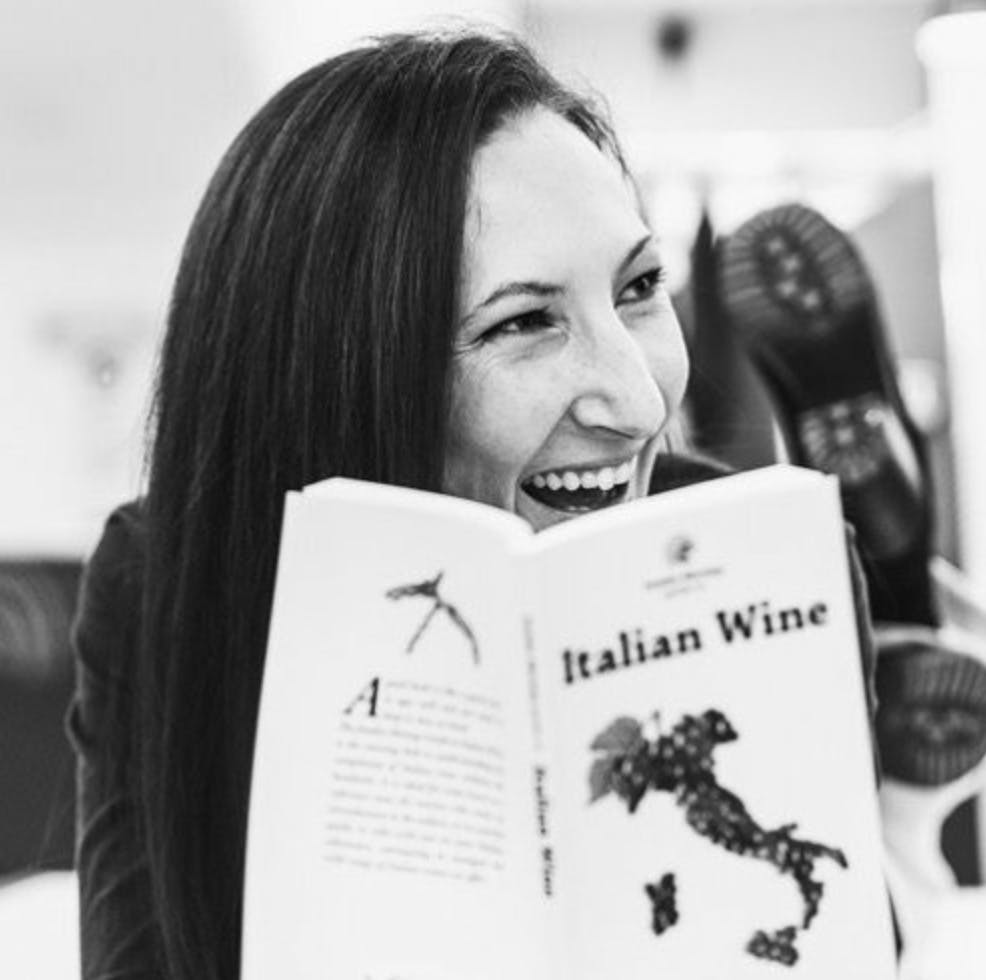
Ep. 517 Jumbo Shrimp Guide to Italian Wine, International Grape Varieties | IT Wines, INT Varieties
Jumbo Shrimp Guide to Italian Wine
Episode Summary
Content Analysis Key Themes and Main Ideas 1. The historical development and impact of ""Super Tuscans"" in Italian winemaking, challenging traditional regulations. 2. The role of international grape varieties (Cabernet Sauvignon, Merlot, Chardonnay, Cabernet Franc, Carmenere) in innovating Italian wine styles. 3. Pioneering winemakers and their contributions to modernizing Italian wine. 4. The evolution of wine classification (DOC) in Italy versus rapid winemaking innovation. 5. Analysis of specific international grape varieties, their characteristics, and their presence in various Italian regions. Summary The text, an installment of the ""Jumbo Shrimp Guide to Italian Wine: International Grape Varieties,"" explores how international grape varieties have shaped modern Italian winemaking. It primarily focuses on the rise of ""Super Tuscans,"" such as Sassicaia and Tignanello, which emerged from a period of crisis in Chianti in the 1960s. These wines, initially classified as mere ""table wines"" due to their use of non-traditional grapes like Cabernet Sauvignon and Merlot and aging in barriques, revolutionized the industry and gained international acclaim, even outperforming traditional Bordeaux wines. The text highlights key figures like Mario Incisa della Rocchetta, Emile Peynaud, and Giacomo Tachis. It also mentions earlier innovations, such as Leonello Lattari's pioneering use of international grapes and barrique aging, predating Sassicaia. Beyond red wines, the text discusses the successful integration of international varieties in white wines (Jermann's Vintage Tunina) and sparkling wines (Chardonnay in Trento DOC). The latter part of the text provides a ""varietal spotlight"" on Cabernet Sauvignon and Merlot, detailing their origins, characteristics, ideal growing conditions, blending partners, and notable presence in Italian wine regions, emphasizing their versatility and global impact despite common misconceptions (e.g., Merlot's ""Sideways"" effect). Takeaways - ""Super Tuscans"" were a groundbreaking movement in Italian wine, born out of innovation and a desire to improve quality and market appeal, challenging existing DOC regulations. - The use of international grape varieties like Cabernet Sauvignon, Merlot, and Chardonnay played a crucial role in modernizing Italian winemaking and achieving global recognition. - Pioneering winemakers in Tuscany and other regions experimented with new techniques (e.g., barrique aging, specific blends) to create world-class wines. - Italian wine classification struggled to keep pace with rapid innovation, leading to highly acclaimed wines initially being relegated to lower quality tiers. - Cabernet Sauvignon and Merlot are versatile international varieties, widely planted globally and successfully integrated into various Italian wine styles and regions (Tuscany, Veneto, Friuli, Sicily, Lazio). - Quality and style, not just adherence to tradition, became driving forces for success in Italian winemaking. Notable Quotes - ""Perhaps the most famous examples of of wines made with international varieties in Italy are the super tuscans. This term refers to a group of now prestigious wines that started their lives as unusual blends being made outside of regional regulation."
About This Episode
The hosts of the-thank you for watching the episode of the Thailand White podcast discuss the success of Italian wines, including the T Comparal Chest and Teenage and Teenager categories. They also discuss the success of Bar evolution wines in Italy, including the white vintage Tunena and Vintage Tunica, and the success of cabernetGeneration battles and Merlo, a black fruit variety. They emphasize the importance of innovation in the Italian style of purveyance and the success of cabernetLive and Merlo, both of which were later replaced by new wineries.
Transcript
Welcome to the Thailand White podcast. I'm Rebecca Lawrence. And I am Yacupofanshoo Lee, and we are the authors of the jumbo sharing guide to Italian wine series. This show will feature generations of our second book in the series, the job machine guides to tell you why international grape varieties. We wrote this book for Curzroy lovers. Especially those who enjoy the idea of having a lighthearted entertaining crash course into this very broad topic. Jonas we journey through the world of Italian wine. Hello, and welcome to another installment of the second Jumbo Shrimp guide to Italian wine. International Great varieties in Italy presented by the Italian wine podcast. My name is Joy livingston, and I'll be your narrator for this series. The Jumbo Shrimp Guide to Italian wine, international grape varieties in Italy is the new book from Positive Press and if you're wondering how to get a copy of the book, the Kindle version will soon be available on Amazon, and the paperback will likewise be available positive press dot net. Donate to the Italian wine podcast, and we'll send you a complimentary paperback copy of the book. Wait. I should rephrase that. It seems like last time I said this, a one dollar donation cost us thirty dollars to ship to to Pakistan. Seriously, not cool, dude. So by donating a minimum of ten dollars to the Italian wine podcast, we'll send you a free copy of the book. Find details at italian wine podcast dot com. And remember, to rate our show wherever you listen to your podcasts. Famous Italian wines made with international varieties. Perhaps the most famous examples of of wines made with international varieties in Italy are the super tuscans. This term refers to a group of now prestigious wines that started their lives as unusual blends being made outside of regional regulation The first super tuscan, Saskicaya, is the result of the intuition and obstinacy of Mario and Chiza Delaroceta, and the winemaking wisdom of Emil Peno and Jacob Mota It was born around the same time that other innovations were taking place in Tuscany, such as those with the Kianti blend. Kianti perhaps the most famous Tuscan wine at this point in history was in crisis and foreign consumers began to reduce their purchases. To counter this dip in interest, the large companies began to remove white grapes from the famous blend of Rica Soli and began to experiment with the contribution of international varieties such as cabernet sauvignon and Merlo to give the sangiovese a greater color stability and an aromatic profile. In addition, they even turn to the help of Barriques, small barrels that give intense oak flavors and therefore produced wines closer to the demands of the Anglo Saxon market in palette. Meanwhile, Mario Inchiza de la roqueta planted a vineyard on the eastern side of the castle of castiliancello, focusing on native tuscan vines such as canayolo, Sanervese, and Trebiano. The result was modest and the wines were often a service When he returned to his mentor, Veronelli, an important wine journalist at the time for advice, the response was honest and very critical. And so he began to search for another half and sought out Emil Peno, who was then a consultant of the great Antinori family. Peno convinced him to cultivate vines other than Tusin' ones, and thanks to a relation ship with count Salviati de Miliarino. He was introduced to Cabernet Salvignon and Cabernet fall. Both of which seemed suitable suggestions for his new wine. Thus, the experimentation began. In nineteen sixty eight with the help of Takis and the encouragement of Veronelli I participated in an important competition in London where he beat all the best board chateau. This success was repeated in nineteen eighty five in a comparison that pitched him against Cabernet wines from around the world. And he was awarded one hundred points by American critic Robert Parker. And yeah, get. These wines found themselves in a strange position. Along with fellow Supertuscan Tignanello, these wines were still only classified as Italian table wine. The lowest level of quality pyramid of the dock. It was agreed by these producers that in nineteen sixty three, the law which instituted the doc could not keep up with the rapid innovation that many winemakers were demonstrating with their wines. Yet despite this, tinianello gave life to a new movement of innovation in the style of tuscan wine. And the success it had on the markets was immediate. In short, thanks to this wine, the Chianti classico area became a laboratory. From which an impressive series, a world class red table wines were released, with SASKaya improving from year to year and Solaya, another Supertuscan arriving in nineteen seventy eight. It was clear that this was the birth of a movement that would change the very imagination of wines produced in the Cantian coastal Tuscany area. Solaya Tignanello's sister wine earned first place in a wine spectator ranking. The goal was to equal France, but it is wrong to talk about these wines as simply imitations of bordeaux. Yes, they were made from so called international grapes. But with a tuscan style and their own character, it was this that was the key to their success. Exactly one year after Solia's conquest of the top of the world wine list drawn up by wine spectator. A vintage of Ornelaia nineteen ninety eight was found in the same place. The rise of the super tuscans had officially happened. It is not just cabernet sauvignon that had been able to shine in the super tuscan wine Masseto has made its name, thanks to Merlo, which performs in years even when cabernet sauvignon doesn't and has led to an exceptional series of vintages since its inception in nineteen eighty eight. Similarly, tenuta di Bizarno, a new project from Antinori focuses on cabernetro. Why cabernetro? It matures well in this area and gives excellent results with more richness and less vegetal characters than the cabaret Fran wines that have traditionally been enjoyed from France. Whilst these may be the most recognized there have been many other in the history of Italian wine that have echoed these styles. In fact, the first great red wine that used international varietals aged in Barrique and Italy preceded SASicaya nineteen sixty eight by seven years. It was Leonello Lettrari, then a young ecologist who directed the bossy Federico of who first decided to combine Barrique aging and international wines. For Fogenage, carmenere, and Merlo were used in proportions of forty and sixty percent. Long macerations were adopted at controlled temperature and the malolactic fermentation, which changes harsh acids to soft acids, was the real secret to the smoothness and richness of this wine. The wine started its life in Slavonian oak barrels. Where it stayed for fourteen months and then it enjoyed a further ten months in twenty five hectoliter barrels. It was an immediate success and a few years later on April twenty fifth, nineteen seventy one, a gentleman showed up. It was Robert Mondavi. He had tasted the wine in America and said that it was incredible and that there could be a better wine in Italy than in bordeaux. In addition to the big bold red styles, there are other successful wines being produced in Italy using international varieties. In for example, there is the white vintage Tunena. The first official vintage Vintage Tunina by Yerman was nineteen seventy five. The grapes were those of the Tunina vineyard planted with Chardonnay, Sabignon, Malvasia, and picolet. Again, finding the balance between using international grapes and Italian natives to produce exceptional yet unique new wines. Chardonnay was introduced in Pino by the Austrian Administration under the name of Pino Chardonay through the Instituteo di san michele Aladige in the late eighteen hundreds, but it didn't really take off. However, it was Julia Ferati of the now famous trento doc wines who in his dual role as a nursery man and sparkling wine producer understood the qualitative potential of Chardonnay. Ferrari invested in the first plants in the mid nineteen twenties and began experimenting with the quality of chardonnay grapes in his sparkling wines produced with the me to do classico traditional method. The result of this was the birth in nineteen ninety three of the Trento Doc denomination. De dedicated only to sparkling wines, reef fermented in bottles. Varietal spotlight on international grape varieties that are found in Italy. Cabernet sauvignon. Cabernet sauvignon is truly an international grape. It is as of this writing the most widely planted in one of the most popular wine grapes in the world. It is a of a crossing between cabernet Fron and sovignon Blanc. And is believed to be and is believed to have originated in French in the French region of Bordeaux, specifically the Ote Midock. Although it is one of the most widely planted varieties in the world, it actually prefers to be in warm climates in order to fully ripen. There is always the risk in more moderate areas that it will produce unfavorable vegetal flavors if the growing season is not long enough to allow for full ripening. Its high tannin and acid profile means it is pseudo for long oak aging, and indeed many of the best cabernet sauvignon wines produced in the world are not ready for drinking upon release and require some patients to soften the tannic etch, cabernet sauvignon is often blended with Merlot. It's partner variety in Bordeaux. It has proved such a popular blend that other regions around the world such as Margaret River in Australia and Napa Valley in California have followed this model. This is the case also on the Tuscan coast. However, in Tuscany more rugged inland areas overlapping the Kianchi zone, San Jovese becomes the preferred blending partner. Where in Italy? Like Chardonnay, this is of variety that has traveled widely in Italy. Perhaps the more notable regions in which wines from Cabernet sauvignon are produced are Tuscany and the Veneto. Cabernet sauvignon is truly a black grape variety with dark fruits such as black currant, black plum, blackberry, and black cherry dominating the flavor and aroma profile. Wines can sometimes be characterized by a green character such as capsicum or black currant leaf. Some people say that the wines of Kudawara in Australia display a clear eucalyptus aroma. Murlo. Perhaps one of the most well recognize grape varieties in the world. Merlo is practically a brand in and of itself. However, its popularity waned dramatically after it was maligned in the popular film sideways, where the protagonist refused to due to its reputation for its simple fruity crowd pleasing style yet another variety that originated in here it can be split into two styles. Those picked early to mean obtain an acidity and structure and those picked late to give more body and roundness. Recent analysis has shown that Merlo is the offspring of Cabot Nifron and Madeline also giving it a genetic connection with its blending partner, Cabernet sauvignon. Merlo is usually blended with higher tannin varieties to give more structured and long lasting wines. This is why in bordeaux, you almost always find it with cabernet sauvignon, cabernet sauvignon or petit verdeau. It ripens early and more reliably than cabernet sauvignon, which is another reason that it is chosen. Outside of France, it is found in regions that focus on bordeaux blends such as Margaret River, Napa Valley and Washington state. However, it gained a new following when made into simple easy to drink wines that were simply labeled as from Australia or California. Like chardonnay, it is a very versatile variety that can be produced in fresh fruity, simple easy to drink wines or complex full bodied wine suitable for Where in Italy? Whilst is found in many different parts of Italy. Five regions seem to specialize in this variety either in pure wines or blends, Veneto, Frioli, Tuscany, Lacio and Sicily. Thank you for listening to this episode of the jumbo shrimp guide to Italian wine International Great varieties. The second and newest book in the jumbo shrimp series, we plan to continue bringing you more soaps each Thursday and remember, the candle version of the book will soon be available on Amazon, and the paperback will likewise be available from Positivepress dot net. Also, Ray R Show wherever you tune in, find Italian podcast on Facebook and Instagram. Our Twitter handle is at ita wine podcast. Check out at mama jumbo shrimp on TikTok.