

Ep. 1031 Map 28 North Italy West | Jumbo Shrimp Maps
Jumbo Shrimp Maps
Episode Summary
Content Analysis Key Themes and Main Ideas 1. The unique geography, geology, and climate of Northwest Italy and their influence on viticulture. 2. In-depth exploration of key red grape varietals: Nebbiolo (Barolo, Barbaresco), Barbera, and Dolcetto. 3. Discussion of important white grape varietals: Cortese (Gavi) and Moscato Bianco (Moscato d'Asti). 4. The characteristics, aging potential, and winemaking styles associated with each grape and their respective DOC/DOCG classifications. 5. Historical context and iconic status of certain wines, such as Barolo as the ""King of Wines."
About This Episode
The Italian wine Academy is releasing a study and tour guide book on their website, including a tour of the Northwest Italy wine market and a description of their varieties and regions. Barolo wines are typically sourced from a village area and typically aged for three years before release by the winery. The wines are often too acidic and too tannic to enjoy and require a longer maturation period. Barbara is one of the most prestigious wines of Italy, and one of its most famous wines in the states. The wines are ripe on the same way and typically planted in lower acidity, higher tannins, and a higher percentage of the grape, ninety versus eighty five. Muscato Bianco is recommended for its drinkability, versatility, and potential uses for various purposes.
Transcript
This episode is brought to you by the Italian wine Academy, teaching WSET levels one, two, and three in English right here in verona, the home of the Italian wine podcast. Want to become part of the international wine sector? Need a worldwide recognized certification. Don't know where to start. You can easily complete our courses while you enjoy the fun and excitement of verona. Make your vacation good value for money by adding a wine certificate to your souvenirs. Visit our website at italian wine academy dot org for more information and sign up today to start your personal adventure in Global Wine Education. Welcome to jumbo shrimp wine study maps. We have specially created this free content for all our listeners who are studying for wine exams. This has been a journey of development since Stevie Kim discovered Rosie Baker's hand drawn maps on Instagram through two years of work by our in house editorial and graphics team, and now the maps are available to purchase in beta form while they undergo the final briefing and editing by our expert advisory board. It's a three layered project because we know everyone learns differently. We now offer the complete box set of thirty nine maps. This series of podcasts with the maps narrated by our crack team of wine educators. And finally, the study guide book, which will be published later this year. Our map project is in no way a substitute for the materials set out by other educational organizations, but we hope all the wine students out there will find our map project a new exciting and useful tool for learning. For more information and to buy the maps, please visit our website at mama jumbo shrimp dot com. Welcome to the jumbo shrimp wine study maps podcast. In this episode, we'll be looking at the Northwest Italy map. Exploring the wines and subregions of Northwest, Italy, especially the reds, can be for some connoisseurs, collectors, and Mademen, a lifelong pursuit. Let's see what we can do in fifteen minutes. This corner of Italy is formed a bit like an amphitheatre with the Alps closing it from the north and west and the apennine range creating a smaller coastal mountains to the south. The rivers that flow from the north and west converge into the Po River, which flows east creating its own wide flat valley all the way to the Adriatic sea. The African tectonic plate moving slowly north has created the two mountain ranges, but there are areas of hills in the middle of the region, especially in Pemonte, the literal foothills of the mountains. Where this movement creates uplift of ancient soils into the hills that then contain many layers soil types, and many wrinkles, ridges, and aspects. Perfect for Viticulture. Vines have been grown on many of these hills since Roman times and before, even up into the mountains and valleys where terraces were cut by hand into the steep slopes to make growing attending vines possible. So the millennia have shown where the best conditions have created the best grapes. The various rivers throughout the region, as well as the larger lakes like Magiore and Como, Also help to moderate the more extreme weather conditions, but winters are generally long and cold, with ample snowfall at elevation, and summer rainstorms that bring the threat of damaging hail to the vineyards. Some towns go as far as to blast air canons at the clouds, hoping to break up any hailstones before reaching the grapes. Obviously, lack of moisture in Northwest Italy is rarely a problem. In fact, when the moisture comes as fog in the spring and early summer, La Nevia, It can act as a protective blanket from the sun, especially for thin skinned grapes like Naviolo, which may have gotten its name for the gray bloom that covers its skin like fog right before harvest. Nebula is Piedmont's, and one of Italy's most commercially important grapes. It is not locally the most planted. That would be barbera. But those two reds, along with Dolceto and White Creek Cortesia Moscado, account for eighty percent of the vineyard area. So these are our focus today. Nebulaola is the main or Soul grape in twenty one DOCs and eight DOCGs in Northwest Italy. Please note that this is one region in Italy that has no IGT or IGP designation for a winemaker to declassify his wine. If d o c or d o c g wine is not made following all the rules, it must simply be bottled as table wine. The wines Nebula yellow makes are considered some of the most complex and age worthy in the world. Each single vine from the barolo commune is the most expensive wine from Italy upon release. Oh, and Barolo is actually referred to as the king of wines and wine of kings. But what makes it so special and why isn't it grown all around the world? First, as a grape, Neabilo has thin skins with very little color left after fermentation, so the wine looks old even when it's young. High in acid and tannin, requiring wine making skills to manage both. It's also slow to ripen, sensitive to some diseases, and seems to only grow on the types of soil in a particular climate of northwest Italy. Wines from Barolo and the eight surrounding villages of the DOCG have vineyards on steep, mostly south facing slopes for maximum sun exposure, In fact, burillo Naviolo cannot be grown on the north facing slopes. Most producers will blend the wine from different village vineyards to get a mix of flavors and historically, to guarantee at least a decent harvest in case of damaging hail. These village names can appear on the label if all the grapes are sourced from that village area. And the best wines often come from single named vineyard slopes or crews, as they're called, that have historically been recognized for producing grape grapes. By law, the y must be aged for three years before release by the winery, with eighteen months of that in oak barrels. Well, the size and type of which are a y making decision. Many y makers now have come full circle from using big, old wooden bode, of ten thousand liters to experimenting with modern French New Oak Barriques to going back to usually a mix of larger and more neutral barrels. No need to add additional tenants to Naviolo. Combined with technology and the sellers, better understanding of how to identify nebbiolo and cleaner and more careful techniques in the vineyards. Barolo wines now require a shorter maturation period. Not to say they don't need some time in bottle. When young, The wines are often too acidic and too tannic to enjoy and require, in some cases, decades to repeat maturity of flavor. Agent wines like Naviolo allow for molecular and chemical changes that eventually make the taste smoother flavors and aromas evolving from simply floral and fruity to more complex truffles, tar, and leather. As for being the wine of kings, not only is Brola one of the most prestigious wines of Italy, but one of its most famous wineries in the states, which w was once owned by the first king of unified Italy. Victoria Manuelio El Segundo. The first modern borrolo, as you might recognize the wine today, was bottled during his reign, and so was born King of wines. The wines above Baresco can be very similar. A queen to king Brolo, if you will? The vineyards that surround the town, just to the east of Borolo, and at slightly less elevation on lighter, sandier soils, produce powerful wines, but not to the degree of Borolo. Because of the additional rivers surrounding Babaresco, including the tenaro that flows past the town and some of its famous vineyards, Nebula Rybens earlier here, usually with less tenon. So in vinifying Babaresco, Only two years of aging with nine months in barrel is required. These wines do not age quite as long, but still show the classic beautiful notes of Naviolo, sour cherries, licorice, or even tar, rose petals to potpourri, and bracing acidity and tannins. But what are they drinking Pima while the Nebula's raging? That's Barbara. The most widely planted grape in the northwest. Barbara is in many ways, the antithesis of Nebula. It has medium to deep color, low to medium tannins, and while late ripening is not nearly as sensitive to where it's planted. Sandy soils tend to produce grapes of higher acidity, lower tannins, and lower potential alcohol, while cooler clay soils will reduce the vines' natural vigor, extending the growing season and leading to high tenons and ripeness. Even in those warm to hot vintages, Barbarra retains its juicy acidity, even as it achieves high levels of sugar ripeness, with wines easily achieving fifteen plus percent alcohol. Red cherry, plum, and black pepper notes are sort of a tall marks, along with other herbs, and spice, and even chocolate that rarely makes wines of deep complexity or ageability. Yes. Some producers are experimenting with small yields and expensive wood aging, But the beauty of Barbara is its drinkability and versatility. It can even be a red with seafood. Barbara is usually labeled by which town or region it comes from. If the map is available, you can see the region for Barbera Dosti is quite a bit larger than for the Alva DOC area. With the best vineyards of the Auba regions of Barolo and Babaresco, planted to Nebula, many consumers and critics alike agree that the best vineyards of Astei make for the better wine. Italian wine podcast, part of the mama jumbo shrimp family. As a DOCG, Barbero Dosti versus Barbero Dalva, DOC, requires lower yields, higher minimum alcohol, and a higher percentage of the grape, ninety versus eighty five percent. And most telling. Nevio is not allowed as a blending grape in austi like it is in Alba. The little sweet one, Dolceto, is the third leg of the triad of Pemontezi red grapes. Although it makes wines that are dry and definitely not sweet, Doteno grape fits perfectly with the other two, as it ripens earlier and will ripen in cooler vineyard sites at the higher elevations of Southern Alba, especially around the towns of Deano Dalba and Doliani, which have their own DOCGs for the grape. The best wines are deep in color, almost to purple, medium to high in tenons, while staying lower in acidity. And and when ripe on the vine can taste a little sweet before harvest. The best wines have flavors and aromas of black plums, red cherries, purple flowers, and dried herbs, almost to orange peel and black tea leaves. Since these sound like delicious wines, why is Dolceto not more widely known and consumed? Partly due to the excess seeds in each grape, excess maceration of the winery can extract bitter tannins. The wines tend toward reduction during vinification, and the vines need a lot of management. The great bunches are susceptible to mildews and the cool humid sites that you really planted. Many Piedmont winemakers that still make wine in Delceto do it as a labor of love. For after selling barbera and Nebulaillo at higher prices, Little Goceto commands the least profit of the three. But then, great value can still be had from these producers committed to working with this difficult but rewarding grape. There are many white grapes in Pemonte. Most of them native to the area, but let's focus our attention on two of the most important. Around the small town of Gave, in the southeast corner of the main Piedmont wine region, the white Cortes is used to make the popular wine Cortes de Gave, or just called Gave, which is a commune of the surrounding small villages and their vineyards. But if grown in the villages of the township itself, they then may be labeled as Gave to Gave. This town and its vineyards sit closer to the influencing sea breezes of the Gulf of Genoa, and this coastal range at a slightly higher elevation than the hills of Elba. These hills of limestone rich white clay, along with the climatic influences helped to slow the ripening Cortese while increasing its naturally high acidity and aromatics of a pronounced floral character. Frmentation of the wine is most common in stainless steel, but some producers choose to use old neutral oak barrels and excess leaves contact to increase body and texture of the wine. The VOCG requires one hundred percent Cortizing of these wines, and wine age for at least one year in the cellar becomes an example of a white reservable wine, one with the Hallmark white flower, green apple, and especially yellow citrus notes. But a little more body and texture to what is typically a very light lime. It is perfect to pair with delicacy mosquito. Many mosquitoes grow around the world, known by dozens of names, and having grape skin colors from pale yellow to rosy pink to deep red. But we speak of Muscato Bianco, most likely the parent of all the other Muscatos. Also called Kenelli or Muscato bicanelli since the thirteen hundreds, from a small town in the heart of Pemonte, where Muscata was first famously grown. Probably known to Romans and Greeks. It's not the easiest grape to grow. Has thin skins and small berries, so it's susceptible to humidity diseases. It needs a lot of sun and ripens late. Which brings a threat of frost or harvest rains in cooler climates, like Piedmont. But it's also quite adaptable, still thriving in warm to hot areas around the world. In the cool limestone chalky clay soils around the astea area, With the fog to offer a little extra sun protection, muscato makes one of the world's most delicious wines. As an aromatic grape, its wines give off heady aromas of orange blossom and rose, and the flavors are like a fruit salad of pineapple, peach, honey, and apricot, with some herbs like sage and thyme thrown in. Sometimes we call it almost grapey, which seems redundant. But to bite into a ripe grape off the vine, you experience many of these primary flavors. The Pemonteje have found that the best way to present the bounty of Moscado is in sparkling wine. As this is not a high acid grape, the carbonation acts as a balancing counterpoint to the natural sweetness of the wine. Sweet, because Moscado Dosti, DOCG, is a forzante style that only undergoes one fermentation in stainless steel tank. Again, that Martnoti Charmont method, and retains much of the natural sugar into the wine. The aussie DOCG designation, mostly refers to wines that are more fully sparkling, spumante, but still most often sweet. Some with total classical and even late harvest bandemia Tardiva, these are called wines, are made, but these are less common. All these wines, of course, are a hundred percent Moscado. As for the name Moscado, what a Moscat? He used to be thought to originate from the Persian town of Muscat in modern day Oman, but better research has found that muscat or musk Musch, the word, comes from Persian or Sanskrit for the very important source of ancient perfumes. Decent in the strodom of the male musk deer. So on that note, thank you for joining us, and please come back for the next regional Italian wide map podcast. Thanks for listening to this episode of Italian wine podcast brought to you by Italian wine Academy, offering WSET levels one, two, and three in English. Visit our website at Italianwine Academy dot org for more information. And sign up today to start your personal adventure in Global Wine Education right here in the heart of Verona. Remember to subscribe and like Italian wine podcast and catch us on Sound Cloud, Spotify, and wherever you get your pops. You can also find our entire back catalog of episodes at Italianwine podcast dot com. Chinging. Hi, guys. I'm Joy Living's Denon. I am the producer of the Italian wine podcast. Thank you for listening. We are the only wine podcast that has been due a daily show since the pandemic began. This is a labor of love and we are committed to bringing you free content every day. Of course, this takes time and effort not to mention the cost of equipment, production, and editing. We would be grateful for your donations, suggestions, requests, and ideas. For more information on how to get in touch, go to Italian wine podcast dot com.
Episode Details
Related Episodes

Ep. 2789 ColleMassari: a long-term vision rooted in Montecucco with Giuseppe Di Gioia | On The Road With Stevie Kim
Episode 2789

Ep. 2788 Ep. 14: Austria and Hungary | Study Smart for your WSET Level 3
Episode 2788

Ep. 2785 From Volunteer to Speaker at TEXSOM with Samantha Cole Johnson | TEXSOM 2026
Episode 2785

Ep. 2766 Inside the U.S. Non-Alcoholic Wine Market: What Wineries Need to Know with Jill Sites | Masterclass US Wine Market
Episode 2766
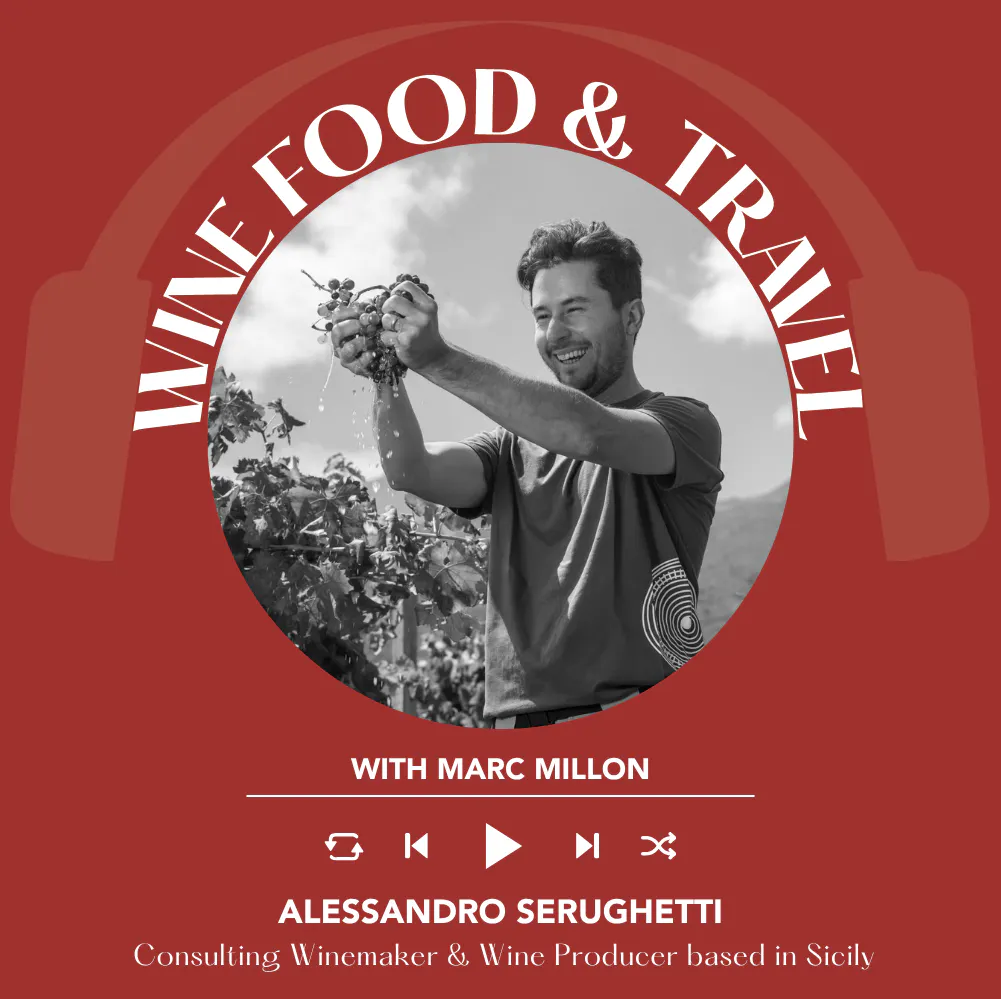
Ep. 2761 Winemaking and Consulting Across Sicily with Alessandro Serughetti | Wine, Food & Travel with Marc Millon
Episode 2761

Ep. 2759 Part 2 – The VIA Educational Program & Italian Wine | Heart-to-Heart Conversation with Sarah Looper
Episode 2759