

Ep. 957 Map 10 South of France | Jumbo Shrimp Maps
Jumbo Shrimp Maps
Episode Summary
Content Analysis Key Themes and Main Ideas 1. Introduction to the ""Jumbo Shrimp Wine Study Maps"" educational project. 2. Overview of the South of France's Mediterranean climate and geographical influences on viticulture. 3. Detailed discussion of key grape varieties in the region, both red and white. 4. Exploration of specific Appellation d'Origine Contrôlée (AOC) wine regions in Languedoc-Roussillon and Provence. 5. Emphasis on blending practices and distinct regional wine styles. Summary This episode of the ""Jumbo Shrimp Wine Study Maps"" podcast introduces the project's multi-layered educational resources designed for wine exam preparation. The core of the episode then focuses on the South of France wine region. It describes the warm Mediterranean climate with hot summers, mild winters, and low rainfall, noting that while drought can be an issue, fungal diseases are rare. The podcast highlights the significant impact of two cooling winds, the Mistral from the north and the Tramontaine from the west, on grape production. It delves into the prominent red grape varieties, including Grenache, Syrah, Mourvèdre, Cinsault, and especially Carignan, discussing its historical perceptions and the potential for quality from old vines. The increasing trend of planting international varieties like Merlot and Cabernet Sauvignon for IGP wines is also noted. For white grapes, Chardonnay, Sauvignon Blanc, Viognier, Muscat, Grenache Blanc, Clairette, and Picpoul are covered. The episode then details specific AOCs such as Fitou, Corbières, Minervois, Picpoul de Pinet (known for refreshing, salty white wines), Côtes de Provence (famous for pale, light-bodied rosés), and Bandol (renowned for premium, age-worthy Mourvèdre reds). Takeaways - The ""Jumbo Shrimp Wine Study Maps"" project provides comprehensive and multi-format learning tools for wine enthusiasts and students. - The South of France benefits from a warm Mediterranean climate moderated by cooling winds like the Mistral and Tramontaine. - Carignan, despite its rustic reputation, can produce high-quality wines from old vines, though its overall planting is declining in favor of international varieties. - Blending is a predominant winemaking practice across many appellations in Languedoc-Roussillon and Provence, particularly within the IGP Pay d'Oc. - Côtes de Provence has established itself as an international benchmark for pale, light-bodied rosé wines. - Bandol stands out for its powerful, age-worthy red wines primarily made from Mourvèdre. - IGP Pay d'Oc offers significant flexibility for varietal labeling and experimentation, contributing to high-volume, fruity wine production. Notable Quotes - ""Welcome to the jumbo shrimp wine study maps podcast. This episode will be looking at the south of France map."
About This Episode
The Italian wine industry is hosting twenty-fourth edition of their Italian wine Portuguese course, which emphasizes learning differently and offers a box of thirty-nine maps. The course is a three-liner project that emphasizes learning differently, and the study guide book will be published later in the year. The success of carbonic and semi- carbonic macerations in wines is discussed, along with the success of planting different varieties of grapes and using chardonnay and auditsargin for verietly labeled wines. The importance of blending styles and exposure to different factors for different types of wines is also highlighted. The production of the podcast is mentioned, and the speakers thank the audience for their suggestions, requests, and ideas. The podcast is available for free through the Natili International dot com, and the speakers thank the audience for their donations, suggestions, requests, and ideas.
Transcript
Welcome to the Italian wine podcast. This episode is brought to you by Vinitally International Academy, announcing the twenty fourth of our Italian wine Ambassador courses to be held in London, Austria, and Hong Kong, from the twenty seventh to the twenty ninth of July. Are you up for the challenge of this demanding force? Do you wanna be the next Italian wine Ambassador? Learn more and apply now at viniti international dot com. Welcome to jumbo shrimp wine study maps. We have specially created this free content for all our listeners who are studying for wine exams. This has been a journey of development since Stevie Kim discovered Rosie Baker's hand drawn maps on Instagram through two years of work by our in house editorial and graphics team, and now the maps are available to purchase in beta form while they undergo the final briefing and editing by our expert advisory board. It's a three layered project because we know everyone learns differently. We now offer the complete box set of thirty nine maps. This series of podcasts with the maps narrated by our crack team of wine educators. And finally, the study guide book, which will be published later this year. Our map project is in no way a substitute for the materials set out by other educational organizations, but we hope all the wine students out there will find our map project a new, exciting, and useful tool for learning. For more information and to buy the maps, please visit our website at mama jumbo shrimp dot com. Welcome to the jumbo shrimp wine study maps podcast. This episode will be looking at the south of France map. We've made it to the south of France and the regions that hug the Mediterranean. And it is truly a warm Mediterranean climate here. Hot summers, mild winters, low rainfall throughout the growing season. Quite often drought is a problem, but fortunately fungal disease is not as it's very dry. There's a large IGT area here of the pay dock allowing for many styles and also for lots of experimentation and innovation. There are also a series of key appallations. We'll tackle each part separately. Two key influences that you need to be aware of in this southern region of France are the influence of two different wins. The mistral, a cold wind coming from the north, and the tramontaine, a cool wind from the west. Both of these aid in cooling the vineyards, allowing for premium great production. Let's look a little bit at the grape varieties that are grown in this large area and then look in more detail at specific appylations. So for our black grape varieties, there is a continuation in the theme we see in the southern Rome. Gronash, very suited to the warm climate here. Sierra on the other hand tends to prefer the cooler sites with the influence of the cooling winds or some altitude in order to gain the best from it. We also have pockets of Mulved and Sanso here. One of the key grapes in this southern area is Karan Yang. This is widely grown and it's naturally high in tannin, acid, and color. Now it has, in recent years, been thought of as a very rustic grape variety, which can lack fruit or finesse. However, some old vine carignan on very poor soils can produce incredibly powerful complex quality wines. And there has been some success in using carbonic and semi carbonic maceration to control the tannins and produce fruitier wines. However, the trend is still for less planting of caron yan and more focus on other varieties. In particular, there's been an increase in the production of merlot and cabinet sauvignon here, largely for wines that are verietly labeled within the large IGP of the pay dock and very successful in blends. Following that trend in the white grapes, there is large plantings here of chardonnay and sauvignon blanc. Again, for this production of high volume fruity IGP wines in the pay dock. We have some vigner here, again, echoing the southern rhone. We have muscat used for sweet fortified wines and Granache Blanc for these peachy wines. In addition, we also have claret, or Raulay, and Picpool. Italian wine podcast. If you think you love wine as much as we do, then give us a like and a follow anywhere you get your pods. Many of the styles here, both in the IGP, and the regional appylations of Langwoodock and Rousion, are focused on blending. Should be noted that the wines of the coat, Dorousillon, are found in the hills, so there's more concentration, the best villages of which actually take village status here. Let's take a quick look at some of the Appelastion controller that you should know for your wine exams. First up, let's talk about Fitu. So these are coastal wines, but it's very warm here still. So they are full bodied. In land, we have an area that are exposed to altitude. Therefore, gain a little bit more freshness and tend to be lighter. Next up, we have the wines of Corbier. Now this is an area really cooled by the tramontaine, so it's possible for blends to retain a lot of freshness here, and you might see a slightly higher percentage of syrup in the blend as a result, obviously, in the red wines. The wines of the minuvoir vary in style a lot due to different richness of soil and exposure to cooling influences. So you might find wines here that are very full, very complex, and others that are much lighter and fresher. Very much depends on the microclimate within the minnewire. There is a key white grape app elastion here of Pickball de biena, where we find the planting of Pickpool. Now the sea breeze influence here helps maintain the natural acidity of this great, giving relatively neutral, but very refreshing wines, a little bit of a salty character, very suited to the seafood here. Heading east along the coast, we come to the large Appalachian Controlet of cote de provence. Now, at provence, this landscape has lots of hills, the protect from the mistral wind, but channel the cooling influence of the sea. It's most famous for the Rosay wines here, blended wines from Granache and Sanso in particular, but there are some white and red wines here. But really coach provence focused on rose and really setting the international standard these days for pale color light bodied with grapefruit and red fruits. Close by, we also have Bandol. This is an Afelacron Controlet for premium red, full bodied, powerful wines with long suitability for aging made from Muvedge. There's lots of south facing slopes here that are used to ripen the tannins of this grape, and they have licorice and bramble characters. Speaking of aging, join me on the next episode when we begin our discussion of Bordeaux. Thanks for listening to this episode of Italian wine podcast brought to you by Vineetli Academy, home of the gold standard of Italian wine education. Do you want to be the next ambassador? Apply online at the Natili International dot com. For courses in London, Austria, and Hong Kong, the twenty seventh to the twenty ninth of July. Remember to subscribe and like Italian One podcast and catch us on sound flat, Spotify, and wherever you get your pods. You can also find our entire back catalog of episodes at Italian wine podcast dot com. Hi, guys. I'm Joy Livingston, and I am the producer of the Italian wine podcast. Thank you for listening. We are the only wine podcast that has been doing a daily show since the pandemic began. This is a labor of love and we are committed to bringing you free content every day. Of course, this takes time and effort not to mention the cost of equipment, production, and editing. We would be grateful for your donations, suggestions, requests, and ideas. For more information on how to get in touch, go to Italian wine podcast dot com.
Episode Details
Related Episodes

Ep. 2789 ColleMassari: a long-term vision rooted in Montecucco with Giuseppe Di Gioia | On The Road With Stevie Kim
Episode 2789

Ep. 2788 Ep. 14: Austria and Hungary | Study Smart for your WSET Level 3
Episode 2788

Ep. 2785 From Volunteer to Speaker at TEXSOM with Samantha Cole Johnson | TEXSOM 2026
Episode 2785

Ep. 2766 Inside the U.S. Non-Alcoholic Wine Market: What Wineries Need to Know with Jill Sites | Masterclass US Wine Market
Episode 2766
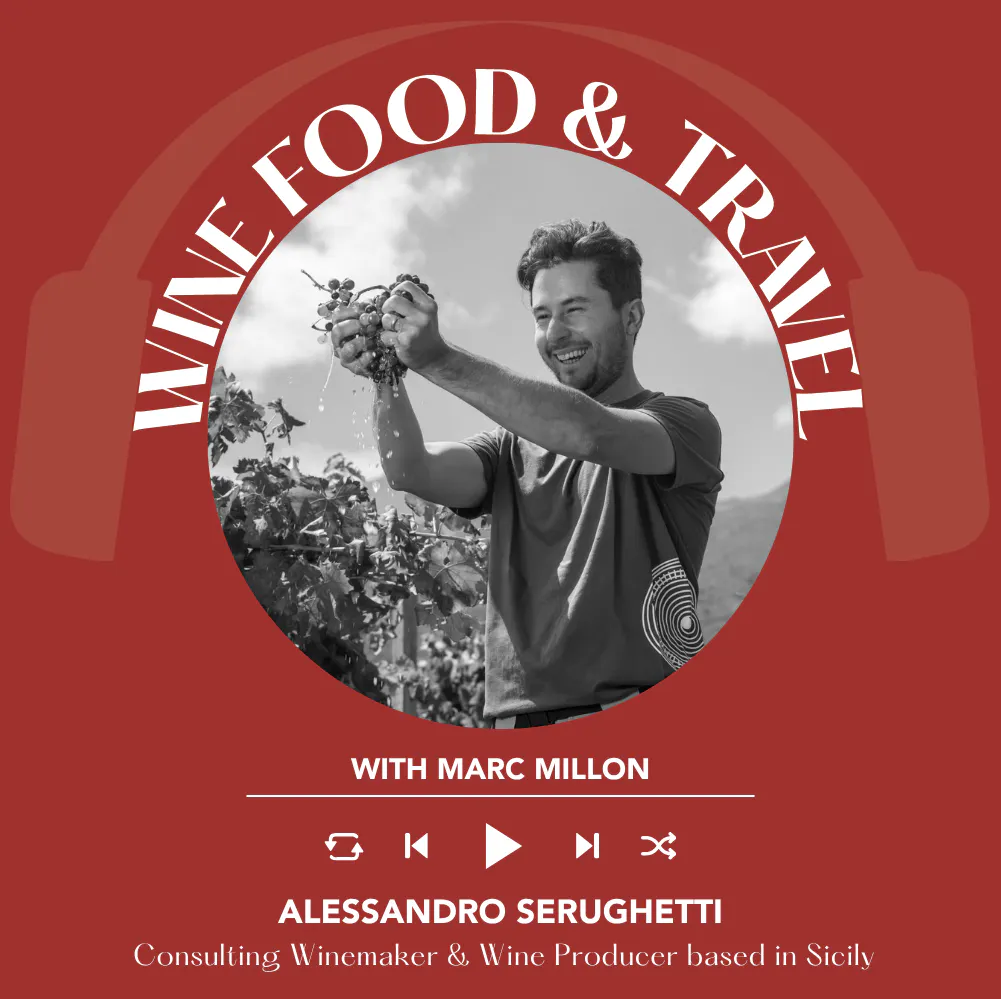
Ep. 2761 Winemaking and Consulting Across Sicily with Alessandro Serughetti | Wine, Food & Travel with Marc Millon
Episode 2761

Ep. 2759 Part 2 – The VIA Educational Program & Italian Wine | Heart-to-Heart Conversation with Sarah Looper
Episode 2759